Loreful
HomeDiscover
Search series, authors…⌘K
Loreful

Reading orders for SF/F series and shared universes — with your place kept in every one.

Explore

UniversesSeriesWorksAuthorsAtlas

Help

FAQAboutSite map

Account & legal

Sign inCreate accountPrivacyTerms

Data

Built on ISFDB, Wikipedia, Wikidata and Open Library. Curated reading orders carry their reasoning on the page; the rest follow publication order. Data sources & licenses

© Loreful · data: ISFDB · CC BY

More like Solution Unsatisfactory

anchored on:science fictionalternate historywarour worldearly 20th centurydystopia+4 more

but

Mood

The mood the book leaves you in.

  • The reading experience is propelled by journeys, exploration, and physical risk; excitement and forward momentum dominate over dread or introspection.
  • Joy and loss are deliberately mixed; the resolution grants characters something real while taking something else away, leaving warmth and sorrow together.
  • The book demands work from the reader — dense prose, difficult structure, unfamiliar ideas, or morally uncomfortable material — as part of its intended effect.
  • Grim events, cruelty, or despair dominate the atmosphere, and the book does not soften them with comfort or comic relief.
  • The atmosphere is quietly unsettling — wrongness, unease, and the uncanny pervade the book without necessarily escalating into overt horror.
  • The book is built to move the reader; character feeling is foregrounded and major scenes aim at a strong emotional response.
  • Humor is a primary aim and the prose plays for laughs — comic situations, wit, or dialogue produce sustained comedy, not occasional levity.
  • The book insists that things can improve; effort and decency are shown to matter, and the arc bends toward better outcomes even through hardship.
  • The book teaches as it goes — real facts, history, science, or craft are conveyed in enough depth that learning is part of the reading experience.
  • The book is designed to uplift and motivate, presenting perseverance or achievement in a way that invites the reader to aspire or act.
  • The overall register is cheerful and easygoing; stakes are kept gentle and the book avoids dwelling on pain or dread.
  • Withheld information drives the experience; the book sustains enigmas and secrets the reader wants resolved, whatever its genre.
  • The book is contemplative and inward-looking, giving more weight to thought, memory, and meaning than to external events.
  • The book works as comfort reading — low tension, a soothing pace, and an atmosphere the reader can unwind in.
  • Grief, loss, or melancholy set the dominant register, and the book lets sorrow stand rather than resolving it into comfort.
  • Sustained suspense is the point; the book keeps the reader braced for what happens next through danger, pressure, or impending revelation.
  • Playful invention and charm define the register — fanciful conceits, light absurdity, and a narration that delights in its own oddity.

About

What the story runs on.

  • Stories in which extraterrestrial beings are central — as characters, cultures, or the object of the plot.
  • Stories structured as a quest — a journey undertaken to find, deliver, or destroy something of great import.
  • Stories in which staying alive against nature, catastrophe, or scarcity is the central problem.
  • Stories of lovers kept apart by law, family, faith, or station, where the obstacle to love is the plot.
  • Stories in which a friendship — its making, testing, or loss — is the emotional center.
  • Stories of growing up — a young protagonist crossing from childhood into adult knowledge and responsibility.
  • Stories about who a character truly is — self-discovery, doubled lives, and the search for a self.
  • Stories about mourning — living through the death of a loved one and what loss does to the survivors.
  • Stories in which a buried family truth — hidden parentage, crimes, or shames — surfaces and reorders the present.
  • Stories driven by maneuvering for power — factions, conspiracies, and statecraft conducted in shadow.
  • Stories in which war itself is the subject — combat, occupation, and what warfare does to soldiers and civilians.
  • Stories organized around investigating a killing — the case, the clues, and the pursuit of the killer, in any genre's clothing.

Shelf

Where it sits in the library.

    • Fiction built on magic or other supernatural elements that have no scientific explanation.
    • Secondary-world fantasy at large scale, where the fate of nations or the world turns on the protagonists' struggle.
    • Fantasy set in a recognizably modern city or contemporary world where the supernatural intrudes on everyday life.
    • Fantasy that blends in horror's atmosphere and imagery, keeping a fantastical frame around grim or frightening material.
    • Action-driven fantasy following warriors or rogues with personal stakes against sorcerous threats, rather than world-spanning conflicts.
    • Fantasy set in a real historical period or a close analogue of one, with magic woven into the era.
    • Fantasy in which protagonists cross from the ordinary world into another world through a portal or similar passage.
    • Fiction that retells or reworks a traditional fairy tale in a new form or setting.
    • Fantasy drawing directly on myths, legends, and folklore, retelling them or building on their figures and logic.
    • Fantasy of ghosts, vampires, shapeshifters, psychics, and similar phenomena, usually set in an otherwise ordinary world.
    • Fiction mixing science-fictional trappings with overtly magical or impossible elements in one setting.
    • Low-stakes fantasy emphasizing comfort, community, and everyday pleasures over conflict and peril.
    • Speculative fiction of pervasive moral ambiguity, violence, and cynicism that rejects heroic conventions — fantasy and SF alike.
      • Fiction that extrapolates from science and technology — future societies, space travel, or speculative inventions — within at least nominally natural laws.
      • Science fiction of interstellar scope — starships, galactic polities, and adventure across star systems.
      • Science fiction committed to scientific rigor, where technical plausibility constrains the story.
      • Science fiction centered on armed forces and warfare, told largely from a military point of view.
      • Science fiction of networked, corporate-dominated near futures, pairing high technology with social decay.
      • Science fiction styled on nineteenth-century steam-powered technology, often in a Victorian or pseudo-Victorian setting.
      • Fiction depicting an oppressive or catastrophic society, presented as a warning.
      • Fiction set after civilization's collapse, following survivors in the ruins of the old world.
      • Fiction in which characters move between past and future, and the mechanics or consequences of that travel drive the plot.
      • Fiction exploring a world where a historical event went differently and history diverged from ours.
      • Science fiction about humanity's first encounter and communication with an alien intelligence.
      • Science fiction in which extraterrestrial forces attack or occupy Earth and humanity resists.
      • Fiction whose primary aim is to frighten or unsettle the reader through dread, menace, or the monstrous.
      • Horror of vast, indifferent, incomprehensible entities before which humanity is insignificant, in the Lovecraft tradition.
      • Horror of decaying houses, buried family secrets, and oppressive atmosphere in the Gothic literary tradition.
      • Horror centered on hauntings and the returning dead.
      • Horror located in the mind — paranoia, obsession, and unreliable perception rather than external monsters.
      • Horror built around the reanimated dead and survival amid their outbreaks.
      • Horror defined by explicit, transgressive gore that refuses to cut away from violence.
      • Speculative fiction of the strange and uncanny that resists both natural explanation and standard genre categories.
      • Fiction organized around solving a crime or puzzle, typically following an investigator toward the identification of a culprit.
      • A puzzle-first mystery that lays out clues so the culprit's identity can be deduced before the reveal.
      • Crime fiction of moral ambiguity, fatalism, and hard-edged style, set among the corrupt and the doomed.
      • A mystery following the realistic routines of police work — forensics, interviews, and case-building.
      • A gentle mystery with an amateur sleuth, a small community, and violence kept off the page.
      • A mystery set in a past era, where the investigation works within that period's methods and society.
      • Fast-paced fiction driven by imminent danger, pursuit, or high-stakes conspiracy, built to sustain tension.
      • A thriller of espionage — agents, tradecraft, and intelligence services in conflict.
      • A thriller centered on lawyers and the courtroom, where litigation carries the suspense.
      • A thriller driven by detailed contemporary or near-future technology, often military or scientific.
      • A thriller whose tension comes from mental states and manipulation between characters rather than external action.
      • Fiction whose central plot is a romantic relationship and its development toward an emotionally satisfying resolution.
      • Romance in which one or both partners are supernatural beings, blending fantasy elements into the love story.
      • A fantasy-romance hybrid in which the romantic arc and the fantasy plot carry equal weight.
      • Romance set in a past era, with courtship shaped by the period's society and manners.
      • Romance set in the present day, without supernatural or historical elements.
      • Fiction set in a real past period, where the historical setting materially shapes characters and events.
        • General and literary fiction emphasizing prose style, character interiority, or formal ambition over genre plot conventions.
        • Fiction in a realistic world where magical events occur and are treated as ordinary, in the tradition of Latin American literature.
        • Fiction that ridicules people, institutions, or society in order to criticize them.
        • Fiction of dreamlike, irrational imagery and logic that breaks from realistic representation.
        • Fiction that plays with narrative convention through metafiction, fragmentation, and self-reference.
        • Fiction propelled by journeys, exploration, and physical peril, where action and survival carry the plot.
        • Adventure fiction of ships and seafaring — naval engagements, voyages, and life at sea.
        • Fiction of the American frontier West — gunmen, ranchers, and lawmen, typically in the late nineteenth century.
        • Fiction centered on soldiers, campaigns, and the experience of warfare, historical or imagined.
          • Fiction written primarily to amuse, using comedic situations, wit, or parody as its organizing principle.
            • Multi-generational fiction following a family or dynasty across decades, with inheritance and kinship as the through-line.
              • Fiction whose world runs on explicit game mechanics — levels, stats, and skills that characters can see and exploit.
                • Fiction about costumed or superpowered heroes and their conflicts with comparable villains.

                Practical

                How long a commitment, whether it stands alone, and whether it has finished.

                Tap a chip to ask for it · tap again to rule it out · once more to clear. Numbers show what would be left.

                • Cover of The War in the Air
                  The War in the Air

                  H. G. Wells · standalone novel · 1908

                  similar byearly 20th centurywartenseour worldpolitical intriguescience fiction+2 more

                  The War in the Air: And Particularly How Mr. Bert Smallways Fared While It Lasted is a military science fiction novel written by H. G. Wells and published in 1908.

                • Cover of The Air Trust
                  The Air Trust

                  George Allan England · standalone novel · 1915

                  similar byearly 20th centurydarktenseour worldtotalitarianismscience fictiondystopianorth america+1 more

                  From the foreword to the 1915 edition: "This book is the result of an attempt to carry the monopolistic principle to its logical conclusion." Publisher's description (2006): "Isaac Flint, a greedy billionaire businessmen plots to extract oxygen from the air and then sell it back to people if they want to live. Through bribes, blackmail and threats, he forces a group of scientists to develop a means of extracting the oxygen and forces politicians to cooperate with his plan. Soon, surrounded by a private army of guards to prevent the outraged populace from stopping him, Flint has "cornered" the oxygen market, and people everywhere have no choice but to pay for the air they breathe--or see themselves and their families die for lack of oxygen."

                • Cover of It Can't Happen Here
                  It Can't Happen Here

                  Sinclair Lewis · standalone novel · 1935

                  similar byearly 20th centurydarktensepolitical intriguetotalitarianismdystopiascience fictionnorth america+1 more

                  It Can't Happen Here is a 1935 dystopian political novel by the American author Sinclair Lewis. Set in a fictionalized version of the 1930s United States, it follows an American politician, Berzelius "Buzz" Windrip, who quickly rises to power to become the country's first outright dictator, and Doremus Jessup, a newspaper editor who sees Windrip's fascist policies for what they are ahead of time and who becomes Windrip's most ardent critic.

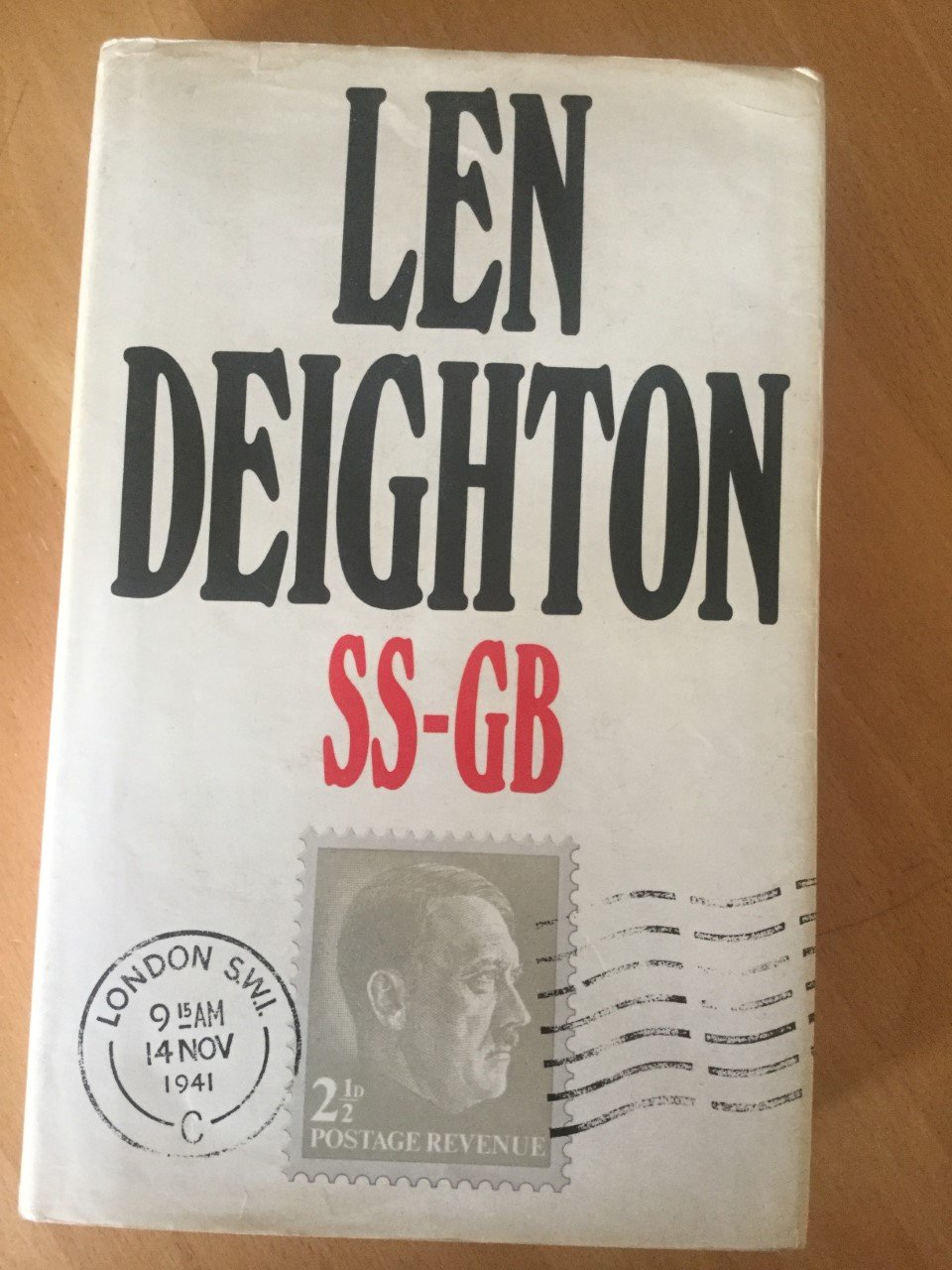
                • Cover of SS-GB
                  SS-GB

                  Len Deighton · standalone novel · 1978

                  similar byearly 20th centurydarktensepolitical intriguealternate historyscience fiction+2 more

                  It's November 1941 in a Britain that lost the war: Operation Sea Lion succeeded, Churchill was executed, and the King is a prisoner in his own Tower of London. Detective Superintendent Douglas Archer, still working homicide for the Metropolitan Police under German occupation, catches what looks like a routine case, a well-dressed man murdered above an antiques shop, until the body's oddities point toward something far more dangerous than burglary gone wrong. Archer's investigation collides with occupation politics, the British resistance, and rival factions of the SS and the German Army, each wanting the case to go a different way. Len Deighton's alternate-history spy thriller.

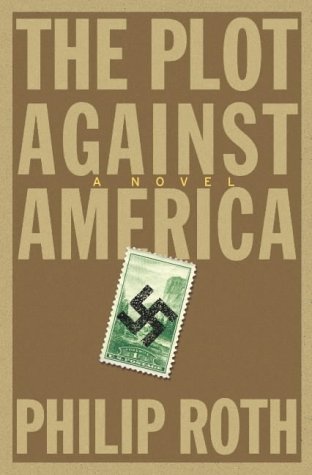
                • Cover of The Plot Against America
                  The Plot Against America

                  Philip Roth · standalone novel · 2004

                  similar byearly 20th centurydarktensepolitical intriguetotalitarianismalternate historyscience fictionnorth america

                  Roosevelt is defeated in 1940 by Charles Lindbergh, who guides the US towards fascism and anti-Semitism.

                • Cover of When the Sleeper Wakes
                  When the Sleeper Wakes

                  H. G. Wells · standalone novel · 1899

                  similar bydarktenseour worldpolitical intriguetotalitarianismscience fictiondystopia

                  Graham, an insomniac Englishman in 1890s London, takes a course of sleep-inducing drugs and falls into a coma that lasts two centuries. He wakes in the year 2100 to find his investments have compounded, through a ruling body called the White Council, into effective ownership of most of the world's wealth and power, making him, on paper, humanity's master, and in practice, its prisoner, held under guard while the Council governs in his name. A rebel faction led by a man named Ostrog frees him, hoping to use his symbolic authority to spark an uprising against the Council. An early H. G. Wells dystopia about inherited power and manufactured consent.

                • Cover of The Children of Men
                  The Children of Men

                  P. D. James · standalone novel · 1992

                  similar bydarktenseour worldpolitical intriguetotalitarianismscience fictiondystopia

                  "The human race has become infertile, and under the despotic rule of Xan Lyppiatt, the Warden of England the old are despairing and the young cruel. Theo Faren, a cousin of the Warden, lives a solitary life in this ominous atmosphere. That is, until a chance encounter with a young woman leads him into contact with a group of dissenters. Suddenly his life is changed irrevocably, as he faces agonising choices which could affect the future of mankind." (pdjames.co.uk)

                • Cover of The Hunger Games Universe
                  The Hunger Games Universe

                  universe · 5 books · 2008

                  Start hereThe Hunger Games · Start here

                  similar bydarktensetotalitarianismscience fictiondystopianorth america+2 more

                  Panem, they call it now — a nation raised on the drowned bones of North America, a glittering Capitol ringed by twelve districts it once starved into obedience. Every year the Capitol collects its debt in children: two tributes from each district, drawn by lottery, dropped into an engineered arena, and made to kill one another on live television while the whole country is required to watch. This is the Hunger Games — entertainment, punishment, and government at once. Suzanne Collins tells it in a compact, unified body of work. The founding trilogy — The Hunger Games, Catching Fire, and Mockingjay — follows Katniss Everdeen, a girl from the coal-mining District 12 who volunteers in her sister's place and becomes something the Capitol never scripted. Two prequels reach back into the same machinery: The Ballad of Songbirds and Snakes traces a young Coriolanus Snow long before he is President, and Sunrise on the Reaping returns to District 12 a generation ahead of Katniss. Begin with the trilogy, in order — it is Katniss's voice, close and present-tense, that makes Panem breathe, and the prequels land hardest once you know how her story ends. Beneath the spectacle sits one steady, uncomfortable question: who profits when we agree to look away.

                • Cover of How Few Remain Universe
                  How Few Remain Universe

                  series · 11 books · 1997

                  similar byearly 20th centurywartensealternate historypolitical intriguenorth america+1 more

                  How Few Remain opens Harry Turtledove's Southern Victory timeline, imagining a North America where the Confederacy won the Civil War. Set mostly in 1881-1882, it follows political and military figures on both sides of a divided continent as old grievances resurface into a new war. It's a single novel here, but the starting point for a much longer alternate-history sequence Turtledove extended across both twentieth-century world wars.

                • Cover of The Heads of Cerberus
                  The Heads of Cerberus

                  Francis Stevens · standalone novel · 1919

                  similar byearly 20th centurytenseour worldtotalitarianismscience fictiondystopianorth america

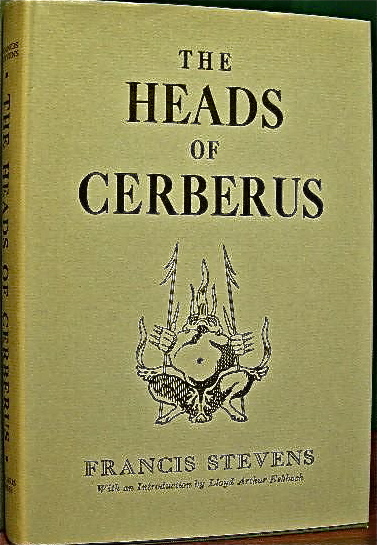
                  The Heads of Cerberus is a science fiction novel by American writer Francis Stevens. The novel was originally serialized in the pulp magazine The Thrill Book in 1919, and it was first published in book form in 1952 by Polaris Press in an edition of 1,563 copies. It was the first book published by Polaris Press. A scholarly reprint edition was issued by Arno Press in 1978, and a mass market paperback by Carroll & Graf in 1984.

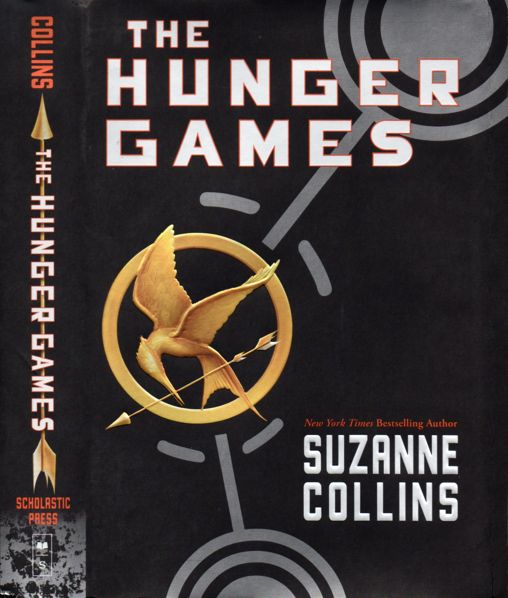
                • Cover of The Hunger Games
                  The Hunger Games

                  series · 3 books · 2008

                  part of The Hunger Games Universe

                  similar bydarktensetotalitarianismscience fictiondystopianorth america+1 more

                  The Hunger Games is a series of young adult dystopian novels written by American author Suzanne Collins. The series consists of a trilogy that follows teenage protagonist Katniss Everdeen, as well as two prequels. The Hunger Games universe is a dystopia set in Panem, a post-apocalyptic North American country consisting of the wealthy Capitol and 12 districts in varying states of poverty. As punishment for rebellion, the Capitol hosts an annual battle royale competition called The Hunger Games. Each of the 12 districts must send two children between the ages of 12 and 18 to participate, and the last surviving child is dubbed the victor.

                • Cover of The Handmaid's Tale
                  The Handmaid's Tale

                  series · 3 books · 1985

                  similar bydarktensetotalitarianismscience fictiondystopianorth america+1 more

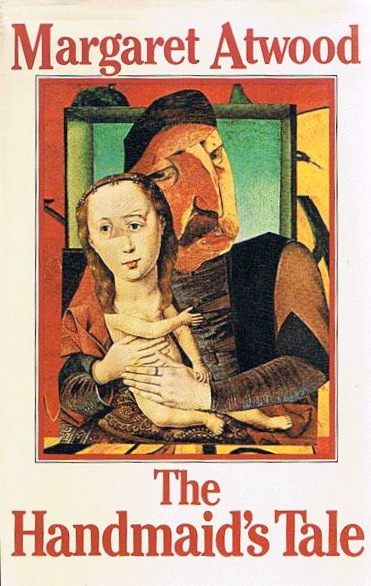
                  The Handmaid's Tale is Margaret Atwood's 1985 novel set in Gilead, a totalitarian theocracy that has overthrown the United States and forces fertile women into reproductive servitude as Handmaids; it is narrated by one such woman, Offred. Atwood returned to the world in her 2019 sequel The Testaments, set fifteen years later and narrated by three women, including the regime's Aunt Lydia. Together the two novels move from Gilead's grip on power toward the first cracks in it.

                • Cover of The Guns of the South
                  The Guns of the South

                  Harry Turtledove · standalone novel · 1992

                  similar bywartenseour worldscience fictionalternate historynorth america+2 more

                  The Guns of the South is an alternate history science fiction novel set during the American Civil War by Harry Turtledove. It was released in the United States on September 22, 1992.

                • Cover of Days of Infamy
                  Days of Infamy

                  series · 2 books · 2004

                  similar byearly 20th centurywartensedarkalternate historynorth america

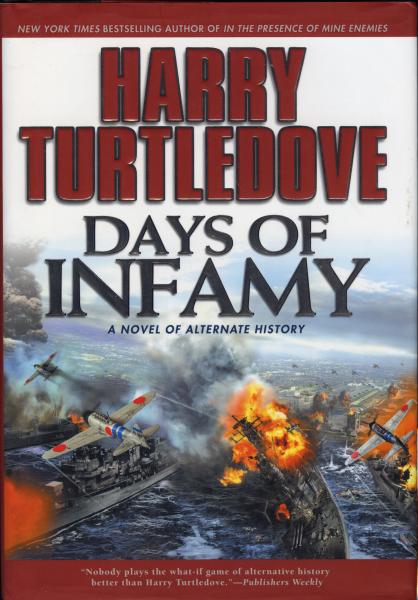
                  Harry Turtledove's Days of Infamy duology reimagines the Pacific theater of World War II with an alternate outcome at Pearl Harbor: a Japanese invasion and occupation of Hawaii rather than a single carrier strike. Days of Infamy covers the invasion itself, while End of the Beginning follows the ensuing occupation and eventual counter-invasion. As in his other alternate-history work, Turtledove follows the changed war through a wide, rotating cast of civilian and military viewpoints.

                • Cover of Final Blackout
                  Final Blackout

                  L. Ron Hubbard · standalone novel · 1948

                  similar bywardarktensescience fictionour worlddystopia+1 more

                  Final Blackout is a dystopic science fiction novel by American writer L. Ron Hubbard. The novel is set in the future and follows a man known as "the Lieutenant" as he restores order to England after a world war. First published in serialized format in 1940 in the science fiction magazine Astounding Science Fiction, Final Blackout was published in book form in 1948 by The Hadley Publishing Co. Author Services Inc. published a hardcover edition of the book in 1988, and in 1989 the Church of Scientology-affiliated organization Bridge Publications said that a film director named Christopher Cain had signed a contract to write and direct a movie version based on the book.

                • WU
                  Worldwar Universe

                  series · 8 books · 1994

                  similar bytenseour worldwarscience fictionalternate history+2 more

                • Cover of The World Set Free
                  The World Set Free

                  H. G. Wells · standalone novel · 1914

                  similar bywardarkour worldscience fictiondystopia+1 more

                  The World Set Free is a novel written in 1913 and published in 1914 by H. G. Wells. The book is based on a prediction of a more destructive and uncontrollable sort of weapon than the world has yet seen. It had appeared first in serialised form with a different ending as A Prophetic Trilogy, consisting of three books: A Trap to Catch the Sun, The Last War in the World and The World Set Free.

                • Cover of The World Jones Made
                  The World Jones Made

                  Philip K. Dick · standalone novel · 1956

                  similar bydarktensepolitical intriguescience fictiondystopianorth america+2 more

                  The World Jones Made is a 1956 science fiction novel by American writer Philip K. Dick, examining notions of precognition, humanity, and politics. It was first published by Ace Books as one half of Ace Double D-150, bound dos-à-dos with Agent of the Unknown by Margaret St. Clair.The story takes place after a nuclear war in which society is dominated by relativism, which rejects absolute truths and preaches tolerance as the highest principle. The mutant Floyd Jones, who can see into the future, plans to overthrow the system and colonise space. The story ends with the defeat of Jones, whose plans fail despite his ability to see the future due to the immutability of fate.

                • Cover of Level 7
                  Level 7

                  Mordecai Roshwald · standalone novel · 1959

                  similar bywardarktensetotalitarianismscience fictiondystopia

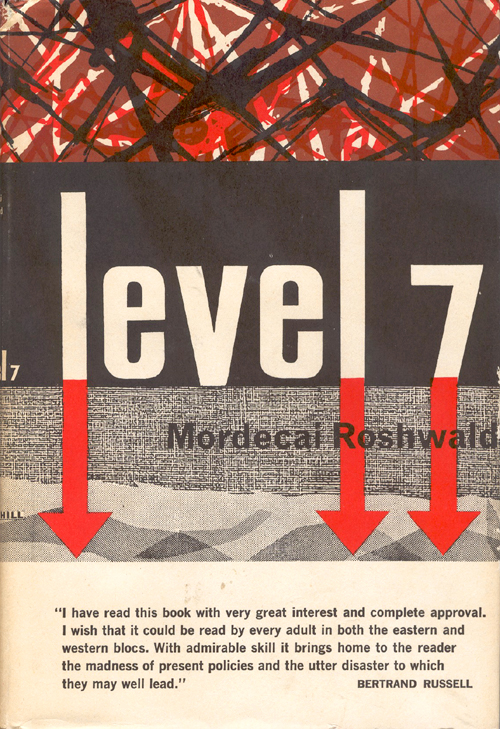
                  Level 7 is a 1959 science fiction novel by American writer Mordecai Roshwald. It is told from the first-person perspective of a modern soldier, X-127, living in the underground military complex Level 7, where he and several hundred others are expected to reside permanently. X-127 fulfills the role of 'push-button' offensive initiator of his nation's nuclear weapons capacity against an unspecified enemy. X-127 narrates life within a deep shelter before, during and after a nuclear war that wipes out the human species.

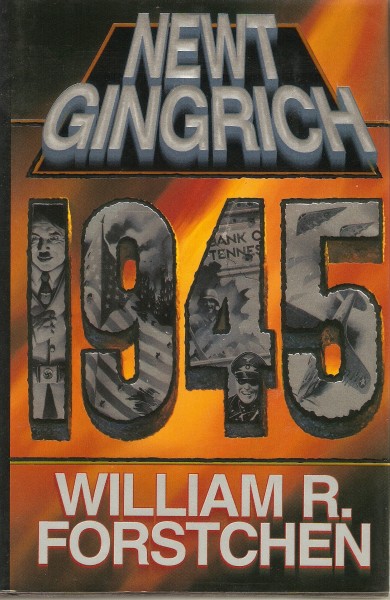
                • Cover of 1945
                  1945

                  William R. Forstchen & Newt Gingrich · standalone novel · 1995

                  similar byearly 20th centurywartensepolitical intriguescience fictionalternate historynorth america+1 more

                  1945 is an alternate history novel written by Newt Gingrich and William R. Forstchen in 1995 that described the period immediately after World War II in which the United States had fought only against Japan, which allowed Nazi Germany to force a truce with the Soviet Union, and the two victors confront each other in a Cold War, which swiftly turns hot.

                • Cover of The Simulacra
                  The Simulacra

                  Philip K. Dick · standalone novel · 1964

                  similar bydarkour worldpolitical intriguetotalitarianismscience fictiondystopianorth america

                  The Simulacra is a 1964 science fiction novel by American writer Philip K. Dick. The novel portrays a future totalitarian society apparently dominated by a matriarch, Nicole Thibodeaux. It revolves around the themes of reality and illusionary beliefs, as do many of Dick's works. Additionally, it touches on Nazi ideology.

                • Cover of A State of Disobedience
                  A State of Disobedience

                  Tom Kratman · standalone novel · 2003

                  similar bydarktensepolitical intriguewartotalitarianismscience fictiondystopianorth america

                  During the war against terrorism, the US government had taken on extraordinary powers. Now that the war was won, elements of the government had no intention of giving those powers up, and the country was on the verge of civil war.

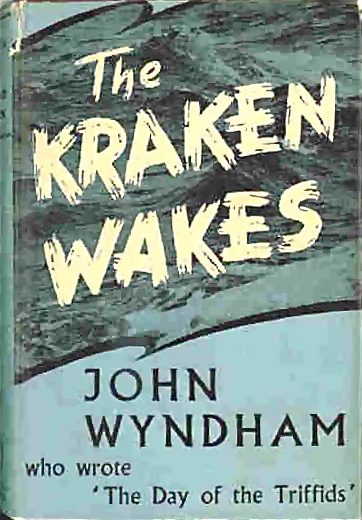
                • Cover of The Kraken Wakes
                  The Kraken Wakes

                  John Wyndham · standalone novel · 1953

                  similar bydarktenseour worldwarscience fiction

                  " Behind a spectacular meteor shower actually hides the beginning of an invasion by a mysterious and powerful alien race. Earth's life is disrupted by the attacks of extraterrestrials whose war machines, emerging from the depths of the oceans, seem indestructible. The coalitioned forces of the whole world are worthless, powerless in the face of the indecipherable and deadly plans of a superior intelligence, capable of bringing the entire planet to the brink of catastrophe" Goodreads May 20, 2022

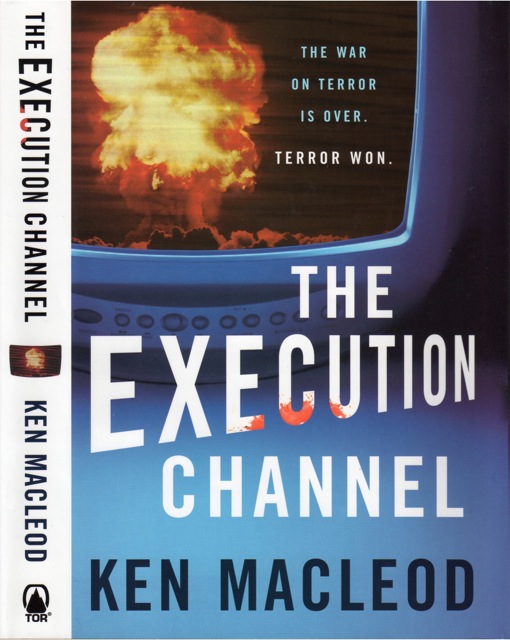
                • Cover of The Execution Channel
                  The Execution Channel

                  Ken MacLeod · standalone novel · 2007

                  similar bydarktensepolitical intriguewarscience fictiondystopianorth america+1 more

                  Al Gore is elected American president and the War on Terror takes on new dimensions.