Loreful
HomeDiscover
Search series, authors…⌘K
Loreful

Reading orders for SF/F series and shared universes — with your place kept in every one.

Explore

UniversesSeriesWorksAuthorsAtlas

Help

FAQAboutSite map

Account & legal

Sign inCreate accountPrivacyTerms

Data

Built on ISFDB, Wikipedia, Wikidata and Open Library. Curated reading orders carry their reasoning on the page; the rest follow publication order. Data sources & licenses

© Loreful · data: ISFDB · CC BY

More like Something Rotten

anchored on:books and readingfunnymetafictionscience fictionmystery & detectivehumor+3 more

but

Mood

The mood the book leaves you in.

  • The reading experience is propelled by journeys, exploration, and physical risk; excitement and forward momentum dominate over dread or introspection.
  • Joy and loss are deliberately mixed; the resolution grants characters something real while taking something else away, leaving warmth and sorrow together.
  • The book demands work from the reader — dense prose, difficult structure, unfamiliar ideas, or morally uncomfortable material — as part of its intended effect.
  • Grim events, cruelty, or despair dominate the atmosphere, and the book does not soften them with comfort or comic relief.
  • The atmosphere is quietly unsettling — wrongness, unease, and the uncanny pervade the book without necessarily escalating into overt horror.
  • The book is built to move the reader; character feeling is foregrounded and major scenes aim at a strong emotional response.
  • Humor is a primary aim and the prose plays for laughs — comic situations, wit, or dialogue produce sustained comedy, not occasional levity.
  • The book insists that things can improve; effort and decency are shown to matter, and the arc bends toward better outcomes even through hardship.
  • The book teaches as it goes — real facts, history, science, or craft are conveyed in enough depth that learning is part of the reading experience.
  • The book is designed to uplift and motivate, presenting perseverance or achievement in a way that invites the reader to aspire or act.
  • The overall register is cheerful and easygoing; stakes are kept gentle and the book avoids dwelling on pain or dread.
  • Withheld information drives the experience; the book sustains enigmas and secrets the reader wants resolved, whatever its genre.
  • The book is contemplative and inward-looking, giving more weight to thought, memory, and meaning than to external events.
  • The book works as comfort reading — low tension, a soothing pace, and an atmosphere the reader can unwind in.
  • Grief, loss, or melancholy set the dominant register, and the book lets sorrow stand rather than resolving it into comfort.
  • Sustained suspense is the point; the book keeps the reader braced for what happens next through danger, pressure, or impending revelation.
  • Playful invention and charm define the register — fanciful conceits, light absurdity, and a narration that delights in its own oddity.

About

What the story runs on.

  • Stories in which extraterrestrial beings are central — as characters, cultures, or the object of the plot.
  • Stories about venturing into space to explore — survey missions, astronauts, and the frontier of the unknown beyond Earth.
  • Stories structured as a quest — a journey undertaken to find, deliver, or destroy something of great import.
  • Stories in which staying alive against nature, catastrophe, or scarcity is the central problem.
  • Stories of lovers kept apart by law, family, faith, or station, where the obstacle to love is the plot.
  • Stories in which a friendship — its making, testing, or loss — is the emotional center.
  • Stories of growing up — a young protagonist crossing from childhood into adult knowledge and responsibility.
  • Stories about who a character truly is — self-discovery, doubled lives, and the search for a self.
  • Stories in which a buried family truth — hidden parentage, crimes, or shames — surfaces and reorders the present.
  • Stories driven by maneuvering for power — factions, conspiracies, and statecraft conducted in shadow.
  • Stories in which war itself is the subject — combat, occupation, and what warfare does to soldiers and civilians.
  • Stories organized around investigating a killing — the case, the clues, and the pursuit of the killer, in any genre's clothing.

Shelf

Where it sits in the library.

    • Fiction built on magic or other supernatural elements that have no scientific explanation.
    • Secondary-world fantasy at large scale, where the fate of nations or the world turns on the protagonists' struggle.
    • Fantasy set in a recognizably modern city or contemporary world where the supernatural intrudes on everyday life.
    • Fantasy that blends in horror's atmosphere and imagery, keeping a fantastical frame around grim or frightening material.
    • Action-driven fantasy following warriors or rogues with personal stakes against sorcerous threats, rather than world-spanning conflicts.
    • Fantasy set in a real historical period or a close analogue of one, with magic woven into the era.
    • Fantasy in which protagonists cross from the ordinary world into another world through a portal or similar passage.
    • Fiction that retells or reworks a traditional fairy tale in a new form or setting.
    • Fantasy drawing directly on myths, legends, and folklore, retelling them or building on their figures and logic.
    • Fantasy of ghosts, vampires, shapeshifters, psychics, and similar phenomena, usually set in an otherwise ordinary world.
    • Fiction mixing science-fictional trappings with overtly magical or impossible elements in one setting.
    • Low-stakes fantasy emphasizing comfort, community, and everyday pleasures over conflict and peril.
    • Speculative fiction of pervasive moral ambiguity, violence, and cynicism that rejects heroic conventions — fantasy and SF alike.
      • Fiction that extrapolates from science and technology — future societies, space travel, or speculative inventions — within at least nominally natural laws.
      • Science fiction of interstellar scope — starships, galactic polities, and adventure across star systems.
      • Science fiction committed to scientific rigor, where technical plausibility constrains the story.
      • Science fiction centered on armed forces and warfare, told largely from a military point of view.
      • Science fiction of networked, corporate-dominated near futures, pairing high technology with social decay.
      • Science fiction styled on nineteenth-century steam-powered technology, often in a Victorian or pseudo-Victorian setting.
      • Fiction depicting an oppressive or catastrophic society, presented as a warning.
      • Fiction set after civilization's collapse, following survivors in the ruins of the old world.
      • Fiction in which characters move between past and future, and the mechanics or consequences of that travel drive the plot.
      • Fiction exploring a world where a historical event went differently and history diverged from ours.
      • Science fiction about humanity's first encounter and communication with an alien intelligence.
      • Science fiction in which extraterrestrial forces attack or occupy Earth and humanity resists.
      • Fiction whose primary aim is to frighten or unsettle the reader through dread, menace, or the monstrous.
      • Horror of vast, indifferent, incomprehensible entities before which humanity is insignificant, in the Lovecraft tradition.
      • Horror of decaying houses, buried family secrets, and oppressive atmosphere in the Gothic literary tradition.
      • Horror centered on hauntings and the returning dead.
      • Horror located in the mind — paranoia, obsession, and unreliable perception rather than external monsters.
      • Horror built around the reanimated dead and survival amid their outbreaks.
      • Horror defined by explicit, transgressive gore that refuses to cut away from violence.
      • Speculative fiction of the strange and uncanny that resists both natural explanation and standard genre categories.
      • Fiction organized around solving a crime or puzzle, typically following an investigator toward the identification of a culprit.
      • A puzzle-first mystery that lays out clues so the culprit's identity can be deduced before the reveal.
      • Crime fiction of moral ambiguity, fatalism, and hard-edged style, set among the corrupt and the doomed.
      • A mystery following the realistic routines of police work — forensics, interviews, and case-building.
      • A gentle mystery with an amateur sleuth, a small community, and violence kept off the page.
      • A mystery set in a past era, where the investigation works within that period's methods and society.
      • Fast-paced fiction driven by imminent danger, pursuit, or high-stakes conspiracy, built to sustain tension.
      • A thriller of espionage — agents, tradecraft, and intelligence services in conflict.
      • A thriller centered on lawyers and the courtroom, where litigation carries the suspense.
      • A thriller driven by detailed contemporary or near-future technology, often military or scientific.
      • A thriller whose tension comes from mental states and manipulation between characters rather than external action.
      • Fiction whose central plot is a romantic relationship and its development toward an emotionally satisfying resolution.
      • Romance in which one or both partners are supernatural beings, blending fantasy elements into the love story.
      • A fantasy-romance hybrid in which the romantic arc and the fantasy plot carry equal weight.
      • Romance set in a past era, with courtship shaped by the period's society and manners.
      • Romance set in the present day, without supernatural or historical elements.
      • Fiction set in a real past period, where the historical setting materially shapes characters and events.
        • General and literary fiction emphasizing prose style, character interiority, or formal ambition over genre plot conventions.
        • Fiction in a realistic world where magical events occur and are treated as ordinary, in the tradition of Latin American literature.
        • Fiction that ridicules people, institutions, or society in order to criticize them.
        • Fiction of dreamlike, irrational imagery and logic that breaks from realistic representation.
        • Fiction that plays with narrative convention through metafiction, fragmentation, and self-reference.
        • Fiction propelled by journeys, exploration, and physical peril, where action and survival carry the plot.
        • Adventure fiction of ships and seafaring — naval engagements, voyages, and life at sea.
        • Fiction of the American frontier West — gunmen, ranchers, and lawmen, typically in the late nineteenth century.
        • Fiction centered on soldiers, campaigns, and the experience of warfare, historical or imagined.
          • Fiction written primarily to amuse, using comedic situations, wit, or parody as its organizing principle.
            • Multi-generational fiction following a family or dynasty across decades, with inheritance and kinship as the through-line.
              • Fiction whose world runs on explicit game mechanics — levels, stats, and skills that characters can see and exploit.
                • Fiction about costumed or superpowered heroes and their conflicts with comparable villains.

                Practical

                How long a commitment, whether it stands alone, and whether it has finished.

                Tap a chip to ask for it · tap again to rule it out · once more to clear. Numbers show what would be left.

                • Cover of Thursday Next
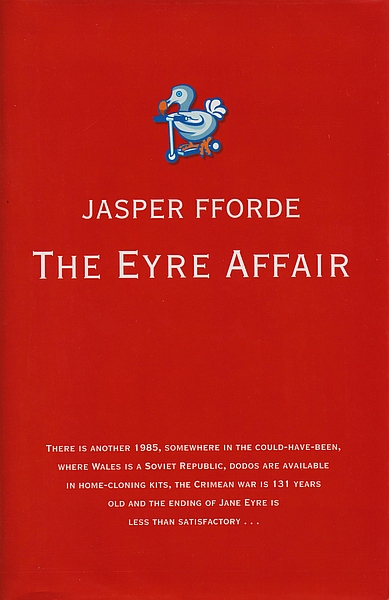
                  Thursday Next

                  series · 8 books · 2001

                  similar bybooks and readingbritish islesfunnywhimsicalmetafictionscience fictionfantasy+1 more

                  Jasper Fforde's Thursday Next novels follow a literary detective in an alternate England who can jump physically into the world of books to solve crimes against literature itself. Beginning with The Eyre Affair, the series mixes metafiction, wordplay and parody across increasingly personal plots as Thursday balances family life with adventures inside classic novels. Fforde has extended the sequence across eight books and several decades, with further installments in the works.

                • Cover of Dirk Gently
                  Dirk Gently

                  series · 3 books · 1987

                  completed

                  part of The Hitchhiker's Guide to the Galaxy Universe

                  similar bybritish islesfunnyhumormystery & detectivescience fiction+2 more

                  Dirk Gently's Holistic Detective Agency (1987) introduces Douglas Adams's eccentric investigator, whose approach treats all events and objects as ultimately connected however implausibly, as a case involving time travel, a ghost, and a Cambridge murder tangles into one plot. Adams completed one further full novel, The Long Dark Tea-Time of the Soul (1988), before his death; The Salmon of Doubt (2002) later collected his unfinished notes toward a third book alongside essays and other writing, rather than completing the story.

                • Cover of The Napoleon of Notting Hill
                  The Napoleon of Notting Hill

                  G. K. Chesterton · standalone novel · 1904

                  similar bybritish islespolitical intriguefunnywhimsical

                  The Napoleon of Notting Hill is a novel written by G. K. Chesterton in 1904, set in a nearly unchanged London in 1984.

                • Cover of The Crock of Gold
                  The Crock of Gold

                  James Stephens · standalone novel · 1912

                  similar bybritish islesfunnywhimsicalhumorfantasy

                  The Crock of Gold is a comic novel written by Irish author James Stephens, first published in 1912.

                • Cover of Gods Behaving Badly
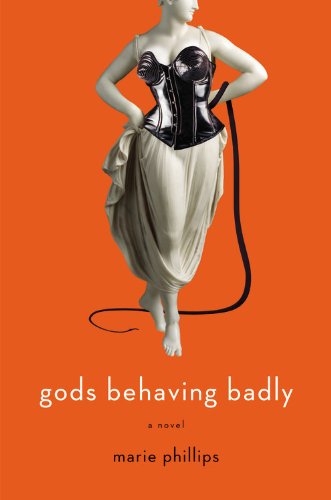
                  Gods Behaving Badly

                  Marie Phillips · standalone novel · 2007

                  similar bybritish islesfunnywhimsicalhumorfantasy

                  Gods Behaving Badly is a novel by the British author Marie Phillips. It was first published by Jonathan Cape in 2007. Set in London, it tells the tale of the twelve gods of Mount Olympus living in a rundown flat as their powers wane. It was selected for The Atlantic's 1book140 Twitter book club's book of the month for August 2011.

                • Cover of The Flying Inn
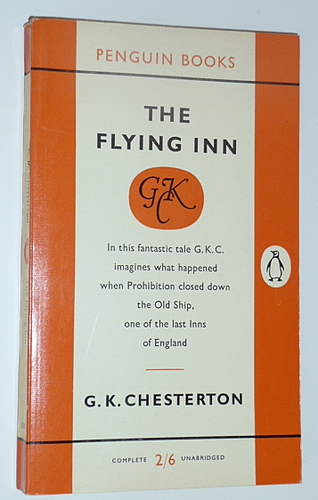
                  The Flying Inn

                  G. K. Chesterton · standalone novel · 1914

                  similar bybritish islespolitical intriguefunny+1 more

                  The Flying Inn is a 1914 novel by English writer G. K. Chesterton. It is set in a future England where the temperance movement has allowed a bizarre form of Progressive Islam to dominate the political and social life of the country. Because of this, alcohol sales to the poor are effectively prohibited, while the rich can get alcoholic drinks "under a medical certificate". The plot centres on the adventures of Humphrey Pump and Captain Patrick Dalroy, who roam the country in their cart with a barrel of rum in an attempt to evade prohibition, exploiting loopholes in the law to temporarily prevent the police taking action against them. Eventually the heroes and their followers foil an attempted coup by an Islamic military force.

                • Cover of The Princess Bride
                  The Princess Bride

                  William Goldman · standalone novel · 1973

                  similar byfunnywhimsicalmetafictionhumorfantasy

                  The Princess Bride: S. Morgenstern's Classic Tale of True Love and High Adventure, The "Good Parts" Version is a 1973 fantasy romance novel by American writer William Goldman. The book combines elements of comedy, adventure, fantasy, drama, romance, and fairy tale. It is metafictionally presented as an abridgment of a longer work by the fictional S. Morgenstern, and Goldman's commentary asides are constant throughout. It was originally published in the United States by Harcourt Brace, then later by Random House, while in the United Kingdom it was later published by Bloomsbury.

                • Cover of The Witches of Chiswick
                  The Witches of Chiswick

                  Robert Rankin · standalone novel · 2003

                  similar bybritish islesfunnywhimsicalhumorfantasy

                  The Witches of Chiswick is a novel by the British author Robert Rankin, the title parodying that of The Witches of Eastwick by John Updike.

                • Cover of Professor Branestawm
                  Professor Branestawm

                  series · 24 books · 1933

                  completed

                  similar bybritish islesfunnywhimsicalhumor

                  Professor Branestawm is a series of thirteen children's books written by the English author Norman Hunter. Professor Theophilus Branestawm is depicted throughout the books as the archetypal absent-minded professor and his name is a variant of the word "brainstorm". The first two books in the series were first published in the 1930s, but the other 11 appeared much later, from 1970 onwards.

                • Cover of The Leaky Establishment
                  The Leaky Establishment

                  David Langford · standalone novel · 1984

                  similar bybritish islespolitical intriguefunnyscience fictionhumor

                  The Leaky Establishment is a novel by David Langford, first published in June 1984 by Frederick Muller Ltd. It was re-issued, with an introduction by Terry Pratchett, in 2001 by Big Engine, and then in July 2003 by Cosmos Books. The book draws on some of Langford's own experiences working at the United Kingdom government's Atomic Weapons Research Establishment at Aldermaston, Berkshire.

                • Cover of SS-GB
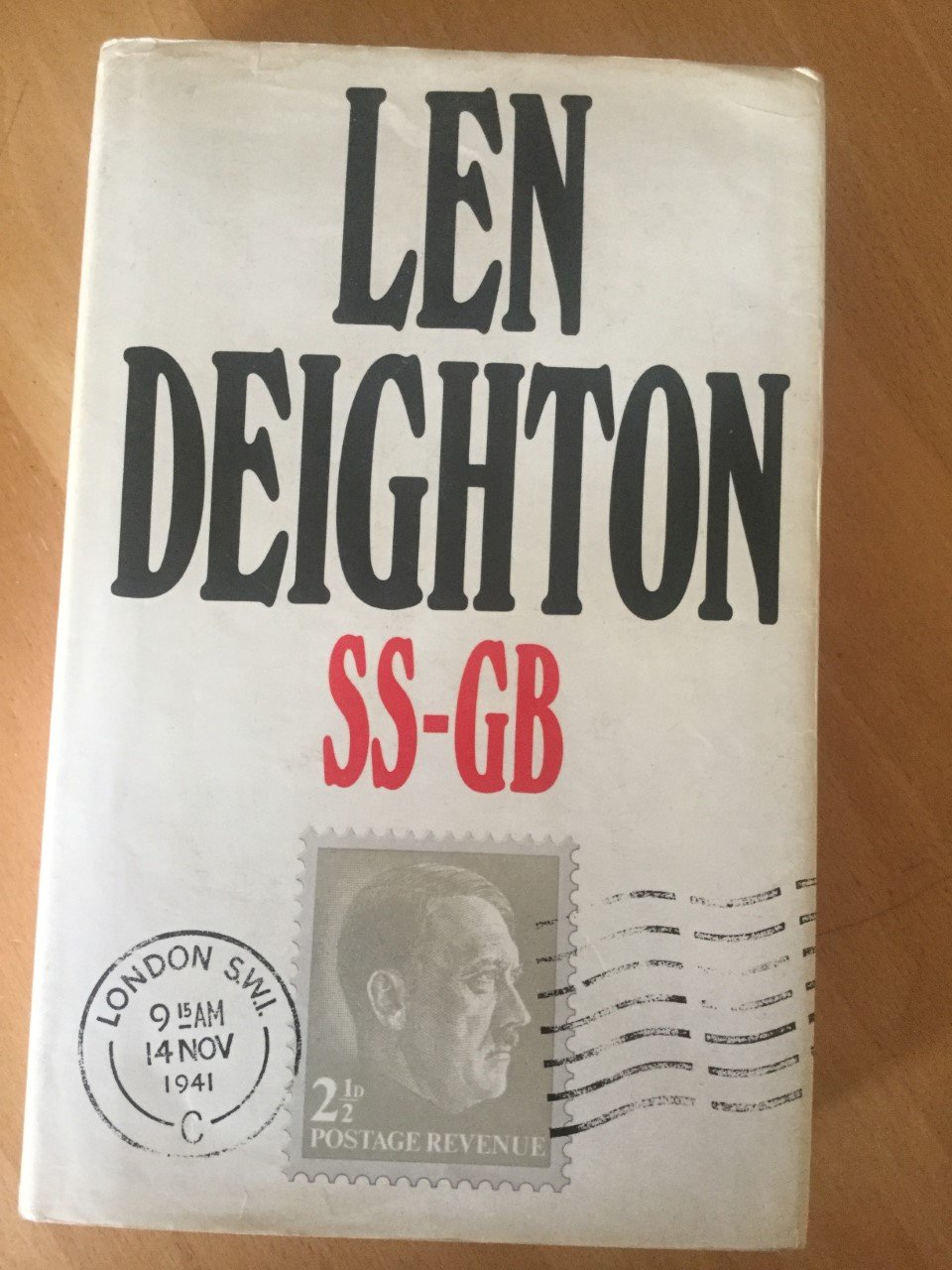
                  SS-GB

                  Len Deighton · standalone novel · 1978

                  similar bybritish islespolitical intriguemystery & detectivescience fiction

                  It's November 1941 in a Britain that lost the war: Operation Sea Lion succeeded, Churchill was executed, and the King is a prisoner in his own Tower of London. Detective Superintendent Douglas Archer, still working homicide for the Metropolitan Police under German occupation, catches what looks like a routine case, a well-dressed man murdered above an antiques shop, until the body's oddities point toward something far more dangerous than burglary gone wrong. Archer's investigation collides with occupation politics, the British resistance, and rival factions of the SS and the German Army, each wanting the case to go a different way. Len Deighton's alternate-history spy thriller.

                • Cover of Good Omens
                  Good Omens

                  series · 2 books · 1990

                  similar bybritish islesfunnyhumorfantasy+1 more

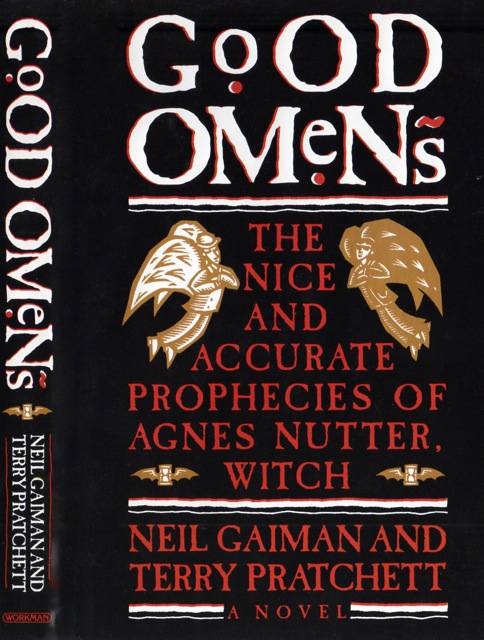
                  Good Omens is Terry Pratchett and Neil Gaiman's 1990 comic fantasy novel in which an angel and a demon, both grown fond of life on Earth, try to head off an apocalypse foretold in a seventeenth-century witch's uncannily accurate prophecies, complicated by the fact that no one can find the misplaced Antichrist. Paired with it here is The Quite Nice and Fairly Accurate Good Omens: Script Book, a companion volume collecting the screenplay for the television adaptation rather than a second novel.

                • Cover of Eddie Bear
                  Eddie Bear

                  series · 2 books · 2002

                  similar byfunnywhimsicalhumorfantasy+2 more

                • Cover of The Fandom of the Operator
                  The Fandom of the Operator

                  Robert Rankin · standalone novel · 2001

                  similar bybritish islesfunnywhimsicalhumorfantasy

                  Gary Cheese is twenty-two years of age and works for British Telecom as an operator. Gary's hobbies include watching TV, walking his dog Princey, going down the pub with his mates, and attempting to re-animate the dead. He hasn't been having too much success with the latter so far. But Gary's heard a rumour. According to this bloke he met down the pub, there exists certain telecommunications technology that can actually let you speak to the dead. Apparently it's been in operation for years. FLATLINE, it's called. As in CHATLINE, but for the dead. Apparently they ran all these ads on the TV a few years ago to prepare the public for it. Those ones about having a one-to-one with famous dead people. But apparently something went very wrong: the dead had certain things to say to the living that the powers that be couldn't allow to be heard. Or something. Apparently. Gary's determined to find out the truth. Gary's a bit of a fan boy and Gary really wants to speak to all of his dead heroes. And Gary will have the time of his life when he talks to the dead.

                • Cover of Laundry Files
                  Laundry Files

                  series · 22 books · 2004

                  similar bybritish islesscience fiction+2 more

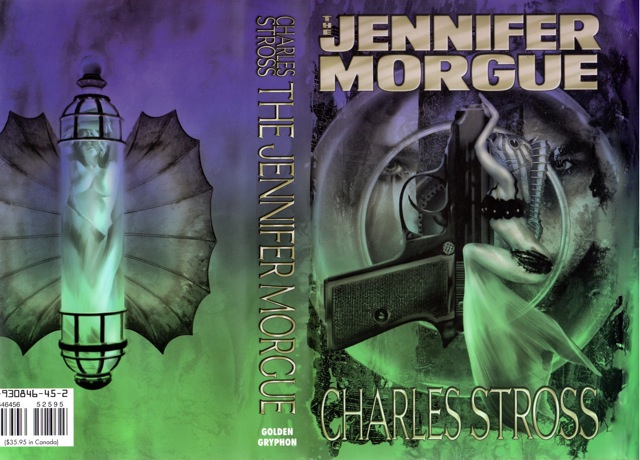
                  The Laundry Files is a series of novels by British writer Charles Stross. They mix the genres of Lovecraftian horror, spy thriller, science fiction, and workplace humour. Their main character for the first five novels is "Bob Howard", a one-time I.T. consultant turned occult field agent. Howard is recruited to work for the Q-Division of SOE, otherwise known as "the Laundry", the British government agency which deals with occult threats. "Magic" is described as being a branch of applied computation (mathematics), therefore computers and equations are just as useful as, and perhaps more potent than, classical spellbooks, pentagrams, and sigils for the purpose of influencing ancient powers and opening gates to other dimensions. These occult struggles happen largely out of view of the public, as the Laundry seeks to keep the methods for contacting such powers under wraps. There are also elements of dry humour and satirisation of bureaucracy.

                • Cover of Matilda
                  Matilda

                  Roald Dahl · standalone novel · 1988

                  similar bybritish islesfunnyfantasy+1 more

                  Matilda is a 1988 children's novel by British author Roald Dahl. It was published by Jonathan Cape. The story features Matilda Wormwood, a precocious child with uncaring parents, and her time in a school run by the tyrannical headmistress Miss Trunchbull.

                • Cover of At Swim-Two-Birds
                  At Swim-Two-Birds

                  Flann O'Brien · standalone novel · 1939

                  similar bybritish islesbooks and readingfunnymetafiction+1 more

                  At Swim-Two-Birds is a 1939 novel by Irish writer Brian O'Nolan, writing under the pseudonym Flann O'Brien. It is widely considered to be O'Brien's masterpiece, and one of the most sophisticated examples of metafiction.

                • Cover of Nightmare at the Book Fair
                  Nightmare at the Book Fair

                  Dan Gutman · standalone novel · 2008

                  similar bybooks and readingfunnywhimsicalhumorfantasy

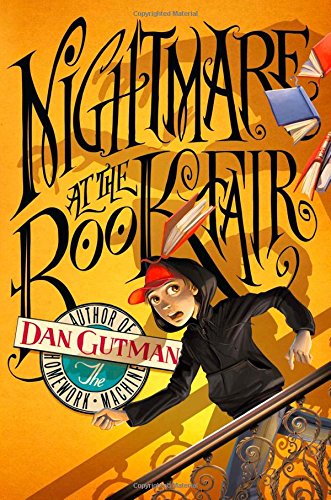
                  When fifth-grader Trip Kindleman, who does not like to read very much, is hit on the head by a heavy box and becomes a character in a series of different books--from a sports story to a science fiction novel to an adventure tale--his view of reading is changed forever. When fifth-grader Trip, who does not like to read very much, is hit on the head by a heavy box and becomes a character in a series of different books, from a sports story to a science fiction novel to an adventure tale, his view of reading is changed.

                • Cover of The Android's Dream
                  The Android's Dream

                  series · 2 books · 2006

                  similar byfunnypolitical intriguescience fictionhumor

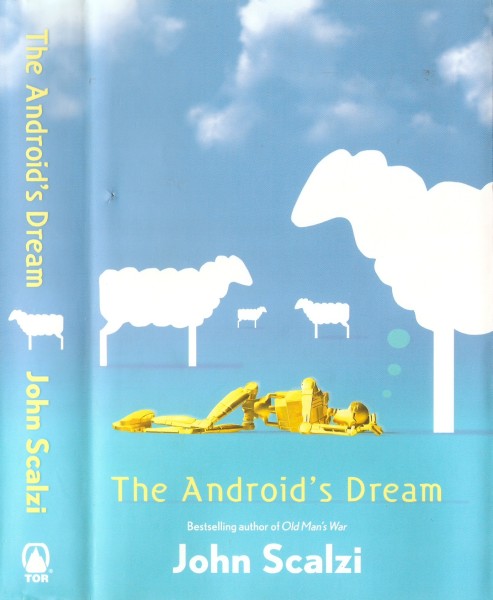
                  A minor diplomatic insult with a genetically engineered sheep breed spirals into a full interstellar crisis when the last surviving specimen of the 'Android's Dream' breed, needed for a critical ceremony with the alien Nidu, turns out to have been hunted to extinction by a Nidu faction bent on provoking war. John Scalzi's The Android's Dream follows ex-soldier Harry Creek as the hunt for a replacement leads him to Robin Baker, an ordinary woman carrying hidden sheep DNA that makes her the key to avoiding a war. It's a standalone comic space opera rather than an ongoing series.

                • Cover of Nursery Crimes
                  Nursery Crimes

                  series · 2 books · 2005

                  similar byfunnymystery & detectivefantasy+3 more

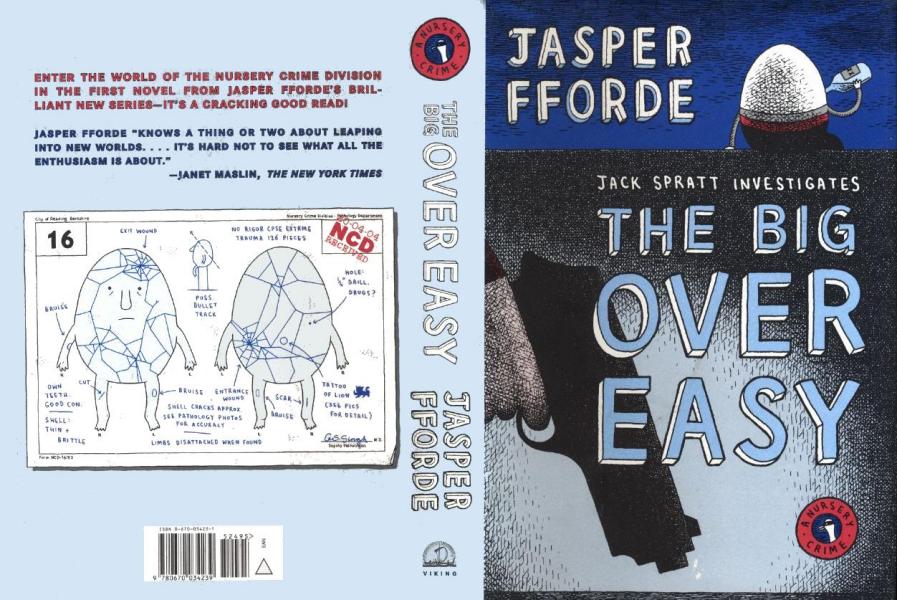
                  In an alternate Reading, England, where nursery-rhyme and fairy-tale characters live as ordinary if eccentric citizens, Detective Inspector Jack Spratt of the Nursery Crime Division investigates cases that keep colliding with their source material. The Big Over Easy turns Humpty Dumpty's fall into a murder investigation; The Fourth Bear follows with the Gingerbread Man as a serial killer. Jasper Fforde plays the premise for satire and wordplay as much as plot, in the same absurdist vein as his Thursday Next novels.

                • Cover of Cornelius Murphy
                  Cornelius Murphy

                  series · 4 books · 1993

                  similar bybritish islesfunnywhimsicalhumorfantasy

                • Cover of The Stone of Chastity
                  The Stone of Chastity

                  Margery Sharp · standalone novel · 1940

                  similar bybritish islesfunnyhumorfantasy

                  Humorous Fantasy. A brook in the small village of Gillenham has a stone in it that will reveal the virtue, or lack of virtue, of any woman who steps on it.

                • Cover of A Midsummer Tempest
                  A Midsummer Tempest

                  Poul Anderson · standalone novel · 1974

                  similar bybritish islespolitical intriguefantasy+2 more

                  A Midsummer Tempest is a 1974 alternative history fantasy novel by Poul Anderson. In 1975, it was nominated for the World Fantasy Award for Best Novel and the Nebula Award for Best Novel and won the Mythopoeic Award.

                • Cover of Brentford
                  Brentford

                  series · 9 books · 1981

                  similar bybritish islesfunnyhumorfantasy+1 more

                  Robert Rankin's Brentford novels are set in a surreal, comic version of the London suburb of Brentford, mixing pub-culture farce with conspiracy theories, aliens, time travel, and increasingly absurd apocalyptic threats. The Antipope opens the loosely connected sequence, which follows an overlapping cast of local eccentrics across bar-room schemes that spiral into cosmic-scale nonsense. It began in 1981 and continued, on and off, for nearly three decades.