Loreful
HomeDiscover
Search series, authors…⌘K
Loreful

Reading orders for SF/F series and shared universes — with your place kept in every one.

Explore

UniversesSeriesWorksAuthorsAtlas

Help

FAQAboutSite map

Account & legal

Sign inCreate accountPrivacyTerms

Data

Built on ISFDB, Wikipedia, Wikidata and Open Library. Curated reading orders carry their reasoning on the page; the rest follow publication order. Data sources & licenses

© Loreful · data: ISFDB · CC BY

More like Songmaster

anchored on:science fictionmusicfar futurecoming of ageidentitypolitical intrigue+1 more

but

Mood

The mood the book leaves you in.

  • The reading experience is propelled by journeys, exploration, and physical risk; excitement and forward momentum dominate over dread or introspection.
  • Joy and loss are deliberately mixed; the resolution grants characters something real while taking something else away, leaving warmth and sorrow together.
  • The book demands work from the reader — dense prose, difficult structure, unfamiliar ideas, or morally uncomfortable material — as part of its intended effect.
  • Grim events, cruelty, or despair dominate the atmosphere, and the book does not soften them with comfort or comic relief.
  • The atmosphere is quietly unsettling — wrongness, unease, and the uncanny pervade the book without necessarily escalating into overt horror.
  • The book is built to move the reader; character feeling is foregrounded and major scenes aim at a strong emotional response.
  • Humor is a primary aim and the prose plays for laughs — comic situations, wit, or dialogue produce sustained comedy, not occasional levity.
  • The book insists that things can improve; effort and decency are shown to matter, and the arc bends toward better outcomes even through hardship.
  • The book teaches as it goes — real facts, history, science, or craft are conveyed in enough depth that learning is part of the reading experience.
  • The book is designed to uplift and motivate, presenting perseverance or achievement in a way that invites the reader to aspire or act.
  • The overall register is cheerful and easygoing; stakes are kept gentle and the book avoids dwelling on pain or dread.
  • Withheld information drives the experience; the book sustains enigmas and secrets the reader wants resolved, whatever its genre.
  • The book is contemplative and inward-looking, giving more weight to thought, memory, and meaning than to external events.
  • The book works as comfort reading — low tension, a soothing pace, and an atmosphere the reader can unwind in.
  • Grief, loss, or melancholy set the dominant register, and the book lets sorrow stand rather than resolving it into comfort.
  • Sustained suspense is the point; the book keeps the reader braced for what happens next through danger, pressure, or impending revelation.
  • Playful invention and charm define the register — fanciful conceits, light absurdity, and a narration that delights in its own oddity.

About

What the story runs on.

  • Stories in which extraterrestrial beings are central — as characters, cultures, or the object of the plot.
  • Stories structured as a quest — a journey undertaken to find, deliver, or destroy something of great import.
  • Stories in which staying alive against nature, catastrophe, or scarcity is the central problem.
  • Stories of lovers kept apart by law, family, faith, or station, where the obstacle to love is the plot.
  • Stories in which a friendship — its making, testing, or loss — is the emotional center.
  • Stories of growing up — a young protagonist crossing from childhood into adult knowledge and responsibility.
  • Stories about who a character truly is — self-discovery, doubled lives, and the search for a self.
  • Stories about mourning — living through the death of a loved one and what loss does to the survivors.
  • Stories in which a buried family truth — hidden parentage, crimes, or shames — surfaces and reorders the present.
  • Stories driven by maneuvering for power — factions, conspiracies, and statecraft conducted in shadow.
  • Stories in which war itself is the subject — combat, occupation, and what warfare does to soldiers and civilians.
  • Stories organized around investigating a killing — the case, the clues, and the pursuit of the killer, in any genre's clothing.

Shelf

Where it sits in the library.

    • Fiction built on magic or other supernatural elements that have no scientific explanation.
    • Secondary-world fantasy at large scale, where the fate of nations or the world turns on the protagonists' struggle.
    • Fantasy set in a recognizably modern city or contemporary world where the supernatural intrudes on everyday life.
    • Fantasy that blends in horror's atmosphere and imagery, keeping a fantastical frame around grim or frightening material.
    • Action-driven fantasy following warriors or rogues with personal stakes against sorcerous threats, rather than world-spanning conflicts.
    • Fantasy set in a real historical period or a close analogue of one, with magic woven into the era.
    • Fantasy in which protagonists cross from the ordinary world into another world through a portal or similar passage.
    • Fiction that retells or reworks a traditional fairy tale in a new form or setting.
    • Fantasy drawing directly on myths, legends, and folklore, retelling them or building on their figures and logic.
    • Fantasy of ghosts, vampires, shapeshifters, psychics, and similar phenomena, usually set in an otherwise ordinary world.
    • Fiction mixing science-fictional trappings with overtly magical or impossible elements in one setting.
    • Low-stakes fantasy emphasizing comfort, community, and everyday pleasures over conflict and peril.
    • Speculative fiction of pervasive moral ambiguity, violence, and cynicism that rejects heroic conventions — fantasy and SF alike.
      • Fiction that extrapolates from science and technology — future societies, space travel, or speculative inventions — within at least nominally natural laws.
      • Science fiction of interstellar scope — starships, galactic polities, and adventure across star systems.
      • Science fiction committed to scientific rigor, where technical plausibility constrains the story.
      • Science fiction centered on armed forces and warfare, told largely from a military point of view.
      • Science fiction of networked, corporate-dominated near futures, pairing high technology with social decay.
      • Science fiction styled on nineteenth-century steam-powered technology, often in a Victorian or pseudo-Victorian setting.
      • Fiction depicting an oppressive or catastrophic society, presented as a warning.
      • Fiction set after civilization's collapse, following survivors in the ruins of the old world.
      • Fiction in which characters move between past and future, and the mechanics or consequences of that travel drive the plot.
      • Fiction exploring a world where a historical event went differently and history diverged from ours.
      • Science fiction about humanity's first encounter and communication with an alien intelligence.
      • Science fiction in which extraterrestrial forces attack or occupy Earth and humanity resists.
      • Fiction whose primary aim is to frighten or unsettle the reader through dread, menace, or the monstrous.
      • Horror of vast, indifferent, incomprehensible entities before which humanity is insignificant, in the Lovecraft tradition.
      • Horror of decaying houses, buried family secrets, and oppressive atmosphere in the Gothic literary tradition.
      • Horror centered on hauntings and the returning dead.
      • Horror located in the mind — paranoia, obsession, and unreliable perception rather than external monsters.
      • Horror built around the reanimated dead and survival amid their outbreaks.
      • Horror defined by explicit, transgressive gore that refuses to cut away from violence.
      • Speculative fiction of the strange and uncanny that resists both natural explanation and standard genre categories.
      • Fiction organized around solving a crime or puzzle, typically following an investigator toward the identification of a culprit.
      • A puzzle-first mystery that lays out clues so the culprit's identity can be deduced before the reveal.
      • Crime fiction of moral ambiguity, fatalism, and hard-edged style, set among the corrupt and the doomed.
      • A mystery following the realistic routines of police work — forensics, interviews, and case-building.
      • A gentle mystery with an amateur sleuth, a small community, and violence kept off the page.
      • A mystery set in a past era, where the investigation works within that period's methods and society.
      • Fast-paced fiction driven by imminent danger, pursuit, or high-stakes conspiracy, built to sustain tension.
      • A thriller of espionage — agents, tradecraft, and intelligence services in conflict.
      • A thriller centered on lawyers and the courtroom, where litigation carries the suspense.
      • A thriller driven by detailed contemporary or near-future technology, often military or scientific.
      • A thriller whose tension comes from mental states and manipulation between characters rather than external action.
      • Fiction whose central plot is a romantic relationship and its development toward an emotionally satisfying resolution.
      • Romance in which one or both partners are supernatural beings, blending fantasy elements into the love story.
      • A fantasy-romance hybrid in which the romantic arc and the fantasy plot carry equal weight.
      • Romance set in a past era, with courtship shaped by the period's society and manners.
      • Romance set in the present day, without supernatural or historical elements.
      • Fiction set in a real past period, where the historical setting materially shapes characters and events.
        • General and literary fiction emphasizing prose style, character interiority, or formal ambition over genre plot conventions.
        • Fiction in a realistic world where magical events occur and are treated as ordinary, in the tradition of Latin American literature.
        • Fiction that ridicules people, institutions, or society in order to criticize them.
        • Fiction of dreamlike, irrational imagery and logic that breaks from realistic representation.
        • Fiction that plays with narrative convention through metafiction, fragmentation, and self-reference.
        • Fiction propelled by journeys, exploration, and physical peril, where action and survival carry the plot.
        • Adventure fiction of ships and seafaring — naval engagements, voyages, and life at sea.
        • Fiction of the American frontier West — gunmen, ranchers, and lawmen, typically in the late nineteenth century.
        • Fiction centered on soldiers, campaigns, and the experience of warfare, historical or imagined.
          • Fiction written primarily to amuse, using comedic situations, wit, or parody as its organizing principle.
            • Multi-generational fiction following a family or dynasty across decades, with inheritance and kinship as the through-line.
              • Fiction whose world runs on explicit game mechanics — levels, stats, and skills that characters can see and exploit.
                • Fiction about costumed or superpowered heroes and their conflicts with comparable villains.

                Practical

                How long a commitment, whether it stands alone, and whether it has finished.

                Tap a chip to ask for it · tap again to rule it out · once more to clear. Numbers show what would be left.

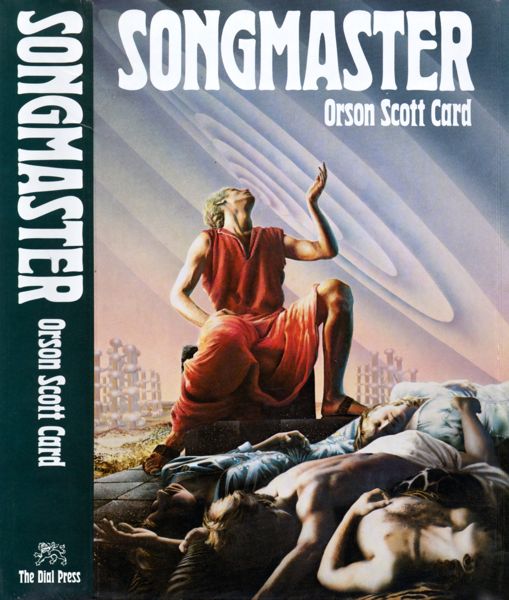
                • Cover of Songmaster
                  Songmaster

                  series · 3 books · 1978

                  similar byscience fictionfar futuremusic+5 more

                  Ansset is a boy with a singing voice so perfect it can reach straight into people's emotions, raised from infancy at the Songhouse to become a 'Songbird' -- a living gift bestowed on the powerful until he comes of age. Orson Scott Card's Songmaster follows Ansset once he's given to the ambitious young emperor of a Rome-like galactic empire, where his voice becomes a tool of influence and vulnerability in equally dangerous measure. The novel grew out of Card's earlier stories 'Mikal's Songbird' and 'Songhouse,' which the catalog also lists under this same series.

                • Cover of The Dreaming Jewels
                  The Dreaming Jewels

                  Theodore Sturgeon · standalone novel · 1950

                  similar byscience fictionemotionalour worldidentity+1 more

                  The Dreaming Jewels (1950), also known as The Synthetic Man, is a science fiction novel by American writer Theodore Sturgeon. It was his first published novel.

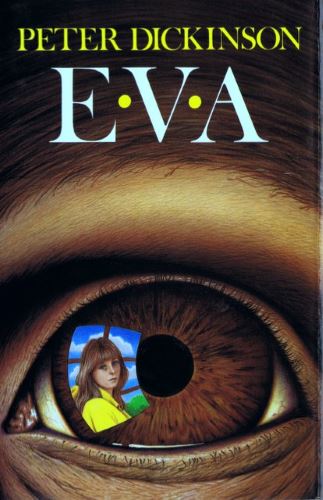
                • Cover of Eva
                  Eva

                  Peter Dickinson · standalone novel · 1988

                  similar byscience fictionemotionalour worldcoming of ageidentity

                  From the back cover: "Thirteen-year-old Eva wakes up in the hospital unable to remember anything since the picnic on the beach. Her mother leans over the bed and begins to explain. A traffic accident, a long coma... But there is something, Eva senses, she is not being told, some other price she must pay to be alive at all. What have they done, with their amazing medical technology, to save her?"

                • Cover of The Speed of Dark
                  The Speed of Dark

                  Elizabeth Moon · standalone novel · 2002

                  similar byscience fictionemotionalour worldidentity+1 more

                  From the Penguin Random House website In the near future, disease will be a condition of the past. Most genetic defects will be removed at birth; the remaining during infancy. Lou Arrendale, a high-functioning autistic adult, is a member of the lost generation, born at the wrong time to reap the rewards of medical science. He lives a low-key, independent life. But then he is offered a chance to try a brand-new experimental "cure" for his condition. With this treatment Lou would think and act and be just like everyone else. But if he was suddenly free of autism, would he still be himself? Would he still love the same classical music — with its complications and resolutions? Would he still see the same colors and patterns in the world—shades and hues that others cannot see? Most important, would he still love Marjory, a woman who may never be able to reciprocate his feelings? Now Lou must decide if he should submit to a surgery that might completely change the way he views the world ... and the very essence of who he is.

                • Cover of Flowers for Algernon
                  Flowers for Algernon

                  Daniel Keyes · standalone novel · 1966

                  similar byscience fictionemotionalcoming of ageidentity

                  A man with a low IQ becomes the subject of an experimental medical procedure which raises his IQ well over genius level.

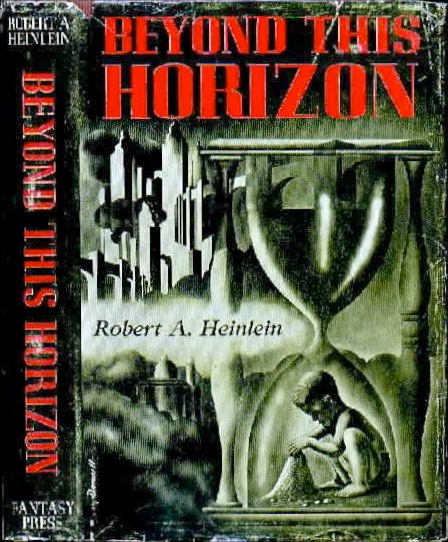
                • Cover of Beyond This Horizon
                  Beyond This Horizon

                  Robert A. Heinlein · standalone novel · 1948

                  similar byscience fictionour worldfar future+2 more

                  From the front flap of a 2001 Baen reprint: "Utopia has been achieved. For centuries, disease, hunger, poverty, and war have been things found only in the history tapes. And applied genetics has given men and women the bodies of athletes and a lifespan of over a century. They should all have been very happy... But Hamilton Felix is bored. And he is the culmination of a star line, each of his last thirty ancestors chosen for superior genes. Hamilton is, as far as genetics can produce one, the ultimate man. And this ultimate man can see no reason why the human race should survive, and has no intention of continuing the pointless comedy. However, Hamilton's life is about to become less boring. A secret cabal of revolutionaries who find utopia not just boring, but desperately in need of leaders who know just What Needs to be Done, are planning to revolt and put themselves in charge. Knowing of Hamilton's disenchantment with the modern world, they have recruited him to join their Glorious Revolution. Big mistake! The revolutionaries are about to find out that recruiting a superman was definitely not a good idea..."

                • Cover of The Host
                  The Host

                  Stephenie Meyer · standalone novel · 2008

                  similar byscience fictionemotionalour worldidentity

                  The earth has been invaded by a species that take over the minds of their human hosts while leaving their bodies intact, and most of humanity has succumbed. But Melanie Stryder refuses to fade away. Wanderer, the invading "soul" who has been given Melanie's body, knew about the challenges of living inside a human: the overwhelming emotions, the too vivid memories. But there was one difficulty Wanderer didn't expect: the former tenant of her body refusing to relinquish possession of her mind. Melanie fills Wanderer's thoughts with visions of the man Melanie loves--Jared, a human who still lives in hiding. Unable to separate herself from her body's desires, Wanderer yearns for a man she's never met. As outside forces make Wanderer and Melanie unwilling allies, they set off to search for the man they both love.--From publisher description.

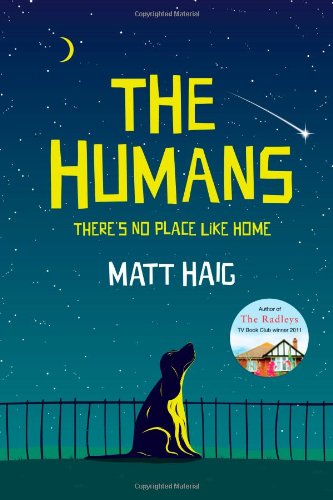
                • Cover of The Humans
                  The Humans

                  Matt Haig · standalone novel · 2013

                  similar byscience fictionemotionalour worldidentity

                  When an extraterrestrial arrives on Earth, his first impressions of humans are less than positive. Taking the form of Professor Andrew Martin at Cambridge University, the visitor is eager to complete his task and hurry back to his own utopian planet. Disgusted by the way humans look, what they eat, their capacity for murder and war, he is equally baffled by the concepts of love and family. But as time goes on, he starts to reconsider.

                • Cover of Stranger in a Strange Land
                  Stranger in a Strange Land

                  Robert A. Heinlein · standalone novel · 1961

                  similar byscience fictionour worldidentitycoming of age

                  Stranger in a Strange Land is a 1961 science fiction novel by the American author Robert A. Heinlein. It tells the story of Valentine Michael Smith, a human who comes to Earth in early adulthood after being born on the planet Mars and raised by Martians, and explores his interaction with and eventual transformation of Terran culture.

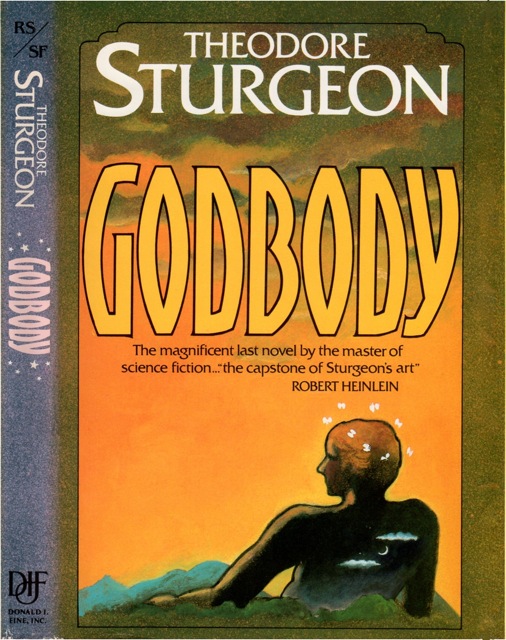
                • Cover of Godbody
                  Godbody

                  Theodore Sturgeon · standalone novel · 1986

                  similar byscience fictionemotionalour worldidentity

                  Godbody is a science fiction novel by American writer Theodore Sturgeon, published posthumously in 1986. A foreword, "Agape and Eros: The Art of Theodore Sturgeon", was contributed by Robert A. Heinlein and an afterword was contributed by Stephen R. Donaldson.

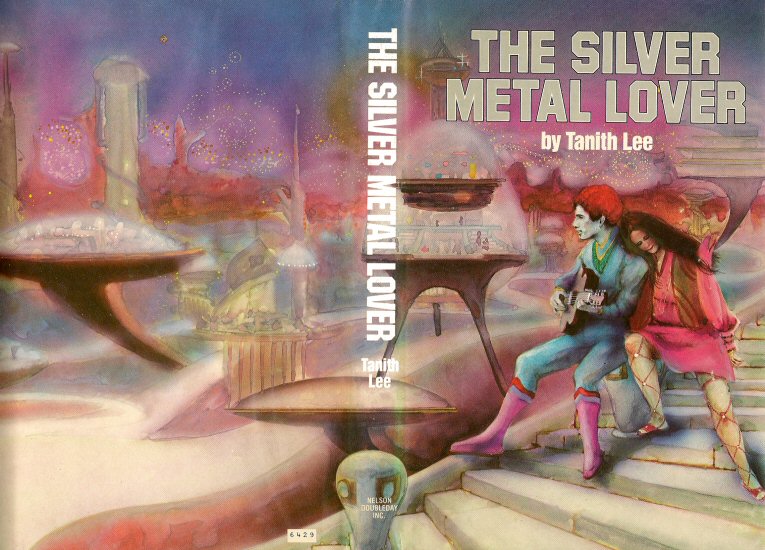
                • Cover of Silver Metal Lover
                  Silver Metal Lover

                  series · 2 books · 1981

                  completed

                  similar byscience fictionemotionalour worldidentity

                  The S.I.L.V.E.R. series is a fantasy novel series by Tanith Lee. The Silver Metal Lover, published in 1981, is the first in the series. Metallic Love, published in 2005, is the second novel.

                • Cover of No Enemy But Time
                  No Enemy But Time

                  Michael Bishop · standalone novel · 1982

                  similar byscience fictionemotionalour world+1 more

                  No Enemy But Time is a 1982 science fiction novel by Michael Bishop. It won the 1982 Nebula Award for Best Novel, and was also nominated for the 1983 John W. Campbell Memorial Award. It was included in David Pringle's book Science Fiction: The 100 Best Novels.

                • Cover of When the Sleeper Wakes
                  When the Sleeper Wakes

                  H. G. Wells · standalone novel · 1899

                  similar byscience fictionour worldfar futurepolitical intrigue

                  Graham, an insomniac Englishman in 1890s London, takes a course of sleep-inducing drugs and falls into a coma that lasts two centuries. He wakes in the year 2100 to find his investments have compounded, through a ruling body called the White Council, into effective ownership of most of the world's wealth and power, making him, on paper, humanity's master, and in practice, its prisoner, held under guard while the Council governs in his name. A rebel faction led by a man named Ostrog frees him, hoping to use his symbolic authority to spark an uprising against the Council. An early H. G. Wells dystopia about inherited power and manufactured consent.

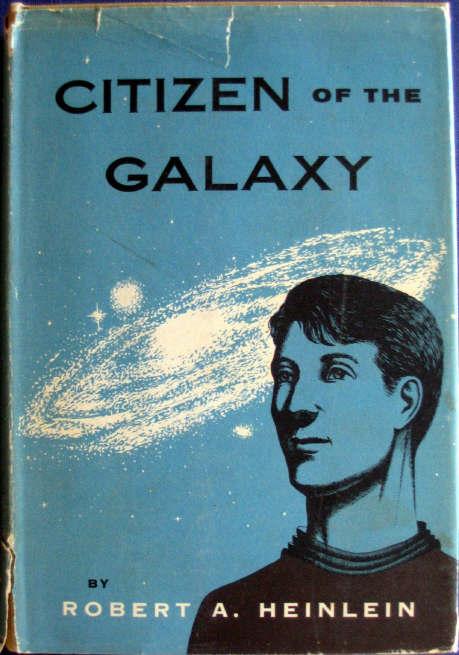
                • Cover of Citizen of the Galaxy
                  Citizen of the Galaxy

                  Robert A. Heinlein · standalone novel · 1957

                  similar byscience fictionfar futurecoming of ageidentity+1 more

                  On a planet far distant from Earth, a lame beggar buys a young boy slave who has forgotten his origins. The beggar is more than he seems, and gives the boy an extensive education while employing him as an observer of activity in their city. Years later, the beggar is captured by the government, and the youth must escape the planet.

                • Cover of Matched
                  Matched

                  series · 3 books · 2010

                  similar byscience fictionfar future+4 more

                  Ally Condie's dystopian trilogy follows Cassia, a teenager in a rigidly controlled Society that assigns citizens' spouses, careers, and even manner of death, after a glitch shows her a second face at her own Matching ceremony. Across Matched, Crossed, and Reached, her quiet doubt about the Society's choices grows into open resistance against the system that shaped her whole life.

                • Cover of Triton
                  Triton

                  Samuel R. Delany · standalone novel · 1976

                  similar byscience fictionfar futureidentitypolitical intrigue+1 more

                  Trouble on Triton: An Ambiguous Heterotopia (1976) is a science fiction novel by American writer Samuel R. Delany. It was nominated for the 1976 Nebula Award for Best Novel, and was shortlisted for a retrospective James Tiptree, Jr. Award in 1995. It was originally published under the shorter title Triton.

                • Cover of Passage
                  Passage

                  Connie Willis · standalone novel · 2001

                  similar byscience fictionemotionalour world

                  Passage is a science fiction novel by Connie Willis, published in 2001. The novel won the Locus Award for Best Novel in 2002, was shortlisted for the Nebula Award in 2001, and received nominations for the Hugo, Campbell, and Clarke Awards in 2002.

                • Cover of The Lost Girl
                  The Lost Girl

                  Sangu Mandanna · standalone novel · 2012

                  similar byscience fictionemotionalour worldcoming of ageidentity

                  "Fifteen-year-old Eva is the clone of a girl living far, far away on another continent--and when this 'other' dies, Eva must step in and take over her life"--Provided by publisher.

                • Cover of Ender Wiggin
                  Ender Wiggin

                  series · 14 books · 1977

                  part of Ender's Game Universe

                  similar byscience fictionfar future+2 more

                  Orson Scott Card's Ender's Game (1985, expanded from his 1977 novella) follows child prodigy Andrew "Ender" Wiggin as he is recruited into a military training program built to prepare Earth's defenses for an anticipated third war against an insectoid alien species known as the Formics. The saga continues years later through Speaker for the Dead and Xenocide, following an older Ender as he confronts the moral weight of his role in that earlier conflict, and concludes the core arc in Children of the Mind, with Ender in Exile filling in the years between the first two books. Set within the wider Ender's Game universe, the series shifts from military coming-of-age story to slower, more philosophical science fiction as it progresses.

                • Cover of Solar Lottery
                  Solar Lottery

                  Philip K. Dick · standalone novel · 1955

                  similar byscience fictionour worldfar futurepolitical intrigue

                  Solar Lottery is a 1955 science fiction novel by American writer Philip K. Dick. It was his first published novel and contains many of the themes present in his later work. It was also published in altered form in the UK as World of Chance. The main story is about a man named Ted Benteley who lives in a strange world, dominated by percentages and the lottery. Lotteries are used to choose the next leader as well as a new assassin, whose job is to try to kill the leader or "Quizmaster". Everybody in society has the opportunity to be selected as a leader or an assassin. Benteley unexpectedly gets chosen to be a member of the committee trying to assassinate the new Quizmaster and he must decide what he is going to do.

                • Cover of This Perfect Day
                  This Perfect Day

                  Ira Levin · standalone novel · 1970

                  similar byscience fictionour worldfar futureidentity

                  This Perfect Day is a science fiction novel by American writer Ira Levin, about a technocratic dystopia. Levin won a Prometheus Award in 1992 for this novel. This Perfect Day is one of two Levin novels yet to be adapted to film.

                • Cover of Riddley Walker
                  Riddley Walker

                  Russell Hoban · standalone novel · 1980

                  similar byscience fictionour worldfar futurecoming of age

                  WorldCat: Composed in an English which has never been spoken and laced with a storytelling tradition that predates the written word, RIDDLEY WALKER is the world waiting for us at the bitter end of the nuclear road. It is desolate, dangerous and harrowing, and a modern masterpiece.

                • Cover of The Einstein Intersection
                  The Einstein Intersection

                  Samuel R. Delany · standalone novel · 1967

                  similar byscience fictionfar futureidentity+2 more

                  The Einstein Intersection is a 1967 science fiction novel by Samuel R. Delany. The title is a reference to Einstein's Theory of Relativity connecting to Kurt Gödel's Constructible universe, which is an analogy to science meeting philosophy. The original publisher, Ace Books, changed Delany's originally intended title from A Fabulous, Formless Darkness for commercial reasons.

                • Cover of The Werewolf Principle
                  The Werewolf Principle

                  Clifford D. Simak · standalone novel · 1967

                  similar byscience fictionour worldfar futureidentity

                  From the back cover of the first DAW printing: "Andrew Blake, found in a space capsule on a distant planet, was brought back to an unfamiliar Earth, where antigravity devices had replaced the wheel and houses talk and even fly! Yet nothing was as strange as Blake's own feelings. Tormented by eerie sensations and a loss of memory, he didn't know who he really was nor exactly where he came from. His destiny only began to grow frighteningly clear when he met a weird, tassel-eared creature who darkly hinted at the truth about Blake's origins. Slowly Blake became aware of the long hushed-up "Werewolf Principle," a scientific theory buried in the past, which held the key to Blake's own fate - and the future of the human race..."