More like Souldancer
but
- Stephen King multiverse
universe46 books1967
Start hereThe Gunslinger · Start here
similar bydark+3 more
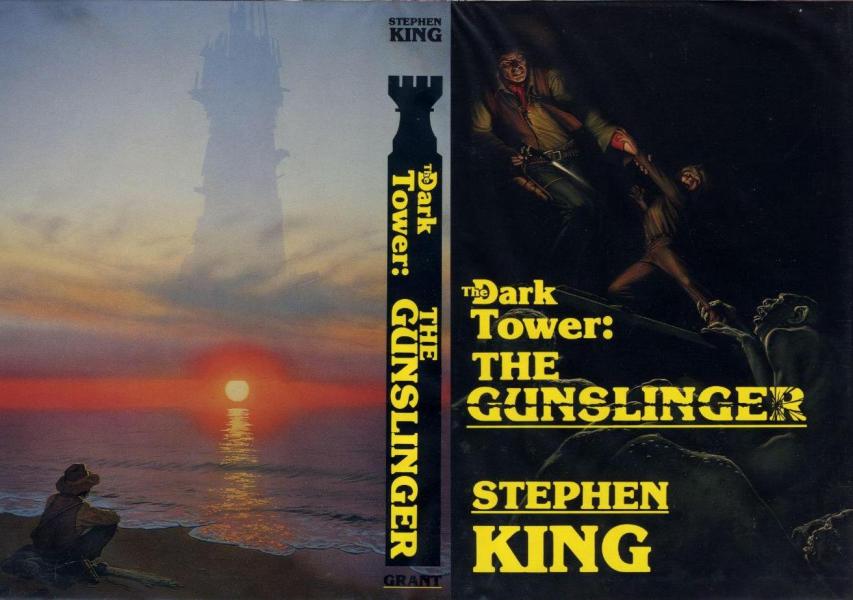
The man in black fled across the desert, and the gunslinger followed. So begins the long walk of Roland Deschain, last of an order of knight-errant pistoleers, across a land that has "moved on" — where the compass points drift, dead machines rot toward sentience, and the weave of what's real wears thin. His quest is the Dark Tower itself: a spire standing at the hub of every world that exists, the linchpin that holds all of them back from ruin. Roland's road runs eight volumes, from The Gunslinger through the closing Dark Tower, with the later, interleaved tale The Wind Through the Keyhole folding a story-within-a-story back into his youth. Along the way he draws a ka-tet — a fellowship bound by fate, not choosing — through doorways between worlds: a heroin-shackled New Yorker, a woman of two minds, a boy who dies twice. The Tower is also the secret axle around which the wider shelf of King's work turns; threads from The Stand, 'Salem's Lot and beyond wind quietly toward it. Expect a mongrel of Western, high fantasy, horror and decayed science fiction, told in a dusty, incantatory dialect all its own — ka, thankee-sai, the world that has moved on. This is King at his most mythic and most personal, a decades-spanning circle that rewards a patient reader. Begin at the beginning: The Gunslinger, then walk forward in publication order. There are other worlds than these — but this door opens first.
- New Crobuzon
series4 books2000
similar bydarksecondary world+3 more
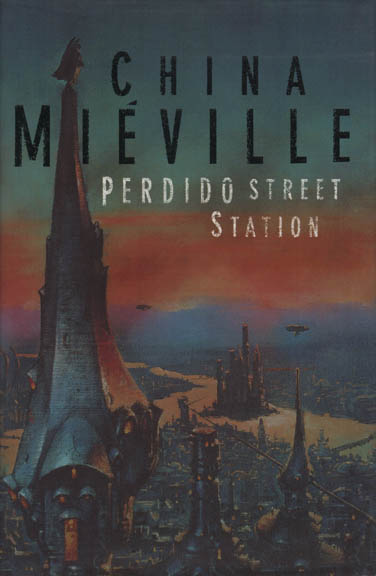
The New Crobuzon books are three standalone novels by China Miéville set in and around New Crobuzon, a vast, corrupt industrial city in his invented world of Bas-Lag where magic, biopunk technology, and several sentient species coexist. Perdido Street Station follows a renegade scientist and his lover after an experiment unleashes something monstrous on the city, while The Scar and Iron Council return to the same setting with different casts and only loose continuity between books.
- The Dark World
Henry Kuttnerstandalone novel1965
similar bysecondary worldadventurousscience fantasy+3 more
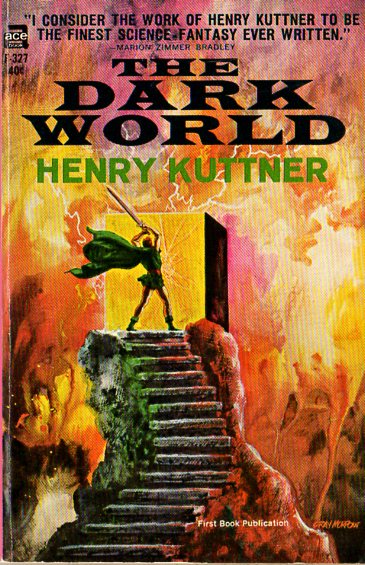
The Dark World is a science fantasy novel credited to Henry Kuttner, although his wife C. L. Moore may have been an uncredited collaborator, or possibly even the author. The novel was first published in the July 1946 issue of Startling Stories, then reprinted in the Winter 1954 issue of Fantastic Story Magazine. Its first book edition was issued by Ace in 1965, followed by a British edition by Mayflower Books in 1966. A French translation appeared in 1972. The novel was reprinted in full in Issue #5 of Amberzine in 1992, and also collected in a 1997 paperback omnibus, The Startling Worlds of Henry Kuttner. Roger Zelazny, author of The Chronicles of Amber, credits this book as being one of his primary influences during his youth.
- Iron Widow
series2 books2021
similar bydarksecondary worldrebellion and revolution+4 more
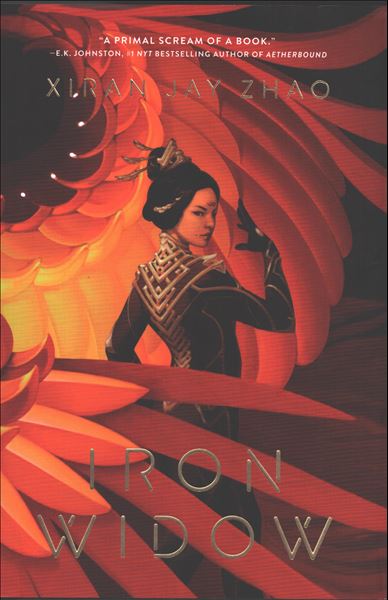
Xiran Jay Zhao's Iron Widow reimagines the rise of Chinese Empress Wu Zetian as a mecha-piloting heroine in Huaxia, a futuristic reinvention of Medieval China. Heavenly Tyrant continues the story as the second book in this young-adult science-fantasy duology.
- The Courier's Daughter Trilogy
series3 books2012
similar bysecondary worldscience fiction+3 more
The Courier's Daughter Trilogy is C. J. Redwine's YA fantasy series: Defiance (2012), Deception and Deliverance. Set in a walled, post-collapse city ruled by rigid survival laws, it follows a young woman searching for her missing father against the city's authorities and the monstrous forces beyond its walls. The trilogy follows one continuous search and its fallout across all three books.
- Gor
series41 books1966
similar bydarksecondary worldscience fantasy+1 more
Gor is the fictional setting for a series of sword and planet novels written by philosophy professor John Lange, writing as John Norman. The setting was first described in the 1966 novel Tarnsman of Gor. The series is inspired by science fantasy pulp fiction works by Edgar Rice Burroughs, such as the Barsoom series. It also includes erotica and philosophical content. The Gor series repeatedly depicts men abducting and physically and sexually brutalizing women, who grow to enjoy their submissive state. According to The Encyclopedia of Science Fiction, Norman's "sexual philosophy" is "widely detested", but the books have inspired a Gorean subculture.
- Birthgrave
series3 books1975
completed
similar bydarksecondary world+2 more
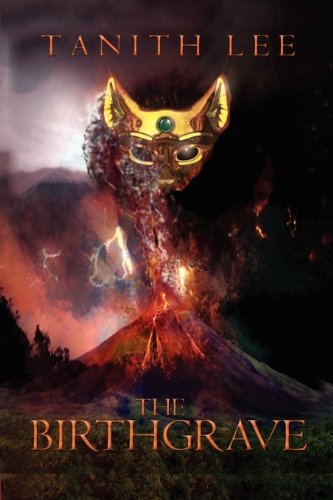
Tanith Lee's Birthgrave trilogy (The Birthgrave, Vazkor Son of Vazkor, Quest for the White Witch, 1975-1978) opens with an amnesiac woman waking inside a volcano with no memory of who she is, and follows her journey through a brutal, quasi-medieval world in search of her identity, wielding strange powers she doesn't understand along the way. She eventually learns she is one of the last of the Old Ones, an ancient, nearly extinct people, and must reckon with the harm her own vanished civilization once did.
- Demon Cycle
series10 books2008
part of The Demon Cycle
similar bysecondary worlddemons+1 more
Peter V. Brett's Demon Cycle is set in a world where nightly demon attacks have driven humanity behind protective magical wards, following several point-of-view characters, including Arlen Bales and Leesha Paper, who each search for ways to fight back after centuries of retreat. The core story runs across five novels plus companion novellas.
- A Song of Ice and Fire
series14 books1996
part of World of Ice and Fire
similar bydarksecondary world
A Song of Ice and Fire is a series of high fantasy novels by the American author George R. R. Martin. Martin began writing the first volume, A Game of Thrones, in 1991, and published it in 1996. Martin, who originally envisioned the series as a trilogy, has released five out of seven planned volumes. The most recent entry in the series, A Dance with Dragons, was published in 2011. Since then, Martin has been working on the sixth novel, titled The Winds of Winter. A seventh novel, A Dream of Spring, is planned to follow.
- Who Fears Death
series5 books2010
similar bydarksecondary world+1 more
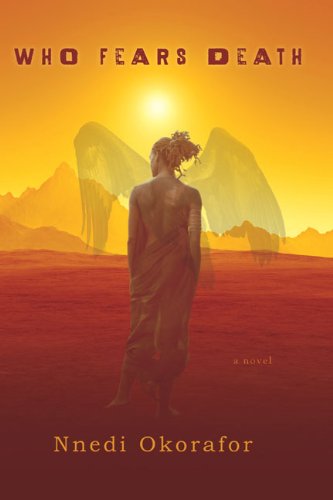
Nnedi Okorafor's award-winning novel is a work of science fantasy set in a post-apocalyptic Africa, engaging directly with themes of race and ethnicity through a speculative lens; it won the World Fantasy Award for Best Novel and the Carl Brandon Kindred Award. The Book of Phoenix, published five years later, serves as a prequel exploring the earlier origins of that same world.
- Incarceron
series2 books2007
similar by+5 more
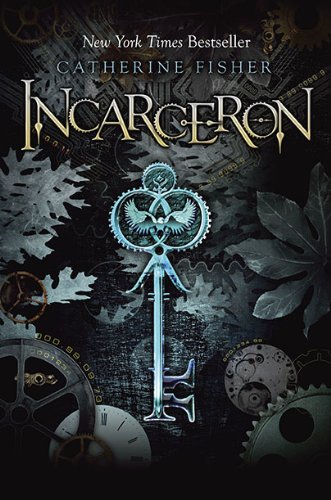
Incarceron follows two teenagers on opposite sides of an impossible prison: Finn, trapped inside the vast penal structure of Incarceron with no memory of how he got there, and Claudia, the warden's daughter living in a rigidly controlled world outside who comes to suspect Incarceron is more than a building. Catherine Fisher's 2007 novel blends fantasy and science fiction as the two search for a way to breach the boundary between them. The 2008 sequel, Sapphique, continues both characters' stories.
- Red Queen
series14 books2015
similar bydarksecondary worldrebellion and revolution
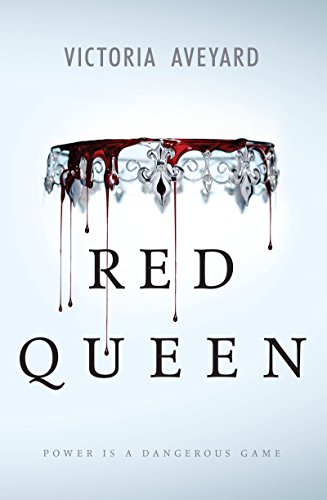
Red Queen is set in a world split between Reds, an oppressed servant class, and Silvers, a ruling class with superhuman abilities, where a Red girl discovers she has Silver-like powers of her own and is forced into the royal court to hide what she is. Victoria Aveyard's debut novel opens a four-book main sequence - Red Queen, Glass Sword, King's Cage, War Storm - plus the interstitial novella Cruel Crown and the epilogue novella Broken Throne. It's YA dystopian fantasy built around a class-based magic system and a slow-burn political rebellion.
- The Night Land
series5 books1912
similar by+2 more
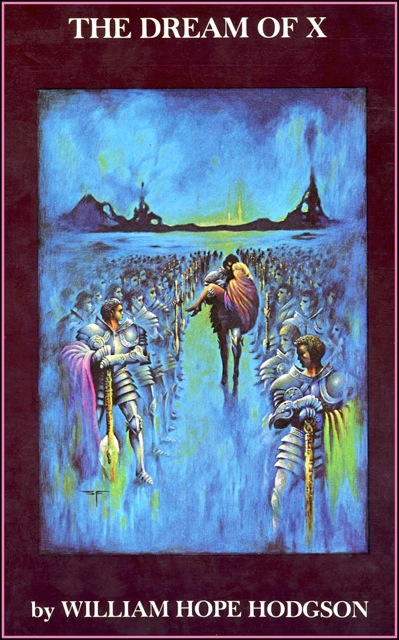
The Night Land is William Hope Hodgson's 1912 novel, set in an unimaginably distant future after the sun has died, where the last of humanity shelters inside a colossal pyramid called the Last Redoubt against unseen things that hunt in the surrounding dark. Framed as a seventeenth-century narrator's vision of that future, the story follows his far-future self on a journey out into the night to find a woman he believes is his lost love reincarnated. James Stoddard later produced The Night Land, A Story Retold (2011), a modernized retelling that adds conventional dialogue and character names to make Hodgson's dense, archaic prose more approachable.
- Malazan
universe36 books1999
Start hereMalazan Book of the Fallen · Start here
similar bydarksecondary world+1 more
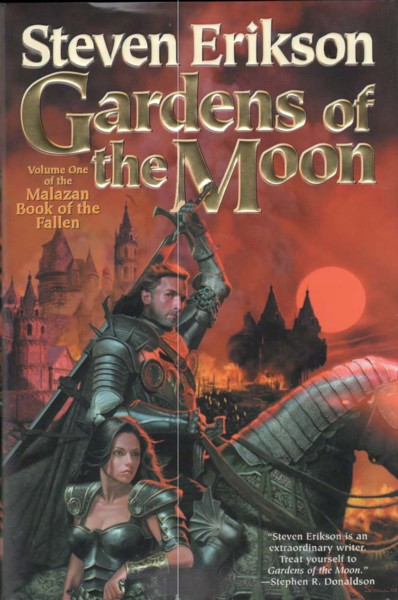
Pity the historian who tries to map this world; pity more the god who thinks he rules it. The Malazan Empire marches across continents on the boots of its common soldiers, and above them move Ascendants — mortals grown into something like gods, and gods worn thin as old coin. Magic is drawn from Warrens, roads of power threaded through reality; the dead keep their grudges; and every empire, however vast, is a wager against time. This is epic fantasy told from the mud, where a sapper cracking a joke weighs as much as an immortal settling a feud older than the human race. The world began as a tabletop campaign two friends built in the 1980s, and it still moves by two hands. Steven Erikson's ten-volume Malazan Book of the Fallen is the spine — Gardens of the Moon, Deadhouse Gates, Memories of Ice, on through The Crippled God — each book a near-standalone campaign that only later reveals how it locks together. Ian C. Esslemont walks the same years from a different vantage in his Novels of the Malazan Empire (Night of Knives, Return of the Crimson Guard onward). Around them stand the prequels: Erikson's Kharkanas Trilogy, archaic and elegiac, chronicling a doomed elder people, and Esslemont's brisker Path to Ascendancy, following two adventurers before they became legends. Erikson's Witness sequence carries the tale forward, and novellas of the genial necromancers Bauchelain and Korbal Broach supply the gallows comedy. Nothing is explained to you; comprehension is earned, and that is the pleasure. The themes run deep — compassion set against cruelty, the toll empires charge, civilizations that fall and are mourned. Begin where the saga does, with Erikson's Gardens of the Moon, and read the ten in publication order; the prequels are for the already-initiated. Trust that confusion is the price of entry.
- The Demon Cycle
universe18 books2008
Start hereDemon Cycle · Start here
similar bysecondary world+2 more
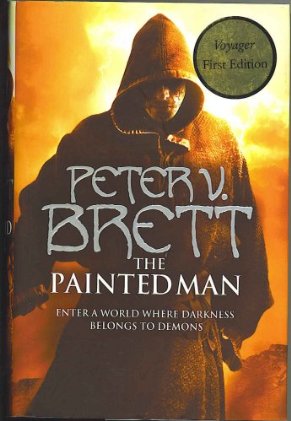
When the sun goes down, the ground breathes out murder. Mist seeps up from the Core, hardens into flame and rock and wind given teeth, and the only thing between a sleeping family and the corelings is a ring of wards — glyphs scratched in the dust that hold as long as the lines stay unbroken. Miss one stroke and you are meat by morning. This is Peter V. Brett's world: a humanity three centuries into a losing siege, huddled in the dark, waiting on a Deliverer half of them no longer believe will come. The Demon Cycle runs five volumes — The Warded Man (published in Britain as The Painted Man), The Desert Spear, The Daylight War, The Skull Throne, and The Core — following a messenger who tattoos the lost combat-wards into his own skin, a healer, a fiddler whose music turns demons aside, and a desert warlord who claims the prophecy for himself. Around them sit shorter works (Brayan's Gold, Messenger's Legacy, Barren), and beyond them the ongoing Nightfall Saga — The Desert Prince, The Hidden Queen — carrying the next generation into a war their parents did not finish. At its heart is a quarrel over faith and fire: the mannered Free Cities against fanatic, sand-hard Krasia, two would-be saviors who cannot both be right, and a lost art of war-magic that could turn prey into hunters. Begin with The Warded Man and read straight through in publication order; the novellas keep, for later, once the dark is under your skin.
- A Chorus of Dragons / Godslayer Cycle
series5 books2019
similar bydarksecondary worlddemons+2 more
The Ruin of Kings opens Jenn Lyons's series with Kihrin, an orphan raised on storybook tales of lost princes, who is claimed against his will as the missing son of a treasonous prince and finds the reality of that bloodline nothing like the stories promised: prisoner-like confinement, family power plays, and revelations that dragons, gods, demons, and prophecy don't work the way the tales said either. The five-book series is told through interleaved, non-chronological narration rather than a single straightforward timeline. Lyons continues the story through The Name of All Things, The Memory of Souls, The House of Always, and The Discord of Gods.
- Tales of the Flat Earth
series14 books1978
completed
similar bydarksecondary worlddemons+1 more
Tales from the Flat Earth is a fantasy series by British writer Tanith Lee. The novels take inspiration from One Thousand and One Nights and are similarly structured as interconnected stories. The series has been well received, and Death's Master, the second book in the series, won the British Fantasy Award for Best Novel in 1980.
- Winterlands
series7 books1986
similar bysecondary worlddemons+1 more
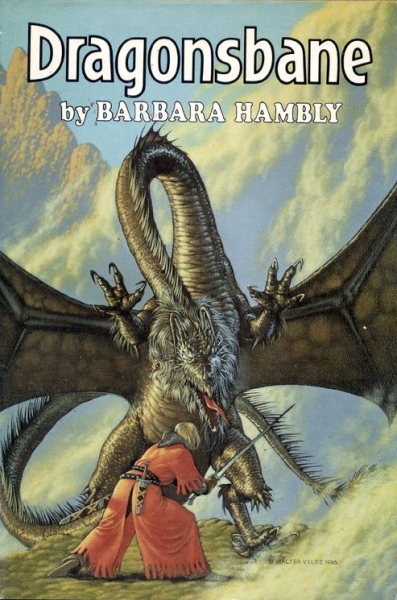
Winterlands follows John Aversin, a practical, unglamorous dragon-slayer, and Jenny Waynest, the self-taught village witch he loves, as their small corner of a forgotten kingdom keeps getting dragged into magic far bigger than either of them wanted. Barbara Hambly's series opens with Dragonsbane (1985), which deliberately undercuts the 'brave knight slays dragon' story it seems to promise, and continues across Dragonshadow, Knight of the Demon Queen, and Dragonstar as Jenny pursues real magical training. It favors domestic detail and moral complexity over conventional high-fantasy grandeur.
- The Iron Dragon's Daughter
series3 books1993
similar bydarkscience fantasy+2 more
The Iron Dragon's Daughter follows Jane, a human changeling enslaved in a factory that builds part-mechanical, part-magical dragons used as war machines, in a Faerie that runs on industrial-age technology as much as spellcraft. Michael Swanwick wrote it as a deliberately recursive, spiral narrative rather than a straight line, and returned to the same colliding fantasy-industrial world, though not the same plot, in The Dragons of Babel and The Iron Dragon's Mother. The three books share a setting and sensibility more than a continuing story.