More like Souls
anchored on:science fictionour worldmedievalfaith and religioneuropereflective
but
- Stranger in a Strange Land
Robert A. Heinleinstandalone novel1961
similar byscience fictionreflectivefaith and religionaliensour world
Stranger in a Strange Land is a 1961 science fiction novel by the American author Robert A. Heinlein. It tells the story of Valentine Michael Smith, a human who comes to Earth in early adulthood after being born on the planet Mars and raised by Martians, and explores his interaction with and eventual transformation of Terran culture.
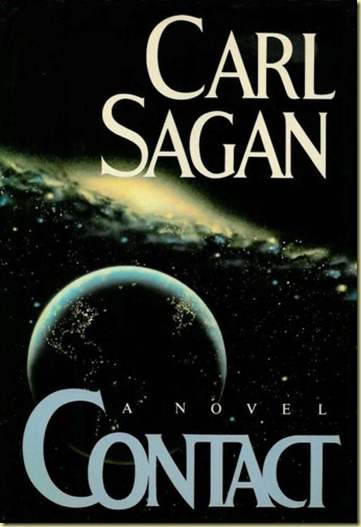
- Contact
Carl Saganstandalone novel1985
similar byscience fictionreflectivefaith and religionaliensour world
From the front flap of the Simon and Schuster first edition: For centuries humanity has dreamed of life and intelligence beyond the Earth; for decades scientists have searched for it in every corner of the sky; for years Project Argus, a vast, sophisticated complex of radio telescopes, has listened for a signal indicating the existence, somewhere in the universe, of extraterrestrial intelligence. Then, one afternoon, the course of human history is changed, abruptly and forever. The Message, awaited for so long, its very possibility doubted by so many, arrives. Contact has been made. Life, intelligence, someone, something beyond Earth, 26 light-years away, in the vicinity of the star Vega, is calling, beaming across space a wholly unexpected message to say that we are not - have never been - alone. In Contact, Carl Sagan, whose Cosmos enthralled millions of readers and television viewers, has brilliantly employed the freedom of fiction to imagine the greatest adventure of all - humanity's first encounter with other intelligent beings. But the novel is not only about contact between humans and extraterrestrials; it is also about contact, down here on Earth, with each other and ourselves. At its center is a brilliant scientist, Eleanor Arroway, director of Project Argos, who is the first to realize that chapter one of human history is over. It is she who is instrumental in decoding the Message - and in persuading world leaders not to treat it as a threat - she who finds her own life changed by the immense challenge of responding to the Message; she who finally journeys out to experience, in circumstances at once profoundly religious and scientific, the most fateful encounter in human history.
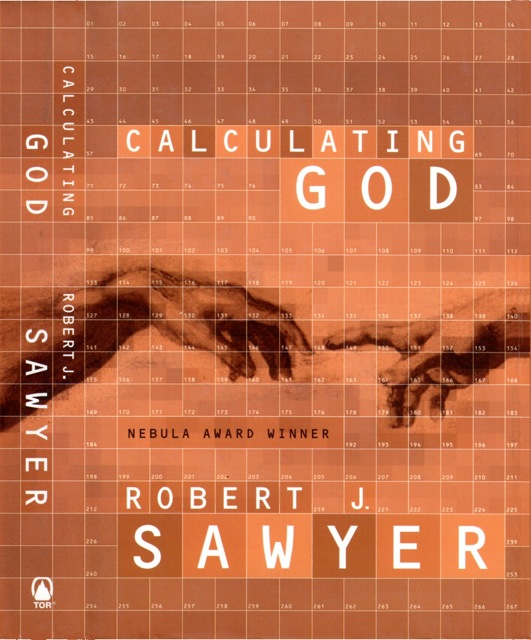
- Calculating God
Robert J. Sawyerstandalone novel2000
similar byscience fictionreflectivefaith and religionour worldaliens
Calculating God is a 2000 science fiction novel by Canadian writer Robert J. Sawyer. It takes place in the present day and describes the arrival of sentient aliens on Earth. The bulk of the novel covers the many discussions and arguments on this topic, as well as the nature of belief, religion, and science. Several planetary civilizations illustrate the logical conclusion of the Fermi paradox.
- Childhood's End
Arthur C. Clarkestandalone novel1953
similar byscience fictionreflectivealiensour world
Childhood's End is a 1953 science fiction novel by the British author Arthur C. Clarke. The story follows a peaceful alien invasion of Earth by mysterious Overlords, whose arrival begins decades of apparent utopia under indirect alien rule, at the cost of human identity and culture.
- Why Call Them Back from Heaven?
Clifford D. Simakstandalone novel1967
similar byscience fictionreflectivefaith and religionour world
Why Call them Back From Heaven? is a 1967 science fiction novel by American writer Clifford D. Simak. It was the initial volume in the Ace Science Fiction Specials line.
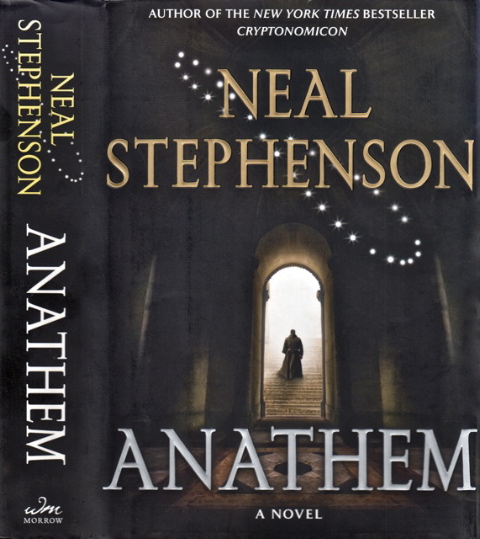
- Anathem
Neal Stephensonstandalone novel2008
similar byscience fictionreflectivefaith and religionaliens
On a planet where quasi-monastic academic institutions have existed alongside the secular world for thousands of years, a young scholar from one such institution becomes part of a planetwide effort to muster an appropriate reaction to a shocking discovery.
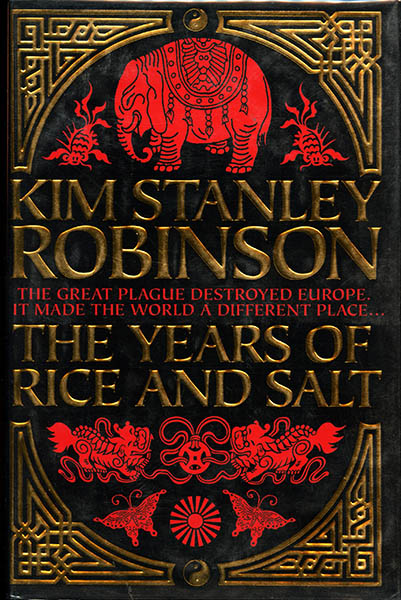
- The Years of Rice and Salt
Kim Stanley Robinsonstandalone novel2002
similar byreflectivescience fictionmedievalour world+1 more
What if the Black Death had killed nearly everyone in Europe instead of a third of it? Kim Stanley Robinson opens on that premise with a Mongol scout named Bold, who finds a Hungarian city emptied by plague and only narrowly escapes execution meant to contain the contagion; sold into slavery, he ends up serving aboard a Chinese treasure fleet alongside a young African companion. From there the novel follows a recurring cast of souls, reincarnated across centuries and identifiable book to book by the first letter of their names, through an alternate history in which Islamic and Chinese civilizations, not a devastated Europe, shape the world's future.
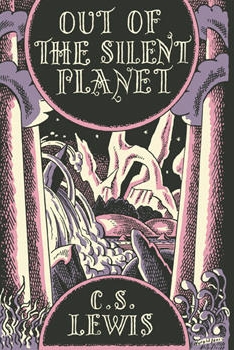
- Cosmic Trilogy (C. S. Lewis)
series4 books1938
completed
similar byscience fictionfaith and religionaliens+1 more
The Space Trilogy is a series of science fiction novels by British writer C. S. Lewis. The trilogy consists of Out of the Silent Planet (1938), Perelandra (1943), and That Hideous Strength (1945). A philologist named Elwin Ransom is the protagonist of the first two novels and an important character in the third.
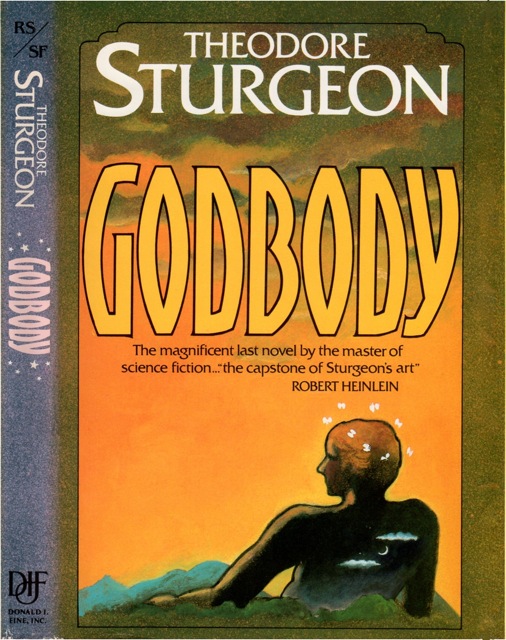
- Godbody
Theodore Sturgeonstandalone novel1986
similar byscience fictionreflectivefaith and religionour world
Godbody is a science fiction novel by American writer Theodore Sturgeon, published posthumously in 1986. A foreword, "Agape and Eros: The Art of Theodore Sturgeon", was contributed by Robert A. Heinlein and an afterword was contributed by Stephen R. Donaldson.
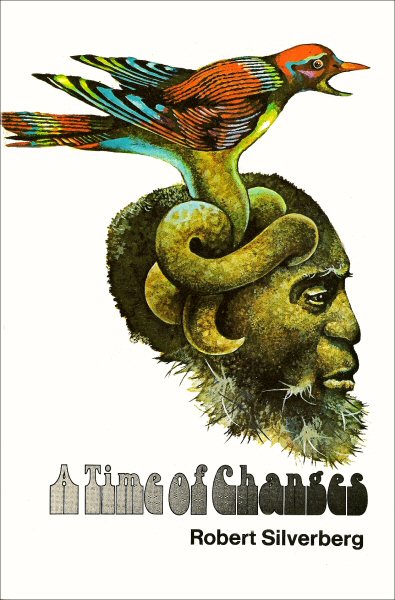
- A Time of Changes
Robert Silverbergstandalone novel1971
similar byscience fictionreflectivefaith and religion
A Time of Changes is a 1971 science fiction novel by American writer Robert Silverberg. It won the Nebula Award for that year, and was also nominated for the 1972 Hugo and Locus Awards.
- VALIS
series4 books1981
completed
similar byscience fictionfaith and religionreflective+1 more
The VALIS trilogy is a set of science fiction/philosophical novels by author Philip K. Dick which include VALIS (1981), The Divine Invasion (1981), and The Transmigration of Timothy Archer (1982). Dick's first novel about the VALIS concept originally titled "VALISystem A", was published as Radio Free Albemuth after Dick's death in 1985.
- A Mirror for Observers
Edgar Pangbornstandalone novel1954
similar byscience fictionreflectivealiensour world+1 more
A Mirror for Observers is a science fiction novel by American writer Edgar Pangborn, winner of the International Fantasy Award in 1955. The plot concerns a philosophical conflict between settlers from Mars who attempt to influence human development.
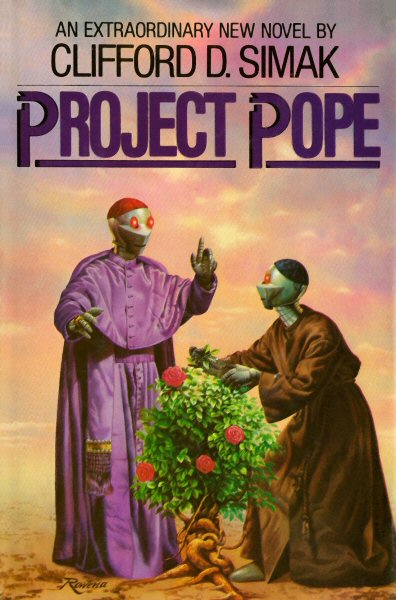
- Project Pope
Clifford D. Simakstandalone novel1981
similar byscience fictionreflectivefaith and religion+1 more
Project Pope is a science fiction novel by the American author Clifford Simak, published in 1981 by Ballantine Books. The novel is about a group of robots and humans living on a planet called the End of Nothing. Their mission is to search the universe and other dimensions to seek out true religion and knowledge. They add the information they gather to their Pope, a robotic supercomputer, in order to make an infallible authority of all knowledge and religion. The novel was nominated for both a Hugo Award for Best Novel and a Locus Award for Best SF novel in 1982.
- The Man Who Fell to Earth
Walter Tevisstandalone novel1963
similar byscience fictionreflectiveour worldaliens
The Man Who Fell to Earth is a 1963 science-fiction novel by American writer Walter Tevis. Published by Gold Medal Books as a paperback original, it was Tevis's second novel, following The Hustler. The novel follows Thomas Jerome Newton, an extraterrestrial from the drought-stricken planet Anthea, who comes to Earth hoping to build a spacecraft that can save the surviving members of his species.
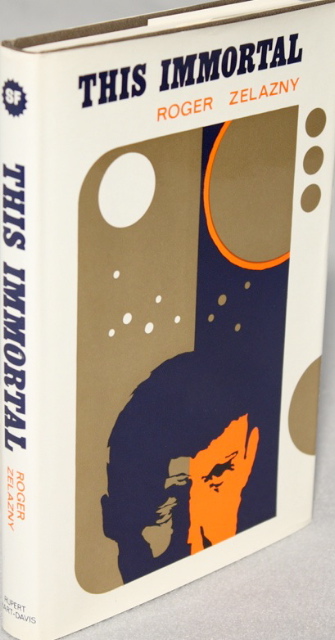
- This Immortal
series2 books1966
similar byscience fictionreflectiveour worldaliens
This Immortal is a single science fiction novel by Roger Zelazny, expanded from his 1965 serial ...And Call Me Conrad. In a depopulated future Earth largely toured by an alien race, its long-lived, secretive protagonist Conrad Nomikos is assigned to guide and protect a visiting alien across the ruins of Greece and Egypt, uncovering old grudges and assassination plots along the way. The novel shared the 1966 Hugo Award for Best Novel with Frank Herbert's Dune.
- Saint Leibowitz
series6 books1955
completed
similar byscience fictionfaith and religion+1 more
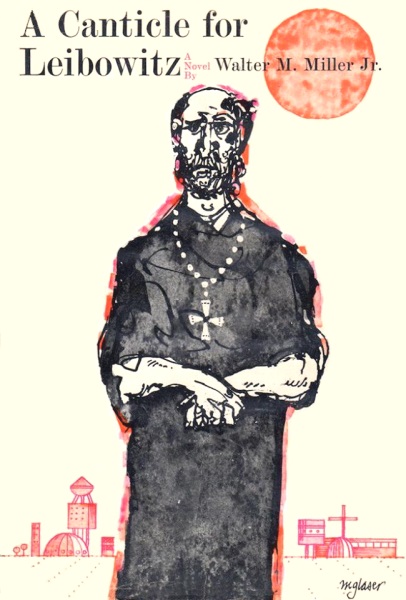
Walter M. Miller Jr.'s A Canticle for Leibowitz (1959), assembled from three novellas he had published earlier in the decade, follows the monks of a Catholic monastery in the post-nuclear American Southwest as they preserve fragments of scientific knowledge across centuries, watching civilization slowly rebuild itself and edge back toward the mistakes that destroyed it. Miller's posthumous sequel, Saint Leibowitz and the Wild Horse Woman, completed by Terry Bisson from his notes after his death and published in 1997, returns to the same abbey and its world decades later. Together the two novels form a sparse, decades-spanning series about memory, faith, and the cycles of civilization.
- The Book of Strange New Things
Michel Faberstandalone novel2014
similar byscience fictionreflectivefaith and religionaliens
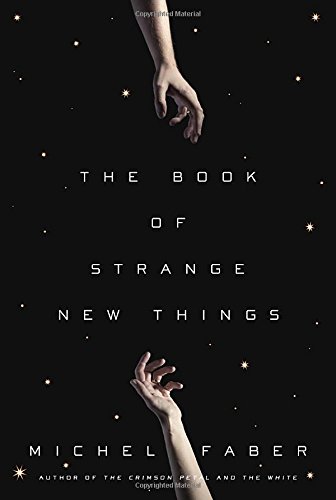
The Book of Strange New Things is a 2014 science fiction novel by Dutch-born author Michel Faber. The work was first published in the United Kingdom on October 6, 2014, and concerns an English pastor who is sent to the planet of Oasis to teach its reclusive native inhabitants about Christianity.
- The Chrysalids
John Wyndhamstandalone novel1955
similar byscience fictionreflective+1 more
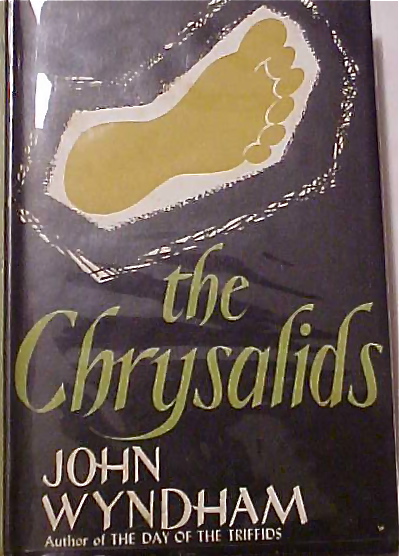
The Chrysalids is a science fiction novel by British writer John Wyndham, first published in 1955 by Michael Joseph. It is the least typical of Wyndham's major novels, but regarded by some as his best. An early manuscript version was entitled Time for a Change.
- The Long Tomorrow
Leigh Brackettstandalone novel1955
similar byscience fictionreflectivefaith and religion
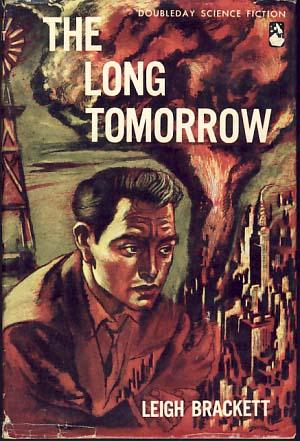
The Long Tomorrow is a post-apocalyptic science fiction novel by American writer Leigh Brackett, originally published by Doubleday & Company, Inc in 1955. Set in the aftermath of a nuclear war, it portrays a world where scientific knowledge is feared and restricted. It was nominated for a Hugo Award in 1956.
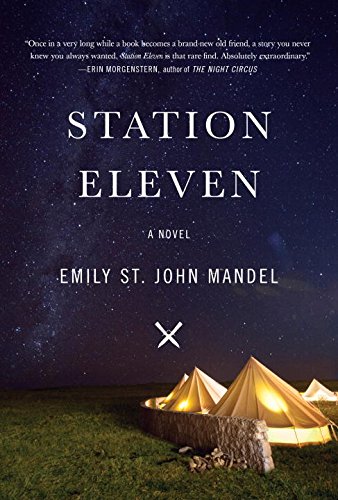
- Station Eleven
Emily St. John Mandelstandalone novel2014
similar byscience fictionreflectiveour world+1 more
"Set in the days of civilization's collapse, Station Eleven tells the story of a Hollywood star, his would-be savior, and a nomadic group of actors roaming the scattered outposts of the Great Lakes region, risking everything for art and humanity. One snowy night a famous Hollywood actor slumps over and dies onstage during a production of King Lear. Hours later, the world as we know it begins to dissolve. Moving back and forth in time — from the actor's early days as a film star to fifteen years in the future, when a theater troupe known as the Traveling Symphony roams the wasteland of what remains — this suspenseful, elegiac, spellbinding novel charts the strange twists of fate that connect five people: the actor, the man who tried to save him, the actor's first wife, his oldest friend, and a young actress with the Traveling Symphony, caught in the crosshairs of a dangerous self-proclaimed prophet." (source: Goodreads.com)
- The Hercules Text
Jack McDevittstandalone novel1986
similar byscience fictionreflectiveour worldaliens+1 more
The Hercules Text is a 1986 science fiction novel by American writer Jack McDevitt. It tells the story of a message of intelligent extraterrestrial origin received by SETI scientists. The Hercules Text was nominated for the Philip K. Dick Award in 1986.
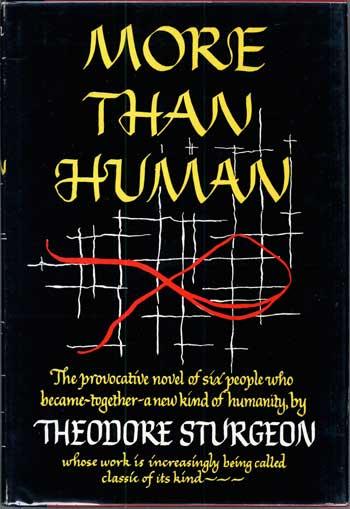
- More Than Human
Theodore Sturgeonstandalone novel1953
similar byscience fictionreflectiveour world
More Than Human is a 1953 science fiction fix-up novel by American writer Theodore Sturgeon. It is a revision and expansion of his 1952 novella Baby Is Three, which is bracketed by two additional parts written for the novel, "The Fabulous Idiot" and "Morality". It won the 1954 International Fantasy Award, which was also given to works in science fiction. It was additionally nominated in 2004 for a "Retro Hugo" award for the year 1954. Science fiction critic and editor David Pringle included it in his book Science Fiction: The 100 Best Novels.
- Hainish
series33 books1964
completed
similar byscience fictionreflective+1 more
The Hainish Cycle consists of a number of science fiction novels and stories by Ursula K. Le Guin. The cycle is set in a future history that features civilizations of human beings on planets orbiting a number of nearby stars, including Terra ("Earth"); these humans are contacting each other for the first time and establishing diplomatic relations, as well as setting up a confederacy under the guidance of the oldest of the human worlds, the peaceful planet Hain. In this history, human beings did not evolve on Earth, but they were instead the result of interstellar colonies planted by Hain in the distant past, after which interstellar travel ceased for an extended period. Some of the human races have new genetic traits, a result of ancient Hainish experiments in genetic engineering; this includes people who can dream while awake, and a world of hermaphroditic people who only enter active sexuality once per month, not knowing which sex will manifest in them. In keeping with Le Guin's narrative approach, she uses varied social and environmental settings to explore the anthropological and sociological outcomes of human evolution in those environments. The author often discounted the characterization of a so-called "Hainish Cycle".
- Jesus on Mars
Philip José Farmerstandalone novel1979
similar byscience fictionreflectivefaith and religionaliens
Jesus on Mars is a 1979 science fiction novel by American writer Philip José Farmer, set on Mars and involving an alien civilization. It makes social commentary on a just society and on religious belief.