Loreful
HomeDiscover
Search series, authors…⌘K
Loreful

Reading orders for SF/F series and shared universes — with your place kept in every one.

Explore

UniversesSeriesWorksAuthorsAtlas

Help

FAQAboutSite map

Account & legal

Sign inCreate accountPrivacyTerms

Data

Built on ISFDB, Wikipedia, Wikidata and Open Library. Curated reading orders carry their reasoning on the page; the rest follow publication order. Data sources & licenses

© Loreful · data: ISFDB · CC BY

More like Speculations

anchored on:science fictionshort story cycleour worldmysterious

but

Mood

The mood the book leaves you in.

  • The reading experience is propelled by journeys, exploration, and physical risk; excitement and forward momentum dominate over dread or introspection.
  • Joy and loss are deliberately mixed; the resolution grants characters something real while taking something else away, leaving warmth and sorrow together.
  • The book demands work from the reader — dense prose, difficult structure, unfamiliar ideas, or morally uncomfortable material — as part of its intended effect.
  • Grim events, cruelty, or despair dominate the atmosphere, and the book does not soften them with comfort or comic relief.
  • The atmosphere is quietly unsettling — wrongness, unease, and the uncanny pervade the book without necessarily escalating into overt horror.
  • The book is built to move the reader; character feeling is foregrounded and major scenes aim at a strong emotional response.
  • Humor is a primary aim and the prose plays for laughs — comic situations, wit, or dialogue produce sustained comedy, not occasional levity.
  • The book insists that things can improve; effort and decency are shown to matter, and the arc bends toward better outcomes even through hardship.
  • The book teaches as it goes — real facts, history, science, or craft are conveyed in enough depth that learning is part of the reading experience.
  • The book is designed to uplift and motivate, presenting perseverance or achievement in a way that invites the reader to aspire or act.
  • The overall register is cheerful and easygoing; stakes are kept gentle and the book avoids dwelling on pain or dread.
  • Withheld information drives the experience; the book sustains enigmas and secrets the reader wants resolved, whatever its genre.
  • The book is contemplative and inward-looking, giving more weight to thought, memory, and meaning than to external events.
  • The book works as comfort reading — low tension, a soothing pace, and an atmosphere the reader can unwind in.
  • Grief, loss, or melancholy set the dominant register, and the book lets sorrow stand rather than resolving it into comfort.
  • Sustained suspense is the point; the book keeps the reader braced for what happens next through danger, pressure, or impending revelation.
  • Playful invention and charm define the register — fanciful conceits, light absurdity, and a narration that delights in its own oddity.

About

What the story runs on.

  • Stories in which extraterrestrial beings are central — as characters, cultures, or the object of the plot.
  • Stories about venturing into space to explore — survey missions, astronauts, and the frontier of the unknown beyond Earth.
  • Stories structured as a quest — a journey undertaken to find, deliver, or destroy something of great import.
  • Stories in which staying alive against nature, catastrophe, or scarcity is the central problem.
  • Stories of lovers kept apart by law, family, faith, or station, where the obstacle to love is the plot.
  • Stories in which a friendship — its making, testing, or loss — is the emotional center.
  • Stories of growing up — a young protagonist crossing from childhood into adult knowledge and responsibility.
  • Stories about who a character truly is — self-discovery, doubled lives, and the search for a self.
  • Stories in which a buried family truth — hidden parentage, crimes, or shames — surfaces and reorders the present.
  • Stories driven by maneuvering for power — factions, conspiracies, and statecraft conducted in shadow.
  • Stories in which war itself is the subject — combat, occupation, and what warfare does to soldiers and civilians.
  • Stories organized around investigating a killing — the case, the clues, and the pursuit of the killer, in any genre's clothing.

Shelf

Where it sits in the library.

    • Fiction built on magic or other supernatural elements that have no scientific explanation.
    • Secondary-world fantasy at large scale, where the fate of nations or the world turns on the protagonists' struggle.
    • Fantasy set in a recognizably modern city or contemporary world where the supernatural intrudes on everyday life.
    • Fantasy that blends in horror's atmosphere and imagery, keeping a fantastical frame around grim or frightening material.
    • Action-driven fantasy following warriors or rogues with personal stakes against sorcerous threats, rather than world-spanning conflicts.
    • Fantasy set in a real historical period or a close analogue of one, with magic woven into the era.
    • Fantasy in which protagonists cross from the ordinary world into another world through a portal or similar passage.
    • Fiction that retells or reworks a traditional fairy tale in a new form or setting.
    • Fantasy drawing directly on myths, legends, and folklore, retelling them or building on their figures and logic.
    • Fantasy of ghosts, vampires, shapeshifters, psychics, and similar phenomena, usually set in an otherwise ordinary world.
    • Fiction mixing science-fictional trappings with overtly magical or impossible elements in one setting.
    • Low-stakes fantasy emphasizing comfort, community, and everyday pleasures over conflict and peril.
    • Speculative fiction of pervasive moral ambiguity, violence, and cynicism that rejects heroic conventions — fantasy and SF alike.
      • Fiction that extrapolates from science and technology — future societies, space travel, or speculative inventions — within at least nominally natural laws.
      • Science fiction of interstellar scope — starships, galactic polities, and adventure across star systems.
      • Science fiction committed to scientific rigor, where technical plausibility constrains the story.
      • Science fiction centered on armed forces and warfare, told largely from a military point of view.
      • Science fiction of networked, corporate-dominated near futures, pairing high technology with social decay.
      • Science fiction styled on nineteenth-century steam-powered technology, often in a Victorian or pseudo-Victorian setting.
      • Fiction depicting an oppressive or catastrophic society, presented as a warning.
      • Fiction set after civilization's collapse, following survivors in the ruins of the old world.
      • Fiction in which characters move between past and future, and the mechanics or consequences of that travel drive the plot.
      • Fiction exploring a world where a historical event went differently and history diverged from ours.
      • Science fiction about humanity's first encounter and communication with an alien intelligence.
      • Science fiction in which extraterrestrial forces attack or occupy Earth and humanity resists.
      • Fiction whose primary aim is to frighten or unsettle the reader through dread, menace, or the monstrous.
      • Horror of vast, indifferent, incomprehensible entities before which humanity is insignificant, in the Lovecraft tradition.
      • Horror of decaying houses, buried family secrets, and oppressive atmosphere in the Gothic literary tradition.
      • Horror centered on hauntings and the returning dead.
      • Horror located in the mind — paranoia, obsession, and unreliable perception rather than external monsters.
      • Horror built around the reanimated dead and survival amid their outbreaks.
      • Horror defined by explicit, transgressive gore that refuses to cut away from violence.
      • Speculative fiction of the strange and uncanny that resists both natural explanation and standard genre categories.
      • Fiction organized around solving a crime or puzzle, typically following an investigator toward the identification of a culprit.
      • A puzzle-first mystery that lays out clues so the culprit's identity can be deduced before the reveal.
      • Crime fiction of moral ambiguity, fatalism, and hard-edged style, set among the corrupt and the doomed.
      • A mystery following the realistic routines of police work — forensics, interviews, and case-building.
      • A gentle mystery with an amateur sleuth, a small community, and violence kept off the page.
      • A mystery set in a past era, where the investigation works within that period's methods and society.
      • Fast-paced fiction driven by imminent danger, pursuit, or high-stakes conspiracy, built to sustain tension.
      • A thriller of espionage — agents, tradecraft, and intelligence services in conflict.
      • A thriller centered on lawyers and the courtroom, where litigation carries the suspense.
      • A thriller driven by detailed contemporary or near-future technology, often military or scientific.
      • A thriller whose tension comes from mental states and manipulation between characters rather than external action.
      • Fiction whose central plot is a romantic relationship and its development toward an emotionally satisfying resolution.
      • Romance in which one or both partners are supernatural beings, blending fantasy elements into the love story.
      • A fantasy-romance hybrid in which the romantic arc and the fantasy plot carry equal weight.
      • Romance set in a past era, with courtship shaped by the period's society and manners.
      • Romance set in the present day, without supernatural or historical elements.
      • Fiction set in a real past period, where the historical setting materially shapes characters and events.
        • General and literary fiction emphasizing prose style, character interiority, or formal ambition over genre plot conventions.
        • Fiction in a realistic world where magical events occur and are treated as ordinary, in the tradition of Latin American literature.
        • Fiction that ridicules people, institutions, or society in order to criticize them.
        • Fiction of dreamlike, irrational imagery and logic that breaks from realistic representation.
        • Fiction that plays with narrative convention through metafiction, fragmentation, and self-reference.
        • Fiction propelled by journeys, exploration, and physical peril, where action and survival carry the plot.
        • Adventure fiction of ships and seafaring — naval engagements, voyages, and life at sea.
        • Fiction of the American frontier West — gunmen, ranchers, and lawmen, typically in the late nineteenth century.
        • Fiction centered on soldiers, campaigns, and the experience of warfare, historical or imagined.
          • Fiction written primarily to amuse, using comedic situations, wit, or parody as its organizing principle.
            • Multi-generational fiction following a family or dynasty across decades, with inheritance and kinship as the through-line.
              • Fiction whose world runs on explicit game mechanics — levels, stats, and skills that characters can see and exploit.
                • Fiction about costumed or superpowered heroes and their conflicts with comparable villains.

                Practical

                How long a commitment, whether it stands alone, and whether it has finished.

                Tap a chip to ask for it · tap again to rule it out · once more to clear. Numbers show what would be left.

                • Cover of The Masks of Time
                  The Masks of Time

                  Robert Silverberg · standalone novel · 1968

                  similar byscience fictionmysteriousour worldlate 20th century

                  From the back cover of the Ballantine first edition: "The year is 1999. The century is about to turn. The civilized world is prosperous but tense with fear about the still existing possibility of a major war. While in the large area that used called "underdeveloped" there is a hysterical conviction that the world will cone to an end with the arrival of the new century Into this explosive situation floats a creature calling himself Vornam-19 - and claiming to be a visitor from 1000 years in the future... The world is ready, indeed ripe, for a sign, an omen, a new cult. But no one realizes exactly what Vornaa-19 is in his own right."

                • Cover of Time Out of Joint
                  Time Out of Joint

                  Philip K. Dick · standalone novel · 1959

                  similar byscience fictionmysteriousour world

                  Time Out of Joint is a science fiction novel by American writer Philip K. Dick, first published in novel form in the United States in 1959. An abridged version was also serialised in the British science fiction magazine New Worlds Science Fiction in several installments from December 1959 to February 1960.

                • Cover of Jonathan Maberry's X-Files Anthologies
                  Jonathan Maberry's X-Files Anthologies

                  series · 3 books · 2015

                  part of The X-Files

                  similar byscience fictionmysteriousour worldshort story cycle+1 more

                • Cover of The Last Day
                  The Last Day

                  Glenn Kleier · standalone novel · 1997

                  similar byscience fictionmysteriousour worldlate 20th century

                  From the flaps of the Warner Books first printing: "The final week of 1999 draws to a close. Billions prepare for the inevitable letdown. Billions more hold their breath. Will the wild fantasies of New Age zealots be realized and the world we know end? Will the dawn of a new era be marked by profound occurrences? Or will it be just one more New Year's day? Suddenly and terrifyingly, everyone's question is answered. On Christmas Eve, fiery destruction rains down on a secret scientific installation in the Negev desert. Then at midnight on New Year's Eve, a beautiful young woman appears, displaying a strange and awesome gift. The extraordinary powers of this ethereal creature foster both jubilation and alarm. Drawn into the most intimate bond of all is Jon Feldman, seasoned TV correspondent. An inveterate skeptic, Feldman finds himself caught in the woman's spell even as others argue that she is a Trojan Horse, come to wreck devastation on humanity. Forced to confront his deepest fears as he simultaneously probes a conspiracy at the outermost limits of bioengineering, Felman will find what he seeks - in a single heartbeat that could end his life and that will forever alter his very being."

                • Cover of The Werewolf Principle
                  The Werewolf Principle

                  Clifford D. Simak · standalone novel · 1967

                  similar byscience fictionmysteriousour world

                  From the back cover of the first DAW printing: "Andrew Blake, found in a space capsule on a distant planet, was brought back to an unfamiliar Earth, where antigravity devices had replaced the wheel and houses talk and even fly! Yet nothing was as strange as Blake's own feelings. Tormented by eerie sensations and a loss of memory, he didn't know who he really was nor exactly where he came from. His destiny only began to grow frighteningly clear when he met a weird, tassel-eared creature who darkly hinted at the truth about Blake's origins. Slowly Blake became aware of the long hushed-up "Werewolf Principle," a scientific theory buried in the past, which held the key to Blake's own fate - and the future of the human race..."

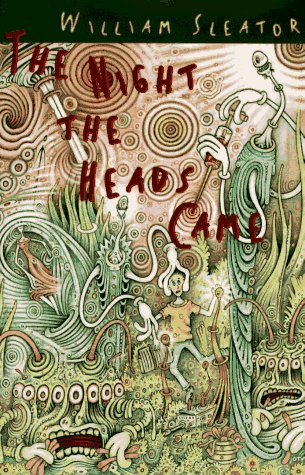
                • Cover of The Night the Heads Came
                  The Night the Heads Came

                  William Sleator · standalone novel · 1996

                  similar byscience fictionmysteriousour worldlate 20th century

                  "There's no such thing as an alien—at least that's what Leo thinks, until he and his friend Tim are abducted late one night on a deserted road. When Leo comes to, Tim is gone, and no one believes his story. After he sees a psychiatrist and undergoes hypnosis, even he doesn't believe his story. But then memories begin to surface—memories he can't push away—and when Time suddenly returns, Le knows they are in otherworldly extraterrestrial danger." — quoted from the back cover of the third printing of the Penguin paperback edition.

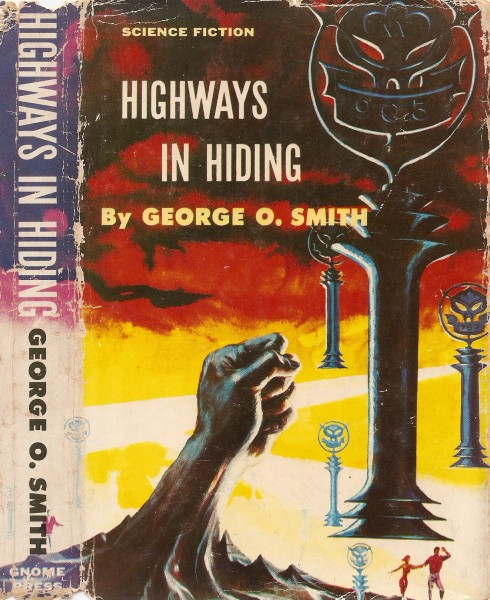
                • Cover of Highways in Hiding
                  Highways in Hiding

                  George O. Smith · standalone novel · 1956

                  similar byscience fictionmysteriousour world

                  From the back cover of the first Lancer printing: "Quest impossible - Someone had stolen an important part of Steve Cornell's life. It was bad enough when his fiancee vanished. It was infinitely worse when everyone in the world insisted it couldn't have happened the way he knew it had. In a world where ESP and telepathy were normal, it was difficult to keep secrets. But Steve's search for his missing sweetheart brought him to the threshold of one of the greatest secrets of all time. And it was obvious that somebody would stop at nothing to keep him from uncovering it. What were the oddly sinister symbols along the otherwise ordinary roads? What was behind the spreading plague called Mekstrom's Disease? Why were there "blank" spots where telepathy didn't work? Who was the elusive enemy with powers even beyond those ESP had bestowed on mankind? And, most important of all... could Steve find that enemy before they made him vanish too?"

                • Cover of The House That Stood Still
                  The House That Stood Still

                  A. E. van Vogt · standalone novel · 1950

                  similar byscience fictionmysteriousour world

                  A California estate lawyer takes a case involving a decaying mansion built atop a pre-Toltec stone structure, and discovers, following a secretive cult in the house, that the ancient foundation confers immortality on those who know how to use it. Drawn in through his attraction to a cult member, the lawyer learns the group possesses technology beyond its disguise, including spacecraft, and is preparing to relocate the house's stones off-world to escape a coming war. He finds himself trying to stop a catastrophe, expose an ancient secret, and win the woman's trust, all at once. A. E. van Vogt's blend of hardboiled mystery and cosmic science fiction.

                • Cover of The Visitors
                  The Visitors

                  Clifford D. Simak · standalone novel · 1980

                  similar byscience fictionmysteriousour world

                  WorldCat: Intelligent, alien creatures arrive on Earth from outer space, threatening world stability and presaging the destruction of civilization.

                • Cover of Flashforward
                  Flashforward

                  Robert J. Sawyer · standalone novel · 1999

                  similar byscience fictionmysteriousour world

                  Flashforward is a science fiction novel by Canadian author Robert J. Sawyer first published in 1999. The novel is set in 2009. At CERN, the Large Hadron Collider accelerator is performing a run to search for the Higgs boson. The experiment has a unique side effect; the entire human race loses their consciousness for about two minutes. During that time, nearly everyone sees themselves roughly twenty-one years and six months in the future. Each individual experiences the future through the senses of their future self. This "flashforward" results in countless deaths and accidents involving vehicles, aircraft, and any other device needing human control at the time of the experiment. The novel was adapted into the 2009 television series FlashForward.

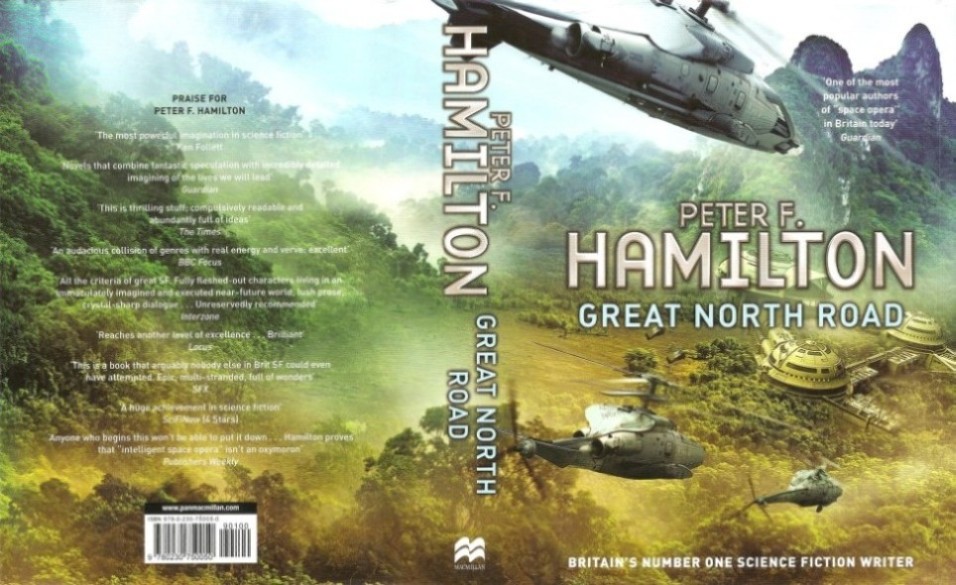
                • Cover of Great North Road
                  Great North Road

                  Peter F. Hamilton · standalone novel · 2012

                  similar byscience fictionmysteriousour world

                  Great North Road is a science fiction novel by Peter F. Hamilton. It was first published in 2012 by Macmillan. Jonathan Wright of SFX magazine said, "Peter F Hamilton’s latest novel may be a standalone tale, but it’s a thuddingly imposing 1,100 pages in length. Not that it seems that way when you’re reading it. Balancing a multi-stranded plot, different exotic locales and a huge cast of characters, Hamilton plunges us straight into a murder mystery set in a near-future Newcastle, a city now adjacent to a portal to another world, the tropical St Libra."

                • Cover of Time Story
                  Time Story

                  Stuart Gordon · standalone novel · 1972

                  similar byscience fictionmysteriousour worldlate 20th century

                  Her name was Hawisa. She died in 1992 in an effort to kill Kitson. Her name was Hawinda. She rished her life in 1996 to save Kitson His name was Kitson. He got away with the theft of the Moongem reactor stones His name was Denzil Amiss. As Twilight Journeyman 356, he couldn't get his hands on the Moongems But... Hawisa and Hawinda were the same person! Kitson and Amiss were the same person! (from the back cover of the DAW Books first American edition)

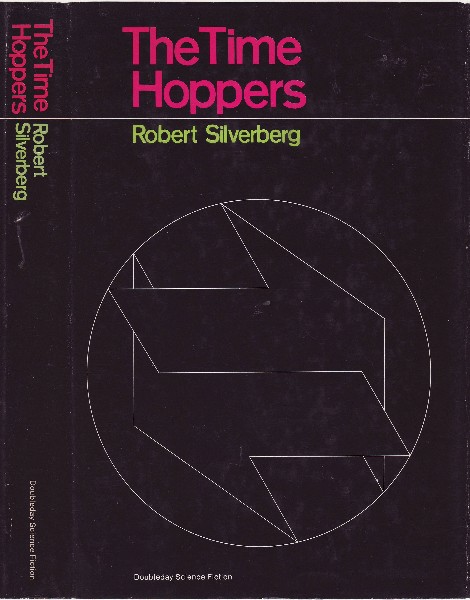
                • Cover of The Time Hoppers
                  The Time Hoppers

                  Robert Silverberg · standalone novel · 1967

                  similar byscience fictionmysteriousour world

                  The Time Hoppers is a science fiction novel by American writer Robert Silverberg, first published by Doubleday in 1967. The plot concerns Joe Quellen, a 25th-century bureaucrat charged with investigating "hoppers", travelers from the future whose presence in the past has been documented for hundreds of years, and his brother-in-law, Norman Pomrath, an unemployed blue collar worker who ends up being presented with an opportunity to travel back in time.

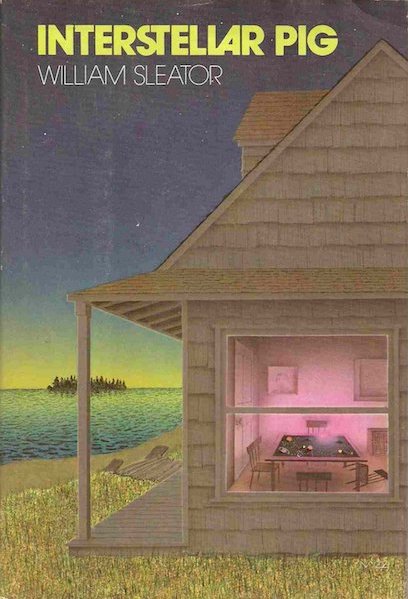
                • Cover of Interstellar Pig
                  Interstellar Pig

                  series · 2 books · 1984

                  completed

                  similar byscience fiction+3 more

                • Cover of Eva
                  Eva

                  Peter Dickinson · standalone novel · 1988

                  similar byscience fictionmysteriousour world

                  From the back cover: "Thirteen-year-old Eva wakes up in the hospital unable to remember anything since the picnic on the beach. Her mother leans over the bed and begins to explain. A traffic accident, a long coma... But there is something, Eva senses, she is not being told, some other price she must pay to be alive at all. What have they done, with their amazing medical technology, to save her?"

                • Cover of Legion / Stephen Leeds
                  Legion / Stephen Leeds

                  series · 5 books · 2012

                  similar byscience fictionmysteriousour world

                  Legion, or the Stephen Leeds series, is a series of science fiction novellas created by American author Brandon Sanderson. Sanderson authored the first three stories : Legion, first published on August 31, 2012, Legion: Skin Deep in November 2014, and Legion: Lies of the Beholder in September 2018. Death and Faxes, co-authored by Max Epstein, David Pace, and Michael Harkins, was released in June 2022. The books have received favorable reviews.

                • Cover of Sinister Barrier
                  Sinister Barrier

                  Eric Frank Russell · standalone novel · 1939

                  similar byscience fictionmysteriousour world

                  Sinister Barrier is an English-language science fiction novel by British writer Eric Frank Russell. The novel originally appeared in the magazine Unknown in 1939, the first novel to appear in its pages. It was first published in book form in 1943 by The World's Work, Ltd. Russell revised and expanded the book for its first US publication by Fantasy Press in 1948. Most subsequent editions were based on the Fantasy Press version.

                • Cover of Free Live Free
                  Free Live Free

                  Gene Wolfe · standalone novel · 1984

                  similar byscience fictionmysteriousour world

                  Free Live Free is a novel by American writer Gene Wolfe, first published in 1984.

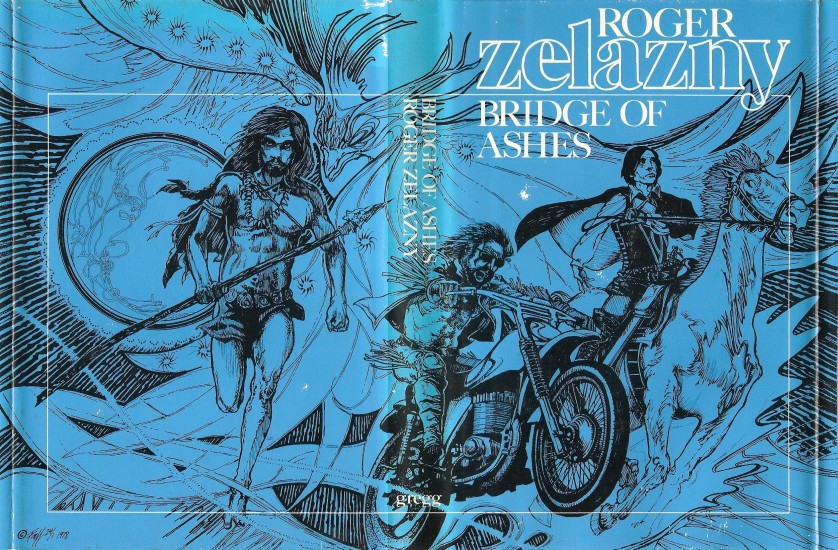
                • Cover of Bridge of Ashes
                  Bridge of Ashes

                  Roger Zelazny · standalone novel · 1976

                  similar byscience fictionmysteriousour world

                  Bridge of Ashes is an experimental science fiction novel by American writer Roger Zelazny. The paperback edition was published in 1976 and the hardcover in 1979. Zelazny describes the book as one of five books from which he learned things "that have borne me through thirty or so others". He states that he "felt that if I could pull it off I could achieve some powerful effects. What I learned from this book is something of the limits of puzzlement in that no man’s land between suspense and the weakening of communication".

                • Cover of The Adjacent
                  The Adjacent

                  Christopher Priest · standalone novel · 2013

                  similar byscience fictionmysteriousour world

                  In the near future, Tibor Tarent, a freelance photographer, is recalled from Anatolia to Britain when his wife, an aid worker, is killed--annihilated by a terrifying weapon that reduces its target to a triangular patch of scorched earth. A century earlier, Tommy Trent, a stage magician, is sent to the Western Front on a secret mission to render British reconnaissance aircraft invisible to the enemy. Present day: a theoretical physicist develops a new method of diverting matter, a discovery with devastating consequences that will resonate through time.

                • Cover of Quest for the Future
                  Quest for the Future

                  A. E. van Vogt · standalone novel · 1970

                  similar byscience fictionmysteriousour world

                  Quest for the Future is a science fiction novel by Canadian-American writer A. E. van Vogt. It was first published by Ace Books in 1970.

                • Cover of Chocky
                  Chocky

                  series · 2 books · 1968

                  similar byscience fictionmysterious+1 more

                  Chocky (1968) is John Wyndham's science fiction novel about an eleven-year-old boy, Matthew, whose parents grow alarmed by his conversations with an unseen presence that feeds him unsettling insights into mathematics and human progress, building toward the reveal of what, or who, Chocky really is. Mark Daniel's Chocky's Challenge (1986), published after Wyndham's death, is an authorized continuation that carries the story forward.

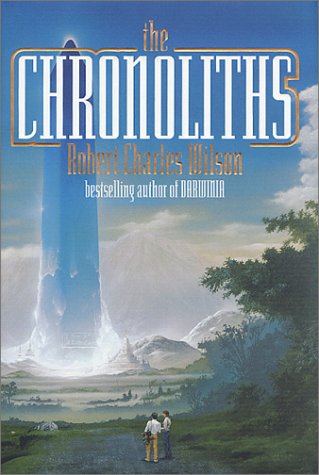
                • Cover of The Chronoliths
                  The Chronoliths

                  Robert Charles Wilson · standalone novel · 2001

                  similar byscience fictionmysteriousour world

                  The Chronoliths is a 2001 science fiction novel by American-Canadian writer Robert Charles Wilson. It was nominated for the 2002 Hugo Award for Best Novel and tied for the 2002 John W. Campbell Memorial Award for Best Science Fiction Novel.

                • Cover of Greg Mandel
                  Greg Mandel

                  series · 5 books · 1993

                  similar byscience fictionmysteriousour world

                  Greg Mandel is a former special-forces soldier with a psychic 'gland' implant for reading emotions, working as a private investigator in a near-future Britain recovering from an authoritarian climate-crisis government. Peter F. Hamilton's original trilogy - Mindstar Rising, A Quantum Murder, The Nano Flower - follows his cases as ordinary detective work keeps sliding into conspiracies with much bigger stakes; The Suspect Genome revisits an older Mandel decades later. It was Hamilton's first fiction, blending noir detective plotting with hard SF.