More like Spellbound
anchored on:horrorlate 20th centurytenseyoung adultpsychological horrormurder investigation+2 more
but
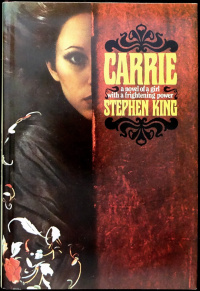
- Carrie
Stephen Kingstandalone novel1974
similar byhorrorpsychological horrortenselate 20th centurynorth america+1 more
In one way or another, everybody abused Carrie. This sixteen-year-old misfit was forbidden everything that was young and fun by her fanatical mother. She was teased and taunted by her classmates, misunderstood by her teachers, and given up as hopeless by almost everyone. But Carrie had a secret: She possessed terrifying telekinetic powers that could make inanimate objects move, a lighted candle fall, or a door lock. Carrie could make all kinds of startling bizarre, and malevolent things happen. (WorldCat)
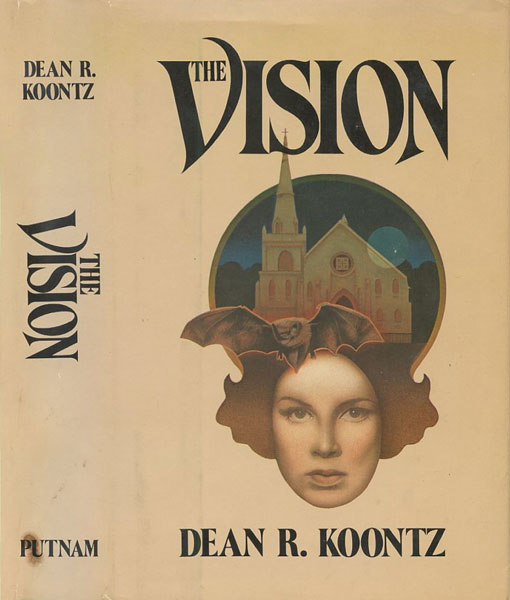
- The Vision
Dean R. Koontzstandalone novel1977
similar bymurder investigationlate 20th centuryhorrortensenorth america+1 more
The Vision is a 1977 horror-mystery novel by American writer Dean Koontz.
- Robert Bloch's Psycho Universe
series5 books1959
similar byhorrormadnesspsychological horrornorth americatense+2 more
- Stranger with My Face
Lois Duncanstandalone novel1981
similar bylate 20th centuryhorrortensepsychological horroreerienorth americayoung adult
Stranger with My Face is a young adult horror novel by Lois Duncan, first published in 1981. The novel is about the Native American Laurie Stratton, who is seen by others in places which she knows she could not be. She discovers that she has an identical twin sister named Lia who has been visiting her town using astral projection, which involves sending her soul outside her body. Laurie learns astral projection and uses it to look for her sister. During this time, Lia's spirit takes control of Laurie's body. The story describes Laurie's struggle to take back control of her body. The novel explores themes of appearance versus true self and the idea of a double, someone similar but not quite the same as someone else. Duncan got the idea for the book after hearing about the concept of astral projection, which she thought would make a great plot for a novel. In 2011, the novel was updated with text to modernize the content.
- Lost Boys
Orson Scott Cardstandalone novel1992
similar bylate 20th centuryhorrorpsychological horroreerietensenorth america+1 more
Lost Boys (1992) is a horror novel by American author Orson Scott Card. The premise of the novel revolves around the daily lives of a Mormon family, and the challenges they face after a move to North Carolina. The story primarily follows the family's troubles at work, church, and the oldest child Stevie's difficulty fitting in at school, which lead to him becoming increasingly withdrawn.
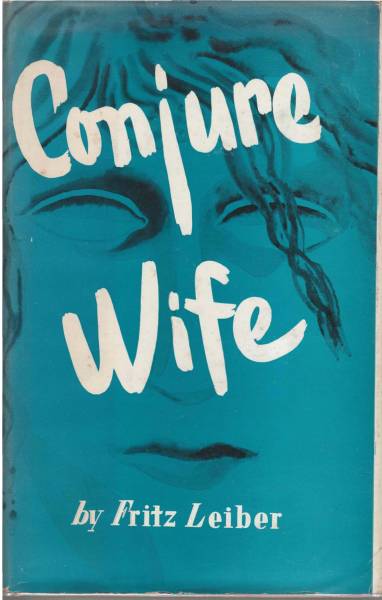
- Conjure Wife
Fritz Leiberstandalone novel1943
similar byhorrorpsychological horroreerietensenorth america+1 more
From the front cover of the Lion first paperback: "Potions in the house... evil in the air... and a witch in his bed." From the back cover of the Lion first paperback: ""Conjure Wife... is easily the most frightening (and necessarily) the most thoroughly convincing of all modern horror stories. Its premise is that witchcraft still flourishes, or at any rate survives, an open secret among women, a closed book to men. Under the rational overlay of 20th-century civilization this sickly growth, uncultivated, unsuspected, still manages to propagate itself. Leiber develops this theme with the utmost dexterity, piling up alternate layers of the mundane and outre, until at the story's real climax, the shocker at the end of chapter 14, I am not ashamed to say that I jumped an inch out of my seat. From that point onward the story anticlimax so skillfully managed that I am not really certain I touched the slipcover again until after the last page. Leiber has never written anything better... which perhaps is all that needed to be said." Damon Knight, Science Fiction Adventures"
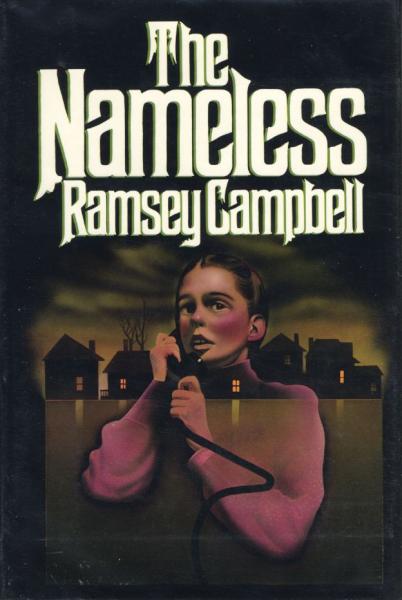
- The Nameless
Ramsey Campbellstandalone novel1981
similar bymurder investigationhorrortensepsychological horror+1 more
A call for help... from a little girl long dead. Barbara Waugh experienced the worst horror a mother can imagine. Her little girl, Angela, was murdered. Horribly. But now, years later, mysterious phone calls bring both hope and fear. Each time, the girl's voice on the other end simply pleads, 'Mummy, help me.' Could Angela still be alive after all? Barbara's desperate search for the truth - and her daughter - will lead her into a living nightmare, an evil world of torture, murder and gruesome rituals, where the initiated have abandoned their names... and are searching for new victims.
- In the Valley of the Sun
Andy Davidsonstandalone novel2017
similar bymurder investigationlate 20th centuryhorrormadnesstensenorth america
"Deftly written and utterly addictive, this Western literary horror debut will find a home with fans of authors like Joe Hill, Cormac McCarthy, and Anne Rice. One night in 1980, a man becomes a monster. Haunted by his past, Travis Stillwell spends his nights searching out women in West Texas honky-tonks. What he does with them doesn't make him proud, just quiets the demons for a little while. But after Travis crosses paths one night with a mysterious pale-skinned girl, he wakes weak and bloodied in his cabover camper the next morning-with no sign of a girl, no memory of the night before. Annabelle Gaskin spies the camper parked behind her motel and offers the cowboy a few odd jobs to pay his board. Travis takes her up on the offer, if only to buy time, to lay low and heal. By day, he mends the old motel, insinuating himself into the lives of Annabelle and her ten-year-old son. By night, in the cave of his camper, he fights an unspeakable hunger. Before long, Annabelle and her boy come to realize that this strange cowboy is not what he seems. Half a state away, a grizzled Texas Ranger is hunting Travis for his past misdeeds, but what he finds will lead him to a revelation far more monstrous. A man of the law, he'll have to decide how far into the darkness he'll go for the sake of justice. When these lives converge on a dusty autumn night, an old evil will find new life-and new blood"--
- Punish the Sinners
John Saulstandalone novel1978
similar bylate 20th centuryhorrormadnesspsychological horrortensenorth america
Punish the Sinners is a horror novel and the second novel by author John Saul, first published in 1978. The novel concerns a rash of violent suicides at a Catholic high school. There is an audiobook narrated by Jonathan Davis on Audible. Punish the Sinners was the first book with a UPC code on the cover.
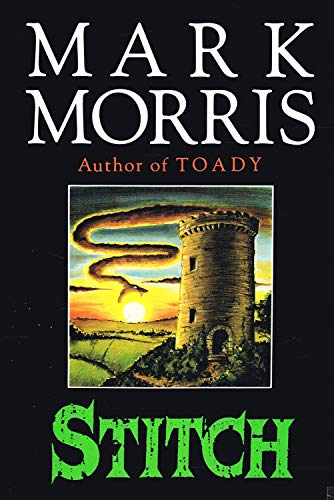
- Stitch
Mark Morrisstandalone novel1991
similar bylate 20th centuryhorrormadnesspsychological horroreerienorth america+1 more
Autumn term at Maybury University and, as the nights draw in, so does an atmosphere of menace. Dan Latcher — a previously quiet and withdrawn student — blossoms overnight into the forceful illusion-working leader of a charismatic student movement, ‘The Crack’; an organization with the power to shape and alter its followers’ personalities, pushing them on to mindless heights of pleasure and pain. When hitherto bright, vivacious fresher Stephanie Peele becomes one of his converts, her worried room-mate Annie enlists the support of fellow student Ian. While the campus is further beset by an unknown knife-wielding psychopath, Annie and Ian pit their strength against the forces of evil as personified by Latcher and his infinitely more potent puppet master, Peregrine Stitch, voraciously sucking-in new converts body and soul…
- Blue Rose (Peter Straub)
series9 books1985
completed
similar bymurder investigationhorrorlate 20th centurynorth america+2 more
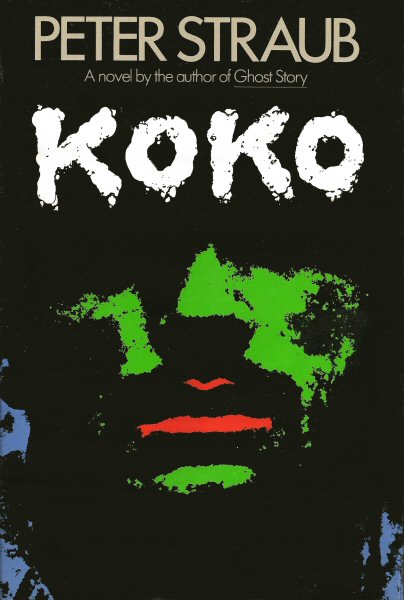
The Blue Rose novels are only loosely a series: Peter Straub's Koko, Mystery, and The Throat are separate suspense novels connected by recurring characters, a shared Midwestern town, and the shadow of a Vietnam-era program called Blue Rose that haunts several of the men at their centers. Koko follows a group of Vietnam veterans hunting a former comrade turned serial killer decades after the war. The 1985 novella Blue Rose and later story collections explore the same program's darker origins.
- The Shining
series5 books1977
similar byhorrortensenorth america+3 more
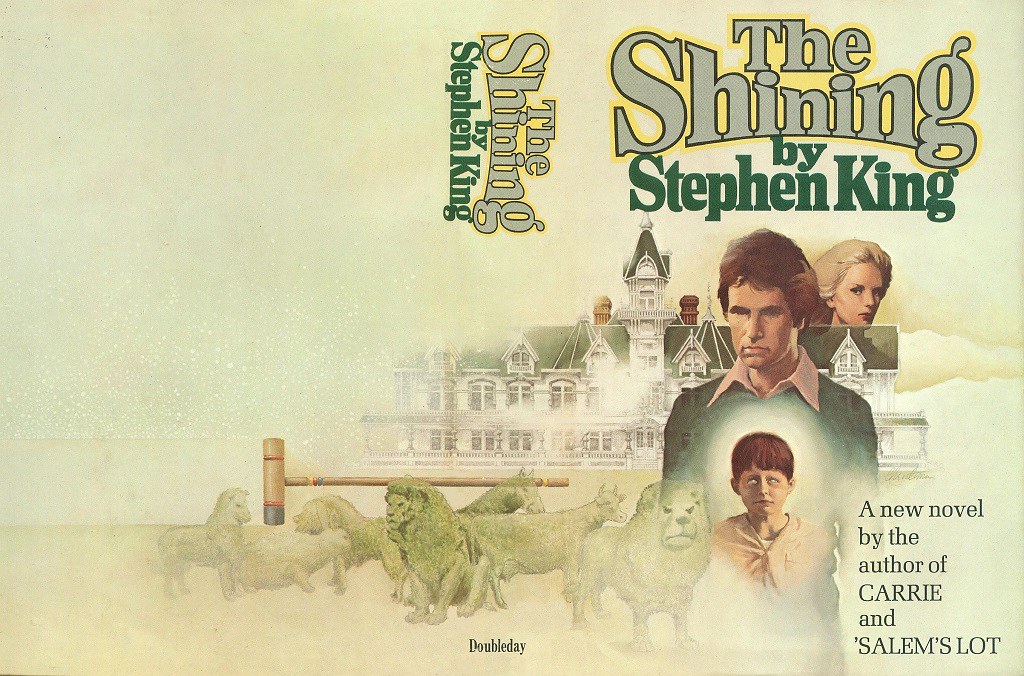
Stephen King's 1977 novel The Shining follows the Torrance family as winter caretakers of the isolated, malevolent Overlook Hotel, where father Jack is gradually consumed by the hotel's influence while his young son Danny's psychic "shining" draws its attention. Doctor Sleep (2013) picks up the story decades later, following Danny as an adult still marked by that childhood ordeal. Together the two form a horror duology spanning nearly forty years of real-world publication.
- American Psycho
Bret Easton Ellisstandalone novel1991
similar bymurder investigationlate 20th centuryhorrormadnessnorth america
American Psycho is a horror novel by American writer Bret Easton Ellis, published in 1991. The story is told in the first-person by Patrick Bateman, a wealthy, narcissistic, and vain Manhattan investment banker who lives a double life as a serial killer. Alison Kelly of The Observer notes that while "Some countries [deem it] so potentially controversial that it only to be sold as shrink-wrapped in Australia", "critics rave about it" and "academics revel in its transgressive and postmodern qualities".
- The Possession of Joel Delaney
Ramona Stewartstandalone novel1970
similar bylate 20th centuryhorrormadnesspsychological horroreerienorth america+1 more
The Possession of Joel Delaney is a 1970 horror novel by American writer Ramona Stewart. Its plot follows a woman who comes to believe her brother has been possessed by the spirit of a serial killer. It was adapted into the 1972 feature film of the same title starring Shirley MacLaine and Perry King.
- The Silence of the Lambs
Thomas Harrisstandalone novel1988
similar bymurder investigationlate 20th centuryhorrortensemadnesspsychological horrornorth america
The Silence of the Lambs is a 1988 psychological horror crime thriller novel by Thomas Harris. Published August 29, it is the sequel to Harris's 1981 novel Red Dragon, and both novels feature the cannibalistic serial killer and brilliant psychiatrist Dr. Hannibal Lecter. This time, however, he is pitted against FBI trainee Clarice Starling as she works to solve the case of the "Buffalo Bill" serial killer. St. Martin’s Press also issued uncorrected proof copies in 1988, which are considered scarce by collectors. It is the most well-known installment of Harris's Hannibal Lecter series, selling over 10 million copies.
- Ghost Story
Peter Straubstandalone novel1979
similar bylate 20th centuryhorroreerietensenorth america
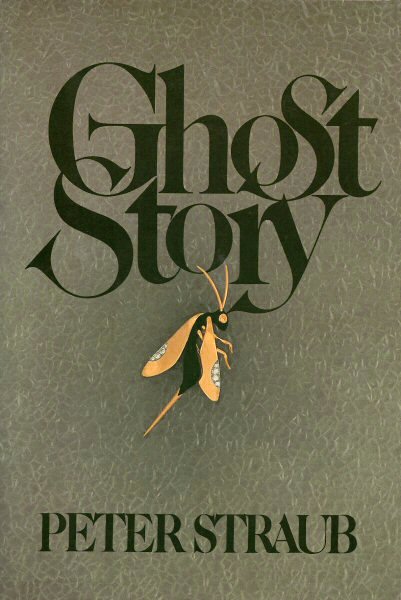
Four prominent citizens of a small town in upstate New York who share guilt over something that happened in their youth are revisited late in life by a destructive evil force which uses their guilt as an opportunity to destroy them as well as the entire town.
- In the Night Room
Peter Straubstandalone novel2004
similar byhorrormadnesspsychological horrortensenorth america+2 more
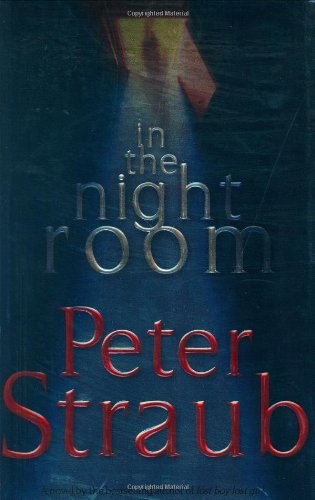
In the Night Room is a 2004 horror-thriller novel by American author Peter Straub, a sequel to his 2003 book Lost Boy, Lost Girl. The work was first published in hardback on October 26, 2004, through Random House and it won the 2004 Bram Stoker Award for Novel. Straub encountered some difficulties while writing In the Night Room and had written several different passages for the work before growing bored with each version before writing it using the same technique he used for its predecessor in which he "reached down inside the book and turned it inside out."
- Let's Go Play at the Adams'
Mendal W. Johnsonstandalone novel1974
similar bylate 20th centuryhorrormadnesspsychological horrortensenorth america
Let's Go Play at the Adams' is a 1974 psychological horror novel by Mendal W. Johnson and originally published by Thomas Y. Crowell Co. Its plot focuses on a group of rural Maryland children who drug, incapacitate, and eventually torture the college student babysitter hired by their parents while they are away in Europe for two weeks.
- Apt Pupil
Stephen Kingstandalone novel1982
similar bylate 20th centurymadnesspsychological horrortensenorth americahorror+1 more
A high school student discovers that a neighbor is a Nazi war criminal living under an assumed identity, but rather than expose him, he expresses a fascination with the man's history of evil deeds.
- Shadows
John Saulstandalone novel1992
similar bylate 20th centuryhorrormadnesspsychological horrortensenorth america
"They call it the Academy. A secluded, cliff-top mansion overlooking the rugged Pacific coast. A school for children gifted—or cursed—with extraordinary minds. Children soon to come under the influence of an intelligence even more brilliant than their own—and unspeakably evil. For within this mind a dark plan is taking form. A plan so horrifying, no one will believe it. No one but the children. And for them it is already too late. Too late, unless one young student can resist the seductive invitation that will lead . . . into the Shadows. — quoted from the product description that is found on this book's page on Amazon.com.
- The Bad Place
Dean R. Koontzstandalone novel1990
similar bylate 20th centuryhorrortensenorth america+1 more
The Bad Place is a horror novel by American writer Dean Koontz, released in 1990. It includes elements of horror, suspense, and mystery, and is presented partially as a twist on the private eye drama. The story follows Frank Pollard, a man who wakes up each night with no memory of where he has been or what he has done, only to find himself covered in injuries or in possession of strange items. As his condition worsens, private investigators Bobby and Julie Dakota are hired to track him and uncover the truth behind his blackouts. Their investigation leads them into a disturbing web of genetic experimentation, family secrets, and a hidden force manipulating human lives from the shadows. As the plot unfolds, the novel reveals that Frank and others are being pursued by powerful, almost inhuman figures connected to a twisted experiment involving selective breeding and enhanced abilities. The Dakotas become entangled in a struggle not only to save Frank but also to survive against forces that seem to operate beyond normal human limits. Themes in the novel include identity, memory loss, the abuse of science, and the nature of evil. Koontz blends psychological horror with fast-paced action, creating a narrative that shifts between detective fiction and supernatural thriller. The book received generally positive reception from readers who enjoyed Koontz’s signature suspense style, though some critics noted its complex and sometimes chaotic plot structure. Over time, it has remained one of his more memorable early-1990s works due to its unusual blend of genres and its dark, unsettling tone.
- The Girl Who Loved Tom Gordon
Stephen Kingstandalone novel1999
similar bytensehorrorpsychological horrornorth americamountains+1 more
A nine year old girl becomes lost in the Maine forest while on a day hike with her family, and finds the strength to survive in her idolizing of the Red Sox closing pitcher.
- Ancient Images
Ramsey Campbellstandalone novel1989
similar byhorroreerietensenorth america+2 more
A lost horror film holds the key to terrifying secrets. The legends have persisted for decades of a lost horror film starring Boris Karloff and Bela Lugosi that was never released. Rumor has it that, for reasons long forgotten, powerful forces suppressed the film and burned all known prints. Nobody now living has seen the finished film. But that might no longer be true… Film researcher Sandy Allan is invited to a screening of a newly-discovered sole-surviving print, but then the film disappears and the real horror begins. Sandy’s search for the film leads her to Redfield, a rural community known its rich soil, fertilized by blood from an ancient massacre. But Redfield guards its secrets closely, with good reason. During every step of her search, Sandy is watched, shadowed by strange figures. Is it paranoia, or is someone—or something—determined to keep the lost film and the secrets it reveals buried forever?
- The Wicked Heart
Christopher Pikestandalone novel1993
similar bymurder investigationhorrormadnesspsychological horrortenseyoung adult
He did not want to kill. Dusty Shame was a high school senior, and a serial killer. Already he has murdered three young women, and he has more planned. Yet Dusty did not want to hurt anybody. There was something inside him, or perhaps outside him, that compelled him to kill. Sheila Hardolt has lost her best friend to Dusty's insane attacks. It will be her task to probe the clues Dusty has left at the site of each of his murders. Clues that will point her into the past -- to a time when a large portion of mankind lost all sense of decency. There she will find the seed of Dusty's evil compulsion, the Wicked Heart, and the reason why it did not die the first time it was destroyed.