Loreful
HomeDiscover
Search series, authors…⌘K
Loreful

Reading orders for SF/F series and shared universes — with your place kept in every one.

Explore

UniversesSeriesWorksAuthorsAtlas

Help

FAQAboutSite map

Account & legal

Sign inCreate accountPrivacyTerms

Data

Built on ISFDB, Wikipedia, Wikidata and Open Library. Curated reading orders carry their reasoning on the page; the rest follow publication order. Data sources & licenses

© Loreful · data: ISFDB · CC BY

More like Spellbound

anchored on:19th centurybritish isles

but

Mood

The mood the book leaves you in.

  • The reading experience is propelled by journeys, exploration, and physical risk; excitement and forward momentum dominate over dread or introspection.
  • Joy and loss are deliberately mixed; the resolution grants characters something real while taking something else away, leaving warmth and sorrow together.
  • The book demands work from the reader — dense prose, difficult structure, unfamiliar ideas, or morally uncomfortable material — as part of its intended effect.
  • Grim events, cruelty, or despair dominate the atmosphere, and the book does not soften them with comfort or comic relief.
  • The atmosphere is quietly unsettling — wrongness, unease, and the uncanny pervade the book without necessarily escalating into overt horror.
  • The book is built to move the reader; character feeling is foregrounded and major scenes aim at a strong emotional response.
  • Humor is a primary aim and the prose plays for laughs — comic situations, wit, or dialogue produce sustained comedy, not occasional levity.
  • The book insists that things can improve; effort and decency are shown to matter, and the arc bends toward better outcomes even through hardship.
  • The book teaches as it goes — real facts, history, science, or craft are conveyed in enough depth that learning is part of the reading experience.
  • The book is designed to uplift and motivate, presenting perseverance or achievement in a way that invites the reader to aspire or act.
  • The overall register is cheerful and easygoing; stakes are kept gentle and the book avoids dwelling on pain or dread.
  • Withheld information drives the experience; the book sustains enigmas and secrets the reader wants resolved, whatever its genre.
  • The book is contemplative and inward-looking, giving more weight to thought, memory, and meaning than to external events.
  • The book works as comfort reading — low tension, a soothing pace, and an atmosphere the reader can unwind in.
  • Grief, loss, or melancholy set the dominant register, and the book lets sorrow stand rather than resolving it into comfort.
  • Sustained suspense is the point; the book keeps the reader braced for what happens next through danger, pressure, or impending revelation.
  • Playful invention and charm define the register — fanciful conceits, light absurdity, and a narration that delights in its own oddity.

About

What the story runs on.

  • Stories driven by a curse laid on a person, family, or place, and the struggle to live under it or break it.
  • Stories structured as a quest — a journey undertaken to find, deliver, or destroy something of great import.
  • Stories in which staying alive against nature, catastrophe, or scarcity is the central problem.
  • Stories of lovers kept apart by law, family, faith, or station, where the obstacle to love is the plot.
  • Stories of growing up — a young protagonist crossing from childhood into adult knowledge and responsibility.
  • Stories about who a character truly is — self-discovery, doubled lives, and the search for a self.
  • Stories about mental unraveling — descent into madness, delusion, and minds at war with themselves.
  • Stories about mourning — living through the death of a loved one and what loss does to the survivors.
  • Stories in which a buried family truth — hidden parentage, crimes, or shames — surfaces and reorders the present.
  • Stories driven by maneuvering for power — factions, conspiracies, and statecraft conducted in shadow.
  • Stories in which war itself is the subject — combat, occupation, and what warfare does to soldiers and civilians.
  • Stories organized around investigating a killing — the case, the clues, and the pursuit of the killer, in any genre's clothing.

Shelf

Where it sits in the library.

    • Fiction built on magic or other supernatural elements that have no scientific explanation.
    • Secondary-world fantasy at large scale, where the fate of nations or the world turns on the protagonists' struggle.
    • Fantasy set in a recognizably modern city or contemporary world where the supernatural intrudes on everyday life.
    • Fantasy that blends in horror's atmosphere and imagery, keeping a fantastical frame around grim or frightening material.
    • Action-driven fantasy following warriors or rogues with personal stakes against sorcerous threats, rather than world-spanning conflicts.
    • Fantasy set in a real historical period or a close analogue of one, with magic woven into the era.
    • Fantasy in which protagonists cross from the ordinary world into another world through a portal or similar passage.
    • Fiction that retells or reworks a traditional fairy tale in a new form or setting.
    • Fantasy drawing directly on myths, legends, and folklore, retelling them or building on their figures and logic.
    • Fantasy of ghosts, vampires, shapeshifters, psychics, and similar phenomena, usually set in an otherwise ordinary world.
    • Fiction mixing science-fictional trappings with overtly magical or impossible elements in one setting.
    • Low-stakes fantasy emphasizing comfort, community, and everyday pleasures over conflict and peril.
    • Speculative fiction of pervasive moral ambiguity, violence, and cynicism that rejects heroic conventions — fantasy and SF alike.
      • Fiction that extrapolates from science and technology — future societies, space travel, or speculative inventions — within at least nominally natural laws.
      • Science fiction of interstellar scope — starships, galactic polities, and adventure across star systems.
      • Science fiction committed to scientific rigor, where technical plausibility constrains the story.
      • Science fiction centered on armed forces and warfare, told largely from a military point of view.
      • Science fiction of networked, corporate-dominated near futures, pairing high technology with social decay.
      • Science fiction styled on nineteenth-century steam-powered technology, often in a Victorian or pseudo-Victorian setting.
      • Fiction depicting an oppressive or catastrophic society, presented as a warning.
      • Fiction set after civilization's collapse, following survivors in the ruins of the old world.
      • Fiction in which characters move between past and future, and the mechanics or consequences of that travel drive the plot.
      • Fiction exploring a world where a historical event went differently and history diverged from ours.
      • Science fiction about humanity's first encounter and communication with an alien intelligence.
      • Science fiction in which extraterrestrial forces attack or occupy Earth and humanity resists.
      • Fiction whose primary aim is to frighten or unsettle the reader through dread, menace, or the monstrous.
      • Horror of vast, indifferent, incomprehensible entities before which humanity is insignificant, in the Lovecraft tradition.
      • Horror of decaying houses, buried family secrets, and oppressive atmosphere in the Gothic literary tradition.
      • Horror centered on hauntings and the returning dead.
      • Horror located in the mind — paranoia, obsession, and unreliable perception rather than external monsters.
      • Horror built around the reanimated dead and survival amid their outbreaks.
      • Horror defined by explicit, transgressive gore that refuses to cut away from violence.
      • Speculative fiction of the strange and uncanny that resists both natural explanation and standard genre categories.
      • Fiction organized around solving a crime or puzzle, typically following an investigator toward the identification of a culprit.
      • A puzzle-first mystery that lays out clues so the culprit's identity can be deduced before the reveal.
      • Crime fiction of moral ambiguity, fatalism, and hard-edged style, set among the corrupt and the doomed.
      • A mystery following the realistic routines of police work — forensics, interviews, and case-building.
      • A gentle mystery with an amateur sleuth, a small community, and violence kept off the page.
      • A mystery set in a past era, where the investigation works within that period's methods and society.
      • Fast-paced fiction driven by imminent danger, pursuit, or high-stakes conspiracy, built to sustain tension.
      • A thriller of espionage — agents, tradecraft, and intelligence services in conflict.
      • A thriller centered on lawyers and the courtroom, where litigation carries the suspense.
      • A thriller driven by detailed contemporary or near-future technology, often military or scientific.
      • A thriller whose tension comes from mental states and manipulation between characters rather than external action.
      • Fiction whose central plot is a romantic relationship and its development toward an emotionally satisfying resolution.
      • Romance in which one or both partners are supernatural beings, blending fantasy elements into the love story.
      • A fantasy-romance hybrid in which the romantic arc and the fantasy plot carry equal weight.
      • Romance set in a past era, with courtship shaped by the period's society and manners.
      • Romance set in the present day, without supernatural or historical elements.
      • Fiction set in a real past period, where the historical setting materially shapes characters and events.
        • General and literary fiction emphasizing prose style, character interiority, or formal ambition over genre plot conventions.
        • Fiction in a realistic world where magical events occur and are treated as ordinary, in the tradition of Latin American literature.
        • Fiction that ridicules people, institutions, or society in order to criticize them.
        • Fiction of dreamlike, irrational imagery and logic that breaks from realistic representation.
        • Fiction that plays with narrative convention through metafiction, fragmentation, and self-reference.
        • Fiction propelled by journeys, exploration, and physical peril, where action and survival carry the plot.
        • Adventure fiction of ships and seafaring — naval engagements, voyages, and life at sea.
        • Fiction of the American frontier West — gunmen, ranchers, and lawmen, typically in the late nineteenth century.
        • Fiction centered on soldiers, campaigns, and the experience of warfare, historical or imagined.
          • Fiction written primarily to amuse, using comedic situations, wit, or parody as its organizing principle.
            • Multi-generational fiction following a family or dynasty across decades, with inheritance and kinship as the through-line.
              • Fiction whose world runs on explicit game mechanics — levels, stats, and skills that characters can see and exploit.
                • Fiction about costumed or superpowered heroes and their conflicts with comparable villains.

                Practical

                How long a commitment, whether it stands alone, and whether it has finished.

                Tap a chip to ask for it · tap again to rule it out · once more to clear. Numbers show what would be left.

                • Cover of The Turn of the Screw
                  The Turn of the Screw

                  series · 3 books · 1898

                  similar bybritish isles19th century+2 more

                  Henry James's 1898 novella The Turn of the Screw follows a governess at an isolated English country house who becomes convinced that the two children in her care are being stalked by malevolent ghosts, narrated entirely through her own increasingly uncertain account. Its ambiguity over whether the haunting is real has made it one of the most discussed ghost stories in English literature and prompted later works built around it, including Michael Hastings's The Nightcomers, a 1971 prequel imagining events at the house before the governess's arrival. A stage adaptation of James's original text also exists.

                • Cover of Haunted Hearts Legacy
                  Haunted Hearts Legacy

                  series · 3 books · 2016

                  similar byeerie19th centurybritish islesghost stories+2 more

                • Cover of Silent Wings
                  Silent Wings

                  series · 3 books · 2018

                  similar by19th centurybritish isles+3 more

                • Cover of The Lost Stradivarius
                  The Lost Stradivarius

                  J. Meade Falkner · standalone novel · 1895

                  similar byeerie19th centurybritish islesghost stories

                  The Lost Stradivarius (1895), by J. Meade Falkner, is a short horror novel about ghosts and the evil that can be invested in an object, in this case an extremely fine Stradivarius violin. It has been described as "one of Falkner's three celebrated novels" and as a "psychic romance".

                • Cover of This House Is Haunted
                  This House Is Haunted

                  John Boyne · standalone novel · 2013

                  similar byeerie19th centurybritish islesghost stories

                  This House Is Haunted is a novel written by Irish novelist John Boyne. It was first published in 2013 by Doubleday.

                • Cover of The Dead Secret
                  The Dead Secret

                  Wilkie Collins · standalone novel · 1857

                  similar byeerie19th centurybritish isles+1 more

                  The late Mrs. Treverton and her maid Sarah Leeson had a secret between them. When young Rosamond Treverton marries, the secret will trouble her marriage, and Sarah Leeson (who carries a ghost with her everywhere she goes) will not find rest until matters are resolved.

                • Cover of The Seance
                  The Seance

                  John Harwood · standalone novel · 2008

                  similar byeerie19th centurybritish islesghost stories

                  The Seance is a 2008 horror novel by John Harwood. Set in late 19th century London, it follows the story of Constance Langton who in an attempt to make her mother healthy again takes her to a séance only to result in tragic consequences. The Seance won the 2008 Aurealis Award for best horror novel.

                • Cover of The Mist in the Mirror
                  The Mist in the Mirror

                  Susan Hill · standalone novel · 1992

                  similar byeerie19th centurybritish islesghost stories

                  The Mist in the Mirror: A Ghost Story is a novel by Susan Hill. The novel is about a traveller called Sir James Monmouth and his pursuit of an explorer called Conrad Vane.

                • Cover of The Wizard's Daughter
                  The Wizard's Daughter

                  Barbara Michaels · standalone novel · 1980

                  similar byeerie19th centurybritish isles+1 more

                  WorldCat: When Marianne Ransom, a lovely orphan from the slums of Victorian London, moves to the mansion of the Duchess of Devonbrook, she finds her hidden psychic powers activated and learns their awesome power when she tries to summon her dead father's spirit.

                • Cover of Ghosts and Shadows
                  Ghosts and Shadows

                  series · 2 books · 2015

                  similar byeeriebritish islesghost stories+2 more

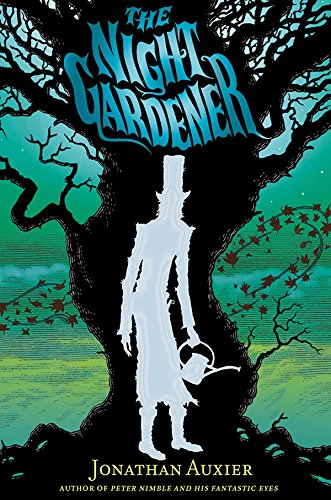
                • Cover of The Night Gardener
                  The Night Gardener

                  Jonathan Auxier · standalone novel · 2014

                  similar byeerie19th centurybritish isles

                  From copyright page: Irish orphans Molly, fourteen, and Kip, ten, travel to England to work as servants in a crumbling manor house where nothing is quite what it seems to be, and soon the siblings are confronted by a mysterious stranger and secrets of the cursed house.

                • Cover of Mary Reilly
                  Mary Reilly

                  Valerie Martin · standalone novel · 1990

                  similar byeerie19th centurybritish isles

                  Mary Reilly is a 1990 parallel novel by American writer Valerie Martin. It is inspired by Robert Louis Stevenson's classic 1886 novella Strange Case of Dr. Jekyll and Mr. Hyde. It was nominated for the Nebula Award for Best Novel in 1990 and the World Fantasy Award for Best Novel in 1991. Martin's novel was the basis for the 1996 film of the same name starring Julia Roberts in the title role.

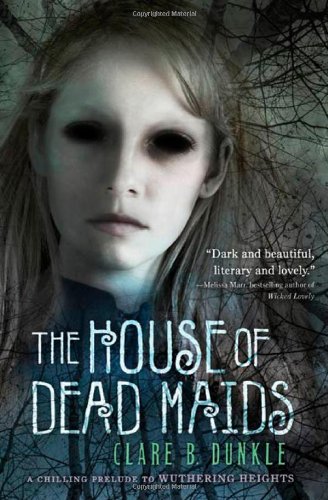
                • Cover of The House of Dead Maids
                  The House of Dead Maids

                  Clare B. Dunkle · standalone novel · 2010

                  similar byeerie19th centurybritish islesghost stories

                  Eleven-year-old Tabby Aykroyd, who would later serve as housekeeper for thirty years to the Brönte sisters, is taken from an orphanage to a ghost-filled house, where she and a wild young boy are needed for a pagan ritual.

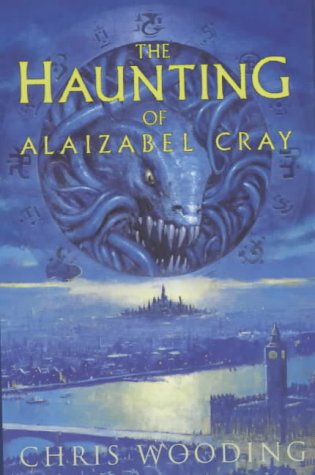
                • Cover of The Haunting of Alaizabel Cray
                  The Haunting of Alaizabel Cray

                  Chris Wooding · standalone novel · 2001

                  similar byeerie19th centurybritish isles

                  The Haunting Of Alaizabel Cray (2004) is a Gothic steampunk horror/alternate history novel by Chris Wooding about a young man and an amnesiac girl fighting a cult in an alternate Victorian era London.

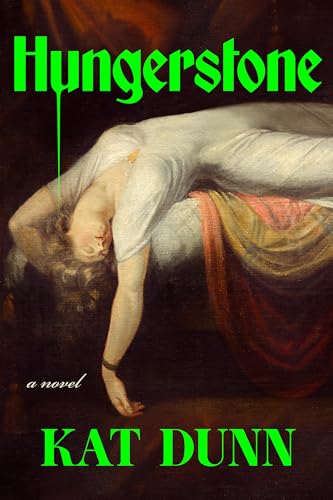
                • Cover of Hungerstone
                  Hungerstone

                  Kat Dunn · standalone novel · 2025

                  similar byeerie19th centurybritish isles

                  An orphaned, emotionally isolated heiress with no money marries a cunning steel tycoon for a chance to build back her life. As their relationship progresses, she grows increasingly disturbed by her own desires, which are brought to the forefront by the mysterious woman they rescue upon their arrival to their new, decrepit, countryside estate. Set during the English industrial revolution, inspired by Sheridan Le Fanu's Carmilla (1872).

                • Cover of The Iremonger Trilogy
                  The Iremonger Trilogy

                  series · 3 books · 2013

                  similar byeerie19th centurybritish isles

                • Cover of The Haunted Hotel
                  The Haunted Hotel

                  Wilkie Collins · standalone novel · 1878

                  similar byeerie19th centuryghost stories

                  Lord Montbarry breaks off his engagement to Agnes Lockwood and marries the Countess Narona, with whom he lives in a Venetian palace. When he dies, Agnes Lockwood becomes suspicious of the circumstances, and goes to Venice with other family members to investigate. Staying in Montbarry's former residence, they experience a haunting.

                • Cover of Carnacki
                  Carnacki

                  universe · 102 books · 1909

                  Start hereCarnacki, the Ghost-Finder · Start here

                  similar byeeriebritish islesghost stories

                  The card arrives without preamble: dinner at 472 Cheyne Walk, and afterward the tale. Thomas Carnacki explains nothing until his four friends are fed and settled by the fire — then, pipe lit, he recounts the thing he has just come back from, and at the last word turns them out into the Embankment dark with a curt "Out you go!" This is the world of the Ghost-Finder: an Edwardian London where a haunting is a case to be worked, and the man who works it trusts neither the credulous nor the smug. William Hope Hodgson raised Carnacki in a slim sheaf of stories — "The Gateway of the Monster," "The Whistling Room," "The Horse of the Invisible" and their fellows, gathered in 1913 and rounded out to nine. Each is a siege: Carnacki barricades himself inside a defended circle, half medieval and half modern — chalk, garlic, water-drawn pentacles and the glass tubes of his own Electric Pentacle humming against the dark — and consults the crumbling Sigsand Manuscript for a rite that may or may not hold. A century on, other hands keep the Chelsea rooms lit: William Meikle, the team of Chico Kidd and Rick Kennett, and editors such as John Linwood Grant, Robert M. Price and Sam Gafford send him after horrors Hodgson never named. What sets the cases apart is Carnacki's refusal to decide in advance. A whistling room may prove a swindle with a trick of plumbing behind it, or a genuine intrusion of the "ab-natural" pressing at the pentacle till the light fails — and until the last page neither he nor you can say which. Begin at the source: read Hodgson's 1913 collection in its own order, "The Gateway of the Monster" first. The later homages are a loose fraternity with no fixed sequence; take them up afterward, as the dark permits.

                • Cover of A Taste for Monsters
                  A Taste for Monsters

                  Matthew J. Kirby · standalone novel · 2016

                  similar byeerie19th centurybritish islesghost stories

                  In 1888 seventeen-year-old Evelyn Fallow, herself disfigured by the phosphorus in the match factory where she worked, has been hired as a maid to Joseph Merrick, the Elephant Man--but when the Jack the Ripper murders begin she and Merrick find themselves haunted by the ghosts of the slain women, and Evelyn is caught up in the mystery of Jack's identity.

                • Cover of Greygallows
                  Greygallows

                  Barbara Michaels · standalone novel · 1972

                  similar by19th centurybritish isles+2 more

                  Lucy Cartwright placed her life and future into the hands of the dashing Baron Clare, despite the rumors of his dark, unsavory past. Trusting his kind words and gentle manner, she agreed to be his wife and followed the enigmatic lord to Greygallows, his sprawling country estate. But mystery, deception, betrayal, and danger surround the magnificent manor—a ghostly secret charges the atmosphere and terror reigns in its shadowed hallways. Lucy entered Greygallows willingly . . . and now she may never leave.

                • Cover of The Ghost Club
                  The Ghost Club

                  series · 2 books · 2017

                  similar byeerie19th centurybritish islesghost stories

                • Cover of The Woman in Black
                  The Woman in Black

                  series · 3 books · 1983

                  similar byeeriebritish islesghost stories

                • Cover of My Brother's Keeper
                  My Brother's Keeper

                  Tim Powers · standalone novel · 2023

                  similar byeerie19th centurybritish isles

                  This is a ghost story. It is a story about werewolves, and things that go bump in the night. It is a story of an ill-fated land, the pathless moors of Northern England so well chronicled in Wuthering Heights. And it is the story of a real family whose destiny it is to deal with this darkly glamorous and dangerous world. When young Emily Brontë helps a wounded man she finds at the foot of an ancient pagan shrine in the remote Yorkshire moors, her life becomes contentiously entwined with his. He is Alcuin Curzon, embittered member of a sect working to eradicate the resurgent plague of lycanthropy in Europe and northern England. But Emily’s father, curate of the Haworth village church, is responsible for having unwittingly brought a demonic werewolf god to Yorkshire forty years ago—and it is taking possession of Emily’s beloved but foolish and dissolute brother. Curzon must regard Emily’s family as a dire threat. In spite of being at deadly odds, Emily and Curzon find themselves thrown together in fighting werewolves, confronting pagan gods, even saving each other from the lures of moorland demons. And in a final battle that sweeps from the haunted village of Haworth to a monstrous shrine far out on the moors, the two of them must be reluctant allies against an ancient power that seems likely to take their souls as well as their lives.

                • Cover of A Strange Story
                  A Strange Story

                  Edward Bulwer-Lytton · standalone novel · 1861

                  similar byeerie19th centurybritish isles

                  A Strange Story is an 1862 Gothic novel by the British writer Edward Bulwer-Lytton. It was originally serialised in the magazine All the Year Round edited by Charles Dickens. It was then published in two volumes by the London publishing house Sampson Low. The American release was handled by Harper and Brothers of New York. The novel reflects Bulwer-Lytton's interest in themes of the occult and mesmerism.