Loreful
HomeDiscover
Search series, authors…⌘K
Loreful

Reading orders for SF/F series and shared universes — with your place kept in every one.

Explore

UniversesSeriesWorksAuthorsAtlas

Help

FAQAboutSite map

Account & legal

Sign inCreate accountPrivacyTerms

Data

Built on ISFDB, Wikipedia, Wikidata and Open Library. Curated reading orders carry their reasoning on the page; the rest follow publication order. Data sources & licenses

© Loreful · data: ISFDB · CC BY

More like Spider

anchored on:psychological thrillermadnesscontemporarydarkunreliable narratorliterary & general+4 more

but

Mood

The mood the book leaves you in.

  • The reading experience is propelled by journeys, exploration, and physical risk; excitement and forward momentum dominate over dread or introspection.
  • Joy and loss are deliberately mixed; the resolution grants characters something real while taking something else away, leaving warmth and sorrow together.
  • The book demands work from the reader — dense prose, difficult structure, unfamiliar ideas, or morally uncomfortable material — as part of its intended effect.
  • Grim events, cruelty, or despair dominate the atmosphere, and the book does not soften them with comfort or comic relief.
  • The atmosphere is quietly unsettling — wrongness, unease, and the uncanny pervade the book without necessarily escalating into overt horror.
  • The book is built to move the reader; character feeling is foregrounded and major scenes aim at a strong emotional response.
  • Humor is a primary aim and the prose plays for laughs — comic situations, wit, or dialogue produce sustained comedy, not occasional levity.
  • The book insists that things can improve; effort and decency are shown to matter, and the arc bends toward better outcomes even through hardship.
  • The book teaches as it goes — real facts, history, science, or craft are conveyed in enough depth that learning is part of the reading experience.
  • The book is designed to uplift and motivate, presenting perseverance or achievement in a way that invites the reader to aspire or act.
  • The overall register is cheerful and easygoing; stakes are kept gentle and the book avoids dwelling on pain or dread.
  • Withheld information drives the experience; the book sustains enigmas and secrets the reader wants resolved, whatever its genre.
  • The book is contemplative and inward-looking, giving more weight to thought, memory, and meaning than to external events.
  • The book works as comfort reading — low tension, a soothing pace, and an atmosphere the reader can unwind in.
  • Grief, loss, or melancholy set the dominant register, and the book lets sorrow stand rather than resolving it into comfort.
  • Sustained suspense is the point; the book keeps the reader braced for what happens next through danger, pressure, or impending revelation.
  • Playful invention and charm define the register — fanciful conceits, light absurdity, and a narration that delights in its own oddity.

About

What the story runs on.

  • Stories in which extraterrestrial beings are central — as characters, cultures, or the object of the plot.
  • Stories structured as a quest — a journey undertaken to find, deliver, or destroy something of great import.
  • Stories in which staying alive against nature, catastrophe, or scarcity is the central problem.
  • Stories of lovers kept apart by law, family, faith, or station, where the obstacle to love is the plot.
  • Stories in which a friendship — its making, testing, or loss — is the emotional center.
  • Stories of growing up — a young protagonist crossing from childhood into adult knowledge and responsibility.
  • Stories about who a character truly is — self-discovery, doubled lives, and the search for a self.
  • Stories about mourning — living through the death of a loved one and what loss does to the survivors.
  • Stories in which a buried family truth — hidden parentage, crimes, or shames — surfaces and reorders the present.
  • Stories driven by maneuvering for power — factions, conspiracies, and statecraft conducted in shadow.
  • Stories in which war itself is the subject — combat, occupation, and what warfare does to soldiers and civilians.
  • Stories organized around investigating a killing — the case, the clues, and the pursuit of the killer, in any genre's clothing.

Shelf

Where it sits in the library.

    • Fiction built on magic or other supernatural elements that have no scientific explanation.
    • Secondary-world fantasy at large scale, where the fate of nations or the world turns on the protagonists' struggle.
    • Fantasy set in a recognizably modern city or contemporary world where the supernatural intrudes on everyday life.
    • Fantasy that blends in horror's atmosphere and imagery, keeping a fantastical frame around grim or frightening material.
    • Action-driven fantasy following warriors or rogues with personal stakes against sorcerous threats, rather than world-spanning conflicts.
    • Fantasy set in a real historical period or a close analogue of one, with magic woven into the era.
    • Fantasy in which protagonists cross from the ordinary world into another world through a portal or similar passage.
    • Fiction that retells or reworks a traditional fairy tale in a new form or setting.
    • Fantasy drawing directly on myths, legends, and folklore, retelling them or building on their figures and logic.
    • Fantasy of ghosts, vampires, shapeshifters, psychics, and similar phenomena, usually set in an otherwise ordinary world.
    • Fiction mixing science-fictional trappings with overtly magical or impossible elements in one setting.
    • Low-stakes fantasy emphasizing comfort, community, and everyday pleasures over conflict and peril.
    • Speculative fiction of pervasive moral ambiguity, violence, and cynicism that rejects heroic conventions — fantasy and SF alike.
      • Fiction that extrapolates from science and technology — future societies, space travel, or speculative inventions — within at least nominally natural laws.
      • Science fiction of interstellar scope — starships, galactic polities, and adventure across star systems.
      • Science fiction committed to scientific rigor, where technical plausibility constrains the story.
      • Science fiction centered on armed forces and warfare, told largely from a military point of view.
      • Science fiction of networked, corporate-dominated near futures, pairing high technology with social decay.
      • Science fiction styled on nineteenth-century steam-powered technology, often in a Victorian or pseudo-Victorian setting.
      • Fiction depicting an oppressive or catastrophic society, presented as a warning.
      • Fiction set after civilization's collapse, following survivors in the ruins of the old world.
      • Fiction in which characters move between past and future, and the mechanics or consequences of that travel drive the plot.
      • Fiction exploring a world where a historical event went differently and history diverged from ours.
      • Science fiction about humanity's first encounter and communication with an alien intelligence.
      • Science fiction in which extraterrestrial forces attack or occupy Earth and humanity resists.
      • Fiction whose primary aim is to frighten or unsettle the reader through dread, menace, or the monstrous.
      • Horror of vast, indifferent, incomprehensible entities before which humanity is insignificant, in the Lovecraft tradition.
      • Horror of decaying houses, buried family secrets, and oppressive atmosphere in the Gothic literary tradition.
      • Horror centered on hauntings and the returning dead.
      • Horror located in the mind — paranoia, obsession, and unreliable perception rather than external monsters.
      • Horror built around the reanimated dead and survival amid their outbreaks.
      • Horror defined by explicit, transgressive gore that refuses to cut away from violence.
      • Speculative fiction of the strange and uncanny that resists both natural explanation and standard genre categories.
      • Fiction organized around solving a crime or puzzle, typically following an investigator toward the identification of a culprit.
      • A puzzle-first mystery that lays out clues so the culprit's identity can be deduced before the reveal.
      • Crime fiction of moral ambiguity, fatalism, and hard-edged style, set among the corrupt and the doomed.
      • A mystery following the realistic routines of police work — forensics, interviews, and case-building.
      • A gentle mystery with an amateur sleuth, a small community, and violence kept off the page.
      • A mystery set in a past era, where the investigation works within that period's methods and society.
      • Fast-paced fiction driven by imminent danger, pursuit, or high-stakes conspiracy, built to sustain tension.
      • A thriller of espionage — agents, tradecraft, and intelligence services in conflict.
      • A thriller centered on lawyers and the courtroom, where litigation carries the suspense.
      • A thriller driven by detailed contemporary or near-future technology, often military or scientific.
      • A thriller whose tension comes from mental states and manipulation between characters rather than external action.
      • Fiction whose central plot is a romantic relationship and its development toward an emotionally satisfying resolution.
      • Romance in which one or both partners are supernatural beings, blending fantasy elements into the love story.
      • A fantasy-romance hybrid in which the romantic arc and the fantasy plot carry equal weight.
      • Romance set in a past era, with courtship shaped by the period's society and manners.
      • Romance set in the present day, without supernatural or historical elements.
      • Fiction set in a real past period, where the historical setting materially shapes characters and events.
        • General and literary fiction emphasizing prose style, character interiority, or formal ambition over genre plot conventions.
        • Fiction in a realistic world where magical events occur and are treated as ordinary, in the tradition of Latin American literature.
        • Fiction that ridicules people, institutions, or society in order to criticize them.
        • Fiction of dreamlike, irrational imagery and logic that breaks from realistic representation.
        • Fiction that plays with narrative convention through metafiction, fragmentation, and self-reference.
        • Fiction propelled by journeys, exploration, and physical peril, where action and survival carry the plot.
        • Adventure fiction of ships and seafaring — naval engagements, voyages, and life at sea.
        • Fiction of the American frontier West — gunmen, ranchers, and lawmen, typically in the late nineteenth century.
        • Fiction centered on soldiers, campaigns, and the experience of warfare, historical or imagined.
          • Fiction written primarily to amuse, using comedic situations, wit, or parody as its organizing principle.
            • Multi-generational fiction following a family or dynasty across decades, with inheritance and kinship as the through-line.
              • Fiction whose world runs on explicit game mechanics — levels, stats, and skills that characters can see and exploit.
                • Fiction about costumed or superpowered heroes and their conflicts with comparable villains.

                Practical

                How long a commitment, whether it stands alone, and whether it has finished.

                Tap a chip to ask for it · tap again to rule it out · once more to clear. Numbers show what would be left.

                • Cover of Crash
                  Crash

                  J. G. Ballard · standalone novel · 1973

                  similar bymadnesscontemporarydarkbritish islesliterary & general

                  Crash is a novel by J. G. Ballard, first published in 1973 with a cover designed by Bill Botten. It follows a group of car-crash fetishists who, inspired by the famous crashes of celebrities, become sexually aroused by staging and participating in car accidents.

                • Cover of The Haunting of Toby Jugg
                  The Haunting of Toby Jugg

                  Dennis Wheatley · standalone novel · 1948

                  similar bymadnessbritish islespsychological thrillerdarktense+1 more

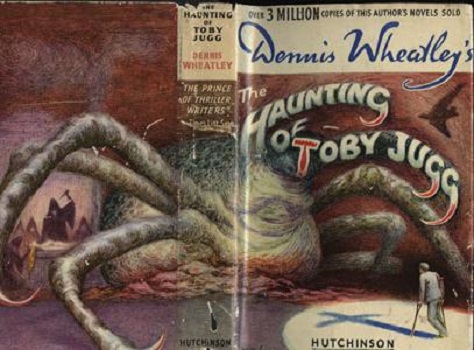
                  The Haunting of Toby Jugg is a 1948 psychological thriller novel on an occult theme by English writer Dennis Wheatley, incorporating his usual themes of satanic possession and madness, in what was at that time a fresh situation: a disabled British airman recovering from his experiences in the last stages of World War II, in which he played a part in the bombardment of Germany.

                • Cover of The Nameless
                  The Nameless

                  Ramsey Campbell · standalone novel · 1981

                  similar bybritish islescontemporarydarkgrief and losstense+1 more

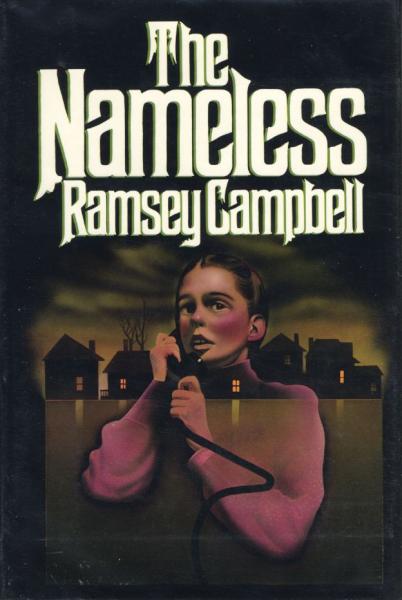
                  A call for help... from a little girl long dead. Barbara Waugh experienced the worst horror a mother can imagine. Her little girl, Angela, was murdered. Horribly. But now, years later, mysterious phone calls bring both hope and fear. Each time, the girl's voice on the other end simply pleads, 'Mummy, help me.' Could Angela still be alive after all? Barbara's desperate search for the truth - and her daughter - will lead her into a living nightmare, an evil world of torture, murder and gruesome rituals, where the initiated have abandoned their names... and are searching for new victims.

                • Cover of Perfunctory Affection
                  Perfunctory Affection

                  Kim Harrison · standalone novel · 2019

                  similar bycontemporarymadnessgrief and losspsychological thrillerliterary & generaldarktenseunreliable narrator

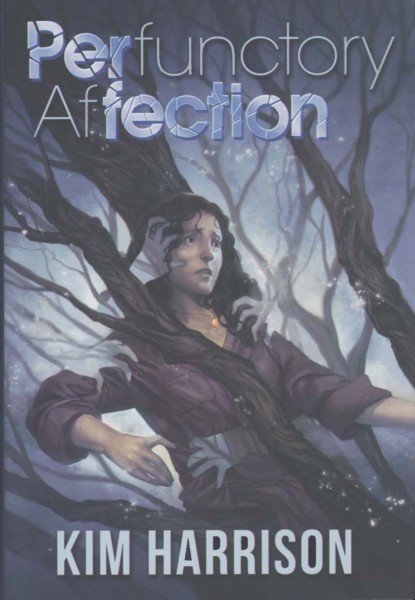
                  Is it better to live a lie of perfection when the truth is too ugly to survive? Meg wants a normal life. Her new artistic style, born in the depression of her mother’s death, is poised to take the art world by storm, if she could just overcome the debilitating anxiety caused by the car accident that scarred her boyfriend, Austin. Encouraged by her therapist, Meg pushes outside her comfort zone to befriend Haley, a guest instructor at the university where Meg teaches. Haley is everything Meg wants to be: charismatic, confident, and perfect, but when Austin expresses his worry that Haley is changing Meg too fast and leads her to realize that Austin is trying to keep her afraid and needing him, Meg kicks him out of her life. Or at least, she tries. Kim Harrison, author of the number one bestselling Urban Fantasy Hollows series, brings to life a world terrifyingly near to our own, where what’s real and what shouldn’t exist twine together in the madness of a troubled mind desperate for a way out. But when the truth is revealed, the question remains, is it better to live a lie of perfection, or cleave to an ugly reality that will destroy you?

                • Cover of The Road of the Dead
                  The Road of the Dead

                  Kevin Brooks · standalone novel · 2006

                  similar bybritish islescontemporarygrief and losspsychological thrillerdarktense

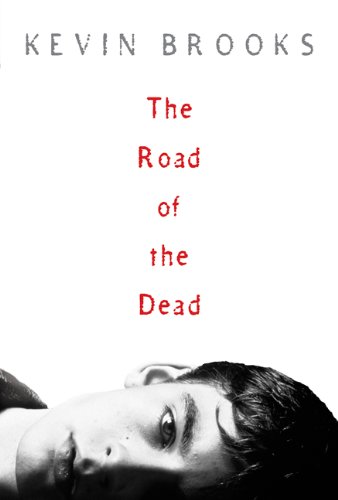
                  Two brothers, one with second sight, investigate their sister's murder.

                • Cover of The Fog
                  The Fog

                  James Herbert · standalone novel · 1975

                  similar bybritish islescontemporarymadnessdarktense

                  The Fog is a horror novel by English writer James Herbert, published in 1975. It is about a deadly fog that drives its victims insane when they come into contact with it.

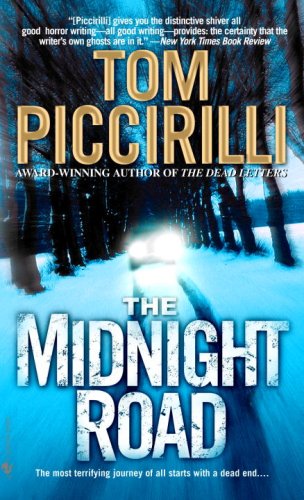
                • Cover of The Midnight Road
                  The Midnight Road

                  Tom Piccirilli · standalone novel · 2007

                  similar bycontemporarypsychological thrillerdarkgrief and losstense+1 more

                  From his first vision of a girl during a snowstorm, the boundaries between life and death become blurred for Flynn, an investigator for the Suffolk County Child Protective Services, as he becomes trapped in a terrifying cat and mouse game with a mysterious, unknown killer--Publisher.

                • Cover of Dead Babies
                  Dead Babies

                  Martin Amis · standalone novel · 1975

                  similar bybritish islescontemporarydarkmadnessliterary & general

                  Dead Babies is Martin Amis's second novel, published in 1975 by Jonathan Cape. Its first UK and US paperback edition was published under the title Dark Secrets. Amis's second novel—a parody of Agatha Christie's country-house mysteries—takes place over a single weekend at a manor called Appleseed Rectory. In 2000, the book was adapted into a film of the same name, starring Paul Bettany and Olivia Williams. In 2001, BBC critic David Wood wrote "Amis's second novel ranks among his most incendiary with its mordant wit, black comedy, and sense of the violently absurd." It has an epigraph attributed to the Cynic Menippus and the novel has been interpreted as a Menippean satire.

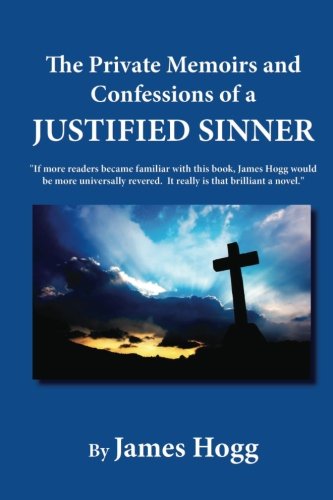
                • Cover of The Private Memoirs and Confessions of a Justified Sinner
                  The Private Memoirs and Confessions of a Justified Sinner

                  James Hogg · standalone novel · 1824

                  similar bymadnessbritish islesdarkliterary & generalunreliable narrator

                  The Private Memoirs and Confessions of a Justified Sinner: Written by Himself: With a detail of curious traditionary facts and other evidence by the editor is a novel by the Scottish author James Hogg, published anonymously in 1824.

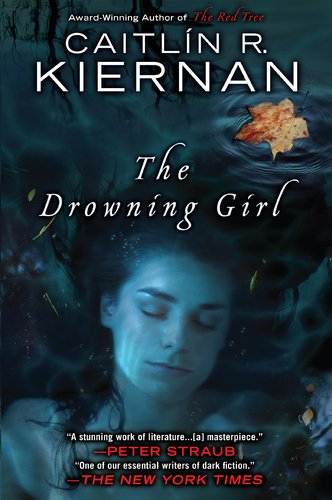
                • Cover of The Drowning Girl
                  The Drowning Girl

                  Caitlín R. Kiernan · standalone novel · 2012

                  similar bymadnesscontemporarygrief and lossliterary & generaldarkunreliable narratorfirst person

                  The Drowning Girl: A Memoir is a 2012 dark fantasy novel by American writer Caitlín R. Kiernan, set in Providence, Rhode Island. The story's protagonist and unreliable narrator, India Morgan Phelps, has schizophrenia.

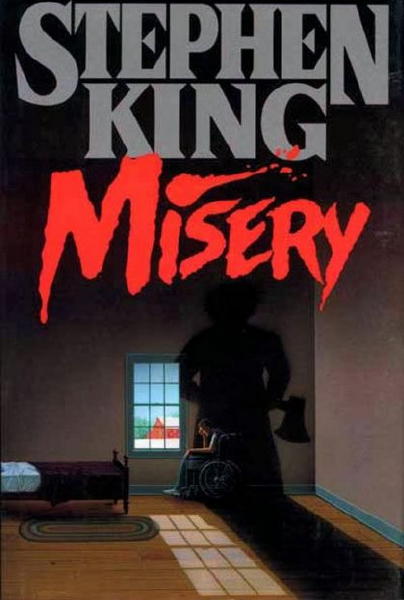
                • Cover of Misery
                  Misery

                  Stephen King · standalone novel · 1987

                  similar bycontemporarypsychological thrillerdarktensefirst person+1 more

                  Novelist Paul Sheldon finishes the manuscript that will finally kill off Misery Chastain, the heroine who made his career, when a snowstorm sends his car off a Colorado road. He wakes with both legs shattered, in the care of Annie Wilkes, a former nurse and 'number one fan' with no intention of taking him to a hospital. Annie manages his pain with drugs he comes to depend on, and her moods swing between doting and violent. When she learns Misery doesn't survive his new manuscript, her reaction makes clear Paul isn't just her patient, he's her hostage. A Stephen King novel about a writer at his most devoted fan's mercy.

                • Cover of The True Tale of the Monster Billy Dean
                  The True Tale of the Monster Billy Dean

                  David Almond · standalone novel · 2011

                  similar bybritish islescontemporarydarkmadnessliterary & generalfirst person

                  The True Tale of the Monster Billy Dean telt by hisself is a 2011 story by David Almond. It was released simultaneously in young adult (Puffin) and adult editions (Penguin), and was Almond's first adult novel. It is about a boy, Paul, who is imprisoned by his parents until the age of thirteen and on his freedom is treated as a messiah.

                • Cover of A Monster Calls
                  A Monster Calls

                  series · 2 books · 2011

                  similar bybritish islescontemporarygrief and lossliterary & general+1 more

                  A Monster Calls follows a boy struggling with his mother's terminal illness, who is visited each night by a tree-like monster demanding an honest story from him in exchange for the unsettling tales it tells. Patrick Ness wrote the novel from an idea left unfinished by Siobhan Dowd, who died of cancer before she could write it herself, with illustrations by Jim Kay integral to the original edition. It was later adapted for the stage.

                • Cover of Midget
                  Midget

                  Tim Bowler · standalone novel · 1994

                  similar bybritish islescontemporarypsychological thrillermadnessdarktense

                  Midget is the first novel by British author Tim Bowler, first published in 1994. It is a psychic and psychological thriller. It is set in Leigh-on-Sea.

                • Cover of The Course of the Heart
                  The Course of the Heart

                  M. John Harrison · standalone novel · 1992

                  similar bybritish islescontemporarymadnessgrief and lossdark

                  On a hot May night, three Cambridge students carry out a ritualistic act that changes their lives. Years later, none of the participants can remember what exactly transpired, but their clouded memories can't rid them of an overwhelming sense of dread.

                • Cover of The Doll Who Ate His Mother
                  The Doll Who Ate His Mother

                  Ramsey Campbell · standalone novel · 1976

                  similar bycontemporarydarkmadnessgrief and losstense

                  It was a freak accident. The man had suddenly stepped into the road, and the brakes had failed. Clare could only steer wildly, the car finally crashing into a tree and on to the kerb. Now her brother Rob was dead, silent in the passenger seat, slumped against the door. He died of massive head injuries. But there was something else, something that at first she couldnt quite grasp, that seemed inexplicable. His right arm was missing. Gone. Someone had taken it.

                • Cover of Kerry Darke
                  Kerry Darke

                  series · 1 book · 2018

                  similar bybritish islescontemporarydarkmadnesstense+1 more

                • Cover of The Machine
                  The Machine

                  James Smythe · standalone novel · 2013

                  similar bybritish islescontemporarygrief and lossdarktense+1 more

                  From the publisher's website: Haunting memories defined him. The machine took them away. She vowed to rebuild him. From the author of The Testimony comes a Frankenstein for the twenty-first century. Beth lives alone on a desolate housing estate near the sea. She came here to rebuild her life following her husband's return from the war. His memories haunted him but a machine promised salvation. It could record memories, preserving a life that existed before the nightmares. Now the machines are gone. The government declared them too controversial, the side-effects too harmful. But within Beth's flat is an ever-whirring black box. She knows that memories can be put back, that she can rebuild her husband piece by piece. A Frankenstein tale for the 21st century, The Machine is a story of the indelibility of memory, the human cost of science and the horrors of love.

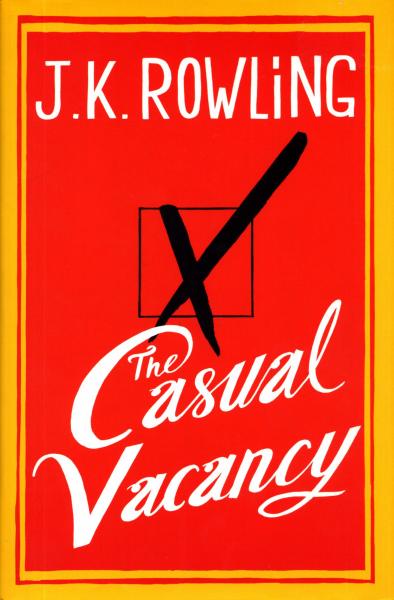
                • Cover of The Casual Vacancy
                  The Casual Vacancy

                  J. K. Rowling · standalone novel · 2012

                  similar bybritish islescontemporaryliterary & generaldark+2 more

                  Publisher: "When Barry Fairbrother dies unexpectedly in his early forties, the little town of Pagford is left in shock. Pagford is, seemingly, an English idyll, with a cobbled market square and an ancient abbey, but what lies behind the pretty façade is a town at war. Rich at war with poor, teenagers at war with their parents, wives at war with their husbands, teachers at war with their pupils…. Pagford is not what it first seems. And the empty seat left by Barry on the town's council soon becomes the catalyst for the biggest war the town has yet seen. Who will triumph in an election fraught with passion, duplicity and unexpected revelations?"

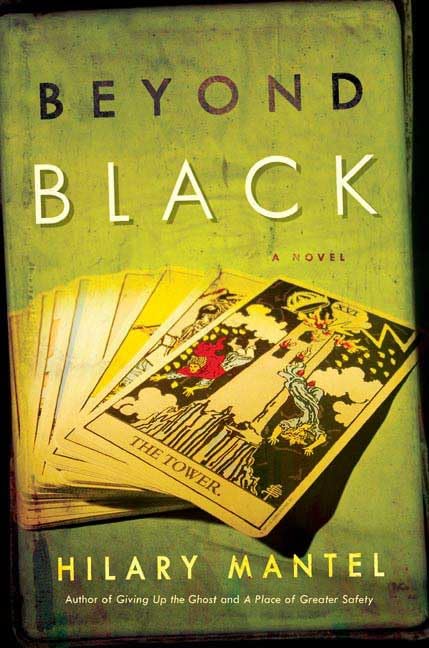
                • Cover of Beyond Black
                  Beyond Black

                  Hilary Mantel · standalone novel · 2005

                  similar bybritish islescontemporarymadnessliterary & generaldark+1 more

                  Beyond Black is a 2005 novel by English writer Hilary Mantel. It was shortlisted for the 2006 Orange Prize for Fiction.

                • Cover of The Scarecrows
                  The Scarecrows

                  Robert Westall · standalone novel · 1981

                  similar bybritish islescontemporarydarkmadnessgrief and loss

                  The Scarecrows is a young-adult novel by Robert Westall, published by Chatto & Windus in 1981. It is a psychological novel with a supernatural twist, featuring a thirteen-year-old boy's reaction to his mother's courtship and remarriage six years after his father's death. It deals with themes of rage, isolation and fear. Beside the inner themes, it "tells of a boy and his family brought to the brink of destruction by sinister external forces" and it may be called a ghost story. Its US Library of Congress Subject Headings are remarriage, stepfathers, and horror stories.

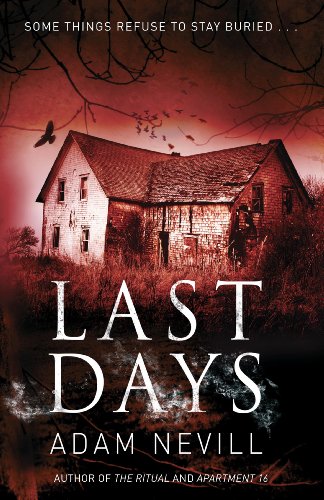
                • Cover of Last Days
                  Last Days

                  Adam Nevill · standalone novel · 2012

                  similar bybritish islescontemporarydarkmadnesstense

                  Last Days is a 2012 horror novel by the British author Adam Nevill. The book was first published in the United Kingdom on 24 May 2012 by Pan Macmillan and was published in the United States on 26 February 2013 through St. Martin's Griffin. It won the 2013 British Fantasy Award for Best Horror Novel and film rights for Last Days were first optioned by Adam Storke in early 2014. The option has subsequently passed to another film production company.

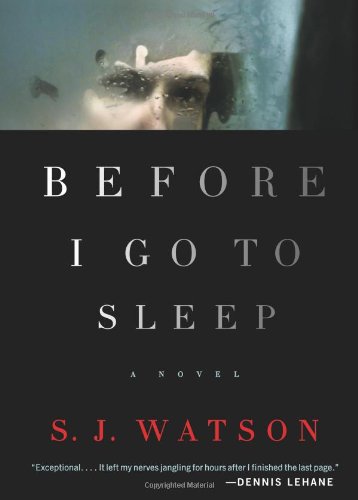
                • Cover of Before I Go to Sleep
                  Before I Go to Sleep

                  S. J. Watson · standalone novel · 2011

                  similar bybritish islescontemporarypsychological thrillertenseunreliable narrator

                  Before I Go to Sleep is the first novel by S. J. Watson, published in the spring of 2011. It became both a Sunday Times and The New York Times bestseller and has been translated into over 40 languages. It has become a bestseller in France, Canada, Bulgaria and the Netherlands. It reached number 7 on the U.S. bestseller list, the highest position for a debut novel by a British author since J. K. Rowling. The New York Times described the author as an "out-of-nowhere literary sensation". He wrote the novel between shifts whilst working as a National Health Service (NHS) audiologist.

                • Cover of The Cement Garden
                  The Cement Garden

                  Ian McEwan · standalone novel · 1978

                  similar bybritish islescontemporarydarkgrief and lossliterary & general+1 more

                  The Cement Garden is a 1978 novel by Ian McEwan. It was adapted into a 1993 film of the same name by Andrew Birkin, starring Charlotte Gainsbourg and Andrew Robertson. The Cement Garden has had a positive reception since its original publication.