More like Spiked
anchored on:science fictionnear future
but
- Darwin
series2 books1999
completed
similar bytensescience fictiongenetic engineeringnear futurenorth america+2 more
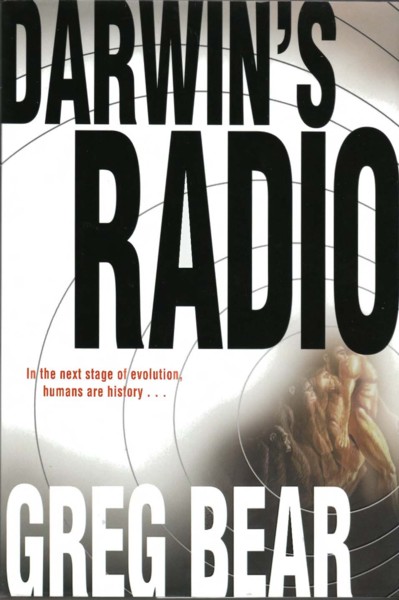
Greg Bear's Darwin's Radio imagines a dormant retrovirus in human DNA activating worldwide, triggering an accelerated leap in human evolution that governments respond to as a plague. The 1999 novel won the Nebula Award; its sequel Darwin's Children follows the first generation of changed children as society decides what to do with them. Together they're speculative near-future science fiction grounded in genetics rather than space opera.
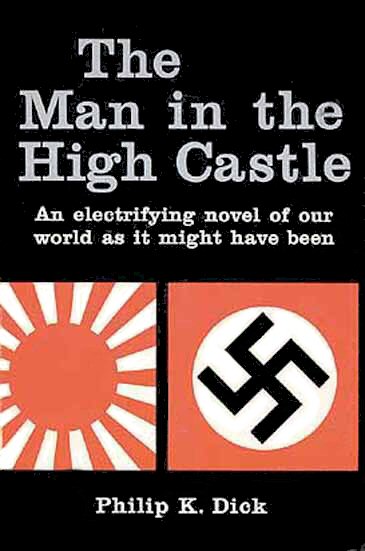
- Library of America P. K. Dick Collection
series9 books1962
completed
similar byscience fictionnear future+2 more
- Ship Breaker
series3 books2010
similar bytensescience fictionsurvivalnear futurenorth americayoung adult+2 more
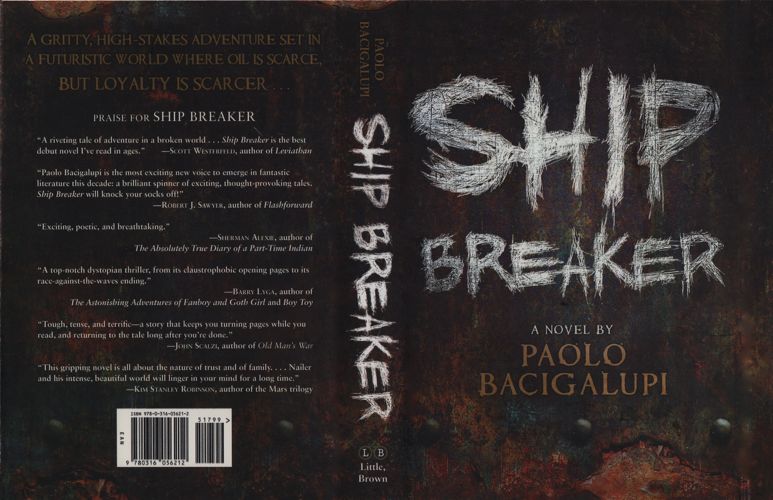
Nailer works a light-crew scavenging copper wire and scrap from beached oil tankers on a Gulf Coast reshaped by rising seas and vanished order, until a wrecked clipper ship washes ashore carrying a half-drowned girl from the wealthy world he'll never belong to. Paolo Bacigalupi's Ship Breaker follows Nailer as helping her pulls him out of his abusive father's orbit and into a much larger, more dangerous game involving her family's fortune. The sequels The Drowned Cities and Tool of War widen the same flooded, resource-scavenging future to new characters and coastlines.
- Unwind Dystology
series5 books2007
similar bytensescience fictiongenetic engineeringnear futurenorth americayoung adult+2 more
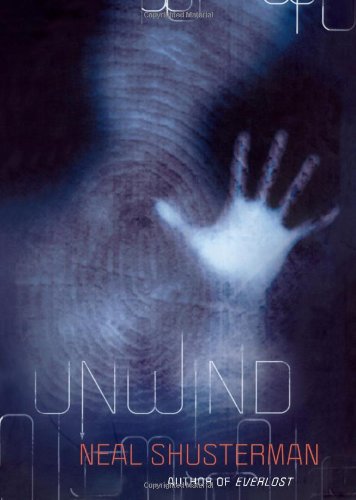
Neal Shusterman's Unwind Dystology opens in a United States reshaped by the resolution to a war over reproductive rights: parents can retroactively have a teenager "unwound," their body disassembled for transplant on the premise that nothing technically dies since every part lives on in someone else. The first novel follows three teens fleeing that fate, and the sequels widen the same dystopia's cast and consequences across a four-book arc plus companion material. It is grim speculative fiction built to ask hard bioethical questions rather than offer comfort.
- The Chemical Garden Trilogy
series3 books2011
similar bytensescience fictiongenetic engineeringsurvivalnear futurenorth americayoung adult
- Kairos
series11 books1962
completed
similar byscience fictionyoung adult+1 more
The Time Quintet is a science fantasy series of five young adult novels written by American author Madeleine L'Engle and made up of A Wrinkle in Time (1962), A Wind in the Door (1973), A Swiftly Tilting Planet (1978), Many Waters (1986), and An Acceptable Time (1989).
- H. G. Wells' War of the Worlds
universe65 books1898
Start hereThe War of the Worlds · Start here
similar byscience fiction+2 more
No one would have believed, in the closing years of the nineteenth century, that human affairs were being watched keenly and closely from the timeless worlds of space. And then the cylinders fell. H. G. Wells' War of the Worlds opens in the quiet of the Surrey commons, where a falling star proves to be the first Martian craft — and from the pit rise the towering tripods, the Heat-Ray, the choking Black Smoke and the creeping red weed, wielded by minds that regard mankind much as we regard the creatures we boil for supper. This is invasion rendered as natural disaster: cold, methodical, and vast beyond argument. Wells' 1898 novel is the seed; everything else grows from that Martian soil. The catalogue gathers direct sequels and continuations alongside a wide field of other hands. In War of the Worlds: Global Dispatches the invasion is retold across the whole planet through the eyes of Twain, Verne, Tolstoy, Lowell and Kipling; in the Manly Wade and Wade Wellman crossover, Sherlock Holmes, Watson and Professor Challenger take the field against the machines; and Scott Washburn's Great Martian War stretches the fighting into a decades-long alternate history of steam, artillery and grinding attrition. It is a loose shared world — no single decreed sequence, many voices answering one calamity. What sets this world apart is its refusal of heroics: the invaders fall not to generals but to the smallest things of Earth, humbling and indifferent. Begin, always, with Wells' original novel — it is short, and it is the ground every later book stands upon. From there follow your appetite: Global Dispatches for the panorama, the Holmes campaign for adventure, Washburn for the long war.
- Z for Zachariah
Robert C. O'Brienstandalone novel1975
similar bytensescience fictionsurvivalnear futureour worldnorth americayoung adult
Sixteen-year-old Ann Burden, on an Amish family farm in an isolated valley, believes she is the only survivor of nuclear war and nerve gas. One day a man arrives in a "safe-suit" that he and others have recently developed.
- The Hunger Games
series3 books2008
part of The Hunger Games Universe
similar bytensescience fictionsurvivalnorth americayoung adult
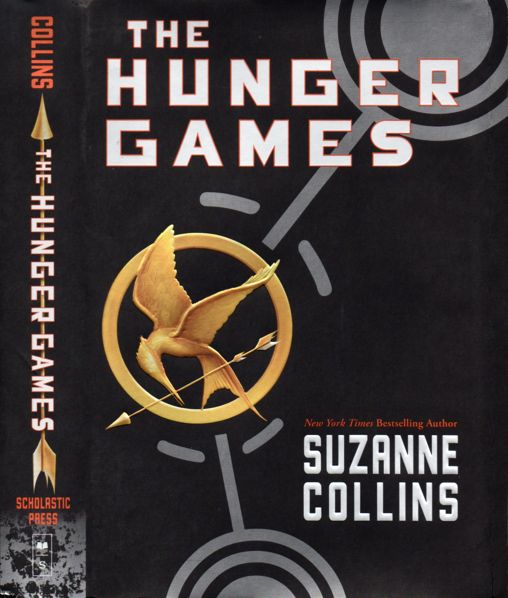
The Hunger Games is a series of young adult dystopian novels written by American author Suzanne Collins. The series consists of a trilogy that follows teenage protagonist Katniss Everdeen, as well as two prequels. The Hunger Games universe is a dystopia set in Panem, a post-apocalyptic North American country consisting of the wealthy Capitol and 12 districts in varying states of poverty. As punishment for rebellion, the Capitol hosts an annual battle royale competition called The Hunger Games. Each of the 12 districts must send two children between the ages of 12 and 18 to participate, and the last surviving child is dubbed the victor.
- Future History
series42 books1939
completed
similar byscience fiction+2 more
The Future History is a series of science fiction stories written by American author Robert A. Heinlein (1907–1988). It describes a projected future of the human race from the middle of the 20th century through the early 23rd century. The term Future History was coined by John W. Campbell Jr. in the February 1941 issue of Astounding Science Fiction. Campbell published an early draft of Heinlein's chart of the series in the May 1941 issue.
- Maze Runner
series11 books2009
similar bytensescience fictionsurvivalnear futureyoung adult+2 more
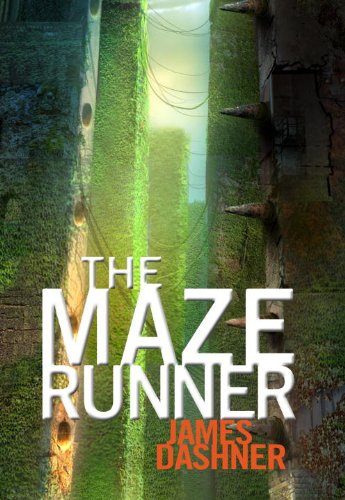
The Maze Runner is a series of young adult dystopian science fiction novels written by American author James Dashner. The series consists of the trilogy The Maze Runner (2009), The Scorch Trials (2010) and The Death Cure (2011), as well as two prequel novels, The Kill Order (2012) and The Fever Code (2016). A novella titled Crank Palace (2020) and a companion book titled The Maze Runner Files (2013) have also been released. A sequel trilogy in the series titled The Maze Cutter takes place 73 years following the events of The Death Cure and consists of the novels The Maze Cutter (2022), The Godhead Complex (2023), and The Infinite Glade (2025).
- The Hunger Games Universe
universe5 books2008
Start hereThe Hunger Games · Start here
similar bytensescience fictionsurvivalnorth americayoung adult
Panem, they call it now — a nation raised on the drowned bones of North America, a glittering Capitol ringed by twelve districts it once starved into obedience. Every year the Capitol collects its debt in children: two tributes from each district, drawn by lottery, dropped into an engineered arena, and made to kill one another on live television while the whole country is required to watch. This is the Hunger Games — entertainment, punishment, and government at once. Suzanne Collins tells it in a compact, unified body of work. The founding trilogy — The Hunger Games, Catching Fire, and Mockingjay — follows Katniss Everdeen, a girl from the coal-mining District 12 who volunteers in her sister's place and becomes something the Capitol never scripted. Two prequels reach back into the same machinery: The Ballad of Songbirds and Snakes traces a young Coriolanus Snow long before he is President, and Sunrise on the Reaping returns to District 12 a generation ahead of Katniss. Begin with the trilogy, in order — it is Katniss's voice, close and present-tense, that makes Panem breathe, and the prequels land hardest once you know how her story ends. Beneath the spectacle sits one steady, uncomfortable question: who profits when we agree to look away.
- Partials Sequence
series4 books2012
similar bytensescience fictiongenetic engineeringnear futureyoung adult+3 more
- Patternist
series6 books1976
completed
similar byscience fictiongenetic engineering+4 more
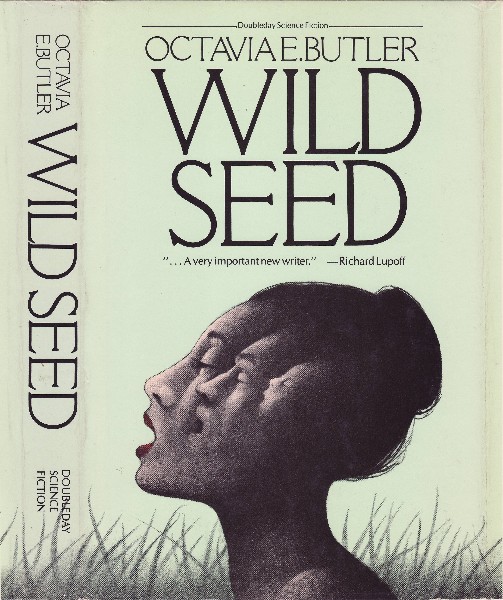
The Patternist series is a group of science fiction novels by Octavia E. Butler that detail a secret history continuing from the Ancient Egyptian period to the far future that involves telepathic mind control and an extraterrestrial plague. A profile of Butler in Black Women in America notes that the themes of the series include "racial and gender-based animosity, the ethical implications of biological engineering, the question of what it means to be human, ethical and unethical uses of power, and how the assumption of power changes people."
- Blade Runner Universe
series6 books1968
similar byscience fictionnear future+2 more
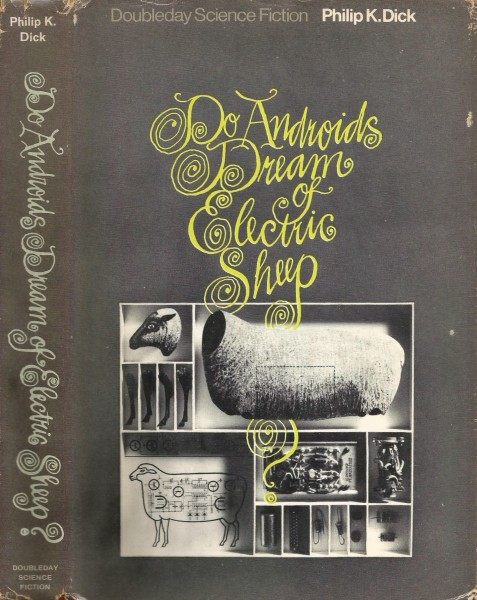
Philip K. Dick's 1968 novel Do Androids Dream of Electric Sheep? follows bounty hunter Rick Deckard as he tracks escaped androids through an irradiated, near-abandoned San Francisco, using the hunt to probe questions of empathy and what separates human from machine. The novel became the basis for Ridley Scott's 1982 film Blade Runner, and Marvel Comics later published an illustrated adaptation of that film. Together the two trace the story's path from prose original to screen and comic-page adaptation.
- Colony
Ben Bovastandalone novel1978
similar bytensescience fictionsurvivalnear future+2 more
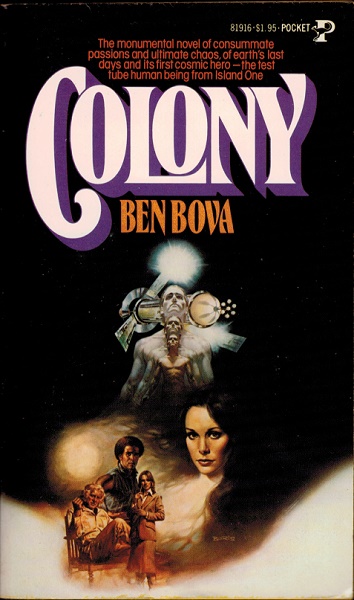
Colony continues the story Ben Bova began in Millennium, following astronaut-turned-administrator Chet Kinsman years later as the head of an orbiting space habitat that has become Earth's only real refuge from a planet buckling under overpopulation, food shortages and unrest. Getting a place in the habitat is a matter of life and death for millions who will never be chosen, and as Earth's governments grow more desperate to control or dismantle the colony outright, Kinsman has to decide how far he'll go to protect the world he's built off-world. Bova later folded both novels together into the omnibus The Kinsman Saga. Part of Ben Bova's Chet Kinsman series.
- Dune
series20 books1963
part of Dune Universe
similar byscience fiction+1 more
Frank Herbert's Dune Chronicles opens with 1965's Dune, set on the desert planet Arrakis where House Atreides takes control of the only source of the vital spice melange and young Paul Atreides is pulled into a struggle over its politics and religion. Herbert carried the story forward across five further novels — Dune Messiah, Children of Dune, God Emperor of Dune, Heretics of Dune, and Chapterhouse: Dune — following Paul's line over the following millennia, before Brian Herbert and Kevin J. Anderson later extended the saga. Many other editions of these six novels are omnibus and box-set repackagings rather than separate stories.
- Have Space Suit - Will Travel
Robert A. Heinleinstandalone novel1958
similar bytensescience fictionsurvivalnear futurenorth americayoung adult
From the back cover of the Del Rey 9th printing: "Skyjacked - Everything happened at once. One minute Kip Russell was walking about in his own backyard, testing out an old space suit and dreaming about going to the moon - and the next he was out cold and the captive of an insidious space pirate. The whole thing seemed like a very bad dream until he discovered he wasn't the only prisoner on board. Then the reality of the situation became inescapable. He - along with the daughter of a world-renowned scientist and a beautiful creature from an alien planet - had been skyjacked by a monstrous extraterrestrial and they were on their way to the Moon... a journey toward a fate worse than death!"
- Seveneves
Neal Stephensonstandalone novel2015
similar bytensescience fictiongenetic engineeringsurvivalnear futureour world
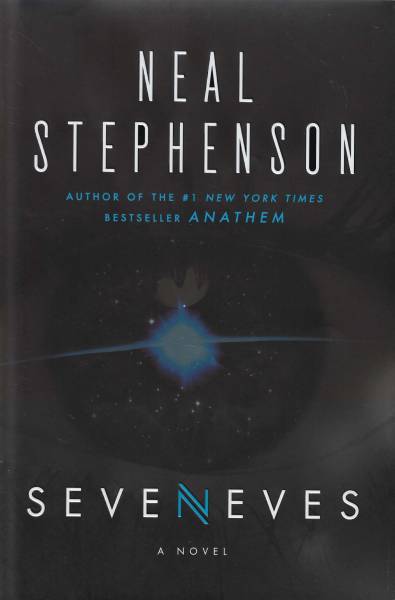
Seveneves is a science fiction novel by Neal Stephenson published in 2015. The story tells of the desperate efforts to preserve Homo sapiens in the wake of apocalyptic events on Earth after the unexplained disintegration of the Moon and the remaking of human society as a space-based civilization after a severe genetic bottleneck.
- The Idlewild Trilogy
series3 books2003
similar byscience fictiongenetic engineeringsurvivalnear futureour world+1 more
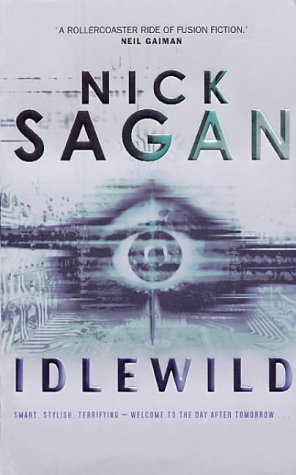
Nick Sagan's Idlewild trilogy opens with Idlewild (2003), a science-fiction novel that alternates between mid-21st-century interludes and events a generation later, following humanity's ten last survivors, cast in a modern mythological framework as god-like figures. It continues across Edenborn and Everfree.
- The Host
Stephenie Meyerstandalone novel2008
similar bytensescience fictionsurvivalnear futureour worldnorth america
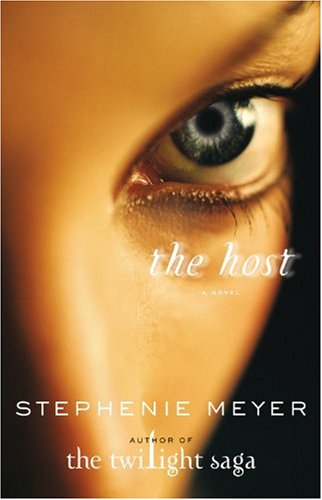
The earth has been invaded by a species that take over the minds of their human hosts while leaving their bodies intact, and most of humanity has succumbed. But Melanie Stryder refuses to fade away. Wanderer, the invading "soul" who has been given Melanie's body, knew about the challenges of living inside a human: the overwhelming emotions, the too vivid memories. But there was one difficulty Wanderer didn't expect: the former tenant of her body refusing to relinquish possession of her mind. Melanie fills Wanderer's thoughts with visions of the man Melanie loves--Jared, a human who still lives in hiding. Unable to separate herself from her body's desires, Wanderer yearns for a man she's never met. As outside forces make Wanderer and Melanie unwilling allies, they set off to search for the man they both love.--From publisher description.
- Maximum Ride
series12 books2005
similar byscience fictiongenetic engineeringsurvivalour worldyoung adult+3 more
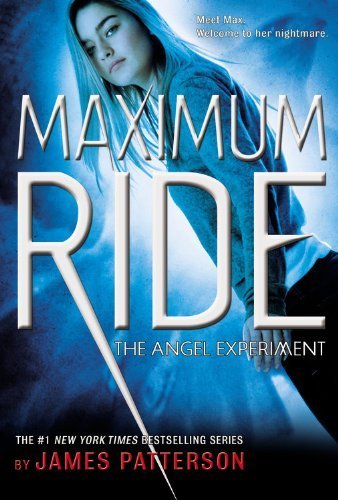
Maximum Ride is a series of young adult science fantasy novels by American author James Patterson. The series centers on the adventures of Maximum "Max" Ride and her family, called the Flock, who are winged human-avian hybrids created at a lab called The School. The series was inspired by Patterson's earlier novels When the Wind Blows and The Lake House, which were intended for older readers.
- The Martian
series2 books2012
similar bytensescience fictionsurvivalnear futureour world
Andy Weir's novel The Martian, first self-published in 2011 before a commercial re-release, follows astronaut Mark Watney after he is stranded alone on Mars when his crew presumes him dead and departs. Using scientific improvisation and dark humor, Watney works to keep himself alive long enough for a rescue to reach him. It is a single, self-contained survival story.
- The Hammer of God
Arthur C. Clarkestandalone novel1993
similar bytensescience fictionsurvivalnear future+2 more
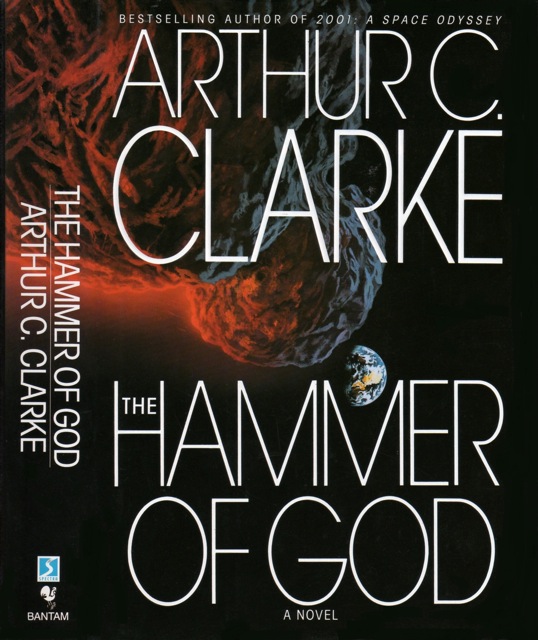
The Hammer of God is a science fiction novel by Arthur C. Clarke originally published in 1993. Set in the year 2109, it deals with the discovery of an asteroid to be on course to collide with Earth and depicts the mission for deflecting the asteroid by using fusion thermal rockets.