More like Spin Control
anchored on:science fictionartificial intelligencenear futuretensecyberpunkcloning+3 more
but
- Sprawl Trilogy
series10 books1981
similar bynear futurescience fictioncyberpunktensedarkartificial intelligence
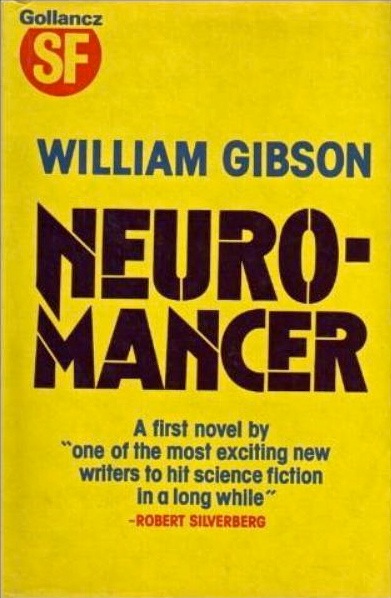
The Sprawl Trilogy is William Gibson's foundational cyberpunk sequence: Neuromancer (1984), in which hacker Case is drawn into a high-stakes heist alongside an artificial intelligence and a damaged ex-soldier, followed by Count Zero (1986) and Mona Lisa Overdrive (1988), which widen the same near-future world of corporate power and networked cyberspace to new characters. Johnny Mnemonic, an early short story set in the same fictional milieu, predates the novels and introduces the courier Molly Millions before her role in the trilogy. Together these works established much of cyberpunk's visual and thematic vocabulary.
- Blade Runner Universe
series6 books1968
similar bynear futurescience fictioncyberpunkdark+3 more
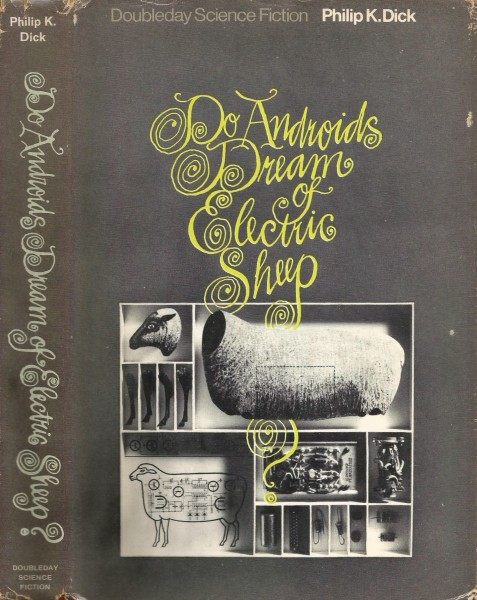
Philip K. Dick's 1968 novel Do Androids Dream of Electric Sheep? follows bounty hunter Rick Deckard as he tracks escaped androids through an irradiated, near-abandoned San Francisco, using the hunt to probe questions of empathy and what separates human from machine. The novel became the basis for Ridley Scott's 1982 film Blade Runner, and Marvel Comics later published an illustrated adaptation of that film. Together the two trace the story's path from prose original to screen and comic-page adaptation.
- Fairyland
Paul J. McAuleystandalone novel1995
similar bynear futurescience fictioncyberpunkdarktenseartificial intelligencegenetic engineering
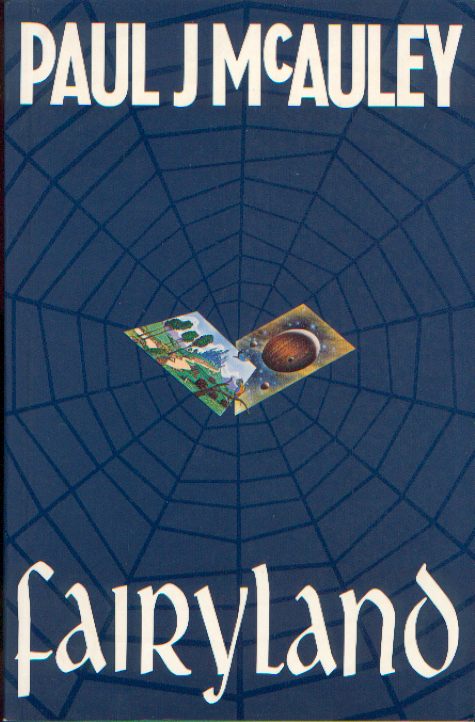
In a near-future Europe, gene-hacker Alex Sharkey has created a new life form: fairies - genetically-altered dolls with human intelligence. As the fairies develop their own societies, it become apparent that one group has sinister intentions, and Sharkey must try and put an end to their plans.
- The Shockwave Rider
John Brunnerstandalone novel1975
similar bynear futurescience fictiontensecyberpunkdark
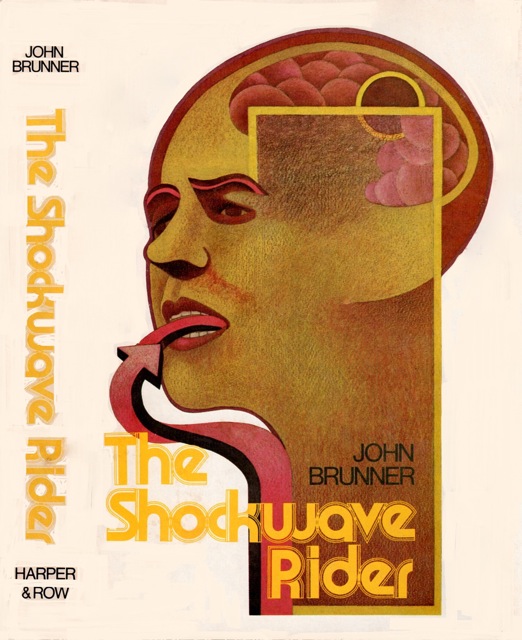
The Shockwave Rider is a science fiction novel by John Brunner, originally published in 1975. It is notable for its hero's use of computer hacking skills to escape pursuit in a dystopian future, and for the coining of the word "worm" to describe a program that propagates itself through a computer network. It also introduces the concept of a Delphi pool, perhaps derived from the RAND Corporation's Delphi method – a prediction market on world events which bears close resemblance to DARPA's controversial and cancelled Policy Analysis Market.
- Nexus 5
series3 books2012
similar bynear futurescience fictiontensedarkartificial intelligence+3 more
Nexus opens Ramez Naam's postcyberpunk trilogy in 2040 with scientist Kaden Lane, who works on Nexus, an experimental nano-drug that lets human minds be networked and reprogrammed, and finds himself caught between government and corporate interests once the technology's implications become clear. The trilogy continues through Crux and Apex, following the same central conflict over who controls the technology. Nexus tied for Best Novel at the 2014 Prometheus Awards and Apex won the 2015 Philip K. Dick Award.
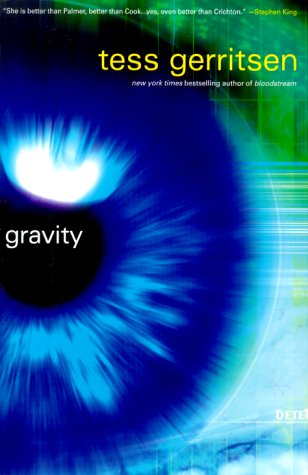
- Gravity
Tess Gerritsenstandalone novel1999
similar byspacenear futurescience fictiontensedark
Medical thriller set aboard the International Space Station where astronauts are dying one by one from a mysterious disease. Dr Emma Watson is a research physician on a mission to study living organisms in space. But the mission aboard the space station turns into a nightmare.
- Jenny Casey
series4 books2004
similar bynear futurescience fictiontense+4 more
Elizabeth Bear's Jenny Casey trilogy opens with Hammered (2004), her debut novel, which won the Locus Award for Best First Novel. It continues across Scardown and Worldwired, completing the story of its title character across three volumes published through 2006.
- Aftermath (Charles Sheffield)
series2 books1998
completed
similar byspacenear futurescience fictiontensedark
Charles Sheffield's Aftermath duology opens with a near-future Earth devastated by a nearby supernova's radiation, which knocks out electronics and forces survivors to rebuild without most modern technology. Starfire continues years later as a second, larger stellar threat approaches and humanity must recover enough capability to respond. Sheffield, a physicist by training, grounds both books in hard-science consequences of the disaster rather than treating it as mere backdrop.
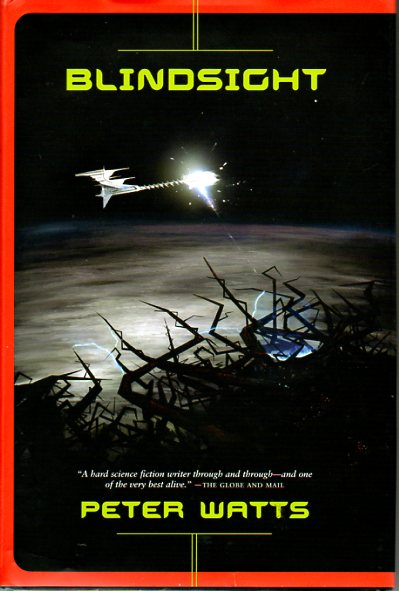
- Blindsight / Firefall
series3 books2006
similar byspacescience fictiontensedarkartificial intelligence+2 more
Blindsight sends a crew of radically modified posthumans (including a resurrected, genetically restored vampire) out to the Oort cloud after humanity detects an alien signal, only to make contact with something intelligent, wildly capable, and possibly not conscious at all — a first-contact story built around the question of whether self-awareness is actually useful. Peter Watts's Echopraxia is a same-timeframe "sidequel" rather than a direct sequel, following different characters through the fallout of the same first-contact event.
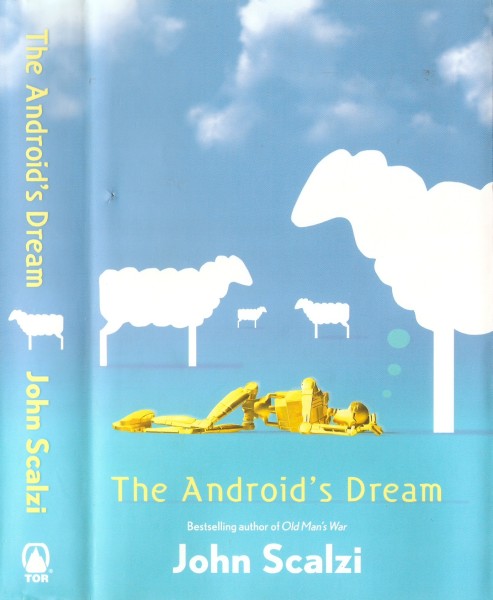
- The Android's Dream
series2 books2006
similar byspacenear futurescience fictionartificial intelligencegenetic engineeringpolitical intrigue
A minor diplomatic insult with a genetically engineered sheep breed spirals into a full interstellar crisis when the last surviving specimen of the 'Android's Dream' breed, needed for a critical ceremony with the alien Nidu, turns out to have been hunted to extinction by a Nidu faction bent on provoking war. John Scalzi's The Android's Dream follows ex-soldier Harry Creek as the hunt for a replacement leads him to Robin Baker, an ordinary woman carrying hidden sheep DNA that makes her the key to avoiding a war. It's a standalone comic space opera rather than an ongoing series.
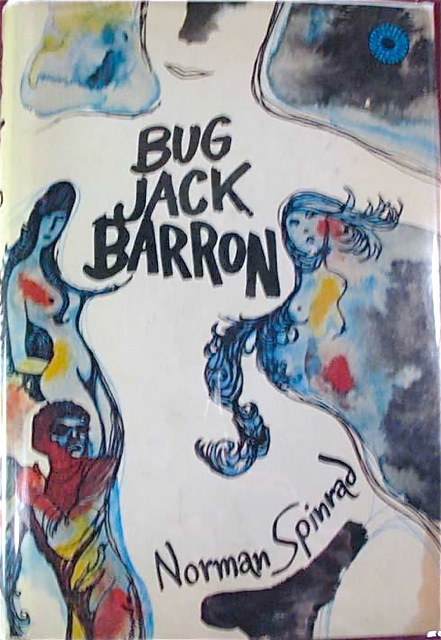
- Bug Jack Barron
Norman Spinradstandalone novel1969
similar bynear futurescience fictioncyberpunktensepolitical intrigue+1 more
Bug Jack Barron is a 1969 science fiction novel by American writer Norman Spinrad, first serialized in the New Worlds magazine under the editorship of Michael Moorcock. It was nominated for the 1970 Hugo Award. The novel is notable for its lyrical style and unique use of cut-up phrases. In this regard, Spinrad has cited the influence of Beat writers William S. Burroughs, Allen Ginsberg, and Jack Kerouac.
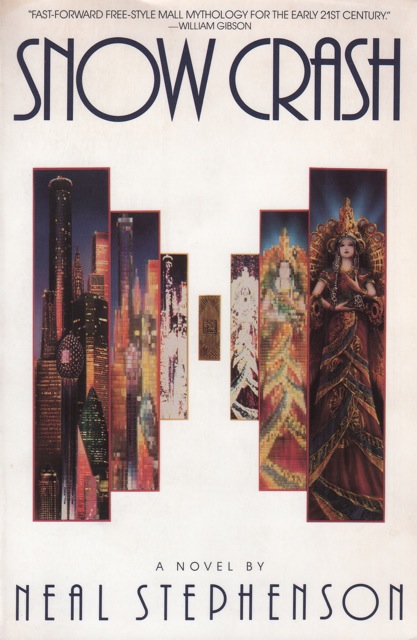
- Snow Crash
Neal Stephensonstandalone novel1992
similar bynear futurescience fictioncyberpunktensepolitical intrigue
Snow Crash is a 1992 science fiction novel by Neal Stephenson. Like many of Stephenson's novels, its themes include history, linguistics, anthropology, archaeology, religion, computer science, politics, cryptography, memetics, and philosophy.
- Blood Music
Greg Bearstandalone novel1985
similar bynear futurescience fictiondarkcyberpunkgenetic engineering+1 more
Blood Music is a 1985 science fiction novel by American writer Greg Bear. It is an expanded version of a short story of the same title, originally published in the June 1983 issue of Analog and the winner of both the 1983 Nebula and 1984 Hugo awards for Best Novelette. The novel won the 1986 Prix Apollo Award, given to the best science fiction novel published in France during the preceding year, under the title La Musique du sang.
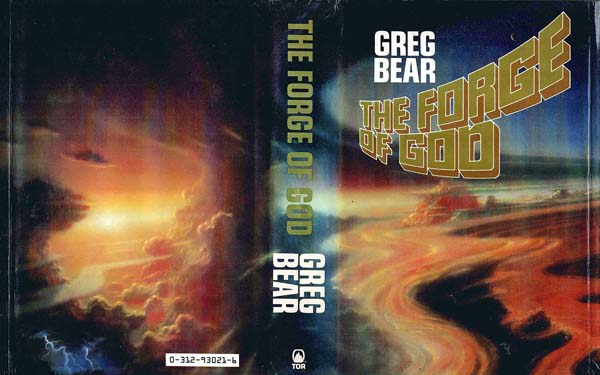
- Forge of God
series2 books1987
completed
similar byscience fictiondarktense+2 more
The Forge of God (1987) is Greg Bear's science fiction novel about Earth's discovery that it is the target of an incomprehensible, overwhelming alien attack, following scientists and ordinary people as they try to understand what is destroying the planet. Its 1992 sequel, Anvil of Stars, follows a group of young survivors sent on a mission of interstellar retaliation, continuing directly from the first book's ending.
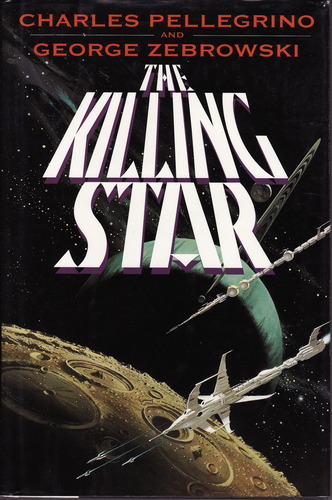
- The Killing Star
George Zebrowski & Charles Pellegrinostandalone novel1995
similar byspacenear futurescience fictiondarktensecloning
The Killing Star is a hard science fiction novel by American writers Charles R. Pellegrino and George Zebrowski, published in April 1995. It chronicles a sudden alien invasion in a late 21st century technological utopia, while covering several other speculative fiction ideas such as sublight interstellar travel, genetic cloning, virtual reality and advanced robotics.
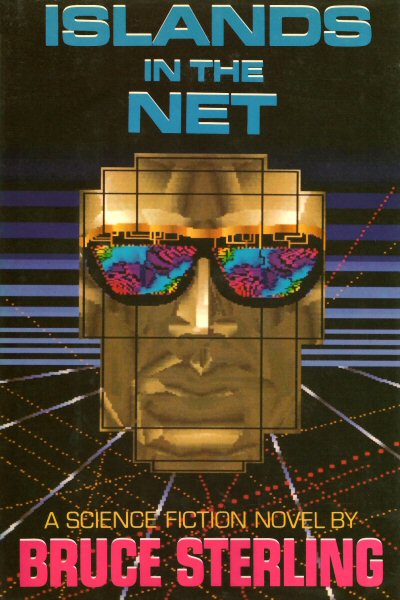
- Islands in the Net
Bruce Sterlingstandalone novel1988
similar bynear futurescience fictioncyberpunktensepolitical intrigue+1 more
Islands in the Net is a 1988 science fiction novel by American writer Bruce Sterling. It won the John W. Campbell Memorial Award for Best Science Fiction Novel in 1989, and was nominated for both the Hugo and Locus Awards that same year. It offers a view of an early 21st century world, apparently peaceful, with delocalised, networking corporations. The protagonist, swept up in events beyond her control, finds herself in places that are off the net, from a datahaven in Grenada, to a Singapore under terrorist attack, to the poorest and most disaster-struck parts of Africa.
- Hugo Cornelius Toorop Universe
series1 book1999
similar bynear futurescience fictioncyberpunkdarktensegenetic engineering+1 more
- Seveneves
Neal Stephensonstandalone novel2015
similar byspacenear futurescience fictiontensegenetic engineering
Seveneves is a science fiction novel by Neal Stephenson published in 2015. The story tells of the desperate efforts to preserve Homo sapiens in the wake of apocalyptic events on Earth after the unexplained disintegration of the Moon and the remaking of human society as a space-based civilization after a severe genetic bottleneck.
- Hardwired
series3 books1986
similar bynear futurescience fictioncyberpunktense+3 more
Walter Jon Williams' Hardwired (1986) is an early and influential cyberpunk novel. Voice of the Whirlwind, published three years later, is a loosely connected follow-up set in the same future, sharing its technological and political backdrop with a different cast of characters.
- BZRK
series3 books2012
similar bynear futurescience fictiontensecyberpunk+3 more
BZRK is a book series written by Michael Grant. The series consists of four books: BZRK, BZRK II: Reloaded, BZRK III: Apocalypse and BZRK: Origins. The series follows the interaction between two warring factions. On one side Charles and Benjamin Armstrong, owners of the Armstrong Fancy Gifts Corporation have a goal to turn the world into their version of utopia. The only people who can stop them are a group of teenagers with the codename BZRK. In 2011, Grant's BZRK had a multimedia online debut with gaming, apps and social media tie-ins beginning six months before the book's publication.
- The Dervish House
Ian McDonaldstandalone novel2010
similar bynear futurescience fictioncyberpunktenseartificial intelligencepolitical intrigue
The Dervish House is a 2010 science fiction novel by British author Ian McDonald. The novel was shortlisted for the Arthur C. Clarke Award in 2011, and won the BSFA Award and the John W. Campbell Memorial Award in the same year. It was a nominee for the 2011 Hugo Award for Best Novel. The French translation La maison des derviches won the Planete-SF Blogger's Award in 2012.
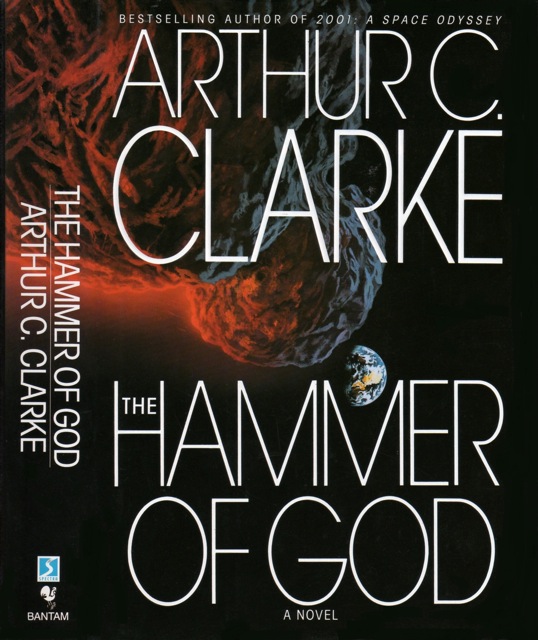
- The Hammer of God
Arthur C. Clarkestandalone novel1993
similar byspacenear futurescience fictiontense+1 more
The Hammer of God is a science fiction novel by Arthur C. Clarke originally published in 1993. Set in the year 2109, it deals with the discovery of an asteroid to be on course to collide with Earth and depicts the mission for deflecting the asteroid by using fusion thermal rockets.
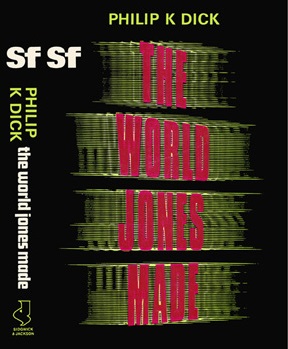
- The World Jones Made
Philip K. Dickstandalone novel1956
similar bynear futurescience fictiondarktensepolitical intrigue+1 more
The World Jones Made is a 1956 science fiction novel by American writer Philip K. Dick, examining notions of precognition, humanity, and politics. It was first published by Ace Books as one half of Ace Double D-150, bound dos-à-dos with Agent of the Unknown by Margaret St. Clair.The story takes place after a nuclear war in which society is dominated by relativism, which rejects absolute truths and preaches tolerance as the highest principle. The mutant Floyd Jones, who can see into the future, plans to overthrow the system and colonise space. The story ends with the defeat of Jones, whose plans fail despite his ability to see the future due to the immutability of fate.