More like Splintegrate
anchored on:science fiction
but
- Sprawl Trilogy
series10 books1981
similar byscience fictiondarkvirtual realitynear futuretensecyberpunk
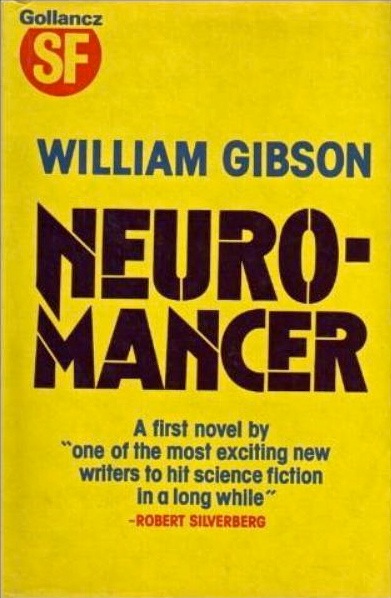
The Sprawl Trilogy is William Gibson's foundational cyberpunk sequence: Neuromancer (1984), in which hacker Case is drawn into a high-stakes heist alongside an artificial intelligence and a damaged ex-soldier, followed by Count Zero (1986) and Mona Lisa Overdrive (1988), which widen the same near-future world of corporate power and networked cyberspace to new characters. Johnny Mnemonic, an early short story set in the same fictional milieu, predates the novels and introduces the courier Molly Millions before her role in the trilogy. Together these works established much of cyberpunk's visual and thematic vocabulary.
- Library of America P. K. Dick Collection
series9 books1962
completed
similar byscience fictionnear future+2 more
- Bridge Trilogy
series4 books1990
similar byscience fictionnear futurecyberpunk+3 more
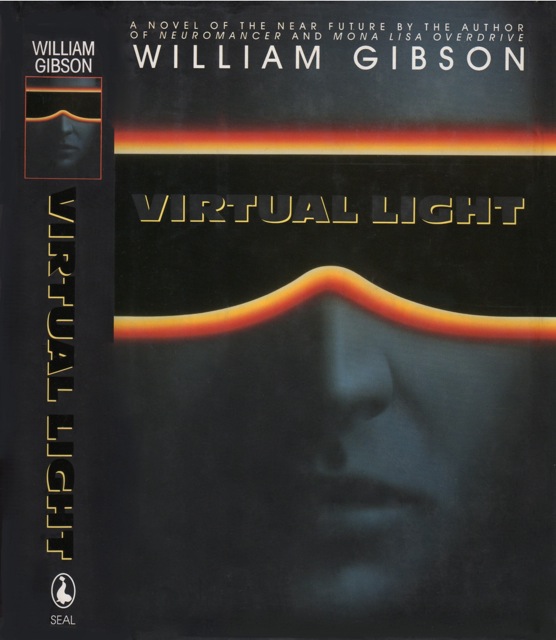
The Bridge trilogy is a series of novels by William Gibson, his second after the successful Sprawl trilogy. The trilogy comprises the novels Virtual Light (1993), Idoru (1996) and All Tomorrow's Parties (1999). A short story, "Skinner's Room", was originally composed for Visionary San Francisco, a 1990 museum exhibition exploring the future of San Francisco.
- The Idlewild Trilogy
series3 books2003
similar byscience fictiondarkidentitynear future+2 more
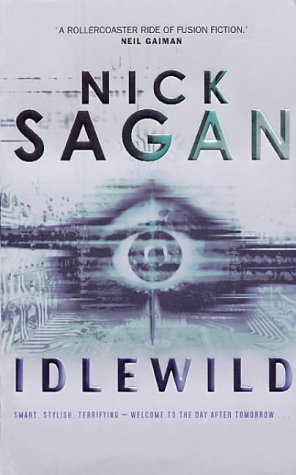
Nick Sagan's Idlewild trilogy opens with Idlewild (2003), a science-fiction novel that alternates between mid-21st-century interludes and events a generation later, following humanity's ten last survivors, cast in a modern mythological framework as god-like figures. It continues across Edenborn and Everfree.
- Blade Runner Universe
series6 books1968
similar byscience fictiondarkidentitynear futurecyberpunk+1 more
Philip K. Dick's 1968 novel Do Androids Dream of Electric Sheep? follows bounty hunter Rick Deckard as he tracks escaped androids through an irradiated, near-abandoned San Francisco, using the hunt to probe questions of empathy and what separates human from machine. The novel became the basis for Ridley Scott's 1982 film Blade Runner, and Marvel Comics later published an illustrated adaptation of that film. Together the two trace the story's path from prose original to screen and comic-page adaptation.
- Otherland
series6 books1996
similar byscience fictionvirtual realityvirtual worldnear futuretensecyberpunk
Otherland is a science fiction tetralogy by American writer Tad Williams, published between 1996 and 2001. The story is set on Earth near the end of the 21st century, probably between 2082 and 2089, in a world where technology has advanced somewhat beyond the present. The most notable advancement is the widespread availability of full-immersion virtual reality installations, which allow people from all walks of life to access an online world, called simply the Net. Tad Williams weaves an intricate plot spanning four thick volumes, and creates a picture of a future society where virtual worlds are fully integrated into everyday life.
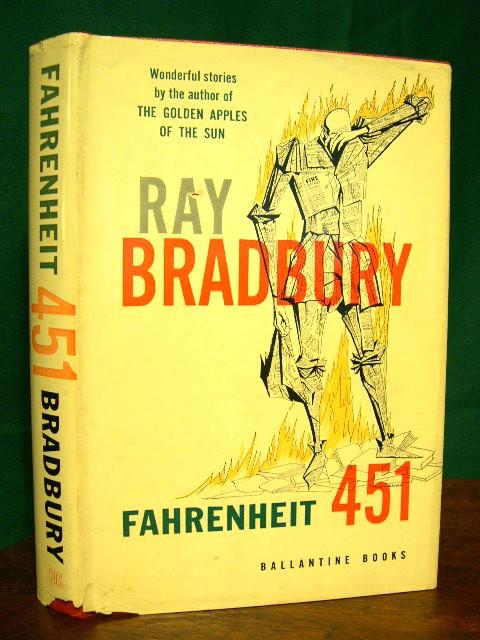
- Fahrenheit 451
series2 books1951
completed
similar byscience fictionnear future+2 more
Fahrenheit 451 began life as "The Fireman," a novella Ray Bradbury published in 1951, which he then expanded into the full novel released in 1953 under its now-famous title. Set in a future where books are outlawed and firemen exist to burn them, it follows fireman Guy Montag as doubts about his job push him toward the very literature he's supposed to destroy. The novella and novel are one story's evolution rather than two separate books.
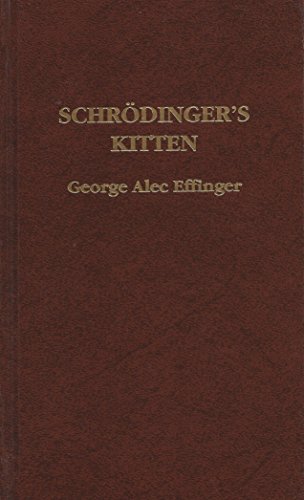
- Budayeen
series13 books1973
completed
similar byscience fictiondarknear futurecyberpunk+2 more
George Alec Effinger's Budayeen sequence reimagines the French Quarter of New Orleans as a 22nd-century red-light district in a future Middle Eastern city, where body modification has gone electronic: cybernetic 'moddies' and 'daddies' let people plug in new personalities and skills at will. Its hero, hustler-turned-investigator Marid Audran, works the Budayeen's back alleys across the novels When Gravity Fails, A Fire in the Sun, and The Exile Kiss. Budayeen Nights, published after Effinger's death, gathers his shorter fiction set in the same neon-lit quarter.
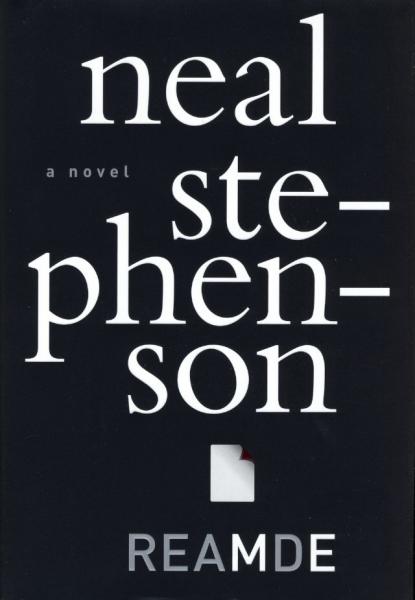
- Richard Forthrast
series2 books2011
similar byscience fictionvirtual realityvirtual world+2 more
Neal Stephenson's Richard 'Dodge' Forthrast novels open with Reamde, a globe-spanning thriller that starts when ransomware inside an MMORPG economy pulls Richard's extended family into a real-world hostage crisis involving hackers, jihadists and Russian mobsters. The sequel Fall; or, Dodge in Hell shifts registers entirely, following Richard's digitally preserved mind after death into an afterlife simulation built from his scanned brain. The two books share a protagonist and family but differ sharply in genre and scale.
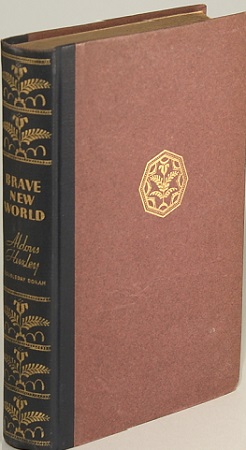
- Brave New World
series8 books1932
similar byscience fiction+2 more
Aldous Huxley's 1932 novel imagines a future World State where reproduction, social caste, and desire are all engineered before birth, and the population is kept content through conditioning, sleep-hypnosis, and a mood-altering drug called soma. The story follows the disruption this seemingly stable order suffers when an outsider raised beyond its reach is brought into it, exposing what the society traded away for comfort and order. Some editions pair the novel with Huxley's own 1958 nonfiction essay collection, Brave New World Revisited, which reassesses the book's ideas rather than continuing its story.
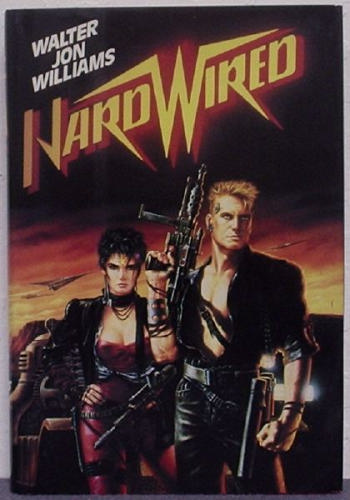
- Hardwired
series3 books1986
similar byscience fictionnear futuretensecyberpunk+2 more
Walter Jon Williams' Hardwired (1986) is an early and influential cyberpunk novel. Voice of the Whirlwind, published three years later, is a loosely connected follow-up set in the same future, sharing its technological and political backdrop with a different cast of characters.
- Skylar Cruz
series3 books2016
similar byscience fictionvirtual realityvirtual worldnear futuretense+3 more
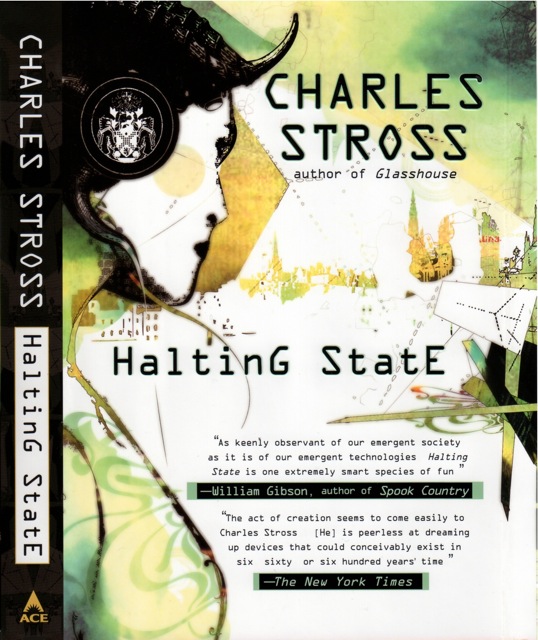
- Halting State
series2 books2007
similar byscience fictionnear futuretensecyberpunk+2 more
Charles Stross's Halting State opens as a near-future police procedural: a bank robbery inside a massively multiplayer online game turns out to mask a much larger cybercrime, investigated through shifting narrators using augmented-reality glasses and always-on networks. Its loose sequel, Rule 34, follows an Edinburgh police officer investigating a string of deaths linked by nothing but an obscure internet meme, in the same near-future Scotland. Both are standalone technothrillers connected by setting and tone rather than a continuing plot.
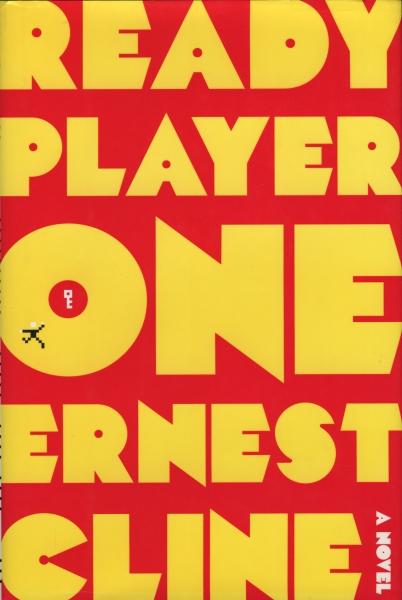
- Ready Player One
series3 books2011
similar byscience fictionvirtual realityvirtual worldnear futurecyberpunk+1 more
Ernest Cline's Ready Player One (2011) is set in a near-future dystopia where much of humanity escapes into the OASIS, a vast virtual-reality universe, and follows teenager Wade Watts as he chases an Easter egg hidden by the OASIS's late creator in a puzzle-based hunt worth a fortune. The 2020 sequel, Ready Player Two, picks up after Wade has gained control of the OASIS and follows him and his friends into a new quest built around a brain-computer interface the creator left behind.
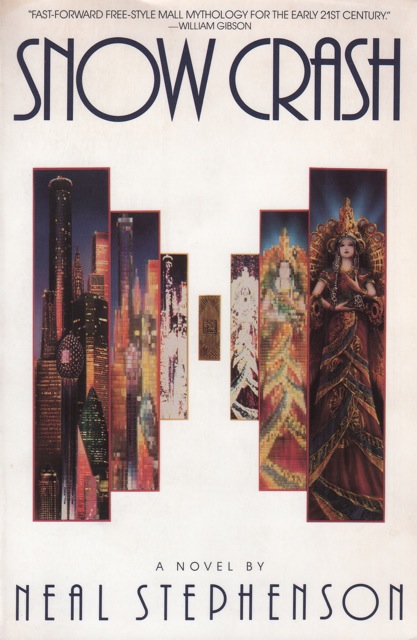
- Snow Crash
Neal Stephensonstandalone novel1992
similar byscience fictionvirtual realitynear futuretensecyberpunk+1 more
Snow Crash is a 1992 science fiction novel by Neal Stephenson. Like many of Stephenson's novels, its themes include history, linguistics, anthropology, archaeology, religion, computer science, politics, cryptography, memetics, and philosophy.
- A Clockwork Orange
series4 books1962
completed
similar byscience fictiondarknear future+1 more
Anthony Burgess's 1962 novel is narrated by Alex, a teenage gang leader in a near-future Britain gripped by a youth subculture of extreme violence, recounting his crimes in Nadsat, an invented slang blending English with Russian-derived words. After his crimes catch up with him, Alex is made the subject of a controversial state program meant to forcibly reform his behavior, and the novel uses his ordeal to question whether imposed goodness is worth the loss of free will. It is a standalone novel.
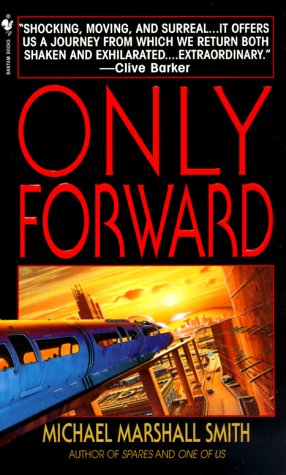
- Only Forward
Michael Marshall Smithstandalone novel1994
similar byscience fictiondarkvirtual realityidentitynear futurecyberpunk
Only Forward is a science fiction novel by English writer Michael Marshall Smith; his debut novel, it was first published in 1994 by HarperCollins. It was the winner of the August Derleth Award (1995) and Philip K. Dick Award (2000).
- Last Reality
series3 books2017
similar byscience fictionvirtual realityvirtual worldnear futuretense+2 more
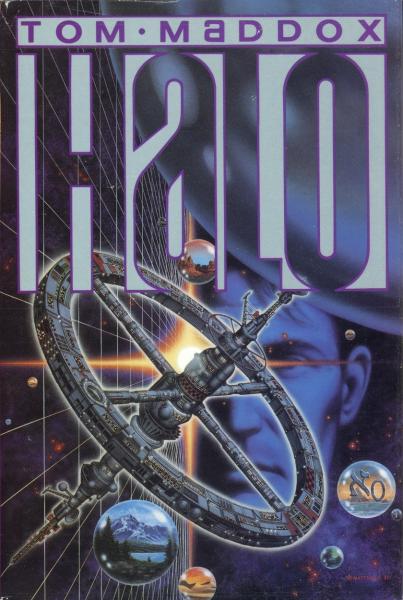
- Halo (Tom Maddox)
series5 books1985
completed
similar byscience fictionnear futurecyberpunk+3 more
Halo (1991) was Tom Maddox's only novel, a work of early cyberpunk fiction published by Tor Books. Maddox was part of the cyberpunk movement alongside William Gibson (with whom he later collaborated on The X-Files) and coined the term Gibson popularized as 'ICE' in Neuromancer; Halo remains his sole full-length work in the genre.
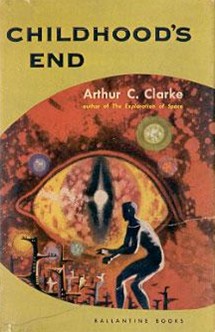
- Childhood's End
Arthur C. Clarkestandalone novel1953
similar byscience fictionidentitynear future+1 more
Childhood's End is a 1953 science fiction novel by the British author Arthur C. Clarke. The story follows a peaceful alien invasion of Earth by mysterious Overlords, whose arrival begins decades of apparent utopia under indirect alien rule, at the cost of human identity and culture.