Loreful
HomeDiscover
Search series, authors…⌘K
Loreful

Reading orders for SF/F series and shared universes — with your place kept in every one.

Explore

UniversesSeriesWorksAuthorsAtlas

Help

FAQAboutSite map

Account & legal

Sign inCreate accountPrivacyTerms

Data

Built on ISFDB, Wikipedia, Wikidata and Open Library. Curated reading orders carry their reasoning on the page; the rest follow publication order. Data sources & licenses

© Loreful · data: ISFDB · CC BY

More like Spring Break

but

Mood

The mood the book leaves you in.

  • The reading experience is propelled by journeys, exploration, and physical risk; excitement and forward momentum dominate over dread or introspection.
  • Joy and loss are deliberately mixed; the resolution grants characters something real while taking something else away, leaving warmth and sorrow together.
  • The book demands work from the reader — dense prose, difficult structure, unfamiliar ideas, or morally uncomfortable material — as part of its intended effect.
  • Grim events, cruelty, or despair dominate the atmosphere, and the book does not soften them with comfort or comic relief.
  • The atmosphere is quietly unsettling — wrongness, unease, and the uncanny pervade the book without necessarily escalating into overt horror.
  • The book is built to move the reader; character feeling is foregrounded and major scenes aim at a strong emotional response.
  • Humor is a primary aim and the prose plays for laughs — comic situations, wit, or dialogue produce sustained comedy, not occasional levity.
  • The book insists that things can improve; effort and decency are shown to matter, and the arc bends toward better outcomes even through hardship.
  • The book teaches as it goes — real facts, history, science, or craft are conveyed in enough depth that learning is part of the reading experience.
  • The book is designed to uplift and motivate, presenting perseverance or achievement in a way that invites the reader to aspire or act.
  • The overall register is cheerful and easygoing; stakes are kept gentle and the book avoids dwelling on pain or dread.
  • Withheld information drives the experience; the book sustains enigmas and secrets the reader wants resolved, whatever its genre.
  • The book is contemplative and inward-looking, giving more weight to thought, memory, and meaning than to external events.
  • The book works as comfort reading — low tension, a soothing pace, and an atmosphere the reader can unwind in.
  • Grief, loss, or melancholy set the dominant register, and the book lets sorrow stand rather than resolving it into comfort.
  • Sustained suspense is the point; the book keeps the reader braced for what happens next through danger, pressure, or impending revelation.
  • Playful invention and charm define the register — fanciful conceits, light absurdity, and a narration that delights in its own oddity.

About

What the story runs on.

  • Stories in which a machine intelligence — an AI, computer mind, or sentient program — is a central character or the story's driving problem.
  • Stories in which extraterrestrial beings are central — as characters, cultures, or the object of the plot.
  • Stories about venturing into space to explore — survey missions, astronauts, and the frontier of the unknown beyond Earth.
  • Stories about minds with paranormal abilities — telepathy, telekinesis, precognition, empathy — and how societies handle those who have them.
  • Stories in which staying alive against nature, catastrophe, or scarcity is the central problem.
  • Stories of growing up — a young protagonist crossing from childhood into adult knowledge and responsibility.
  • Stories about who a character truly is — self-discovery, doubled lives, and the search for a self.
  • Stories about mourning — living through the death of a loved one and what loss does to the survivors.
  • Stories in which a buried family truth — hidden parentage, crimes, or shames — surfaces and reorders the present.
  • Stories driven by maneuvering for power — factions, conspiracies, and statecraft conducted in shadow.
  • Stories in which war itself is the subject — combat, occupation, and what warfare does to soldiers and civilians.
  • Stories organized around investigating a killing — the case, the clues, and the pursuit of the killer, in any genre's clothing.

Shelf

Where it sits in the library.

    • Fiction built on magic or other supernatural elements that have no scientific explanation.
    • Secondary-world fantasy at large scale, where the fate of nations or the world turns on the protagonists' struggle.
    • Fantasy set in a recognizably modern city or contemporary world where the supernatural intrudes on everyday life.
    • Fantasy that blends in horror's atmosphere and imagery, keeping a fantastical frame around grim or frightening material.
    • Action-driven fantasy following warriors or rogues with personal stakes against sorcerous threats, rather than world-spanning conflicts.
    • Fantasy set in a real historical period or a close analogue of one, with magic woven into the era.
    • Fantasy in which protagonists cross from the ordinary world into another world through a portal or similar passage.
    • Fiction that retells or reworks a traditional fairy tale in a new form or setting.
    • Fantasy drawing directly on myths, legends, and folklore, retelling them or building on their figures and logic.
    • Fantasy of ghosts, vampires, shapeshifters, psychics, and similar phenomena, usually set in an otherwise ordinary world.
    • Fiction mixing science-fictional trappings with overtly magical or impossible elements in one setting.
    • Low-stakes fantasy emphasizing comfort, community, and everyday pleasures over conflict and peril.
    • Speculative fiction of pervasive moral ambiguity, violence, and cynicism that rejects heroic conventions — fantasy and SF alike.
      • Fiction that extrapolates from science and technology — future societies, space travel, or speculative inventions — within at least nominally natural laws.
      • Science fiction of interstellar scope — starships, galactic polities, and adventure across star systems.
      • Science fiction committed to scientific rigor, where technical plausibility constrains the story.
      • Science fiction centered on armed forces and warfare, told largely from a military point of view.
      • Science fiction of networked, corporate-dominated near futures, pairing high technology with social decay.
      • Science fiction styled on nineteenth-century steam-powered technology, often in a Victorian or pseudo-Victorian setting.
      • Fiction depicting an oppressive or catastrophic society, presented as a warning.
      • Fiction set after civilization's collapse, following survivors in the ruins of the old world.
      • Fiction in which characters move between past and future, and the mechanics or consequences of that travel drive the plot.
      • Fiction exploring a world where a historical event went differently and history diverged from ours.
      • Science fiction about humanity's first encounter and communication with an alien intelligence.
      • Science fiction in which extraterrestrial forces attack or occupy Earth and humanity resists.
      • Fiction whose primary aim is to frighten or unsettle the reader through dread, menace, or the monstrous.
      • Horror of vast, indifferent, incomprehensible entities before which humanity is insignificant, in the Lovecraft tradition.
      • Horror of decaying houses, buried family secrets, and oppressive atmosphere in the Gothic literary tradition.
      • Horror centered on hauntings and the returning dead.
      • Horror located in the mind — paranoia, obsession, and unreliable perception rather than external monsters.
      • Horror built around the reanimated dead and survival amid their outbreaks.
      • Horror defined by explicit, transgressive gore that refuses to cut away from violence.
      • Speculative fiction of the strange and uncanny that resists both natural explanation and standard genre categories.
      • Fiction organized around solving a crime or puzzle, typically following an investigator toward the identification of a culprit.
      • A puzzle-first mystery that lays out clues so the culprit's identity can be deduced before the reveal.
      • Crime fiction of moral ambiguity, fatalism, and hard-edged style, set among the corrupt and the doomed.
      • A mystery following the realistic routines of police work — forensics, interviews, and case-building.
      • A gentle mystery with an amateur sleuth, a small community, and violence kept off the page.
      • A mystery set in a past era, where the investigation works within that period's methods and society.
      • Fast-paced fiction driven by imminent danger, pursuit, or high-stakes conspiracy, built to sustain tension.
      • A thriller of espionage — agents, tradecraft, and intelligence services in conflict.
      • A thriller centered on lawyers and the courtroom, where litigation carries the suspense.
      • A thriller driven by detailed contemporary or near-future technology, often military or scientific.
      • A thriller whose tension comes from mental states and manipulation between characters rather than external action.
      • Fiction whose central plot is a romantic relationship and its development toward an emotionally satisfying resolution.
      • Romance in which one or both partners are supernatural beings, blending fantasy elements into the love story.
      • A fantasy-romance hybrid in which the romantic arc and the fantasy plot carry equal weight.
      • Romance set in a past era, with courtship shaped by the period's society and manners.
      • Romance set in the present day, without supernatural or historical elements.
      • Fiction set in a real past period, where the historical setting materially shapes characters and events.
        • General and literary fiction emphasizing prose style, character interiority, or formal ambition over genre plot conventions.
        • Fiction in a realistic world where magical events occur and are treated as ordinary, in the tradition of Latin American literature.
        • Fiction that ridicules people, institutions, or society in order to criticize them.
        • Fiction of dreamlike, irrational imagery and logic that breaks from realistic representation.
        • Fiction that plays with narrative convention through metafiction, fragmentation, and self-reference.
        • Fiction propelled by journeys, exploration, and physical peril, where action and survival carry the plot.
        • Adventure fiction of ships and seafaring — naval engagements, voyages, and life at sea.
        • Fiction of the American frontier West — gunmen, ranchers, and lawmen, typically in the late nineteenth century.
        • Fiction centered on soldiers, campaigns, and the experience of warfare, historical or imagined.
          • Fiction written primarily to amuse, using comedic situations, wit, or parody as its organizing principle.
            • Multi-generational fiction following a family or dynasty across decades, with inheritance and kinship as the through-line.
              • Fiction whose world runs on explicit game mechanics — levels, stats, and skills that characters can see and exploit.
                • Fiction about costumed or superpowered heroes and their conflicts with comparable villains.

                Practical

                How long a commitment, whether it stands alone, and whether it has finished.

                Tap a chip to ask for it · tap again to rule it out · once more to clear. Numbers show what would be left.

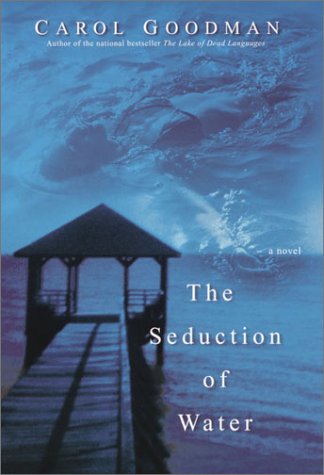
                • Cover of The Seduction of Water
                  The Seduction of Water

                  Carol Goodman · standalone novel · 2003

                  similar bygothicbooks and reading+1 more

                  "Iris Greenfeder, ABD (All But Dissertation), has just turned forty, lives in Manhattan, and works three teaching jobs to support herself. Recently she's felt that the "buts" are taking over her life: all but published, all but a professor, all but married (to Jack, her boyfriend of ten years). Yet the sudden impulse to write a story about her mother leads to a shot at literary success. The piece recounts an eerie Irish fairy tale her mother used to tell her at bedtime - and nestled inside it is the sad story of her mother's death...". "More than fifty years ago, Iris's mother, Katherine Morrissey, arrived at the Catskills's grand Hotel Equinox penniless, with almost no belongings. Kay was hired as a maid but refused to speak of her past or her family. One year later, she married Ben Greenfeder, the hotel's manager. During the hotel's off-season, Kay wrote the first two fantasy novels of a planned trilogy. There never was a third book. When Iris was nine, her mother left one day for a writer's conference - and never came back. Kay died that very night in a hotel fire on Coney Island, registered as another man's wife." "Now Hedda Wolfe, Kay's former literary agent, has a proposal: If Iris will return to the Hotel Equinox where she grew up, research her mother's life, and find the third and final manuscript that Hedda is convinced exists, then she can guarantee Iris a huge advance to write her mother's biography.". "Transfixed by the notion of a third book, Iris believes that it will hold clues to the mysteries of Kay's life - and death. But as she begins to peer into the thicket of her mother's hidden world, stinging revelations leave Iris with new questions. When a deadly "accident" befalls the one man who could shed some light on Kay, it becomes clear that Iris is not alone in her deep interest in her mother's past - or in her search for a lost manuscript that might hold more secrets than she ever expected."--BOOK JACKET.

                • Cover of Houses of Stone
                  Houses of Stone

                  Barbara Michaels · standalone novel · 1993

                  similar bygothicmurder investigation+1 more

                  It is a find of inestimable value for Karen Holloway. The battered manuscript she holds in her hand—written in the nineteenth century and bearing the mysterious attribution "Ismene"—could prove a boon to the eager young English professor's career. But Karen's search for the author's true identity is carrying her into the gray shadows of the past, to places fraught with danger and terror. For the deeper she delves into Ismene's strange tale of gothic horror, the more she is haunted by the suspicion that the long-dead author was writing the truth . . . and that even now she is guiding Karen's investigation, leading her to terrible secrets hidden behind the cold walls of houses of stone.

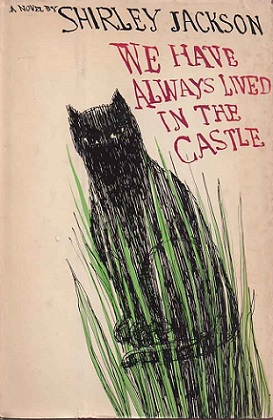
                • Cover of We Have Always Lived in the Castle
                  We Have Always Lived in the Castle

                  Shirley Jackson · standalone novel · 1962

                  similar bygothic+1 more

                  A young woman lives with her older sister and sickly uncle in their old family house, after a mysterious tragedy turns the townsfolk against them.

                • Cover of The Haunted Hotel
                  The Haunted Hotel

                  Wilkie Collins · standalone novel · 1878

                  similar bygothicmurder investigation

                  Lord Montbarry breaks off his engagement to Agnes Lockwood and marries the Countess Narona, with whom he lives in a Venetian palace. When he dies, Agnes Lockwood becomes suspicious of the circumstances, and goes to Venice with other family members to investigate. Staying in Montbarry's former residence, they experience a haunting.

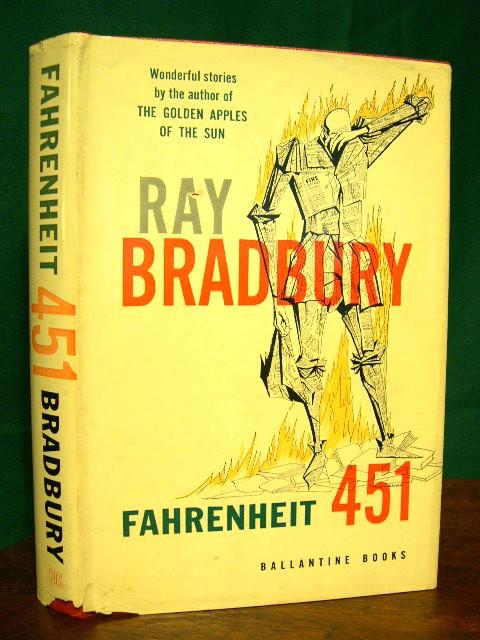
                • Cover of Fahrenheit 451
                  Fahrenheit 451

                  series · 2 books · 1951

                  completed

                  similar bybooks and readingnear future

                  Fahrenheit 451 began life as "The Fireman," a novella Ray Bradbury published in 1951, which he then expanded into the full novel released in 1953 under its now-famous title. Set in a future where books are outlawed and firemen exist to burn them, it follows fireman Guy Montag as doubts about his job push him toward the very literature he's supposed to destroy. The novella and novel are one story's evolution rather than two separate books.

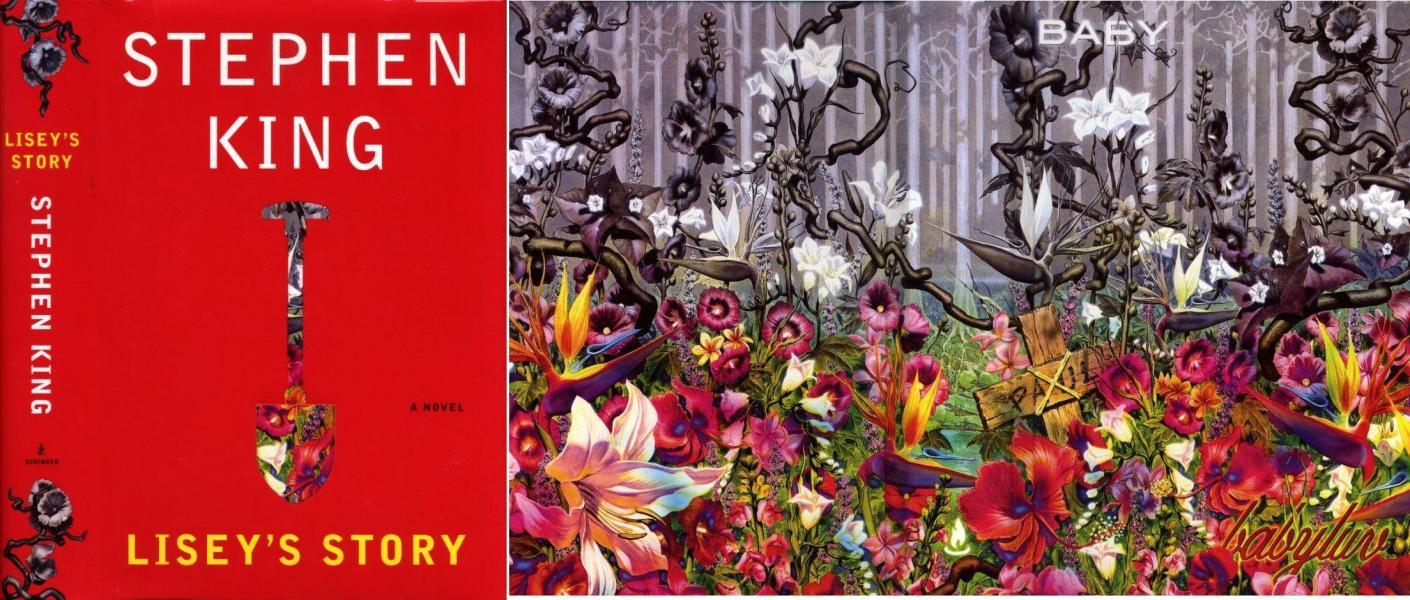
                • Cover of Lisey's Story
                  Lisey's Story

                  Stephen King · standalone novel · 2006

                  similar bygothic+1 more

                  When the widow of a successful author is targeted by a psychopath, she must make use of the ability to shift to a parallel world, which she learned from her husband.

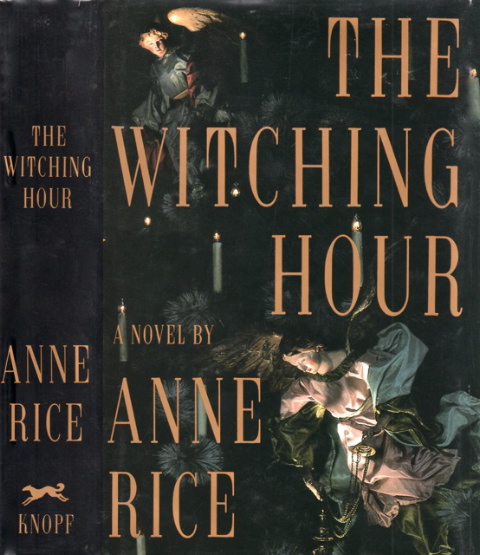
                • Cover of The Mayfair Witches Saga
                  The Mayfair Witches Saga

                  series · 3 books · 1990

                  completed

                  similar bygothic+1 more

                  Lives of the Mayfair Witches is a trilogy of Gothic supernatural horror fantasy novels by American author Anne Rice. It centers on a family of witches whose fortunes have been guided for generations by a spirit named Lasher. The series began in 1990 with The Witching Hour, which was followed by the sequels Lasher (1993) and Taltos (1994). All three novels debuted at No. 2 on The New York Times Best Seller list.

                • Cover of Dr. Jekyll and Mr. Hyde
                  Dr. Jekyll and Mr. Hyde

                  series · 33 books · 1886

                  similar by+1 more

                • Cover of Stranger in a Strange Land
                  Stranger in a Strange Land

                  Robert A. Heinlein · standalone novel · 1961

                  similar bynear future+1 more

                  Stranger in a Strange Land is a 1961 science fiction novel by the American author Robert A. Heinlein. It tells the story of Valentine Michael Smith, a human who comes to Earth in early adulthood after being born on the planet Mars and raised by Martians, and explores his interaction with and eventual transformation of Terran culture.

                • Cover of Usher's Passing
                  Usher's Passing

                  Robert R. McCammon · standalone novel · 1984

                  similar bygothicmurder investigation

                  Usher's Passing is a Gothic historical fiction novel by American writer Robert McCammon. It was published in 1984 by Holt, Rinehart, and Winston. It focuses on the divide between an aristocratic family and a community of hill people near Asheville, North Carolina. Both are drawn into a plot surrounding a string of child disappearances, a mysterious serial killer, and ghouls and monsters that lie buried deep within the Ushers' family history, and the answers to which lie deep within the sprawling, creaky mansion they call home.

                • Cover of Drood
                  Drood

                  Dan Simmons · standalone novel · 2009

                  similar bygothicbooks and reading

                  Drood is a novel written by Dan Simmons. The book was initially published on February 1, 2009 by Little, Brown and Company. It is a fictionalized account of the last five years of Charles Dickens' life.

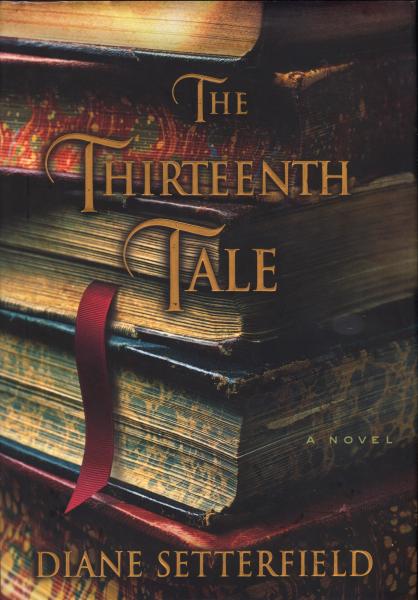
                • Cover of The Thirteenth Tale
                  The Thirteenth Tale

                  Diane Setterfield · standalone novel · 2006

                  similar bygothicbooks and reading

                  The Thirteenth Tale (2006) by Diane Setterfield is a gothic suspense novel; it was the author's debut book.

                • Cover of Doctors Wear Scarlet
                  Doctors Wear Scarlet

                  Simon Raven · standalone novel · 1960

                  similar bygothicmurder investigation

                  What happened to Richard Fountain, successful archaeologist? From the claustrophobic atmosphere of a college to the sun-drenched, remote hills of Greece, haunted by a disturbing presence, the investigation and the discovery of the protagonist by a handful of colleagues and friends will prove not without breathtaking twists. A race against time in which the protagonists will have to confront the dark myth of vampirism, which seems like an invention of literature and cinema but instead intertwines its roots with the arcane rites of a civilization that has been accustomed to hiding its secrets for centuries. [adapted from the Italian translation]

                • Cover of The Historian
                  The Historian

                  Elizabeth Kostova · standalone novel · 2005

                  similar bygothic+1 more

                  The Historian is the 2005 debut novel of American author Elizabeth Kostova. The plot blends the history and folklore of Vlad Țepeș and his fictional equivalent Count Dracula. Kostova's father told her stories about Dracula when she was a child, and later in life she was inspired to turn the experience into a novel. She worked on the book for ten years and then sold it within a few months to Little, Brown and Company, which bought it for US$2 million.

                • Cover of The Bewitching
                  The Bewitching

                  Silvia Moreno-Garcia · standalone novel · 2025

                  similar bygothicbooks and reading

                  “Back then, when I was a young woman, there were still witches”: That was how Nana Alba always began the stories she told her great-granddaughter Minerva—stories that have stayed with Minerva all her life. Perhaps that’s why Minerva has become a graduate student focused on the history of horror literature and is researching the life of Beatrice Tremblay, an obscure author of macabre tales. In the course of assembling her thesis, Minerva uncovers information that reveals that Tremblay’s most famous novel, The Vanishing, was inspired by a true story: Decades earlier, during the Great Depression, Tremblay attended the same university where Minerva is now studying and became obsessed with her beautiful and otherworldly roommate, who then disappeared under mysterious circumstances. As Minerva descends ever deeper into Tremblay’s manuscript, she begins to sense that the malign force that stalked Tremblay and the missing girl might still walk the halls of the campus. These disturbing events also echo the stories Nana Alba told about her girlhood in 1900s Mexico, where she had a terrifying encounter with a witch. Minerva suspects that the same shadow that darkened the lives of her great-grandmother and Beatrice Tremblay is now threatening her own in 1990s Massachusetts. An academic career can be a punishing pursuit, but it might turn outright deadly when witchcraft is involved.

                • Cover of The Golden
                  The Golden

                  Lucius Shepard · standalone novel · 1993

                  similar bygothicmurder investigation

                  Deviating from traditional tales that feature lonely vampires who prowl through human society in search of victims or solace, this account of vampires flourishing in their own "inhuman society" takes place in the year 1860, when their centuries-long breeding experiments have finally produced "The Golden," a mortal whose blood is perfect and powerful. Mobilized by the news of this discovery, aristocratic vampire clans arrive at the looming Castle Banat, where they plan to partake of the sublime blood. To their shock, the guests find that The Golden, a young girl, has been brutally murdered and her blood already drained. The story also follows the Inspector Michael Beheim—a recent vampire—assigned to track down the killer. Recounted in full 19th-century literary style with gothic elements and foreshadowing, the inspector navigates his way through the vampire world and the crime therein.

                • Cover of The Lost Bride Trilogy
                  The Lost Bride Trilogy

                  series · 3 books · 2023

                  similar bygothic+1 more

                  Inheritance opens Nora Roberts's Lost Bride trilogy, following a woman who inherits a Maine house entangled with a generations-old family curse and the restless spirit of a bride who never got to live in it. The series mixes contemporary romance with haunted-house suspense as the heroine works to unravel the curse's origins. It runs across three novels published between 2023 and 2025.

                • Cover of The Adventures of Dr. Caspian and Bronwen
                  The Adventures of Dr. Caspian and Bronwen

                  series · 4 books · 1976

                  completed

                  similar by+2 more

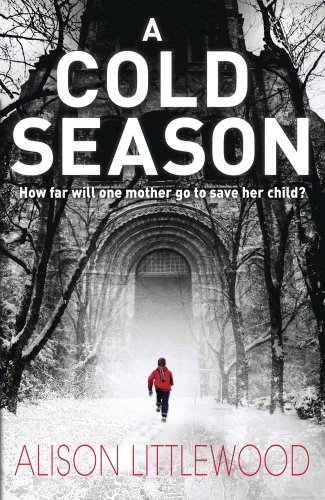
                • Cover of A Cold Season
                  A Cold Season

                  series · 2 books · 2011

                  similar by+2 more

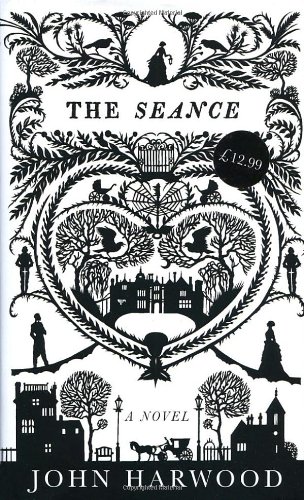
                • Cover of The Seance
                  The Seance

                  John Harwood · standalone novel · 2008

                  similar bygothic+1 more

                  The Seance is a 2008 horror novel by John Harwood. Set in late 19th century London, it follows the story of Constance Langton who in an attempt to make her mother healthy again takes her to a séance only to result in tragic consequences. The Seance won the 2008 Aurealis Award for best horror novel.

                • Cover of The Wife Upstairs
                  The Wife Upstairs

                  Rachel Hawkins · standalone novel · 2021

                  similar bygothicmurder investigation

                  "A delicious twist on a Gothic classic, Rachel Hawkins' The Wife Upstairs pairs Southern charm with atmospheric domestic suspense, perfect for fans of B.A. Paris and Megan Miranda. Meet Jane. Newly arrived to Birmingham, Alabama, Jane is a broke dog-walker in Thornfield Estates--a gated community full of McMansions, shiny SUVs, and bored housewives. The kind of place where no one will notice if Jane lifts the discarded tchotchkes and jewelry off the side tables of her well-heeled clients. Where no one will think to ask if Jane is her real name. But her luck changes when she meets Eddie Rochester. Recently widowed, Eddie is Thornfield Estates' most mysterious resident. His wife, Bea, drowned in a boating accident with her best friend, their bodies lost to the deep. Jane can't help but see an opportunity in Eddie--not only is he rich, brooding, and handsome, he could also offer her the kind of protection she's always yearned for. Yet as Jane and Eddie fall for each other, Jane is increasingly haunted by the legend of Bea, an ambitious beauty with a rags-to-riches origin story, who launched a wildly successful southern lifestyle brand. How can she, plain Jane, ever measure up? And can she win Eddie's heart before her past--or his--catches up to her? With delicious suspense, incisive wit, and a fresh, feminist sensibility, The Wife Upstairs flips the script on a timeless tale of forbidden romance, ill-advised attraction, and a wife who just won't stay buried. In this vivid reimagining of one of literature's most twisted love triangles, which Mrs. Rochester will get her happy ending?"--

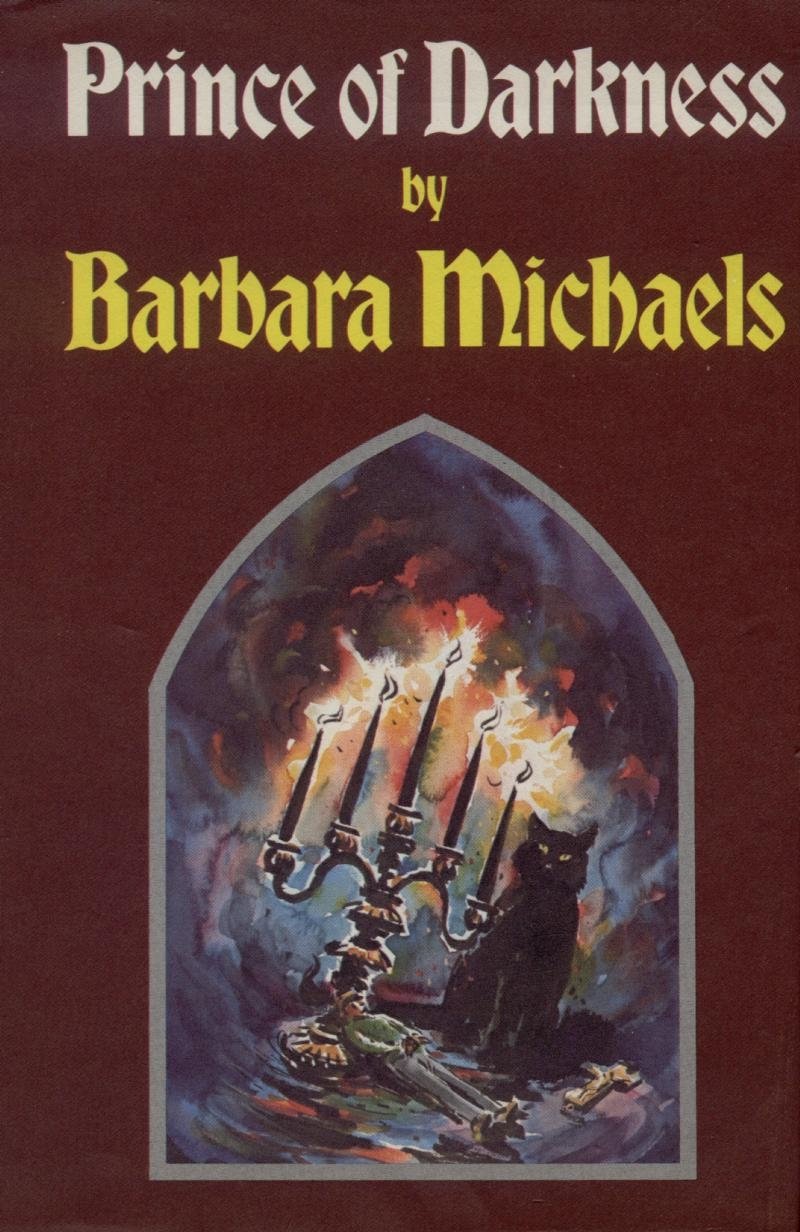
                • Cover of Prince of Darkness
                  Prince of Darkness

                  Barbara Michaels · standalone novel · 1969

                  similar bygothic+1 more

                  A stranger has come to Middleburg, Maryland, a visitor from abroad with a mysterious purpose. But this quaint, affluent community has dark secrets of its own. And when the interloper, Peter Stewart, becomes involved with the bewitching, seductive ward of noted local author Kate More, the townfolk fear the chilling past they are hiding will no longer be safe. For Middleburg has a colonial history of malevolent sorceries and obscene sacrifice. And when the terrible pot is stirred, murder may be the least of the evils to emerge from the unholy brew.

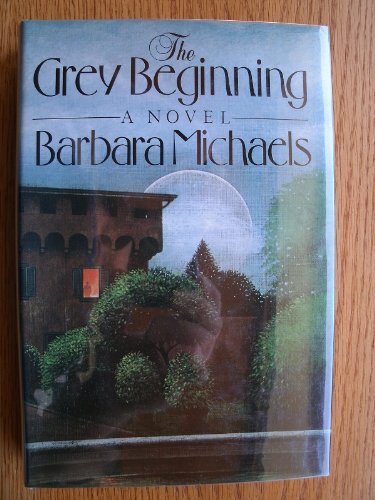
                • Cover of The Grey Beginning
                  The Grey Beginning

                  Barbara Michaels · standalone novel · 1984

                  similar bygothic+1 more

                  Devastated by her husband's death, Kathy Malone has traveled to his childhood home, hoping to come to terms with the recent tragedy. Here in the beautiful rolling hills of Tuscany, she seeks solace—and discovers something sinister instead. Befriending a lonely boy named Pietro—accepting the chilly hospitality of the aristocratic Contessa Morandini—Kathy begins to uncover the pieces of an ominous puzzle and hints of a deadly obsession. And now she has stumbled upon a murderous plot that could cost Kathy her life—for it was meant to stay hidden . . . forever.

                • Cover of A Clockwork Orange
                  A Clockwork Orange

                  series · 4 books · 1962

                  completed

                  similar bynear future+1 more

                  Anthony Burgess's 1962 novel is narrated by Alex, a teenage gang leader in a near-future Britain gripped by a youth subculture of extreme violence, recounting his crimes in Nadsat, an invented slang blending English with Russian-derived words. After his crimes catch up with him, Alex is made the subject of a controversial state program meant to forcibly reform his behavior, and the novel uses his ordeal to question whether imposed goodness is worth the loss of free will. It is a standalone novel.