Loreful
HomeDiscover
Search series, authors…⌘K
Loreful

Reading orders for SF/F series and shared universes — with your place kept in every one.

Explore

UniversesSeriesWorksAuthorsAtlas

Help

FAQAboutSite map

Account & legal

Sign inCreate accountPrivacyTerms

Data

Built on ISFDB, Wikipedia, Wikidata and Open Library. Curated reading orders carry their reasoning on the page; the rest follow publication order. Data sources & licenses

© Loreful · data: ISFDB · CC BY

More like Springboard

anchored on:science fictiontechno-thrillerour worldcontemporarytenseartificial intelligence+2 more

but

Mood

The mood the book leaves you in.

  • The reading experience is propelled by journeys, exploration, and physical risk; excitement and forward momentum dominate over dread or introspection.
  • Joy and loss are deliberately mixed; the resolution grants characters something real while taking something else away, leaving warmth and sorrow together.
  • The book demands work from the reader — dense prose, difficult structure, unfamiliar ideas, or morally uncomfortable material — as part of its intended effect.
  • Grim events, cruelty, or despair dominate the atmosphere, and the book does not soften them with comfort or comic relief.
  • The atmosphere is quietly unsettling — wrongness, unease, and the uncanny pervade the book without necessarily escalating into overt horror.
  • The book is built to move the reader; character feeling is foregrounded and major scenes aim at a strong emotional response.
  • Humor is a primary aim and the prose plays for laughs — comic situations, wit, or dialogue produce sustained comedy, not occasional levity.
  • The book insists that things can improve; effort and decency are shown to matter, and the arc bends toward better outcomes even through hardship.
  • The book teaches as it goes — real facts, history, science, or craft are conveyed in enough depth that learning is part of the reading experience.
  • The book is designed to uplift and motivate, presenting perseverance or achievement in a way that invites the reader to aspire or act.
  • The overall register is cheerful and easygoing; stakes are kept gentle and the book avoids dwelling on pain or dread.
  • Withheld information drives the experience; the book sustains enigmas and secrets the reader wants resolved, whatever its genre.
  • The book is contemplative and inward-looking, giving more weight to thought, memory, and meaning than to external events.
  • The book works as comfort reading — low tension, a soothing pace, and an atmosphere the reader can unwind in.
  • Grief, loss, or melancholy set the dominant register, and the book lets sorrow stand rather than resolving it into comfort.
  • Sustained suspense is the point; the book keeps the reader braced for what happens next through danger, pressure, or impending revelation.
  • Playful invention and charm define the register — fanciful conceits, light absurdity, and a narration that delights in its own oddity.

About

What the story runs on.

  • Stories in which extraterrestrial beings are central — as characters, cultures, or the object of the plot.
  • Stories structured as a quest — a journey undertaken to find, deliver, or destroy something of great import.
  • Stories in which staying alive against nature, catastrophe, or scarcity is the central problem.
  • Stories of lovers kept apart by law, family, faith, or station, where the obstacle to love is the plot.
  • Stories in which a friendship — its making, testing, or loss — is the emotional center.
  • Stories of growing up — a young protagonist crossing from childhood into adult knowledge and responsibility.
  • Stories about who a character truly is — self-discovery, doubled lives, and the search for a self.
  • Stories about mourning — living through the death of a loved one and what loss does to the survivors.
  • Stories in which a buried family truth — hidden parentage, crimes, or shames — surfaces and reorders the present.
  • Stories driven by maneuvering for power — factions, conspiracies, and statecraft conducted in shadow.
  • Stories in which war itself is the subject — combat, occupation, and what warfare does to soldiers and civilians.
  • Stories organized around investigating a killing — the case, the clues, and the pursuit of the killer, in any genre's clothing.

Shelf

Where it sits in the library.

    • Fiction built on magic or other supernatural elements that have no scientific explanation.
    • Secondary-world fantasy at large scale, where the fate of nations or the world turns on the protagonists' struggle.
    • Fantasy set in a recognizably modern city or contemporary world where the supernatural intrudes on everyday life.
    • Fantasy that blends in horror's atmosphere and imagery, keeping a fantastical frame around grim or frightening material.
    • Action-driven fantasy following warriors or rogues with personal stakes against sorcerous threats, rather than world-spanning conflicts.
    • Fantasy set in a real historical period or a close analogue of one, with magic woven into the era.
    • Fantasy in which protagonists cross from the ordinary world into another world through a portal or similar passage.
    • Fiction that retells or reworks a traditional fairy tale in a new form or setting.
    • Fantasy drawing directly on myths, legends, and folklore, retelling them or building on their figures and logic.
    • Fantasy of ghosts, vampires, shapeshifters, psychics, and similar phenomena, usually set in an otherwise ordinary world.
    • Fiction mixing science-fictional trappings with overtly magical or impossible elements in one setting.
    • Low-stakes fantasy emphasizing comfort, community, and everyday pleasures over conflict and peril.
    • Speculative fiction of pervasive moral ambiguity, violence, and cynicism that rejects heroic conventions — fantasy and SF alike.
      • Fiction that extrapolates from science and technology — future societies, space travel, or speculative inventions — within at least nominally natural laws.
      • Science fiction of interstellar scope — starships, galactic polities, and adventure across star systems.
      • Science fiction committed to scientific rigor, where technical plausibility constrains the story.
      • Science fiction centered on armed forces and warfare, told largely from a military point of view.
      • Science fiction of networked, corporate-dominated near futures, pairing high technology with social decay.
      • Science fiction styled on nineteenth-century steam-powered technology, often in a Victorian or pseudo-Victorian setting.
      • Fiction depicting an oppressive or catastrophic society, presented as a warning.
      • Fiction set after civilization's collapse, following survivors in the ruins of the old world.
      • Fiction in which characters move between past and future, and the mechanics or consequences of that travel drive the plot.
      • Fiction exploring a world where a historical event went differently and history diverged from ours.
      • Science fiction about humanity's first encounter and communication with an alien intelligence.
      • Science fiction in which extraterrestrial forces attack or occupy Earth and humanity resists.
      • Fiction whose primary aim is to frighten or unsettle the reader through dread, menace, or the monstrous.
      • Horror of vast, indifferent, incomprehensible entities before which humanity is insignificant, in the Lovecraft tradition.
      • Horror of decaying houses, buried family secrets, and oppressive atmosphere in the Gothic literary tradition.
      • Horror centered on hauntings and the returning dead.
      • Horror located in the mind — paranoia, obsession, and unreliable perception rather than external monsters.
      • Horror built around the reanimated dead and survival amid their outbreaks.
      • Horror defined by explicit, transgressive gore that refuses to cut away from violence.
      • Speculative fiction of the strange and uncanny that resists both natural explanation and standard genre categories.
      • Fiction organized around solving a crime or puzzle, typically following an investigator toward the identification of a culprit.
      • A puzzle-first mystery that lays out clues so the culprit's identity can be deduced before the reveal.
      • Crime fiction of moral ambiguity, fatalism, and hard-edged style, set among the corrupt and the doomed.
      • A mystery following the realistic routines of police work — forensics, interviews, and case-building.
      • A gentle mystery with an amateur sleuth, a small community, and violence kept off the page.
      • A mystery set in a past era, where the investigation works within that period's methods and society.
      • Fast-paced fiction driven by imminent danger, pursuit, or high-stakes conspiracy, built to sustain tension.
      • A thriller of espionage — agents, tradecraft, and intelligence services in conflict.
      • A thriller centered on lawyers and the courtroom, where litigation carries the suspense.
      • A thriller driven by detailed contemporary or near-future technology, often military or scientific.
      • A thriller whose tension comes from mental states and manipulation between characters rather than external action.
      • Fiction whose central plot is a romantic relationship and its development toward an emotionally satisfying resolution.
      • Romance in which one or both partners are supernatural beings, blending fantasy elements into the love story.
      • A fantasy-romance hybrid in which the romantic arc and the fantasy plot carry equal weight.
      • Romance set in a past era, with courtship shaped by the period's society and manners.
      • Romance set in the present day, without supernatural or historical elements.
      • Fiction set in a real past period, where the historical setting materially shapes characters and events.
        • General and literary fiction emphasizing prose style, character interiority, or formal ambition over genre plot conventions.
        • Fiction in a realistic world where magical events occur and are treated as ordinary, in the tradition of Latin American literature.
        • Fiction that ridicules people, institutions, or society in order to criticize them.
        • Fiction of dreamlike, irrational imagery and logic that breaks from realistic representation.
        • Fiction that plays with narrative convention through metafiction, fragmentation, and self-reference.
        • Fiction propelled by journeys, exploration, and physical peril, where action and survival carry the plot.
        • Adventure fiction of ships and seafaring — naval engagements, voyages, and life at sea.
        • Fiction of the American frontier West — gunmen, ranchers, and lawmen, typically in the late nineteenth century.
        • Fiction centered on soldiers, campaigns, and the experience of warfare, historical or imagined.
          • Fiction written primarily to amuse, using comedic situations, wit, or parody as its organizing principle.
            • Multi-generational fiction following a family or dynasty across decades, with inheritance and kinship as the through-line.
              • Fiction whose world runs on explicit game mechanics — levels, stats, and skills that characters can see and exploit.
                • Fiction about costumed or superpowered heroes and their conflicts with comparable villains.

                Practical

                How long a commitment, whether it stands alone, and whether it has finished.

                Tap a chip to ask for it · tap again to rule it out · once more to clear. Numbers show what would be left.

                • Cover of Digital Fortress
                  Digital Fortress

                  Dan Brown · standalone novel · 1998

                  similar bytensecontemporarytechno-thrillersurveillanceour worldpolitical intrigue+1 more

                  Digital Fortress is a techno-thriller novel written by American author Dan Brown and published in 1998 by St. Martin's Press. The book explores the theme of government surveillance of electronically stored information on the private lives of citizens, and the possible civil liberties and ethical implications of using such technology.

                • Cover of Daemon (Daniel Suarez)
                  Daemon (Daniel Suarez)

                  series · 2 books · 2006

                  similar bytensescience fictionartificial intelligencesurveillancetechno-thrillerour worldnorth america+1 more

                • Cover of Prey
                  Prey

                  Michael Crichton · standalone novel · 2002

                  similar bytensecontemporaryscience fictionartificial intelligencetechno-thrillerour world

                  Prey is the thirteenth novel by Michael Crichton under his own name and his twenty-third novel overall. It was first published in November 2002, making it his first novel of the twenty-first century. An excerpt was first published in the January–February 2003 issue of Seed magazine. Prey brings together themes from two earlier Crichton best-selling novels, Jurassic Park and The Andromeda Strain, and serves as a cautionary tale about developments in science and technology: in particular, nanotechnology, genetic engineering, and distributed artificial intelligence.

                • Cover of The Terminal Man
                  The Terminal Man

                  Michael Crichton · standalone novel · 1972

                  similar bytensecontemporaryscience fictionartificial intelligencenorth americabig city

                  The Terminal Man is a novel by American writer Michael Crichton. It is his second novel under his own name, his 12th overall, and is about the dangers of mind control. It was published in April 1972 and also serialized in Playboy in March, April, and May 1972. In 1974, it was made into a film of the same name.

                • Cover of The Andromeda Strain
                  The Andromeda Strain

                  series · 2 books · 1969

                  similar bytensecontemporaryscience fiction+3 more

                  Michael Crichton's 1969 novel The Andromeda Strain follows a team of scientists racing to contain a lethal extraterrestrial microorganism that crash-lands in Arizona, told in the clinical, document-driven style that helped establish the techno-thriller genre. Daniel H. Wilson's authorized 2019 sequel The Andromeda Evolution revisits the same threat five decades later. Together the two books form a two-part outbreak story separated by a fifty-year gap in publication.

                • Cover of WWW Trilogy
                  WWW Trilogy

                  series · 3 books · 2009

                  similar bycontemporaryscience fictionartificial intelligenceour worldnorth america+2 more

                  The WWW Trilogy is a trilogy of science-fiction novels by Canadian science fiction author Robert J. Sawyer. The first book, Wake, was originally serialized in four parts in Analog Science Fiction and Fact from November 2008 to March 2009, published in book form through Ace on April 7, 2009, and was followed by the second book, Watch, on April 6, 2010. Wonder was published in 2011.

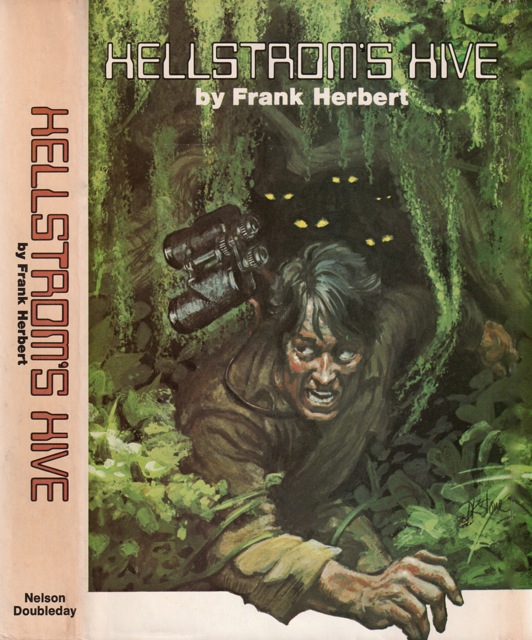
                • Cover of Hellstrom's Hive
                  Hellstrom's Hive

                  Frank Herbert · standalone novel · 1973

                  similar bytensecontemporaryscience fictionsurveillancenorth america

                  Hellstrom's Hive is a 1973 science fiction novel by Frank Herbert. It is about a secret group of humans who model their lives upon social insects and the unsettling events that unfold after they are discovered by a deep undercover agency of the U.S. government.

                • Cover of Wargames
                  Wargames

                  David Bischoff · standalone novel · 1983

                  similar bytensecontemporaryscience fictionartificial intelligencetechno-thrillerour worldnorth america

                  Deep in the control room the nation's chiefs watch with alarm as their computers show an imminent missile attack. Could this be it? Or is the truth funnier, thought almost as alarming? This is the story, based on the successful movie, WarGames, of how one young computer freak sent the nation's defence into turmoil - and nearly caused World War III.

                • Cover of The Fear Index
                  The Fear Index

                  Robert Harris · standalone novel · 2011

                  similar bytensecontemporaryartificial intelligencescience fictionour world+1 more

                  A computer designed for stock trading becomes sentient.

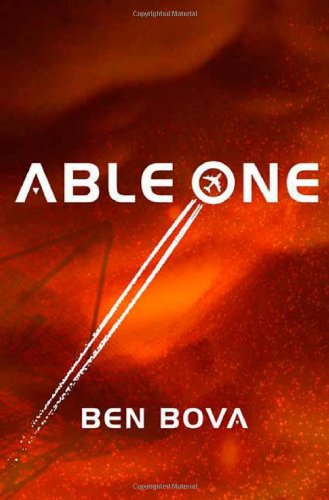
                • Cover of Able One
                  Able One

                  Ben Bova · standalone novel · 2010

                  similar bytensecontemporaryscience fictiontechno-thrillerpolitical intriguenorth america

                  Can an experimental defense system stop North Korean missile strikes? "Able One" is a timely thrill-ride by one of science fiction's most respected novelists.

                • Cover of Hard Questions
                  Hard Questions

                  Ian Watson · standalone novel · 1996

                  similar bytensecontemporaryscience fictionartificial intelligenceour worldpolitical intriguenorth america

                  Meet Qua, the quantum computer with immense power capabilities that tunes into pathways in parallel universes to operate at lightning speed. But with such power comes the threat of catastrophe, and as government agents, cult disciples, and computer criminals learn what this computer is capable of, Cambridge researcher Clare Conway makes every attempt to safeguard herself and society from the realities she discovers about Qua. For all of the power this computer offers, it threatens to spark a civil war in America, a danger unlike any other that history has ever known.

                • Cover of Little Brother
                  Little Brother

                  series · 7 books · 2008

                  similar bytensescience fictionsurveillancecontemporarynorth america+3 more

                  Cory Doctorow's Little Brother follows Marcus, a San Francisco teenager who builds a covert mesh network, the Xnet, to organize resistance after the Department of Homeland Security uses a terrorist attack as pretext for mass surveillance and civil-rights violations. Homeland continues Marcus's fight years later, and Attack Surface completes the trilogy; a companion story, 'Lawful Interception,' and other short pieces extend the same near-future world. Throughout, the series doubles as a working explanation of the surveillance and cryptography tools its characters use.

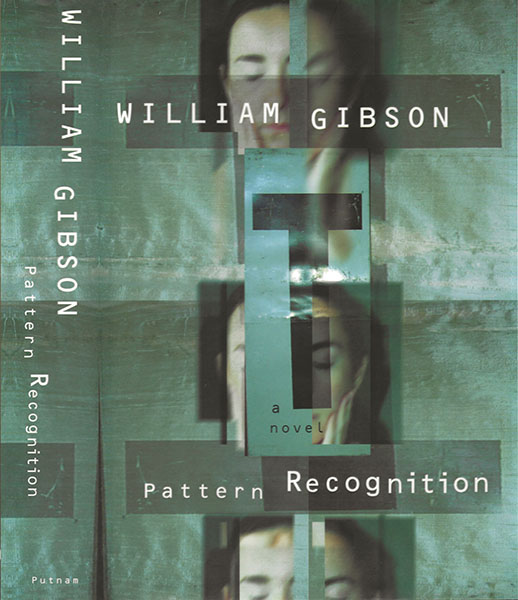
                • Cover of The Blue Ant Trilogy
                  The Blue Ant Trilogy

                  series · 3 books · 2003

                  similar bycontemporarysurveillancescience fictiontechno-thrillerbig city+4 more

                  Hubertus Bigend is a fictional character appearing in the third trilogy of novels of science fiction and literary author William Gibson. Bigend is the antihero of Gibson's Pattern Recognition (2003), Spook Country (2007) and Zero History (2010). In an interview Gibson says "I've always had a sense of Bigend as someone who presents himself as though he knows what's going on, but who in fact doesn't. It's just my sense of the subtext of the character: he's bullshitting himself, at the same time as he's bullshitting all of us."

                • Cover of Deception Point
                  Deception Point

                  Dan Brown · standalone novel · 2001

                  similar bytensecontemporarytechno-thrillerour worldpolitical intrigue+1 more

                  Deception Point is a 2001 mystery-thriller novel by American author Dan Brown. It is Brown's third novel. It was published by Simon & Schuster.

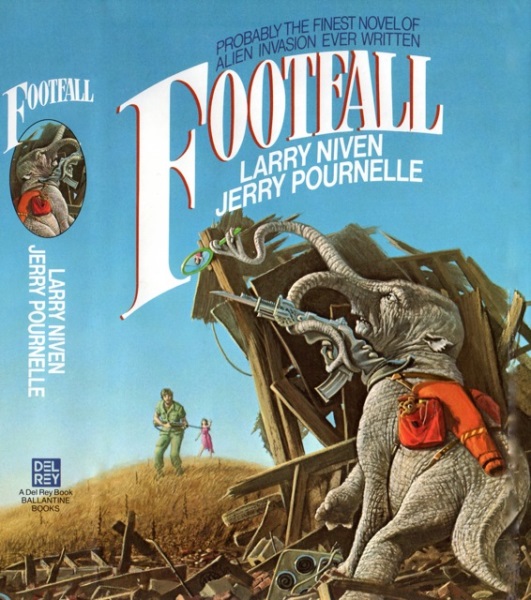
                • Cover of Footfall
                  Footfall

                  Larry Niven & Jerry Pournelle · standalone novel · 1985

                  similar bytensecontemporaryscience fictionour worldnorth america

                  When aliens travel to Earth from Alpha Centauri, differences between alien and human psychology result in an unprovoked invasion, and the resulting resistance results in the aliens' use of a devastating weapon.

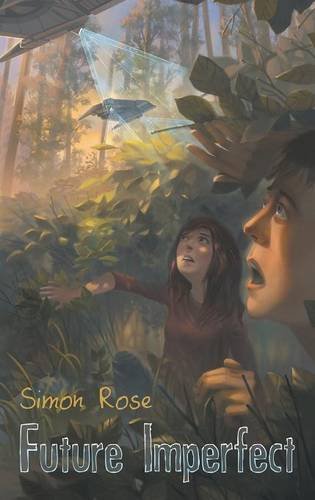
                • Cover of Future Imperfect
                  Future Imperfect

                  Simon Rose · standalone novel · 2016

                  similar bytensecontemporaryscience fictionartificial intelligencetechno-thrillernorth america+2 more

                  Andrew Mitchell was one of the leading experts in highly advanced technology in Silicon Valley, until he vanished following a car accident, which also injured his son, Alex. When a mysterious app later appears on Alex's phone, he and and his friend Stephanie embark on a terrifying journey involving secret technology, corporate espionage, kidnapping, and murder in a desperate bid to save the future from the sinister Veronica Castlewood.

                • Cover of Death Match
                  Death Match

                  Lincoln Child · standalone novel · 2004

                  similar bytensecontemporarytechno-thrillerartificial intelligenceour worldnorth america+1 more

                  Lincoln Child is an American author of techno-thriller and horror novels. Though he is most well known for his collaborations with Douglas Preston, he has also written eight solo novels, including the Jeremy Logan series. Over twenty of the collaborative novels and most of his solo novels have become New York Times bestsellers, some reaching the #1 position. Child and Preston's first novel together, Relic, was adapted into a feature film. Their books are notable for their thorough research and scientific accuracy.

                • Cover of Tom Broadbent / Wyman Ford
                  Tom Broadbent / Wyman Ford

                  series · 6 books · 2003

                  similar bytensecontemporarytechno-thrillerscience fictionnorth americaour world+1 more

                  Douglas Jerome Preston is an American journalist and author. Although he is best known for his thrillers in collaboration with Lincoln Child, he has also written six solo novels, including the Wyman Ford series and a novel titled Jennie, which was made into a movie by Disney called The Jennie Project. Preston has authored a half-dozen nonfiction books on science and exploration and writes occasionally for The New Yorker, Smithsonian, and other magazines.

                • Cover of State of Fear
                  State of Fear

                  Michael Crichton · standalone novel · 2004

                  similar bytensecontemporarytechno-thrillerour worldpolitical intrigue+1 more

                  State of Fear is a 2004 techno-thriller novel by Michael Crichton, his fourteenth under his own name and twenty-fourth overall, in which eco-terrorists plot mass murder to publicize the danger of global warming.

                • Cover of Cell
                  Cell

                  Stephen King · standalone novel · 2006

                  similar bytensecontemporaryscience fictionour worldnorth america+1 more

                  In Cell, King taps into readers fears of technological warfare and terrorism. Mobile phones deliver the apocalypse to millions of unsuspecting humans by wiping their brains of any humanity, leaving only aggressive and destructive impulses behind. Those without cell phones, like illustrator Clayton Riddell and his small band of "normies," must fight for survival, and their journey to find Clayton's estranged wife and young son rockets the book toward resolution.

                • Cover of Micro
                  Micro

                  Michael Crichton & Richard Preston · standalone novel · 2011

                  similar bytensecontemporarytechno-thrillerscience fictionour world

                  Micro is a techno-thriller novel by Michael Crichton, the seventeenth under his own name and second to be published after his death, published in 2011. Upon his death in 2008, an untitled, unfinished manuscript was found on his computer, which would become Micro. Publisher HarperCollins chose science writer Richard Preston to complete the novel from Crichton's remaining notes and research, and it was finally published in 2011. Micro followed the historical thriller Pirate Latitudes, which was also found on his computer and published posthumously in 2009.

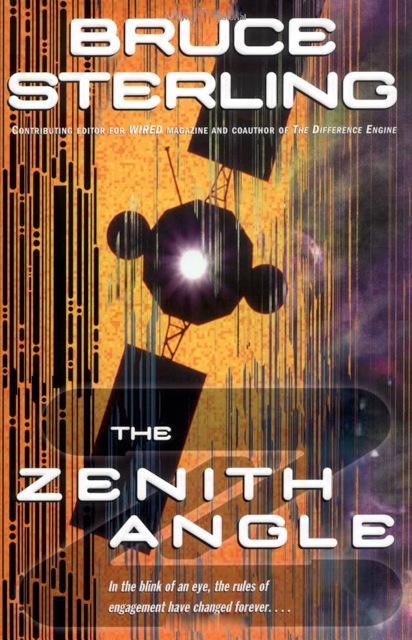
                • Cover of The Zenith Angle
                  The Zenith Angle

                  Bruce Sterling · standalone novel · 2004

                  similar bytensecontemporaryscience fictionsurveillancetechno-thrillerpolitical intriguenorth america

                  The Zenith Angle is a science fiction novel by American writer Bruce Sterling, first published in 2004, about a pioneering expert in computer and network security with a traditional hacker personality named Derek Vandeveer. His life irrevocably changes after the September 11, 2001 attacks on the World Trade Center.

                • Cover of City of Cain
                  City of Cain

                  Kate Wilhelm · standalone novel · 1974

                  similar bytensecontemporaryscience fictionsurveillancepolitical intriguenorth america

                  Publisher: "Peter Roos cannot help knowing the thoughts of those around him. A rare physical condition has given him that power. Now he has ''heard'' about the government's secret plan to give up control of America to the military - to build an underground city for themselves in the event of a nuclear attack. Unfortunately for Roos, the government knows he knows. And the project's sponsors - including his senator brother - have no choice."

                • Cover of Dark Matter
                  Dark Matter

                  Blake Crouch · standalone novel · 2016

                  similar bytensecontemporaryscience fictionour worldnorth america

                  Jason Dessen, college physics professor, husband and father, is kidnapped and taken to a parallel universe where his counterpart had dedicated his life to inventing a method of traveling between an infinity of parallel universes.