More like Stability
anchored on:science fictiondystopiatotalitarianismfar futuresurveillancedark
but
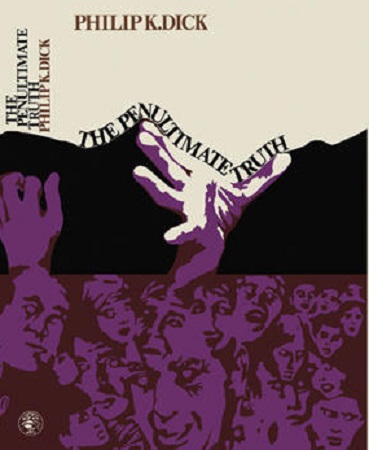
- The Penultimate Truth
Philip K. Dickstandalone novel1964
similar bytotalitarianismdarkfar futuresurveillancescience fictiondystopia
The Penultimate Truth is a 1964 science fiction novel by American writer Philip K. Dick. The story is set in a future where the bulk of humanity is kept in large underground shelters. The people are told that World War III is being fought above them, when in reality the war ended years ago. The novel is based on Dick's 1953 short story "The Defenders". Dick also drew upon two of his other short stories for the plot of the novel: "The Mold of Yancy" and "The Unreconstructed M".
- This Perfect Day
Ira Levinstandalone novel1970
similar bytotalitarianismdarkfar futurescience fictiondystopiatense+1 more
This Perfect Day is a science fiction novel by American writer Ira Levin, about a technocratic dystopia. Levin won a Prometheus Award in 1992 for this novel. This Perfect Day is one of two Levin novels yet to be adapted to film.
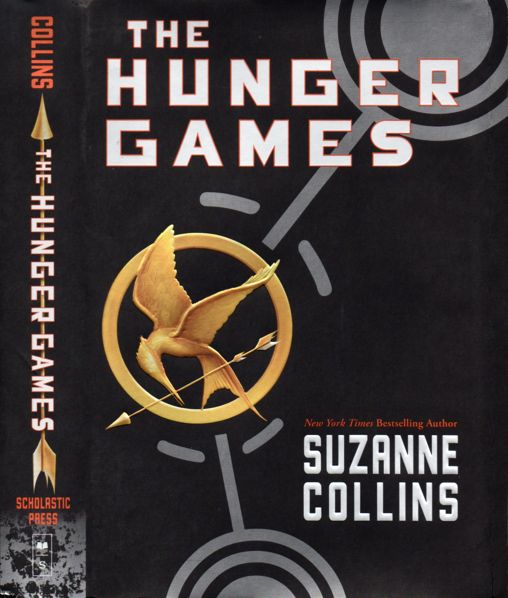
- The Hunger Games
series3 books2008
part of The Hunger Games Universe
similar bydarkfar futuretotalitarianismscience fictiondystopiatense
The Hunger Games is a series of young adult dystopian novels written by American author Suzanne Collins. The series consists of a trilogy that follows teenage protagonist Katniss Everdeen, as well as two prequels. The Hunger Games universe is a dystopia set in Panem, a post-apocalyptic North American country consisting of the wealthy Capitol and 12 districts in varying states of poverty. As punishment for rebellion, the Capitol hosts an annual battle royale competition called The Hunger Games. Each of the 12 districts must send two children between the ages of 12 and 18 to participate, and the last surviving child is dubbed the victor.
- The Hunger Games Universe
universe5 books2008
Start hereThe Hunger Games · Start here
similar bydarkfar futuretotalitarianismdystopiascience fictiontense
Panem, they call it now — a nation raised on the drowned bones of North America, a glittering Capitol ringed by twelve districts it once starved into obedience. Every year the Capitol collects its debt in children: two tributes from each district, drawn by lottery, dropped into an engineered arena, and made to kill one another on live television while the whole country is required to watch. This is the Hunger Games — entertainment, punishment, and government at once. Suzanne Collins tells it in a compact, unified body of work. The founding trilogy — The Hunger Games, Catching Fire, and Mockingjay — follows Katniss Everdeen, a girl from the coal-mining District 12 who volunteers in her sister's place and becomes something the Capitol never scripted. Two prequels reach back into the same machinery: The Ballad of Songbirds and Snakes traces a young Coriolanus Snow long before he is President, and Sunrise on the Reaping returns to District 12 a generation ahead of Katniss. Begin with the trilogy, in order — it is Katniss's voice, close and present-tense, that makes Panem breathe, and the prequels land hardest once you know how her story ends. Beneath the spectacle sits one steady, uncomfortable question: who profits when we agree to look away.
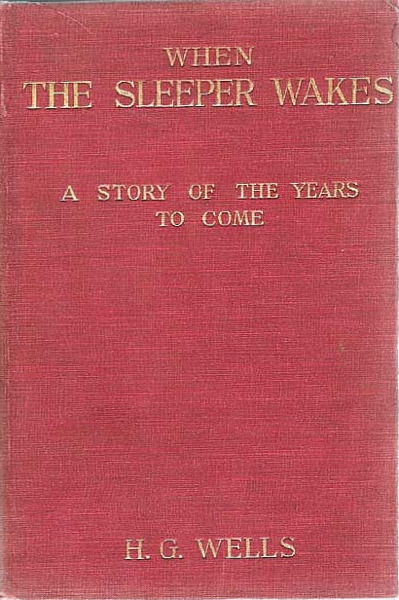
- When the Sleeper Wakes
H. G. Wellsstandalone novel1899
similar bydarkfar futuretotalitarianismscience fictiondystopiatensetime travel
Graham, an insomniac Englishman in 1890s London, takes a course of sleep-inducing drugs and falls into a coma that lasts two centuries. He wakes in the year 2100 to find his investments have compounded, through a ruling body called the White Council, into effective ownership of most of the world's wealth and power, making him, on paper, humanity's master, and in practice, its prisoner, held under guard while the Council governs in his name. A rebel faction led by a man named Ostrog frees him, hoping to use his symbolic authority to spark an uprising against the Council. An early H. G. Wells dystopia about inherited power and manufactured consent.
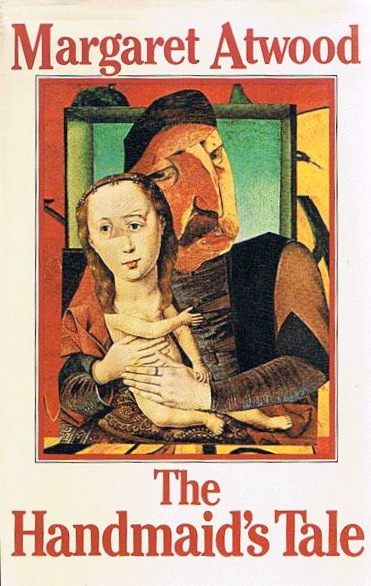
- The Handmaid's Tale
series3 books1985
similar bytotalitarianismdarkdystopiascience fictiontense+1 more
The Handmaid's Tale is Margaret Atwood's 1985 novel set in Gilead, a totalitarian theocracy that has overthrown the United States and forces fertile women into reproductive servitude as Handmaids; it is narrated by one such woman, Offred. Atwood returned to the world in her 2019 sequel The Testaments, set fifteen years later and narrated by three women, including the regime's Aunt Lydia. Together the two novels move from Gilead's grip on power toward the first cracks in it.
- A Clockwork Orange
series4 books1962
completed
similar bydarktotalitarianismdystopiasurveillancescience fiction
Anthony Burgess's 1962 novel is narrated by Alex, a teenage gang leader in a near-future Britain gripped by a youth subculture of extreme violence, recounting his crimes in Nadsat, an invented slang blending English with Russian-derived words. After his crimes catch up with him, Alex is made the subject of a controversial state program meant to forcibly reform his behavior, and the novel uses his ordeal to question whether imposed goodness is worth the loss of free will. It is a standalone novel.
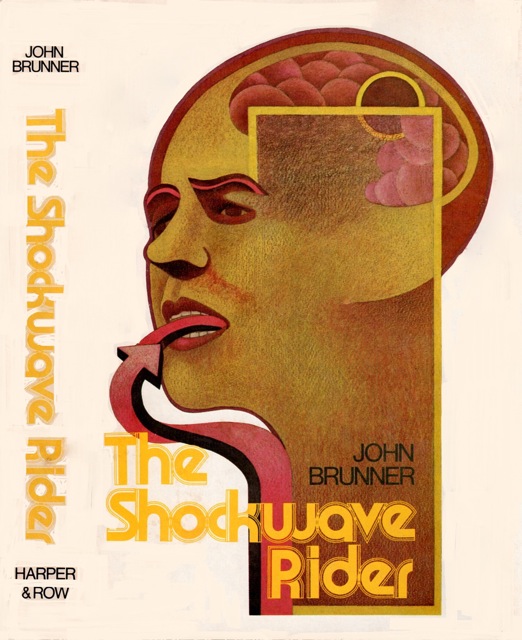
- The Shockwave Rider
John Brunnerstandalone novel1975
similar bydarksurveillancetotalitarianismscience fictiontensedystopia
The Shockwave Rider is a science fiction novel by John Brunner, originally published in 1975. It is notable for its hero's use of computer hacking skills to escape pursuit in a dystopian future, and for the coining of the word "worm" to describe a program that propagates itself through a computer network. It also introduces the concept of a Delphi pool, perhaps derived from the RAND Corporation's Delphi method – a prediction market on world events which bears close resemblance to DARPA's controversial and cancelled Policy Analysis Market.
- Dayworld
series5 books1971
similar byfar futuretotalitarianismscience fictiondystopiatense+2 more
Dayworld is a trilogy of science fiction novels by Philip José Farmer, inspired by his own short story "The Sliced-Crosswise Only-On-Tuesday World". They are set in a dystopian future in which people are allowed to live only one day of the week. For the rest of the six days, they are "stoned", kept in a kind of suspended animation. The novels focus on a man, Jeff Caird, who is a daybreaker: someone who lives more than one day a week. As the series progresses, the main character seems to be suffering from dissociative identity disorder. The novels comprising the trilogy are:Dayworld (1985) Dayworld Rebel (1987) Dayworld Breakup (1990)
- City of Endless Night
Milo Hastingsstandalone novel1920
similar bydarkfar futuretotalitarianismscience fictiondystopia+1 more
Set in the distant future, "City of endless night" tells the story of a world where only Germany has managed to evade occupation by the League of Nations. In it's effort to remain independent, Germany has developed a strange cast society based on eugenics.
- Hazards of Time Travel
Joyce Carol Oatesstandalone novel2018
similar bytotalitarianismdarksurveillancescience fictiondystopiatensetime travel
Hazards of Time Travel is a 2018 dystopian, social science fiction novel by Joyce Carol Oates. It tells the story of Adriane Strohl, a 17-year-old living in a dystopian America in 2039. After her incendiary graduation speech, she is sent back to re-education in the year 1959. Oates began writing it in 2011.
- Starchild
series3 books1964
completed
similar bytotalitarianismfar futuresurveillancescience fictiondystopiatense
The Starchild Trilogy is a series of three science fiction novels written by Frederik Pohl and Jack Williamson. In the future depicted in this series, mankind is ruled by a brutal totalitarian government known as the Plan of Man, enforced by a computerized surveillance state.
- Out on Blue Six
Ian McDonaldstandalone novel1989
similar bytotalitarianismdarkfar futuresurveillancescience fictiondystopia
Out on Blue Six is a 1989 science fiction novel by the British writer Ian McDonald, his third novel. The plot describes the adventures of groups of outcasts and "pain criminals" in the Compassionate Society, a civilization in which all forms of pain and unhappiness have been made illegal.
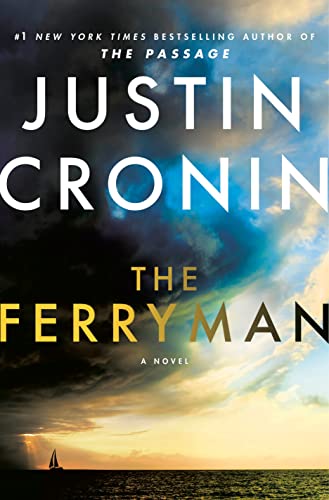
- The Ferryman
Justin Croninstandalone novel2023
similar byfar futuresurveillancetotalitarianismscience fictiondystopiatense
The Ferryman is a 2023 dystopian fiction novel by Justin Cronin. The protagonist, Proctor Bennett, is a titular "ferryman", responsible for transporting elderly citizens to be reborn. Proctor gradually realizes that his utopian life is not what it seems. The Ferryman is Cronin's first novel since 2016's The City of Mirrors.
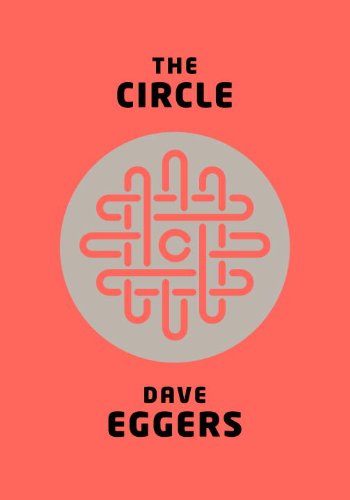
- The Circle (Eggers)
series2 books2013
similar bydarksurveillancetotalitarianismdystopiatensescience fiction
Mae Holland lands a coveted job at the Circle, a Silicon Valley tech company whose relentless, cheerful push toward total transparency -- 'secrets are lies, sharing is caring, privacy is theft' -- gradually reveals itself as something closer to soft totalitarianism. Dave Eggers's The Circle follows Mae's rise inside the company as she buys further and further into its ideology, at increasing cost to her own privacy and the people around her. The 2021 follow-up, The Every, picks up with Mae now running the merged tech giant and a new employee questioning it from the inside.
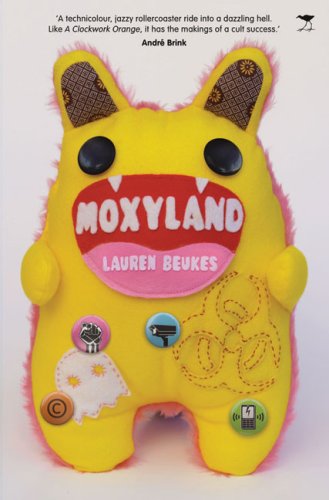
- Moxyland
Lauren Beukesstandalone novel2008
similar bydarksurveillancetotalitarianismdystopiatensescience fiction
Moxyland is a cyberpunk dystopian novel written by South African author, Lauren Beukes. The book was published in 2008.
- Brave New World
series8 books1932
similar byscience fictiondystopiafar future+3 more
Aldous Huxley's 1932 novel imagines a future World State where reproduction, social caste, and desire are all engineered before birth, and the population is kept content through conditioning, sleep-hypnosis, and a mood-altering drug called soma. The story follows the disruption this seemingly stable order suffers when an outsider raised beyond its reach is brought into it, exposing what the society traded away for comfort and order. Some editions pair the novel with Huxley's own 1958 nonfiction essay collection, Brave New World Revisited, which reassesses the book's ideas rather than continuing its story.
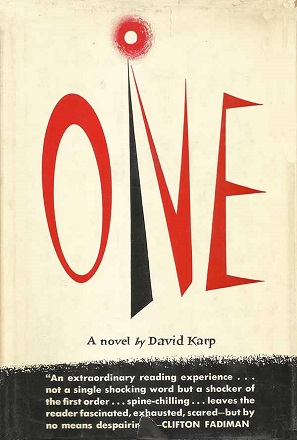
- One
David Karpstandalone novel1953
similar bytotalitarianismdarksurveillancescience fictiondystopiatense
One is a dystopian novel by David Karp first published in 1953. It was also published under the title, Escape to Nowhere.
- We
Евгений Замятинstandalone novel1921
similar bytotalitarianismdarkfar futuresurveillancescience fictiondystopia
In a glass-enclosed city of absolute straight lines, ruled over by the all-powerful 'Benefactor', the citizens of the totalitarian society of OneState live out lives devoid of passion and creativity - until D-503, a mathematician who dreams in numbers, makes a discovery: he has an individual soul. Set in the twenty-sixth century AD, We is the classic dystopian novel and was the forerunner of works such as George Orwell's 1984 and Aldous Huxley's Brave New World. (source: goodreads.com)
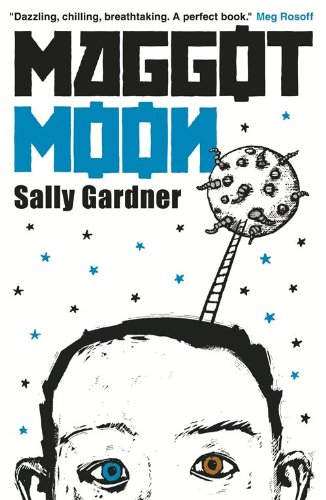
- Maggot Moon
Sally Gardnerstandalone novel2012
similar bytotalitarianismdarksurveillancedystopiatense+1 more
Maggot Moon is a young adult novel written by Sally Gardner, illustrated by Julian Crouch, and published February 12, 2013 by Candlewick Press. The book takes place in an alternate timeline of 1956 as the characters live in "The Motherland," telling a tale of what could have happened had the Nazis won the Second World War.
- Fahrenheit 451
series2 books1951
completed
similar bytotalitarianismdystopiascience fiction+2 more
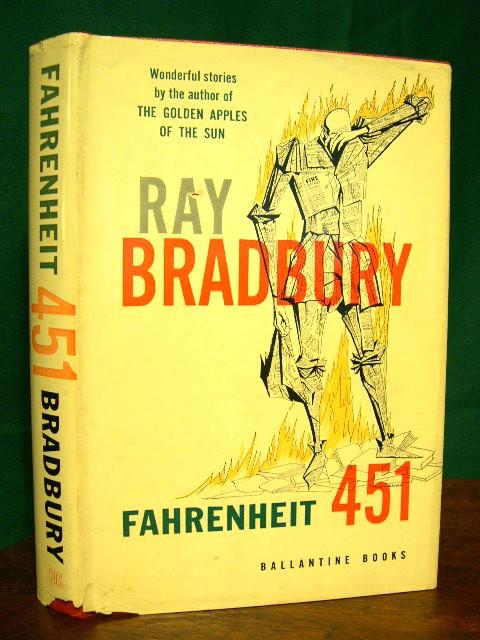
Fahrenheit 451 began life as "The Fireman," a novella Ray Bradbury published in 1951, which he then expanded into the full novel released in 1953 under its now-famous title. Set in a future where books are outlawed and firemen exist to burn them, it follows fireman Guy Montag as doubts about his job push him toward the very literature he's supposed to destroy. The novella and novel are one story's evolution rather than two separate books.
- The Future
Naomi Aldermanstandalone novel2023
similar bydarktotalitarianismscience fictiondystopiatense+1 more
The Future is a 2023 science fiction novel by English writer Naomi Alderman, published by Simon & Schuster. The novel is set in a future dystopia where the world has been altered by environmental crisis and a powerful technocracy.
- Stand on Zanzibar
John Brunnerstandalone novel1968
similar bydarksurveillancescience fictiondystopia+1 more
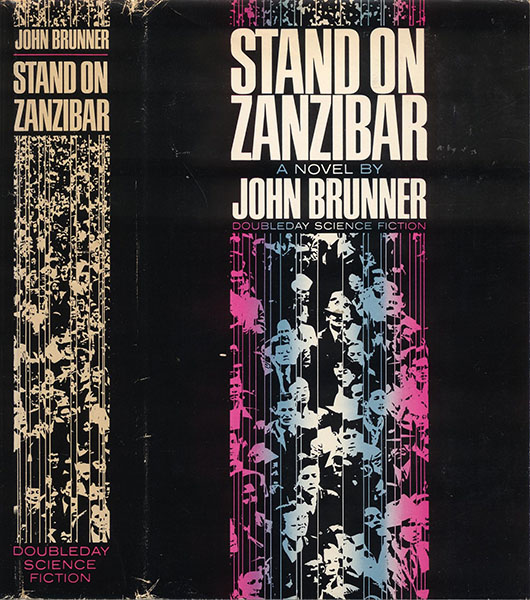
Stand on Zanzibar is a dystopian New Wave science fiction novel written by John Brunner and first in part published in New Worlds magazine in 1967 and in book form in 1968. The book won a Hugo Award for Best Novel at the 27th World Science Fiction Convention in 1969, as well as the 1969 BSFA Award and the 1973 Prix Tour-Apollo Award.
- The Children of Men
P. D. Jamesstandalone novel1992
similar bytotalitarianismdarkscience fictiondystopiatense
"The human race has become infertile, and under the despotic rule of Xan Lyppiatt, the Warden of England the old are despairing and the young cruel. Theo Faren, a cousin of the Warden, lives a solitary life in this ominous atmosphere. That is, until a chance encounter with a young woman leads him into contact with a group of dissenters. Suddenly his life is changed irrevocably, as he faces agonising choices which could affect the future of mankind." (pdjames.co.uk)