Loreful
HomeDiscover
Search series, authors…⌘K
Loreful

Reading orders for SF/F series and shared universes — with your place kept in every one.

Explore

UniversesSeriesWorksAuthorsAtlas

Help

FAQAboutSite map

Account & legal

Sign inCreate accountPrivacyTerms

Data

Built on ISFDB, Wikipedia, Wikidata and Open Library. Curated reading orders carry their reasoning on the page; the rest follow publication order. Data sources & licenses

© Loreful · data: ISFDB · CC BY

More like Step Closer

anchored on:horrorcontemporaryyoung adult

but

Mood

The mood the book leaves you in.

  • The reading experience is propelled by journeys, exploration, and physical risk; excitement and forward momentum dominate over dread or introspection.
  • Joy and loss are deliberately mixed; the resolution grants characters something real while taking something else away, leaving warmth and sorrow together.
  • The book demands work from the reader — dense prose, difficult structure, unfamiliar ideas, or morally uncomfortable material — as part of its intended effect.
  • Grim events, cruelty, or despair dominate the atmosphere, and the book does not soften them with comfort or comic relief.
  • The atmosphere is quietly unsettling — wrongness, unease, and the uncanny pervade the book without necessarily escalating into overt horror.
  • The book is built to move the reader; character feeling is foregrounded and major scenes aim at a strong emotional response.
  • Humor is a primary aim and the prose plays for laughs — comic situations, wit, or dialogue produce sustained comedy, not occasional levity.
  • The book insists that things can improve; effort and decency are shown to matter, and the arc bends toward better outcomes even through hardship.
  • The book teaches as it goes — real facts, history, science, or craft are conveyed in enough depth that learning is part of the reading experience.
  • The book is designed to uplift and motivate, presenting perseverance or achievement in a way that invites the reader to aspire or act.
  • The overall register is cheerful and easygoing; stakes are kept gentle and the book avoids dwelling on pain or dread.
  • Withheld information drives the experience; the book sustains enigmas and secrets the reader wants resolved, whatever its genre.
  • The book is contemplative and inward-looking, giving more weight to thought, memory, and meaning than to external events.
  • The book works as comfort reading — low tension, a soothing pace, and an atmosphere the reader can unwind in.
  • Grief, loss, or melancholy set the dominant register, and the book lets sorrow stand rather than resolving it into comfort.
  • Sustained suspense is the point; the book keeps the reader braced for what happens next through danger, pressure, or impending revelation.
  • Playful invention and charm define the register — fanciful conceits, light absurdity, and a narration that delights in its own oddity.

About

What the story runs on.

  • Stories in which extraterrestrial beings are central — as characters, cultures, or the object of the plot.
  • Stories structured as a quest — a journey undertaken to find, deliver, or destroy something of great import.
  • Stories in which staying alive against nature, catastrophe, or scarcity is the central problem.
  • Stories of lovers kept apart by law, family, faith, or station, where the obstacle to love is the plot.
  • Stories in which a friendship — its making, testing, or loss — is the emotional center.
  • Stories of growing up — a young protagonist crossing from childhood into adult knowledge and responsibility.
  • Stories about who a character truly is — self-discovery, doubled lives, and the search for a self.
  • Stories about mourning — living through the death of a loved one and what loss does to the survivors.
  • Stories in which a buried family truth — hidden parentage, crimes, or shames — surfaces and reorders the present.
  • Stories driven by maneuvering for power — factions, conspiracies, and statecraft conducted in shadow.
  • Stories in which war itself is the subject — combat, occupation, and what warfare does to soldiers and civilians.
  • Stories organized around investigating a killing — the case, the clues, and the pursuit of the killer, in any genre's clothing.

Shelf

Where it sits in the library.

    • Fiction built on magic or other supernatural elements that have no scientific explanation.
    • Secondary-world fantasy at large scale, where the fate of nations or the world turns on the protagonists' struggle.
    • Fantasy set in a recognizably modern city or contemporary world where the supernatural intrudes on everyday life.
    • Fantasy that blends in horror's atmosphere and imagery, keeping a fantastical frame around grim or frightening material.
    • Action-driven fantasy following warriors or rogues with personal stakes against sorcerous threats, rather than world-spanning conflicts.
    • Fantasy set in a real historical period or a close analogue of one, with magic woven into the era.
    • Fantasy in which protagonists cross from the ordinary world into another world through a portal or similar passage.
    • Fiction that retells or reworks a traditional fairy tale in a new form or setting.
    • Fantasy drawing directly on myths, legends, and folklore, retelling them or building on their figures and logic.
    • Fantasy of ghosts, vampires, shapeshifters, psychics, and similar phenomena, usually set in an otherwise ordinary world.
    • Fiction mixing science-fictional trappings with overtly magical or impossible elements in one setting.
    • Low-stakes fantasy emphasizing comfort, community, and everyday pleasures over conflict and peril.
    • Speculative fiction of pervasive moral ambiguity, violence, and cynicism that rejects heroic conventions — fantasy and SF alike.
      • Fiction that extrapolates from science and technology — future societies, space travel, or speculative inventions — within at least nominally natural laws.
      • Science fiction of interstellar scope — starships, galactic polities, and adventure across star systems.
      • Science fiction committed to scientific rigor, where technical plausibility constrains the story.
      • Science fiction centered on armed forces and warfare, told largely from a military point of view.
      • Science fiction of networked, corporate-dominated near futures, pairing high technology with social decay.
      • Science fiction styled on nineteenth-century steam-powered technology, often in a Victorian or pseudo-Victorian setting.
      • Fiction depicting an oppressive or catastrophic society, presented as a warning.
      • Fiction set after civilization's collapse, following survivors in the ruins of the old world.
      • Fiction in which characters move between past and future, and the mechanics or consequences of that travel drive the plot.
      • Fiction exploring a world where a historical event went differently and history diverged from ours.
      • Science fiction about humanity's first encounter and communication with an alien intelligence.
      • Science fiction in which extraterrestrial forces attack or occupy Earth and humanity resists.
      • Fiction whose primary aim is to frighten or unsettle the reader through dread, menace, or the monstrous.
      • Horror of vast, indifferent, incomprehensible entities before which humanity is insignificant, in the Lovecraft tradition.
      • Horror of decaying houses, buried family secrets, and oppressive atmosphere in the Gothic literary tradition.
      • Horror centered on hauntings and the returning dead.
      • Horror located in the mind — paranoia, obsession, and unreliable perception rather than external monsters.
      • Horror built around the reanimated dead and survival amid their outbreaks.
      • Horror defined by explicit, transgressive gore that refuses to cut away from violence.
      • Speculative fiction of the strange and uncanny that resists both natural explanation and standard genre categories.
      • Fiction organized around solving a crime or puzzle, typically following an investigator toward the identification of a culprit.
      • A puzzle-first mystery that lays out clues so the culprit's identity can be deduced before the reveal.
      • Crime fiction of moral ambiguity, fatalism, and hard-edged style, set among the corrupt and the doomed.
      • A mystery following the realistic routines of police work — forensics, interviews, and case-building.
      • A gentle mystery with an amateur sleuth, a small community, and violence kept off the page.
      • A mystery set in a past era, where the investigation works within that period's methods and society.
      • Fast-paced fiction driven by imminent danger, pursuit, or high-stakes conspiracy, built to sustain tension.
      • A thriller of espionage — agents, tradecraft, and intelligence services in conflict.
      • A thriller centered on lawyers and the courtroom, where litigation carries the suspense.
      • A thriller driven by detailed contemporary or near-future technology, often military or scientific.
      • A thriller whose tension comes from mental states and manipulation between characters rather than external action.
      • Fiction whose central plot is a romantic relationship and its development toward an emotionally satisfying resolution.
      • Romance in which one or both partners are supernatural beings, blending fantasy elements into the love story.
      • A fantasy-romance hybrid in which the romantic arc and the fantasy plot carry equal weight.
      • Romance set in a past era, with courtship shaped by the period's society and manners.
      • Romance set in the present day, without supernatural or historical elements.
      • Fiction set in a real past period, where the historical setting materially shapes characters and events.
        • General and literary fiction emphasizing prose style, character interiority, or formal ambition over genre plot conventions.
        • Fiction in a realistic world where magical events occur and are treated as ordinary, in the tradition of Latin American literature.
        • Fiction that ridicules people, institutions, or society in order to criticize them.
        • Fiction of dreamlike, irrational imagery and logic that breaks from realistic representation.
        • Fiction that plays with narrative convention through metafiction, fragmentation, and self-reference.
        • Fiction propelled by journeys, exploration, and physical peril, where action and survival carry the plot.
        • Adventure fiction of ships and seafaring — naval engagements, voyages, and life at sea.
        • Fiction of the American frontier West — gunmen, ranchers, and lawmen, typically in the late nineteenth century.
        • Fiction centered on soldiers, campaigns, and the experience of warfare, historical or imagined.
          • Fiction written primarily to amuse, using comedic situations, wit, or parody as its organizing principle.
            • Multi-generational fiction following a family or dynasty across decades, with inheritance and kinship as the through-line.
              • Fiction whose world runs on explicit game mechanics — levels, stats, and skills that characters can see and exploit.
                • Fiction about costumed or superpowered heroes and their conflicts with comparable villains.

                Practical

                How long a commitment, whether it stands alone, and whether it has finished.

                Tap a chip to ask for it · tap again to rule it out · once more to clear. Numbers show what would be left.

                • Cover of Jerusalem's Lot
                  Jerusalem's Lot

                  series · 3 books · 1975

                  similar byhorrorcontemporaryour worldeerietense+1 more

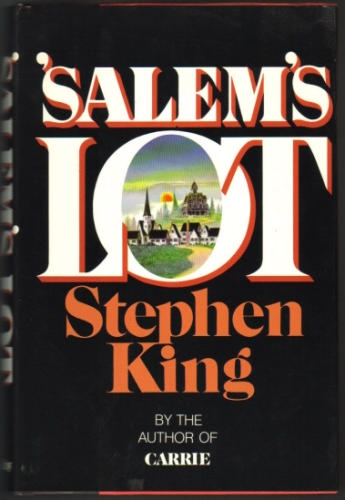
                  Stephen King's 1975 novel 'Salem's Lot follows writer Ben Mears as he returns to his childhood town of Jerusalem's Lot, Maine, only to discover that its residents are being turned into vampires by a newly arrived stranger. It transplants Gothic vampire horror into a small New England community, tracking that community's collapse under a supernatural siege. It is a single, self-contained novel.

                • Cover of Southern Reach Trilogy
                  Southern Reach Trilogy

                  series · 4 books · 2014

                  similar byhorrorcontemporarymadnessour worldeerie+2 more

                  The Southern Reach Series is a series of novels by the American author Jeff VanderMeer first published in 2014—Annihilation, Authority, Acceptance, and Absolution. The series takes its name from the secret agency that is central to the plot. In 2013, Paramount Pictures bought the movie rights for the series, and a film adaptation of Annihilation was made with Alex Garland as writer-director. The film was released in 2018. The most recent book in the series, Absolution, was released on 22 October 2024.

                • Cover of The Fog
                  The Fog

                  James Herbert · standalone novel · 1975

                  similar byhorrorcontemporarysurvivalmadnessour worldtense

                  The Fog is a horror novel by English writer James Herbert, published in 1975. It is about a deadly fog that drives its victims insane when they come into contact with it.

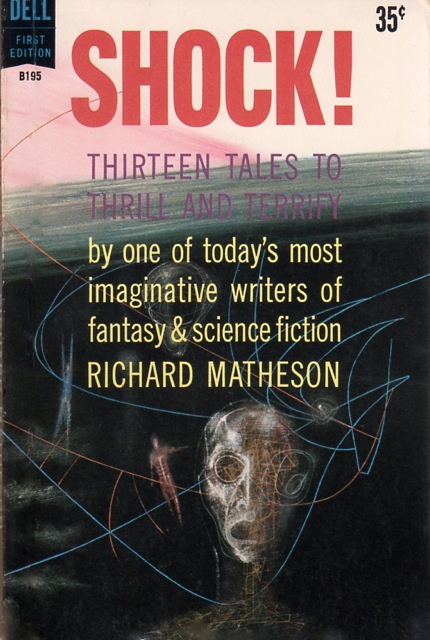
                • Cover of Shock
                  Shock

                  series · 4 books · 1961

                  completed

                  similar byhorrorcontemporarymadnessour worldtenseshort story cycle+1 more

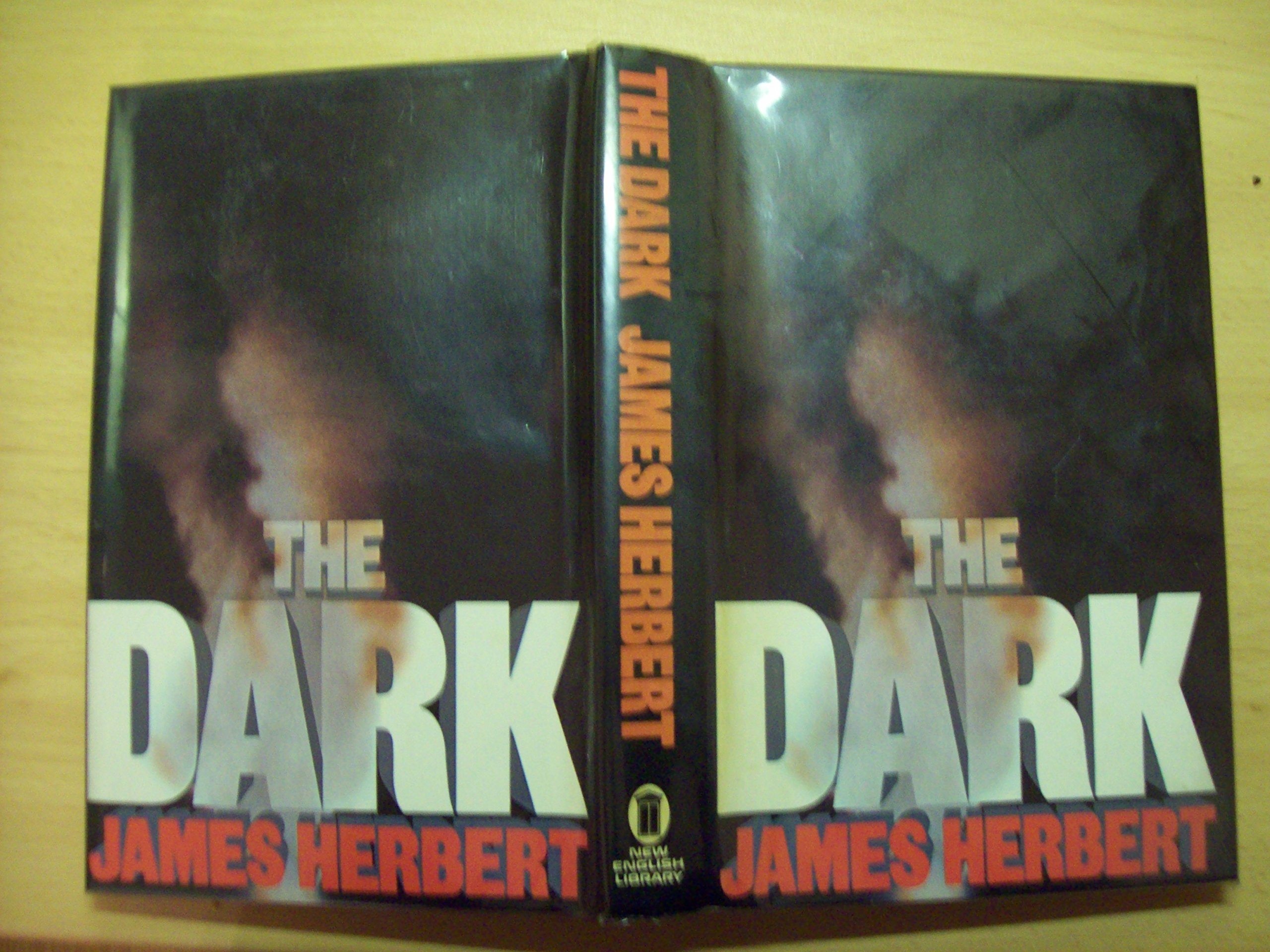
                • Cover of The Dark
                  The Dark

                  James Herbert · standalone novel · 1980

                  similar byhorrorcontemporarysurvivalmadnessour worldtense

                  WorldCat: It came like a malignant shadow with seductive promises of power. And somewhere in the night, a small girl smiled as her mother burned. Asylum inmates slaughtered their attendants. In slimy tunnels, once-human creatures gathered. Madness raged as the lights began to fade and humanity was attacked by an ancient, unstoppable evil.

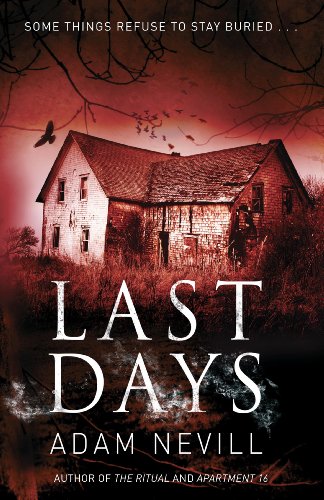
                • Cover of Last Days
                  Last Days

                  Adam Nevill · standalone novel · 2012

                  similar byhorrorcontemporarymadnessour worldeerietense+1 more

                  Last Days is a 2012 horror novel by the British author Adam Nevill. The book was first published in the United Kingdom on 24 May 2012 by Pan Macmillan and was published in the United States on 26 February 2013 through St. Martin's Griffin. It won the 2013 British Fantasy Award for Best Horror Novel and film rights for Last Days were first optioned by Adam Storke in early 2014. The option has subsequently passed to another film production company.

                • Cover of Monster
                  Monster

                  Christopher Pike · standalone novel · 1992

                  similar byhorrorcontemporarysurvivalmadnessour worldtenseyoung adult

                  She said she killed them because they were monsters. Mary Blanc walked into the party with a loaded shotgun. In the blink of an eye she blew two people away. She wanted to kill more, but was stopped by her best friend, Angela Warner, and the police. The next day, when Angela visits Mary at the jail, she asks why she did it. Mary responds, "Because they were no longer human." Angela thinks she's crazy. At first. Until she probes deeper into Mary's claims and discovers a horror so unimaginable that she thinks she is going crazy. She even gets to the point where she wonders if she should have let Mary keep on killing. While there was still time to stop the thing from spreading. The very old thing. The hungry thing.

                • Cover of The Nightmare People
                  The Nightmare People

                  Lawrence Watt-Evans · standalone novel · 1990

                  similar byhorrorcontemporarymadnessour worldeerietense+1 more

                  One night Ed Smith thought he was having a waking nightmare when he saw a monstrous face at his window, but in the morning his neighbors were missing. The people who later turned up were not quite right, and gradually Smith realized they not only weren't his neighbors, but weren't even human--they were the creatures he had seen ? Watt-Evans has created a terrifying new monster in the classic tradition of Frankenstein and Dracula!

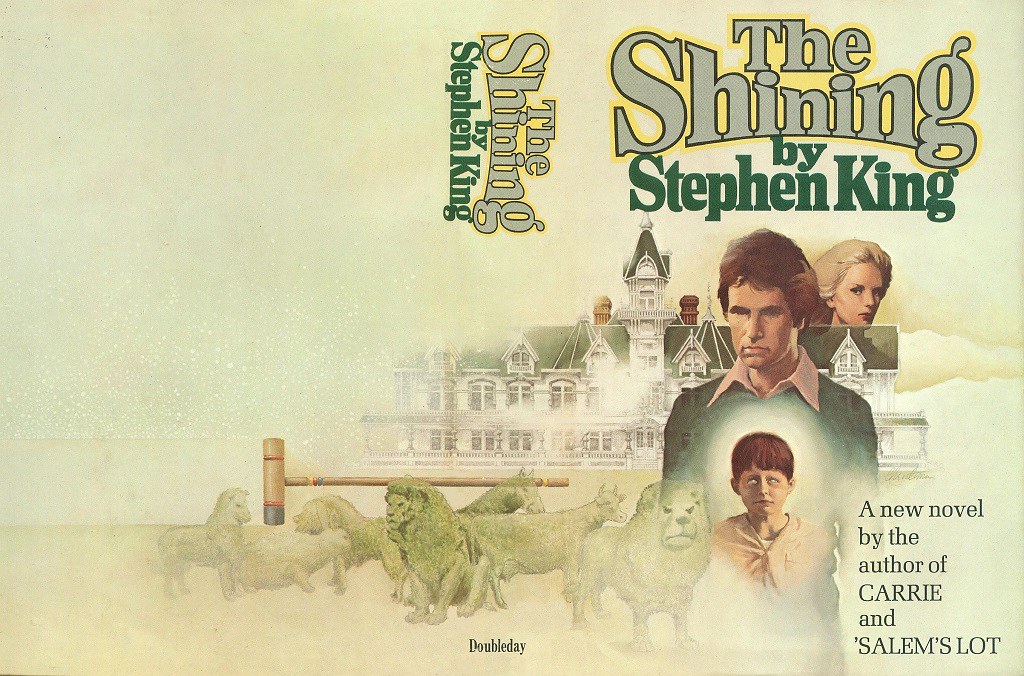
                • Cover of The Shining
                  The Shining

                  series · 5 books · 1977

                  similar byhorrorcontemporarytense+1 more

                  Stephen King's 1977 novel The Shining follows the Torrance family as winter caretakers of the isolated, malevolent Overlook Hotel, where father Jack is gradually consumed by the hotel's influence while his young son Danny's psychic "shining" draws its attention. Doctor Sleep (2013) picks up the story decades later, following Danny as an adult still marked by that childhood ordeal. Together the two form a horror duology spanning nearly forty years of real-world publication.

                • Cover of Asylum (Madeleine Roux)
                  Asylum (Madeleine Roux)

                  series · 8 books · 2013

                  similar byhorrormadnesscontemporarytenseyoung adult+2 more

                  Asylum is a New York Times bestselling young adult horror novel series by Madeleine Roux. The series is composed of four novels, Asylum, Sanctum, Catacomb, and Escape from Asylum and three novellas: The Scarlets, The Bone Artists, and The Warden. The series features various twists and turns.

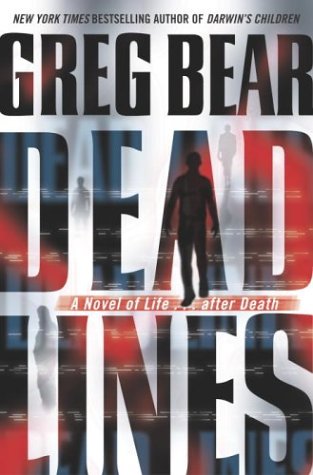
                • Cover of Dead Lines
                  Dead Lines

                  Greg Bear · standalone novel · 2004

                  similar byhorrorcontemporarymadnessour worldeerie+1 more

                  From the flaps of the Ballantine first edition: "For the last two years, Peter Russell has mourned the death of one of his twin daughters - who was just ten when she was murdered. Recent news of his best friend's fatal heart attack has now come as another devastating blow. Divorced, despondent, and going nowhere in his career, Peter fears his life is circling the drain. Then Trans comes along. The brainchild of an upstart telecom company, Trans is (as its name suggests) a transcendent marvel, a sleek, handheld interpersonal communication device capable of flawless operation anywhere in the world, at any time. "A cell phone, but not" - transmitting with crystal clarity across a newly discovered, never-utilized bandwidth... and poised to spark a new-technology revolution. When its creators offer Peter a position on their team, it should be a golden opportunity for him. If only he wasn't seemingly going mad. Everywhere Peter turns, inexplicable apparitions are walking before him or reaching out in torment. After a chilling encounter with his own lost child he begins to grasp the terrifying truth: Trans is a Pandora's box that has tapped into a frequency not of this world... but of the next. And now, via this open channel to oblivion, the dead have gained access to the living. For Peter, and for humankind, a long shadowy night of the soul has descended, bringing with it the stuff of a horrifying nightmare from which they may never awaken."

                • Cover of Fear
                  Fear

                  L. Ron Hubbard · standalone novel · 1951

                  similar byhorrorcontemporarymadnessour worldeerietense

                  Fear is a psychological thriller-horror novella by American writer L. Ron Hubbard, which first appeared in the magazine Unknown Fantasy Fiction in July 1940.

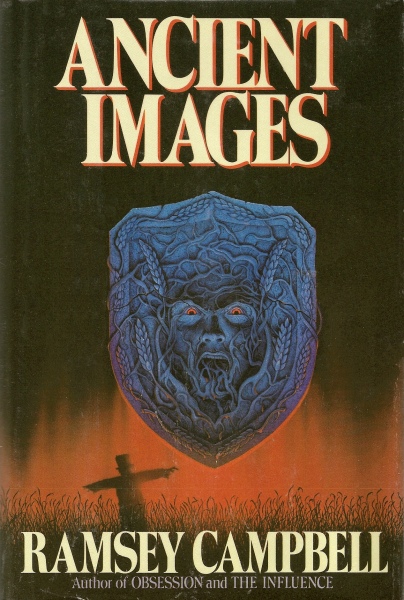
                • Cover of Ancient Images
                  Ancient Images

                  Ramsey Campbell · standalone novel · 1989

                  similar byhorrorcontemporaryour worldeerietense+1 more

                  A lost horror film holds the key to terrifying secrets. The legends have persisted for decades of a lost horror film starring Boris Karloff and Bela Lugosi that was never released. Rumor has it that, for reasons long forgotten, powerful forces suppressed the film and burned all known prints. Nobody now living has seen the finished film. But that might no longer be true… Film researcher Sandy Allan is invited to a screening of a newly-discovered sole-surviving print, but then the film disappears and the real horror begins. Sandy’s search for the film leads her to Redfield, a rural community known its rich soil, fertilized by blood from an ancient massacre. But Redfield guards its secrets closely, with good reason. During every step of her search, Sandy is watched, shadowed by strange figures. Is it paranoia, or is someone—or something—determined to keep the lost film and the secrets it reveals buried forever?

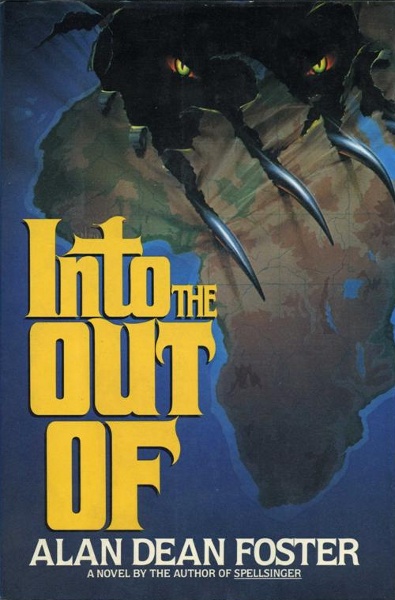
                • Cover of Into the Out of
                  Into the Out of

                  Alan Dean Foster · standalone novel · 1986

                  similar byhorrorcontemporaryeerietense+2 more

                  Into the Out Of (1986) is a horror-science fiction novel by American writer Alan Dean Foster.

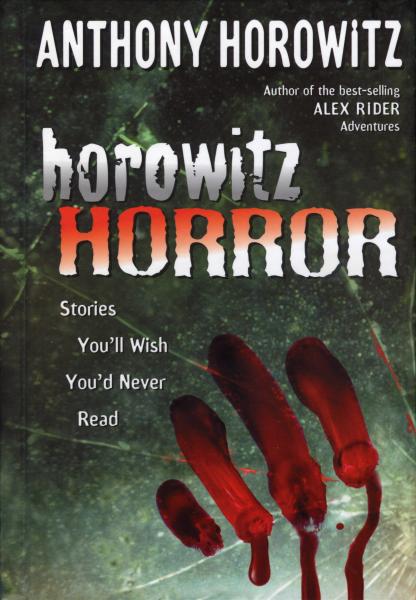
                • Cover of Horowitz Horror
                  Horowitz Horror

                  series · 3 books · 1999

                  similar byhorrorcontemporaryour worldshort story cycle+4 more

                • Cover of Rosemary Reilly
                  Rosemary Reilly

                  series · 2 books · 1967

                  completed

                  similar byhorrortense+3 more

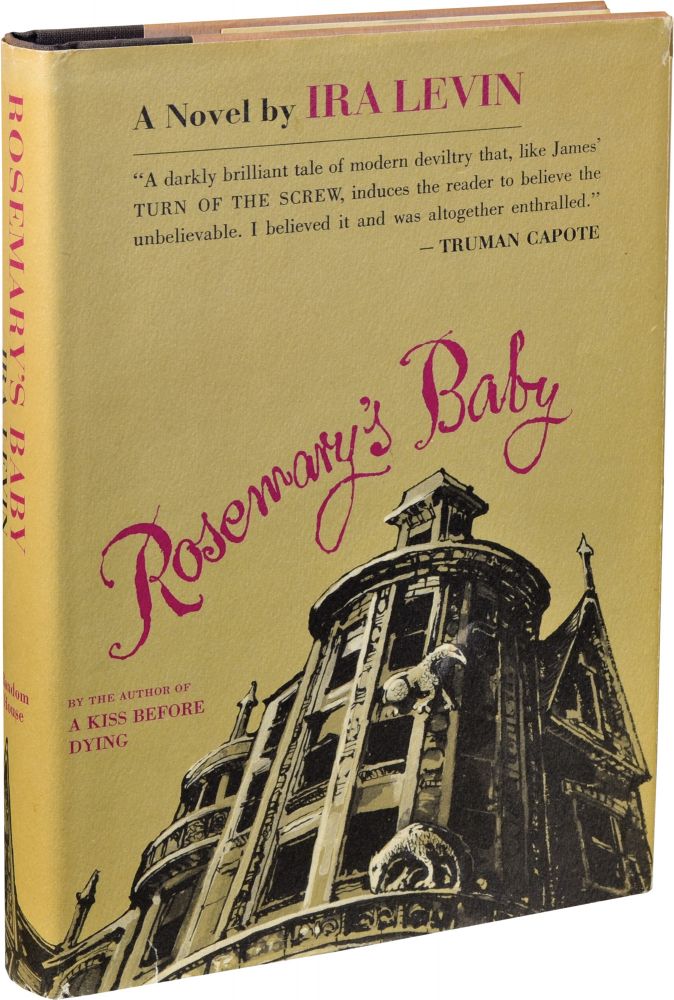
                  Rosemary's Baby follows a young wife in a Gothic Manhattan apartment building who grows increasingly convinced that her elderly neighbors, and even her own husband, are part of a conspiracy surrounding her pregnancy. Ira Levin returned to the character thirty years later in the 1997 sequel Son of Rosemary. Together the two novels form a short, self-contained horror series about faith, control, and motherhood.

                • Cover of The House on Moon Creek Avenue
                  The House on Moon Creek Avenue

                  E. Reyes · standalone novel · 2020

                  similar byhorrorcontemporarymadnessour worldeerietense

                  ● "Cindy is a twenty-one-year-old single mother, retail worker, and college student. She inherits her grandmother's home on Moon Creek Avenue after she passes away. At first, the home is comfortable, nostalgic of Cindy's childhood at nana's, and her daughter enjoys the home, too. But soon, ghosts randomly appear day and night, doors open and close, a streak of bad luck begins, Cindy and her daughter have unsettling nightmares, and Cindy's mental state is pushed to the edge. When Cindy's video recording of paranormal activity goes viral on social media, she gets the attention of famous ghost hunters. Without anywhere else to turn, Cindy accepts their help." ― paraphrased from this book's product page on Amazon.com as of 2024-09-26.

                • Cover of The Fury
                  The Fury

                  Alexander Gordon Smith · standalone novel · 2012

                  similar byhorrorcontemporarysurvivalour worldtenseyoung adult+1 more

                  "To defend themselves, a ragtag group of teens bands together at an abandoned amusement park after one day when, without warning, the entire human race turns against them"--Provided by publisher. To defend themselves, a ragtag group of teens bands together at an abandoned amusement park after, without warning, the entire human race turns against them. The plot contains profanity and graphic violence.

                • Cover of Good Girls Don't Die
                  Good Girls Don't Die

                  Christina Henry · standalone novel · 2023

                  similar byhorrorcontemporarysurvivalour worldeerietense+1 more

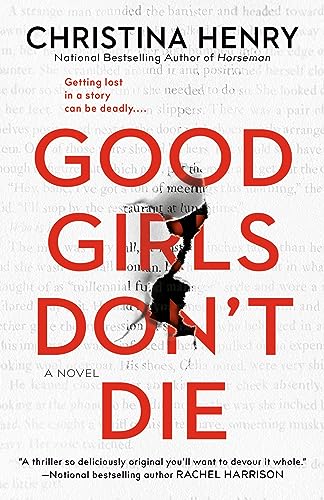
                  Celia wakes up in a house that’s supposed to be hers. There’s a little girl who claims to be her daughter and a man who claims to be her husband, but Celia knows this family—and this life—is not hers… Allie is supposed to be on a fun weekend trip—but then her friend’s boyfriend unexpectedly invites the group to a remote cabin in the woods. No one else believes Allie, but she is sure that something about this trip is very, very wrong… Maggie just wants to be home with her daughter, but she’s in a dangerous situation and she doesn’t know who put her there or why. She’ll have to fight with everything she has to survive… Three women. Three stories. Only one way out. This captivating novel will keep readers guessing until the very end.

                • Cover of Goosebumps
                  Goosebumps

                  universe · 234 books · 1992

                  Start hereRevenge of the Living Dummy · The connected HorrorLand story

                  similar byhorrorour worldcontemporary+3 more

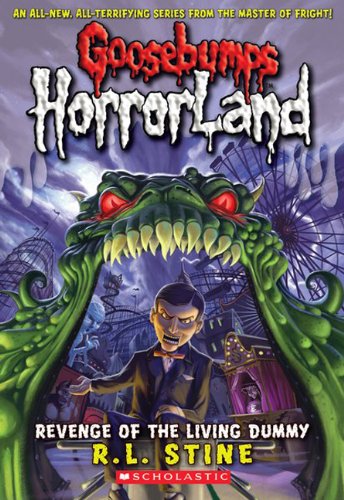
                  Reader beware — you're in for a scare. That promise has been kept, book after book, since a boy first knocked on the door of the Dead House and found the whole neighborhood grinning too widely. Goosebumps is R. L. Stine's carnival of small-town dread, where the horror is always sized just right for a kid: a haunted ventriloquist dummy, a camera that photographs disasters before they happen, a mask that won't come off, a basement that hums. Each book is its own self-contained nightmare, narrated by an ordinary boy or girl whose ordinary street has quietly turned against them — and every one snaps shut on a twist that pulls the rug out one last time before the lights come up. The shelf is deep. The original run of paperbacks gave way to Series 2000, then the branching, choose-your-doom gamebooks of Give Yourself Goosebumps, the story-collections Tales to Give You Goosebumps, and villain showcases in Most Wanted. HorrorLand strung the standalones into a single running arc set inside a monstrous theme park, and SlappyWorld and House of Shivers keep the lights flickering for new readers, hosted by Slappy, the wooden fiend who considers himself the star of the whole show. The tone is mock-scary and knowing — spooky enough to thrill, silly enough to laugh off before bed, always short and always cliffhung. No reading order binds them; open any cover. Newcomers usually meet the dummy first, in Night of the Living Dummy, or start where it all began, in Welcome to Dead House.

                • Cover of Cell
                  Cell

                  Stephen King · standalone novel · 2006

                  similar byhorrorcontemporarysurvivalour worldtense

                  In Cell, King taps into readers fears of technological warfare and terrorism. Mobile phones deliver the apocalypse to millions of unsuspecting humans by wiping their brains of any humanity, leaving only aggressive and destructive impulses behind. Those without cell phones, like illustrator Clayton Riddell and his small band of "normies," must fight for survival, and their journey to find Clayton's estranged wife and young son rockets the book toward resolution.

                • Cover of Bloody Horowitz
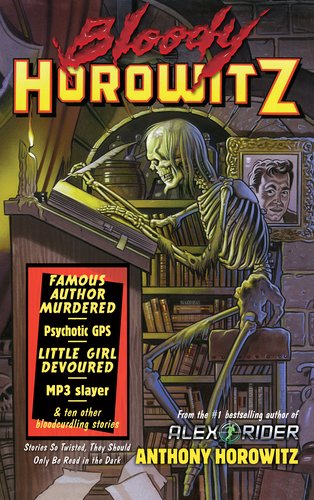
                  Bloody Horowitz

                  series · 2 books · 2010

                  similar byhorrorcontemporaryour worldshort story cycleyoung adult+2 more
                • Cover of Self Storage
                  Self Storage

                  Jay Bonansinga · standalone novel · 2016

                  similar byhorrorcontemporaryour world+2 more

                • SG
                  Suburban Gothic Universe

                  series · 17 books · 2007

                  similar byhorrorcontemporary+1 more