Loreful
HomeDiscover
Search series, authors…⌘K
Loreful

Reading orders for SF/F series and shared universes — with your place kept in every one.

Explore

UniversesSeriesWorksAuthorsAtlas

Help

FAQAboutSite map

Account & legal

Sign inCreate accountPrivacyTerms

Data

Built on ISFDB, Wikipedia, Wikidata and Open Library. Curated reading orders carry their reasoning on the page; the rest follow publication order. Data sources & licenses

© Loreful · data: ISFDB · CC BY

More like Stepping Back

but

Mood

The mood the book leaves you in.

  • The reading experience is propelled by journeys, exploration, and physical risk; excitement and forward momentum dominate over dread or introspection.
  • Joy and loss are deliberately mixed; the resolution grants characters something real while taking something else away, leaving warmth and sorrow together.
  • The book demands work from the reader — dense prose, difficult structure, unfamiliar ideas, or morally uncomfortable material — as part of its intended effect.
  • Grim events, cruelty, or despair dominate the atmosphere, and the book does not soften them with comfort or comic relief.
  • The atmosphere is quietly unsettling — wrongness, unease, and the uncanny pervade the book without necessarily escalating into overt horror.
  • The book is built to move the reader; character feeling is foregrounded and major scenes aim at a strong emotional response.
  • Humor is a primary aim and the prose plays for laughs — comic situations, wit, or dialogue produce sustained comedy, not occasional levity.
  • The book insists that things can improve; effort and decency are shown to matter, and the arc bends toward better outcomes even through hardship.
  • The book teaches as it goes — real facts, history, science, or craft are conveyed in enough depth that learning is part of the reading experience.
  • The book is designed to uplift and motivate, presenting perseverance or achievement in a way that invites the reader to aspire or act.
  • The overall register is cheerful and easygoing; stakes are kept gentle and the book avoids dwelling on pain or dread.
  • Withheld information drives the experience; the book sustains enigmas and secrets the reader wants resolved, whatever its genre.
  • The book is contemplative and inward-looking, giving more weight to thought, memory, and meaning than to external events.
  • Grief, loss, or melancholy set the dominant register, and the book lets sorrow stand rather than resolving it into comfort.
  • Sustained suspense is the point; the book keeps the reader braced for what happens next through danger, pressure, or impending revelation.
  • Playful invention and charm define the register — fanciful conceits, light absurdity, and a narration that delights in its own oddity.

About

What the story runs on.

  • Stories in which extraterrestrial beings are central — as characters, cultures, or the object of the plot.
  • Stories centered on vampires — blood-drinking undead — whether as predators, love interests, or protagonists.
  • Stories centered on werewolves and the curse or gift of transformation into a wolf.
  • Stories about beings who change form at will — skinwalkers, selkies, and other shape-changers beyond the werewolf.
  • Stories centered on witches and the practice of witchcraft — covens, hedge magic, familiars, and the witch's place in her community.
  • Stories in which demons or devils — infernal beings, their bargains, possessions, and hierarchies — drive the plot.
  • Stories in which staying alive against nature, catastrophe, or scarcity is the central problem.
  • Stories of lovers kept apart by law, family, faith, or station, where the obstacle to love is the plot.
  • Romantic arcs that begin in genuine antagonism and turn, through conflict, into love.
  • Stories of growing up — a young protagonist crossing from childhood into adult knowledge and responsibility.
  • Stories about who a character truly is — self-discovery, doubled lives, and the search for a self.
  • Stories organized around investigating a killing — the case, the clues, and the pursuit of the killer, in any genre's clothing.

Shelf

Where it sits in the library.

    • Fiction built on magic or other supernatural elements that have no scientific explanation.
    • Secondary-world fantasy at large scale, where the fate of nations or the world turns on the protagonists' struggle.
    • Fantasy set in a recognizably modern city or contemporary world where the supernatural intrudes on everyday life.
    • Fantasy that blends in horror's atmosphere and imagery, keeping a fantastical frame around grim or frightening material.
    • Action-driven fantasy following warriors or rogues with personal stakes against sorcerous threats, rather than world-spanning conflicts.
    • Fantasy set in a real historical period or a close analogue of one, with magic woven into the era.
    • Fantasy in which protagonists cross from the ordinary world into another world through a portal or similar passage.
    • Fiction that retells or reworks a traditional fairy tale in a new form or setting.
    • Fantasy drawing directly on myths, legends, and folklore, retelling them or building on their figures and logic.
    • Fantasy of ghosts, vampires, shapeshifters, psychics, and similar phenomena, usually set in an otherwise ordinary world.
    • Fiction mixing science-fictional trappings with overtly magical or impossible elements in one setting.
    • Low-stakes fantasy emphasizing comfort, community, and everyday pleasures over conflict and peril.
    • Fiction that extrapolates from science and technology — future societies, space travel, or speculative inventions — within at least nominally natural laws.
    • Science fiction of interstellar scope — starships, galactic polities, and adventure across star systems.
    • Science fiction committed to scientific rigor, where technical plausibility constrains the story.
    • Science fiction centered on armed forces and warfare, told largely from a military point of view.
    • Science fiction of networked, corporate-dominated near futures, pairing high technology with social decay.
    • Science fiction styled on nineteenth-century steam-powered technology, often in a Victorian or pseudo-Victorian setting.
    • Fiction depicting an oppressive or catastrophic society, presented as a warning.
    • Fiction set after civilization's collapse, following survivors in the ruins of the old world.
    • Fiction in which characters move between past and future, and the mechanics or consequences of that travel drive the plot.
    • Fiction exploring a world where a historical event went differently and history diverged from ours.
    • Science fiction about humanity's first encounter and communication with an alien intelligence.
    • Science fiction in which extraterrestrial forces attack or occupy Earth and humanity resists.
    • Fiction whose primary aim is to frighten or unsettle the reader through dread, menace, or the monstrous.
    • Horror of vast, indifferent, incomprehensible entities before which humanity is insignificant, in the Lovecraft tradition.
    • Horror of decaying houses, buried family secrets, and oppressive atmosphere in the Gothic literary tradition.
    • Horror centered on hauntings and the returning dead.
    • Horror located in the mind — paranoia, obsession, and unreliable perception rather than external monsters.
    • Horror built around the reanimated dead and survival amid their outbreaks.
    • Speculative fiction of the strange and uncanny that resists both natural explanation and standard genre categories.
    • Fiction organized around solving a crime or puzzle, typically following an investigator toward the identification of a culprit.
    • A puzzle-first mystery that lays out clues so the culprit's identity can be deduced before the reveal.
    • Crime fiction of moral ambiguity, fatalism, and hard-edged style, set among the corrupt and the doomed.
    • A mystery following the realistic routines of police work — forensics, interviews, and case-building.
    • A gentle mystery with an amateur sleuth, a small community, and violence kept off the page.
    • A mystery set in a past era, where the investigation works within that period's methods and society.
    • Fast-paced fiction driven by imminent danger, pursuit, or high-stakes conspiracy, built to sustain tension.
    • A thriller of espionage — agents, tradecraft, and intelligence services in conflict.
    • A thriller driven by detailed contemporary or near-future technology, often military or scientific.
    • A thriller whose tension comes from mental states and manipulation between characters rather than external action.
    • Fiction whose central plot is a romantic relationship and its development toward an emotionally satisfying resolution.
    • Romance in which one or both partners are supernatural beings, blending fantasy elements into the love story.
    • A fantasy-romance hybrid in which the romantic arc and the fantasy plot carry equal weight.
    • Romance set in a past era, with courtship shaped by the period's society and manners.
    • Romance set in the present day, without supernatural or historical elements.
    • Fiction set in a real past period, where the historical setting materially shapes characters and events.
      • General and literary fiction emphasizing prose style, character interiority, or formal ambition over genre plot conventions.
      • Fiction that ridicules people, institutions, or society in order to criticize them.
      • Fiction of dreamlike, irrational imagery and logic that breaks from realistic representation.
      • Fiction that plays with narrative convention through metafiction, fragmentation, and self-reference.
      • Fiction propelled by journeys, exploration, and physical peril, where action and survival carry the plot.
      • Fiction of the American frontier West — gunmen, ranchers, and lawmen, typically in the late nineteenth century.
      • Fiction centered on soldiers, campaigns, and the experience of warfare, historical or imagined.
        • Fiction written primarily to amuse, using comedic situations, wit, or parody as its organizing principle.
          • Fiction whose world runs on explicit game mechanics — levels, stats, and skills that characters can see and exploit.
            • Fiction about costumed or superpowered heroes and their conflicts with comparable villains.

            Practical

            How long a commitment, whether it stands alone, and whether it has finished.

            Tap a chip to ask for it · tap again to rule it out · once more to clear. Numbers show what would be left.

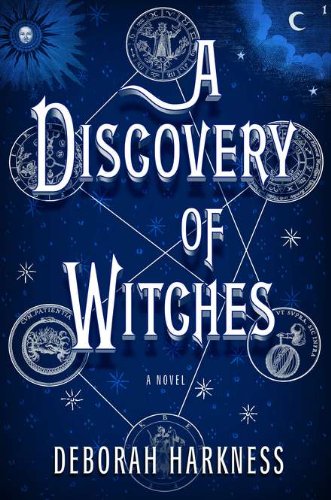
            • Cover of All Souls
              All Souls

              series · 5 books · 2011

              similar by+1 more

              A Discovery of Witches is a 2011 historical-fantasy novel and the debut novel by American scholar Deborah Harkness. It follows Diana Bishop, a history of science professor at Yale University, as she embraces her magical blood after finding a long-thought-lost manuscript and engages in a forbidden romance with a charming vampire, Matthew Clairmont.

            • Cover of The Circle Trilogy
              The Circle Trilogy

              series · 3 books · 2006

              similar by+2 more

            • Cover of Highlander (Karen Marie Moning)
              Highlander (Karen Marie Moning)

              series · 8 books · 1999

              similar bytime travel+1 more

            • Cover of The Rose Garden
              The Rose Garden

              Susanna Kearsley · standalone novel · 2011

              similar by+2 more

            • Cover of The Companion Universe
              The Companion Universe

              series · 12 books · 2002

              similar byparanormal romance+1 more

            • Cover of Montgomery / Taggert
              Montgomery / Taggert

              series · 10 books · 1988

              similar by+2 more

              These Jude Deveraux romances are linked less by one continuing plot than by recurring family surnames — Montgomery and Taggert — that Deveraux threads through much of her historical and contemporary romance writing. A Knight in Shining Armor, her best-known novel, is a standalone time-travel romance whose heroine, Dougless Montgomery, falls for a sixteenth-century English lord pulled forward into her present; The Maiden instead belongs to her more tightly connected medieval Montgomery-brothers sequence. Readers should expect a loose family of stories connected by name and world rather than one continuous saga.

            • Cover of Hornblower Brothers
              Hornblower Brothers

              series · 2 books · 1989

              similar bytime travel+1 more

            • Cover of Son of the Morning
              Son of the Morning

              Linda Howard · standalone novel · 1997

              similar by+2 more

            • Cover of The Masters of Time
              The Masters of Time

              series · 5 books · 2007

              similar bytime travelparanormal romance

            • TE
              Temporal Enforcement Universe

              series · 8 books · 2004

              similar bytime travelparanormal romance

            • Cover of Legends (Carolan Ivey)
              Legends (Carolan Ivey)

              series · 2 books · 1999

              similar byparanormal romance+1 more

            • Cover of Immortal Warriors
              Immortal Warriors

              series · 6 books · 2006

              similar byparanormal romance+1 more

            • Cover of Time Raiders
              Time Raiders

              series · 9 books · 2009

              similar bytime travel+1 more

            • Cover of Barbara Bretton Time Travel Trilogy
              Barbara Bretton Time Travel Trilogy

              series · 3 books · 1992

              similar bytime travel+1 more

            • Cover of Timeless (Alexandra Monir)
              Timeless (Alexandra Monir)

              series · 2 books · 2011

              similar bytime travel+1 more

            • Cover of Home in Time for Christmas
              Home in Time for Christmas

              Heather Graham · standalone novel · 2009

              similar bytime travel+1 more

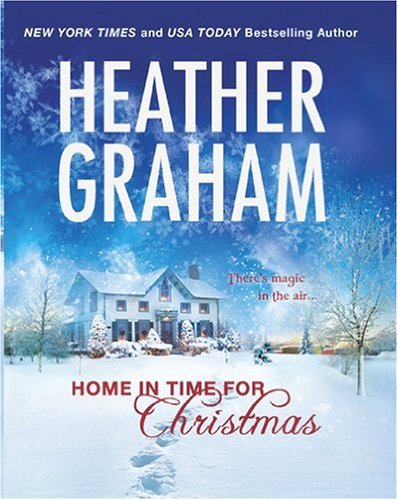
              Melody Tarleton is driving home for Christmas when a man—clad in Revolutionary War-era costume—appears right in the path of her car. Shaken, she takes the injured stranger in, listening with concern to Jake Mallory's fantastic claim that he's a Patriot soldier, sentenced to death by British authorities. The last thing he remembers is the tug of the noose.Safe at her parents' house, Melody concocts a story to explain the handsome guest with courtly manners, strange clothes and bump on the head. Mark, her close friend who wishes he were more, is skeptical and her family is fascinated—though not half so fascinated as Melody herself. Jake is passionate, charming and unlike anyone she's ever met. Can he really be who he claims? And can a man from the past be the future she longs for?With the aid of enchanted petals, ancient potions and the magic of the season, Melody and Jake embark on an unimaginable Christmas adventure—and discover a love that transcends time.

            • Cover of Immortal Warrior
              Immortal Warrior

              series · 2 books · 1997

              similar by+2 more

            • Cover of Love Across Time
              Love Across Time

              series · 2 books · 2009

              similar by+2 more

            • Cover of Bridge Through the Mist
              Bridge Through the Mist

              Denise A. Agnew · standalone novel · 2001

              similar by+2 more

            • Cover of Time After Time
              Time After Time

              Constance O'Day-Flannery · standalone novel · 2001

              similar bytime travel+1 more

            • Cover of A Ghost of a Chance at Love
              A Ghost of a Chance at Love

              Terry Spear · standalone novel · 2011

              similar bytime travel+1 more

              Lisa Welsh only wishes to leave a messy divorce behind for a couple of days stay in Salado, Texas but wakes to nightmares and a cowboy in her bed, and she has no earthly idea how he got there. But the situation gets worse when she learns she & apos;s now living in 19th Century Salado. Even more worrisome is the tall dark stranger, and everyone else in town believes she & apos;s some woman named Josephine Rogers who is supposed to be dead. Jack Stanton can & apos;t believe the clerk gave him an occupied room at the Shady Villa Inn, but worse, he was ready to ravage the woman in that bed-until he realized his mistake. Now the woman he thinks is Josephine claims to be some other woman-and though he could never abide by Josephine & apos;s fickle ways, this Lisa Welsh intrigues him like no other. Still, if she isn & apos;t Josephine, he figures he best help her find her way back to where she really belongs no matter how much he wants to keep her with him. Together, Lisa and Jack must solve the mysteries and face the troubles in their worlds or they will never be free to share the love that binds them across the ages.

            • Cover of Midnight Warriors
              Midnight Warriors

              series · 5 books · 2006

              similar byparanormal romance+1 more

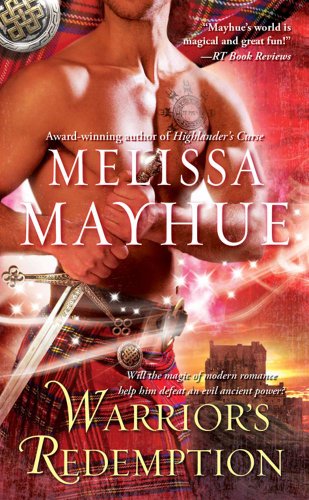
            • Cover of Warrior (Melissa Mayhue)
              Warrior (Melissa Mayhue)

              series · 3 books · 2011

              similar by+2 more

            • Cover of The Beautiful
              The Beautiful

              series · 4 books · 2019

              similar by+1 more

              The Beautiful is Renee Ahdieh's gothic fantasy quartet set in nineteenth-century New Orleans: The Beautiful (2019), The Damned, The Righteous and The Ruined. It follows a young seamstress drawn into the city's hidden supernatural society after a string of murders among her adopted family, mixing court intrigue with vampire-adjacent gothic horror. It is a complete four-book arc.