More like Stepping Stone
anchored on:science fictionour world
but
- Stranger in a Strange Land
Robert A. Heinleinstandalone novel1961
similar byidentityscience fictionchallengingnear futureour world
Stranger in a Strange Land is a 1961 science fiction novel by the American author Robert A. Heinlein. It tells the story of Valentine Michael Smith, a human who comes to Earth in early adulthood after being born on the planet Mars and raised by Martians, and explores his interaction with and eventual transformation of Terran culture.
- A Clockwork Orange
series4 books1962
completed
similar bychallengingscience fictionour worldnear future+1 more
Anthony Burgess's 1962 novel is narrated by Alex, a teenage gang leader in a near-future Britain gripped by a youth subculture of extreme violence, recounting his crimes in Nadsat, an invented slang blending English with Russian-derived words. After his crimes catch up with him, Alex is made the subject of a controversial state program meant to forcibly reform his behavior, and the novel uses his ordeal to question whether imposed goodness is worth the loss of free will. It is a standalone novel.
- The Light of Other Days
Arthur C. Clarke & Stephen Baxterstandalone novel2000
similar byscience fictionchallengingour worldnear future+1 more
An industrialist devises a technique to use tiny wormholes as light pipes to enable viewing of any event anywhere; and subsequently it becomes possible to use them to view any event in the past as well. The effects on society are enormous.
- Richard Forthrast
series2 books2011
similar byscience fictionour world+2 more
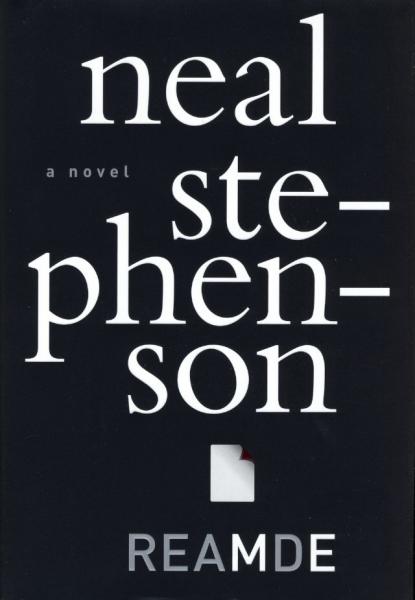
Neal Stephenson's Richard 'Dodge' Forthrast novels open with Reamde, a globe-spanning thriller that starts when ransomware inside an MMORPG economy pulls Richard's extended family into a real-world hostage crisis involving hackers, jihadists and Russian mobsters. The sequel Fall; or, Dodge in Hell shifts registers entirely, following Richard's digitally preserved mind after death into an afterlife simulation built from his scanned brain. The two books share a protagonist and family but differ sharply in genre and scale.
- Brave New World
series8 books1932
similar byscience fiction+3 more
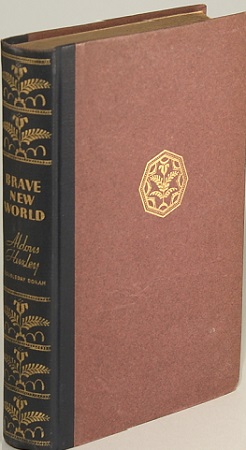
Aldous Huxley's 1932 novel imagines a future World State where reproduction, social caste, and desire are all engineered before birth, and the population is kept content through conditioning, sleep-hypnosis, and a mood-altering drug called soma. The story follows the disruption this seemingly stable order suffers when an outsider raised beyond its reach is brought into it, exposing what the society traded away for comfort and order. Some editions pair the novel with Huxley's own 1958 nonfiction essay collection, Brave New World Revisited, which reassesses the book's ideas rather than continuing its story.
- Childhood's End
Arthur C. Clarkestandalone novel1953
similar byidentityscience fictionour worldnear future
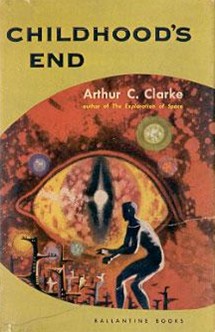
Childhood's End is a 1953 science fiction novel by the British author Arthur C. Clarke. The story follows a peaceful alien invasion of Earth by mysterious Overlords, whose arrival begins decades of apparent utopia under indirect alien rule, at the cost of human identity and culture.
- Gnomon
Nick Harkawaystandalone novel2017
similar byidentityscience fictionchallengingour worldnear future
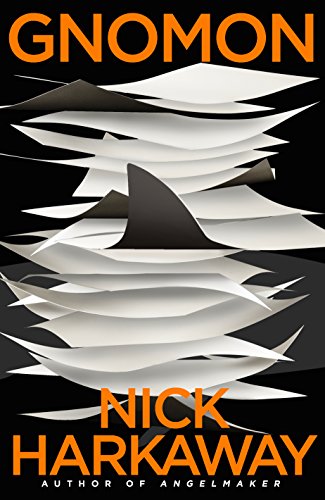
Gnomon is a 2017 science fiction novel by British author Nick Harkaway. The book deals with a state that exerts ubiquitous surveillance on its population. A detective investigates a murder through unconventional methods that leads to questions about her society's very nature.
- Quantum Night
Robert J. Sawyerstandalone novel2016
similar byscience fictionour worldnear future+2 more
Quantum Night is a 2016 science-fiction thriller novel written by Canadian novelist Robert J. Sawyer. Set in 2020, the book touches on themes of quantum physics, psychology, current politics and ethics.
- Library of America P. K. Dick Collection
series9 books1962
completed
similar byscience fictionnear future+2 more
- The Collected Stories of Philip K. Dick
series11 books1987
completed
similar byidentityscience fictionour world+2 more
The Collected Stories of Philip K. Dick is a collection of 118 science fiction stories by American writer Philip K. Dick. It was first published by Underwood-Miller in 1987 as a five volume set. See Philip K. Dick bibliography for information about the mass market reprints.
- Eye in the Sky
Philip K. Dickstandalone novel1957
similar byidentityscience fictionchallengingour world
Eight visitors touring a particle-accelerator facility are caught in a catastrophic malfunction, a collapsing platform, a burst of radiation, that leaves them all unconscious. When protagonist Jack Hamilton, an engineer recently fired over Red Scare-era suspicions about his wife's politics, comes to, the world around him is subtly, then not so subtly, wrong: physics bends to fit one fellow victim's religious convictions, then to another's paranoid fears, as the group cycles through what turn out to be shared hallucinations built from each other's private belief systems. Philip K. Dick's early novel about how differently people actually see the same world.
- I Will Fear No Evil
Robert A. Heinleinstandalone novel1970
similar byidentityscience fictionour worldnear future
I Will Fear No Evil is a science fiction novel by American writer Robert A. Heinlein, originally serialised in Galaxy and published in hardcover in 1970. The title is taken from Psalm 23:4.
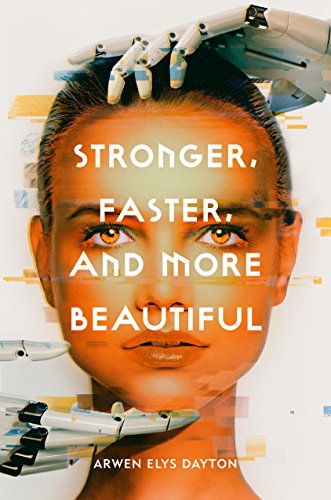
- Stronger, Faster, and More Beautiful
Arwen Elys Daytonstandalone novel2018
similar byidentityscience fictionchallengingour worldnear future
Stronger, Faster and More Beautiful is a 2018 science fiction novel by Arwen Elys Dayton. It explores the ethical question of how far humans will go in their pursuit of physical perfection. It was well received critically, with Tom Shippey of the Wall Street Journal citing it as one of the best science fiction novels of 2018, and has won a number of awards.
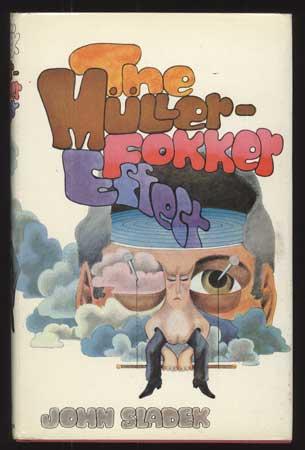
- The Müller-Fokker Effect
John Sladekstandalone novel1970
similar byidentityscience fictionour worldnear future+1 more
The Müller-Fokker Effect is a satirical science fiction novel written by John Sladek in 1970. The first UK edition was published by Hutchinson with cover design by Bill Botten. It has long been out of print in the United States, having come out in a Pocket Books edition in 1973. A reprint was done in 1990 by Carroll & Graf. The title is a pun with the insult motherfucker, and the book itself is suffused with wordplay of all stripes.
- The Disappearance
Philip Wyliestandalone novel1951
similar byscience fictionchallengingour world+1 more
One ordinary moment, the world splits in two: every man on Earth finds every woman gone without a trace, and at the same instant every woman finds herself in a world emptied of men -- two parallel realities on the same planet, each population convinced the other has vanished. Philip Wylie follows both worlds afterward, one sliding into authoritarian collapse without women to share or restrain power, the other building something more equal and freer, using the split to interrogate mid-century assumptions about sex, marriage and the double standards separating what men and women were each allowed to be. A speculative novel years ahead of the feminist movement it anticipates.
- VALIS
series4 books1981
completed
similar byidentitychallengingscience fiction+1 more
The VALIS trilogy is a set of science fiction/philosophical novels by author Philip K. Dick which include VALIS (1981), The Divine Invasion (1981), and The Transmigration of Timothy Archer (1982). Dick's first novel about the VALIS concept originally titled "VALISystem A", was published as Radio Free Albemuth after Dick's death in 1985.
- Venus Plus X
Theodore Sturgeonstandalone novel1960
similar byidentityscience fictionchallenging+1 more
Charlie Johns wakes in a featureless silver room with no memory of how he got there and a watch that's inexplicably running backward. He's been brought, how and by whom is never explained to him, to Ledom, an isolated, technologically advanced society whose members are all both male and female and have done away with fixed sex roles entirely. Guides walk him through Ledom's customs and machinery while making clear he's there to judge them before he can go home. Interwoven with Charlie's tour are chapters following an ordinary mid-century American family, setting the utopia against the world it's implicitly critiquing. Theodore Sturgeon's provocative novel about gender and social design.
- Genesis
Bernard Beckettstandalone novel2006
similar byidentityscience fictionchallengingnear future
Genesis (2006) is a philosophical science fiction novel by New Zealand author Bernard Beckett. It won the 2007 Esther Glen Award for children's literature, and the 2007 New Zealand Post Book Awards for Children and Young Adults. As of 2008 it has been published in 22 countries.
- Inverted World
Christopher Prieststandalone novel1974
similar byscience fictionchallenging+2 more
A city travels slowly along tracks laid by the residents ahead of the city and pulled up from behind the city, through territory where other people live.
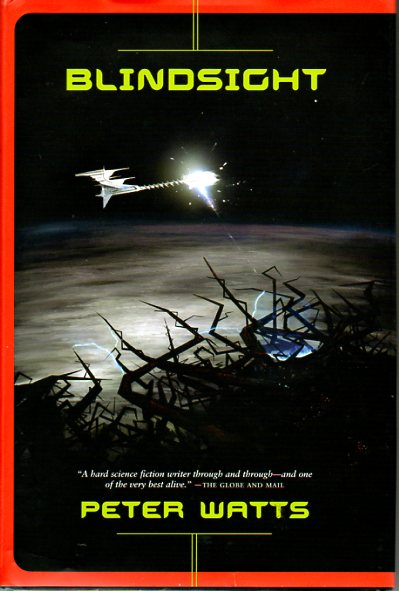
- Blindsight / Firefall
series3 books2006
similar byscience fictionchallenging+2 more
Blindsight sends a crew of radically modified posthumans (including a resurrected, genetically restored vampire) out to the Oort cloud after humanity detects an alien signal, only to make contact with something intelligent, wildly capable, and possibly not conscious at all — a first-contact story built around the question of whether self-awareness is actually useful. Peter Watts's Echopraxia is a same-timeframe "sidequel" rather than a direct sequel, following different characters through the fallout of the same first-contact event.
- The R-Master
Gordon R. Dicksonstandalone novel1973
similar byidentityscience fictionour worldnear future+1 more
The World Economic Council said the world had become Utopia. There should be no cause for dissatisfaction. But for those who were still restless, there was the new mind-stimulating drug R-47. Those who took R-47 were engaging in a sort of lottery whose rare winners would be super-geniuses and whose losers might be fit only for asylums. Etter Ho, whose brother was one of the losers, took the drug on the chance that, if he won, he could cure his brother. But what he became when he emerged from the mainlining was something none expected. For he became a menace to Utopian order, a danger to those who knew him, and the only man who might, just possibly, diagnose the real illnesses of the world. (from the back cover of the DAW Books first printing)