Loreful
HomeDiscover
Search series, authors…⌘K
Loreful

Reading orders for SF/F series and shared universes — with your place kept in every one.

Explore

UniversesSeriesWorksAuthorsAtlas

Help

FAQAboutSite map

Account & legal

Sign inCreate accountPrivacyTerms

Data

Built on ISFDB, Wikipedia, Wikidata and Open Library. Curated reading orders carry their reasoning on the page; the rest follow publication order. Data sources & licenses

© Loreful · data: ISFDB · CC BY

More like Stone Fox

anchored on:contemporary

but

Mood

The mood the book leaves you in.

  • The reading experience is propelled by journeys, exploration, and physical risk; excitement and forward momentum dominate over dread or introspection.
  • Joy and loss are deliberately mixed; the resolution grants characters something real while taking something else away, leaving warmth and sorrow together.
  • The book demands work from the reader — dense prose, difficult structure, unfamiliar ideas, or morally uncomfortable material — as part of its intended effect.
  • Grim events, cruelty, or despair dominate the atmosphere, and the book does not soften them with comfort or comic relief.
  • The atmosphere is quietly unsettling — wrongness, unease, and the uncanny pervade the book without necessarily escalating into overt horror.
  • The book is built to move the reader; character feeling is foregrounded and major scenes aim at a strong emotional response.
  • Humor is a primary aim and the prose plays for laughs — comic situations, wit, or dialogue produce sustained comedy, not occasional levity.
  • The book insists that things can improve; effort and decency are shown to matter, and the arc bends toward better outcomes even through hardship.
  • The book teaches as it goes — real facts, history, science, or craft are conveyed in enough depth that learning is part of the reading experience.
  • The book is designed to uplift and motivate, presenting perseverance or achievement in a way that invites the reader to aspire or act.
  • The overall register is cheerful and easygoing; stakes are kept gentle and the book avoids dwelling on pain or dread.
  • Withheld information drives the experience; the book sustains enigmas and secrets the reader wants resolved, whatever its genre.
  • The book is contemplative and inward-looking, giving more weight to thought, memory, and meaning than to external events.
  • The book works as comfort reading — low tension, a soothing pace, and an atmosphere the reader can unwind in.
  • Grief, loss, or melancholy set the dominant register, and the book lets sorrow stand rather than resolving it into comfort.
  • Sustained suspense is the point; the book keeps the reader braced for what happens next through danger, pressure, or impending revelation.
  • Playful invention and charm define the register — fanciful conceits, light absurdity, and a narration that delights in its own oddity.

About

What the story runs on.

  • Stories about minds with paranormal abilities — telepathy, telekinesis, precognition, empathy — and how societies handle those who have them.
  • Stories centered on vampires — blood-drinking undead — whether as predators, love interests, or protagonists.
  • Stories in which staying alive against nature, catastrophe, or scarcity is the central problem.
  • Stories of lovers kept apart by law, family, faith, or station, where the obstacle to love is the plot.
  • Stories in which a friendship — its making, testing, or loss — is the emotional center.
  • Stories of growing up — a young protagonist crossing from childhood into adult knowledge and responsibility.
  • Stories about who a character truly is — self-discovery, doubled lives, and the search for a self.
  • Stories about mental unraveling — descent into madness, delusion, and minds at war with themselves.
  • Stories about mourning — living through the death of a loved one and what loss does to the survivors.
  • Stories in which a buried family truth — hidden parentage, crimes, or shames — surfaces and reorders the present.
  • Stories driven by maneuvering for power — factions, conspiracies, and statecraft conducted in shadow.
  • Stories organized around investigating a killing — the case, the clues, and the pursuit of the killer, in any genre's clothing.

Shelf

Where it sits in the library.

    • Fiction built on magic or other supernatural elements that have no scientific explanation.
    • Secondary-world fantasy at large scale, where the fate of nations or the world turns on the protagonists' struggle.
    • Fantasy set in a recognizably modern city or contemporary world where the supernatural intrudes on everyday life.
    • Fantasy that blends in horror's atmosphere and imagery, keeping a fantastical frame around grim or frightening material.
    • Action-driven fantasy following warriors or rogues with personal stakes against sorcerous threats, rather than world-spanning conflicts.
    • Fantasy set in a real historical period or a close analogue of one, with magic woven into the era.
    • Fantasy in which protagonists cross from the ordinary world into another world through a portal or similar passage.
    • Fiction that retells or reworks a traditional fairy tale in a new form or setting.
    • Fantasy drawing directly on myths, legends, and folklore, retelling them or building on their figures and logic.
    • Fantasy of ghosts, vampires, shapeshifters, psychics, and similar phenomena, usually set in an otherwise ordinary world.
    • Fiction mixing science-fictional trappings with overtly magical or impossible elements in one setting.
    • Low-stakes fantasy emphasizing comfort, community, and everyday pleasures over conflict and peril.
    • Speculative fiction of pervasive moral ambiguity, violence, and cynicism that rejects heroic conventions — fantasy and SF alike.
      • Fiction that extrapolates from science and technology — future societies, space travel, or speculative inventions — within at least nominally natural laws.
      • Science fiction of interstellar scope — starships, galactic polities, and adventure across star systems.
      • Science fiction committed to scientific rigor, where technical plausibility constrains the story.
      • Science fiction centered on armed forces and warfare, told largely from a military point of view.
      • Science fiction of networked, corporate-dominated near futures, pairing high technology with social decay.
      • Science fiction styled on nineteenth-century steam-powered technology, often in a Victorian or pseudo-Victorian setting.
      • Fiction depicting an oppressive or catastrophic society, presented as a warning.
      • Fiction set after civilization's collapse, following survivors in the ruins of the old world.
      • Fiction in which characters move between past and future, and the mechanics or consequences of that travel drive the plot.
      • Fiction exploring a world where a historical event went differently and history diverged from ours.
      • Science fiction about humanity's first encounter and communication with an alien intelligence.
      • Science fiction in which extraterrestrial forces attack or occupy Earth and humanity resists.
      • Fiction whose primary aim is to frighten or unsettle the reader through dread, menace, or the monstrous.
      • Horror of vast, indifferent, incomprehensible entities before which humanity is insignificant, in the Lovecraft tradition.
      • Horror of decaying houses, buried family secrets, and oppressive atmosphere in the Gothic literary tradition.
      • Horror centered on hauntings and the returning dead.
      • Horror located in the mind — paranoia, obsession, and unreliable perception rather than external monsters.
      • Horror built around the reanimated dead and survival amid their outbreaks.
      • Horror defined by explicit, transgressive gore that refuses to cut away from violence.
      • Speculative fiction of the strange and uncanny that resists both natural explanation and standard genre categories.
      • Fiction organized around solving a crime or puzzle, typically following an investigator toward the identification of a culprit.
      • A puzzle-first mystery that lays out clues so the culprit's identity can be deduced before the reveal.
      • Crime fiction of moral ambiguity, fatalism, and hard-edged style, set among the corrupt and the doomed.
      • A mystery following the realistic routines of police work — forensics, interviews, and case-building.
      • A gentle mystery with an amateur sleuth, a small community, and violence kept off the page.
      • A mystery set in a past era, where the investigation works within that period's methods and society.
      • Fast-paced fiction driven by imminent danger, pursuit, or high-stakes conspiracy, built to sustain tension.
      • A thriller of espionage — agents, tradecraft, and intelligence services in conflict.
      • A thriller centered on lawyers and the courtroom, where litigation carries the suspense.
      • A thriller driven by detailed contemporary or near-future technology, often military or scientific.
      • A thriller whose tension comes from mental states and manipulation between characters rather than external action.
      • Fiction whose central plot is a romantic relationship and its development toward an emotionally satisfying resolution.
      • Romance in which one or both partners are supernatural beings, blending fantasy elements into the love story.
      • A fantasy-romance hybrid in which the romantic arc and the fantasy plot carry equal weight.
      • Romance set in a past era, with courtship shaped by the period's society and manners.
      • Romance set in the present day, without supernatural or historical elements.
      • Fiction set in a real past period, where the historical setting materially shapes characters and events.
        • General and literary fiction emphasizing prose style, character interiority, or formal ambition over genre plot conventions.
        • Fiction in a realistic world where magical events occur and are treated as ordinary, in the tradition of Latin American literature.
        • Fiction that ridicules people, institutions, or society in order to criticize them.
        • Fiction of dreamlike, irrational imagery and logic that breaks from realistic representation.
        • Fiction that plays with narrative convention through metafiction, fragmentation, and self-reference.
        • Fiction propelled by journeys, exploration, and physical peril, where action and survival carry the plot.
        • Adventure fiction of ships and seafaring — naval engagements, voyages, and life at sea.
        • Fiction of the American frontier West — gunmen, ranchers, and lawmen, typically in the late nineteenth century.
        • Fiction centered on soldiers, campaigns, and the experience of warfare, historical or imagined.
          • Fiction written primarily to amuse, using comedic situations, wit, or parody as its organizing principle.
            • Multi-generational fiction following a family or dynasty across decades, with inheritance and kinship as the through-line.
              • Fiction whose world runs on explicit game mechanics — levels, stats, and skills that characters can see and exploit.
                • Fiction about costumed or superpowered heroes and their conflicts with comparable villains.

                Practical

                How long a commitment, whether it stands alone, and whether it has finished.

                Tap a chip to ask for it · tap again to rule it out · once more to clear. Numbers show what would be left.

                • K
                  Kairos

                  series · 11 books · 1962

                  completed

                  similar by+1 more

                  The Time Quintet is a science fantasy series of five young adult novels written by American author Madeleine L'Engle and made up of A Wrinkle in Time (1962), A Wind in the Door (1973), A Swiftly Tilting Planet (1978), Many Waters (1986), and An Acceptable Time (1989).

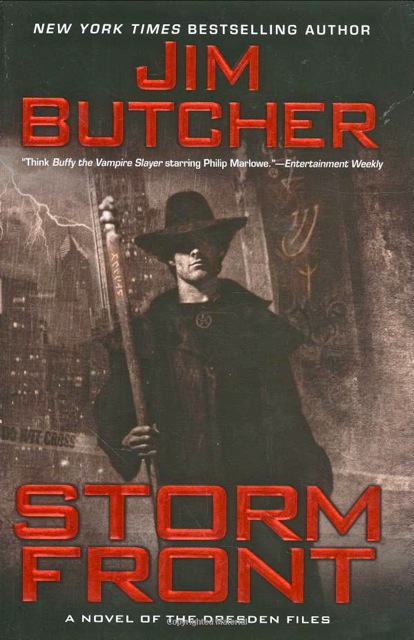
                • Cover of The Dresden Files
                  The Dresden Files

                  series · 56 books · 2000

                  similar bynorth americacontemporary+2 more

                  The Dresden Files is an urban fantasy series written by American author Jim Butcher. The novels are narrated from the first-person perspective of Harry Dresden, a private detective and wizard, as he investigates supernatural disturbances in contemporary Chicago. The first entry, Storm Front, was published in 2000 by Roc Books.

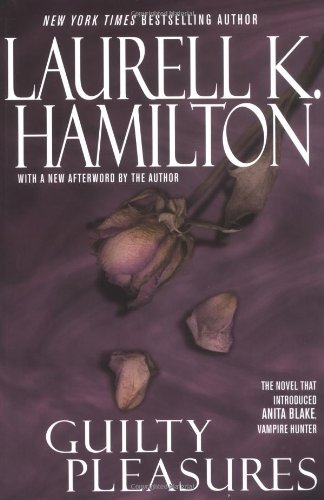
                • Cover of Anita Blake
                  Anita Blake

                  series · 42 books · 1993

                  similar bycontemporarynorth america+1 more

                  Anita Blake: Vampire Hunter is a series of urban fantasy novels, short stories, and comic books by Laurell K. Hamilton. The books have sold more than six million copies; many have made The New York Times Best Seller list.

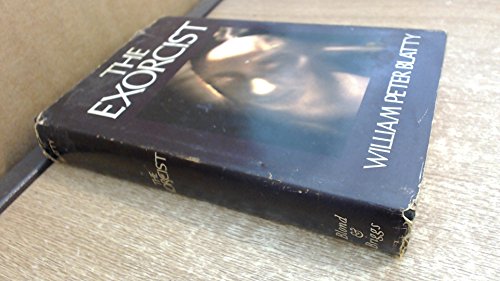
                • Cover of Exorcist
                  Exorcist

                  series · 6 books · 1971

                  similar bynorth americacontemporary+2 more

                  William Peter Blatty's The Exorcist (1971) follows two Catholic priests trying to save a twelve-year-old girl from a violent demonic possession, and became the basis of the acclaimed 1973 film. Blatty returned to the story in 1983 with Legion, in which police detective Bill Kinderman's investigation of a string of ritual murders leads him back to the aftermath of that exorcism and the fate of Father Karras; Legion was later filmed as The Exorcist III. Other Exorcist books are tie-in and franchise material rather than further novels by Blatty himself.

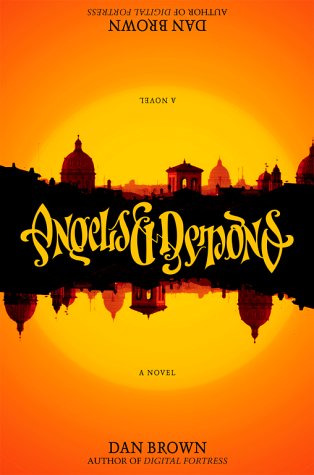
                • Cover of Robert Langdon
                  Robert Langdon

                  series · 6 books · 2000

                  similar bymystery & detectivecontemporary+1 more

                  The Robert Langdon novel series is named after Robert Langdon, the protagonist of the novels by American author Dan Brown. Langdon is portrayed as a Harvard University professor of religious iconology and symbology, a fictional field related to the study of historic symbols, which is not methodologically connected to the actual discipline of semiotics. Brown's novels that feature the lead character also include historical themes and Christianity as motifs, and as a result have generated controversy. Brown states on his website that his novels are not anti-Christian, and that he is on a "constant spiritual journey" himself.

                • Cover of Black Dragon
                  Black Dragon

                  series · 2 books · 1983

                  similar bymystery & detectivecontemporarynorth america+1 more

                  R. A. MacAvoy's Tea with the Black Dragon pairs Martha Macnamara, a folk musician searching for her missing daughter, with Mayland Long, a courtly stranger who reveals himself to be a dragon living in human form, as they investigate a computer-fraud scheme in 1980s San Francisco. Its low-key blend of contemporary mystery and gentle fantasy proved popular enough to spawn a sequel, Twisting the Rope, following the same pair into a new case years later.

                • Cover of The Colorado Kid
                  The Colorado Kid

                  Stephen King · standalone novel · 2005

                  similar bymurder investigationmystery & detectivecontemporarynorth america

                  The Colorado Kid is a mystery novel by American writer Stephen King, published by the Hard Case Crime imprint in 2005. The book was initially issued in one paperback-only edition by the specialty crime and mystery publishing house. King's next novel for Hard Case Crime was Joyland, which was published in June 2013. Hard Case Crime reissued The Colorado Kid in an illustrated paperback edition in May 2019.

                • Cover of October Daye
                  October Daye

                  series · 42 books · 2009

                  similar bynorth americacontemporary+1 more

                  October Daye is a New York Times Best Selling series of urban fantasy novels by American author Seanan McGuire. They follow October "Toby" Daye, a half-fae changeling and reluctant hero of the realm.

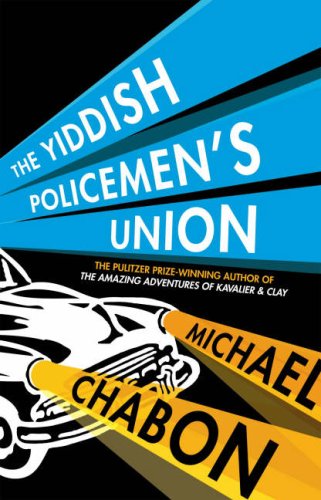
                • Cover of The Yiddish Policemen's Union
                  The Yiddish Policemen's Union

                  Michael Chabon · standalone novel · 2007

                  similar bymurder investigationmystery & detectivecontemporarynorth america

                  In an alternate present where Jewish refugees settled Alaska during World War II rather than Israel, homicide detective Meyer Landsman -- divorced, drinking, living in a run-down hotel -- catches a case in his own building: a former chess prodigy, shot dead beside an unfinished game. Landsman and his half-Tlingit partner Berko Shemets learn the dead man was more than he seemed, connected to a messianic movement within Sitka's Orthodox community, just as the settlement faces a countdown of its own -- its status as a federal district about to expire, everyone's future up for grabs. Michael Chabon's Hugo- and Nebula-winning noir, told as hardboiled alternate history.

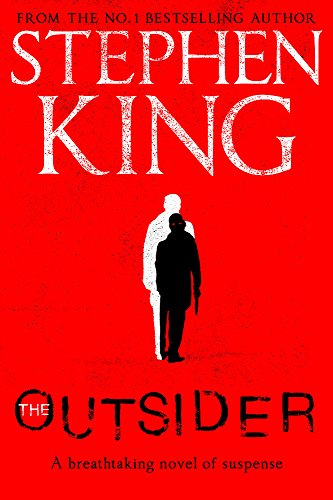
                • Cover of Finders Keepers (Stephen King)
                  Finders Keepers (Stephen King)

                  series · 7 books · 2014

                  similar bymurder investigationmystery & detectivecontemporarynorth america

                  The books gathered here follow Holly Gibney, who first appeared as a supporting character in Stephen King's Bill Hodges trilogy (Mr. Mercedes, Finders Keepers, End of Watch) before graduating into her own strand of stories: a major role in The Outsider, then top billing in the novella If It Bleeds and the novels Holly and Never Flinch, where she works as a private investigator taking on cases with a supernatural edge. The mix of true-crime procedural instincts and creeping horror is a hallmark of King's later work with the character.

                • Cover of Robert Bloch's Psycho Universe
                  Robert Bloch's Psycho Universe

                  series · 5 books · 1959

                  similar bynorth america+2 more

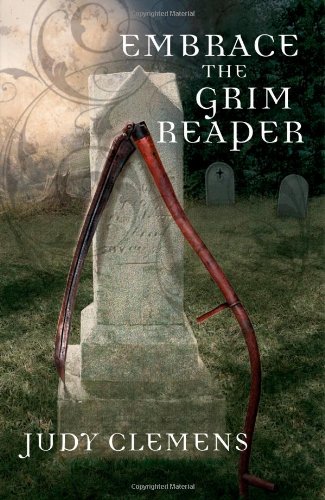
                • Cover of Grim Reaper mysteries
                  Grim Reaper mysteries

                  series · 5 books · 2009

                  similar bymurder investigationmystery & detectivecontemporarynorth america

                  After a bad car accident, Casey Maldonado hits the road and finds herself unable to shake an unwelcome companion: Death itself, which won't take her but won't leave her alone either. Judy Clemens's Grim Reaper mysteries follow Casey as her wandering keeps landing her in small towns hiding real crimes, starting with a struggling Ohio farm community where a supposed suicide looks more like a cover-up. It's amateur-sleuth mystery with a wry supernatural conceit rather than straight horror.

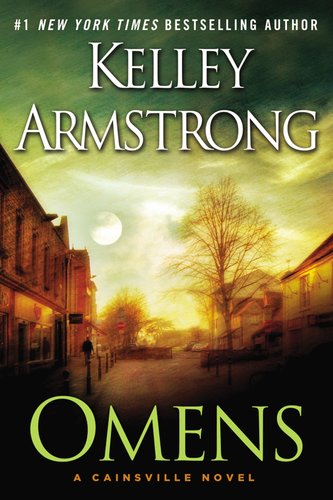
                • Cover of Cainsville
                  Cainsville

                  series · 21 books · 2011

                  similar bynorth americacontemporary+2 more

                • Cover of Rivers of London
                  Rivers of London

                  series · 32 books · 2011

                  similar bymurder investigationmystery & detectivecontemporary

                  The Rivers of London series is a series of urban fantasy novels by English author Ben Aaronovitch, and comics/graphic novels by Aaronovitch and Andrew Cartmel, illustrated by Lee Sullivan.

                • Cover of Effective Engineering Solutions
                  Effective Engineering Solutions

                  series · 37 books · 1995

                  similar bymurder investigationmystery & detectivenorth americacontemporary

                  The Ice Limit follows a team hired by an eccentric billionaire to recover what looks like the largest meteorite ever found, off a remote island near Cape Horn, only to discover, as they flee across the Antarctic seas aboard a retrofitted tanker, that they've actually excavated something alive. Douglas Preston and Lincoln Child wrote it as a standalone techno-thriller in 2000; it later fed into their separate Gideon Crew series rather than getting a direct sequel of its own.

                • JD
                  John Decker Universe

                  series · 19 books · 2015

                  similar bycontemporary+2 more

                • AB
                  Allie Beckstrom Universe

                  series · 14 books · 2008

                  similar bycontemporary+1 more

                • Cover of Charlie Parker
                  Charlie Parker

                  series · 22 books · 1999

                  similar bymurder investigationmystery & detectivecontemporarynorth america

                  John Connolly's long-running crime series follows Charlie Parker, a former New York police detective turned private investigator in Maine, whose cases repeatedly brush against the genuinely supernatural alongside conventional violence and grief. Every Dead Thing (1999) opens with Parker hunting his own wife and daughter's killer, establishing the series' recurring blend of hardboiled procedural and horror; later novels widen into recurring antagonists and a broader mythology of evil working through human agents. Now well over twenty books, the series has grown Parker's two associates, Louis and Angel, into major recurring characters.

                • Cover of Henry Fitzroy
                  Henry Fitzroy

                  series · 29 books · 1991

                  similar bynorth americacontemporary+2 more

                  These short-fiction collections gather stories built around Henry Fitzroy, the illegitimate son of Henry VIII turned centuries-old vampire and romance novelist, a recurring character from Tanya Huff's Blood Books urban-fantasy series. Rather than continuing that series' novel-length plots, the collections give Henry shorter, self-contained cases and encounters set in the same "Blood 'Verse." They function as a minor spinoff for readers already invested in the character from the main Blood Books.

                • Cover of The Sisters Grimm
                  The Sisters Grimm

                  series · 9 books · 2005

                  similar bymystery & detectivecontemporary+2 more

                  The Sisters Grimm is a children's fantasy series written by Michael Buckley and illustrated by Peter Ferguson. The series is partially based on the works and lives of the Brothers Grimm, with the titular protagonists, Sabrina Grimm and Daphne Grimm, being their fictional descendants, and the supporting cast featuring many characters from the Grimms’ collection of fairytales.

                • Cover of Jack Nightingale
                  Jack Nightingale

                  series · 39 books · 2010

                  similar bycontemporary+3 more

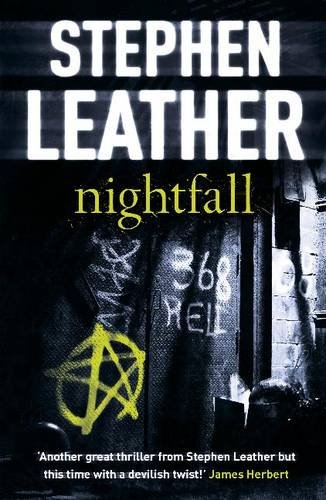
                  Jack Nightingale opens as a former police negotiator turned private detective who inherits a mansion from a man claiming to be his real father — along with a warning that his soul was sold before birth and will be claimed on his 33rd birthday. Stephen Leather's series follows Nightingale as people around him start dying in increasingly inexplicable ways, forcing a skeptic into treating the occult threat as real. Later books, some co-written with other authors, keep Nightingale investigating supernatural cases across a long-running run of novels and short story collections.

                • AS
                  Arcane Society / Curtain / Harmony Universe

                  series · 35 books · 1996

                  similar bycontemporary+2 more

                • Cover of Ancient Images
                  Ancient Images

                  Ramsey Campbell · standalone novel · 1989

                  similar bymystery & detectivecontemporarynorth america+1 more

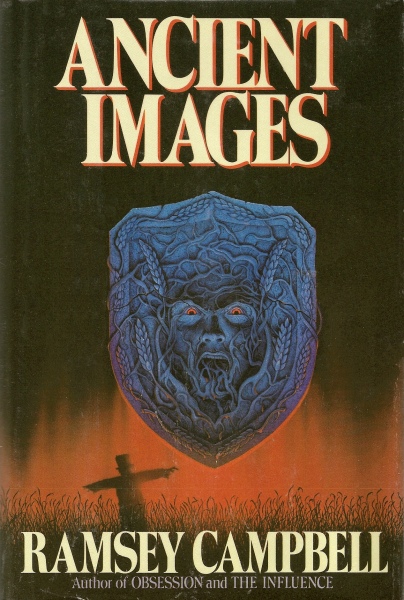
                  A lost horror film holds the key to terrifying secrets. The legends have persisted for decades of a lost horror film starring Boris Karloff and Bela Lugosi that was never released. Rumor has it that, for reasons long forgotten, powerful forces suppressed the film and burned all known prints. Nobody now living has seen the finished film. But that might no longer be true… Film researcher Sandy Allan is invited to a screening of a newly-discovered sole-surviving print, but then the film disappears and the real horror begins. Sandy’s search for the film leads her to Redfield, a rural community known its rich soil, fertilized by blood from an ancient massacre. But Redfield guards its secrets closely, with good reason. During every step of her search, Sandy is watched, shadowed by strange figures. Is it paranoia, or is someone—or something—determined to keep the lost film and the secrets it reveals buried forever?

                • Cover of Meredith Gentry
                  Meredith Gentry

                  series · 10 books · 2000

                  similar bycontemporary+1 more

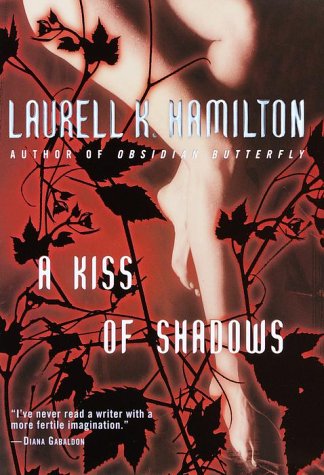
                  The Merry Gentry series is a series of urban fantasy novels by New York Times bestselling author Laurell K. Hamilton. The series is told through the lens of the titular character Meredith "Merry" Gentry, a faerie princess turned private investigator in a world where faeries exist and are known to the general public. The first book in the series, A Kiss of Shadows, was released by Del Rey on October 3, 2000. There are currently nine books in the series.