More like Strange Compulsion
anchored on:science fictionour worldmid 20th century
but
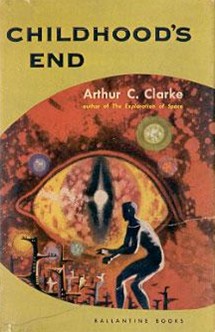
- Childhood's End
Arthur C. Clarkestandalone novel1953
similar byscience fictionour world+1 more
Childhood's End is a 1953 science fiction novel by the British author Arthur C. Clarke. The story follows a peaceful alien invasion of Earth by mysterious Overlords, whose arrival begins decades of apparent utopia under indirect alien rule, at the cost of human identity and culture.
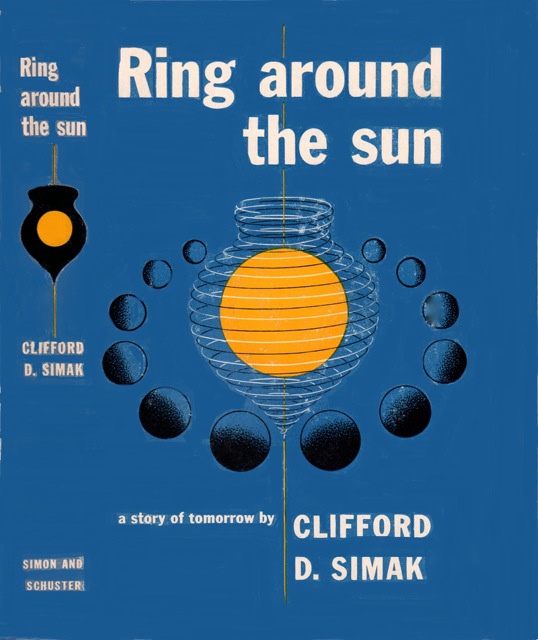
- Ring Around the Sun
Clifford D. Simakstandalone novel1953
similar byscience fictionmid 20th centuryour world+1 more
Ring Around the Sun is a science fiction novel by American writer Clifford D. Simak. Its anti-urban and pro-agrarian sentiments are typical of much of Simak's work.
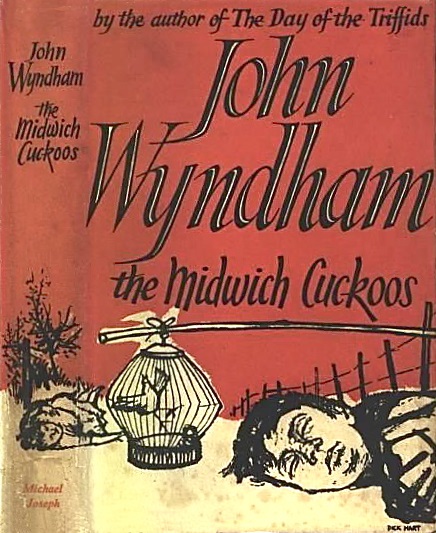
- The Midwich Cuckoos
John Wyndhamstandalone novel1957
similar byscience fictionmid 20th century+1 more
The Midwich Cuckoos is a 1957 science fiction novel written by the English author John Wyndham. It tells the tale of an English village in which the women become pregnant by brood parasitic aliens. The book has been praised by many critics, including the dramatist Dan Rebellato, who called it "a searching novel of moral ambiguities", and the novelist Margaret Atwood, who called the book Wyndham's "chef d'œuvre". The book has been adapted for film, radio, and television.
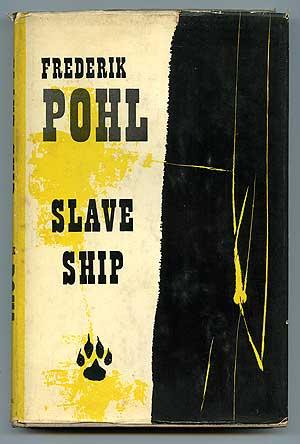
- Slave Ship
Frederik Pohlstandalone novel1957
similar bypsychic powersscience fictionour worldmid 20th century
Slave Ship is a 1956 short science fiction novel by American writer Frederik Pohl, originally serialized in Galaxy. The scene is a world in the throes of a low-intensity global war, which appears to be an amplified representation of the Vietnam War, in which the U.S. was just beginning to be involved. The plot involves telepathy, speaking to animals, and, in the last few pages, an invasion by extraterrestrials.
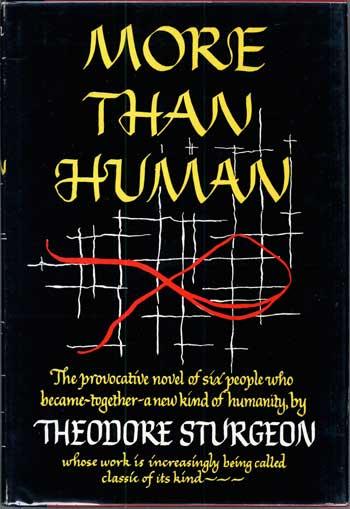
- More Than Human
Theodore Sturgeonstandalone novel1953
similar bypsychic powersscience fictionour world
More Than Human is a 1953 science fiction fix-up novel by American writer Theodore Sturgeon. It is a revision and expansion of his 1952 novella Baby Is Three, which is bracketed by two additional parts written for the novel, "The Fabulous Idiot" and "Morality". It won the 1954 International Fantasy Award, which was also given to works in science fiction. It was additionally nominated in 2004 for a "Retro Hugo" award for the year 1954. Science fiction critic and editor David Pringle included it in his book Science Fiction: The 100 Best Novels.
- Stranger in a Strange Land
Robert A. Heinleinstandalone novel1961
similar bypsychic powersscience fictionour world
Stranger in a Strange Land is a 1961 science fiction novel by the American author Robert A. Heinlein. It tells the story of Valentine Michael Smith, a human who comes to Earth in early adulthood after being born on the planet Mars and raised by Martians, and explores his interaction with and eventual transformation of Terran culture.
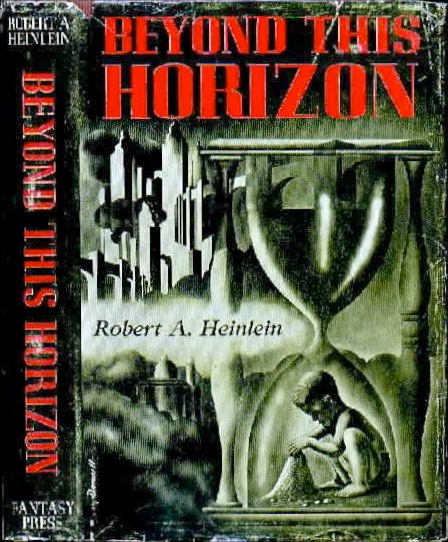
- Beyond This Horizon
Robert A. Heinleinstandalone novel1948
similar byscience fictionour world+1 more
From the front flap of a 2001 Baen reprint: "Utopia has been achieved. For centuries, disease, hunger, poverty, and war have been things found only in the history tapes. And applied genetics has given men and women the bodies of athletes and a lifespan of over a century. They should all have been very happy... But Hamilton Felix is bored. And he is the culmination of a star line, each of his last thirty ancestors chosen for superior genes. Hamilton is, as far as genetics can produce one, the ultimate man. And this ultimate man can see no reason why the human race should survive, and has no intention of continuing the pointless comedy. However, Hamilton's life is about to become less boring. A secret cabal of revolutionaries who find utopia not just boring, but desperately in need of leaders who know just What Needs to be Done, are planning to revolt and put themselves in charge. Knowing of Hamilton's disenchantment with the modern world, they have recruited him to join their Glorious Revolution. Big mistake! The revolutionaries are about to find out that recruiting a superman was definitely not a good idea..."
- The Lathe of Heaven
Ursula K. Le Guinstandalone novel1971
similar bypsychic powersscience fictionour world
The Lathe of Heaven is a 1971 science fiction novel by American writer Ursula K. Le Guin, first serialized in the American science fiction magazine Amazing Stories. It won the 1972 Locus Award for Best Novel and was a finalist for the 1971 Nebula Award for Best Novel and 1972 Hugo Award for Best Novel. Two television film adaptations were released: the PBS production, The Lathe of Heaven (1980), and Lathe of Heaven (2002), a remake produced by the A&E Network.
- Dr. Patrick Cory
series3 books1942
completed
similar byscience fictionour world+2 more
Donovan's Brain (1942) is one of the earliest and most influential 'brain in a jar' stories: Dr. Patrick Cory keeps the disembodied brain of a dead millionaire alive in his lab, only to find it telepathically overriding his own mind and will. Curt Siodmak revisited the same premise and character in Hauser's Memory, where Cory absorbs a dying spy's memories through an experimental serum, with consequences of his own. Both were adapted for film and television, and the 1942 original is often cited as a formative influence on later mad-science and body-horror fiction.
- Slan
series2 books1946
similar byscience fictionour world+1 more
Slan (1946) is A. E. van Vogt's science fiction novel about slans, a persecuted race of telepathic superbeings living hidden among ordinary humans, first serialized in Astounding Science Fiction before its Arkham House hardcover edition. More than sixty years later, Kevin J. Anderson completed Slan Hunter (2007), an authorized sequel built from van Vogt's notes to continue the story left unfinished at the original author's death. The two novels together bracket a single continuing narrative rather than an ongoing series.
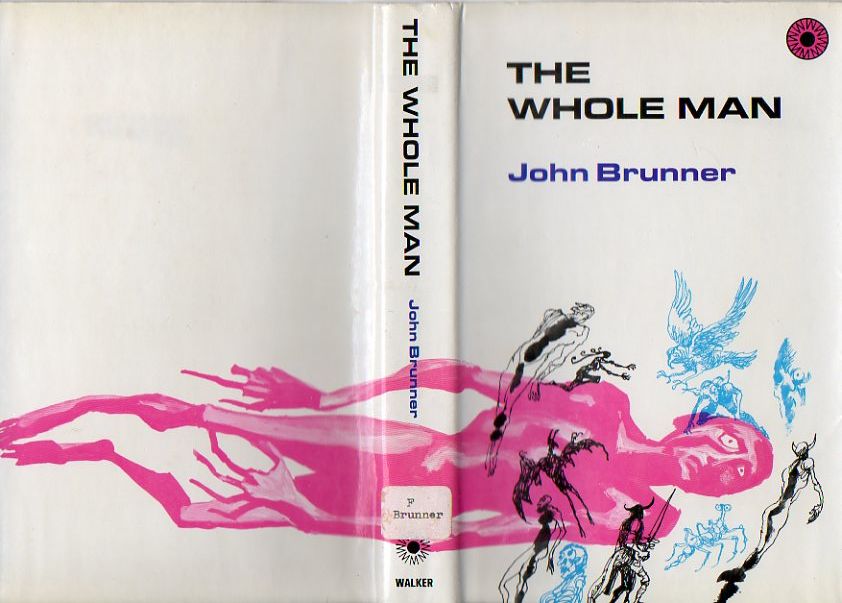
- The Whole Man
John Brunnerstandalone novel1964
similar bypsychic powersscience fictionmid 20th centuryour world
The Whole Man is a 1964 science fiction novel by John Brunner. It was nominated for a Hugo Award for Best Novel in 1965. In the UK, it was published under the title Telepathist.
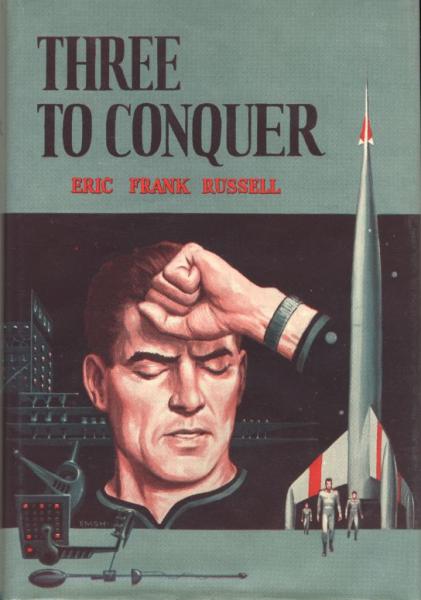
- Three to Conquer
Eric Frank Russellstandalone novel1956
similar bypsychic powersscience fictionour worldmid 20th century
Three to Conquer is a novel by Eric Frank Russell published in 1956.
- The Demolished Man
Alfred Besterstandalone novel1953
similar bypsychic powersscience fictionour world
In the year 2301, guns are only museum pieces and benign telepaths sweep the minds of the populace to detect crimes before they happen. In 2301 murder is virtually impossible, but one man is about to change that..
- The Master
T. H. Whitestandalone novel1957
similar bypsychic powersscience fictionmid 20th centuryour world
Set on and inside Rockall, a small island more than 200 miles northwest of Ireland that Britain claimed in September 1955 (and later annexed) --purportedly in response to the world-threatening events featured in this adventure story, which occurred there that summer --on and inside the rock. Twelve-year-old twins and their pet dog discover a plot to dominate the world, led by a 157-year-old genius physicist and telepath (mad scientist).
- The Dream Master
Roger Zelaznystandalone novel1966
similar bypsychic powersscience fictionour world
The Dream Master (1966) is a science fiction novel by American writer Roger Zelazny, based on the novella He Who Shapes. Zelazny's original title was The Ides of Octember. He Who Shapes won the 1965 Nebula Award for Best Novella.
- Fantastic Voyage
series2 books1966
completed
similar byscience fiction+2 more
Fantastic Voyage (1966) is Isaac Asimov's novelization of the film about a submarine crew shrunk to microscopic size and injected into an injured scientist's body to repair damage from the inside. Asimov returned to the same premise of medical miniaturization in the unrelated 1987 novel Fantastic Voyage II: Destination Brain, which follows a different cast and plot rather than continuing the first book's story.
- The Zap Gun
Philip K. Dickstandalone novel1967
similar byscience fictionour world+1 more
The Zap Gun is a 1967 science fiction novel by American writer Philip K. Dick. It was first published as the two-part serial Project Plowshare in Worlds of Tomorrow in 1965 and 1966, before Pyramid Books issued it in paperback under its present title. The novel originated in a title-first commission devised by Pyramid editor Don Bensen and was written in 1964 during a period of rapid production in Dick's career.
- The Mind Cage
A. E. van Vogtstandalone novel1957
similar bypsychic powersscience fictionour world
The Mind Cage is a 1957 science fiction novel by American writer A. E. van Vogt, adapted from the short story "The Great Judge" (1948).
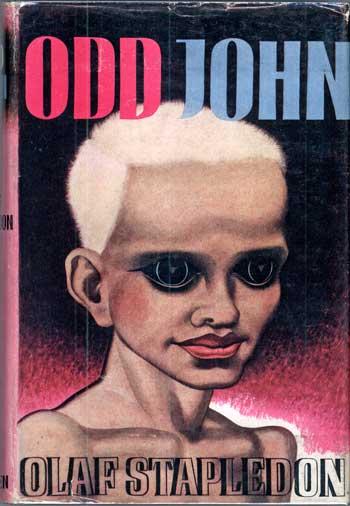
- Odd John
Olaf Stapledonstandalone novel1935
similar byscience fictionour world+1 more
Odd John: A Story Between Jest and Earnest is a 1935 science fiction novel by the British author Olaf Stapledon. The novel explores the theme of the Übermensch (superman) in the character of John Wainwright, whose supernormal human mentality inevitably leads to conflict with normal human society and to the destruction of the utopian colony founded by John and other superhumans.
- Dune Universe
universe78 books1963
Start hereDune · Start here
similar byscience fiction
Arrakis. Dune. The desert planet, where empire runs on a single substance: the spice melange, which folds space, prolongs life, and unlocks prescience, and which exists nowhere else in the known universe. Frank Herbert's saga is a meditation dressed as an adventure — feudal houses and a secret sisterhood, engineered messiahs and the patient ecology of a world without water, all turning on the terrible gravity of who commands the spice. It reads like scripture and schemes like a war room, ten thousand years hence, among people who have outlawed the thinking machine and made instruments of themselves instead. At its heart stand Herbert's original six — Dune, Dune Messiah, Children of Dune, God Emperor of Dune, Heretics of Dune, Chapterhouse: Dune — a single deepening arc across millennia, arguing the whole way between prophecy and free will. Around that spine his son Brian Herbert and Kevin J. Anderson have raised a vast prequel architecture: Prelude to Dune, tracing the great houses a generation before Paul; Legends of Dune, reaching back to the crusade that broke the machines; the Schools of Dune cycle on the founding of Bene Gesserit, Mentat, and Navigator; the Caladan Trilogy and Heroes of Dune filling years the originals left in shadow. Many hands, dozens of volumes, one desert. What sets Dune apart is its refusal of the simple: religion is manufactured, heroes are hazards, and the sand itself — worm, water, ecology — acts as a political power. Begin where the universe did, with Frank Herbert's Dune (1965), and read the original six in order; you need nothing else to feel the full weight. The prequels are a country to explore afterward, taken by era. Beginnings are delicate times.
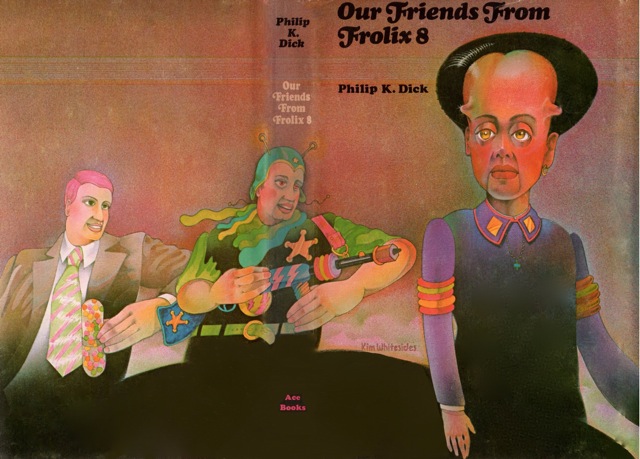
- Our Friends from Frolix 8
Philip K. Dickstandalone novel1970
similar byscience fictionour world+1 more
Our Friends from Frolix 8 is a science fiction novel by American writer Philip K. Dick. It was written from 1968 to 1969 and was published in 1970 by Ace Books. The novel is set in the 22nd century, when humanity is ruled by mutated humans, "New Men" and "Unusuals", while normal "Old Men" are discriminated against. The story follows Nick Appleton, a low-class Old Man worker who becomes a subversive to the system, and Willis Gram, the Unusual ruler of the Earth. Separately, resistance leader Thors Provoni has left the planet to find an ally to the Old Men, finally returning with an alien from far away in space. The novel is best known for a single scene where the characters discuss the dead body of God having been found in space.
- Dune
series20 books1963
part of Dune Universe
similar byscience fiction+1 more
Frank Herbert's Dune Chronicles opens with 1965's Dune, set on the desert planet Arrakis where House Atreides takes control of the only source of the vital spice melange and young Paul Atreides is pulled into a struggle over its politics and religion. Herbert carried the story forward across five further novels — Dune Messiah, Children of Dune, God Emperor of Dune, Heretics of Dune, and Chapterhouse: Dune — following Paul's line over the following millennia, before Brian Herbert and Kevin J. Anderson later extended the saga. Many other editions of these six novels are omnibus and box-set repackagings rather than separate stories.
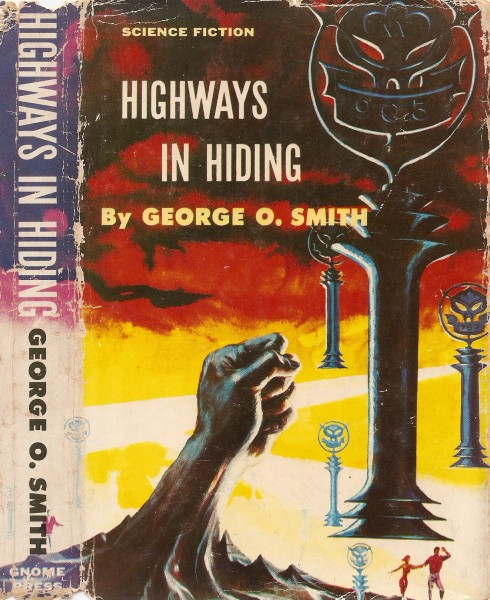
- Highways in Hiding
George O. Smithstandalone novel1956
similar bypsychic powersscience fictionour world
From the back cover of the first Lancer printing: "Quest impossible - Someone had stolen an important part of Steve Cornell's life. It was bad enough when his fiancee vanished. It was infinitely worse when everyone in the world insisted it couldn't have happened the way he knew it had. In a world where ESP and telepathy were normal, it was difficult to keep secrets. But Steve's search for his missing sweetheart brought him to the threshold of one of the greatest secrets of all time. And it was obvious that somebody would stop at nothing to keep him from uncovering it. What were the oddly sinister symbols along the otherwise ordinary roads? What was behind the spreading plague called Mekstrom's Disease? Why were there "blank" spots where telepathy didn't work? Who was the elusive enemy with powers even beyond those ESP had bestowed on mankind? And, most important of all... could Steve find that enemy before they made him vanish too?"