More like Stranger (Part Two)
but
- Ayesha
series8 books1886
similar byimmortality19th century+1 more
The Ayesha books follow H. Rider Haggard's immortal sorceress-queen Ayesha, introduced in his 1887 novel She as the ruler of a hidden civilization who has waited millennia for her lost love to be reborn. Haggard continued her story in later novels, including the 1905 sequel Ayesha: The Return of She, which reunites her with characters from the first book, and further installments tracing her earlier history. Later reissues and retellings continue to build on the same character.
- Ringworld
series5 books1970
part of Known Space
similar byadventurousscience fiction
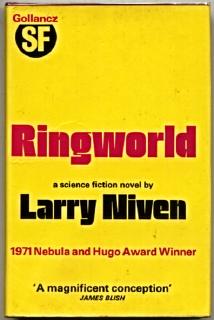
The Ringworld series is a series of science fiction novels written by American author Larry Niven. It is part of his Known Space series of stories. Its backdrop is the Ringworld, a giant artifact 3 million times the surface area of Earth circling a star. The series is composed of four standalone science fiction novels, the original award-winning book and its three sequels:1970: Ringworld 1979: The Ringworld Engineers 1996: The Ringworld Throne 2004: Ringworld's Children
- Dune
series20 books1963
part of Dune Universe
similar byscience fiction
Frank Herbert's Dune Chronicles opens with 1965's Dune, set on the desert planet Arrakis where House Atreides takes control of the only source of the vital spice melange and young Paul Atreides is pulled into a struggle over its politics and religion. Herbert carried the story forward across five further novels — Dune Messiah, Children of Dune, God Emperor of Dune, Heretics of Dune, and Chapterhouse: Dune — following Paul's line over the following millennia, before Brian Herbert and Kevin J. Anderson later extended the saga. Many other editions of these six novels are omnibus and box-set repackagings rather than separate stories.
- Monella
series3 books1896
completed
similar byadventurous19th century+1 more
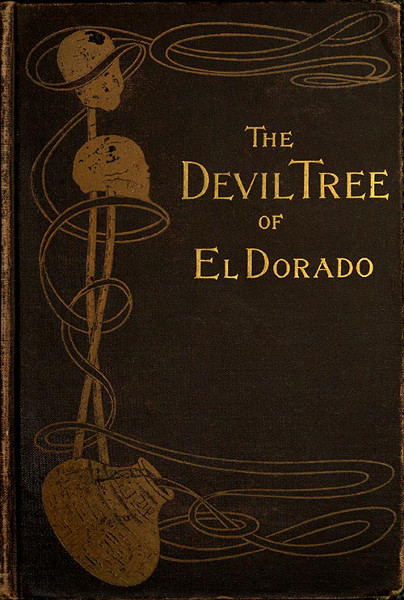
Frank Aubrey's Monella novels are Victorian-era lost-world adventures built around a recurring, sorceress-like figure named Monella, encountered by different explorers in hidden regions of South America and a submerged Atlantis. Beginning with The Devil-Tree of El Dorado, the loosely linked books send new casts of characters into fresh perils rather than continuing one plot across volumes. Later editions have repackaged the novels together in combined omnibus volumes.
- Earthsea Cycle
series18 books1964
completed
part of Earthsea
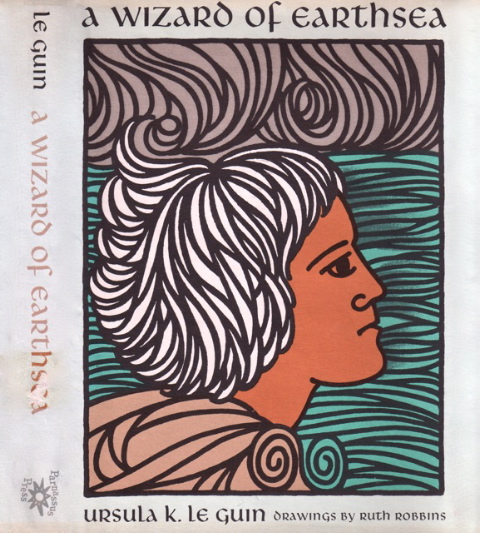
The Earthsea Cycle, also known as Earthsea, is a series of high fantasy books written by American author Ursula K. Le Guin. Beginning with A Wizard of Earthsea (1968), The Tombs of Atuan (1970), and The Farthest Shore (1972), the series was continued in Tehanu (1990), and Tales from Earthsea and The Other Wind. In 2018, all the novels and short stories were published in a single volume, The Books of Earthsea: The Complete Illustrated Edition, with artwork by Charles Vess.
- Future History
series42 books1939
completed
similar byscience fiction+2 more
The Future History is a series of science fiction stories written by American author Robert A. Heinlein (1907–1988). It describes a projected future of the human race from the middle of the 20th century through the early 23rd century. The term Future History was coined by John W. Campbell Jr. in the February 1941 issue of Astounding Science Fiction. Campbell published an early draft of Heinlein's chart of the series in the May 1941 issue.
- Cities in Flight
series10 books1950
completed
similar byscience fiction+2 more
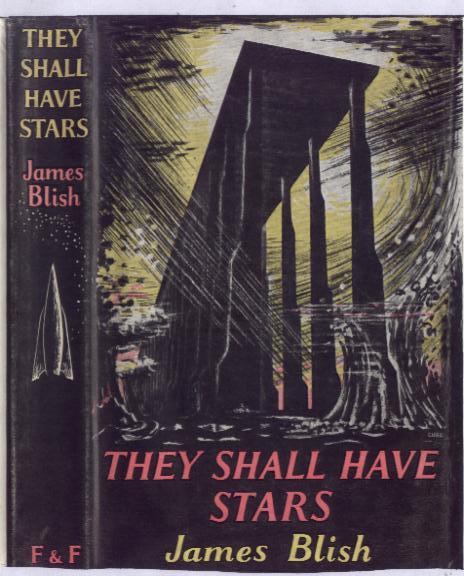
Cities in Flight is a four-volume series of science fiction novels and short stories by American writer James Blish, originally published between 1950 and 1962, which were first known collectively as the "Okie" novels. The series features entire cities that are able to fly through space using an anti-gravity device, the spindizzy. The stories cover roughly two thousand years, from the very near future to the end of the universe. One story, "Earthman, Come Home", won a Retro Hugo Award in 2004 for Best Novelette. Since 1970, the primary edition has been the omnibus volume first published in paperback by Avon Books. Over the years James Blish made many changes to these stories in response to points raised in letters from readers.
- Company (Kage Baker)
series41 books1997
completed
part of Company
similar byscience fiction+1 more
Kage Baker's Company novels imagine a secretive 24th-century corporation, Dr. Zeus Incorporated, that recruits children throughout history and remakes them into immortal cyborg operatives who quietly harvest art, biological specimens, and lost treasures for the future. The saga follows operatives such as the botanist Mendoza across centuries of missions, building toward the unexplained blackout in the corporation's own records after the year 2355. Later volumes, some completed with Kathleen Bartholomew after Baker's death, close out the operatives' long, involuntary service.
- This Immortal
series2 books1966
similar byimmortalityadventurousscience fiction
This Immortal is a single science fiction novel by Roger Zelazny, expanded from his 1965 serial ...And Call Me Conrad. In a depopulated future Earth largely toured by an alien race, its long-lived, secretive protagonist Conrad Nomikos is assigned to guide and protect a visiting alien across the ruins of Greece and Egypt, uncovering old grudges and assassination plots along the way. The novel shared the 1966 Hugo Award for Best Novel with Frank Herbert's Dune.
- The Vampire Chronicles
series15 books1976
completed
similar byimmortalityhorror
The Vampire Chronicles is a series of Gothic vampire novels and a media franchise, created by American author Anne Rice, that revolves around the fictional character Lestat de Lioncourt, a French nobleman turned into a vampire in the 18th century.
- Allan Quatermain
series25 books1885
similar byadventurous19th century
Allan Quatermain is the protagonist of H. Rider Haggard's 1885 novel King Solomon's Mines, its one sequel Allan Quatermain (1887), twelve prequel novels and four prequel short stories, totalling eighteen works. An English professional big game hunter and adventurer, in film and television he has been portrayed by Richard Chamberlain, Sean Connery, Cedric Hardwicke, Patrick Swayze and Stewart Granger among others.
- Incarnations of Immortality
series8 books1983
similar byimmortality+1 more
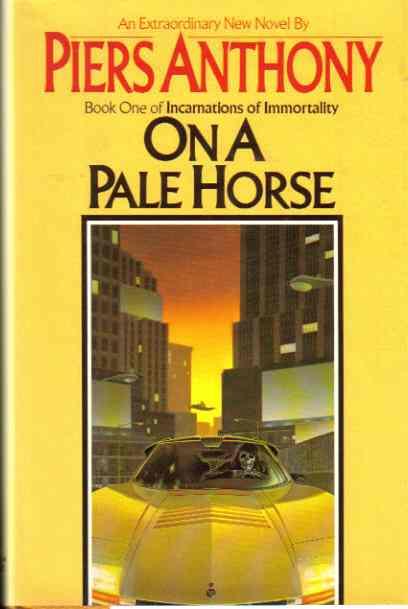
Incarnations of Immortality is an eight-book fantasy series by Piers Anthony. The books each focus on one of eight supernatural "offices" in a fictional reality and history parallel to ours, with the exception that society has advanced both magic and modern technology. The series covers the adventures and struggles of a group of humans called "Incarnations", who hold these supernatural positions for a certain time.
- H. G. Wells' War of the Worlds
universe65 books1898
Start hereThe War of the Worlds · Start here
similar byscience fiction+1 more
No one would have believed, in the closing years of the nineteenth century, that human affairs were being watched keenly and closely from the timeless worlds of space. And then the cylinders fell. H. G. Wells' War of the Worlds opens in the quiet of the Surrey commons, where a falling star proves to be the first Martian craft — and from the pit rise the towering tripods, the Heat-Ray, the choking Black Smoke and the creeping red weed, wielded by minds that regard mankind much as we regard the creatures we boil for supper. This is invasion rendered as natural disaster: cold, methodical, and vast beyond argument. Wells' 1898 novel is the seed; everything else grows from that Martian soil. The catalogue gathers direct sequels and continuations alongside a wide field of other hands. In War of the Worlds: Global Dispatches the invasion is retold across the whole planet through the eyes of Twain, Verne, Tolstoy, Lowell and Kipling; in the Manly Wade and Wade Wellman crossover, Sherlock Holmes, Watson and Professor Challenger take the field against the machines; and Scott Washburn's Great Martian War stretches the fighting into a decades-long alternate history of steam, artillery and grinding attrition. It is a loose shared world — no single decreed sequence, many voices answering one calamity. What sets this world apart is its refusal of heroics: the invaders fall not to generals but to the smallest things of Earth, humbling and indifferent. Begin, always, with Wells' original novel — it is short, and it is the ground every later book stands upon. From there follow your appetite: Global Dispatches for the panorama, the Holmes campaign for adventure, Washburn for the long war.
- Richard Forthrast
series2 books2011
similar byscience fiction+2 more
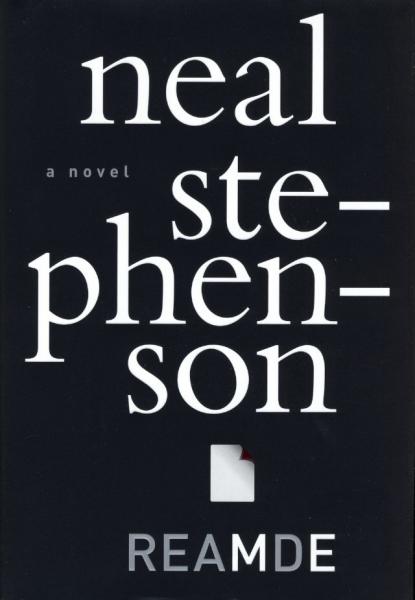
Neal Stephenson's Richard 'Dodge' Forthrast novels open with Reamde, a globe-spanning thriller that starts when ransomware inside an MMORPG economy pulls Richard's extended family into a real-world hostage crisis involving hackers, jihadists and Russian mobsters. The sequel Fall; or, Dodge in Hell shifts registers entirely, following Richard's digitally preserved mind after death into an afterlife simulation built from his scanned brain. The two books share a protagonist and family but differ sharply in genre and scale.
- Weapon Shops of Isher
series5 books1941
completed
similar byscience fiction+2 more
A.E. van Vogt's Weapon Shops of Isher novels (The Weapon Shops of Isher, The Weapon Makers, 1941-1951 magazine-to-book) are set in a far-future empire ruled by the Isher dynasty, where the mysterious, technologically superior Weapon Shops sell defensive arms directly to citizens outside government control. The books follow the immortal Robert Hedrock, secretly the Shops' founder, as he works to keep the balance between the crown and the Shops intact -- not to overthrow the government, but to guarantee ordinary people always retain the means to resist it.
- The Algebraist
Iain M. Banksstandalone novel2004
similar byadventurousscience fiction+1 more
The Algebraist is a science fiction novel by Scottish writer Iain M. Banks, published in print in 2004. It was nominated for a Hugo Award for Best Novel in 2005.
- The World of Tiers
series9 books1965
similar byimmortalityadventurousscience fiction
The World of Tiers is a series of science fiction novels by American writer Philip José Farmer. They are set within a series of artificially constructed universes, created and ruled by decadent beings who are genetically identical to humans, but regard themselves as superior, and are the inheritors of an advanced technology they no longer understand. This technology enables the "Lords" to create novel lifeforms, and also to prevent aging or disease, making them effectively immortal. Their technology also allows them to create small artificial universes, and the planets and stars within them, and modify the physical laws to create unusual or interesting phenomena within these universes. Instantaneous travel within and between these universes is achieved by the use of "gates" which seem to function as teleportation devices, or as a means of creating wormholes between different regions of spacetime.