More like Sunfall
anchored on:science fictionfar futurefantasysurvivalother star systemsdark+1 more
but
- The Stars My Destination
Alfred Besterstandalone novel1956
similar bysurvivaldarkfar futurescience fictionother star systemsspace
When a passing spaceship refuses to rescue the lone survivor from the drifting wreck of another ship, he dedicates his life to discovering who made that decision and exacting his revenge, in the process altering human history and his own character.
- The Status Civilization
Robert Sheckleystandalone novel1960
similar bysurvivaldarkfar futurescience fictionother star systems
"Will Barrent had no memory of his crime ... but he found himself shipped across space to a brutal prison-planet. On Omega, his only chance to advance himself -- and stay alive -- is to commit an endless series of violent crimes. The average inmate's life expectancy from time of arrival is three years. Can Barrett survive, escape, and return to Earth to clear his name?" - From the cover of the 2007 Wildside paperback edition.
- Forge of God
series2 books1987
completed
similar bysurvivaldarkscience fiction+3 more
The Forge of God (1987) is Greg Bear's science fiction novel about Earth's discovery that it is the target of an incomprehensible, overwhelming alien attack, following scientists and ordinary people as they try to understand what is destroying the planet. Its 1992 sequel, Anvil of Stars, follows a group of young survivors sent on a mission of interstellar retaliation, continuing directly from the first book's ending.
- The Dosadi Experiment
Frank Herbertstandalone novel1977
similar bysurvivalfar futurescience fictionother star systems+1 more
From the flaps of the Berkley Putnam first edition: "In his first new work of science fiction since the best-selling Children of Dune, Frank Herbert returns to his world of Whipping Star, and involves Jorj X. McKie, Saboteur Extraordinary, in a new intrigue. In Whipping Star, McKie discovered that some of the stars in the universe are actually intelligent, super-powerful beings, and was able to befriend one of them, the star Alcyone - affectionately known as Fannie Mae. As The Dosadi Experiment opens, McKie is assigned to investigate the planet Dosadi, which is isolated from the rest of the galaxy by a "god-wall," a barrier set up by one of the intelligent stars. Dosadi is rumored to be an experimental planet, and the experimenters are the froglike Gowachin, whose culture is founded upon a strange legal system in which McKie is the only human ever trained. He learns that humans and Gowachin have been placed on Dosadi, without their consent, for an experiment that could last centuries: an experiment in extreme overcrowding. But this monstrous plot is apparently out of control, and it seems the Gowachin may be prepared to destroy Dosadi rather than expose its secret, thus breaking the peace among the races, and starting the first interstellar war. But this is just the beginning. When McKie finally reaches Dosadi he discovers that the Dosadis have taken control of their own evolution and produced a competitive, highly evolved elite, of both humans and Gowachin, who have been able to extrapolate the existence of a universe beyond the god-wall and hate whoever has imprisoned them like this. They plan to break out and avenge themselves on the galaxy."
- The Hunger Games
series3 books2008
part of The Hunger Games Universe
similar bysurvivaldarkfar futurescience fiction
The Hunger Games is a series of young adult dystopian novels written by American author Suzanne Collins. The series consists of a trilogy that follows teenage protagonist Katniss Everdeen, as well as two prequels. The Hunger Games universe is a dystopia set in Panem, a post-apocalyptic North American country consisting of the wealthy Capitol and 12 districts in varying states of poverty. As punishment for rebellion, the Capitol hosts an annual battle royale competition called The Hunger Games. Each of the 12 districts must send two children between the ages of 12 and 18 to participate, and the last surviving child is dubbed the victor.
- The Hunger Games Universe
universe5 books2008
Start hereThe Hunger Games · Start here
similar bysurvivaldarkfar futurescience fiction
Panem, they call it now — a nation raised on the drowned bones of North America, a glittering Capitol ringed by twelve districts it once starved into obedience. Every year the Capitol collects its debt in children: two tributes from each district, drawn by lottery, dropped into an engineered arena, and made to kill one another on live television while the whole country is required to watch. This is the Hunger Games — entertainment, punishment, and government at once. Suzanne Collins tells it in a compact, unified body of work. The founding trilogy — The Hunger Games, Catching Fire, and Mockingjay — follows Katniss Everdeen, a girl from the coal-mining District 12 who volunteers in her sister's place and becomes something the Capitol never scripted. Two prequels reach back into the same machinery: The Ballad of Songbirds and Snakes traces a young Coriolanus Snow long before he is President, and Sunrise on the Reaping returns to District 12 a generation ahead of Katniss. Begin with the trilogy, in order — it is Katniss's voice, close and present-tense, that makes Panem breathe, and the prequels land hardest once you know how her story ends. Beneath the spectacle sits one steady, uncomfortable question: who profits when we agree to look away.
- Pandora
series4 books1966
similar bysurvivalfar futurescience fictionother star systems+1 more
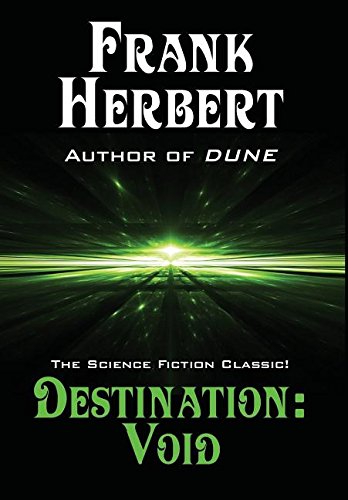
The Pandora Sequence opens with Frank Herbert's solo novel Destination: Void, in which a starship crew must jury-rig a working artificial consciousness after their vessel's control systems fail. Bill Ransom co-writes the three novels that follow, carrying the survivors to the world Pandora, where they must contend with both a manipulative machine intelligence and the planet's own hostile ecology. Across its four books the series moves from a claustrophobic ship-bound crisis to a generations-long struggle over faith, control, and survival on a dangerous new world.
- The Exile Waiting
Vonda N. McIntyrestandalone novel1975
similar bysurvivaldarkfar futurescience fictionother star systems
From the front flap of the Gollancz first printing: The time is the distant future and Earth has been rendered uninhabitable for much of the year by terrible storms during which its only city, Center, constructed around a natural cave system, is closed off from the outside. Mischa, a young thief whose capabilities are enhanced by hereditary mutation, is trying to escape with her drug-addicted brother from the dominance of her uncle. So when a starship arrives commanded by the twin alien pseudosibs, Subone and Subtwo, Mischa seizes her chance. She is soon assigned for training to Jan Hikaru, who quickly realises that Mischa has immense abilities. All goes well until Subone, in a moment of cruelty, lures Mischa's brother into a fight and then kills him. Mischa attacks Subone and both she and Jan have to flee the wrath of the brothers and take refuge n the deep cave system underneath the city.
- Wolfbane
C. M. Kornbluth & Frederik Pohlstandalone novel1959
similar bysurvivalfar futurescience fictionother star systems+1 more
Wolfbane is a science fiction novel by American writers Frederik Pohl and C. M. Kornbluth, published in 1959. It was serialized in Galaxy in 1957, with illustrations by Wally Wood. In his review column for F&SF, Damon Knight selected the novel as one of the 10 best genre books of 1959.
- Creatures of Light and Darkness
Roger Zelaznystandalone novel1969
similar bydarkfar futurescience fictionother star systemseeriefantasyspace
Creatures of Light and Darkness is a 1969 science fiction novel by American writer Roger Zelazny. Long out of print, it was reissued in April 2010. The novel is set in the far future, with humans on many worlds. Some humans have god-like powers or perhaps are actually gods—the names and aspects of various Egyptian gods are used. Elements of horror and technology are mixed, and the novel shares elements with cyberpunk.
- Tunnel in the Sky
Robert A. Heinleinstandalone novel1955
similar bysurvivalfar futurescience fictionother star systems+1 more
As the final test of a survivalist/explorer class, teenagers are dumped on an alien planet to use their skills while awaiting pickup. But something has gone wrong, and they find they are on their own.
- The City in the Middle of the Night
Charlie Jane Andersstandalone novel2019
similar bysurvivaldarkfar futurescience fictionother star systems
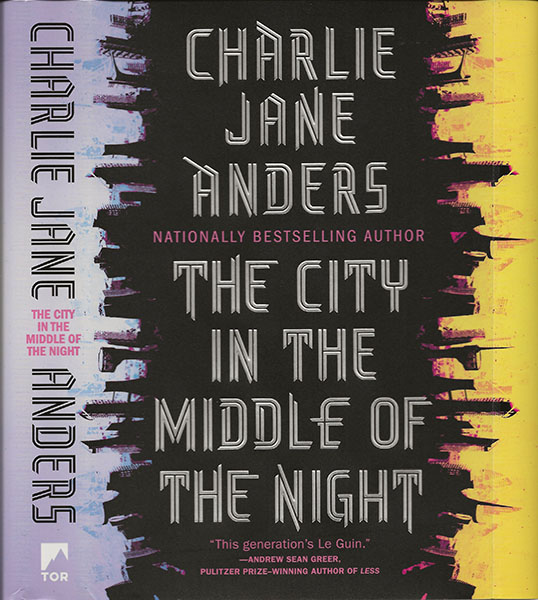
The City In the Middle of the Night is a 2019 climate-fiction novel by Charlie Jane Anders. It is set on a tidally locked planet, where human life, surrounded by hostile alien life, is mostly divided between two archetypically different urban sites. The main story focuses on two characters whose actions take them outside of the cities.
- Bloom
Wil McCarthystandalone novel1998
similar bysurvivalfar futurescience fictionother star systemsspace+1 more
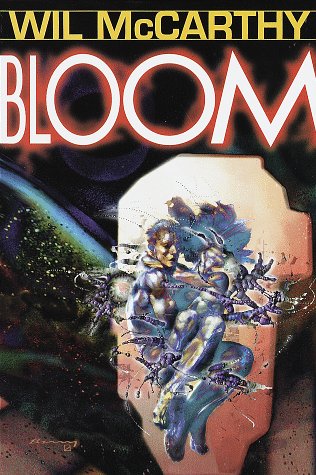
Bloom, written in 1998, is the fifth science fiction novel written by Wil McCarthy. It was first released as a hardcover in September 1998. Almost a year later, in August 1999, its first mass market edition was published. An ebook reprint was published in 2011.
- We Who Are About to ...
Joanna Russstandalone novel1977
similar bysurvivaldarkfar futurescience fictionother star systems
We Who Are About To... is a feminist science fiction novella by Joanna Russ. It first appeared in magazine form in the January 1976 and February 1976 issues of Galaxy Science Fiction and was first published in book form by Dell Publishing in July 1977.
- Deus Irae
Philip K. Dick & Roger Zelaznystandalone novel1976
similar bysurvivaldarkfar futurescience fiction
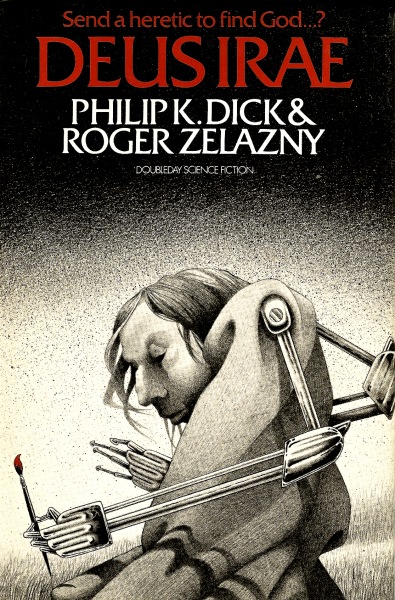
Deus Irae is a post-apocalyptic science fiction novel written by two American authors; it was started by Philip K. Dick and finished with the help of Roger Zelazny. It was published in 1976. The novel's title, Deus irae, means 'God of Wrath' in Latin; the title is a play on words on the phrase Dies Irae, meaning 'Day of Wrath' or 'Judgment Day'. The novel was based on Dick's short stories "The Great C" and "Planet for Transients".
- Pushing Ice
Alastair Reynoldsstandalone novel2005
similar bysurvivalfar futurescience fictionother star systemsspace
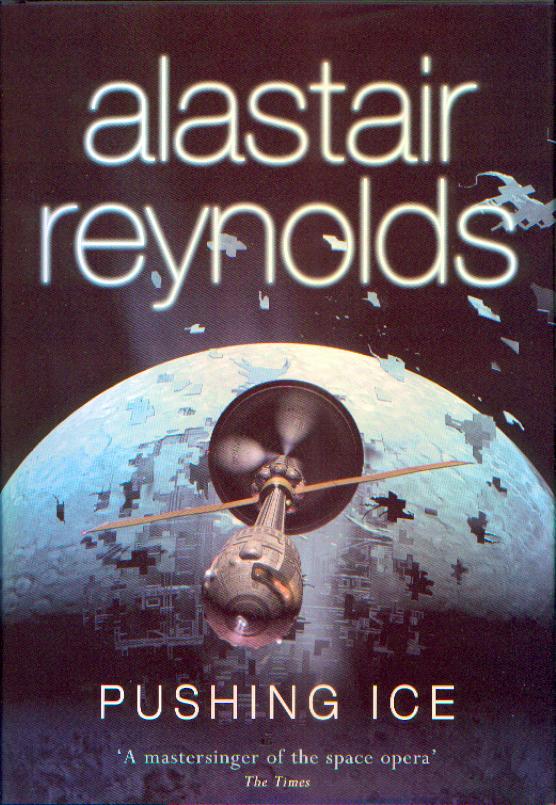
When Saturn's moon Janus suddenly takes off into interstellar space, an ice mining spaceship sent to investigate finds itself swept along into distant space until it ends up trapped in a gigantic alien structure, wherein the crew must prepare to reside for the foreseeable future.
- City at World's End
Edmond Hamiltonstandalone novel1951
similar bysurvivaldarkfar futurescience fiction
An experimental atomic weapons test in small-town America goes catastrophically wrong, hurling the entire town of Middletown, buildings, streets and all, untold ages into Earth's future, to a time when the sun is dying and humanity's last city struggles on beneath a darkening sky. Cut off from everything and everyone they knew, the townspeople have to find a way to survive in a world that has nothing left to spare for latecomers. Edmond Hamilton's novel strands a slice of mid-century America at the literal end of the world.
- Cowl
Neal Asherstandalone novel2004
similar bysurvivaldarkfar futurescience fiction+1 more
In the far future, the Heliothane Dominion is triumphant in the solar system, after a bitter war with their Umbrathane progenitors. But some of the Umbrathane have escaped into the distant past, where they can position themselves to wreak havoc across time and undo their defeat. The most fanatical of them is the superhuman Cowl, more monstrous than any of the creatures outside his prehistoric redoubt. Cowl sends his terrifying hyperdimensional pet, the torbeast, hunting through all the timelines for human specimens. It sheds its scales - each one an organic time machine - where its master orders. Anyone who picks one up is dragged back to the dawn of time, where Cowl awaits. Then the beast can feed, growing ever larger... In our own near-future, Tack is one of U-gov’s programmable killers. When a scale latches onto him, his doom seems inevitable, but the Heliothane have other ideas: they can use Tack against Cowl. Tack is no stranger to violence, but the Heliothane, hardened in their struggle for humanity’s very existence, have much to teach him. He will need it all for his encounter with Cowl.Once one of Tack’s targets, Polly escaped with her life when a torbeast scale snatched her. Now, like Tack, she must learn fast as she is dragged back to Day Zero. To cheat death again, she will have to help him save the human race.
- Riddley Walker
Russell Hobanstandalone novel1980
similar bysurvivaldarkfar futurescience fiction
WorldCat: Composed in an English which has never been spoken and laced with a storytelling tradition that predates the written word, RIDDLEY WALKER is the world waiting for us at the bitter end of the nuclear road. It is desolate, dangerous and harrowing, and a modern masterpiece.
- Heritage of Flight
Susan Shwartzstandalone novel1989
similar bysurvivaldarkfar futurescience fictionother star systemsspace
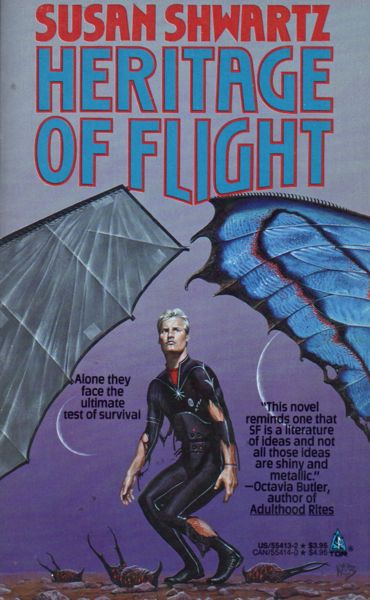
From the back cover of the Tor first edition: "Pauli Yeager knew how to survive in deep space; as senior fighter pilot for the battleship Amherst she had logged years of combat experience. But she knew she wasn't prepared for the new command. Project Seedcorn was the last hope of an ambitious race. Humanity was embroiled in a planet-slagging war that promised a fast and final death. The small group of refugees hidden on the fringe of human-occupied space was ordered to live and be human. THe initial survey had shown no life on Cynthia, but there was life, intelligent life... huge graceful creatures with iridescent wings. They filled the sky with splendor and covered the ground with a legacy of horror. The simple command, live and be human, became an epitaph. Survival depended on the children - human and Cynthian - and Paul had to convince her people to commit a heinous crime or watch their children die..."
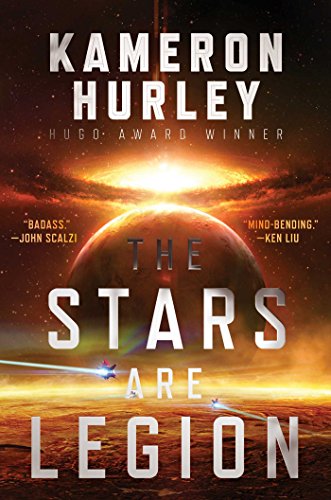
- The Stars Are Legion
Kameron Hurleystandalone novel2017
similar bysurvivaldarkfar futurescience fictionspace
396 pages ; 20 cm
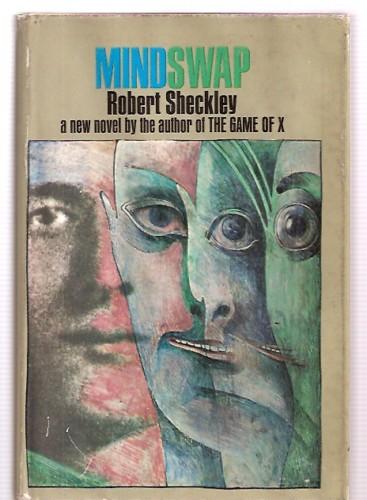
- Mindswap
Robert Sheckleystandalone novel1966
similar bysurvivalfar futurescience fictionother star systemsspace
"In the future, interstellar travel to alien worlds will be too expensive for most ordinary people. It certainly is for Marvin, a college student who wants to take a really good vacation. And so he signs up for what he can afford, a mindswap, in which a persons consciousness is swapped into the body of an alien lifeform. But Marvin is unlucky, and finds himself in the body of an interstellar criminal, a body that he has to vacate fast. But that criminal consciousness has stolen Marvins earthly body, and Marvin has to find a body on the black market. Travel from world to world with Marvin, each one crazier than the last, as he keeps finding far-from-ideal bodies in awful situations, just to stay alive"--Cover p. [4].
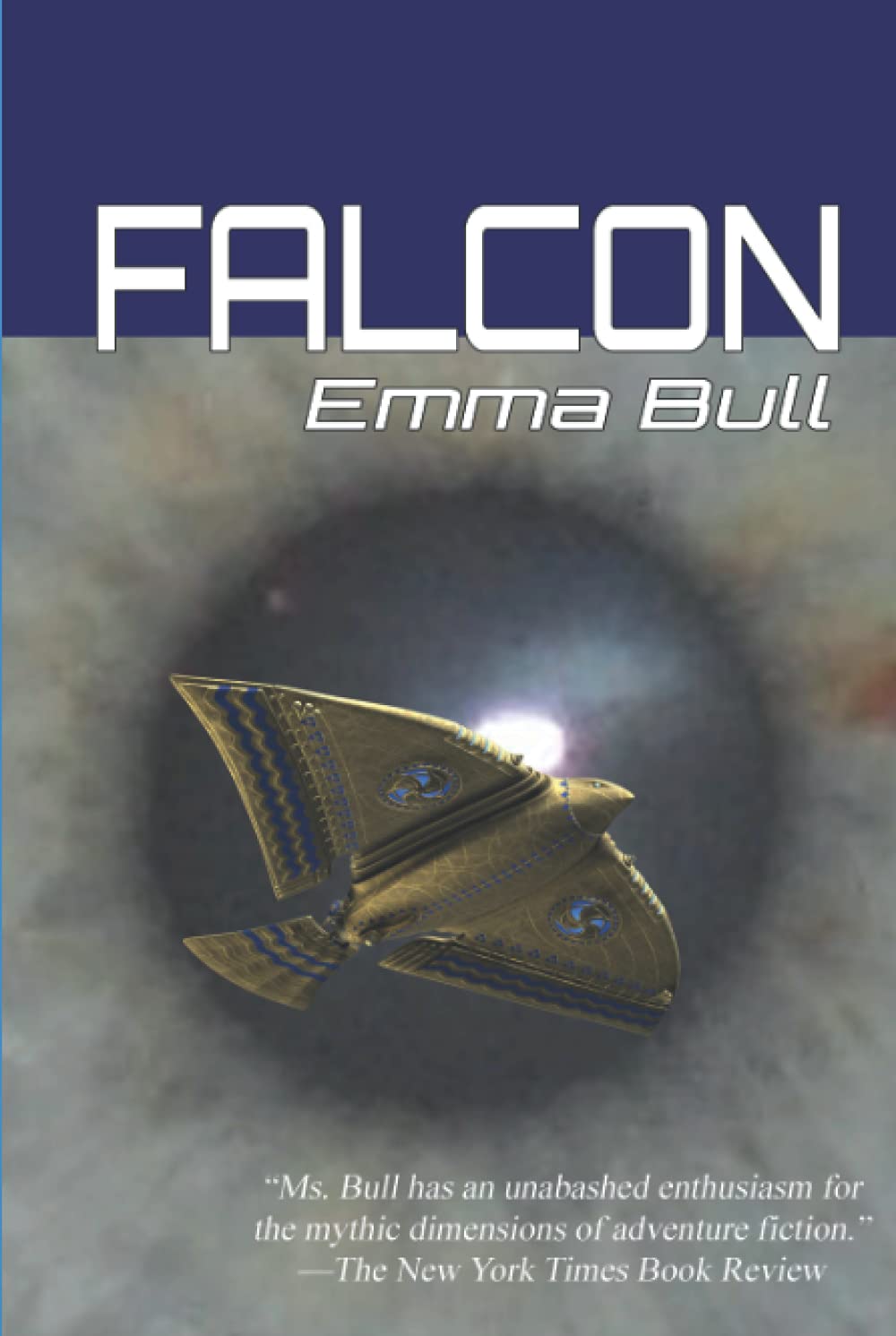
- Falcon
Emma Bullstandalone novel1989
similar bysurvivaldarkfar futurescience fictionother star systemsspace
FOR NIKI FALCON, LIFE IS A RACE AGAINST TIME. AND TIME IS WINNING His planet was stolen, besieged by agents of the Central Worlds Concorde. His family was destroyed, and his world shattered before his eyes... Now Niki Falcon must fight his way to glory living on the cutting edge of danger to become one of the great star-pilots. And he's the last. For behind the young pilot's fighting power lies a deadly drug that systematically destroys his body's defenses. That gives him the strength to defend a planet—and renders him helpless to save himself.