Loreful
HomeDiscover
Search series, authors…⌘K
Loreful

Reading orders for SF/F series and shared universes — with your place kept in every one.

Explore

UniversesSeriesWorksAuthorsAtlas

Help

FAQAboutSite map

Account & legal

Sign inCreate accountPrivacyTerms

Data

Built on ISFDB, Wikipedia, Wikidata and Open Library. Curated reading orders carry their reasoning on the page; the rest follow publication order. Data sources & licenses

© Loreful · data: ISFDB · CC BY

More like Sunflower

anchored on:science fiction

but

Mood

The mood the book leaves you in.

  • The reading experience is propelled by journeys, exploration, and physical risk; excitement and forward momentum dominate over dread or introspection.
  • Joy and loss are deliberately mixed; the resolution grants characters something real while taking something else away, leaving warmth and sorrow together.
  • The book demands work from the reader — dense prose, difficult structure, unfamiliar ideas, or morally uncomfortable material — as part of its intended effect.
  • Grim events, cruelty, or despair dominate the atmosphere, and the book does not soften them with comfort or comic relief.
  • The atmosphere is quietly unsettling — wrongness, unease, and the uncanny pervade the book without necessarily escalating into overt horror.
  • The book is built to move the reader; character feeling is foregrounded and major scenes aim at a strong emotional response.
  • Humor is a primary aim and the prose plays for laughs — comic situations, wit, or dialogue produce sustained comedy, not occasional levity.
  • The book insists that things can improve; effort and decency are shown to matter, and the arc bends toward better outcomes even through hardship.
  • The book teaches as it goes — real facts, history, science, or craft are conveyed in enough depth that learning is part of the reading experience.
  • The book is designed to uplift and motivate, presenting perseverance or achievement in a way that invites the reader to aspire or act.
  • The overall register is cheerful and easygoing; stakes are kept gentle and the book avoids dwelling on pain or dread.
  • Withheld information drives the experience; the book sustains enigmas and secrets the reader wants resolved, whatever its genre.
  • The book is contemplative and inward-looking, giving more weight to thought, memory, and meaning than to external events.
  • The book works as comfort reading — low tension, a soothing pace, and an atmosphere the reader can unwind in.
  • Grief, loss, or melancholy set the dominant register, and the book lets sorrow stand rather than resolving it into comfort.
  • Sustained suspense is the point; the book keeps the reader braced for what happens next through danger, pressure, or impending revelation.
  • Playful invention and charm define the register — fanciful conceits, light absurdity, and a narration that delights in its own oddity.

About

What the story runs on.

  • Stories in which extraterrestrial beings are central — as characters, cultures, or the object of the plot.
  • Stories about venturing into space to explore — survey missions, astronauts, and the frontier of the unknown beyond Earth.
  • Stories structured as a quest — a journey undertaken to find, deliver, or destroy something of great import.
  • Stories in which staying alive against nature, catastrophe, or scarcity is the central problem.
  • Stories of lovers kept apart by law, family, faith, or station, where the obstacle to love is the plot.
  • Stories in which a friendship — its making, testing, or loss — is the emotional center.
  • Stories of growing up — a young protagonist crossing from childhood into adult knowledge and responsibility.
  • Stories about who a character truly is — self-discovery, doubled lives, and the search for a self.
  • Stories in which a buried family truth — hidden parentage, crimes, or shames — surfaces and reorders the present.
  • Stories driven by maneuvering for power — factions, conspiracies, and statecraft conducted in shadow.
  • Stories in which war itself is the subject — combat, occupation, and what warfare does to soldiers and civilians.
  • Stories organized around investigating a killing — the case, the clues, and the pursuit of the killer, in any genre's clothing.

Shelf

Where it sits in the library.

    • Fiction built on magic or other supernatural elements that have no scientific explanation.
    • Secondary-world fantasy at large scale, where the fate of nations or the world turns on the protagonists' struggle.
    • Fantasy set in a recognizably modern city or contemporary world where the supernatural intrudes on everyday life.
    • Fantasy that blends in horror's atmosphere and imagery, keeping a fantastical frame around grim or frightening material.
    • Action-driven fantasy following warriors or rogues with personal stakes against sorcerous threats, rather than world-spanning conflicts.
    • Fantasy set in a real historical period or a close analogue of one, with magic woven into the era.
    • Fantasy in which protagonists cross from the ordinary world into another world through a portal or similar passage.
    • Fiction that retells or reworks a traditional fairy tale in a new form or setting.
    • Fantasy drawing directly on myths, legends, and folklore, retelling them or building on their figures and logic.
    • Fantasy of ghosts, vampires, shapeshifters, psychics, and similar phenomena, usually set in an otherwise ordinary world.
    • Fiction mixing science-fictional trappings with overtly magical or impossible elements in one setting.
    • Low-stakes fantasy emphasizing comfort, community, and everyday pleasures over conflict and peril.
    • Speculative fiction of pervasive moral ambiguity, violence, and cynicism that rejects heroic conventions — fantasy and SF alike.
      • Fiction that extrapolates from science and technology — future societies, space travel, or speculative inventions — within at least nominally natural laws.
      • Science fiction of interstellar scope — starships, galactic polities, and adventure across star systems.
      • Science fiction committed to scientific rigor, where technical plausibility constrains the story.
      • Science fiction centered on armed forces and warfare, told largely from a military point of view.
      • Science fiction of networked, corporate-dominated near futures, pairing high technology with social decay.
      • Science fiction styled on nineteenth-century steam-powered technology, often in a Victorian or pseudo-Victorian setting.
      • Fiction depicting an oppressive or catastrophic society, presented as a warning.
      • Fiction set after civilization's collapse, following survivors in the ruins of the old world.
      • Fiction in which characters move between past and future, and the mechanics or consequences of that travel drive the plot.
      • Fiction exploring a world where a historical event went differently and history diverged from ours.
      • Science fiction about humanity's first encounter and communication with an alien intelligence.
      • Science fiction in which extraterrestrial forces attack or occupy Earth and humanity resists.
      • Fiction whose primary aim is to frighten or unsettle the reader through dread, menace, or the monstrous.
      • Horror of vast, indifferent, incomprehensible entities before which humanity is insignificant, in the Lovecraft tradition.
      • Horror of decaying houses, buried family secrets, and oppressive atmosphere in the Gothic literary tradition.
      • Horror centered on hauntings and the returning dead.
      • Horror located in the mind — paranoia, obsession, and unreliable perception rather than external monsters.
      • Horror built around the reanimated dead and survival amid their outbreaks.
      • Horror defined by explicit, transgressive gore that refuses to cut away from violence.
      • Speculative fiction of the strange and uncanny that resists both natural explanation and standard genre categories.
      • Fiction organized around solving a crime or puzzle, typically following an investigator toward the identification of a culprit.
      • A puzzle-first mystery that lays out clues so the culprit's identity can be deduced before the reveal.
      • Crime fiction of moral ambiguity, fatalism, and hard-edged style, set among the corrupt and the doomed.
      • A mystery following the realistic routines of police work — forensics, interviews, and case-building.
      • A gentle mystery with an amateur sleuth, a small community, and violence kept off the page.
      • A mystery set in a past era, where the investigation works within that period's methods and society.
      • Fast-paced fiction driven by imminent danger, pursuit, or high-stakes conspiracy, built to sustain tension.
      • A thriller of espionage — agents, tradecraft, and intelligence services in conflict.
      • A thriller centered on lawyers and the courtroom, where litigation carries the suspense.
      • A thriller driven by detailed contemporary or near-future technology, often military or scientific.
      • A thriller whose tension comes from mental states and manipulation between characters rather than external action.
      • Fiction whose central plot is a romantic relationship and its development toward an emotionally satisfying resolution.
      • Romance in which one or both partners are supernatural beings, blending fantasy elements into the love story.
      • A fantasy-romance hybrid in which the romantic arc and the fantasy plot carry equal weight.
      • Romance set in a past era, with courtship shaped by the period's society and manners.
      • Romance set in the present day, without supernatural or historical elements.
      • Fiction set in a real past period, where the historical setting materially shapes characters and events.
        • General and literary fiction emphasizing prose style, character interiority, or formal ambition over genre plot conventions.
        • Fiction in a realistic world where magical events occur and are treated as ordinary, in the tradition of Latin American literature.
        • Fiction that ridicules people, institutions, or society in order to criticize them.
        • Fiction of dreamlike, irrational imagery and logic that breaks from realistic representation.
        • Fiction that plays with narrative convention through metafiction, fragmentation, and self-reference.
        • Fiction propelled by journeys, exploration, and physical peril, where action and survival carry the plot.
        • Adventure fiction of ships and seafaring — naval engagements, voyages, and life at sea.
        • Fiction of the American frontier West — gunmen, ranchers, and lawmen, typically in the late nineteenth century.
        • Fiction centered on soldiers, campaigns, and the experience of warfare, historical or imagined.
          • Fiction written primarily to amuse, using comedic situations, wit, or parody as its organizing principle.
            • Multi-generational fiction following a family or dynasty across decades, with inheritance and kinship as the through-line.
              • Fiction whose world runs on explicit game mechanics — levels, stats, and skills that characters can see and exploit.
                • Fiction about costumed or superpowered heroes and their conflicts with comparable villains.

                Practical

                How long a commitment, whether it stands alone, and whether it has finished.

                Tap a chip to ask for it · tap again to rule it out · once more to clear. Numbers show what would be left.

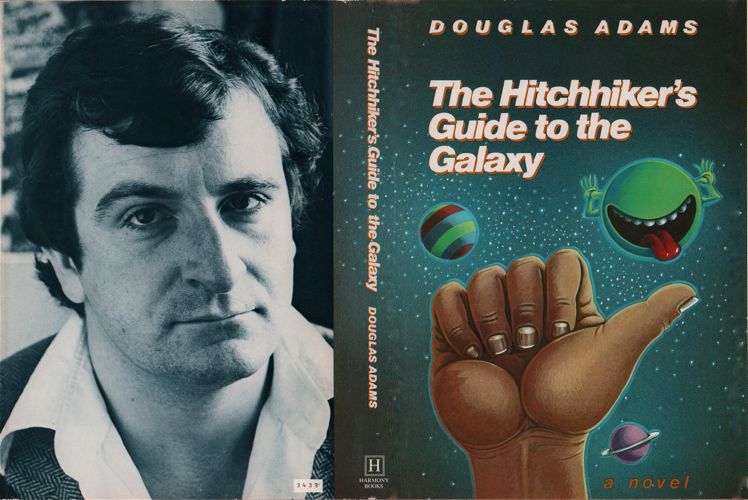
                • Cover of Hitchhiker's Guide to the Galaxy
                  Hitchhiker's Guide to the Galaxy

                  series · 16 books · 1979

                  part of The Hitchhiker's Guide to the Galaxy Universe

                  similar byscience fictionfunny+1 more

                  The Hitchhiker's Guide to the Galaxy is a comedy science fiction franchise created by Douglas Adams. Originally a radio sitcom broadcast over two series on BBC Radio 4 between 1978 and 1980, it was soon adapted to other formats, including both novels and comic books, a 1981 BBC television series, a 1984 text adventure game, stage shows and a 2005 feature film.

                • Cover of Patternist
                  Patternist

                  series · 6 books · 1976

                  completed

                  similar byscience fiction+1 more

                  The Patternist series is a group of science fiction novels by Octavia E. Butler that detail a secret history continuing from the Ancient Egyptian period to the far future that involves telepathic mind control and an extraterrestrial plague. A profile of Butler in Black Women in America notes that the themes of the series include "racial and gender-based animosity, the ethical implications of biological engineering, the question of what it means to be human, ethical and unethical uses of power, and how the assumption of power changes people."

                • Cover of The Sirens of Titan
                  The Sirens of Titan

                  Kurt Vonnegut & Jr. · standalone novel · 1959

                  similar byscience fictionfunny+1 more

                  The Sirens of Titan is a comic science fiction novel by Kurt Vonnegut Jr., first published in 1959. His second novel, it involves issues of free will, omniscience, and the overall purpose of human history, with much of the story revolving around a Martian invasion of Earth.

                • Cover of The Werewolf Principle
                  The Werewolf Principle

                  Clifford D. Simak · standalone novel · 1967

                  similar byshapeshiftersscience fictionour world

                  From the back cover of the first DAW printing: "Andrew Blake, found in a space capsule on a distant planet, was brought back to an unfamiliar Earth, where antigravity devices had replaced the wheel and houses talk and even fly! Yet nothing was as strange as Blake's own feelings. Tormented by eerie sensations and a loss of memory, he didn't know who he really was nor exactly where he came from. His destiny only began to grow frighteningly clear when he met a weird, tassel-eared creature who darkly hinted at the truth about Blake's origins. Slowly Blake became aware of the long hushed-up "Werewolf Principle," a scientific theory buried in the past, which held the key to Blake's own fate - and the future of the human race..."

                • Cover of InCryptid
                  InCryptid

                  series · 53 books · 2012

                  similar byour world+1 more

                  InCryptid is a series of urban fantasy novels by American author Seanan McGuire, published by DAW Books. They follow multiple generations of a family of cryptozoologists who protect supernatural beings from discovery by humankind.

                • PP
                  Pack / Pride Universe

                  series · 20 books · 2006

                  similar byshapeshifters+2 more

                  Shelly Laurenston's Pride novels, beginning with The Mane Event, are paranormal romances set among shapeshifter clans — lions, hyenas, wolves, and more — who mix pack politics with broad comedy and romantic pairings across a sprawling ensemble cast. The connected Pack books extend the same shared world with a different cluster of characters.

                • Cover of Tales from the White Hart
                  Tales from the White Hart

                  series · 19 books · 1949

                  similar byscience fictionfunnyour world

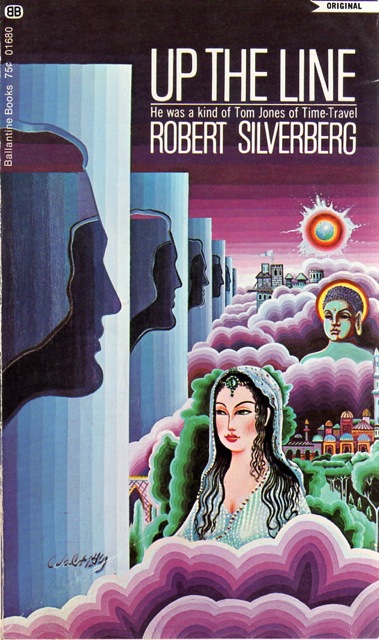
                • Cover of Up the Line
                  Up the Line

                  Robert Silverberg · standalone novel · 1969

                  similar byscience fictionfunnyour world

                  Up the Line (1969) is a time travel novel by American science fiction author Robert Silverberg. The plot revolves mainly around the paradoxes brought about by time travel and is considered an example of the more sexually-permissive era of late 1960s American science-fiction, a reflection of the counterculture of its day. It was nominated for a Nebula Award for Best Novel in 1969 and a Hugo Award for Best Novel in 1970 but lost to Ursula K. Le Guin's The Left Hand of Darkness both times.

                • Cover of The High Crusade
                  The High Crusade

                  Poul Anderson · standalone novel · 1960

                  similar byscience fictionfunny+1 more

                  The High Crusade is a science fiction novel by American writer Poul Anderson, about the consequences of an extraterrestrial scoutship landing in medieval England. Poul Anderson described the novel as "one of the most popular things I've ever done, going through many book editions in several languages."

                • Cover of Magic Shop
                  Magic Shop

                  series · 7 books · 1982

                  similar byour world+2 more

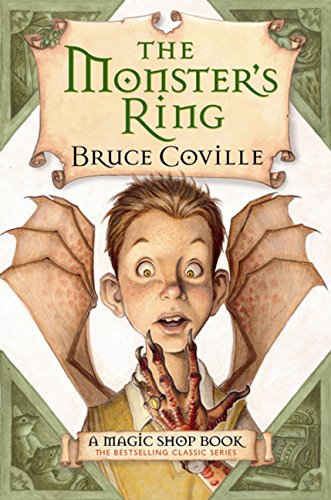
                  Bruce Coville's Magic Shop books each send a different kid into Mr. Elives's strange antique shop, where an ordinary-looking item turns out to carry real magic and consequences. The Monster's Ring opens the series with a boy who buys a ring to scare a bully on Halloween, only to find he can genuinely transform into a monster. Later entries repeat the pattern with new objects and new children, tied together by the shop and its owner rather than a continuing plot.

                • Cover of Svetz
                  Svetz

                  series · 9 books · 1969

                  similar byscience fiction+2 more

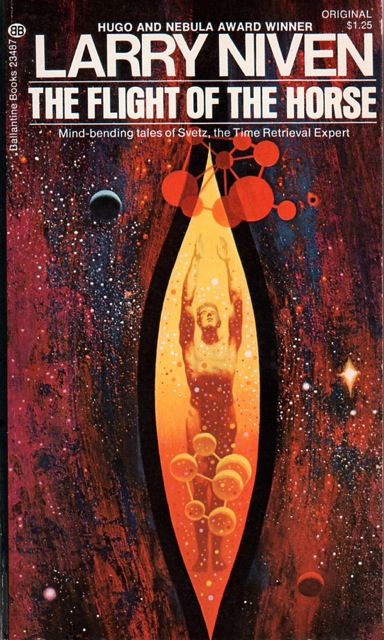
                  Larry Niven's Svetz stories follow Hanville Svetz, a dimension-traveling agent sent to retrieve unusual specimens and creatures, with titles like The Flight of the Horse (1971) and Leviathan! built around individual retrieval missions gone strange. The separate tales were later gathered together with new material into the novel Rainbow Mars (1999).

                • Cover of Cat's Cradle
                  Cat's Cradle

                  Kurt Vonnegut & Jr. · standalone novel · 1963

                  similar byfunnyscience fictionour world

                  Cat's Cradle is a satirical postmodern novel, with science fiction elements, by American writer Kurt Vonnegut. Vonnegut's fourth novel, it was first published on March 18, 1963, exploring and satirizing issues of science, technology, the purpose of religion, and the arms race, often through the use of morbid humor. The novel was nominated for the Hugo Award for Best Novel in 1964.

                • Cover of Borne
                  Borne

                  series · 3 books · 2017

                  similar byscience fiction+2 more

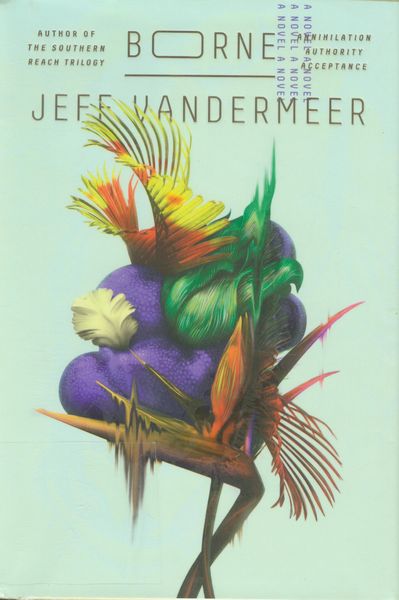
                  Borne is set in a ruined, biotech-poisoned city dominated by a giant flying bear named Mord, where a scavenger finds a strange organism she names Borne and raises it, only to discover it may be more dangerous - and more alive - than she expected. Jeff VanderMeer's series continues with the related novels The Strange Bird and Dead Astronauts, set in the same devastated world.

                • Cover of The Stainless Steel Rat
                  The Stainless Steel Rat

                  series · 21 books · 1957

                  completed

                  similar byscience fictionfunny

                  James Bolivar diGriz, alias "Slippery Jim" and "The Stainless Steel Rat", is a fictional character and a series of comic science fiction novels written by Harry Harrison.

                • Cover of S.W.I.T.C.H.
                  S.W.I.T.C.H.

                  series · 14 books · 2011

                  similar byour world+2 more

                • Cover of Crosstalk
                  Crosstalk

                  Connie Willis · standalone novel · 2016

                  similar byscience fictionfunnyour world

                  Crosstalk is a science fiction novel by Connie Willis, published in 2016. It is a romantic comedy that explores the intersection of telephones and telepathy. In a similar situation to Bellwether and Passage, the main character, Briddey Flannigan, is part of a larger institution who gets caught up in series of escalating events. Additionally, Crosstalk like Bellwether and Passage feature themes of neuroscience, communication and technology.

                • Cover of The Humans
                  The Humans

                  Matt Haig · standalone novel · 2013

                  similar byscience fictionour world+1 more

                  When an extraterrestrial arrives on Earth, his first impressions of humans are less than positive. Taking the form of Professor Andrew Martin at Cambridge University, the visitor is eager to complete his task and hurry back to his own utopian planet. Disgusted by the way humans look, what they eat, their capacity for murder and war, he is equally baffled by the concepts of love and family. But as time goes on, he starts to reconsider.

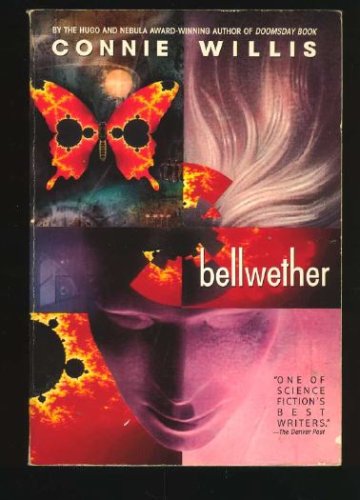
                • Cover of Bellwether
                  Bellwether

                  Connie Willis · standalone novel · 1996

                  similar byscience fictionour world+1 more

                  Bellwether is a 1996 science fiction novel by Connie Willis. It was nominated for the Nebula Award for Best Novel and won the Locus Award for Best Novella in 1997.

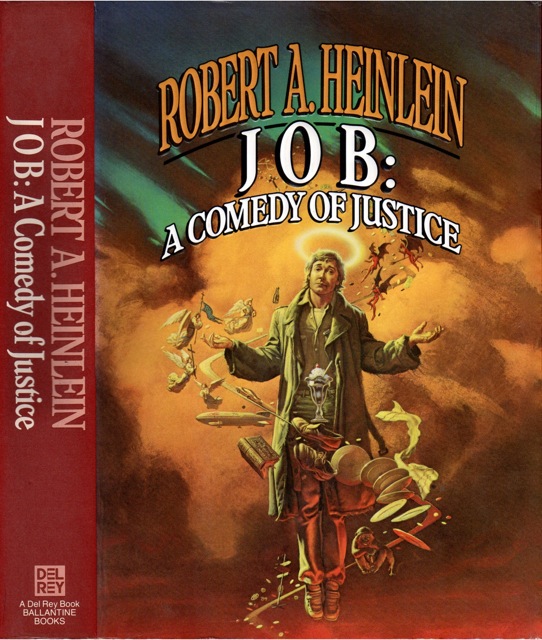
                • Cover of Job: A Comedy of Justice
                  Job: A Comedy of Justice

                  Robert A. Heinlein · standalone novel · 1984

                  similar byscience fictionfunnyour world

                  Job: A Comedy of Justice is a science fiction novel by American writer Robert A. Heinlein published in 1984. The title is a reference to the biblical Book of Job and James Branch Cabell's book Jurgen, A Comedy of Justice. It won the Locus Award for Best Fantasy Novel in 1985 and was nominated for the Nebula Award for Best Novel in 1984, and the Hugo Award for Best Novel in 1985.

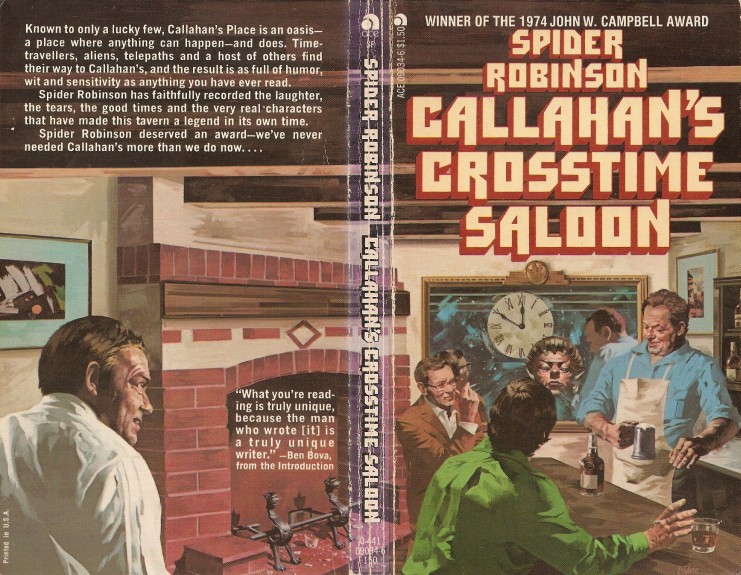
                • Cover of Callahan
                  Callahan

                  series · 33 books · 1973

                  similar byscience fiction+2 more

                  Spider Robinson's Callahan series centers on Callahan's Place, a bar run by Mike Callahan where the regulars - among them a talking dog, stranded aliens, time travelers, an ethical vampire, and Irish mythological beings - trade shaggy-dog puns and help each other through crises both cosmic and personal. Narrated largely by patron Jake Stonebender, the series runs from the original 1977 story collection through further novels and a later spinoff strand centered on Lady Sally McGee's establishment, continuing into the 2000s. It reads as a loosely connected sequence of tall tales more than a single continuous plot.

                • Cover of Freakn' Shifters
                  Freakn' Shifters

                  series · 7 books · 2011

                  similar byour world+1 more

                • Cover of The Caretaker Trilogy
                  The Caretaker Trilogy

                  series · 3 books · 2006

                  similar byscience fictionour world+1 more

                  The Caretaker Trilogy is a series of science fiction thrillers with an ecological theme, written for young adults by David Klass. The first book in the series, Firestorm (2006), was the first book ever endorsed by Greenpeace and was praised by critics for its combination of entertainment value and environmental message, garnering an American Library Association (ALA) Best Book citation, a starred review from Publishers Weekly, and a favorable review by the New York Times Book Review. The story focuses on Jack Danielson, a teenager sent back from the future to save the world's oceans. Whirlwind, the second book in the Caretaker Trilogy, tells the story of Jack's efforts to save the Amazon rainforest; published in March 2008 by Farrar, Straus and Giroux. The third book in the trilogy is Timelock, published in 2009.

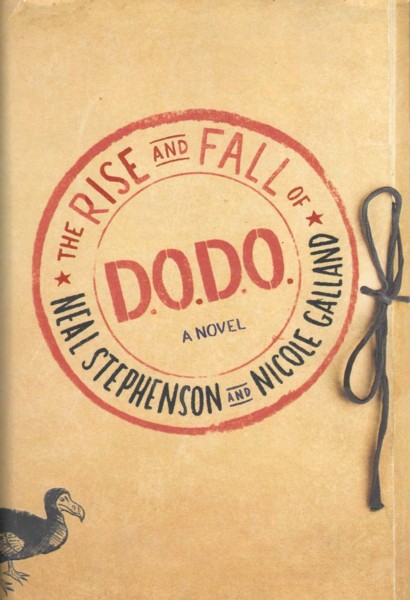
                • Cover of D. O. D. O. (Department of Diachronic Operations)
                  D. O. D. O. (Department of Diachronic Operations)

                  series · 2 books · 2017

                  similar byscience fictionour world+1 more

                  Neal Stephenson and Nicole Galland's D.O.D.O. novels center on the Department of Diachronic Operations, a covert U.S. government agency that discovers magic vanished from the world in the nineteenth century and sets out to use time travel to bring it back. The Rise and Fall of D.O.D.O. (2017) is followed by Master of the Revels, continuing the pair's earlier collaboration on The Mongoliad.

                • Cover of Martians, Go Home
                  Martians, Go Home

                  Fredric Brown · standalone novel · 1955

                  similar byscience fictionfunnyour world

                  Martians, Go Home is a science fiction comic novel by American writer Fredric Brown, published in the magazine Astounding Science Fiction in September 1954 and later by E. P. Dutton in 1955. The novel concerns a writer who witnesses an alien invasion of Earth by boorish little green men from Mars.