More like Supermen
anchored on:science fictionartificial intelligencepsychic powersour worldnear futurereflective+1 more
but
- Stranger in a Strange Land
Robert A. Heinleinstandalone novel1961
similar byscience fictionreflectivenear futureour worldchallengingpsychic powersidentity
Stranger in a Strange Land is a 1961 science fiction novel by the American author Robert A. Heinlein. It tells the story of Valentine Michael Smith, a human who comes to Earth in early adulthood after being born on the planet Mars and raised by Martians, and explores his interaction with and eventual transformation of Terran culture.
- Childhood's End
Arthur C. Clarkestandalone novel1953
similar byscience fictionreflectiveour worldnear futureidentity+1 more
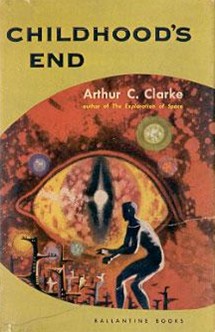
Childhood's End is a 1953 science fiction novel by the British author Arthur C. Clarke. The story follows a peaceful alien invasion of Earth by mysterious Overlords, whose arrival begins decades of apparent utopia under indirect alien rule, at the cost of human identity and culture.
- I Will Fear No Evil
Robert A. Heinleinstandalone novel1970
similar byscience fictionreflectiveour worldnear futureimmortalityidentity
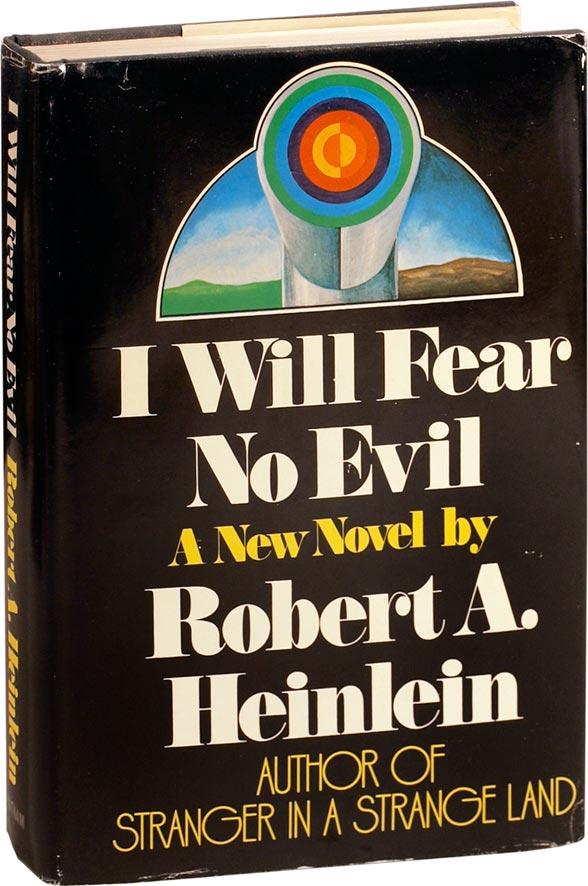
I Will Fear No Evil is a science fiction novel by American writer Robert A. Heinlein, originally serialised in Galaxy and published in hardcover in 1970. The title is taken from Psalm 23:4.
- More Than Human
Theodore Sturgeonstandalone novel1953
similar byscience fictionreflectiveour worldpsychic powersshort story cycleidentity
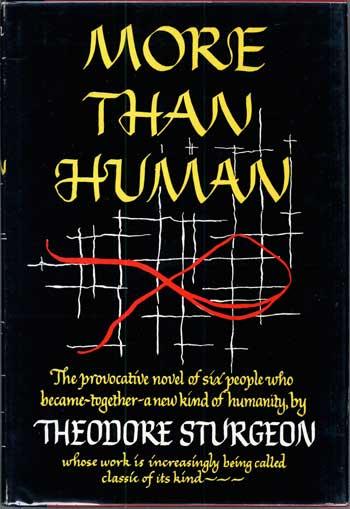
More Than Human is a 1953 science fiction fix-up novel by American writer Theodore Sturgeon. It is a revision and expansion of his 1952 novella Baby Is Three, which is bracketed by two additional parts written for the novel, "The Fabulous Idiot" and "Morality". It won the 1954 International Fantasy Award, which was also given to works in science fiction. It was additionally nominated in 2004 for a "Retro Hugo" award for the year 1954. Science fiction critic and editor David Pringle included it in his book Science Fiction: The 100 Best Novels.
- Time Is the Simplest Thing
Clifford D. Simakstandalone novel1961
similar byscience fictionreflectiveour worldnear futurepsychic powers+1 more
Time Is the Simplest Thing is a science fiction novel by American writer Clifford D. Simak, first published in 1961. The story combines paranormal abilities with themes of space and time travel. The underlying theme is intolerance of ordinary people towards those with unusual abilities.
- Beyond This Horizon
Robert A. Heinleinstandalone novel1948
similar byscience fictionreflectiveour worldgenetic engineering+3 more
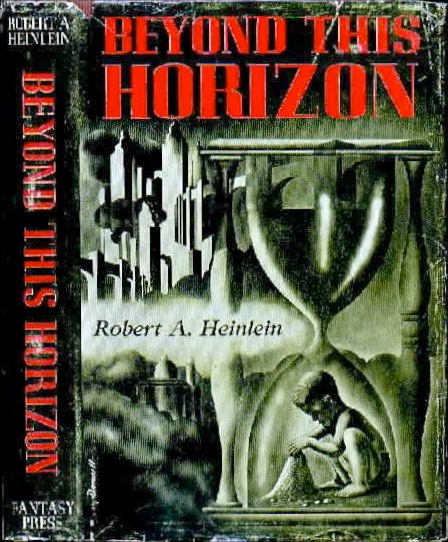
From the front flap of a 2001 Baen reprint: "Utopia has been achieved. For centuries, disease, hunger, poverty, and war have been things found only in the history tapes. And applied genetics has given men and women the bodies of athletes and a lifespan of over a century. They should all have been very happy... But Hamilton Felix is bored. And he is the culmination of a star line, each of his last thirty ancestors chosen for superior genes. Hamilton is, as far as genetics can produce one, the ultimate man. And this ultimate man can see no reason why the human race should survive, and has no intention of continuing the pointless comedy. However, Hamilton's life is about to become less boring. A secret cabal of revolutionaries who find utopia not just boring, but desperately in need of leaders who know just What Needs to be Done, are planning to revolt and put themselves in charge. Knowing of Hamilton's disenchantment with the modern world, they have recruited him to join their Glorious Revolution. Big mistake! The revolutionaries are about to find out that recruiting a superman was definitely not a good idea..."
- Void Star
Zachary Masonstandalone novel2017
similar byscience fictionreflectiveour worldnear futurechallengingartificial intelligenceimmortalityidentity
Void Star is a 2017 near-future science fiction novel by American writer Zachary Mason. It is his second novel, published after The Lost Books of the Odyssey. Set in a near-future San Francisco, the book explores themes of artificial intelligence, philosophy, linguistics and immortality.
- The Dream Master
Roger Zelaznystandalone novel1966
similar byscience fictionour worldnear futurepsychic powersidentity+1 more
The Dream Master (1966) is a science fiction novel by American writer Roger Zelazny, based on the novella He Who Shapes. Zelazny's original title was The Ides of Octember. He Who Shapes won the 1965 Nebula Award for Best Novella.
- A Clockwork Orange
series4 books1962
completed
similar byscience fictionour worldnear futurechallenging+1 more
Anthony Burgess's 1962 novel is narrated by Alex, a teenage gang leader in a near-future Britain gripped by a youth subculture of extreme violence, recounting his crimes in Nadsat, an invented slang blending English with Russian-derived words. After his crimes catch up with him, Alex is made the subject of a controversial state program meant to forcibly reform his behavior, and the novel uses his ordeal to question whether imposed goodness is worth the loss of free will. It is a standalone novel.
- Klara and the Sun
Kazuo Ishigurostandalone novel2021
similar byscience fictionreflectiveour worldnear futureartificial intelligence
Klara and the Sun is the eighth novel by the Japanese-British writer Kazuo Ishiguro, published on 2 March 2021. It is a dystopian science fiction story.
- The Speed of Dark
Elizabeth Moonstandalone novel2002
similar byscience fictionreflectiveour worldnear futuregenetic engineeringidentity
From the Penguin Random House website In the near future, disease will be a condition of the past. Most genetic defects will be removed at birth; the remaining during infancy. Lou Arrendale, a high-functioning autistic adult, is a member of the lost generation, born at the wrong time to reap the rewards of medical science. He lives a low-key, independent life. But then he is offered a chance to try a brand-new experimental "cure" for his condition. With this treatment Lou would think and act and be just like everyone else. But if he was suddenly free of autism, would he still be himself? Would he still love the same classical music — with its complications and resolutions? Would he still see the same colors and patterns in the world—shades and hues that others cannot see? Most important, would he still love Marjory, a woman who may never be able to reciprocate his feelings? Now Lou must decide if he should submit to a surgery that might completely change the way he views the world ... and the very essence of who he is.
- Blood Music
Greg Bearstandalone novel1985
similar byscience fictionour worldnear futuregenetic engineering+2 more
Blood Music is a 1985 science fiction novel by American writer Greg Bear. It is an expanded version of a short story of the same title, originally published in the June 1983 issue of Analog and the winner of both the 1983 Nebula and 1984 Hugo awards for Best Novelette. The novel won the 1986 Prix Apollo Award, given to the best science fiction novel published in France during the preceding year, under the title La Musique du sang.
- We Can Build You
Philip K. Dickstandalone novel1972
similar byscience fictionreflectiveour worldnear futureidentity
We Can Build You is a 1972 science fiction novel by American writer Philip K. Dick. Written in 1962 as The First in Our Family, it remained unpublished until appearing in serial form as A. Lincoln, Simulacrum in the November 1969 and January 1970 issues of Amazing Stories magazine, re-titled by editor Ted White. The novel was issued as a mass market paperback original by DAW Books in 1972, its final title provided by publisher Donald A. Wollheim. Its first hardcover edition was published in Italy in 1976, and Vintage issued a trade paperback in 1994.
- The Collected Stories of Philip K. Dick
series11 books1987
completed
similar byscience fictionour worldshort story cycleidentity+4 more
The Collected Stories of Philip K. Dick is a collection of 118 science fiction stories by American writer Philip K. Dick. It was first published by Underwood-Miller in 1987 as a five volume set. See Philip K. Dick bibliography for information about the mass market reprints.
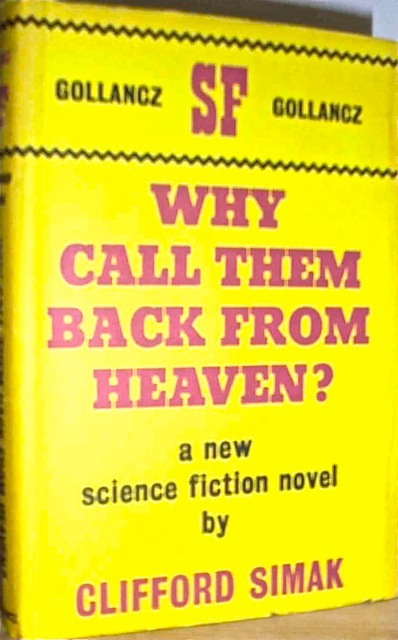
- Why Call Them Back from Heaven?
Clifford D. Simakstandalone novel1967
similar byscience fictionreflectiveour worldnear futureimmortality
Why Call them Back From Heaven? is a 1967 science fiction novel by American writer Clifford D. Simak. It was the initial volume in the Ace Science Fiction Specials line.
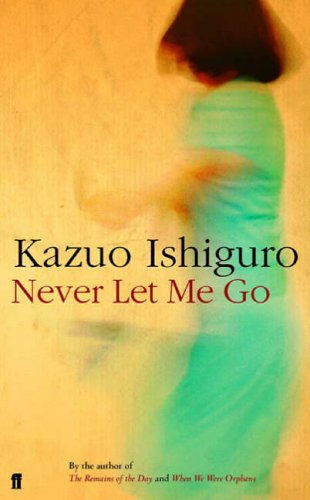
- Never Let Me Go
Kazuo Ishigurostandalone novel2005
similar byscience fictionreflectiveour worldnear futureidentity
Never Let Me Go is a 2005 science fiction novel by the British author Kazuo Ishiguro. It was shortlisted for the 2005 Man Booker Prize, for the 2006 Arthur C. Clarke Award and the 2005 National Book Critics Circle Award. Time magazine named it the best novel of 2005. It included the novel in its '100 Best English-language novels published since 1923—the beginning of TIME'. It also received an ALA Alex Award in 2006. A film adaptation directed by Mark Romanek was released in 2010.
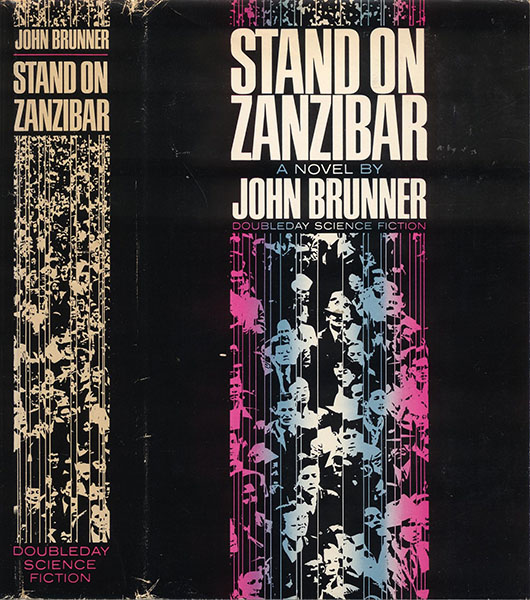
- Stand on Zanzibar
John Brunnerstandalone novel1968
similar byscience fictionour worldnear futurechallenginggenetic engineering
Stand on Zanzibar is a dystopian New Wave science fiction novel written by John Brunner and first in part published in New Worlds magazine in 1967 and in book form in 1968. The book won a Hugo Award for Best Novel at the 27th World Science Fiction Convention in 1969, as well as the 1969 BSFA Award and the 1973 Prix Tour-Apollo Award.
- Genesis
Bernard Beckettstandalone novel2006
similar byscience fictionreflectivenear futurechallengingartificial intelligenceidentity
Genesis (2006) is a philosophical science fiction novel by New Zealand author Bernard Beckett. It won the 2007 Esther Glen Award for children's literature, and the 2007 New Zealand Post Book Awards for Children and Young Adults. As of 2008 it has been published in 22 countries.
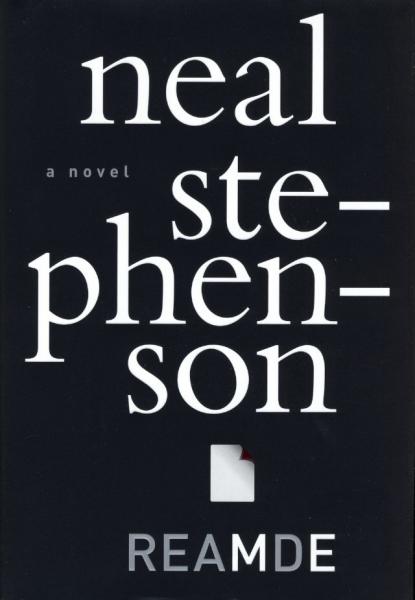
- Richard Forthrast
series2 books2011
similar byscience fictionour world+5 more
Neal Stephenson's Richard 'Dodge' Forthrast novels open with Reamde, a globe-spanning thriller that starts when ransomware inside an MMORPG economy pulls Richard's extended family into a real-world hostage crisis involving hackers, jihadists and Russian mobsters. The sequel Fall; or, Dodge in Hell shifts registers entirely, following Richard's digitally preserved mind after death into an afterlife simulation built from his scanned brain. The two books share a protagonist and family but differ sharply in genre and scale.
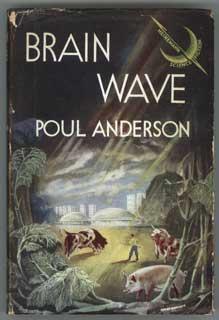
- Brain Wave
Poul Andersonstandalone novel1954
similar byscience fictionreflectiveour worldnear future
Brain Wave is a science fiction novel by American writer Poul Anderson, first published in serial form in Space Science Fiction in 1953, and then as a novel in 1954. Anderson had said that he could consider it one of his top five books. This is one of many science fiction works written at this time on the theme of heightened intelligence.
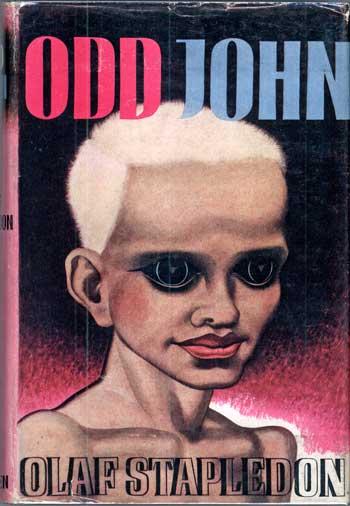
- Odd John
Olaf Stapledonstandalone novel1935
similar byscience fictionreflectiveour worldchallenginggenetic engineering+1 more
Odd John: A Story Between Jest and Earnest is a 1935 science fiction novel by the British author Olaf Stapledon. The novel explores the theme of the Übermensch (superman) in the character of John Wainwright, whose supernormal human mentality inevitably leads to conflict with normal human society and to the destruction of the utopian colony founded by John and other superhumans.
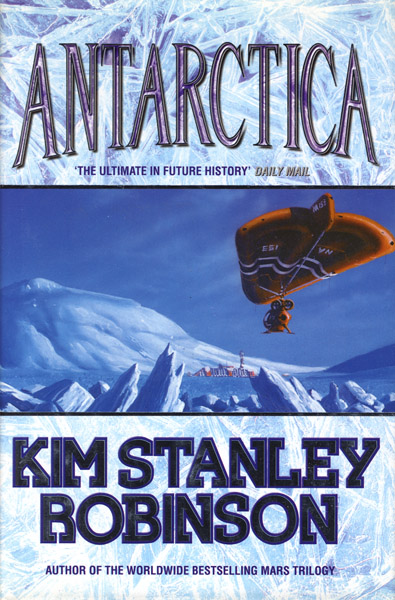
- Antarctica
Kim Stanley Robinsonstandalone novel1997
similar byscience fictionreflectiveour worldnear future
Antarctica (1997) is a science fiction novel by American writer Kim Stanley Robinson. It deals with a variety of characters living at or visiting an Antarctic research station. The novel incorporates many of Robinson's frequent themes, including scientific process and the importance of environmental protection.
- The Light of Other Days
Arthur C. Clarke & Stephen Baxterstandalone novel2000
similar byscience fictionour worldnear futurechallenging+2 more
An industrialist devises a technique to use tiny wormholes as light pipes to enable viewing of any event anywhere; and subsequently it becomes possible to use them to view any event in the past as well. The effects on society are enormous.
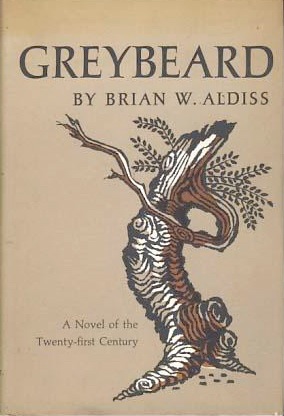
- Greybeard
Brian W. Aldissstandalone novel1964
similar byscience fictionreflectiveour worldnear future
Long after a catastrophe that has sterilized humans and most other mammals, the 54-year-old protagonists—Greybeard and Martha—take a tour of entropic England. In scattered self contained communities only the old survive, while outside these enclaves nature comes back into its own, peopling the land with new animal life.