Loreful
HomeDiscover
Search series, authors…⌘K
Loreful

Reading orders for SF/F series and shared universes — with your place kept in every one.

Explore

UniversesSeriesWorksAuthorsAtlas

Help

FAQAboutSite map

Account & legal

Sign inCreate accountPrivacyTerms

Data

Built on ISFDB, Wikipedia, Wikidata and Open Library. Curated reading orders carry their reasoning on the page; the rest follow publication order. Data sources & licenses

© Loreful · data: ISFDB · CC BY

More like Supportive Relationships

but

Mood

The mood the book leaves you in.

  • The reading experience is propelled by journeys, exploration, and physical risk; excitement and forward momentum dominate over dread or introspection.
  • Joy and loss are deliberately mixed; the resolution grants characters something real while taking something else away, leaving warmth and sorrow together.
  • The book demands work from the reader — dense prose, difficult structure, unfamiliar ideas, or morally uncomfortable material — as part of its intended effect.
  • Grim events, cruelty, or despair dominate the atmosphere, and the book does not soften them with comfort or comic relief.
  • The atmosphere is quietly unsettling — wrongness, unease, and the uncanny pervade the book without necessarily escalating into overt horror.
  • The book is built to move the reader; character feeling is foregrounded and major scenes aim at a strong emotional response.
  • Humor is a primary aim and the prose plays for laughs — comic situations, wit, or dialogue produce sustained comedy, not occasional levity.
  • The book insists that things can improve; effort and decency are shown to matter, and the arc bends toward better outcomes even through hardship.
  • The book teaches as it goes — real facts, history, science, or craft are conveyed in enough depth that learning is part of the reading experience.
  • The overall register is cheerful and easygoing; stakes are kept gentle and the book avoids dwelling on pain or dread.
  • Withheld information drives the experience; the book sustains enigmas and secrets the reader wants resolved, whatever its genre.
  • The book is contemplative and inward-looking, giving more weight to thought, memory, and meaning than to external events.
  • The book works as comfort reading — low tension, a soothing pace, and an atmosphere the reader can unwind in.
  • Grief, loss, or melancholy set the dominant register, and the book lets sorrow stand rather than resolving it into comfort.
  • Sustained suspense is the point; the book keeps the reader braced for what happens next through danger, pressure, or impending revelation.
  • Playful invention and charm define the register — fanciful conceits, light absurdity, and a narration that delights in its own oddity.

About

What the story runs on.

  • Stories about minds with paranormal abilities — telepathy, telekinesis, precognition, empathy — and how societies handle those who have them.
  • Stories centered on vampires — blood-drinking undead — whether as predators, love interests, or protagonists.
  • Stories about beings who change form at will — skinwalkers, selkies, and other shape-changers beyond the werewolf.
  • Stories centered on witches and the practice of witchcraft — covens, hedge magic, familiars, and the witch's place in her community.
  • Stories in which demons or devils — infernal beings, their bargains, possessions, and hierarchies — drive the plot.
  • Stories in which angels or other celestial beings act in the world, from guardians to warring heavenly hosts.
  • Stories about the fae — fairies and the courts, bargains, and dangerous rules of faerie.
  • Stories of lovers kept apart by law, family, faith, or station, where the obstacle to love is the plot.
  • Stories of growing up — a young protagonist crossing from childhood into adult knowledge and responsibility.
  • Stories about who a character truly is — self-discovery, doubled lives, and the search for a self.
  • Stories in which a buried family truth — hidden parentage, crimes, or shames — surfaces and reorders the present.
  • Stories organized around investigating a killing — the case, the clues, and the pursuit of the killer, in any genre's clothing.

Shelf

Where it sits in the library.

    • Fiction built on magic or other supernatural elements that have no scientific explanation.
    • Secondary-world fantasy at large scale, where the fate of nations or the world turns on the protagonists' struggle.
    • Fantasy set in a recognizably modern city or contemporary world where the supernatural intrudes on everyday life.
    • Fantasy that blends in horror's atmosphere and imagery, keeping a fantastical frame around grim or frightening material.
    • Action-driven fantasy following warriors or rogues with personal stakes against sorcerous threats, rather than world-spanning conflicts.
    • Fantasy set in a real historical period or a close analogue of one, with magic woven into the era.
    • Fantasy in which protagonists cross from the ordinary world into another world through a portal or similar passage.
    • Fiction that retells or reworks a traditional fairy tale in a new form or setting.
    • Fantasy drawing directly on myths, legends, and folklore, retelling them or building on their figures and logic.
    • Fantasy of ghosts, vampires, shapeshifters, psychics, and similar phenomena, usually set in an otherwise ordinary world.
    • Fiction mixing science-fictional trappings with overtly magical or impossible elements in one setting.
    • Low-stakes fantasy emphasizing comfort, community, and everyday pleasures over conflict and peril.
    • Speculative fiction of pervasive moral ambiguity, violence, and cynicism that rejects heroic conventions — fantasy and SF alike.
      • Fiction that extrapolates from science and technology — future societies, space travel, or speculative inventions — within at least nominally natural laws.
      • Science fiction of interstellar scope — starships, galactic polities, and adventure across star systems.
      • Science fiction committed to scientific rigor, where technical plausibility constrains the story.
      • Science fiction centered on armed forces and warfare, told largely from a military point of view.
      • Science fiction of networked, corporate-dominated near futures, pairing high technology with social decay.
      • Science fiction styled on nineteenth-century steam-powered technology, often in a Victorian or pseudo-Victorian setting.
      • Fiction depicting an oppressive or catastrophic society, presented as a warning.
      • Fiction set after civilization's collapse, following survivors in the ruins of the old world.
      • Fiction in which characters move between past and future, and the mechanics or consequences of that travel drive the plot.
      • Fiction exploring a world where a historical event went differently and history diverged from ours.
      • Science fiction about humanity's first encounter and communication with an alien intelligence.
      • Science fiction in which extraterrestrial forces attack or occupy Earth and humanity resists.
      • Fiction whose primary aim is to frighten or unsettle the reader through dread, menace, or the monstrous.
      • Horror of vast, indifferent, incomprehensible entities before which humanity is insignificant, in the Lovecraft tradition.
      • Horror of decaying houses, buried family secrets, and oppressive atmosphere in the Gothic literary tradition.
      • Horror centered on hauntings and the returning dead.
      • Horror located in the mind — paranoia, obsession, and unreliable perception rather than external monsters.
      • Horror built around the reanimated dead and survival amid their outbreaks.
      • Horror defined by explicit, transgressive gore that refuses to cut away from violence.
      • Speculative fiction of the strange and uncanny that resists both natural explanation and standard genre categories.
      • Fiction organized around solving a crime or puzzle, typically following an investigator toward the identification of a culprit.
      • Crime fiction of moral ambiguity, fatalism, and hard-edged style, set among the corrupt and the doomed.
      • A mystery following the realistic routines of police work — forensics, interviews, and case-building.
      • A gentle mystery with an amateur sleuth, a small community, and violence kept off the page.
      • A mystery set in a past era, where the investigation works within that period's methods and society.
      • Fast-paced fiction driven by imminent danger, pursuit, or high-stakes conspiracy, built to sustain tension.
      • A thriller of espionage — agents, tradecraft, and intelligence services in conflict.
      • A thriller centered on lawyers and the courtroom, where litigation carries the suspense.
      • A thriller driven by detailed contemporary or near-future technology, often military or scientific.
      • A thriller whose tension comes from mental states and manipulation between characters rather than external action.
      • Fiction whose central plot is a romantic relationship and its development toward an emotionally satisfying resolution.
      • Romance in which one or both partners are supernatural beings, blending fantasy elements into the love story.
      • A fantasy-romance hybrid in which the romantic arc and the fantasy plot carry equal weight.
      • Romance set in a past era, with courtship shaped by the period's society and manners.
      • Romance set in the present day, without supernatural or historical elements.
      • Fiction set in a real past period, where the historical setting materially shapes characters and events.
        • General and literary fiction emphasizing prose style, character interiority, or formal ambition over genre plot conventions.
        • Fiction in a realistic world where magical events occur and are treated as ordinary, in the tradition of Latin American literature.
        • Fiction that ridicules people, institutions, or society in order to criticize them.
        • Fiction of dreamlike, irrational imagery and logic that breaks from realistic representation.
        • Fiction that plays with narrative convention through metafiction, fragmentation, and self-reference.
        • Fiction propelled by journeys, exploration, and physical peril, where action and survival carry the plot.
        • Fiction of the American frontier West — gunmen, ranchers, and lawmen, typically in the late nineteenth century.
        • Fiction written primarily to amuse, using comedic situations, wit, or parody as its organizing principle.
          • Fiction whose world runs on explicit game mechanics — levels, stats, and skills that characters can see and exploit.
            • Fiction about costumed or superpowered heroes and their conflicts with comparable villains.

            Practical

            How long a commitment, whether it stands alone, and whether it has finished.

            Tap a chip to ask for it · tap again to rule it out · once more to clear. Numbers show what would be left.

            • Cover of Good Omens
              Good Omens

              series · 2 books · 1990

              similar by+2 more

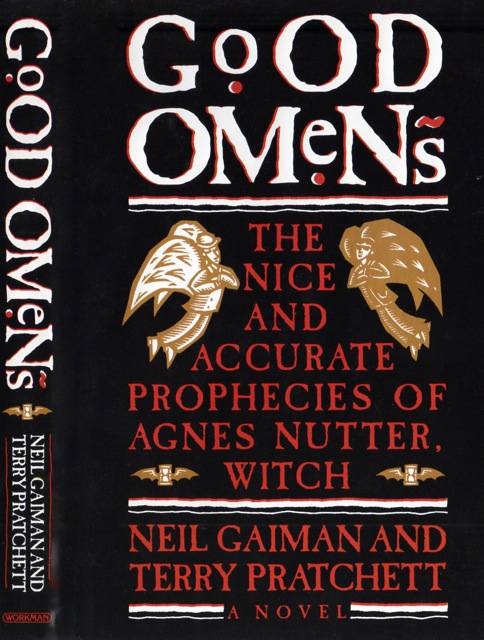
              Good Omens is Terry Pratchett and Neil Gaiman's 1990 comic fantasy novel in which an angel and a demon, both grown fond of life on Earth, try to head off an apocalypse foretold in a seventeenth-century witch's uncannily accurate prophecies, complicated by the fact that no one can find the misplaced Antichrist. Paired with it here is The Quite Nice and Fairly Accurate Good Omens: Script Book, a companion volume collecting the screenplay for the television adaptation rather than a second novel.

            • Cover of Karou
              Karou

              series · 4 books · 2011

              similar by+2 more

              Daughter of Smoke and Bone is a young-adult fantasy book series written by Laini Taylor and published by Hachette Book Group, an imprint of Little, Brown and Company. It is a complete trilogy, Daughter of Smoke and Bone being published on 27 September 2011 in the United States; Days of Blood and Starlight on 6 November 2012 in the United States; and the third book Dreams of Gods and Monsters on April 1, 2014. The books have been published in a variety of different languages.

            • Cover of The Infernal Devices
              The Infernal Devices

              series · 5 books · 2010

              part of The Mortal Instruments

              similar by+2 more

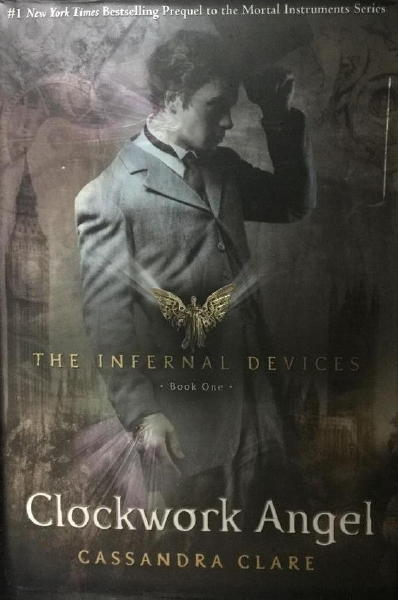
              The Infernal Devices is a trilogy by author Cassandra Clare, centring on a race called the Shadowhunters introduced in her The Mortal Instruments series. The trilogy is a prequel series to The Mortal Instruments series. Cassandra Clare has stated that the two series are able to be read in any order, but it is best to read them in publication order.

            • Cover of Dominion of the Fallen
              Dominion of the Fallen

              series · 16 books · 2015

              similar byangels+1 more

              The House of Shattered Wings opens Aliette de Bodard's Dominion of the Fallen in a Paris devastated by a magical war between rival Houses of fallen angels, its streets and ruins still haunted by the fighting. The series follows uneasy alliances within House Silverspires as its members contend with old secrets and Annamese magic traditions colliding with European angelic power politics. It continues across further novels and a number of shorter linked stories.

            • Cover of Guild Hunter
              Guild Hunter

              series · 23 books · 2009

              similar byangels+1 more

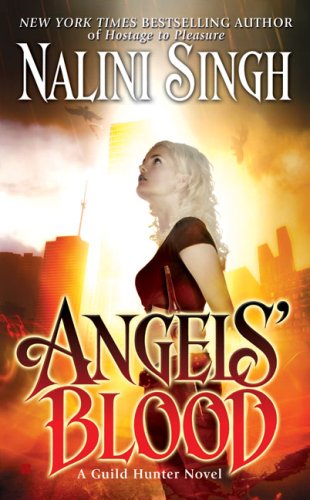
              Guild Hunter is set in a world where angels rule openly over human society, served by vampires bound to them for a century of servitude and policed in part by hunters who track down vampires who break their bonds. Nalini Singh's series follows Guild Hunter Elena Deveraux after she is drawn into the orbit of Raphael, the archangel who governs New York, in a saga that widens to follow the broader archangel-run world across many further novels.

            • Cover of Masters of Death
              Masters of Death

              Olivie Blake · standalone novel · 2023

              similar byurban fantasy+1 more

              Viola Marek is a struggling real estate agent, and a vampire. But her biggest problem currently is that the house she needs to sell is haunted. The ghost haunting the house has been murdered, and until he can solve the mystery of how he died, he refuses to move on. Fox D’Mora is a medium, and though is also most-definitely a shameless fraud, he isn’t entirely without his uses—seeing as he’s actually the godson of Death. When Viola seeks out Fox to help her with her ghost-infested mansion, he becomes inextricably involved in a quest that neither he nor Vi expects (or wants). But with the help of an unruly poltergeist, a demonic personal trainer, a sharp-voiced angel, a love-stricken reaper, and a few high-functioning creatures, Vi and Fox soon discover the difference between a mysterious lost love and an annoying dead body isn’t nearly as distinct as they thought.

            • Cover of Good Intentions
              Good Intentions

              series · 34 books · 2011

              similar byurban fantasy+1 more

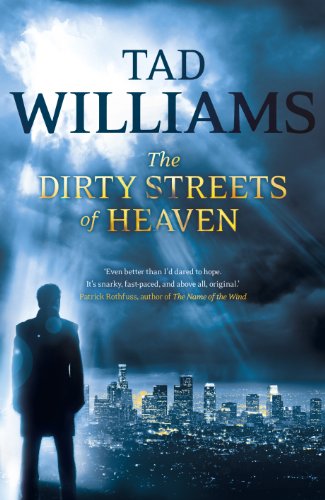
            • Cover of Bobby Dollar
              Bobby Dollar

              series · 3 books · 2012

              similar byurban fantasy+1 more

            • Cover of The Sensor
              The Sensor

              series · 10 books · 2013

              similar byurban fantasy+1 more

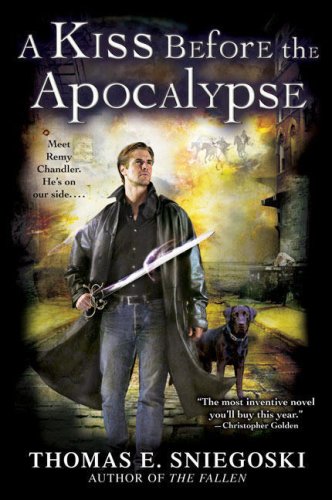
            • Cover of Remy Chandler
              Remy Chandler

              series · 9 books · 2008

              similar byurban fantasy+1 more

            • Cover of Resurrection Man universe
              Resurrection Man universe

              series · 3 books · 1995

              similar by+2 more

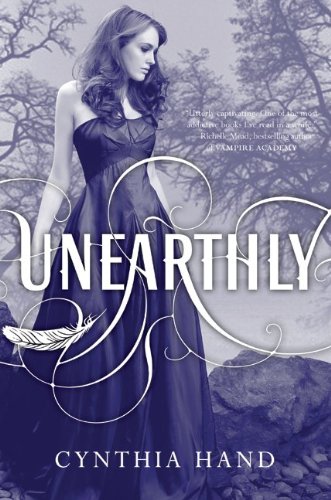
            • Cover of Unearthly
              Unearthly

              series · 4 books · 2011

              similar byangels+1 more

            • Cover of Crescent City (Sarah J. Maas)
              Crescent City (Sarah J. Maas)

              series · 3 books · 2020

              similar byurban fantasy+1 more

              Crescent City follows Bryce Quinlan, a half-Fae, half-human young woman in the magical city of Lunathion, whose life is upended by a violent murder and pulls her into an uneasy partnership with the fallen angel Hunt Athalar as they dig into a conspiracy reaching into the city's ruling powers. Sarah J. Maas set the trilogy — House of Earth and Blood, House of Sky and Breath, House of Flame and Shadow — in Midgard, a world built separately from her earlier series, with political intrigue and romance driving events as much as the mystery.

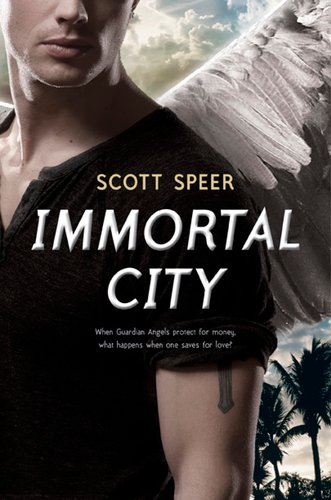
            • Cover of Immortal City
              Immortal City

              series · 3 books · 2012

              similar byangelsurban fantasy

            • Cover of The Rephaim
              The Rephaim

              series · 4 books · 2012

              similar byangels+1 more

            • Cover of Pine Cove
              Pine Cove

              series · 3 books · 1992

              similar by+2 more

              Pine Cove gathers three loosely connected comic novels — Practical Demonkeeping, The Lust Lizard of Melancholy Cove, The Stupidest Angel — that Christopher Moore set in the same fictional small town on the California coast, recycling some of the same eccentric residents even as each book follows its own standalone plot (the first centers on a drifter's demon and the reluctant wizard trying to control it). It's part of the larger shared world Moore uses across most of his comic novels, rather than a continuing story arc.

            • Cover of Celestial Blues
              Celestial Blues

              series · 3 books · 2012

              similar byurban fantasy+1 more

            • Cover of The Unnoticeables / Vicious Circuit
              The Unnoticeables / Vicious Circuit

              series · 3 books · 2015

              similar by+2 more

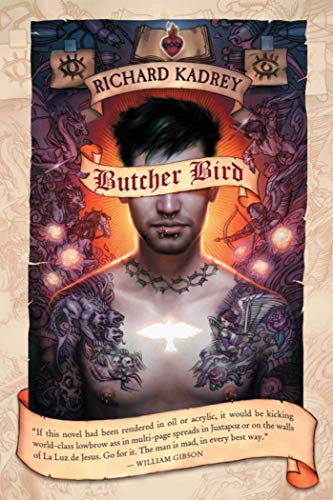
            • Cover of Butcher Bird
              Butcher Bird

              Richard Kadrey · standalone novel · 2007

              similar byangelsurban fantasy

              Spyder Lee owns a tattoo shop in San Francisco, has a favorite drinking buddy, Lulu Garou, and other friends all over town. One night a pissed-off demon tries to bite his head off and he's saved by a small blind woman with a sword. After that, Spyder's life is turned upside down. The demon infected Spyder and he can suddenly see the world as it really is: full of angels and demons and monsters and monster-hunters; a world full of black magic and mysteries. These are the Dominions, parallel worlds full of wonder, beatuy and horror. The Dominions never touch, or at least they're not supposed to. The Black Clerks, powerful beings whos job it is to keep the Dominions in balance, seem to have a new agenda. Sypder finds himself dropped into the middle of a conflict he doesn't fully understand. With the blind swordswoman who saved him, Spyder searches for a magic book.

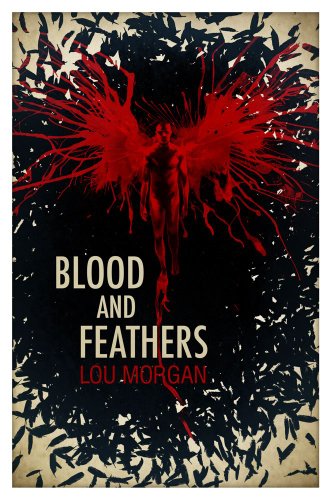
            • Cover of Blood and Feathers
              Blood and Feathers

              series · 2 books · 2012

              similar byurban fantasy+1 more

            • Cover of I Was an OP Demon Lord Before I Got Isekai'd to This Boring Corporate Job!
              I Was an OP Demon Lord Before I Got Isekai'd to This Boring Corporate Job!

              series · 3 books · 2021

              similar by+3 more

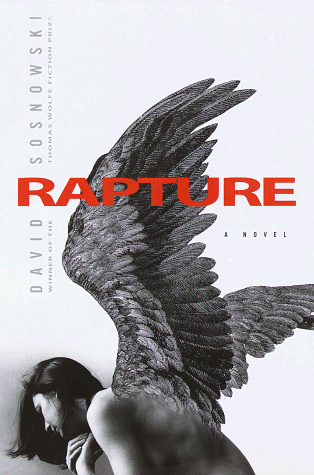
            • Cover of Rapture
              Rapture

              David Sosnowski · standalone novel · 1996

              similar byangelsurban fantasy

              Rapture is a 1996 novel by David Sosnowski. The overarching story of this book deals with the effects on society when normal people begin sprouting angelic wings. The story follows two main characters; Alexander 'Zander' Wiles is a petty crook suffering from acute agoraphobia, and Cassandra 'Cassie' O'Conner, a psychiatrist specializing in 'angels' and author of a pop-psychology book titled Angel Blues. Both live and work around Detroit, Michigan, and much of the story takes place either in Detroit or its suburbs.

            • Cover of Something More Than Night
              Something More Than Night

              Ian Tregillis · standalone novel · 2013

              similar byangels+1 more

              "A Dashiell Hammett- and Raymond Chandler-inspired murder mystery set in Thomas Aquinas's vision of Heaven ... a noir detective story starring fallen angels, the heavenly choir, nightclub stigmatics, a priest with a dirty secret, a femme fatale, and the Voice of God"--

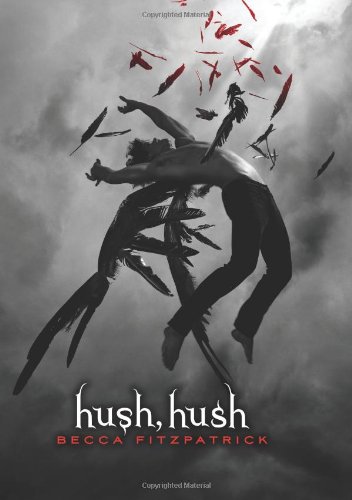
            • Cover of Hush, Hush
              Hush, Hush

              series · 5 books · 2009

              similar byangels

              The Hush, Hush quartet is a series of four novels by Becca Fitzpatrick that follow teenager Nora Grey as she falls in love with the fallen angel Patch and discovers her own angelic heritage. The first book in the series, Hush, Hush, was released on October 13, 2009 through Simon & Schuster, with the final novel in the series, Finale, releasing on October 23, 2012. The series was initially promoted as a trilogy, with later announcements stating that the series would comprise four books.