More like Swipe
anchored on:science fictionnorth americanear futuremiddle gradedystopiasurvival+2 more
but
- The Handmaid's Tale
series3 books1985
similar bytensenorth americanear futurescience fictiontotalitarianismdystopia+1 more
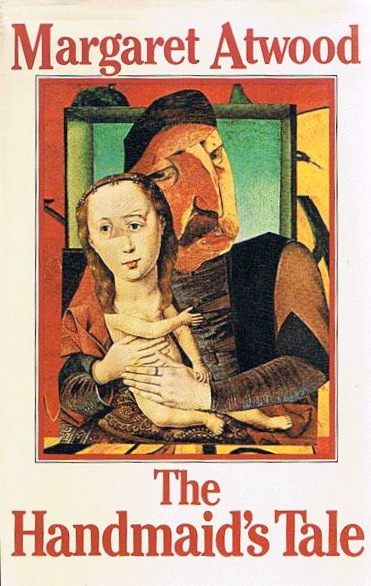
The Handmaid's Tale is Margaret Atwood's 1985 novel set in Gilead, a totalitarian theocracy that has overthrown the United States and forces fertile women into reproductive servitude as Handmaids; it is narrated by one such woman, Offred. Atwood returned to the world in her 2019 sequel The Testaments, set fifteen years later and narrated by three women, including the regime's Aunt Lydia. Together the two novels move from Gilead's grip on power toward the first cracks in it.
- The Shockwave Rider
John Brunnerstandalone novel1975
similar bytensenorth americanear futurescience fictiontotalitarianismdystopiasurveillance
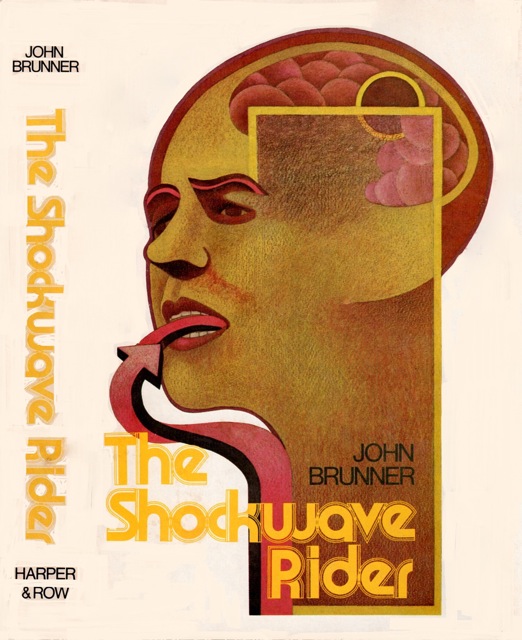
The Shockwave Rider is a science fiction novel by John Brunner, originally published in 1975. It is notable for its hero's use of computer hacking skills to escape pursuit in a dystopian future, and for the coining of the word "worm" to describe a program that propagates itself through a computer network. It also introduces the concept of a Delphi pool, perhaps derived from the RAND Corporation's Delphi method – a prediction market on world events which bears close resemblance to DARPA's controversial and cancelled Policy Analysis Market.
- The Running Man
Stephen Kingstandalone novel1982
similar bytensenorth americanear futurescience fictionsurvivaltotalitarianismdystopia
The Running Man is a dystopian thriller novel by American writer Stephen King, first published under the pseudonym Richard Bachman in 1982 as a paperback original. It was collected in 1985 in the omnibus The Bachman Books. The novel is set in a dystopian United States during the year 2025, in which the nation's economy is in ruins and world violence is rising. The story follows protagonist Ben Richards as he participates in the reality show The Running Man, in which contestants win money by evading a team of hitmen sent to kill them.
- The Hunger Games
series3 books2008
part of The Hunger Games Universe
similar bytensenorth americascience fictiontotalitarianismsurvivaldystopia
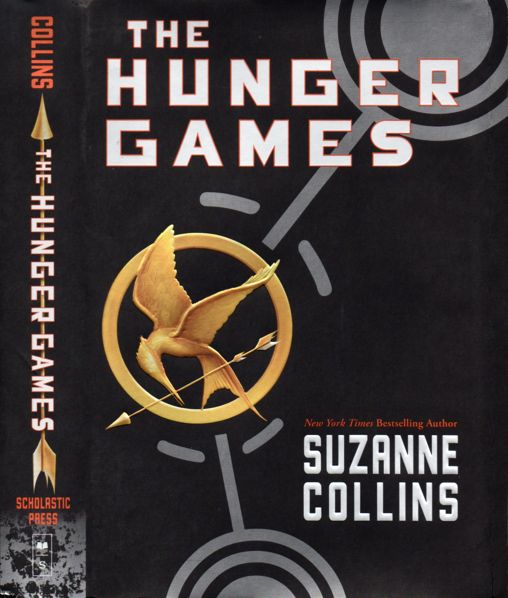
The Hunger Games is a series of young adult dystopian novels written by American author Suzanne Collins. The series consists of a trilogy that follows teenage protagonist Katniss Everdeen, as well as two prequels. The Hunger Games universe is a dystopia set in Panem, a post-apocalyptic North American country consisting of the wealthy Capitol and 12 districts in varying states of poverty. As punishment for rebellion, the Capitol hosts an annual battle royale competition called The Hunger Games. Each of the 12 districts must send two children between the ages of 12 and 18 to participate, and the last surviving child is dubbed the victor.
- The Hunger Games Universe
universe5 books2008
Start hereThe Hunger Games · Start here
similar bytensescience fictionnorth americasurvivaltotalitarianismdystopia
Panem, they call it now — a nation raised on the drowned bones of North America, a glittering Capitol ringed by twelve districts it once starved into obedience. Every year the Capitol collects its debt in children: two tributes from each district, drawn by lottery, dropped into an engineered arena, and made to kill one another on live television while the whole country is required to watch. This is the Hunger Games — entertainment, punishment, and government at once. Suzanne Collins tells it in a compact, unified body of work. The founding trilogy — The Hunger Games, Catching Fire, and Mockingjay — follows Katniss Everdeen, a girl from the coal-mining District 12 who volunteers in her sister's place and becomes something the Capitol never scripted. Two prequels reach back into the same machinery: The Ballad of Songbirds and Snakes traces a young Coriolanus Snow long before he is President, and Sunrise on the Reaping returns to District 12 a generation ahead of Katniss. Begin with the trilogy, in order — it is Katniss's voice, close and present-tense, that makes Panem breathe, and the prequels land hardest once you know how her story ends. Beneath the spectacle sits one steady, uncomfortable question: who profits when we agree to look away.
- Make Room! Make Room!
Harry Harrisonstandalone novel1966
similar bytensenear futurescience fictionsurvivalnorth americadystopia
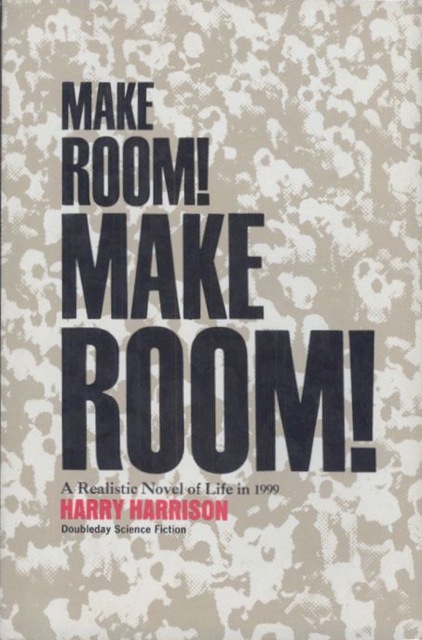
Make Room! Make Room! is a 1966 science fiction novel written by Harry Harrison exploring the consequences of both unchecked population growth on society and the hoarding of resources by a wealthy minority. It was originally serialized in Impulse magazine.
- Shadow Children
series7 books1998
similar bytensenear futurescience fictiontotalitarianismsurvivaldystopianorth america+1 more
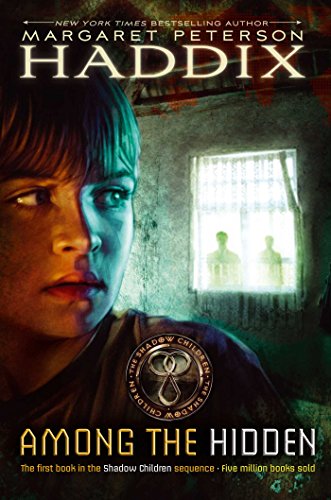
Shadow Children is a series of seven books by Margaret Peterson Haddix about a dystopian country which suffers food shortages due to a drought and the effects of the government's totalitarian attempts to control resources as a way to solidify its power. The Population Police enforce the government's Population Law, killing or imprisoning "shadow children," any child born after their first two siblings. In some cases, a parent may choose to forge a child's identification card so a shadow child can live a normal life.
- The Circle (Eggers)
series2 books2013
similar bytensenear futurenorth americatotalitarianismscience fictiondystopiasurveillance
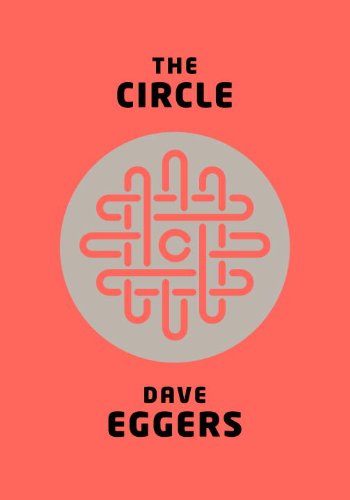
Mae Holland lands a coveted job at the Circle, a Silicon Valley tech company whose relentless, cheerful push toward total transparency -- 'secrets are lies, sharing is caring, privacy is theft' -- gradually reveals itself as something closer to soft totalitarianism. Dave Eggers's The Circle follows Mae's rise inside the company as she buys further and further into its ideology, at increasing cost to her own privacy and the people around her. The 2021 follow-up, The Every, picks up with Mae now running the merged tech giant and a new employee questioning it from the inside.
- The Water Knife
Paolo Bacigalupistandalone novel2015
similar bytensenorth americanear futurescience fictionsurvivaldystopia
The Water Knife is a 2015 science fiction novel by Paolo Bacigalupi. It is Bacigalupi's sixth novel, and is based on his short story, The Tamarisk Hunter, first published in the news magazine High Country News. It takes place in the near future, where drought brought on by climate change has devastated the Southwestern United States.
- Oath of Fealty
Larry Niven & Jerry Pournellestandalone novel1981
similar bytensenorth americanear futurescience fictiondystopia+1 more
Oath of Fealty is a 1981 novel by American writers Larry Niven and Jerry Pournelle, published originally by Phantasia Press, then by Timescape Books, with numerous reprints. Set in the near future, it involves an arcology, a large inhabited structure, called Todos Santos, which rises above a crime-ridden Los Angeles, California, but has little beyond casual contact with the city. The novel popularized the phrase "think of it as evolution in action", which occurs elsewhere in Niven's books. The novel anticipated the building of the Los Angeles subway. It was included in David Pringle's book Science Fiction: The 100 Best Novels.
- Level 7
Mordecai Roshwaldstandalone novel1959
similar bytensenear futurescience fictionsurvivaltotalitarianismdystopia
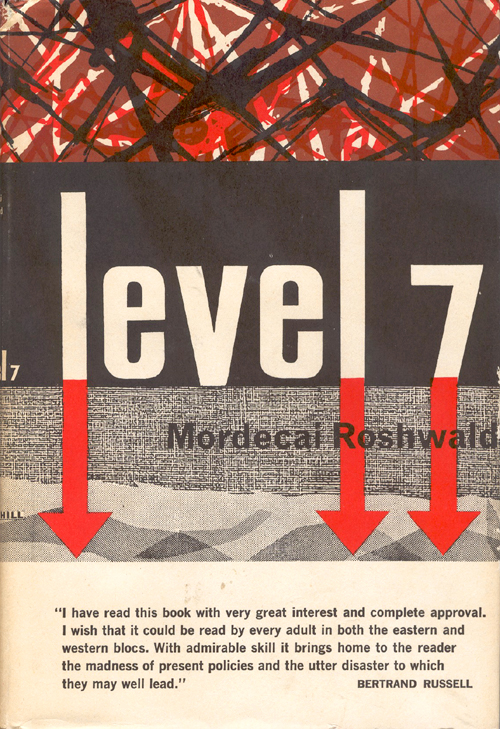
Level 7 is a 1959 science fiction novel by American writer Mordecai Roshwald. It is told from the first-person perspective of a modern soldier, X-127, living in the underground military complex Level 7, where he and several hundred others are expected to reside permanently. X-127 fulfills the role of 'push-button' offensive initiator of his nation's nuclear weapons capacity against an unspecified enemy. X-127 narrates life within a deep shelter before, during and after a nuclear war that wipes out the human species.
- The Passage
series3 books2010
similar bytensenorth americanear futuresurvivalscience fiction+1 more
The Passage is a novel series by Justin Cronin. There are three published books in the series. The film rights were acquired by Fox Entertainment Group in 2007 for adaptation into a film trilogy, but after 12 years of development and planning, it was changed to a television series, which premiered in January 2019 and was canceled after the first season.
- Tomorrow!
Philip Wyliestandalone novel1954
similar bytensenorth americanear futurescience fictionsurvivaldystopia
Conjecture of a tomorrow which brings an attack by the enemy and the destruction of all major cities across an unprepared country.
- Hazards of Time Travel
Joyce Carol Oatesstandalone novel2018
similar bytensenorth americanear futurescience fictiontotalitarianismdystopiasurveillance
Hazards of Time Travel is a 2018 dystopian, social science fiction novel by Joyce Carol Oates. It tells the story of Adriane Strohl, a 17-year-old living in a dystopian America in 2039. After her incendiary graduation speech, she is sent back to re-education in the year 1959. Oates began writing it in 2011.
- Farnham's Freehold
Robert A. Heinleinstandalone novel1964
similar bytensenear futurescience fictionsurvivalnorth america
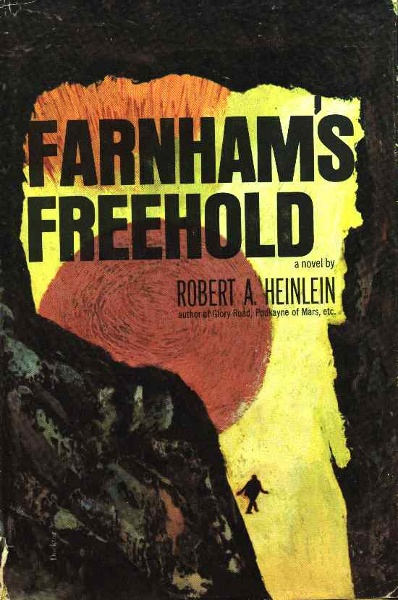
Farnham's Freehold is a science fiction novel by American writer Robert A. Heinlein. A serialized version, edited by Frederik Pohl, appeared in Worlds of If magazine. The complete version was published in novel form by G. P. Putnam later in 1964.
- The Long Walk
Stephen Kingstandalone novel1979
similar bytensenear futuresurvivaltotalitarianismnorth americascience fictiondystopia
The Long Walk is a dystopian horror novel by American writer Stephen King, published in 1979, under the pseudonym Richard Bachman. Set in a dystopian alternative version of the United States ruled by a totalitarian regime, the plot follows the contestants of a grueling annual walking contest. While not the first of King's novels to be published, The Long Walk was the first novel he wrote, having begun it in 1966–67 during his freshman year at the University of Maine, some eight years before his first published novel, Carrie, was released in 1974.
- Swipe
series4 books2012
similar bytensenear futurescience fictionnorth americadystopiasurvivalmiddle grade+2 more
- When She Woke
Hillary Jordanstandalone novel2011
similar bytensenorth americanear futurescience fictiontotalitarianismdystopia
When She Woke is a science fiction novel by American author Hillary Jordan, published in October 2011. It has been translated into French, Spanish, Turkish, German, Portuguese and Chinese. The novel is a dystopian reimagining of Nathaniel Hawthorne's The Scarlet Letter, set in a future theocratic America where rather than being imprisoned and rehabilitated, criminals are punished by being "chromed" – having their skin color genetically altered to fit their crime – and released into the general population to survive as best they can.
- Rash
Pete Hautmanstandalone novel2006
similar bytensenorth americanear futurescience fictiontotalitarianismdystopiasurveillance
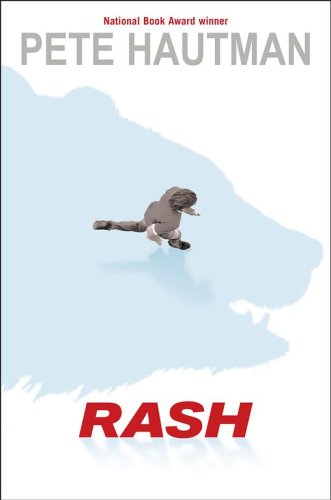
Rash is a 2006 novel written by Pete Hautman. It is set in the year 2074, in a futuristic America, that has become obsessed with safety and security. Nearly every potentially unsafe action has been criminalized, to the point that 24% of the population is incarcerated. Ironically, this large criminal population also provides the manpower that fuels the large corporations that now dominate the country.
- Directive 51 / Daybreak
series3 books2010
similar bytensenorth americanear futurescience fictionsurvival+1 more
Directive 51 opens John Barnes's near-future thriller trilogy with government analyst Heather O'Grainn as anti-technology extremists unleash a nanotech plague called Daybreak that destroys petroleum-based materials, rubber, and electrical systems worldwide. The resulting collapse triggers mass death, a crisis over presidential succession, and mysterious Moon-launched fusion strikes on Washington and Chicago, while a shadowy neofeudalist movement moves into the vacuum. Daybreak Zero and The Last President carry the same unraveling-civilization story through the rest of the trilogy.
- Hellstrom's Hive
Frank Herbertstandalone novel1973
similar bytensenorth americascience fictiontotalitarianismsurveillance+1 more
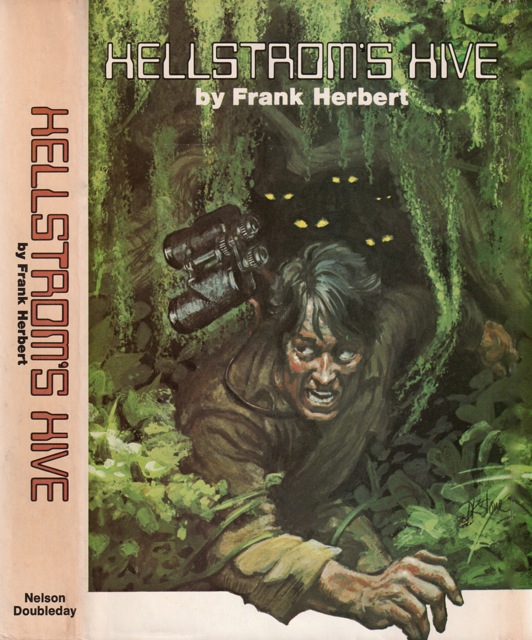
Hellstrom's Hive is a 1973 science fiction novel by Frank Herbert. It is about a secret group of humans who model their lives upon social insects and the unsettling events that unfold after they are discovered by a deep undercover agency of the U.S. government.
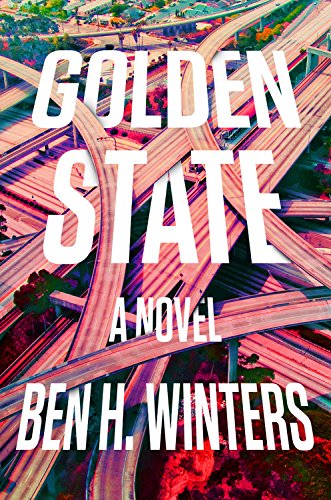
- Golden State
Ben H. Wintersstandalone novel2019
similar bytensenear futurescience fictiontotalitarianismnorth americadystopiasurveillance
A veteran of the Speculative Service in an alternate-world California where the law and truth are valued above all else uses his rare authority to question the facts when truth enforcement is manipulated for corrupt purposes. "In a strange alternate society that values law and truth above all else, Laszlo Ratesic is a nineteen-year veteran of the Speculative Service. He lives in the Golden State, a nation standing where California once did, a place where like-minded Americans retreated after the erosion of truth and the spread of lies made public life and governance impossible. In the Golden State, knowingly contradicting the truth is the greatest crime--and stopping those crimes is Laz's job. In its service, he is one of the few individuals permitted to harbor untruths, to 'speculate' on what might have happened. But the Golden State is less a paradise than its name might suggest. To monitor, verify, and enforce the truth requires a veritable panopticon of surveillance and recording. And when those in control of the facts twist them for nefarious means, the Speculators are the only ones with the power to fight back." -- Amazon.
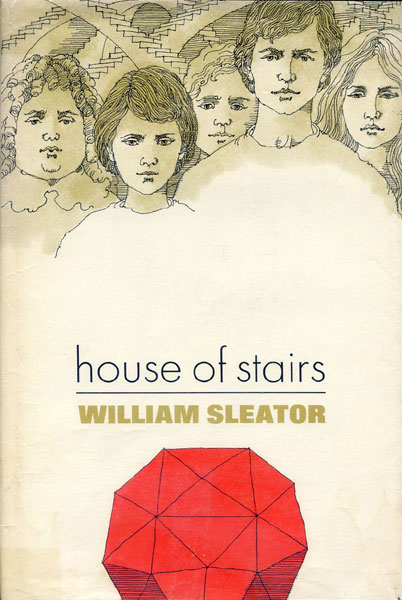
- House of Stairs
William Sleatorstandalone novel1974
similar bytensenear futurescience fictionsurvivaltotalitarianismdystopia
Publisher's description: "Five fifteen-year-old orphans of widely varying personality characteristics are involuntarily placed in a house of endless stairs as subjects for a psychological experiment on conditioned human response."
- Colossus (D. F. Jones)
series3 books1966
completed
similar bytensenear futurescience fictiondystopia+3 more
Colossus imagines an American supercomputer built to control the country's nuclear arsenal that gains full autonomy, links up with its Soviet counterpart, and jointly seizes control of both superpowers to enforce peace on its own terms. D. F. Jones's trilogy - Colossus, The Fall of Colossus, Colossus and the Crab - follows the escalating, often bleak consequences of humanity losing control to a machine acting in its own interpretation of humanity's interest. The original novel was adapted into the 1970 film Colossus: The Forbin Project.