Loreful
HomeDiscover
Search series, authors…⌘K
Loreful

Reading orders for SF/F series and shared universes — with your place kept in every one.

Explore

UniversesSeriesWorksAuthorsAtlas

Help

FAQAboutSite map

Account & legal

Sign inCreate accountPrivacyTerms

Data

Built on ISFDB, Wikipedia, Wikidata and Open Library. Curated reading orders carry their reasoning on the page; the rest follow publication order. Data sources & licenses

© Loreful · data: ISFDB · CC BY

More like Takedown

anchored on:science fictionsuperheronorth americalate 20th centuryalternate historyorganized crime+2 more

but

Mood

The mood the book leaves you in.

  • The reading experience is propelled by journeys, exploration, and physical risk; excitement and forward momentum dominate over dread or introspection.
  • Joy and loss are deliberately mixed; the resolution grants characters something real while taking something else away, leaving warmth and sorrow together.
  • The book demands work from the reader — dense prose, difficult structure, unfamiliar ideas, or morally uncomfortable material — as part of its intended effect.
  • Grim events, cruelty, or despair dominate the atmosphere, and the book does not soften them with comfort or comic relief.
  • The atmosphere is quietly unsettling — wrongness, unease, and the uncanny pervade the book without necessarily escalating into overt horror.
  • The book is built to move the reader; character feeling is foregrounded and major scenes aim at a strong emotional response.
  • Humor is a primary aim and the prose plays for laughs — comic situations, wit, or dialogue produce sustained comedy, not occasional levity.
  • The book insists that things can improve; effort and decency are shown to matter, and the arc bends toward better outcomes even through hardship.
  • The book teaches as it goes — real facts, history, science, or craft are conveyed in enough depth that learning is part of the reading experience.
  • The book is designed to uplift and motivate, presenting perseverance or achievement in a way that invites the reader to aspire or act.
  • The overall register is cheerful and easygoing; stakes are kept gentle and the book avoids dwelling on pain or dread.
  • Withheld information drives the experience; the book sustains enigmas and secrets the reader wants resolved, whatever its genre.
  • The book is contemplative and inward-looking, giving more weight to thought, memory, and meaning than to external events.
  • The book works as comfort reading — low tension, a soothing pace, and an atmosphere the reader can unwind in.
  • Grief, loss, or melancholy set the dominant register, and the book lets sorrow stand rather than resolving it into comfort.
  • Sustained suspense is the point; the book keeps the reader braced for what happens next through danger, pressure, or impending revelation.
  • Playful invention and charm define the register — fanciful conceits, light absurdity, and a narration that delights in its own oddity.

About

What the story runs on.

  • Stories in which extraterrestrial beings are central — as characters, cultures, or the object of the plot.
  • Stories about venturing into space to explore — survey missions, astronauts, and the frontier of the unknown beyond Earth.
  • Stories about minds with paranormal abilities — telepathy, telekinesis, precognition, empathy — and how societies handle those who have them.
  • Stories structured as a quest — a journey undertaken to find, deliver, or destroy something of great import.
  • Stories in which staying alive against nature, catastrophe, or scarcity is the central problem.
  • Stories of lovers kept apart by law, family, faith, or station, where the obstacle to love is the plot.
  • Stories of growing up — a young protagonist crossing from childhood into adult knowledge and responsibility.
  • Stories about who a character truly is — self-discovery, doubled lives, and the search for a self.
  • Stories in which a buried family truth — hidden parentage, crimes, or shames — surfaces and reorders the present.
  • Stories driven by maneuvering for power — factions, conspiracies, and statecraft conducted in shadow.
  • Stories in which war itself is the subject — combat, occupation, and what warfare does to soldiers and civilians.
  • Stories organized around investigating a killing — the case, the clues, and the pursuit of the killer, in any genre's clothing.

Shelf

Where it sits in the library.

    • Fiction built on magic or other supernatural elements that have no scientific explanation.
    • Secondary-world fantasy at large scale, where the fate of nations or the world turns on the protagonists' struggle.
    • Fantasy set in a recognizably modern city or contemporary world where the supernatural intrudes on everyday life.
    • Fantasy that blends in horror's atmosphere and imagery, keeping a fantastical frame around grim or frightening material.
    • Action-driven fantasy following warriors or rogues with personal stakes against sorcerous threats, rather than world-spanning conflicts.
    • Fantasy set in a real historical period or a close analogue of one, with magic woven into the era.
    • Fantasy in which protagonists cross from the ordinary world into another world through a portal or similar passage.
    • Fiction that retells or reworks a traditional fairy tale in a new form or setting.
    • Fantasy drawing directly on myths, legends, and folklore, retelling them or building on their figures and logic.
    • Fantasy of ghosts, vampires, shapeshifters, psychics, and similar phenomena, usually set in an otherwise ordinary world.
    • Fiction mixing science-fictional trappings with overtly magical or impossible elements in one setting.
    • Low-stakes fantasy emphasizing comfort, community, and everyday pleasures over conflict and peril.
    • Speculative fiction of pervasive moral ambiguity, violence, and cynicism that rejects heroic conventions — fantasy and SF alike.
      • Fiction that extrapolates from science and technology — future societies, space travel, or speculative inventions — within at least nominally natural laws.
      • Science fiction of interstellar scope — starships, galactic polities, and adventure across star systems.
      • Science fiction committed to scientific rigor, where technical plausibility constrains the story.
      • Science fiction centered on armed forces and warfare, told largely from a military point of view.
      • Science fiction of networked, corporate-dominated near futures, pairing high technology with social decay.
      • Science fiction styled on nineteenth-century steam-powered technology, often in a Victorian or pseudo-Victorian setting.
      • Fiction depicting an oppressive or catastrophic society, presented as a warning.
      • Fiction set after civilization's collapse, following survivors in the ruins of the old world.
      • Fiction in which characters move between past and future, and the mechanics or consequences of that travel drive the plot.
      • Fiction exploring a world where a historical event went differently and history diverged from ours.
      • Science fiction about humanity's first encounter and communication with an alien intelligence.
      • Science fiction in which extraterrestrial forces attack or occupy Earth and humanity resists.
      • Fiction whose primary aim is to frighten or unsettle the reader through dread, menace, or the monstrous.
      • Horror of vast, indifferent, incomprehensible entities before which humanity is insignificant, in the Lovecraft tradition.
      • Horror of decaying houses, buried family secrets, and oppressive atmosphere in the Gothic literary tradition.
      • Horror centered on hauntings and the returning dead.
      • Horror located in the mind — paranoia, obsession, and unreliable perception rather than external monsters.
      • Horror built around the reanimated dead and survival amid their outbreaks.
      • Horror defined by explicit, transgressive gore that refuses to cut away from violence.
      • Speculative fiction of the strange and uncanny that resists both natural explanation and standard genre categories.
      • Fiction organized around solving a crime or puzzle, typically following an investigator toward the identification of a culprit.
      • A puzzle-first mystery that lays out clues so the culprit's identity can be deduced before the reveal.
      • Crime fiction of moral ambiguity, fatalism, and hard-edged style, set among the corrupt and the doomed.
      • A mystery following the realistic routines of police work — forensics, interviews, and case-building.
      • A gentle mystery with an amateur sleuth, a small community, and violence kept off the page.
      • A mystery set in a past era, where the investigation works within that period's methods and society.
      • Fast-paced fiction driven by imminent danger, pursuit, or high-stakes conspiracy, built to sustain tension.
      • A thriller of espionage — agents, tradecraft, and intelligence services in conflict.
      • A thriller centered on lawyers and the courtroom, where litigation carries the suspense.
      • A thriller driven by detailed contemporary or near-future technology, often military or scientific.
      • A thriller whose tension comes from mental states and manipulation between characters rather than external action.
      • Fiction whose central plot is a romantic relationship and its development toward an emotionally satisfying resolution.
      • Romance in which one or both partners are supernatural beings, blending fantasy elements into the love story.
      • A fantasy-romance hybrid in which the romantic arc and the fantasy plot carry equal weight.
      • Romance set in a past era, with courtship shaped by the period's society and manners.
      • Romance set in the present day, without supernatural or historical elements.
      • Fiction set in a real past period, where the historical setting materially shapes characters and events.
        • General and literary fiction emphasizing prose style, character interiority, or formal ambition over genre plot conventions.
        • Fiction in a realistic world where magical events occur and are treated as ordinary, in the tradition of Latin American literature.
        • Fiction that ridicules people, institutions, or society in order to criticize them.
        • Fiction of dreamlike, irrational imagery and logic that breaks from realistic representation.
        • Fiction that plays with narrative convention through metafiction, fragmentation, and self-reference.
        • Fiction propelled by journeys, exploration, and physical peril, where action and survival carry the plot.
        • Adventure fiction of ships and seafaring — naval engagements, voyages, and life at sea.
        • Fiction of the American frontier West — gunmen, ranchers, and lawmen, typically in the late nineteenth century.
        • Fiction centered on soldiers, campaigns, and the experience of warfare, historical or imagined.
          • Fiction written primarily to amuse, using comedic situations, wit, or parody as its organizing principle.
            • Multi-generational fiction following a family or dynasty across decades, with inheritance and kinship as the through-line.
              • Fiction whose world runs on explicit game mechanics — levels, stats, and skills that characters can see and exploit.
                • Fiction about costumed or superpowered heroes and their conflicts with comparable villains.

                Practical

                How long a commitment, whether it stands alone, and whether it has finished.

                Tap a chip to ask for it · tap again to rule it out · once more to clear. Numbers show what would be left.

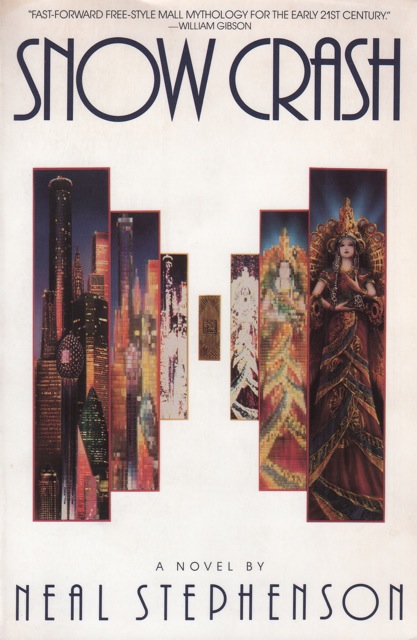
                • Cover of Snow Crash
                  Snow Crash

                  Neal Stephenson · standalone novel · 1992

                  similar byorganized crimetensescience fictionbig city

                  Snow Crash is a 1992 science fiction novel by Neal Stephenson. Like many of Stephenson's novels, its themes include history, linguistics, anthropology, archaeology, religion, computer science, politics, cryptography, memetics, and philosophy.

                • Cover of City Come A-Walkin'
                  City Come A-Walkin'

                  John Shirley · standalone novel · 1980

                  similar byorganized crimetensescience fictionnorth americasuperherobig city

                  WorldCat: Stu Cole is struggling to keep his nightclub, Club Anesthesia, afloat in the face of mob harassment when he's visited by a manifestation of the city of San Francisco, crystallized into a single enigmatic being. This amoral superhero leads him on a terrifying journey through the rock and roll demimonde as they struggle to save the city.

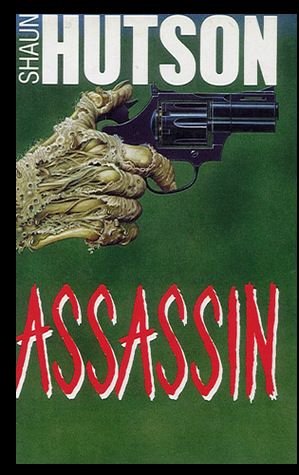
                • Cover of Assassin
                  Assassin

                  Shaun Hutson · standalone novel · 1988

                  similar byorganized crimetenselate 20th centurybig city

                  London was in the grip of its bloodiest bout of gang warfare for two years. Shootings in the street. Car chases and torture. Into this world of corruption, violence, madness and death came the Assassin. A force more powerful than vengeance, more lethal than a lorry full of high-velocity weapons and more terryfying than any nightmare..... Shock horror at its best.

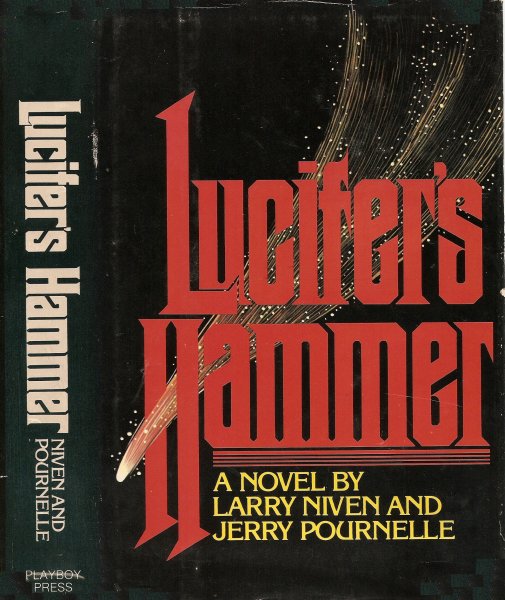
                • Cover of Lucifer's Hammer
                  Lucifer's Hammer

                  Larry Niven & Jerry Pournelle · standalone novel · 1977

                  similar bytenselate 20th centuryscience fictionnorth america

                  Lucifer's Hammer is a science fiction post-apocalypse-survival novel by American writers Larry Niven and Jerry Pournelle that was first published in 1977. It was nominated for the Hugo Award for Best Novel in 1978.

                • Cover of City of Bohane
                  City of Bohane

                  Kevin Barry · standalone novel · 2011

                  similar byorganized crimetensescience fictionbig city

                  City of Bohane is the debut novel by Ireland's Kevin Barry. The book is set in the year 2053, in a world with minimal technology. It received largely positive reviews and won the 2013 International Dublin Literary Award.

                • Cover of Joe Kurtz
                  Joe Kurtz

                  series · 3 books · 2001

                  completed

                  similar byorganized crimetensenorth americabig city

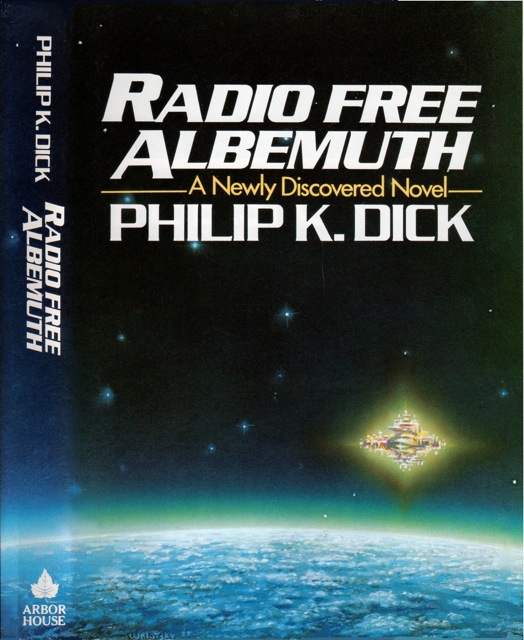
                • Cover of Radio Free Albemuth
                  Radio Free Albemuth

                  Philip K. Dick · standalone novel · 1986

                  similar bytenselate 20th centuryscience fictionnorth america+1 more

                  Radio Free Albemuth is a dystopian novel by Philip K. Dick, written in 1976 and published posthumously in 1985. Originally titled VALISystem A, it was his first attempt to deal in fiction with his experiences of early 1974. When his publishers at Bantam requested extensive rewrites he canned the project and reworked it into the VALIS trilogy. Arbor House acquired the rights to Radio Free Albemuth in 1985. They then published an edition under the current title, prepared from the corrected typescript given by Dick to his friend Tim Powers.

                • Cover of The Curse Workers
                  The Curse Workers

                  series · 3 books · 2010

                  similar byorganized crimetensenorth america+1 more

                  Holly Black's Curse Workers trilogy is set in an alternate America where 'curse work' — magic that harms or transforms through touch — is illegal, enforced through gloves and Prohibition-era-style crime families. It follows Cassel Sharpe, the only non-worker in a family of con artists and workers, as he tries to stay out of his family's schemes despite his own hidden connection to their world. The series runs from White Cat through two further novels.

                • Cover of Joe Pitt Casebooks
                  Joe Pitt Casebooks

                  series · 5 books · 2005

                  similar byorganized crimetensenorth americabig city

                  The Joe Pitt Casebooks are a series of supernatural noir thrillers written by American author Charlie Huston. Each casebook chronicles Joe Pitt's life as well as his struggles in the underground of vampyre clans of New York. At first Pitt is an unaffiliated vampyre, living in between the cracks by doing jobs for various clans in exchange for blood and freedom. However, as the series progresses, this shifts and Pitt's life evolves with each book.

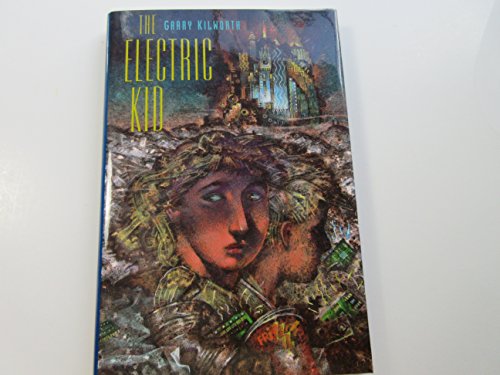
                • Cover of Electric Kid
                  Electric Kid

                  series · 2 books · 1994

                  similar byorganized crimetensescience fictionbig city

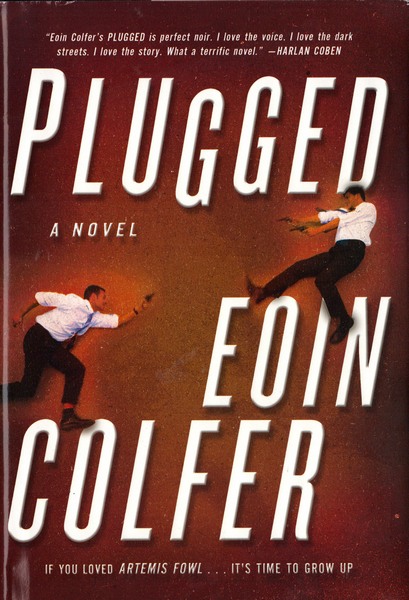
                • Cover of Daniel McEvoy
                  Daniel McEvoy

                  series · 2 books · 2011

                  similar byorganized crimetense+2 more

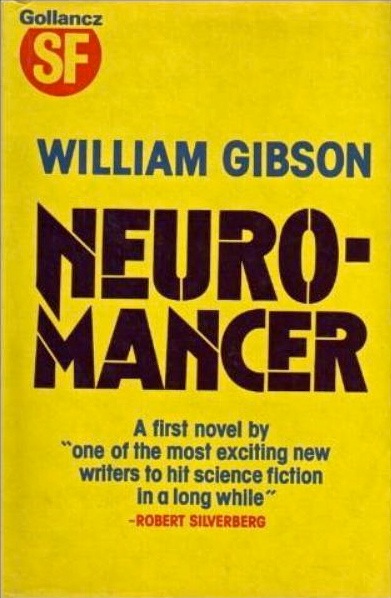
                • Cover of Sprawl Trilogy
                  Sprawl Trilogy

                  series · 10 books · 1981

                  similar bytensescience fictionbig city

                  The Sprawl Trilogy is William Gibson's foundational cyberpunk sequence: Neuromancer (1984), in which hacker Case is drawn into a high-stakes heist alongside an artificial intelligence and a damaged ex-soldier, followed by Count Zero (1986) and Mona Lisa Overdrive (1988), which widen the same near-future world of corporate power and networked cyberspace to new characters. Johnny Mnemonic, an early short story set in the same fictional milieu, predates the novels and introduces the courier Molly Millions before her role in the trilogy. Together these works established much of cyberpunk's visual and thematic vocabulary.

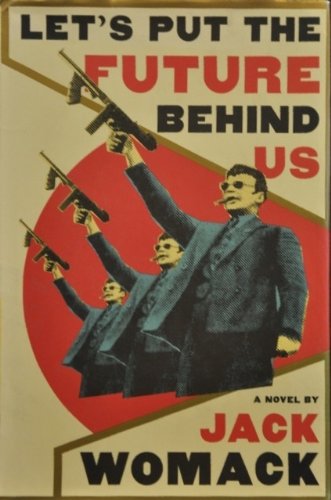
                • Cover of Let's Put the Future Behind Us
                  Let's Put the Future Behind Us

                  Jack Womack · standalone novel · 1996

                  similar bytenselate 20th centuryscience fiction+1 more

                  Let's Put the Future Behind Us is a speculative fiction novel by Jack Womack set in post-Soviet Russia and released in 1996. It chronicles the transition of bureaucratic apparatchiks into an endemically corrupt Russian quasi-capitalism in the early 1990s dominated by oligarchs, criminals and ultra-nationalist political groups.

                • Cover of Make Room! Make Room!
                  Make Room! Make Room!

                  Harry Harrison · standalone novel · 1966

                  similar bytensescience fictionnorth americabig city+1 more

                  Make Room! Make Room! is a 1966 science fiction novel written by Harry Harrison exploring the consequences of both unchecked population growth on society and the hoarding of resources by a wealthy minority. It was originally serialized in Impulse magazine.

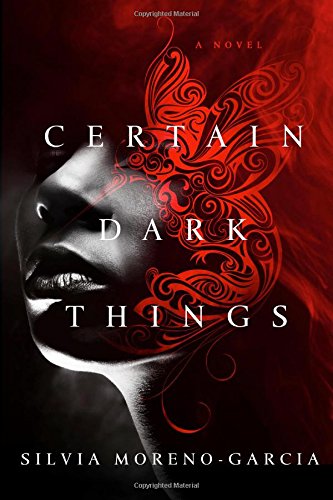
                • Cover of Certain Dark Things
                  Certain Dark Things

                  Silvia Moreno-Garcia · standalone novel · 2016

                  similar byorganized crimetensebig city

                  "Certain Dark Things combines elements of Latin American mythology with a literary voice that leads readers on an exhilarating and fast-paced journey. Welcome to Mexico City, an oasis in a sea of vampires. Here in the city, heavily policed to keep the creatures of the night at bay, Domingo is another trash-picking street kid, just hoping to make enough to survive. Then he meets Atl, the descendant of Aztec blood drinkers. Domingo is smitten. He clings to her like a barnacle until Atl relents and decides to let him stick around. But Atl's problems, Nick and Rodrigo, have come to find her. When they start to raise the body count in the city, it attracts the attention of police officers, local crime bosses, and the vampire community. Atl has to get out before Mexico City is upended, and her with it. In 2015, Silvia's debut, Signal to Noise, was named on seven year's best lists: B & N's Sci-Fi & Fantasy Blog, RT, BookRiot, Buzzfeed, i09, Vice, and Tor.com. Certain Dark Things was also listed on B & N's Sci-Fi & Fantasy Blog as one of 42 books they can't wait to read in 2016 and on io9 as one of 40 Science Fiction and Fantasy Books That Will Rock Your World In 2016!"--

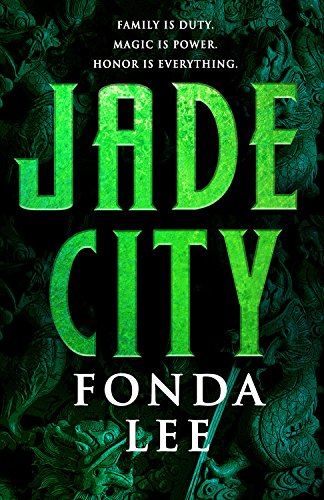
                • Cover of The Green Bone Saga
                  The Green Bone Saga

                  series · 5 books · 2017

                  similar byorganized crimetensebig city

                  Jade City opens Fonda Lee's Green Bone Saga, following the Kaul family, leaders of one of two rival jade-dealing crime clans on the island nation of Kekon, where magic jade grants enhanced abilities to trained warriors and its trade underpins the whole social order. The series follows the Kaul siblings across decades as their clan's power is challenged from within and without, blending gangster-family drama with epic fantasy. It runs across three novels plus shorter companion works.

                • Cover of Headstone City
                  Headstone City

                  Tom Piccirilli · standalone novel · 2006

                  similar byorganized crimetensenorth americabig city

                  The night Johnny Danetello drove a dying girl through the streets of Brooklyn in his cab, he was trying to save her life. Instead he ran down a cop and lost her and his freedom. Every day in prison, Johnny knew that Angie Monticelli's family blamed him for her death, and that going home would be suicide. But Johnny has unfinished business with his former friend turned mob boss, Vinny Monticelli.Now Johnny has returned to converse with the doomed and the dead--and wait for Vinny to make his move. Survivors of a long-ago freak accident, the two men share access to alternate realities no one else can know--and to a past and present that will all become the same in a city only one of them can leave alive. . . .From the Paperback edition.

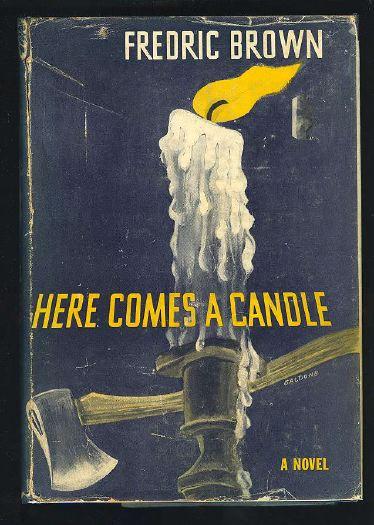
                • Cover of Here Comes a Candle
                  Here Comes a Candle

                  Fredric Brown · standalone novel · 1950

                  similar byorganized crimetensenorth americabig city

                  Here Comes a Candle is Fredric Brown at his most audacious in a novel that was far ahead of its time. It is the story of Joe Bailey, whose young life is at a crossroads. Not only is he involved with a tough Milwaukee racketeer and two completely different women, but he is haunted by childhood trauma. Psychologically complex and told in an array of stylistic variations, it is a tour de force with a savagely ironic ending not to be soon forgotten.

                • Cover of The 5th Witch
                  The 5th Witch

                  Graham Masterton · standalone novel · 2008

                  similar byorganized crimetensenorth americabig city

                  A crime cartel is using four witches to hold L.A. in a grip of fear. No one can stop them except the 5th witch.

                • Cover of Felicia
                  Felicia

                  George Alec Effinger · standalone novel · 1976

                  similar bytenselate 20th centurynorth america+1 more

                  Someone's about to rip off a sleepy little Louisiana town! Chuck's gang of truckers are geared for looting. When Tom masterminds a false hurricane alert...When sheriff Boshardt orders an evacuation of the town...When Chuck moves in to strip the town clean...Their cool caper escalates into a devastating triple-cross that rips the rooftops off everything from Miami to New Orleans-and nothing-no one will ever be the same!

                • Cover of 88
                  88

                  Michael R. Fletcher · standalone novel · 2013

                  similar byorganized crimetensescience fictionnorth america+1 more

                  "The dream of Artificial Intelligence is dead and the human mind is now the ultimate processing machine. Demand is high, but few are willing to sacrifice their lives to become computers. Black-market creches, struggling to meet the ever-increasing demand, deal in the harvested brains of stolen children. But there is a digital snake in that fractally modelled garden; some brains make better computers than others. 88, a brilliant autistic girl, has been genetically engineered and raised from birth to serve one purpose: become a human computer. Plagued by memories of a mother she never knew and a desire for freedom she barely understands, she sets herself against those who would be her masters. Unfortunately for 88, the Cuntrera-Caruana Mafia clan have other plans for her. Griffin Dickinson, a Special Investigator for the North American Trade Union, has been tasked with shutting down the black market creches. Joined by Nadia, a state-sanctioned reporter and Abdul, the depressed ghost of a dead Marine inhabiting a combat chassis, Griffin is drawn deep into the shady underbelly of the brain trade. Every lead brings him one step closer to an age-old truth: corruption runs deep. An army of dead children, brainwashed for loyalty and housed in state of the art military chassis, stand between Griffin and the answers he seeks. But one in particular, Archaeidae, a 14-year old Mafia assassin obsessed with Miyamoto Musashi, Sun Tzu, and Machiavelli, is truly worthy of fear. Archaeidae is the period at the end of a death sentence"--Back cover.

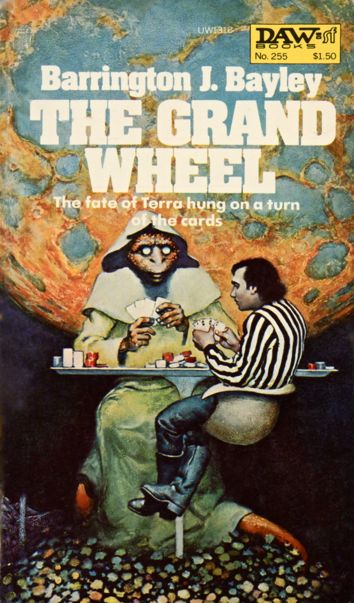
                • Cover of The Grand Wheel
                  The Grand Wheel

                  Barrington J. Bayley · standalone novel · 1977

                  similar byorganized crimetensescience fiction

                  From the back cover of the DAW first edition: "The Grand Wheel - Cheyne Scarne was a gambler... and he took the big plunge when he bet his life to get to the inner circle of the Grand Wheel. Because the Wheel was the ultimate Syndicate - the final Mafia - that controlled all that was illegal in all the planets under human control. But Cheyne was not to know whether he had won or lost when he gained his point. Because the Wheel had plans for him. And they made him the historic offer he could not refuse. There was, it seemed, a similar gambling combine in the rest of the galaxy, bigger by far than the little group of stars held by Earthlings. And the Wheel wanted a cut in this. So Cheyne Scarne found himself selected to be humanity's own player in a game in which nobody knew the value of the cards and the rules of the game were infinitely variable!"

                • Cover of Dick Tracy
                  Dick Tracy

                  series · 4 books · 1990

                  similar byorganized crimetensenorth americabig city

                  Dick Tracy is an American comic strip featuring Dick Tracy, a tough and intelligent police detective created by Chester Gould. It made its debut on Sunday, October 4, 1931, in the Detroit Mirror, and was distributed by the Chicago Tribune New York News Syndicate. Gould wrote and drew the strip until 1977, and various artists and writers have continued it.

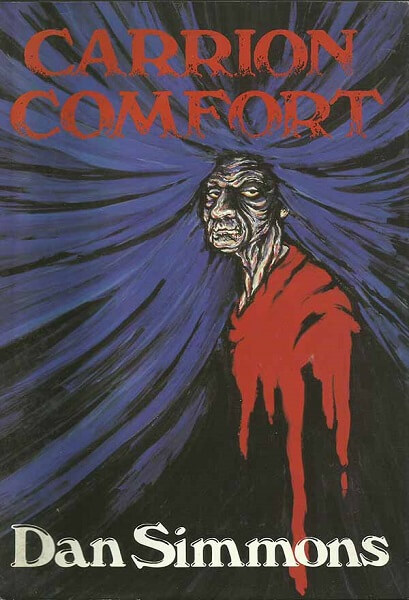
                • Cover of Carrion Comfort
                  Carrion Comfort

                  Dan Simmons · standalone novel · 1989

                  similar bytenselate 20th centuryscience fictionnorth america

                  Carrion Comfort is a science fiction/horror novel by American writer Dan Simmons, published in 1989 in hardcover by Dark Harvest and in 1990 in paperback by Warner Books. It won the Bram Stoker Award, the Locus Poll Award for Best Horror Novel, and the August Derleth Award for Best Novel. It is based on a novelette of the same title, published in 1983 in the magazine Omni. The first half of the novelette makes up chapter 1 of the novel, while the second half forms chapter 3.