More like Tango Midnight
anchored on:science fictionplague and pandemicspace stationnear futuretensetechno-thriller+2 more
but
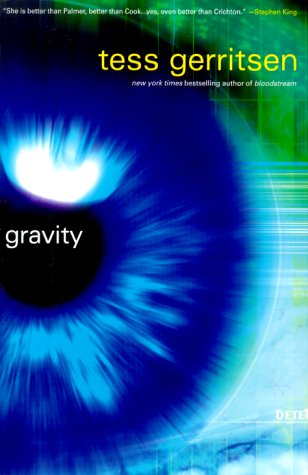
- Gravity
Tess Gerritsenstandalone novel1999
similar bytensespace stationnear futurescience fictionplague and pandemicsurvival
Medical thriller set aboard the International Space Station where astronauts are dying one by one from a mysterious disease. Dr Emma Watson is a research physician on a mission to study living organisms in space. But the mission aboard the space station turns into a nightmare.
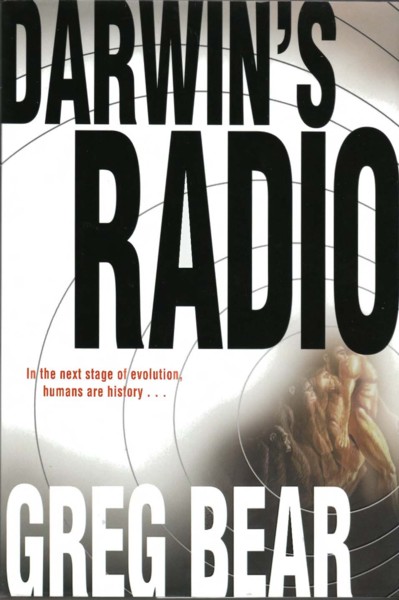
- Darwin
series2 books1999
completed
similar bytensenear futurescience fictionplague and pandemicgenetic engineering+2 more
Greg Bear's Darwin's Radio imagines a dormant retrovirus in human DNA activating worldwide, triggering an accelerated leap in human evolution that governments respond to as a plague. The 1999 novel won the Nebula Award; its sequel Darwin's Children follows the first generation of changed children as society decides what to do with them. Together they're speculative near-future science fiction grounded in genetics rather than space opera.
- The Andromeda Strain
series2 books1969
similar bytensescience fictionplague and pandemicsurvival+1 more
Michael Crichton's 1969 novel The Andromeda Strain follows a team of scientists racing to contain a lethal extraterrestrial microorganism that crash-lands in Arizona, told in the clinical, document-driven style that helped establish the techno-thriller genre. Daniel H. Wilson's authorized 2019 sequel The Andromeda Evolution revisits the same threat five decades later. Together the two books form a two-part outbreak story separated by a fifty-year gap in publication.
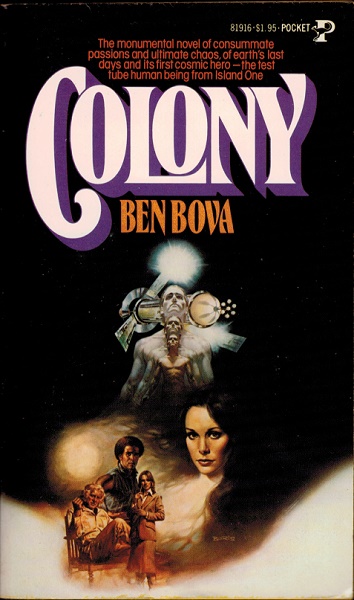
- Colony
Ben Bovastandalone novel1978
similar bytensespace stationnear futurescience fictionsurvival+1 more
Colony continues the story Ben Bova began in Millennium, following astronaut-turned-administrator Chet Kinsman years later as the head of an orbiting space habitat that has become Earth's only real refuge from a planet buckling under overpopulation, food shortages and unrest. Getting a place in the habitat is a matter of life and death for millions who will never be chosen, and as Earth's governments grow more desperate to control or dismantle the colony outright, Kinsman has to decide how far he'll go to protect the world he's built off-world. Bova later folded both novels together into the omnibus The Kinsman Saga. Part of Ben Bova's Chet Kinsman series.
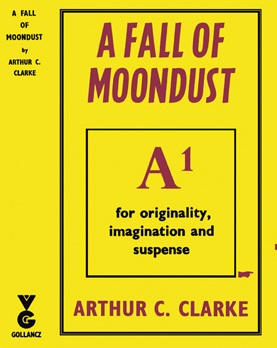
- A Fall of Moondust
Arthur C. Clarkestandalone novel1961
similar bytensenear futurescience fictionsurvival
From the back cover of the Harbrace paperback: "The action of A Fall of Moondust takes place almost a century from now when tours on the moon are a common occurrence. One of the high points of each tour is a cruise around the Sea of Thirst, a body of volcanic dust, in a specially designed vessel called the Selene On a perfectly routine voyage one day the Selene suddenly disappears. How do you locate a small tourist "cruiser" buried beneath fifty feet of dust? If you find it, how do you rescue the passengers and crew? If you are on board, how do you feel and what do you do while brave men and expert technicians join forces in a race against time? Sustained excitement, lively humor, and an engaging cast of characters make this one of Arthur C. Clarke's most intriguing novels."
- Silver Tower
Dale Brownstandalone novel1988
similar bytensespace stationnear futurescience fictiontechno-thriller
The first permanent U.S. space station plays a pivotal role in deciding the outcome of a crisis in the Middle East.
- The Fireman
Joe Hillstandalone novel2016
similar bytensenear futurescience fictionplague and pandemicsurvival
The Fireman is a novel set in a post-apocalyptic time by American author Joe Hill. The novel, Hill's fourth, tells the tale of a deadly spore that has infected most of the world's population. Hill first spoke of the novel in 2013 in promotional interviews for his then-new novel NOS4A2. The novel was released on May 17, 2016.
- Seveneves
Neal Stephensonstandalone novel2015
similar bytensenear futurescience fictiongenetic engineeringsurvival+1 more
Seveneves is a science fiction novel by Neal Stephenson published in 2015. The story tells of the desperate efforts to preserve Homo sapiens in the wake of apocalyptic events on Earth after the unexplained disintegration of the Moon and the remaking of human society as a space-based civilization after a severe genetic bottleneck.
- Alternate Purpose
Christopher Coatesstandalone novel2019
similar bytensenear futurescience fictionplague and pandemicsurvival
• "A global pandemic has devastated the world. Facing a rebuilding time of generations, two scientists come up with a solution: send someone back in time to prevent the horrible accident that released the deadly pathogen on the world. The problem with their discovery? The time travel process is fatal to anyone trying it." ― quoted from this book's product page on Amazon.com as of 2020-05-28.
- The Return
John Barnes & Buzz Aldrinstandalone novel2000
similar bytensenear futurescience fictionspace stationtechno-thrillersurvival
From the flaps of the Forge first edition: "When a tragic Shuttle accident kills a world-famous basketball player on his trip into space, a trip that had been planned as a PR coup for the space program, former astronaut Scott Blackstone is out of a job. Worse, he and his "Citizen Observer" program are vilified in the media, and he's being sued for a billion dollars. His older brother, Nick, research chief for a major aerospace firm, persuades Scott's estranged wife, Thalia - a top-ranked attorney - to take on Scott's defense. Gradually, it begins to appear that the "accident" might not have been an accident at all. Meanwhile, as long feared, India and Pakistan go to war - and worse, Pakistan deploys a nuclear device high in the upper atmosphere, putting the crew of the orbiting International Space Station in imminent danger of destruction by radiation exposure. While the world's space vehicles are all grounded by the radiation storm set off by the detonation, only a few weeks remain to rescue the crew, and there's no way to do it. Save, perhaps, for a secret project of Nick's..."
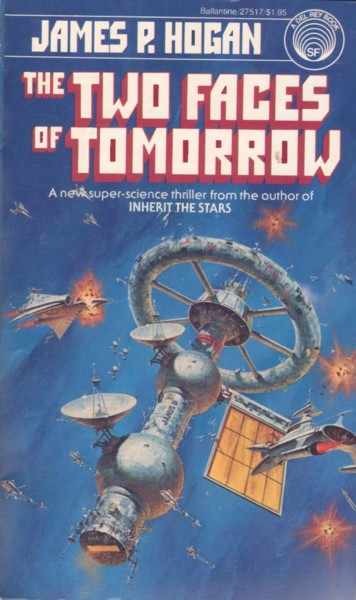
- The Two Faces of Tomorrow
James P. Hoganstandalone novel1979
similar bytensenear futurescience fictionspace stationsurvival
From the back cover: SURVIVAL TEST Civilization had grown so complex that only a world-wide computer network could control everything. But the computer was only logical -- it lacked common sense. And its all-too-logical decisions were beginning to cause too many near fatal accidents. The solution was on the drawing boards -- a universal self-aware and self-programming computer, equipped with judgment. But... could it be controlled? Or would it attempt to take over, disregarding its creators? If so, could it be turned off? Raymond Dyer and his team of computer specialists knew they had to find answers to these questions, but the project was to dangerous to test on Earth. So they installed the super computer on an orbiting satellite and programmed it to survive at all costs. Then they sent a group of men to attack the computer... to goad it into trying to kill them. They they would turn it off. Obviously if things went wrong, they might lose a few men -- but the satellite and the computer could always be destroyed. Obviously... But the computer didn't quite see it that way!
- Wired (Douglas E. Richards)
series2 books2012
similar bytensenear futurescience fictiontechno-thrillergenetic engineering
Wired opens Douglas E. Richards's two-book techno-thriller about genetic engineer Kira Miller, whose discovery of a way to unlock temporary savant-level intelligence turns her into both a scientific breakthrough and a fugitive, and David Desh, the former special-forces operative sent to track her down. The story escalates from a bioterror investigation into a fight over the future of engineered human cognition, continuing directly into the 2012 sequel Amped. Richards, primarily a science-fiction and thriller writer, built both books into New York Times and USA Today bestsellers rather than a longer franchise.
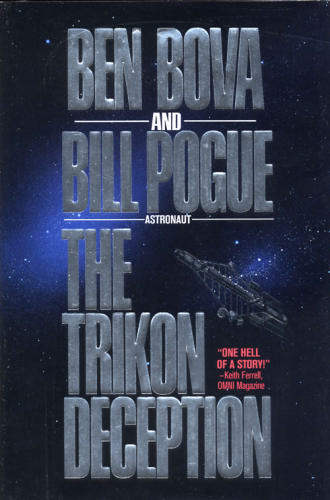
- The Trikon Deception
Ben Bova & Bill Poguestandalone novel1992
similar bytensespace stationnear futurescience fictiongenetic engineering
The Trikon is a shared industrial space laboratory that was built in orbit, designed as the only risk-free environment for genetic experiments too controversial or dangerous to be performed on Earth.
- Aftermath (Charles Sheffield)
series2 books1998
completed
similar bytensenear futurescience fictionsurvival+2 more
Charles Sheffield's Aftermath duology opens with a near-future Earth devastated by a nearby supernova's radiation, which knocks out electronics and forces survivors to rebuild without most modern technology. Starfire continues years later as a second, larger stellar threat approaches and humanity must recover enough capability to respond. Sheffield, a physicist by training, grounds both books in hard-science consequences of the disaster rather than treating it as mere backdrop.
- The Chemical Garden Trilogy
series3 books2011
similar bytensenear futurescience fictionsurvivalgenetic engineeringplague and pandemic
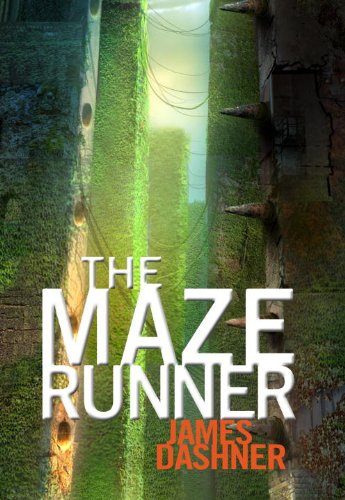
- Maze Runner
series11 books2009
similar bytensescience fictionnear futuresurvival+1 more
The Maze Runner is a series of young adult dystopian science fiction novels written by American author James Dashner. The series consists of the trilogy The Maze Runner (2009), The Scorch Trials (2010) and The Death Cure (2011), as well as two prequel novels, The Kill Order (2012) and The Fever Code (2016). A novella titled Crank Palace (2020) and a companion book titled The Maze Runner Files (2013) have also been released. A sequel trilogy in the series titled The Maze Cutter takes place 73 years following the events of The Death Cure and consists of the novels The Maze Cutter (2022), The Godhead Complex (2023), and The Infinite Glade (2025).
- Rogue Moon
Algis Budrysstandalone novel1960
similar bytensenear futurescience fictionsurvival
A project to transport humans by matter transmission becomes the means to send explorers to the Moon when the US discovers an alien artifact on the dark side, but anyone who enters dies, so a hardened adventurer is given the job.
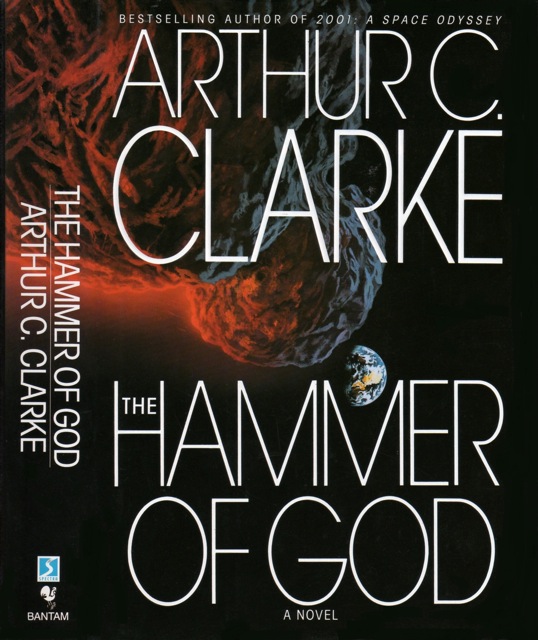
- The Hammer of God
Arthur C. Clarkestandalone novel1993
similar bytensenear futurescience fictionsurvival+1 more
The Hammer of God is a science fiction novel by Arthur C. Clarke originally published in 1993. Set in the year 2109, it deals with the discovery of an asteroid to be on course to collide with Earth and depicts the mission for deflecting the asteroid by using fusion thermal rockets.
- The Martian
series2 books2012
similar bytensenear futurescience fictionsurvival
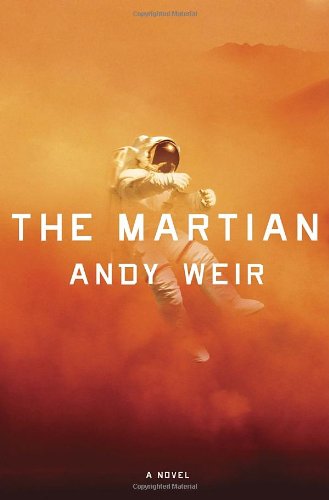
Andy Weir's novel The Martian, first self-published in 2011 before a commercial re-release, follows astronaut Mark Watney after he is stranded alone on Mars when his crew presumes him dead and departs. Using scientific improvisation and dark humor, Watney works to keep himself alive long enough for a rescue to reach him. It is a single, self-contained survival story.
- At the End of Everything
Marieke Nijkampstandalone novel2022
similar bytensenear futurescience fictionplague and pandemicsurvival
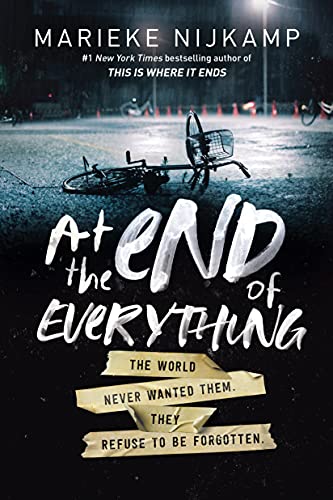
The Hope Juvenile Treatment Center is ironically named. No one has hope for the delinquent teenagers who have been exiled there; the world barely acknowledges that they exist. Then the guards at Hope start acting strange. And one day…they don't show up. But when the teens band together to make a break from the facility, they encounter soldiers outside the gates. There's a rapidly spreading infectious disease outside, and no one can leave their houses or travel without a permit. Which means that they're stuck at Hope. And this time, no one is watching out for them at all. As supplies quickly dwindle and a deadly plague tears through their ranks, the group has to decide whom among them they can trust and figure out how they can survive in a world that has never wanted them in the first place.
- The Last Gasp
Trevor Hoylestandalone novel1983
similar bytensenear futurescience fictionsurvivalplague and pandemic
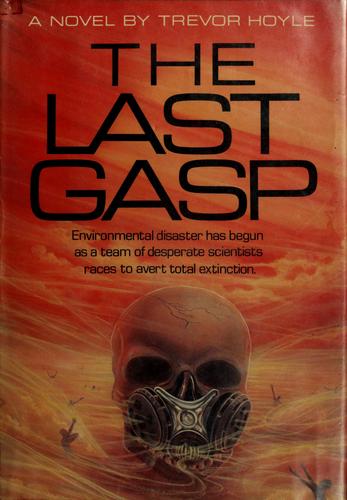
From the flaps of the Crown first edition: "When British marine biologist Gavin Chase stepped out into the windswept wastes at the Halley Bay antarctic research station one morning, the last thing he expected to see was a sled team coming out of nowhere carrying a half-mad, half-frozen Russian scientist babbling an incomprehensible warning. But that warning would threaten the future of the human race and force Chase to make some of the hardest decisions of his life. Months later, at a Geneva environmental conference, Chase meets Cheryl Detrick, the daughter of Theo Detrick, the grand old man of diatom research. Chase, the Detricks, and Soviet scientist Boris Stanovnik theorize that the oxygen-producing microscopic plants of the world's oceans are dying and the level of atmospheric pollutants has finally exceeded the ability of the planet's ecology to recycle them. There is also good reason to believe that the superpowers are planning to wage a new type of environmental warfare. Sooner or later there will be nothing left to breathe. So begins a race against the future. Chase and Cheryl, now lovers, struggle to avert ecological catastrophe as agents of the military-industrial complex hunt them down... and as a growing belt of unbreathable gases spreads outward from the equator, uprooting millions. Their enemies are Lloyd Madden, an insane military mastermind planning to seed the earth with poison and then repopulate it with a race of mutants, and Joseph Earl Gelstrom, a wealthy chemical manufacturer who has Cheryl's father killed to hide his involvement. But Gelstrom himself falls victim to pollution sickness, and he repents. To raise money to finance a research team, Chase must make an unholy alliance with the dying Gelstrom, but this is too much for Cheryl, who leaves him. As more and more of the world becomes uninhabitable, as industries and governments collapse and chaos reigns, as the oceans fill up with dioxin, as the climate changes and mutant life-forms encroach upon the last refuges of humankind, Chase leads a last desperate mission to find and rescue Cheryl and to lead his team of scientists to safety."
- Prey
Michael Crichtonstandalone novel2002
similar bytensescience fictiontechno-thrillergenetic engineeringsurvival
Prey is the thirteenth novel by Michael Crichton under his own name and his twenty-third novel overall. It was first published in November 2002, making it his first novel of the twenty-first century. An excerpt was first published in the January–February 2003 issue of Seed magazine. Prey brings together themes from two earlier Crichton best-selling novels, Jurassic Park and The Andromeda Strain, and serves as a cautionary tale about developments in science and technology: in particular, nanotechnology, genetic engineering, and distributed artificial intelligence.
- Dark Matter (Teri Terry)
series3 books2017
similar bytensenear futurescience fictionplague and pandemicsurvival+1 more
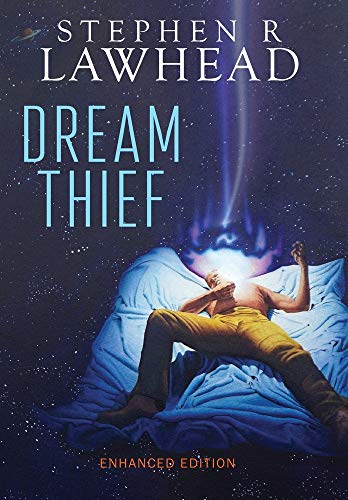
- Dream Thief
Stephen R. Lawheadstandalone novel1983
similar bytensespace stationnear futurescience fiction
Dr. Spencer Reston, a scientist doing dream research aboard the space station, Gotham, begins having unexplained blackouts and concludes that someone is deliberately tampering with his mind.