Loreful
HomeDiscover
Search series, authors…⌘K
Loreful

Reading orders for SF/F series and shared universes — with your place kept in every one.

Explore

UniversesSeriesWorksAuthorsAtlas

Help

FAQAboutSite map

Account & legal

Sign inCreate accountPrivacyTerms

Data

Built on ISFDB, Wikipedia, Wikidata and Open Library. Curated reading orders carry their reasoning on the page; the rest follow publication order. Data sources & licenses

© Loreful · data: ISFDB · CC BY

More like Tapiwa's Uncle

anchored on:literary & generalafricamiddle grade

but

Mood

The mood the book leaves you in.

  • The reading experience is propelled by journeys, exploration, and physical risk; excitement and forward momentum dominate over dread or introspection.
  • Joy and loss are deliberately mixed; the resolution grants characters something real while taking something else away, leaving warmth and sorrow together.
  • The book demands work from the reader — dense prose, difficult structure, unfamiliar ideas, or morally uncomfortable material — as part of its intended effect.
  • Grim events, cruelty, or despair dominate the atmosphere, and the book does not soften them with comfort or comic relief.
  • The atmosphere is quietly unsettling — wrongness, unease, and the uncanny pervade the book without necessarily escalating into overt horror.
  • The book is built to move the reader; character feeling is foregrounded and major scenes aim at a strong emotional response.
  • Humor is a primary aim and the prose plays for laughs — comic situations, wit, or dialogue produce sustained comedy, not occasional levity.
  • The book insists that things can improve; effort and decency are shown to matter, and the arc bends toward better outcomes even through hardship.
  • The book teaches as it goes — real facts, history, science, or craft are conveyed in enough depth that learning is part of the reading experience.
  • The book is designed to uplift and motivate, presenting perseverance or achievement in a way that invites the reader to aspire or act.
  • The overall register is cheerful and easygoing; stakes are kept gentle and the book avoids dwelling on pain or dread.
  • Withheld information drives the experience; the book sustains enigmas and secrets the reader wants resolved, whatever its genre.
  • The book is contemplative and inward-looking, giving more weight to thought, memory, and meaning than to external events.
  • The book works as comfort reading — low tension, a soothing pace, and an atmosphere the reader can unwind in.
  • Grief, loss, or melancholy set the dominant register, and the book lets sorrow stand rather than resolving it into comfort.
  • Sustained suspense is the point; the book keeps the reader braced for what happens next through danger, pressure, or impending revelation.
  • Playful invention and charm define the register — fanciful conceits, light absurdity, and a narration that delights in its own oddity.

About

What the story runs on.

  • Stories in which extraterrestrial beings are central — as characters, cultures, or the object of the plot.
  • Stories structured as a quest — a journey undertaken to find, deliver, or destroy something of great import.
  • Stories in which staying alive against nature, catastrophe, or scarcity is the central problem.
  • Stories of lovers kept apart by law, family, faith, or station, where the obstacle to love is the plot.
  • Stories in which a friendship — its making, testing, or loss — is the emotional center.
  • Stories of growing up — a young protagonist crossing from childhood into adult knowledge and responsibility.
  • Stories about who a character truly is — self-discovery, doubled lives, and the search for a self.
  • Stories about mourning — living through the death of a loved one and what loss does to the survivors.
  • Stories in which a buried family truth — hidden parentage, crimes, or shames — surfaces and reorders the present.
  • Stories driven by maneuvering for power — factions, conspiracies, and statecraft conducted in shadow.
  • Stories in which war itself is the subject — combat, occupation, and what warfare does to soldiers and civilians.
  • Stories organized around investigating a killing — the case, the clues, and the pursuit of the killer, in any genre's clothing.

Shelf

Where it sits in the library.

    • Fiction built on magic or other supernatural elements that have no scientific explanation.
    • Secondary-world fantasy at large scale, where the fate of nations or the world turns on the protagonists' struggle.
    • Fantasy set in a recognizably modern city or contemporary world where the supernatural intrudes on everyday life.
    • Fantasy that blends in horror's atmosphere and imagery, keeping a fantastical frame around grim or frightening material.
    • Action-driven fantasy following warriors or rogues with personal stakes against sorcerous threats, rather than world-spanning conflicts.
    • Fantasy set in a real historical period or a close analogue of one, with magic woven into the era.
    • Fantasy in which protagonists cross from the ordinary world into another world through a portal or similar passage.
    • Fiction that retells or reworks a traditional fairy tale in a new form or setting.
    • Fantasy drawing directly on myths, legends, and folklore, retelling them or building on their figures and logic.
    • Fantasy of ghosts, vampires, shapeshifters, psychics, and similar phenomena, usually set in an otherwise ordinary world.
    • Fiction mixing science-fictional trappings with overtly magical or impossible elements in one setting.
    • Low-stakes fantasy emphasizing comfort, community, and everyday pleasures over conflict and peril.
    • Speculative fiction of pervasive moral ambiguity, violence, and cynicism that rejects heroic conventions — fantasy and SF alike.
      • Fiction that extrapolates from science and technology — future societies, space travel, or speculative inventions — within at least nominally natural laws.
      • Science fiction of interstellar scope — starships, galactic polities, and adventure across star systems.
      • Science fiction committed to scientific rigor, where technical plausibility constrains the story.
      • Science fiction centered on armed forces and warfare, told largely from a military point of view.
      • Science fiction of networked, corporate-dominated near futures, pairing high technology with social decay.
      • Science fiction styled on nineteenth-century steam-powered technology, often in a Victorian or pseudo-Victorian setting.
      • Fiction depicting an oppressive or catastrophic society, presented as a warning.
      • Fiction set after civilization's collapse, following survivors in the ruins of the old world.
      • Fiction in which characters move between past and future, and the mechanics or consequences of that travel drive the plot.
      • Fiction exploring a world where a historical event went differently and history diverged from ours.
      • Science fiction about humanity's first encounter and communication with an alien intelligence.
      • Science fiction in which extraterrestrial forces attack or occupy Earth and humanity resists.
      • Fiction whose primary aim is to frighten or unsettle the reader through dread, menace, or the monstrous.
      • Horror of vast, indifferent, incomprehensible entities before which humanity is insignificant, in the Lovecraft tradition.
      • Horror of decaying houses, buried family secrets, and oppressive atmosphere in the Gothic literary tradition.
      • Horror centered on hauntings and the returning dead.
      • Horror located in the mind — paranoia, obsession, and unreliable perception rather than external monsters.
      • Horror built around the reanimated dead and survival amid their outbreaks.
      • Horror defined by explicit, transgressive gore that refuses to cut away from violence.
      • Speculative fiction of the strange and uncanny that resists both natural explanation and standard genre categories.
      • Fiction organized around solving a crime or puzzle, typically following an investigator toward the identification of a culprit.
      • A puzzle-first mystery that lays out clues so the culprit's identity can be deduced before the reveal.
      • Crime fiction of moral ambiguity, fatalism, and hard-edged style, set among the corrupt and the doomed.
      • A mystery following the realistic routines of police work — forensics, interviews, and case-building.
      • A gentle mystery with an amateur sleuth, a small community, and violence kept off the page.
      • A mystery set in a past era, where the investigation works within that period's methods and society.
      • Fast-paced fiction driven by imminent danger, pursuit, or high-stakes conspiracy, built to sustain tension.
      • A thriller of espionage — agents, tradecraft, and intelligence services in conflict.
      • A thriller centered on lawyers and the courtroom, where litigation carries the suspense.
      • A thriller driven by detailed contemporary or near-future technology, often military or scientific.
      • A thriller whose tension comes from mental states and manipulation between characters rather than external action.
      • Fiction whose central plot is a romantic relationship and its development toward an emotionally satisfying resolution.
      • Romance in which one or both partners are supernatural beings, blending fantasy elements into the love story.
      • A fantasy-romance hybrid in which the romantic arc and the fantasy plot carry equal weight.
      • Romance set in a past era, with courtship shaped by the period's society and manners.
      • Romance set in the present day, without supernatural or historical elements.
      • Fiction set in a real past period, where the historical setting materially shapes characters and events.
        • General and literary fiction emphasizing prose style, character interiority, or formal ambition over genre plot conventions.
        • Fiction in a realistic world where magical events occur and are treated as ordinary, in the tradition of Latin American literature.
        • Fiction that ridicules people, institutions, or society in order to criticize them.
        • Fiction of dreamlike, irrational imagery and logic that breaks from realistic representation.
        • Fiction that plays with narrative convention through metafiction, fragmentation, and self-reference.
        • Fiction propelled by journeys, exploration, and physical peril, where action and survival carry the plot.
        • Adventure fiction of ships and seafaring — naval engagements, voyages, and life at sea.
        • Fiction of the American frontier West — gunmen, ranchers, and lawmen, typically in the late nineteenth century.
        • Fiction centered on soldiers, campaigns, and the experience of warfare, historical or imagined.
          • Fiction written primarily to amuse, using comedic situations, wit, or parody as its organizing principle.
            • Multi-generational fiction following a family or dynasty across decades, with inheritance and kinship as the through-line.
              • Fiction whose world runs on explicit game mechanics — levels, stats, and skills that characters can see and exploit.
                • Fiction about costumed or superpowered heroes and their conflicts with comparable villains.

                Practical

                How long a commitment, whether it stands alone, and whether it has finished.

                Tap a chip to ask for it · tap again to rule it out · once more to clear. Numbers show what would be left.

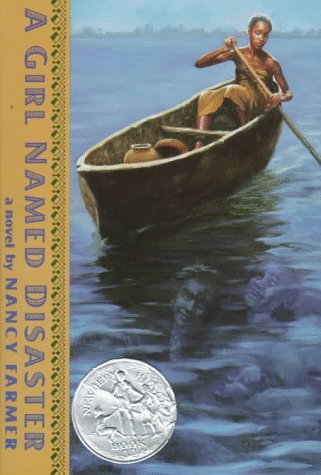
                • Cover of A Girl Named Disaster
                  A Girl Named Disaster

                  Nancy Farmer · standalone novel · 1996

                  similar byliterary & generalemotionalafricalate 20th centurycoming of age

                  A Girl Named Disaster is a 1996 novel written by Nancy Farmer. The book explores the qualities needed to survive in a hostile environment, coming-of-age, and the availability of spiritual guidance.

                • Cover of The Mighty Red
                  The Mighty Red

                  Louise Erdrich · standalone novel · 2024

                  similar byliterary & general+2 more

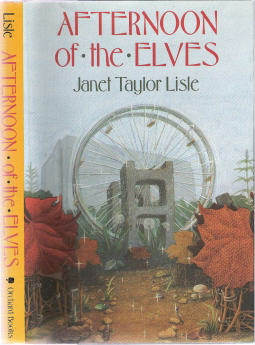
                • Cover of Afternoon of the Elves
                  Afternoon of the Elves

                  Janet Taylor Lisle · standalone novel · 1989

                  similar byemotionalliterary & generallate 20th centurycoming of agemiddle grade

                  Afternoon of the Elves is a 1989 children's novel by author Janet Taylor Lisle. Afternoon of the Elves was a Newbery Medal Honor Book in 1990. The plot centers around the budding friendship between a popular elementary-school student named Hillary, and her misanthropic next-door neighbor Sarah-Kate. The two investigate a tiny village in Sarah-Kate's back yard, and as the story progresses, more of Sarah-Kate's personal life is revealed.

                • Cover of Do You Know Me
                  Do You Know Me

                  Nancy Farmer · standalone novel · 1993

                  similar byliterary & generalemotionalafricacoming of ageimmigration and exilereflective+1 more

                  Although he is continually getting into trouble, Tapiwa's uncle becomes her best friend when he comes from Mozambique to live with her family in Harare, Zimbabwe.

                • Cover of My Life As an Ice Cream Sandwich
                  My Life As an Ice Cream Sandwich

                  Ibi Zoboi · standalone novel · 2019

                  similar byliterary & generalemotionallate 20th centurycoming of agemiddle gradereflective

                  Twelve-year-old Ebony-Grace Norfleet has lived with her beloved grandfather Jeremiah in Huntsville, Alabama ever since she was little. As one of the first black engineers to integrate NASA, Jeremiah has nurtured Ebony-Grace’s love for all things outer space and science fiction—especially Star Wars and Star Trek. But in the summer of 1984, when trouble arises with Jeremiah, it’s decided she’ll spend a few weeks with her father in Harlem. Harlem is an exciting and terrifying place for a sheltered girl from Hunstville, and Ebony-Grace’s first instinct is to retreat into her imagination. But soon 126th Street begins to reveal that it has more in common with her beloved sci-fi adventures than she ever thought possible, and by summer's end, Ebony-Grace discovers that Harlem has a place for a girl whose eyes are always on the stars.

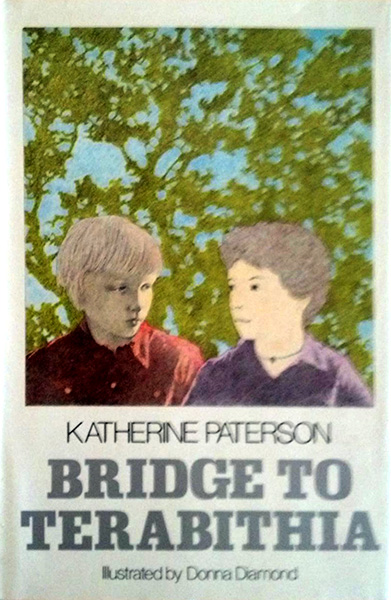
                • Cover of Bridge to Terabithia
                  Bridge to Terabithia

                  Katherine Paterson · standalone novel · 1977

                  similar byemotionalliterary & generallate 20th centurycoming of agemiddle grade

                  Bridge to Terabithia is a children's novel written by American author Katherine Paterson. The book was originally published in 1977 by Thomas Crowell, and won a Newbery Medal the year after.

                • Cover of Wolf
                  Wolf

                  Gillian Cross · standalone novel · 1990

                  similar byliterary & generallate 20th centurycoming of agefamily secrets+1 more

                  Wolf is a young-adult novel by Gillian Cross, published by Oxford in 1990. Set in London, it features communal living, terrorism, and wolves and a teenage girl in relation to her mother, father, and paternal grandmother.

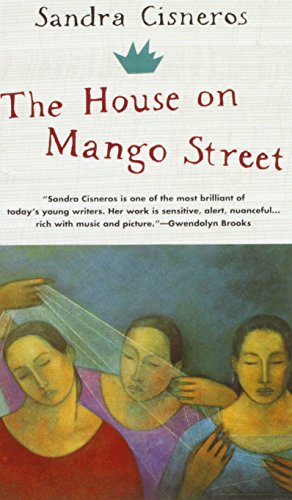
                • Cover of The House on Mango Street
                  The House on Mango Street

                  Sandra Cisneros · standalone novel · 1984

                  similar byliterary & generalemotionallate 20th centurycoming of agereflective

                  In a series of inter-connected vignettes, this is the story of a young girl growing up in the Hispanic quarter of Chicago. Contains magical realism.

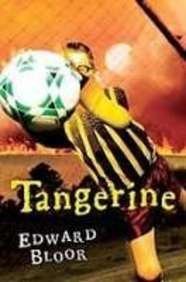
                • Cover of Tangerine
                  Tangerine

                  Edward Bloor · standalone novel · 1997

                  similar byliterary & generalemotionallate 20th centurycoming of age

                  Twelve-year-old Paul, who lives in the shadow of his football hero brother Erik, fights for the right to play soccer despite his near blindness and slowly begins to remember the incident that damaged his eyesight.

                • Cover of Burning Up
                  Burning Up

                  Caroline B. Cooney · standalone novel · 1999

                  similar byliterary & generalemotionallate 20th centurycoming of agefamily secrets+1 more

                  When a girl she had met at an innercity church is murdered, fifteen-year-old Macey channels her grief into a school project that leads her to uncover prejudice she had not imagined in her grandparents and their wealthy Connecticut community.

                • Cover of Don't You Dare Read This, Mrs. Dunphrey
                  Don't You Dare Read This, Mrs. Dunphrey

                  Margaret Peterson Haddix · standalone novel · 1996

                  similar byliterary & generalemotionallate 20th centurycoming of agefamily secrets+1 more

                  Don't You Dare Read This, Mrs. Dunphrey is a 1996 young adult novel written by Margaret Peterson Haddix. It tells the story of high school student Tish Bonner through journal entries assigned throughout the year by her English teacher, Mrs. Dunphrey, and follows her as her life slowly begins to spin out of control through familial and social troubles.

                • K
                  Kairos

                  series · 11 books · 1962

                  completed

                  similar by+3 more

                  The Time Quintet is a science fantasy series of five young adult novels written by American author Madeleine L'Engle and made up of A Wrinkle in Time (1962), A Wind in the Door (1973), A Swiftly Tilting Planet (1978), Many Waters (1986), and An Acceptable Time (1989).

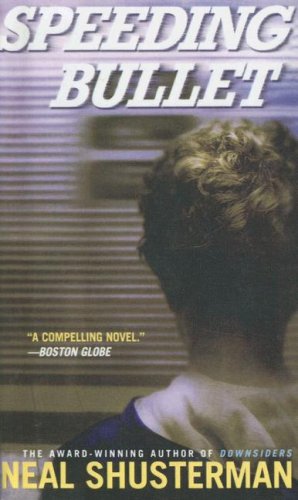
                • Cover of Speeding Bullet
                  Speeding Bullet

                  Neal Shusterman · standalone novel · 1991

                  similar byliterary & generallate 20th centurycoming of agereflective+1 more

                  After becoming famous and getting the attention of the daughter of a wealthy New York City developer following his rescue of a little girl from a speeding subway train, Nick looks for other people to rescue.

                • Cover of A Little Princess
                  A Little Princess

                  Frances Hodgson Burnett · standalone novel · 1905

                  similar byliterary & generalemotionalcoming of age

                  A Little Princess is a work by British-American author Frances Hodgson Burnett, presented as a 1888 novella, a 1902 play and a 1905 children's novel. All three versions tell the story of Sara Crewe, a wealthy young girl and the prize student of a private London boarding school who is reduced to poverty and forced to endure the life of a servant under the school's cruel headmistress.

                • Cover of Midnight's Children
                  Midnight's Children

                  Salman Rushdie · standalone novel · 1980

                  similar byliterary & generalemotionalcoming of agereflective

                  WorldCat: The life of a man born at the moment of India's independence becomes inextricably linked to that of his nation and is a whirlwind of disasters and triumphs that mirror modern India's course.

                • Cover of Austin Family
                  Austin Family

                  series · 4 books · 1963

                  completed

                  similar bycoming of age+4 more

                • Cover of Weetzie Bat
                  Weetzie Bat

                  series · 7 books · 1989

                  similar byliterary & generalcoming of age+1 more

                  Dangerous Angels, also known as the Weetzie Bat series, is a young adult fiction series by Francesca Lia Block. The series consists of seven novels: Weetzie Bat, Witch Baby, Cherokee Bat and the Goat Guys, Missing Angel Juan, Baby Be-Bop, Necklace of Kisses and Pink Smog: Becoming Weetzie Bat. The books follow main character, Weetzie Bat and her friends and family members, who all live in Los Angeles.

                • Cover of Cat's Eye
                  Cat's Eye

                  Margaret Atwood · standalone novel · 1988

                  similar byliterary & generalemotionalcoming of agereflective

                  Cat's Eye is a 1988 novel by Canadian writer Margaret Atwood about fictional painter Elaine Risley, who vividly reflects on her childhood and teenage years. Her strongest memories are of Cordelia, who was the leader of a trio of girls who were both very cruel and very kind to her in ways that tint Elaine's perceptions of relationships and her world — not to mention her art — into her middle years. The novel unfolds in mid-20th century Canada, from World War II to the late 1980s, and includes a look at many of the cultural elements of that time period, including feminism and various modern art movements. The book was a finalist for the 1988 Governor General's Award and for the 1989 Booker Prize.

                • Cover of The Illegal
                  The Illegal

                  Lawrence Hill · standalone novel · 2016

                  similar byliterary & generalemotionalafricaimmigration and exile

                  The Illegal is a novel by Canadian writer Lawrence Hill. It was published in 2015 by Harper-Collins.

                • Cover of The Day of Creation
                  The Day of Creation

                  J. G. Ballard · standalone novel · 1987

                  similar byliterary & generalafricalate 20th centuryreflective

                  Dr. John Mallory has spent six purposeless months running a WHO clinic in a corner of Central Africa gutted by guerrilla war, with almost no patients to treat, when he throws himself into a project: bringing water to the parched land, with dreams of blooming the Sahara. When his drilling improbably succeeds and unleashes a river, Mallory's fixation curdles into obsession -- he begins to identify with the river as an extension of himself, and assembles an expedition, including a girl he takes for a water spirit and a half-blind documentary filmmaker, to follow it upstream toward its source. A visionary novel by J. G. Ballard.

                • Cover of Act Well Your Part
                  Act Well Your Part

                  Don Sakers · standalone novel · 1986

                  similar byliterary & generalemotionallate 20th centurycoming of age+1 more

                  Lonely and unhappy in his new high school, Keith joins the drama club where he meets the good-looking Bran and falls in love.

                • Cover of Skallagrigg
                  Skallagrigg

                  William Horwood · standalone novel · 1987

                  similar byliterary & generalemotionallate 20th centurycoming of agereflective

                  Skallagrigg is a 1987 novel written by William Horwood and influenced by Horwood's relationship with his own daughter Rachel, who has cerebral palsy. It is notable in that it foresaw the importance of adaptive computer technology in the lives of future generations of disabled people. It is also an early example of discourse on disability politics, treatment of disabled people throughout history, and hit-or-miss relations and perceptions between disabled and non-disabled communities.

                • Cover of Eva Luna
                  Eva Luna

                  series · 2 books · 1987

                  similar byliterary & generalemotionalreflective+2 more

                • Cover of Boy's Life
                  Boy's Life

                  Robert R. McCammon · standalone novel · 1991

                  similar byliterary & generalemotionalcoming of agereflective

                  Boy's Life is a 1991 novel by New York Times bestselling author Robert R. McCammon. It received the World Fantasy Award for Best Novel in 1992.