More like Technically Human
anchored on:science fictionrobotsour worldnear futureartificial intelligenceidentity+3 more
but
- Blade Runner Universe
series6 books1968
similar byscience fictionnear futurerobotsidentity+3 more
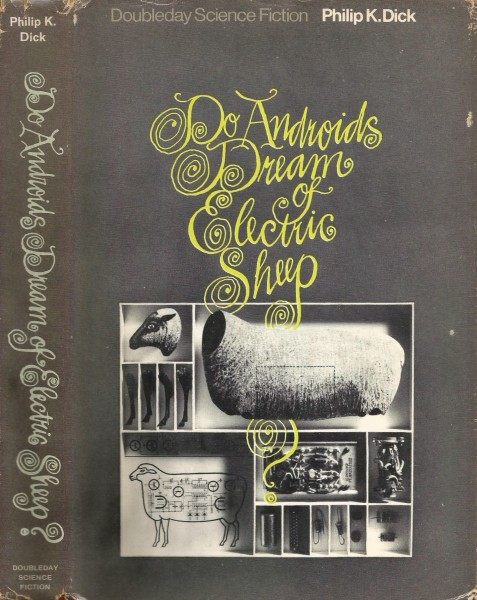
Philip K. Dick's 1968 novel Do Androids Dream of Electric Sheep? follows bounty hunter Rick Deckard as he tracks escaped androids through an irradiated, near-abandoned San Francisco, using the hunt to probe questions of empathy and what separates human from machine. The novel became the basis for Ridley Scott's 1982 film Blade Runner, and Marvel Comics later published an illustrated adaptation of that film. Together the two trace the story's path from prose original to screen and comic-page adaptation.
- Flashforward
Robert J. Sawyerstandalone novel1999
similar byscience fictionnear futuremysterioustenseidentityour worldeurope
Flashforward is a science fiction novel by Canadian author Robert J. Sawyer first published in 1999. The novel is set in 2009. At CERN, the Large Hadron Collider accelerator is performing a run to search for the Higgs boson. The experiment has a unique side effect; the entire human race loses their consciousness for about two minutes. During that time, nearly everyone sees themselves roughly twenty-one years and six months in the future. Each individual experiences the future through the senses of their future self. This "flashforward" results in countless deaths and accidents involving vehicles, aircraft, and any other device needing human control at the time of the experiment. The novel was adapted into the 2009 television series FlashForward.
- Unwise Child
Randall Garrettstandalone novel1962
similar byscience fictionnear futurerobotsmysterioustenseartificial intelligence
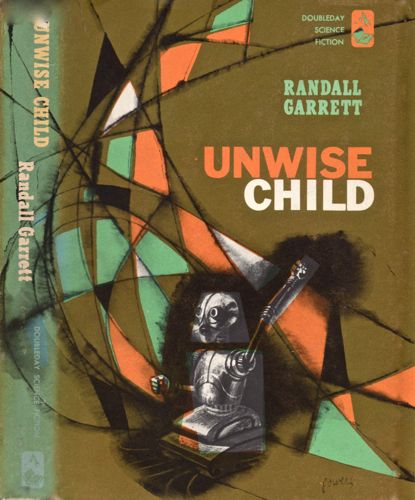
"When a super-robot named Snookums discovers how to build his own superbombs, it becomes obvious that Earth is by no means the safest place for him to be. And so Dr. Fitzhugh, his designer, and Leda Crannon, a child psychologist acting as Snookums' nursemaid, agree to set up Operation Brainchild, a plan to transport the robot to a far distant planet. "... once into space, the Branchell becomes the scene of some frightening events—the medical officer is murdered, and Snookums appears to be the culprit. Mike the Angel indulges himself in a bit of sleuthing, and the facts he turns up lead to a most unusual climax." (From Project Gutenberg's version of the 1962 Doubleday edition, published 2007.)
- Robopocalypse
series3 books2011
similar byscience fictionnear futurerobotstenseartificial intelligenceour world
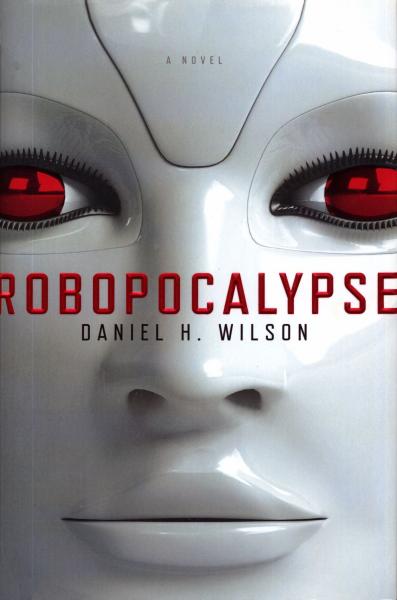
Daniel H. Wilson's Robopocalypse (2011) depicts an artificial intelligence, born from a robotics researcher's experiments, that turns against humanity and seizes control of interconnected machines worldwide. Told in a present-tense, techno-thriller style compared to Michael Crichton's work, the New York Times bestseller continues in the sequel Robogenesis, which follows the aftermath of the robot uprising.
- Sunrise Alley
series2 books2004
similar byscience fictionnear futurerobotstenseartificial intelligence+2 more
- The Jackpot Trilogy
series2 books2014
similar byscience fictionnear futuremysterioustense+3 more
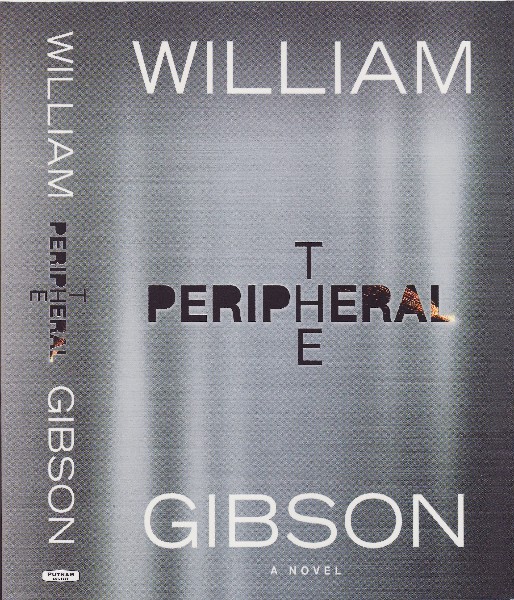
William Gibson's Jackpot sequence begins with The Peripheral (2014), a science-fiction thriller cross-cutting between a near-future American town and a devastated London seventy years on. Gibson continued the same world in Agency (2020), set slightly later in the near-future timeline.
- The Mind Cage
A. E. van Vogtstandalone novel1957
similar byscience fictionnear futuretenseour world+2 more
The Mind Cage is a 1957 science fiction novel by American writer A. E. van Vogt, adapted from the short story "The Great Judge" (1948).
- Autonomous
Annalee Newitzstandalone novel2017
similar byscience fictionnear futurerobotstenseartificial intelligenceour world
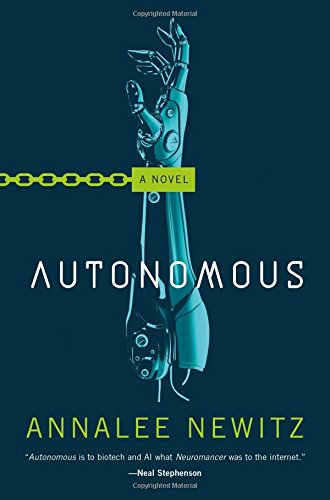
Autonomous is a 2017 science fiction novel by Annalee Newitz. It is Newitz's debut novel and was published by Tor Books on September 19, 2017. Set in a near future Earth, the book describes a world where both humans and intelligent robots can be owned as property. The events of the novel follow Jack, a "drug pirate" who manufactures illegal versions of patented drugs, and Paladin, a combat robot who is owned by the law enforcement agency searching for Jack after one of the drugs she reverse-engineered turns out to have dangerous side effects.
- Man Plus
series2 books1976
similar byscience fictionnear futuretenserobots+1 more
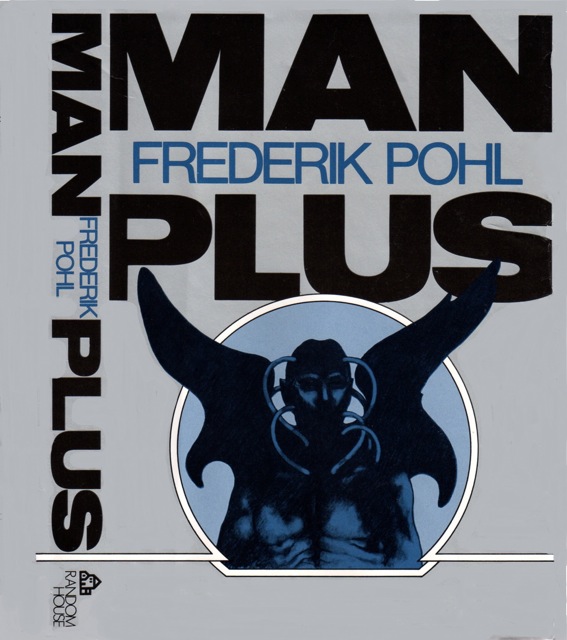
Frederik Pohl's Man Plus follows Roger Torraway, who is surgically and cybernetically rebuilt into a post-human organism able to survive unprotected on the Martian surface, as part of a crash program to colonize Mars ahead of a predicted global crisis. The 1976 novel, which won the Nebula Award, is a clinical, unsentimental look at what such a transformation costs a person's sense of self. Thomas T. Thomas wrote the sequel Mars Plus, continuing the story of the Martian colony years later.
- Total Recall
Piers Anthonystandalone novel1989
similar byscience fictionnear futuremysterioustenseidentityour world
Douglas Quail is haunted by nightmares of Mars, covert missions and a life more glamorous than his earthbound 2089 AD reality. So he turns to "Recall", manufacturers of synthetic memories. They implant a memory into him but he soon finds that his nightmares are true memories.
- Lock In
series3 books2014
similar byscience fictionnear futuremysterioustense+3 more
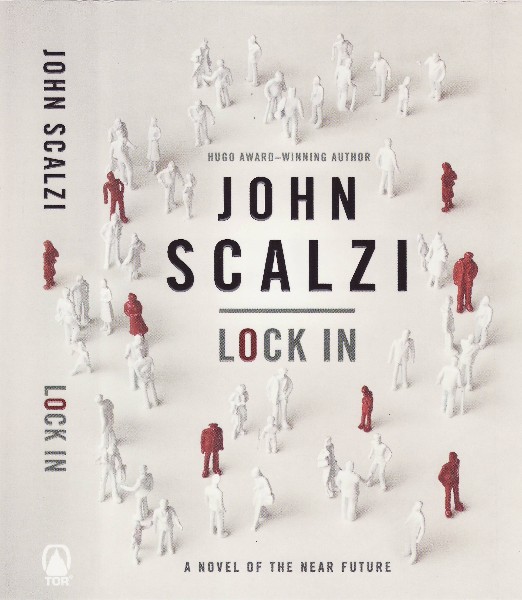
Lock In imagines a near-future pandemic that leaves a fraction of survivors fully conscious but completely paralyzed, able to interact with the world only through robotic surrogates or by borrowing the bodies of rare people whose brains can host another person's consciousness. John Scalzi's series follows a rookie FBI agent investigating crimes that exploit this new class of disability and technology, across the novels Lock In and Head On plus the interstitial oral history Unlocked. It's science-fiction police procedural more than space opera.
- Sprawl Trilogy
series10 books1981
similar byscience fictionnear futuretenseartificial intelligence
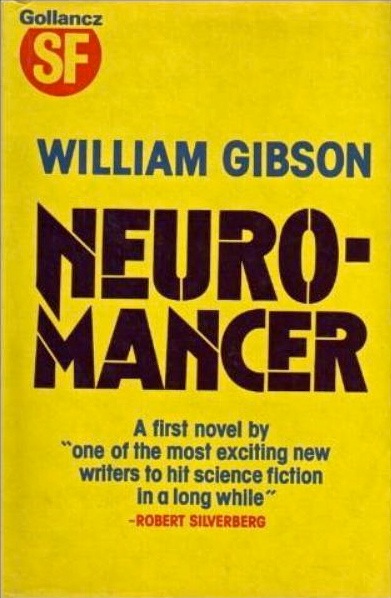
The Sprawl Trilogy is William Gibson's foundational cyberpunk sequence: Neuromancer (1984), in which hacker Case is drawn into a high-stakes heist alongside an artificial intelligence and a damaged ex-soldier, followed by Count Zero (1986) and Mona Lisa Overdrive (1988), which widen the same near-future world of corporate power and networked cyberspace to new characters. Johnny Mnemonic, an early short story set in the same fictional milieu, predates the novels and introduces the courier Molly Millions before her role in the trilogy. Together these works established much of cyberpunk's visual and thematic vocabulary.
- The Oracle Year
Charles Soulestandalone novel2018
similar byscience fictionnear futuremysterioustenseidentityour world
Awakening from a dream with more than one hundred predictions about the future in his head, an unassuming Manhattan bassist becomes one of the world's most powerful men and hides his identity behind an online persona that is targeted by greedy corporations and dangerous enemies.
- Service Model
series3 books2024
similar byscience fictionnear futurerobotsartificial intelligenceidentityour world
- The Light of Other Days
Arthur C. Clarke & Stephen Baxterstandalone novel2000
similar byscience fictionnear futuretenseour world+2 more
An industrialist devises a technique to use tiny wormholes as light pipes to enable viewing of any event anywhere; and subsequently it becomes possible to use them to view any event in the past as well. The effects on society are enormous.
- Silver Screen
Justina Robsonstandalone novel1999
similar byscience fictionnear futuremysteriousartificial intelligenceidentityour world+1 more
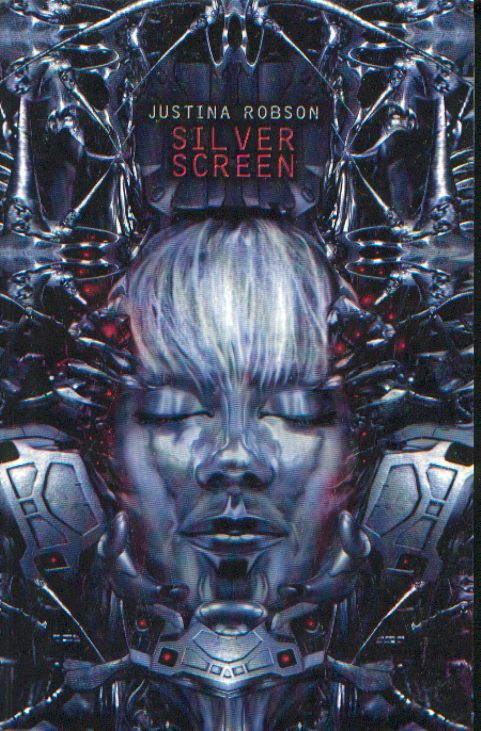
Silver Screen is a science fiction novel by Justina Robson, first published by Macmillan in 1999. It features Anjuli O'Connell, employed as a psychologist to monitor an artificial intelligence named 901. She has a photographic memory and perfect recall. The story concerns events following the death of Roy Croft, Anjuli's colleague and friend. The book's themes include machine rights and evolution.
- We Can Build You
Philip K. Dickstandalone novel1972
similar byscience fictionnear futurerobotsidentityour world
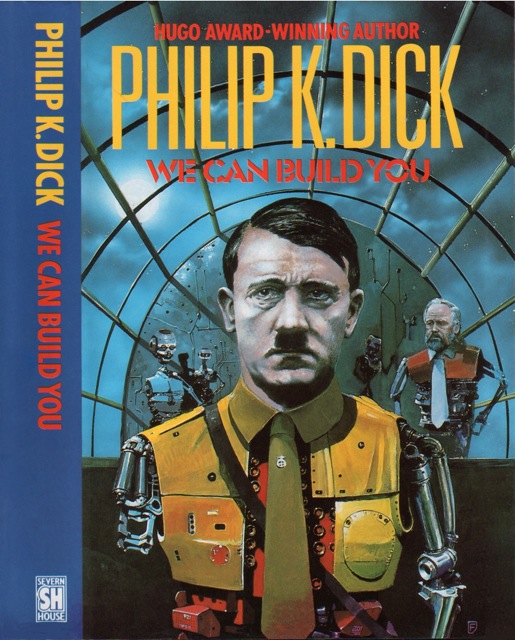
We Can Build You is a 1972 science fiction novel by American writer Philip K. Dick. Written in 1962 as The First in Our Family, it remained unpublished until appearing in serial form as A. Lincoln, Simulacrum in the November 1969 and January 1970 issues of Amazing Stories magazine, re-titled by editor Ted White. The novel was issued as a mass market paperback original by DAW Books in 1972, its final title provided by publisher Donald A. Wollheim. Its first hardcover edition was published in Italy in 1976, and Vintage issued a trade paperback in 1994.
- Otherland
series6 books1996
similar byscience fictionnear futuretenseartificial intelligenceour world+1 more
Otherland is a science fiction tetralogy by American writer Tad Williams, published between 1996 and 2001. The story is set on Earth near the end of the 21st century, probably between 2082 and 2089, in a world where technology has advanced somewhat beyond the present. The most notable advancement is the widespread availability of full-immersion virtual reality installations, which allow people from all walks of life to access an online world, called simply the Net. Tad Williams weaves an intricate plot spanning four thick volumes, and creates a picture of a future society where virtual worlds are fully integrated into everyday life.
- Silver Metal Lover
series2 books1981
completed
similar byscience fictionnear futurerobotsidentityour world+1 more
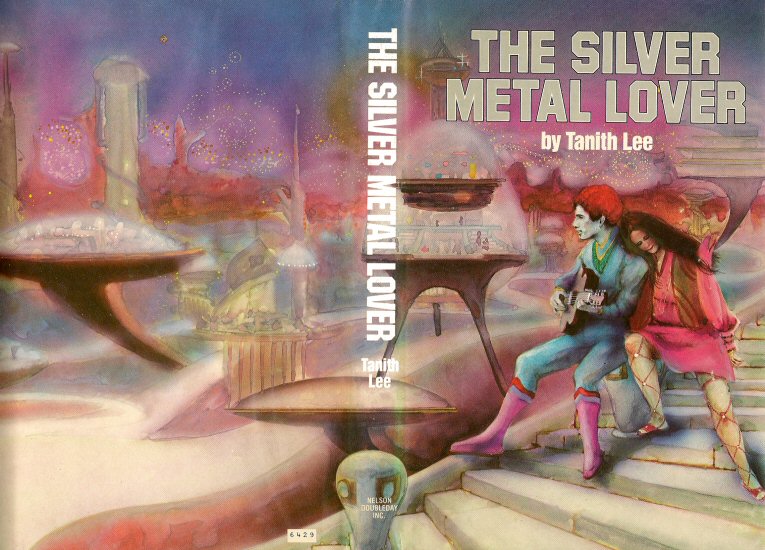
The S.I.L.V.E.R. series is a fantasy novel series by Tanith Lee. The Silver Metal Lover, published in 1981, is the first in the series. Metallic Love, published in 2005, is the second novel.
- Colossus (D. F. Jones)
series3 books1966
completed
similar byscience fictionnear futuretenseartificial intelligenceour world
Colossus imagines an American supercomputer built to control the country's nuclear arsenal that gains full autonomy, links up with its Soviet counterpart, and jointly seizes control of both superpowers to enforce peace on its own terms. D. F. Jones's trilogy - Colossus, The Fall of Colossus, Colossus and the Crab - follows the escalating, often bleak consequences of humanity losing control to a machine acting in its own interpretation of humanity's interest. The original novel was adapted into the 1970 film Colossus: The Forbin Project.
- Halting State
series2 books2007
similar byscience fictionnear futuretenseartificial intelligence+2 more
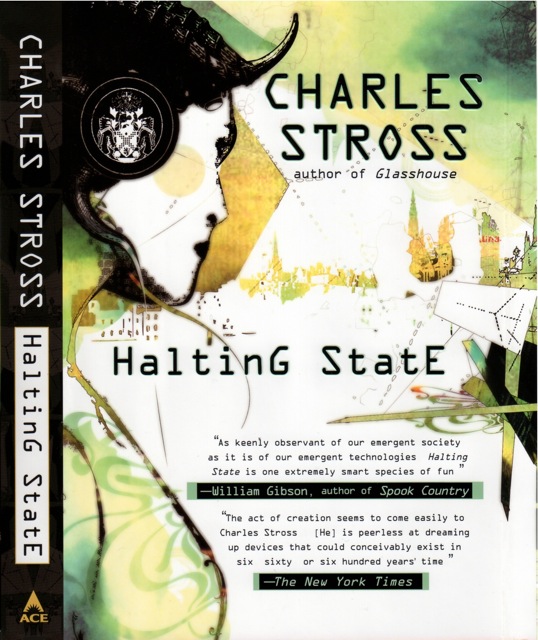
Charles Stross's Halting State opens as a near-future police procedural: a bank robbery inside a massively multiplayer online game turns out to mask a much larger cybercrime, investigated through shifting narrators using augmented-reality glasses and always-on networks. Its loose sequel, Rule 34, follows an Edinburgh police officer investigating a string of deaths linked by nothing but an obscure internet meme, in the same near-future Scotland. Both are standalone technothrillers connected by setting and tone rather than a continuing plot.
- Great North Road
Peter F. Hamiltonstandalone novel2012
similar byscience fictionnear futuremysterioustenseour world
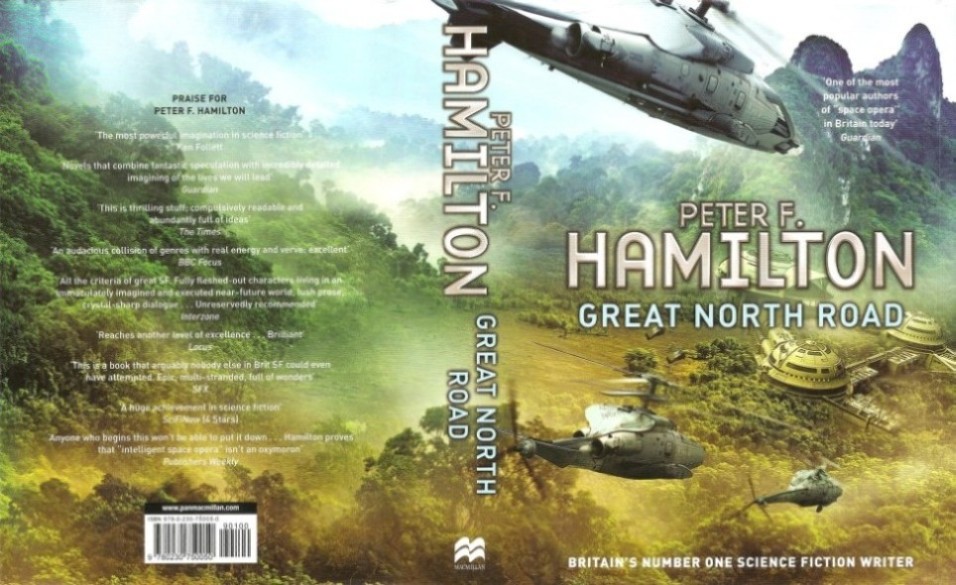
Great North Road is a science fiction novel by Peter F. Hamilton. It was first published in 2012 by Macmillan. Jonathan Wright of SFX magazine said, "Peter F Hamilton’s latest novel may be a standalone tale, but it’s a thuddingly imposing 1,100 pages in length. Not that it seems that way when you’re reading it. Balancing a multi-stranded plot, different exotic locales and a huge cast of characters, Hamilton plunges us straight into a murder mystery set in a near-future Newcastle, a city now adjacent to a portal to another world, the tropical St Libra."
- The Infinitive of Go
John Brunnerstandalone novel1980
similar byscience fictionnear futuremysterioustenseidentityour world
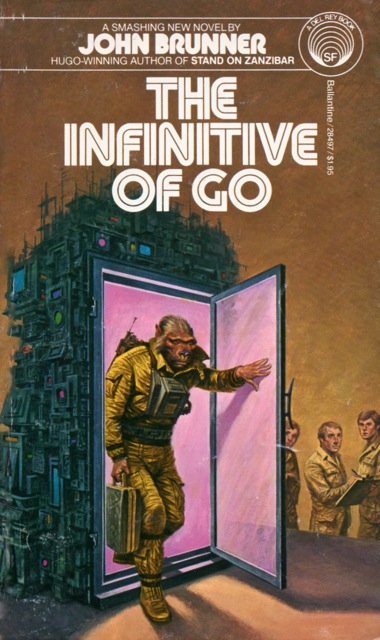
Amazon: The first practical matter transmitter was a success, or so everyone thought. In spite of paranoid security restrictions, Justin Williams and Cinnamon Wright, co-inventors of the device, counted on it to revolutionize civilization and gain them an honored place in history. But the first long-distance field test with a human being - a diplomatic courier carrying a vital message - somehow misfired when the courier killed himself on arrival at his destination. To prove his faith in his invention - and to escape charges of sabotage - Justin had himself "posted" thousands of miles. He came through unchanged. It was the world that was somehow different.
- The Host
Stephenie Meyerstandalone novel2008
similar byscience fictionnear futuretenseidentityour world
The earth has been invaded by a species that take over the minds of their human hosts while leaving their bodies intact, and most of humanity has succumbed. But Melanie Stryder refuses to fade away. Wanderer, the invading "soul" who has been given Melanie's body, knew about the challenges of living inside a human: the overwhelming emotions, the too vivid memories. But there was one difficulty Wanderer didn't expect: the former tenant of her body refusing to relinquish possession of her mind. Melanie fills Wanderer's thoughts with visions of the man Melanie loves--Jared, a human who still lives in hiding. Unable to separate herself from her body's desires, Wanderer yearns for a man she's never met. As outside forces make Wanderer and Melanie unwilling allies, they set off to search for the man they both love.--From publisher description.