Loreful
HomeDiscover
Search series, authors…⌘K
Loreful

Reading orders for SF/F series and shared universes — with your place kept in every one.

Explore

UniversesSeriesWorksAuthorsAtlas

Help

FAQAboutSite map

Account & legal

Sign inCreate accountPrivacyTerms

Data

Built on ISFDB, Wikipedia, Wikidata and Open Library. Curated reading orders carry their reasoning on the page; the rest follow publication order. Data sources & licenses

© Loreful · data: ISFDB · CC BY

More like Temporary Insanity

but

Mood

The mood the book leaves you in.

  • The reading experience is propelled by journeys, exploration, and physical risk; excitement and forward momentum dominate over dread or introspection.
  • The book demands work from the reader — dense prose, difficult structure, unfamiliar ideas, or morally uncomfortable material — as part of its intended effect.
  • Grim events, cruelty, or despair dominate the atmosphere, and the book does not soften them with comfort or comic relief.
  • The atmosphere is quietly unsettling — wrongness, unease, and the uncanny pervade the book without necessarily escalating into overt horror.
  • The book is built to move the reader; character feeling is foregrounded and major scenes aim at a strong emotional response.
  • Humor is a primary aim and the prose plays for laughs — comic situations, wit, or dialogue produce sustained comedy, not occasional levity.
  • The book insists that things can improve; effort and decency are shown to matter, and the arc bends toward better outcomes even through hardship.
  • The overall register is cheerful and easygoing; stakes are kept gentle and the book avoids dwelling on pain or dread.
  • Withheld information drives the experience; the book sustains enigmas and secrets the reader wants resolved, whatever its genre.
  • The book is contemplative and inward-looking, giving more weight to thought, memory, and meaning than to external events.
  • Grief, loss, or melancholy set the dominant register, and the book lets sorrow stand rather than resolving it into comfort.
  • Sustained suspense is the point; the book keeps the reader braced for what happens next through danger, pressure, or impending revelation.
  • Playful invention and charm define the register — fanciful conceits, light absurdity, and a narration that delights in its own oddity.

About

What the story runs on.

  • Stories centered on vampires — blood-drinking undead — whether as predators, love interests, or protagonists.
  • Stories centered on werewolves and the curse or gift of transformation into a wolf.
  • Stories about beings who change form at will — skinwalkers, selkies, and other shape-changers beyond the werewolf.
  • Stories centered on witches and the practice of witchcraft — covens, hedge magic, familiars, and the witch's place in her community.
  • Stories in which demons or devils — infernal beings, their bargains, possessions, and hierarchies — drive the plot.
  • Stories driven by a curse laid on a person, family, or place, and the struggle to live under it or break it.
  • Stories in which staying alive against nature, catastrophe, or scarcity is the central problem.
  • Stories of lovers kept apart by law, family, faith, or station, where the obstacle to love is the plot.
  • Romantic arcs that begin in genuine antagonism and turn, through conflict, into love.
  • Stories about who a character truly is — self-discovery, doubled lives, and the search for a self.
  • Stories about mental unraveling — descent into madness, delusion, and minds at war with themselves.
  • Stories driven by the pursuit of vengeance for a wrong, and what the pursuit costs the avenger.

Shelf

Where it sits in the library.

    • Fiction built on magic or other supernatural elements that have no scientific explanation.
    • Secondary-world fantasy at large scale, where the fate of nations or the world turns on the protagonists' struggle.
    • Fantasy set in a recognizably modern city or contemporary world where the supernatural intrudes on everyday life.
    • Fantasy that blends in horror's atmosphere and imagery, keeping a fantastical frame around grim or frightening material.
    • Action-driven fantasy following warriors or rogues with personal stakes against sorcerous threats, rather than world-spanning conflicts.
    • Fantasy set in a real historical period or a close analogue of one, with magic woven into the era.
    • Fantasy in which protagonists cross from the ordinary world into another world through a portal or similar passage.
    • Fiction that retells or reworks a traditional fairy tale in a new form or setting.
    • Fantasy of ghosts, vampires, shapeshifters, psychics, and similar phenomena, usually set in an otherwise ordinary world.
    • Fiction mixing science-fictional trappings with overtly magical or impossible elements in one setting.
    • Speculative fiction of pervasive moral ambiguity, violence, and cynicism that rejects heroic conventions — fantasy and SF alike.
      • Fiction that extrapolates from science and technology — future societies, space travel, or speculative inventions — within at least nominally natural laws.
      • Science fiction of interstellar scope — starships, galactic polities, and adventure across star systems.
      • Science fiction of networked, corporate-dominated near futures, pairing high technology with social decay.
      • Fiction depicting an oppressive or catastrophic society, presented as a warning.
      • Fiction set after civilization's collapse, following survivors in the ruins of the old world.
      • Fiction in which characters move between past and future, and the mechanics or consequences of that travel drive the plot.
      • Fiction whose primary aim is to frighten or unsettle the reader through dread, menace, or the monstrous.
      • Horror of vast, indifferent, incomprehensible entities before which humanity is insignificant, in the Lovecraft tradition.
      • Horror of decaying houses, buried family secrets, and oppressive atmosphere in the Gothic literary tradition.
      • Horror centered on hauntings and the returning dead.
      • Horror located in the mind — paranoia, obsession, and unreliable perception rather than external monsters.
      • Horror built around the reanimated dead and survival amid their outbreaks.
      • Horror defined by explicit, transgressive gore that refuses to cut away from violence.
      • Speculative fiction of the strange and uncanny that resists both natural explanation and standard genre categories.
      • Fiction organized around solving a crime or puzzle, typically following an investigator toward the identification of a culprit.
      • Crime fiction of moral ambiguity, fatalism, and hard-edged style, set among the corrupt and the doomed.
      • Fast-paced fiction driven by imminent danger, pursuit, or high-stakes conspiracy, built to sustain tension.
      • A thriller of espionage — agents, tradecraft, and intelligence services in conflict.
      • Fiction whose central plot is a romantic relationship and its development toward an emotionally satisfying resolution.
      • Romance in which one or both partners are supernatural beings, blending fantasy elements into the love story.
      • A fantasy-romance hybrid in which the romantic arc and the fantasy plot carry equal weight.
      • Romance set in a past era, with courtship shaped by the period's society and manners.
      • Romance set in the present day, without supernatural or historical elements.
      • Fiction set in a real past period, where the historical setting materially shapes characters and events.
        • General and literary fiction emphasizing prose style, character interiority, or formal ambition over genre plot conventions.
        • Fiction that ridicules people, institutions, or society in order to criticize them.
        • Fiction that plays with narrative convention through metafiction, fragmentation, and self-reference.
        • Fiction propelled by journeys, exploration, and physical peril, where action and survival carry the plot.
        • Fiction of the American frontier West — gunmen, ranchers, and lawmen, typically in the late nineteenth century.
        • Fiction written primarily to amuse, using comedic situations, wit, or parody as its organizing principle.
          • Fiction whose world runs on explicit game mechanics — levels, stats, and skills that characters can see and exploit.
            • Fiction about costumed or superpowered heroes and their conflicts with comparable villains.

            Practical

            How long a commitment, whether it stands alone, and whether it has finished.

            Tap a chip to ask for it · tap again to rule it out · once more to clear. Numbers show what would be left.

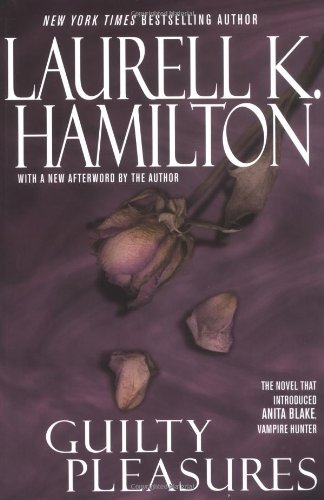
            • Cover of Anita Blake
              Anita Blake

              series · 42 books · 1993

              similar by+1 more

              Anita Blake: Vampire Hunter is a series of urban fantasy novels, short stories, and comic books by Laurell K. Hamilton. The books have sold more than six million copies; many have made The New York Times Best Seller list.

            • Cover of Gor
              Gor

              series · 41 books · 1966

              similar by+1 more

              Gor is the fictional setting for a series of sword and planet novels written by philosophy professor John Lange, writing as John Norman. The setting was first described in the 1966 novel Tarnsman of Gor. The series is inspired by science fantasy pulp fiction works by Edgar Rice Burroughs, such as the Barsoom series. It also includes erotica and philosophical content. The Gor series repeatedly depicts men abducting and physically and sexually brutalizing women, who grow to enjoy their submissive state. According to The Encyclopedia of Science Fiction, Norman's "sexual philosophy" is "widely detested", but the books have inspired a Gorean subculture.

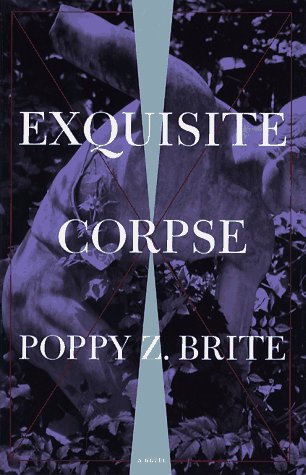
            • Cover of Exquisite Corpse
              Exquisite Corpse

              Poppy Z. Brite · standalone novel · 1996

              similar byadult only

              Exquisite Corpse is a horror novel by American writer William J. Martin. The protagonist of the story is Andrew Compton, an English convicted homosexual serial killer, cannibal and necrophiliac. Brite has described it as "a necrophilic, cannibalistic, serial killer love story that explores the seamy politics of victimhood and disease."

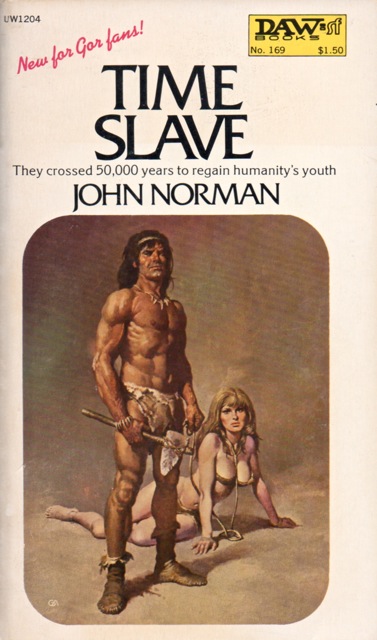
            • Cover of Time Slave
              Time Slave

              John Norman · standalone novel · 1975

              similar by+1 more

              A modern woman travels back in time to a prehistoric era, where she becomes submissive to both modern men and men from the time to which she travels. Not part of the Gor series, but similar in tone.

            • Cover of Eroma
              Eroma

              Piers Anthony · standalone novel · 2013

              similar by+1 more

            • Cover of Trail Mix
              Trail Mix

              series · 2 books · 2013

              similar by+1 more

            • Cover of Pack
              Pack

              series · 4 books · 2011

              similar by+1 more

            • Cover of Tengu
              Tengu

              Graham Masterton · standalone novel · 1983

              similar by+1 more

            • Cover of Sliver
              Sliver

              Ira Levin · standalone novel · 1991

              similar byadult only

              Sliver is an erotic novel by the American writer Ira Levin, first published in 1991. The story follows a group of mysterious people in a privately owned high-rise apartment building in New York City after an attractive young woman moves in. The novel was adapted into a film of the same name in 1993. Directed by Phillip Noyce and written by Joe Eszterhas, it starred Sharon Stone, William Baldwin, Polly Walker and Tom Berenger.

            • Cover of Micah Hayes
              Micah Hayes

              series · 8 books · 1996

              similar byadult only

            • Cover of Love in Vein
              Love in Vein

              series · 2 books · 1994

              similar byadult only

            • Cover of Depraved
              Depraved

              series · 5 books · 2009

              similar byadult only

            • Cover of Survivor (J. F. Gonzalez)
              Survivor (J. F. Gonzalez)

              series · 6 books · 2004

              similar byadult only

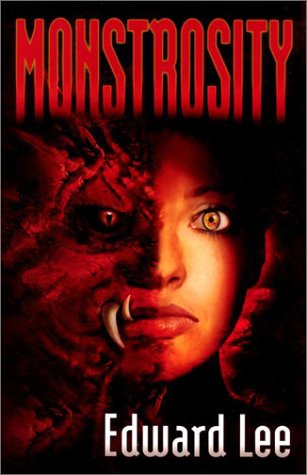
            • Cover of Monstrosity
              Monstrosity

              Edward Lee · standalone novel · 2002

              similar byadult only

            • Cover of Slither
              Slither

              Edward Lee · standalone novel · 2006

              similar byadult only

            • Cover of Black Falcon Nation
              Black Falcon Nation

              series · 3 books · 2005

              similar by+1 more

            • Cover of Header
              Header

              series · 3 books · 1995

              similar byadult only

            • Cover of Paris Immortal
              Paris Immortal

              series · 5 books · 2008

              similar by+1 more

            • Cover of The Bighead
              The Bighead

              Edward Lee · standalone novel · 1997

              similar byadult only

            • O
              Omegaverse

              series · 7 books · 2016

              similar by+1 more

            • Cover of The Extreme Horror Series
              The Extreme Horror Series

              series · 3 books · 2017

              similar byadult only

            • Cover of Hogg
              Hogg

              Samuel R. Delany · standalone novel · 1995

              similar byadult only

              Hogg is a novel by American author Samuel R. Delany, written in 1969 and completed in 1995. The novel deals graphically with themes of murder, child molestation, incest, coprophilia, coprophagia, urolagnia, anal-oral contact, necrophilia and rape. It was conceptualized and written in 1969, with a further draft completed in 1973, and it was finally published with some further, though relatively minor, rewrites in 1995 by Black Ice Books. Two later editions have featured some corrections, the last of which, published by Fiction Collective Two in 2004, carries a note from Delany stating that it is definitive.

            • Cover of Gast
              Gast

              Edward Lee · standalone novel · 2007

              similar byadult only

            • Cover of The Backwoods
              The Backwoods

              Edward Lee · standalone novel · 2005

              similar byadult only

              A backwater prostitute strangled half to death and buried alive. Children scampering into the woods to play–and never return. Women raped and murdered, men strung up and butchered in place–all for sport. Corpses buried and corpses dug up, and bodies found...with parts missing. Welcome home, Patricia... But it's more than home that awaits Patricia when she returns to the quiet backwoods town where she grew up. Lust-driven frenzy and sultry dreams spark the most erotic obsessions, while something wanton stalks her from the darkest heart of the night. As the bodies pile up and the blood pours, the blackest secrets are revealed. Has the town she calls home really been cursed. No. It's been blessed. By a nameless evil older than sin. Welcome to... THE BACKWOODS!