Loreful
HomeDiscover
Search series, authors…⌘K
Loreful

Reading orders for SF/F series and shared universes — with your place kept in every one.

Explore

UniversesSeriesWorksAuthorsAtlas

Help

FAQAboutSite map

Account & legal

Sign inCreate accountPrivacyTerms

Data

Built on ISFDB, Wikipedia, Wikidata and Open Library. Curated reading orders carry their reasoning on the page; the rest follow publication order. Data sources & licenses

© Loreful · data: ISFDB · CC BY

More like Termites

but

Mood

The mood the book leaves you in.

  • The reading experience is propelled by journeys, exploration, and physical risk; excitement and forward momentum dominate over dread or introspection.
  • The book demands work from the reader — dense prose, difficult structure, unfamiliar ideas, or morally uncomfortable material — as part of its intended effect.
  • Grim events, cruelty, or despair dominate the atmosphere, and the book does not soften them with comfort or comic relief.
  • The atmosphere is quietly unsettling — wrongness, unease, and the uncanny pervade the book without necessarily escalating into overt horror.
  • The book is built to move the reader; character feeling is foregrounded and major scenes aim at a strong emotional response.
  • Humor is a primary aim and the prose plays for laughs — comic situations, wit, or dialogue produce sustained comedy, not occasional levity.
  • The book insists that things can improve; effort and decency are shown to matter, and the arc bends toward better outcomes even through hardship.
  • The book teaches as it goes — real facts, history, science, or craft are conveyed in enough depth that learning is part of the reading experience.
  • The overall register is cheerful and easygoing; stakes are kept gentle and the book avoids dwelling on pain or dread.
  • Withheld information drives the experience; the book sustains enigmas and secrets the reader wants resolved, whatever its genre.
  • The book is contemplative and inward-looking, giving more weight to thought, memory, and meaning than to external events.
  • Grief, loss, or melancholy set the dominant register, and the book lets sorrow stand rather than resolving it into comfort.
  • Sustained suspense is the point; the book keeps the reader braced for what happens next through danger, pressure, or impending revelation.
  • Playful invention and charm define the register — fanciful conceits, light absurdity, and a narration that delights in its own oddity.

About

What the story runs on.

  • Stories in which extraterrestrial beings are central — as characters, cultures, or the object of the plot.
  • Stories driven by deliberate modification of genomes — designer organisms, engineered humans, and the consequences of remaking life.
  • Stories about venturing into space to explore — survey missions, astronauts, and the frontier of the unknown beyond Earth.
  • Stories structured as a quest — a journey undertaken to find, deliver, or destroy something of great import.
  • Stories in which staying alive against nature, catastrophe, or scarcity is the central problem.
  • Stories of growing up — a young protagonist crossing from childhood into adult knowledge and responsibility.
  • Stories about who a character truly is — self-discovery, doubled lives, and the search for a self.
  • Stories driven by maneuvering for power — factions, conspiracies, and statecraft conducted in shadow.
  • Stories in which war itself is the subject — combat, occupation, and what warfare does to soldiers and civilians.
  • Stories about empire — conquest, colonial rule, and its legacies for colonizer and colonized.
  • Stories organized around investigating a killing — the case, the clues, and the pursuit of the killer, in any genre's clothing.
  • Stories following an expedition into the unknown — uncharted lands, lost cities, and the discovery or ruin waiting at the end.

Shelf

Where it sits in the library.

    • Fiction built on magic or other supernatural elements that have no scientific explanation.
    • Secondary-world fantasy at large scale, where the fate of nations or the world turns on the protagonists' struggle.
    • Fantasy set in a recognizably modern city or contemporary world where the supernatural intrudes on everyday life.
    • Fantasy that blends in horror's atmosphere and imagery, keeping a fantastical frame around grim or frightening material.
    • Action-driven fantasy following warriors or rogues with personal stakes against sorcerous threats, rather than world-spanning conflicts.
    • Fantasy set in a real historical period or a close analogue of one, with magic woven into the era.
    • Fantasy in which protagonists cross from the ordinary world into another world through a portal or similar passage.
    • Fiction that retells or reworks a traditional fairy tale in a new form or setting.
    • Fantasy drawing directly on myths, legends, and folklore, retelling them or building on their figures and logic.
    • Fantasy of ghosts, vampires, shapeshifters, psychics, and similar phenomena, usually set in an otherwise ordinary world.
    • Fiction mixing science-fictional trappings with overtly magical or impossible elements in one setting.
    • Fiction that extrapolates from science and technology — future societies, space travel, or speculative inventions — within at least nominally natural laws.
    • Science fiction of interstellar scope — starships, galactic polities, and adventure across star systems.
    • Science fiction committed to scientific rigor, where technical plausibility constrains the story.
    • Science fiction centered on armed forces and warfare, told largely from a military point of view.
    • Science fiction of networked, corporate-dominated near futures, pairing high technology with social decay.
    • Science fiction styled on nineteenth-century steam-powered technology, often in a Victorian or pseudo-Victorian setting.
    • Fiction depicting an oppressive or catastrophic society, presented as a warning.
    • Fiction set after civilization's collapse, following survivors in the ruins of the old world.
    • Fiction in which characters move between past and future, and the mechanics or consequences of that travel drive the plot.
    • Fiction exploring a world where a historical event went differently and history diverged from ours.
    • Science fiction about humanity's first encounter and communication with an alien intelligence.
    • Science fiction in which extraterrestrial forces attack or occupy Earth and humanity resists.
    • Fiction whose primary aim is to frighten or unsettle the reader through dread, menace, or the monstrous.
    • Horror of vast, indifferent, incomprehensible entities before which humanity is insignificant, in the Lovecraft tradition.
    • Horror of decaying houses, buried family secrets, and oppressive atmosphere in the Gothic literary tradition.
    • Horror centered on hauntings and the returning dead.
    • Horror located in the mind — paranoia, obsession, and unreliable perception rather than external monsters.
    • Horror built around the reanimated dead and survival amid their outbreaks.
    • Speculative fiction of the strange and uncanny that resists both natural explanation and standard genre categories.
    • Fiction organized around solving a crime or puzzle, typically following an investigator toward the identification of a culprit.
      • Fast-paced fiction driven by imminent danger, pursuit, or high-stakes conspiracy, built to sustain tension.
      • A thriller of espionage — agents, tradecraft, and intelligence services in conflict.
      • A thriller driven by detailed contemporary or near-future technology, often military or scientific.
      • Fiction whose central plot is a romantic relationship and its development toward an emotionally satisfying resolution.
      • Romance in which one or both partners are supernatural beings, blending fantasy elements into the love story.
      • A fantasy-romance hybrid in which the romantic arc and the fantasy plot carry equal weight.
      • Romance set in the present day, without supernatural or historical elements.
      • Fiction set in a real past period, where the historical setting materially shapes characters and events.
        • General and literary fiction emphasizing prose style, character interiority, or formal ambition over genre plot conventions.
        • Fiction in a realistic world where magical events occur and are treated as ordinary, in the tradition of Latin American literature.
        • Fiction that ridicules people, institutions, or society in order to criticize them.
        • Fiction of dreamlike, irrational imagery and logic that breaks from realistic representation.
        • Fiction that plays with narrative convention through metafiction, fragmentation, and self-reference.
        • Fiction propelled by journeys, exploration, and physical peril, where action and survival carry the plot.
        • Adventure fiction of ships and seafaring — naval engagements, voyages, and life at sea.
        • Fiction of the American frontier West — gunmen, ranchers, and lawmen, typically in the late nineteenth century.
        • Fiction centered on soldiers, campaigns, and the experience of warfare, historical or imagined.
          • Fiction written primarily to amuse, using comedic situations, wit, or parody as its organizing principle.
            • Multi-generational fiction following a family or dynasty across decades, with inheritance and kinship as the through-line.
              • Fiction about costumed or superpowered heroes and their conflicts with comparable villains.

              Practical

              How long a commitment, whether it stands alone, and whether it has finished.

              Tap a chip to ask for it · tap again to rule it out · once more to clear. Numbers show what would be left.

              • Cover of Tarzan
                Tarzan

                series · 50 books · 1912

                part of Tarzan Universe

                similar byafrica

                Tarzan is a series of 24 adventure novels written by Edgar Rice Burroughs (1875–1950) and published between 1912 and 1966, followed by several novels either co-written by Burroughs, or officially authorized by his estate. There are also two works written by Burroughs especially for children that are not related to the main series.

              • Cover of Allan Quatermain
                Allan Quatermain

                series · 25 books · 1885

                similar byafrica

                Allan Quatermain is the protagonist of H. Rider Haggard's 1885 novel King Solomon's Mines, its one sequel Allan Quatermain (1887), twelve prequel novels and four prequel short stories, totalling eighteen works. An English professional big game hunter and adventurer, in film and television he has been portrayed by Richard Chamberlain, Sean Connery, Cedric Hardwicke, Patrick Swayze and Stewart Granger among others.

              • Cover of Ayesha
                Ayesha

                series · 8 books · 1886

                similar by+1 more

                The Ayesha books follow H. Rider Haggard's immortal sorceress-queen Ayesha, introduced in his 1887 novel She as the ruler of a hidden civilization who has waited millennia for her lost love to be reborn. Haggard continued her story in later novels, including the 1905 sequel Ayesha: The Return of She, which reunites her with characters from the first book, and further installments tracing her earlier history. Later reissues and retellings continue to build on the same character.

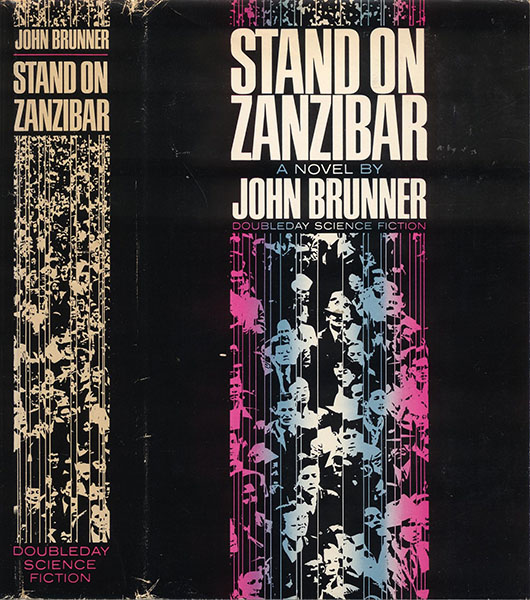
              • Cover of Stand on Zanzibar
                Stand on Zanzibar

                John Brunner · standalone novel · 1968

                similar by+1 more

                Stand on Zanzibar is a dystopian New Wave science fiction novel written by John Brunner and first in part published in New Worlds magazine in 1967 and in book form in 1968. The book won a Hugo Award for Best Novel at the 27th World Science Fiction Convention in 1969, as well as the 1969 BSFA Award and the 1973 Prix Tour-Apollo Award.

              • Cover of The Sheep Look Up
                The Sheep Look Up

                John Brunner · standalone novel · 1972

                similar by+1 more

                The Sheep Look Up is a 1972 dystopian science fiction novel by British author John Brunner, dealing with the deterioration of the environment in the United States. It was nominated for the 1972 Nebula Award for Best Novel.

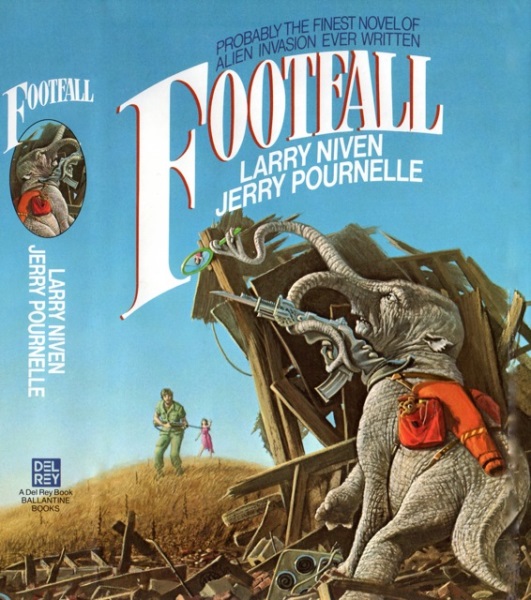
              • Cover of Footfall
                Footfall

                Larry Niven & Jerry Pournelle · standalone novel · 1985

                similar by+1 more

                When aliens travel to Earth from Alpha Centauri, differences between alien and human psychology result in an unprovoked invasion, and the resulting resistance results in the aliens' use of a devastating weapon.

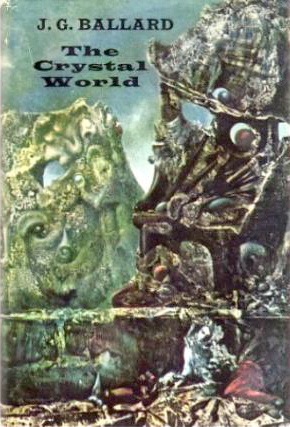
              • Cover of The Crystal World
                The Crystal World

                J. G. Ballard · standalone novel · 1966

                similar byafrica

                The Crystal World is a 1966 novel by British writer J. G. Ballard. It was first published in serialized form under the title "The Equinox" in New Worlds in 1964, before appearing in hardcover from Jonathan Cape in the United Kingdom and Farrar, Straus and Giroux in the United States in 1966. Contemporary reviewers including Brian Aldiss and Judith Merril discussed the novel as a distinctive entry in Ballard’s early catastrophe fiction.

              • Cover of The Light of Other Days
                The Light of Other Days

                Arthur C. Clarke & Stephen Baxter · standalone novel · 2000

                similar by+1 more

                An industrialist devises a technique to use tiny wormholes as light pipes to enable viewing of any event anywhere; and subsequently it becomes possible to use them to view any event in the past as well. The effects on society are enormous.

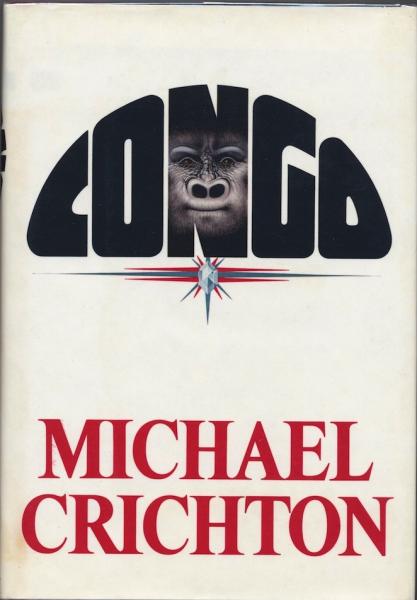
              • Cover of Congo
                Congo

                Michael Crichton · standalone novel · 1980

                similar byafrica

                WorldCat: On an expedition to return Amy, his talking gorilla, to her home in the Congo, Professor Peter Elliot is joined by others who hope to find a legendary diamond mine guarded by mutant gorillas.

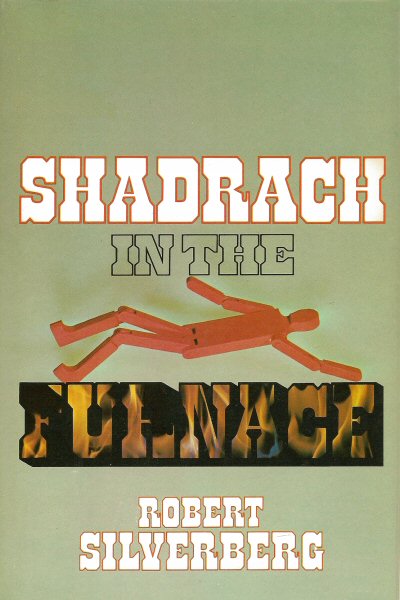
              • Cover of Shadrach in the Furnace
                Shadrach in the Furnace

                Robert Silverberg · standalone novel · 1976

                similar by+1 more

                Shadrach in the Furnace is a science fiction novel by American writer Robert Silverberg, first published as a serial in Analog Science Fiction and Fact magazine in the August, September, and October 1976 issues. It was subsequently published by Bobbs Merrill in 1976. The novel was nominated in 1976 for the Nebula Award, and in 1977 for the Hugo Award.

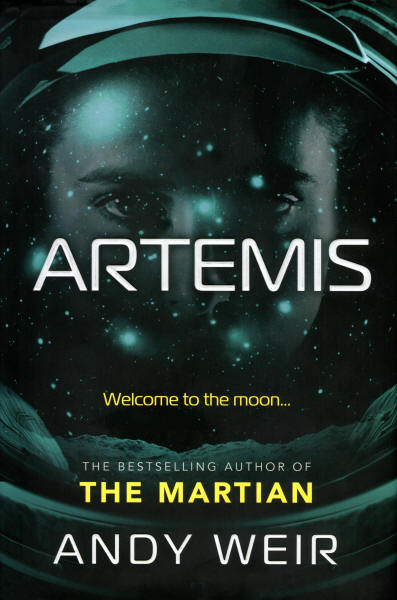
              • Cover of Artemis
                Artemis

                Andy Weir · standalone novel · 2017

                similar by+1 more

                Artemis is a 2017 science fiction novel by American writer Andy Weir. It takes place in the late 2080s in Artemis, the first and only city on the Moon. It follows the life of porter and smuggler Jasmine "Jazz" Bashara as she gets caught up in a conspiracy for control of the city. The book received mixed reviews from critics.

              • Cover of The Day of Creation
                The Day of Creation

                J. G. Ballard · standalone novel · 1987

                similar byafrica

                Dr. John Mallory has spent six purposeless months running a WHO clinic in a corner of Central Africa gutted by guerrilla war, with almost no patients to treat, when he throws himself into a project: bringing water to the parched land, with dreams of blooming the Sahara. When his drilling improbably succeeds and unleashes a river, Mallory's fixation curdles into obsession -- he begins to identify with the river as an extension of himself, and assembles an expedition, including a girl he takes for a water spirit and a half-blind documentary filmmaker, to follow it upstream toward its source. A visionary novel by J. G. Ballard.

              • Cover of Exorcist
                Exorcist

                series · 6 books · 1971

                similar by+1 more

                William Peter Blatty's The Exorcist (1971) follows two Catholic priests trying to save a twelve-year-old girl from a violent demonic possession, and became the basis of the acclaimed 1973 film. Blatty returned to the story in 1983 with Legion, in which police detective Bill Kinderman's investigation of a string of ritual murders leads him back to the aftermath of that exorcism and the fate of Father Karras; Legion was later filmed as The Exorcist III. Other Exorcist books are tie-in and franchise material rather than further novels by Blatty himself.

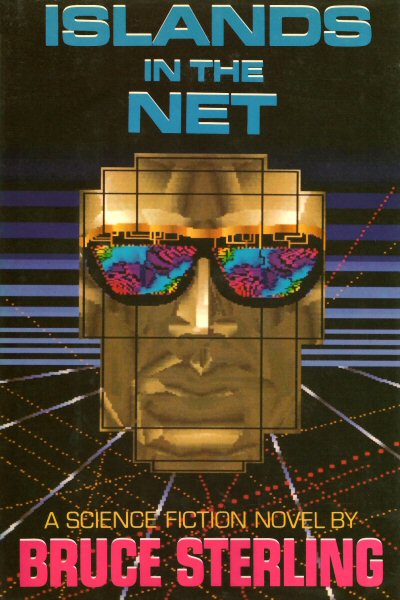
              • Cover of Islands in the Net
                Islands in the Net

                Bruce Sterling · standalone novel · 1988

                similar byafrica

                Islands in the Net is a 1988 science fiction novel by American writer Bruce Sterling. It won the John W. Campbell Memorial Award for Best Science Fiction Novel in 1989, and was nominated for both the Hugo and Locus Awards that same year. It offers a view of an early 21st century world, apparently peaceful, with delocalised, networking corporations. The protagonist, swept up in events beyond her control, finds herself in places that are off the net, from a datahaven in Grenada, to a Singapore under terrorist attack, to the poorest and most disaster-struck parts of Africa.

              • Cover of Queen Sheba's Ring
                Queen Sheba's Ring

                H. Rider Haggard · standalone novel · 1910

                similar byafrica

                Queen Sheba's Ring is a 1910 adventure novel by H. Rider Haggard set in central Africa. It resembles the author's earlier works King Solomon's Mines and She, featuring plotting priests, beautiful women, and daring British adventurers.

              • Cover of No Enemy But Time
                No Enemy But Time

                Michael Bishop · standalone novel · 1982

                similar byafrica

                No Enemy But Time is a 1982 science fiction novel by Michael Bishop. It won the 1982 Nebula Award for Best Novel, and was also nominated for the 1983 John W. Campbell Memorial Award. It was included in David Pringle's book Science Fiction: The 100 Best Novels.

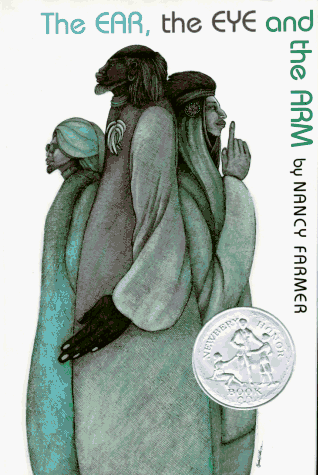
              • Cover of The Ear, the Eye, and the Arm
                The Ear, the Eye, and the Arm

                Nancy Farmer · standalone novel · 1989

                similar byafrica

                The Ear, the Eye, and the Arm is a children's science fiction novel by American writer Nancy Farmer. It was awarded a Newbery Honor. The novel is set in Zimbabwe in the year 2194, with a strong theme of Afrofuturism.

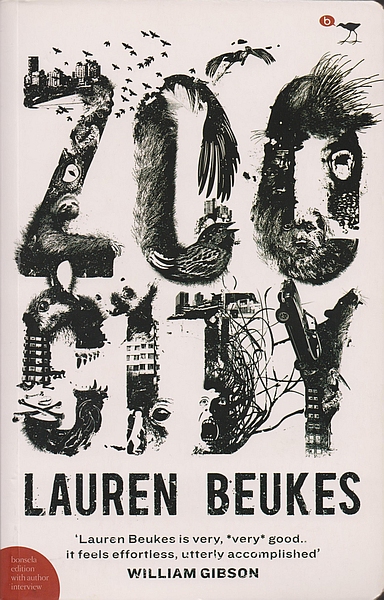
              • Cover of Zoo City
                Zoo City

                Lauren Beukes · standalone novel · 2010

                similar byafrica

                Zoo City is a 2010 science fiction novel by South African author Lauren Beukes. It won the 2011 Arthur C. Clarke Award and the 2010 Kitschies Red Tentacle for best novel. The cover of the British edition of the book was awarded the 2010 BSFA Award for best artwork, and the book itself was shortlisted in the best novel category of the award.

              • Cover of Zulu Nation
                Zulu Nation

                series · 1 book · 1892

                similar byafrica

                H. Rider Haggard's Nada the Lily is set during the rise of the Zulu king Shaka, following Umslopogaas, Shaka's unacknowledged son, and his love for the celebrated beauty Nada. Haggard weaves real Zulu history and figures together with invented characters and supernatural elements, building a tragic story of forbidden love against a backdrop of war and court intrigue. It's a standalone 1892 novel rather than a series.

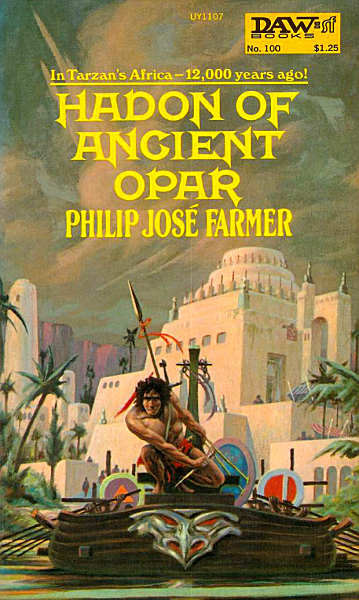
              • Cover of Tarzan's Africa / Opar / Khokarsa
                Tarzan's Africa / Opar / Khokarsa

                series · 9 books · 1972

                part of Tarzan Universe

                similar by+1 more

                More than ten thousand years ago, on the shores of long-vanished inland seas, a sophisticated matriarchal civilization of city-states rises in the heart of Africa -- including Opar, the lost city later stumbled upon by Edgar Rice Burroughs' Tarzan. Philip José Farmer's Khokarsa novels, beginning with Hadon of Ancient Opar, follow the warrior Hadon through adventures that unintentionally help spark a civil war threatening this ancient world. Christopher Paul Carey later continued the series with Farmer's notes and blessing, extending the prehistoric saga behind Tarzan's Opar.

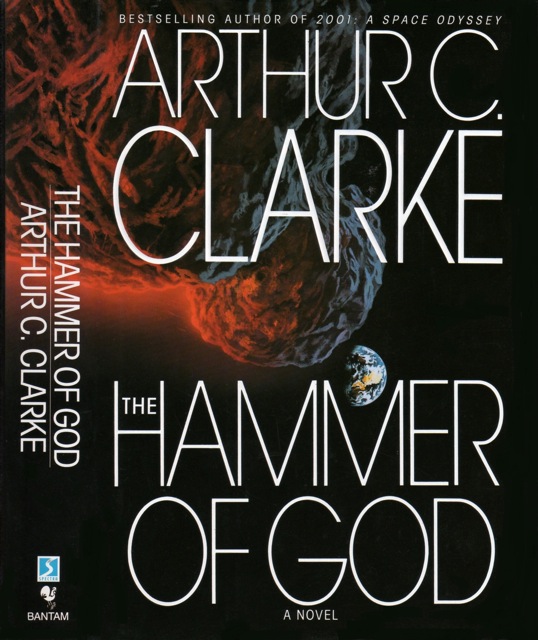
              • Cover of The Hammer of God
                The Hammer of God

                Arthur C. Clarke · standalone novel · 1993

                similar by+1 more

                The Hammer of God is a science fiction novel by Arthur C. Clarke originally published in 1993. Set in the year 2109, it deals with the discovery of an asteroid to be on course to collide with Earth and depicts the mission for deflecting the asteroid by using fusion thermal rockets.

              • Cover of Moxyland
                Moxyland

                Lauren Beukes · standalone novel · 2008

                similar byafrica

                Moxyland is a cyberpunk dystopian novel written by South African author, Lauren Beukes. The book was published in 2008.

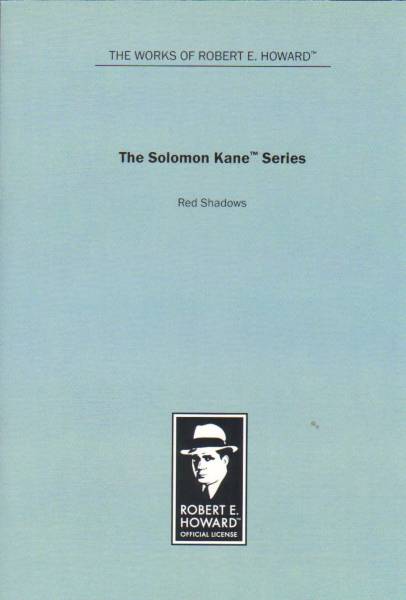
              • Cover of Solomon Kane
                Solomon Kane

                series · 39 books · 1928

                similar by+1 more

                Solomon Kane is a fictional character created by the pulp-era writer Robert E. Howard. A late-16th-to-early-17th century Puritan, Solomon Kane is a somber-looking man who wanders the world with no apparent goal other than to vanquish evil in all its forms. His adventures, published mostly in the pulp magazine Weird Tales, often take him from Europe to the jungles of Africa and back.

              • Cover of Wraiths of Time
                Wraiths of Time

                Andre Norton · standalone novel · 1976

                similar byafrica

                Publisher's description: "Hurtled through space and time into the ancient Nubian kingdom of Meroe, a museum expert in African archaeology finds she must play a key role in preserving their civilization from evil power-seekers."