More like The Andromeda Evolution
anchored on:science fictionplague and pandemicour worldcontemporarytensesurvival+1 more
but
- The Andromeda Strain
series2 books1969
similar byplague and pandemicscience fictioncontemporarytensesurvival+3 more
Michael Crichton's 1969 novel The Andromeda Strain follows a team of scientists racing to contain a lethal extraterrestrial microorganism that crash-lands in Arizona, told in the clinical, document-driven style that helped establish the techno-thriller genre. Daniel H. Wilson's authorized 2019 sequel The Andromeda Evolution revisits the same threat five decades later. Together the two books form a two-part outbreak story separated by a fifty-year gap in publication.
- Cell
Stephen Kingstandalone novel2006
similar byour worldcontemporarytensesurvivalplague and pandemicscience fictiondark
In Cell, King taps into readers fears of technological warfare and terrorism. Mobile phones deliver the apocalypse to millions of unsuspecting humans by wiping their brains of any humanity, leaving only aggressive and destructive impulses behind. Those without cell phones, like illustrator Clayton Riddell and his small band of "normies," must fight for survival, and their journey to find Clayton's estranged wife and young son rockets the book toward resolution.
- Coldbrook
Tim Lebbonstandalone novel2012
similar byscience fictionour worldcontemporarytensesurvivalplague and pandemicdark
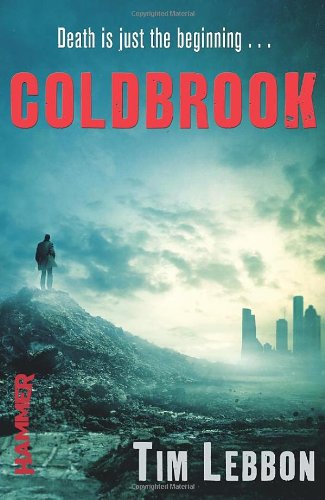
The world as we know it has changed forever. The reason is Coldbrook. The facility lay deep in Appalachian Mountains, a secret laboratory called Coldbrook. Its scientists had achieved the impossible: a gateway to a new world. Theirs was to be the greatest discovery in the history of mankind, but they had no idea what they were unleashing.
- The Death of Grass
John Christopherstandalone novel1956
similar byplague and pandemicscience fictionour worldsurvivaldarktense
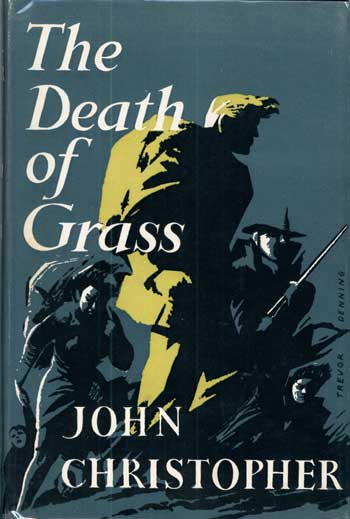
The Death of Grass is a 1956 post-apocalyptic science fiction novel written by the English author Sam Youd under the pen name John Christopher. The plot concerns a virus that kills off grass species, including rice and wheat. The Death of Grass was the first of several post-apocalyptic novels written by Youd. The novel was written in a matter of weeks and liberated him from his day job.
- The Fireman
Joe Hillstandalone novel2016
similar byplague and pandemicscience fictionour worldsurvivaldarktense
The Fireman is a novel set in a post-apocalyptic time by American author Joe Hill. The novel, Hill's fourth, tells the tale of a deadly spore that has infected most of the world's population. Hill first spoke of the novel in 2013 in promotional interviews for his then-new novel NOS4A2. The novel was released on May 17, 2016.
- The Swarm
Frank Schätzingstandalone novel2004
similar byscience fictionour worldcontemporarytensesurvivaldarktechno-thriller
The Swarm is a science fiction novel by German author Frank Schätzing. It was first published in 2004 and soon became a bestseller.
- Prey
Michael Crichtonstandalone novel2002
similar byscience fictionour worldcontemporarytensesurvivaltechno-thriller+1 more
Prey is the thirteenth novel by Michael Crichton under his own name and his twenty-third novel overall. It was first published in November 2002, making it his first novel of the twenty-first century. An excerpt was first published in the January–February 2003 issue of Seed magazine. Prey brings together themes from two earlier Crichton best-selling novels, Jurassic Park and The Andromeda Strain, and serves as a cautionary tale about developments in science and technology: in particular, nanotechnology, genetic engineering, and distributed artificial intelligence.
- I Am Legend
Richard Mathesonstandalone novel1954
similar byour worldsurvivalplague and pandemicscience fictiondarktense
The last human survivor of the vampire epidemic has to maintain his defences against their onslaught, while attempting to research the cause and possibly solution to the plague. Robert Neville is the last living man on Earth... but he is not alone. Every other man, woman and child on the planet has become a vampire, and they are hungry for Neville's blood. By day he is the hunter, stalking the undead through the ruins of civilization. By night, he barricades himself in his home and prays for the dawn. How long can a man survive like this?
- The Triffids
series3 books1951
similar byscience fictionour worldsurvivaldark+2 more
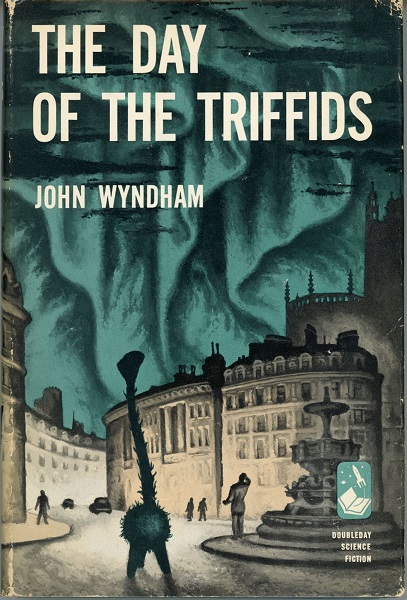
John Wyndham's The Day of the Triffids (1951) opens with a meteor-shower-like event that leaves most of Britain's population blind, throwing civilization into collapse just as triffids, an aggressive and mobile species of poisonous plant, become free to hunt the helpless survivors. Simon Clark's authorized sequel The Night of the Triffids (2001) picks up a generation later, narrated by the original protagonist's son as he confronts a new triffid-dominated world, and John Whitbourn's The Age of the Triffids extends the shared setting further still. Together the three novels form a loose post-apocalyptic trilogy built on Wyndham's original premise rather than a tightly plotted single story.
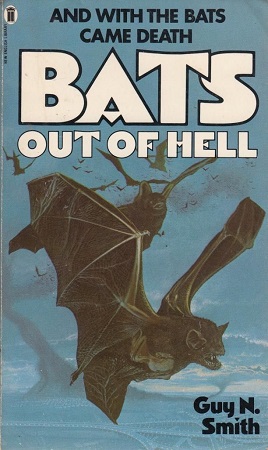
- Bats Out of Hell
Guy N. Smithstandalone novel1978
similar byplague and pandemicour worldcontemporarysurvivalscience fictiondarktense
Professor Brian Newman had accidently created a deadly new virus at the Midland Biological Research Centre. In a single glass cage in his laboratory, its first victims were slowly dying in agony. For the sake of the world, the bats in that cage must never be released. But glass is all too easily broken.........
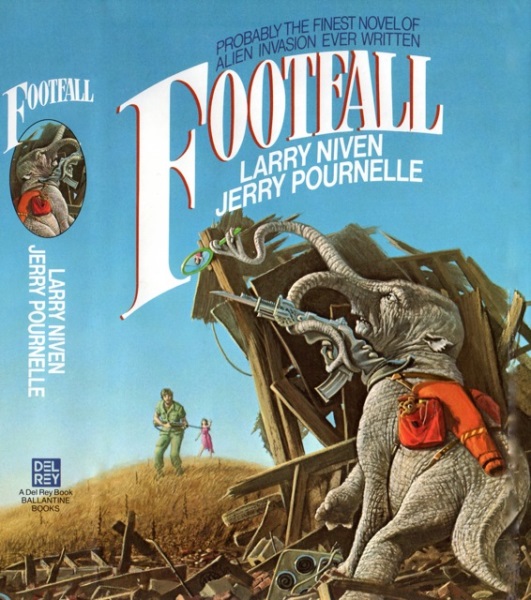
- Footfall
Larry Niven & Jerry Pournellestandalone novel1985
similar byscience fictionour worldcontemporarytensesurvival
When aliens travel to Earth from Alpha Centauri, differences between alien and human psychology result in an unprovoked invasion, and the resulting resistance results in the aliens' use of a devastating weapon.
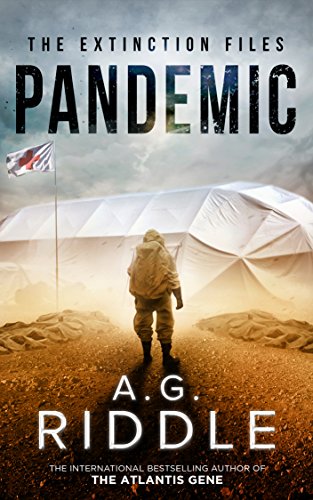
- The Extinction Files
series2 books2017
similar byscience fictionplague and pandemicour worldcontemporarytense+1 more
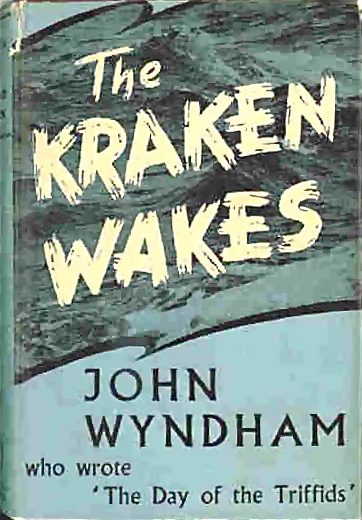
- The Kraken Wakes
John Wyndhamstandalone novel1953
similar byscience fictionour worldtensesurvivaldark
" Behind a spectacular meteor shower actually hides the beginning of an invasion by a mysterious and powerful alien race. Earth's life is disrupted by the attacks of extraterrestrials whose war machines, emerging from the depths of the oceans, seem indestructible. The coalitioned forces of the whole world are worthless, powerless in the face of the indecipherable and deadly plans of a superior intelligence, capable of bringing the entire planet to the brink of catastrophe" Goodreads May 20, 2022
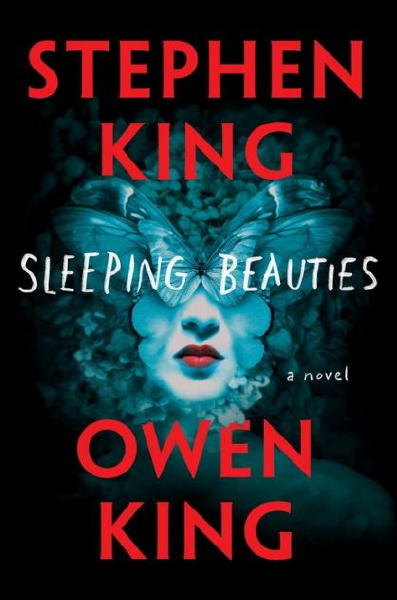
- Sleeping Beauties
Stephen King & Owen Kingstandalone novel2017
similar byplague and pandemiccontemporarysurvivalscience fictiondarktense
Sleeping Beauties is a novel by Stephen King and his son Owen King, released on September 26, 2017. The book was first mentioned during a promotional appearance on the CBC radio program q. Of the novel, Stephen King stated, "Owen brought me this dynamite idea and I've collaborated a couple of times with Joe. I'm not going to say what the idea is because it's too good."
- The Fog
James Herbertstandalone novel1975
similar byour worldcontemporarytensesurvivaldark+1 more
The Fog is a horror novel by English writer James Herbert, published in 1975. It is about a deadly fog that drives its victims insane when they come into contact with it.
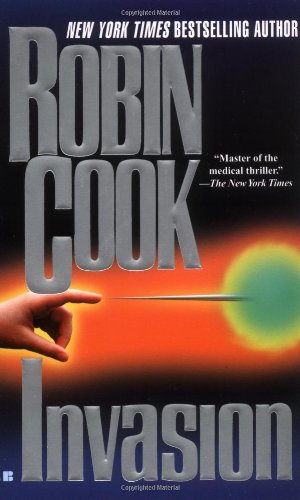
- Invasion
Robin Cookstandalone novel1997
similar byscience fictionour worldcontemporarytense+3 more
Earth is bombarded from space by small disks which, in addition to having powerful physical armaments, when handled activate latent viral DNA which causes humans to mutate into alien beings; a small group recognize the danger and attempt to develop a biological counterweapon.
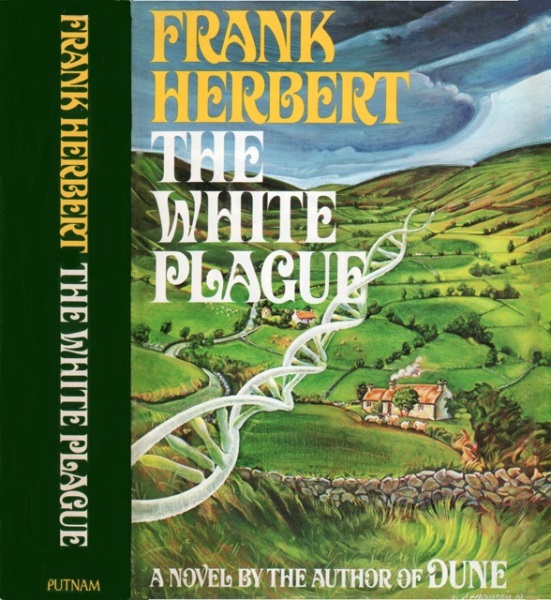
- The White Plague
Frank Herbertstandalone novel1982
similar byplague and pandemicscience fictionour worlddarktense+1 more
The White Plague is a 1982 science fiction novel by American author Frank Herbert about an engineered disease which kills only women. It was nominated for a best science fiction novel Locus Award in 1983.
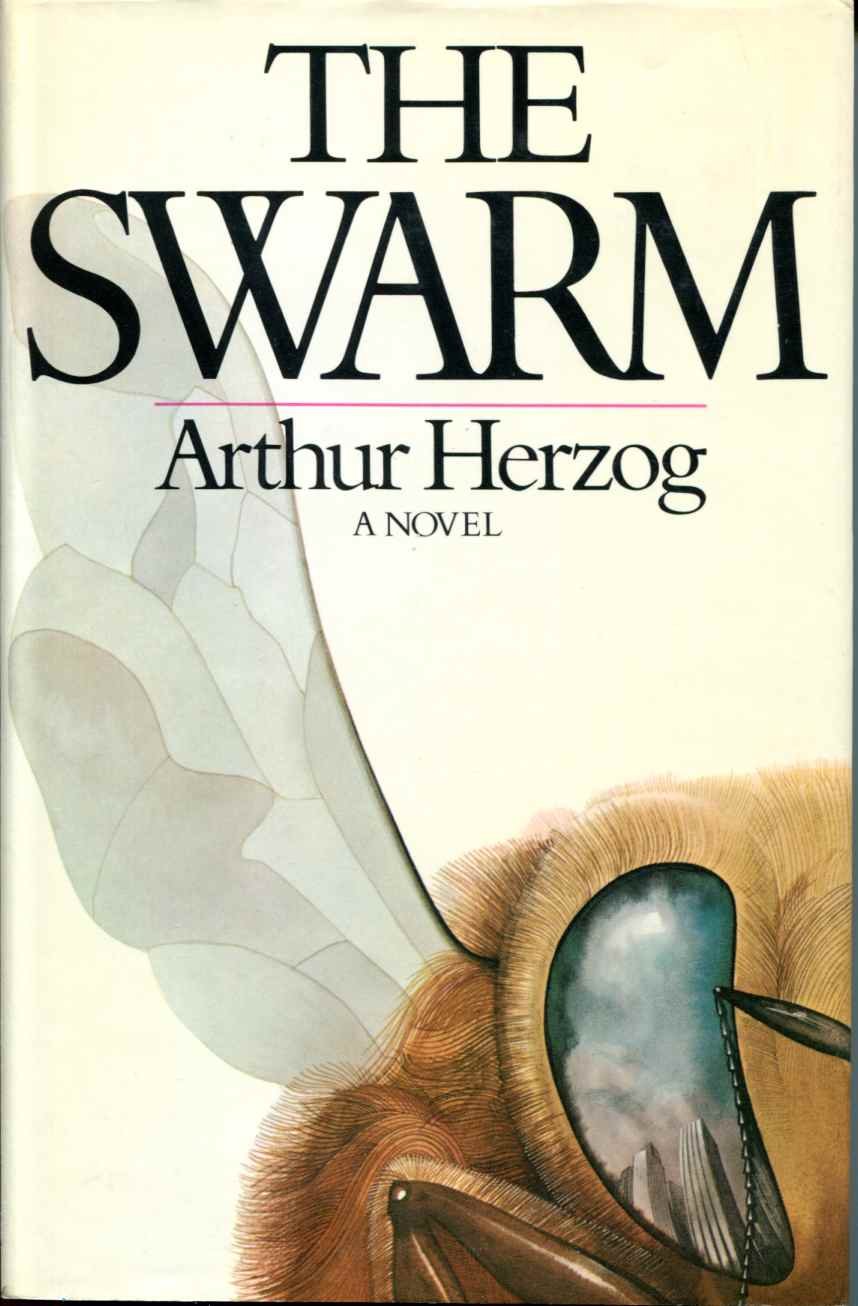
- The Swarm
Arthur Herzogstandalone novel1974
similar byscience fictioncontemporarytensesurvivalplague and pandemicdark
The United States faces an outbreak of offspring of Africanized honeybees, mutated so as to enhance their rapid spread as well as their aggressiveness and lethality.
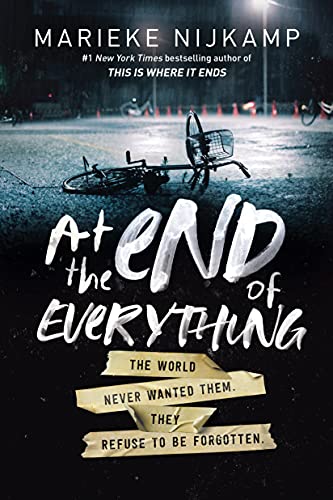
- At the End of Everything
Marieke Nijkampstandalone novel2022
similar byplague and pandemicscience fictionour worldtensesurvivaldark
The Hope Juvenile Treatment Center is ironically named. No one has hope for the delinquent teenagers who have been exiled there; the world barely acknowledges that they exist. Then the guards at Hope start acting strange. And one day…they don't show up. But when the teens band together to make a break from the facility, they encounter soldiers outside the gates. There's a rapidly spreading infectious disease outside, and no one can leave their houses or travel without a permit. Which means that they're stuck at Hope. And this time, no one is watching out for them at all. As supplies quickly dwindle and a deadly plague tears through their ranks, the group has to decide whom among them they can trust and figure out how they can survive in a world that has never wanted them in the first place.
- Taji's Syndrome
Chelsea Quinn Yarbrostandalone novel1988
similar byplague and pandemicscience fictionour worldcontemporarytensesurvivaldark
"A human error, an unreported lab accident. Six pregnant women, six unknown children spreading a plague far deadlier than any doctors have ever seen before—a horror that splits lovers and friends, parents and children. The bravest and the brightest men and women in medicine are fighting to stem the deadly tide. Their only hope for a cure lies with the precious few who have lived through the onslaught. But the survivors of Taji's Syndrome have mysteriously disappeared—and the tasks facing the champions of humanity are far greater than anyone could have ever imagined ... " – quoted from this novel's first Popular Book's printing.
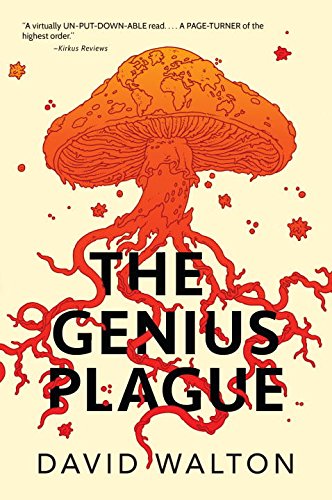
- The Genius Plague
David Waltonstandalone novel2017
similar byplague and pandemicscience fictionour worldcontemporarytensesurvivaldark
"What if the pandemic you thought would kill you made you more intelligent instead? In the Amazon jungle, a disease is spreading. To those who survive, it grants enhanced communication, memory, and pattern recognition. But the miracle may be the sinister survival mechanism of a fungal organism, manipulating the infected into serving it. Paul Johns, a mycologist, is convinced the fungal host is the next stage of human evolution, while his brother Neil, an analyst at the NSA, is committed to its destruction. Is the human race the master in this symbiotic relationship, or are we becoming the pawns of a subtly dominating and utterly alien intelligence?"--
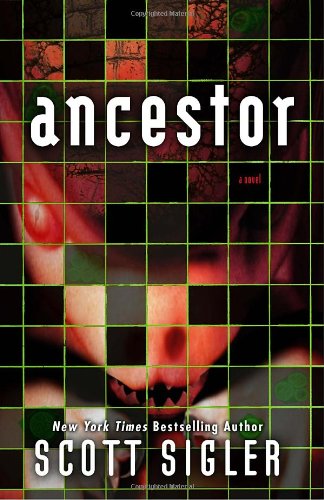
- Ancestor
Scott Siglerstandalone novel2007
similar byscience fictionour worldcontemporarytensesurvivaldark
Ancestor is a science fiction thriller novel by American writer Scott Sigler. The novel was released in podcast format in 2006, with it also being released in print via Dragon Moon Press in 2007. Ancestor was later re-released by Crown Publishing in 2010.
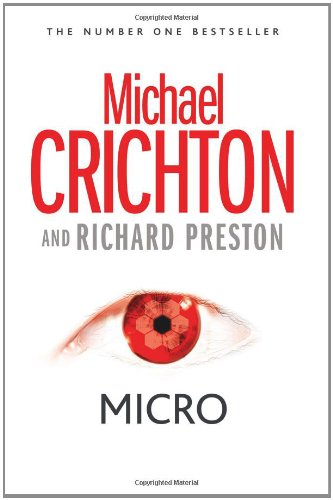
- Micro
Michael Crichton & Richard Prestonstandalone novel2011
similar byour worldcontemporarytensesurvivalscience fictiontechno-thriller
Micro is a techno-thriller novel by Michael Crichton, the seventeenth under his own name and second to be published after his death, published in 2011. Upon his death in 2008, an untitled, unfinished manuscript was found on his computer, which would become Micro. Publisher HarperCollins chose science writer Richard Preston to complete the novel from Crichton's remaining notes and research, and it was finally published in 2011. Micro followed the historical thriller Pirate Latitudes, which was also found on his computer and published posthumously in 2009.