More like The Audran Sequence
anchored on:science fictioncyberpunkfar futuremystery & detectivenoiridentity+4 more
but
- Takeshi Kovacs
series3 books2002
similar byfar futuredarktenseidentityscience fictioncyberpunkother star systems+4 more
Takeshi Kovacs is a former elite soldier turned freelance troubleshooter in a future where human consciousness can be digitized and transferred between bodies, or sleeves, making death an inconvenience for those who can afford new ones. Richard Morgan's trilogy - Altered Carbon, Broken Angels, Woken Furies - moves Kovacs through noir-inflected mysteries on different worlds, using the resleeving premise to interrogate class, violence, and what, if anything, survives a person's original body. It became the basis for a Netflix series.
- The Demolished Man
Alfred Besterstandalone novel1953
similar byfar futuretensemurder investigationscience fictionmystery & detective+1 more
In the year 2301, guns are only museum pieces and benign telepaths sweep the minds of the populace to detect crimes before they happen. In 2301 murder is virtually impossible, but one man is about to change that..
- Sprawl Trilogy
series10 books1981
similar bytensedarkbig citycyberpunkscience fiction
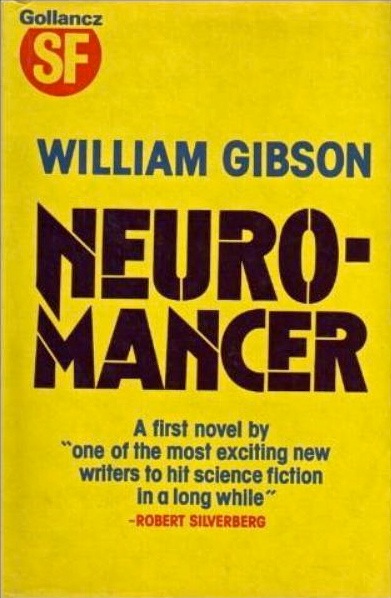
The Sprawl Trilogy is William Gibson's foundational cyberpunk sequence: Neuromancer (1984), in which hacker Case is drawn into a high-stakes heist alongside an artificial intelligence and a damaged ex-soldier, followed by Count Zero (1986) and Mona Lisa Overdrive (1988), which widen the same near-future world of corporate power and networked cyberspace to new characters. Johnny Mnemonic, an early short story set in the same fictional milieu, predates the novels and introduces the courier Molly Millions before her role in the trilogy. Together these works established much of cyberpunk's visual and thematic vocabulary.
- Red Planet Blues
Robert J. Sawyerstandalone novel2013
similar byfar futuredarktensemurder investigationscience fictionmystery & detectivenoir
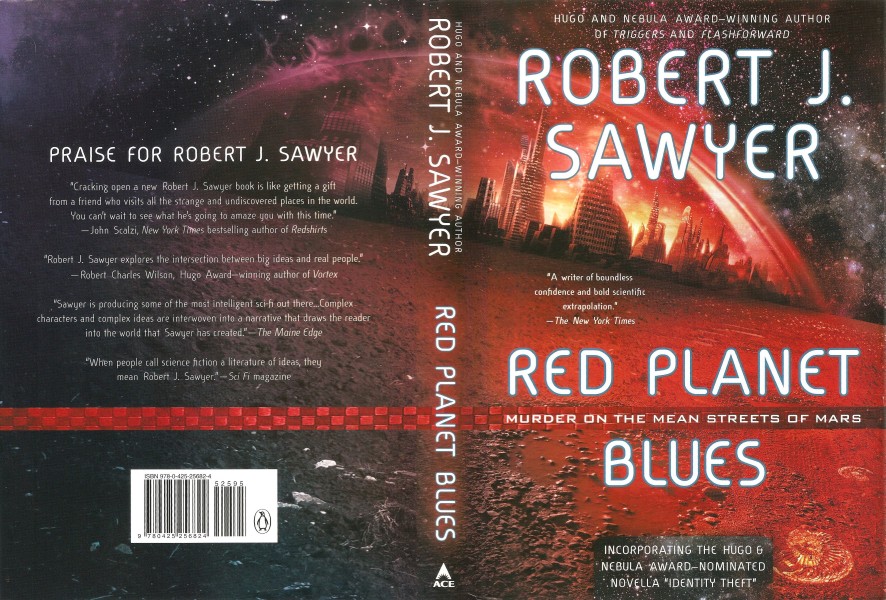
"Robert J. Sawyer, the author of such "revelatory and thought-provoking"* novels as Triggers and The WWW Trilogy, presents a noir mystery expanded from his Hugo and Nebula Award-nominated novella "Identity Theft" and his Aurora Award-winning short story "Biding Time," and set on a lawless Mars in a future where everything is cheap, and life is even cheaper ... Alex Lomax is the one and only private eye working the mean streets of New Klondike, the Martian frontier town that sprang up forty years ago after Simon Weingarten and Denny O'Reilly discovered fossils on the Red Planet. Back on Earth, where anything can be synthesized, the remains of alien life are the most valuable of all collectibles, so shiploads of desperate treasure hunters stampeded to Mars in the Great Martian Fossil Rush. Trying to make an honest buck in a dishonest world, Lomax tracks down killers and kidnappers among the failed prospectors, corrupt cops, and a growing population of transfers--lucky stiffs who, after striking paleontological gold, upload their minds into immortal android bodies. But when he uncovers clues to solving the decades-old murders of Weingarten and O'Reilly, along with a journal that may lead to their legendary mother lode of Martian fossils, God only knows what he'll dig up ... "The Globe and Mail."
- Blade Runner Universe
series6 books1968
similar bydarkidentitybig cityscience fictioncyberpunk+1 more
Philip K. Dick's 1968 novel Do Androids Dream of Electric Sheep? follows bounty hunter Rick Deckard as he tracks escaped androids through an irradiated, near-abandoned San Francisco, using the hunt to probe questions of empathy and what separates human from machine. The novel became the basis for Ridley Scott's 1982 film Blade Runner, and Marvel Comics later published an illustrated adaptation of that film. Together the two trace the story's path from prose original to screen and comic-page adaptation.
- This Perfect Day
Ira Levinstandalone novel1970
similar byfar futuredarktenseidentityscience fiction
This Perfect Day is a science fiction novel by American writer Ira Levin, about a technocratic dystopia. Levin won a Prometheus Award in 1992 for this novel. This Perfect Day is one of two Levin novels yet to be adapted to film.
- Falling Angel
William Hjortsbergstandalone novel1978
similar bydarktenseidentitymurder investigationmystery & detectivenoir
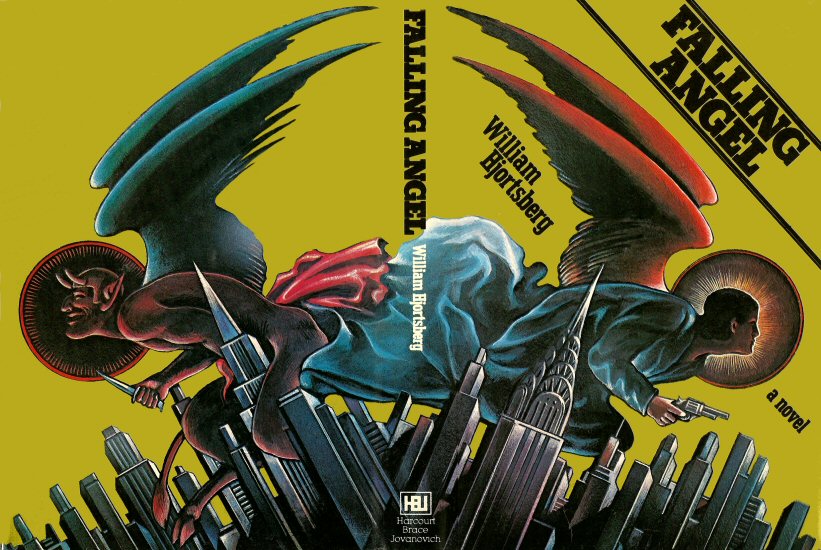
Falling Angel is a 1978 horror novel by American writer William Hjortsberg. Written in a hardboiled detective style with supernatural themes, it was adapted into the 1987 film Angel Heart.
- The City in the Middle of the Night
Charlie Jane Andersstandalone novel2019
similar byfar futuredarktensebig cityscience fictionother star systems
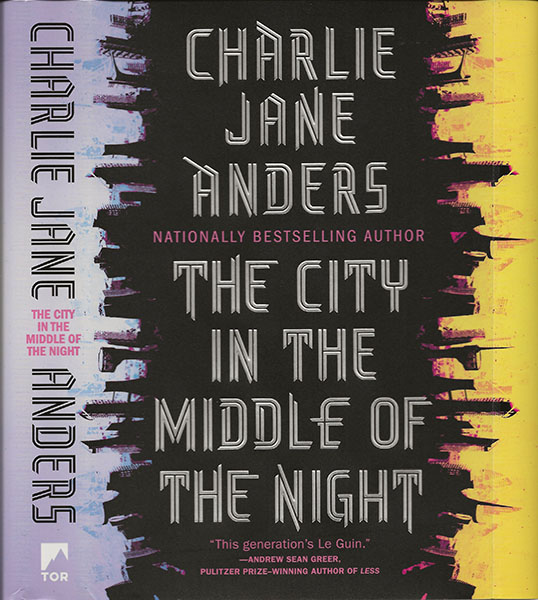
The City In the Middle of the Night is a 2019 climate-fiction novel by Charlie Jane Anders. It is set on a tidally locked planet, where human life, surrounded by hostile alien life, is mostly divided between two archetypically different urban sites. The main story focuses on two characters whose actions take them outside of the cities.
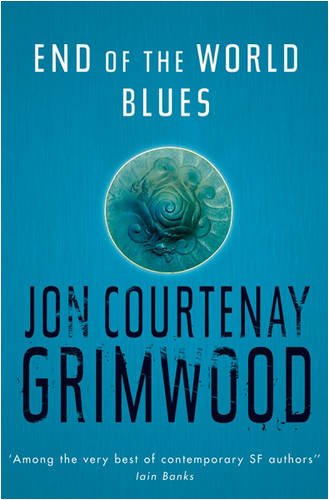
- End of the World Blues
Jon Courtenay Grimwoodstandalone novel2006
similar bydarktenseidentitybig cityscience fictioncyberpunk+1 more
"Kit Nouveau didn't escape himself when he fled to Japan. Now running a biker bar in the Roppongi district of Tokyo, he's also sleeping with the wife of a High Yakusa ganglord. All things considered, being held up at gunpoint isn't a complete shock. The pale girl in the red cloak appearing from nowhere and punching an ivory spike into his attacker's head on the other hand." "Nijie has stolen fifteen million dollars, she's on the run, she's just killed a man and she has a cat who knows more than it should. It's a lot to deal with when you haven't even left school." "But Nijie is also Lady Neku, and in a sentient castle at the end of the world Lady Neku otherwise known as Baroness Nawa-no-ukiyo. Countess High Strange and chatelaine of Schlass Omga realizes that Kit has stolen some of her memories. What happens to a man who finally realises he can't outrun himself? Kit Nouveau is about to find out."--BOOK JACKET. "Kit Nouveau figured he'd already come to the end of the world. An Iraqi war veteran, expatriate, and part owner of Pirate Mary's, the best Irish bar in Tokyo, Kit had settled down to await the inevitable with barely a whimper. It wasn't exactly how Kit thought he'd end up, and he was right." "It's going to end up a lot worse." "A teenage runaway with fifteen million dollars in stolen cash and a taste for cosplay is about to save Kit's life in a lethal swirl of scarlet and bridal lace. Lady Neku, a.k.a. Countess of High Strange, has her own dangerous destiny to fulfill and it's mysteriously connected to Kit's ravaged past. Now Kit's only hope for redemption is to save an ex-girlfriend he tragically failed once before. But everyone says it's already too late. And she's left behind only one ominous clue: her suicide note."--BOOK JACKET.
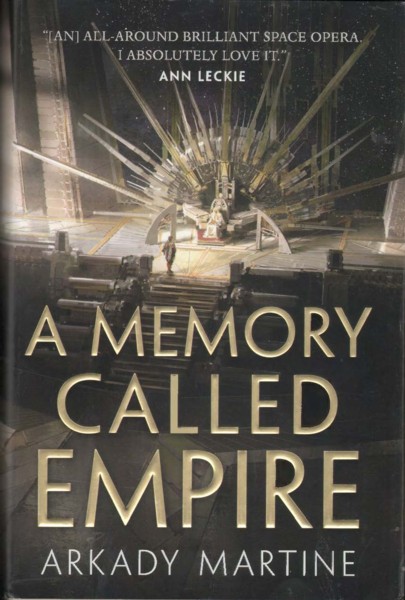
- Teixcalaan
series2 books2019
similar byfar futureidentitytensescience fictionother star systems+2 more
Arkady Martine's space opera duology follows Mahit Dzmare, ambassador from the small, independent Lsel Station, as she arrives in the vast Teixcalaanli Empire to investigate her predecessor's death and finds herself caught up in the empire's own succession crisis. A Memory Called Empire and A Desolation Called Peace pair court intrigue with Mahit's conflicted, outsider fascination with an empire she can't help admiring.
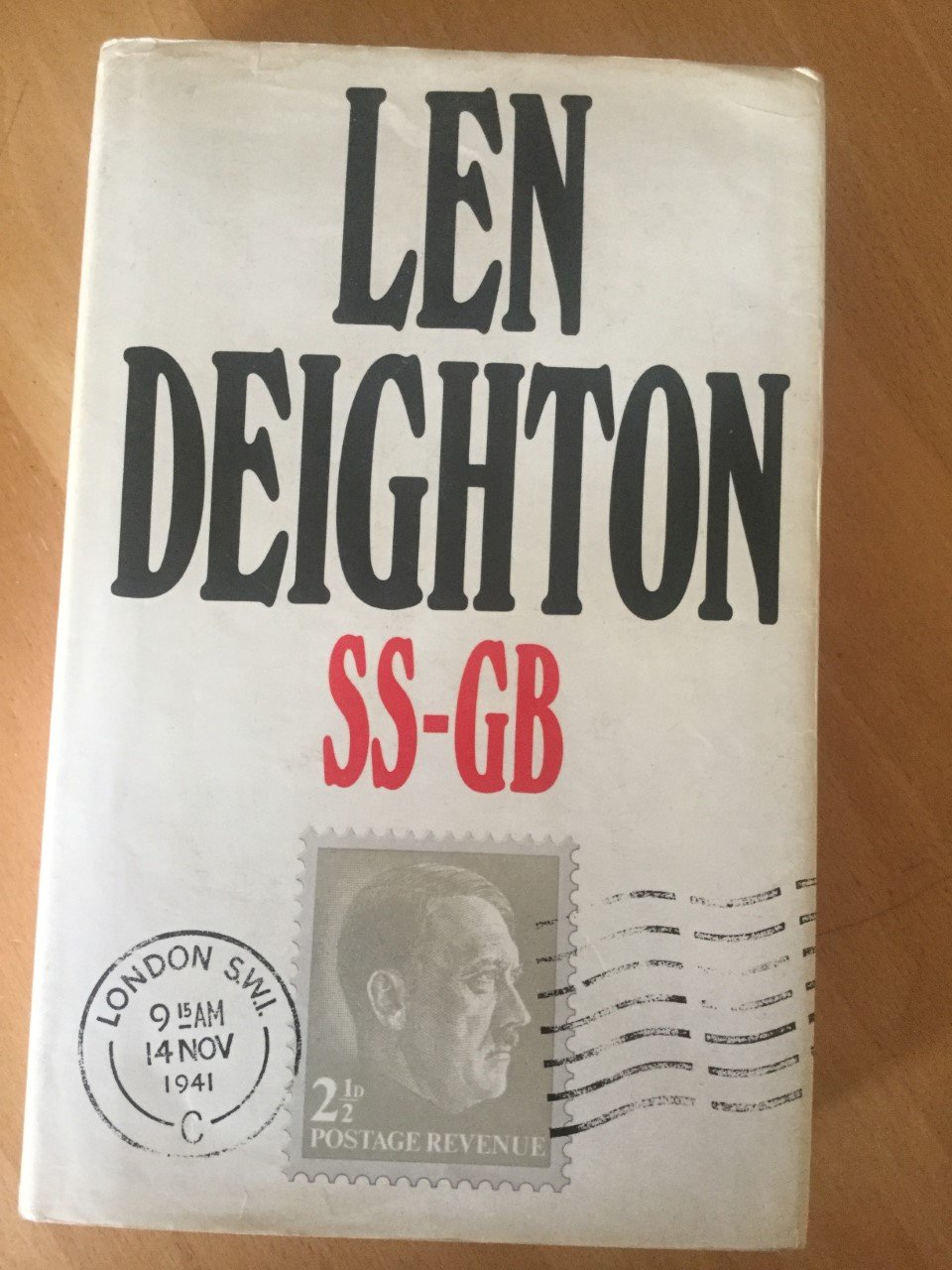
- SS-GB
Len Deightonstandalone novel1978
similar bydarktensemurder investigationbig citymystery & detectivescience fiction
It's November 1941 in a Britain that lost the war: Operation Sea Lion succeeded, Churchill was executed, and the King is a prisoner in his own Tower of London. Detective Superintendent Douglas Archer, still working homicide for the Metropolitan Police under German occupation, catches what looks like a routine case, a well-dressed man murdered above an antiques shop, until the body's oddities point toward something far more dangerous than burglary gone wrong. Archer's investigation collides with occupation politics, the British resistance, and rival factions of the SS and the German Army, each wanting the case to go a different way. Len Deighton's alternate-history spy thriller.
- The Stars My Destination
Alfred Besterstandalone novel1956
similar byfar futuredarkidentityscience fictionother star systems
When a passing spaceship refuses to rescue the lone survivor from the drifting wreck of another ship, he dedicates his life to discovering who made that decision and exacting his revenge, in the process altering human history and his own character.
- This Gilded Abyss
series1 book2023
similar byfar futuredarktensemurder investigationscience fictionother star systems
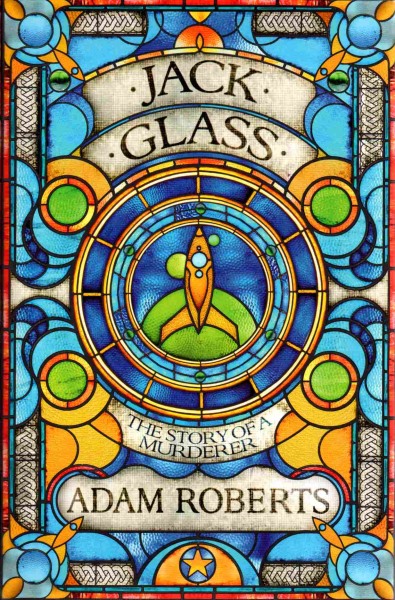
- Jack Glass
Adam Robertsstandalone novel2012
similar byfar futuretensemurder investigationscience fictionother star systemsmystery & detective+1 more
Golden Age SF meets Golden Age Crime from the author of Swiftly, New Model Army, and Yellow Blue Tibia?an innovative literary voice working at the height of his powers Jack Glass is the murderer?we know this from the start. Yet as this extraordinary novel tells the story of three murders committed by Glass, the reader will be surprised to find out that it was Glass who was the killer and how he did it. And by the end of the book our sympathies for the killer are fully engaged. Riffing on the tropes of crime fiction (the country house murder, the locked room mystery) and imbued with the feel of golden age SF, this is another bravura performance from Roberts. Whatever games he plays with the genre, whatever questions he asks of the reader, Roberts never loses sight of the need to entertain. This novel has some wonderfully gruesome moments, is built around three gripping HowDunnits, and comes with liberal doses of sly humor. Roberts invites us to have fun and tricks us into thinking about both crime and SF via a beautifully structured novel set in a society whose depiction challenges notions of crime, punishment, power, and freedom.
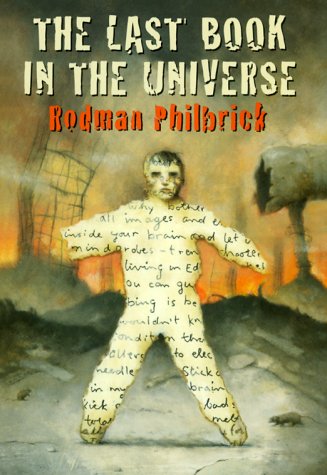
- The Last Book in the Universe
Rodman Philbrickstandalone novel2000
similar byfar futuredarktensebig cityscience fictioncyberpunk
The Last Book in the Universe is a 2000 post-apocalyptic science fiction novel by Rodman Philbrick. Set in a cyberpunk dystopia, its protagonist and narrator is a teenage boy named Spaz who has epilepsy.
- Joe Kurtz
series3 books2001
completed
similar bydarktensemurder investigationbig cityorganized crimemystery & detectivenoir
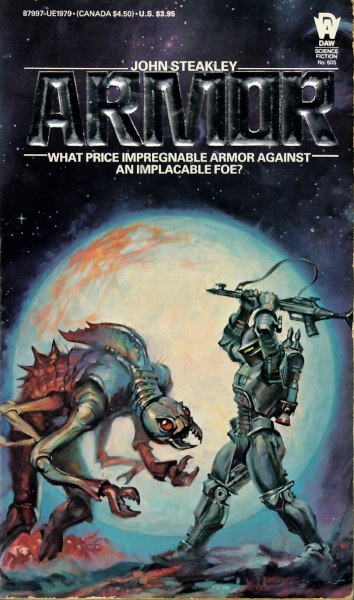
- Armor
John Steakleystandalone novel1984
similar byfar futuredarktensescience fictionother star systems
Armor is a military science fiction novel by John Steakley. It features the military use of exoskeletons and insect-like alien enemies but concentrates on the psychological effects of violence on human beings.
- Six Wakes
Mur Laffertystandalone novel2017
similar byfar futuretenseidentitymurder investigationscience fictionmystery & detective
Six Wakes is a science fiction mystery novel by Mur Lafferty. It was first published in trade paperback and ebook by Orbit Books in January 2017.
- Aton/Piers Anthony's Worlds of Chthon
series4 books1967
similar byfar futuredarkscience fiction+3 more
Piers Anthony's Chthon (1967) follows Aton Five, imprisoned in a sentient underground mineral world after his obsession with a beautiful, dangerous woman leads him to attempted murder; escaping, he pursues the truth about her and about his own mixed human and alien nature across the galaxy. Its sequel Phthor continues Aton's story and the mythology of the living prison-planet Chthon.
- The Artificial Kid
Bruce Sterlingstandalone novel1980
similar byfar futuredarkscience fictionother star systemscyberpunk+2 more
WorldCat: A popular home-video star and ultimate warrior on a planet dangerously divided by class and wealth distinctions discovers the lethal truth about his world and its origins in this satiric science fiction masterwork Founded centuries ago by the enigmatic genius Moses Moses, the planet Reverie can either be heaven or hell, depending on whether you live on or above it.
- The Hunger Games Universe
universe5 books2008
Start hereThe Hunger Games · Start here
similar byfar futuredarktensescience fiction
Panem, they call it now — a nation raised on the drowned bones of North America, a glittering Capitol ringed by twelve districts it once starved into obedience. Every year the Capitol collects its debt in children: two tributes from each district, drawn by lottery, dropped into an engineered arena, and made to kill one another on live television while the whole country is required to watch. This is the Hunger Games — entertainment, punishment, and government at once. Suzanne Collins tells it in a compact, unified body of work. The founding trilogy — The Hunger Games, Catching Fire, and Mockingjay — follows Katniss Everdeen, a girl from the coal-mining District 12 who volunteers in her sister's place and becomes something the Capitol never scripted. Two prequels reach back into the same machinery: The Ballad of Songbirds and Snakes traces a young Coriolanus Snow long before he is President, and Sunrise on the Reaping returns to District 12 a generation ahead of Katniss. Begin with the trilogy, in order — it is Katniss's voice, close and present-tense, that makes Panem breathe, and the prequels land hardest once you know how her story ends. Beneath the spectacle sits one steady, uncomfortable question: who profits when we agree to look away.
- Dune
series20 books1963
part of Dune Universe
similar byfar futurescience fictionother star systems+2 more
Frank Herbert's Dune Chronicles opens with 1965's Dune, set on the desert planet Arrakis where House Atreides takes control of the only source of the vital spice melange and young Paul Atreides is pulled into a struggle over its politics and religion. Herbert carried the story forward across five further novels — Dune Messiah, Children of Dune, God Emperor of Dune, Heretics of Dune, and Chapterhouse: Dune — following Paul's line over the following millennia, before Brian Herbert and Kevin J. Anderson later extended the saga. Many other editions of these six novels are omnibus and box-set repackagings rather than separate stories.
- Dune Universe
universe78 books1963
Start hereDune · Start here
similar byfar futurescience fictionother star systems+2 more
Arrakis. Dune. The desert planet, where empire runs on a single substance: the spice melange, which folds space, prolongs life, and unlocks prescience, and which exists nowhere else in the known universe. Frank Herbert's saga is a meditation dressed as an adventure — feudal houses and a secret sisterhood, engineered messiahs and the patient ecology of a world without water, all turning on the terrible gravity of who commands the spice. It reads like scripture and schemes like a war room, ten thousand years hence, among people who have outlawed the thinking machine and made instruments of themselves instead. At its heart stand Herbert's original six — Dune, Dune Messiah, Children of Dune, God Emperor of Dune, Heretics of Dune, Chapterhouse: Dune — a single deepening arc across millennia, arguing the whole way between prophecy and free will. Around that spine his son Brian Herbert and Kevin J. Anderson have raised a vast prequel architecture: Prelude to Dune, tracing the great houses a generation before Paul; Legends of Dune, reaching back to the crusade that broke the machines; the Schools of Dune cycle on the founding of Bene Gesserit, Mentat, and Navigator; the Caladan Trilogy and Heroes of Dune filling years the originals left in shadow. Many hands, dozens of volumes, one desert. What sets Dune apart is its refusal of the simple: religion is manufactured, heroes are hazards, and the sand itself — worm, water, ecology — acts as a political power. Begin where the universe did, with Frank Herbert's Dune (1965), and read the original six in order; you need nothing else to feel the full weight. The prequels are a country to explore afterward, taken by era. Beginnings are delicate times.
- City Come A-Walkin'
John Shirleystandalone novel1980
similar bydarktenseidentitybig cityscience fictionorganized crimecyberpunk
WorldCat: Stu Cole is struggling to keep his nightclub, Club Anesthesia, afloat in the face of mob harassment when he's visited by a manifestation of the city of San Francisco, crystallized into a single enigmatic being. This amoral superhero leads him on a terrifying journey through the rock and roll demimonde as they struggle to save the city.