Loreful
HomeDiscover
Search series, authors…⌘K
Loreful

Reading orders for SF/F series and shared universes — with your place kept in every one.

Explore

UniversesSeriesWorksAuthorsAtlas

Help

FAQAboutSite map

Account & legal

Sign inCreate accountPrivacyTerms

Data

Built on ISFDB, Wikipedia, Wikidata and Open Library. Curated reading orders carry their reasoning on the page; the rest follow publication order. Data sources & licenses

© Loreful · data: ISFDB · CC BY

More like The Butt

anchored on:literary & generalsatirecontemporarycolonialismdark

but

Mood

The mood the book leaves you in.

  • The reading experience is propelled by journeys, exploration, and physical risk; excitement and forward momentum dominate over dread or introspection.
  • Joy and loss are deliberately mixed; the resolution grants characters something real while taking something else away, leaving warmth and sorrow together.
  • The book demands work from the reader — dense prose, difficult structure, unfamiliar ideas, or morally uncomfortable material — as part of its intended effect.
  • Grim events, cruelty, or despair dominate the atmosphere, and the book does not soften them with comfort or comic relief.
  • The atmosphere is quietly unsettling — wrongness, unease, and the uncanny pervade the book without necessarily escalating into overt horror.
  • The book is built to move the reader; character feeling is foregrounded and major scenes aim at a strong emotional response.
  • Humor is a primary aim and the prose plays for laughs — comic situations, wit, or dialogue produce sustained comedy, not occasional levity.
  • The book insists that things can improve; effort and decency are shown to matter, and the arc bends toward better outcomes even through hardship.
  • The book teaches as it goes — real facts, history, science, or craft are conveyed in enough depth that learning is part of the reading experience.
  • The book is designed to uplift and motivate, presenting perseverance or achievement in a way that invites the reader to aspire or act.
  • The overall register is cheerful and easygoing; stakes are kept gentle and the book avoids dwelling on pain or dread.
  • Withheld information drives the experience; the book sustains enigmas and secrets the reader wants resolved, whatever its genre.
  • The book is contemplative and inward-looking, giving more weight to thought, memory, and meaning than to external events.
  • The book works as comfort reading — low tension, a soothing pace, and an atmosphere the reader can unwind in.
  • Grief, loss, or melancholy set the dominant register, and the book lets sorrow stand rather than resolving it into comfort.
  • Sustained suspense is the point; the book keeps the reader braced for what happens next through danger, pressure, or impending revelation.
  • Playful invention and charm define the register — fanciful conceits, light absurdity, and a narration that delights in its own oddity.

About

What the story runs on.

  • Stories structured as a quest — a journey undertaken to find, deliver, or destroy something of great import.
  • Stories in which staying alive against nature, catastrophe, or scarcity is the central problem.
  • Stories of lovers kept apart by law, family, faith, or station, where the obstacle to love is the plot.
  • Stories in which a friendship — its making, testing, or loss — is the emotional center.
  • Stories of growing up — a young protagonist crossing from childhood into adult knowledge and responsibility.
  • Stories about who a character truly is — self-discovery, doubled lives, and the search for a self.
  • Stories about mental unraveling — descent into madness, delusion, and minds at war with themselves.
  • Stories about mourning — living through the death of a loved one and what loss does to the survivors.
  • Stories in which a buried family truth — hidden parentage, crimes, or shames — surfaces and reorders the present.
  • Stories driven by maneuvering for power — factions, conspiracies, and statecraft conducted in shadow.
  • Stories in which war itself is the subject — combat, occupation, and what warfare does to soldiers and civilians.
  • Stories organized around investigating a killing — the case, the clues, and the pursuit of the killer, in any genre's clothing.

Shelf

Where it sits in the library.

    • Fiction built on magic or other supernatural elements that have no scientific explanation.
    • Secondary-world fantasy at large scale, where the fate of nations or the world turns on the protagonists' struggle.
    • Fantasy set in a recognizably modern city or contemporary world where the supernatural intrudes on everyday life.
    • Fantasy that blends in horror's atmosphere and imagery, keeping a fantastical frame around grim or frightening material.
    • Action-driven fantasy following warriors or rogues with personal stakes against sorcerous threats, rather than world-spanning conflicts.
    • Fantasy set in a real historical period or a close analogue of one, with magic woven into the era.
    • Fantasy in which protagonists cross from the ordinary world into another world through a portal or similar passage.
    • Fiction that retells or reworks a traditional fairy tale in a new form or setting.
    • Fantasy drawing directly on myths, legends, and folklore, retelling them or building on their figures and logic.
    • Fantasy of ghosts, vampires, shapeshifters, psychics, and similar phenomena, usually set in an otherwise ordinary world.
    • Fiction mixing science-fictional trappings with overtly magical or impossible elements in one setting.
    • Low-stakes fantasy emphasizing comfort, community, and everyday pleasures over conflict and peril.
    • Speculative fiction of pervasive moral ambiguity, violence, and cynicism that rejects heroic conventions — fantasy and SF alike.
      • Fiction that extrapolates from science and technology — future societies, space travel, or speculative inventions — within at least nominally natural laws.
      • Science fiction of interstellar scope — starships, galactic polities, and adventure across star systems.
      • Science fiction committed to scientific rigor, where technical plausibility constrains the story.
      • Science fiction centered on armed forces and warfare, told largely from a military point of view.
      • Science fiction of networked, corporate-dominated near futures, pairing high technology with social decay.
      • Science fiction styled on nineteenth-century steam-powered technology, often in a Victorian or pseudo-Victorian setting.
      • Fiction depicting an oppressive or catastrophic society, presented as a warning.
      • Fiction set after civilization's collapse, following survivors in the ruins of the old world.
      • Fiction in which characters move between past and future, and the mechanics or consequences of that travel drive the plot.
      • Fiction exploring a world where a historical event went differently and history diverged from ours.
      • Science fiction about humanity's first encounter and communication with an alien intelligence.
      • Science fiction in which extraterrestrial forces attack or occupy Earth and humanity resists.
      • Fiction whose primary aim is to frighten or unsettle the reader through dread, menace, or the monstrous.
      • Horror of vast, indifferent, incomprehensible entities before which humanity is insignificant, in the Lovecraft tradition.
      • Horror of decaying houses, buried family secrets, and oppressive atmosphere in the Gothic literary tradition.
      • Horror centered on hauntings and the returning dead.
      • Horror located in the mind — paranoia, obsession, and unreliable perception rather than external monsters.
      • Horror built around the reanimated dead and survival amid their outbreaks.
      • Horror defined by explicit, transgressive gore that refuses to cut away from violence.
      • Speculative fiction of the strange and uncanny that resists both natural explanation and standard genre categories.
      • Fiction organized around solving a crime or puzzle, typically following an investigator toward the identification of a culprit.
      • A puzzle-first mystery that lays out clues so the culprit's identity can be deduced before the reveal.
      • Crime fiction of moral ambiguity, fatalism, and hard-edged style, set among the corrupt and the doomed.
      • A mystery following the realistic routines of police work — forensics, interviews, and case-building.
      • A gentle mystery with an amateur sleuth, a small community, and violence kept off the page.
      • A mystery set in a past era, where the investigation works within that period's methods and society.
      • Fast-paced fiction driven by imminent danger, pursuit, or high-stakes conspiracy, built to sustain tension.
      • A thriller of espionage — agents, tradecraft, and intelligence services in conflict.
      • A thriller centered on lawyers and the courtroom, where litigation carries the suspense.
      • A thriller driven by detailed contemporary or near-future technology, often military or scientific.
      • A thriller whose tension comes from mental states and manipulation between characters rather than external action.
      • Fiction whose central plot is a romantic relationship and its development toward an emotionally satisfying resolution.
      • Romance in which one or both partners are supernatural beings, blending fantasy elements into the love story.
      • A fantasy-romance hybrid in which the romantic arc and the fantasy plot carry equal weight.
      • Romance set in a past era, with courtship shaped by the period's society and manners.
      • Romance set in the present day, without supernatural or historical elements.
      • Fiction set in a real past period, where the historical setting materially shapes characters and events.
        • General and literary fiction emphasizing prose style, character interiority, or formal ambition over genre plot conventions.
        • Fiction in a realistic world where magical events occur and are treated as ordinary, in the tradition of Latin American literature.
        • Fiction that ridicules people, institutions, or society in order to criticize them.
        • Fiction of dreamlike, irrational imagery and logic that breaks from realistic representation.
        • Fiction that plays with narrative convention through metafiction, fragmentation, and self-reference.
        • Fiction propelled by journeys, exploration, and physical peril, where action and survival carry the plot.
        • Adventure fiction of ships and seafaring — naval engagements, voyages, and life at sea.
        • Fiction of the American frontier West — gunmen, ranchers, and lawmen, typically in the late nineteenth century.
        • Fiction centered on soldiers, campaigns, and the experience of warfare, historical or imagined.
          • Fiction written primarily to amuse, using comedic situations, wit, or parody as its organizing principle.
            • Multi-generational fiction following a family or dynasty across decades, with inheritance and kinship as the through-line.
              • Fiction whose world runs on explicit game mechanics — levels, stats, and skills that characters can see and exploit.
                • Fiction about costumed or superpowered heroes and their conflicts with comparable villains.

                Practical

                How long a commitment, whether it stands alone, and whether it has finished.

                Tap a chip to ask for it · tap again to rule it out · once more to clear. Numbers show what would be left.

                • Cover of Lord Tyger
                  Lord Tyger

                  Philip José Farmer · standalone novel · 1970

                  similar bycolonialismdarkcontemporary+2 more

                  What if Tarzan had been written by William S. Burroughs instead of Edgar Rice Burroughs? A rich, insane, old racist attempts to raise a white Lord of the Jungle, but things don't turn out that way, and the product of this obsession and the jungle he is supposed to become Lord over must live with the consequences.

                • Cover of Rushing to Paradise
                  Rushing to Paradise

                  J. G. Ballard · standalone novel · 1994

                  similar bydarkcontemporaryliterary & generalchallenging+1 more

                  Rushing to Paradise is a novel by British author J. G. Ballard, first published in 1994.

                • Cover of The Swan Book
                  The Swan Book

                  Alexis Wright · standalone novel · 2013

                  similar bycolonialismcontemporaryliterary & generalchallenging

                  The Swan Book is the third novel by the Indigenous Australian author Alexis Wright. It met with critical acclaim when it was published in 2013, and was shortlisted for Australia's premier literary prize, the Miles Franklin Award.

                • Cover of Crash
                  Crash

                  J. G. Ballard · standalone novel · 1973

                  similar bydarkcontemporaryliterary & generalchallenging

                  Crash is a novel by J. G. Ballard, first published in 1973 with a cover designed by Bill Botten. It follows a group of car-crash fetishists who, inspired by the famous crashes of celebrities, become sexually aroused by staging and participating in car accidents.

                • Cover of The Book of Dave
                  The Book of Dave

                  Will Self · standalone novel · 2006

                  similar bydarkcontemporaryliterary & generalsatirechallenging

                  The Book of Dave is a 2006 novel by English author Will Self.

                • Cover of Babel, or, The Necessity of Violence: An Arcane History of the Oxford Translators' Revolution
                  Babel, or, The Necessity of Violence: An Arcane History of the Oxford Translators' Revolution

                  R. F. Kuang · standalone novel · 2022

                  similar bycolonialismdarkchallenging

                  Babel, or The Necessity of Violence: An Arcane History of the Oxford Translators' Revolution is a 2022 novel of speculative fiction by R. F. Kuang set in a fantastical version of Oxford in 1830s England. Thematically similar to The Poppy War (2018–20), Kuang's first book series, the book criticizes British imperialism, racism and capitalism, and the complicity of academia, knowledge, and language in perpetuating and enabling them.

                • Cover of Millennium People
                  Millennium People

                  J. G. Ballard · standalone novel · 2003

                  similar bydarkcontemporaryliterary & generalsatirechallenging

                  Millennium People is a novel by British writer J. G. Ballard, published in 2003. The novel is the story of a rebellion in the middle classes in an enclave of Greater London.

                • Cover of Great Apes
                  Great Apes

                  Will Self · standalone novel · 1997

                  similar bydarkcontemporaryliterary & generalsatirechallenging

                  Great Apes is a 1997 novel by Will Self.

                • Cover of Dead Babies
                  Dead Babies

                  Martin Amis · standalone novel · 1975

                  similar bydarkcontemporaryliterary & generalsatire

                  Dead Babies is Martin Amis's second novel, published in 1975 by Jonathan Cape. Its first UK and US paperback edition was published under the title Dark Secrets. Amis's second novel—a parody of Agatha Christie's country-house mysteries—takes place over a single weekend at a manor called Appleseed Rectory. In 2000, the book was adapted into a film of the same name, starring Paul Bettany and Olivia Williams. In 2001, BBC critic David Wood wrote "Amis's second novel ranks among his most incendiary with its mordant wit, black comedy, and sense of the violently absurd." It has an epigraph attributed to the Cynic Menippus and the novel has been interpreted as a Menippean satire.

                • Cover of The Fast Red Road: A Plainsong
                  The Fast Red Road: A Plainsong

                  Stephen Graham Jones · standalone novel · 2000

                  similar bycolonialismdarkcontemporaryliterary & generalchallenging

                  "The Fast Red Road, A Plainsong is a novel which plunders, in a gleeful, two-fisted fashion, the myth and pop-culture surrounding the American Indian. It is a story fueled on pot fumes and blues, borrowing and distorting the rigid conventions of the traditional Western. Indians, cowboys, and outlaws are as interchangeable as their outfits; men strike poses from Gunsmoke, and horses are traded for Trans-Ams. Pidgin, the half-blood protagonist, inhabits a world of illusion - of aliens, ghosts, telekinesis, and water-pistol violence, where television offers redemption, and "the Indian always gets it up the ass."" "Having escaped the porn factories of Utah, he heads for Clovis, NM, to bury his father, Cline. But the body is stolen at the funeral, and Pidgin must recover it. With the aid of car thief Charlie Ward, he crisscrosses a wasted New Mexico, straying through bars, junkyards, and rodeos, evading the cops, and tearing through barriers Dukestyle. "Charlie Ward slid his thin leather belt from his jeans and held it out the window, whipped the Cutlass faster, faster, his dyed-black hair unbraiding in the fifty-five mile per hour wind, and the never had to stop for gas." Along the way, Pidgin escapes a giant coyote, survives a showdown with Custer, and encounters the remnants of the Goliard Tribe, a group of radicals to which Cline belonged." "Pidgin's search allows him to reconcile the death of his father with five hundred years of colonial myth-making and eventually places him in a position to rewrite history."--BOOK JACKET.

                • Cover of The Eternal World
                  The Eternal World

                  Christopher Farnsworth · standalone novel · 2015

                  similar bycolonialismdarkcontemporary

                  Five hundred years ago, a group of Spanish conquistadors land in the New World, searching for gold. What they find is a treasure far more valuable: the Fountain of Youth. The Spaniards slaughter the Native American tribe that guards the precious liquid that will keep the conquistadors young for centuries. But one of them escapes: Shako, the chief's daughter, who swears to avenge her people--a blood oath that spans five centuries. When the source of the fountain is destroyed in our own time, the loss threatens the Spaniards and the powerful, shadowy empire of wealth and influence they have built. For help, they turn to David Robinton, a scientific prodigy who believes he is on the verge of the greatest medical breakthrough of all time. But as the centuries-old war reaches its final stages, David makes a horrifying discovery about his employers and the mysterious and exotic woman he loves. Now the scientist must decide: Is he a pawn in a game of immortals--or will he be its only winner?--Adapted from book jacket.

                • Cover of Herland
                  Herland

                  series · 2 books · 1915

                  completed

                  similar bycolonialismliterary & general+2 more

                • Cover of Waiting for the Barbarians
                  Waiting for the Barbarians

                  J. M. Coetzee · standalone novel · 1980

                  similar bycolonialismdarkliterary & general

                  WorldCat: For decades the Magistrate has run the affairs of a tiny frontier settlement, ignoring the impending war between the barbarians and his Empire. But when the interrogation experts arrive, he is jolted into sympathy with the victims and an act of rebellion which sees him imprisoned as an enemy of the state.

                • Cover of The People in the Trees
                  The People in the Trees

                  Hanya Yanagihara · standalone novel · 2013

                  similar bycolonialismdarkliterary & generalchallenging

                  The People in the Trees is the 2013 debut novel of author Hanya Yanagihara. Yanagihara stated that her book was in part inspired by Daniel Carleton Gajdusek, who was revered in the scientific community before being convicted of child molestation.

                • Cover of Fight Club
                  Fight Club

                  Chuck Palahniuk · standalone novel · 1996

                  similar bydarkcontemporaryliterary & generalsatire

                  Fight Club is a 1996 satirical novel by Chuck Palahniuk. It was Palahniuk's first published novel, and follows the experiences of an unnamed protagonist struggling with insomnia. The protagonist finds relief by impersonating a seriously ill person in several support groups, after his doctor remarks that insomnia is not "real suffering" and that he should find out what it is really like to suffer. The protagonist then meets a mysterious man named Tyler Durden and establishes an underground fighting club as radical psychotherapy.

                • Cover of Green Grass, Running Water
                  Green Grass, Running Water

                  Thomas King · standalone novel · 1994

                  similar bycolonialismcontemporaryliterary & generalsatire

                  Green Grass, Running Water is a 1993 novel by American-born Canadian author Thomas King. The novel is set in a contemporary First Nations Blackfoot community in Alberta, Canada. It gained attention due to its unique use of structure, narrative, and the fusion of oral and written literary traditions. The novel is rife with humor and satire, particularly regarding Judeo-Christian beliefs as well as Western government and society. Green Grass, Running Water was a finalist for the 1993 Governor General's Award in Fiction.

                • Cover of Super-Cannes
                  Super-Cannes

                  J. G. Ballard · standalone novel · 2000

                  similar bydarkcontemporaryliterary & generalchallenging

                  Super-Cannes is a novel by the British author J. G. Ballard, published in 2000. It picks up on the same themes as his earlier Cocaine Nights, and has often been called a companion piece to that book. This is the third time that the author has used the concept of a closed society, a privileged community completely shut off from the outside world, as the theme for one of his novels, after High-Rise and Running Wild (novella).

                • Cover of Breakfast of Champions
                  Breakfast of Champions

                  Kurt Vonnegut & Jr. · standalone novel · 1973

                  similar bycontemporaryliterary & generalsatirechallenging

                  The author decides to liberate the characters he created, including an author who decides to try to help a mentally ill reader who was driven over the edge by the book's assertion that he was the only creature with free will in a universe of preprogrammed automatons.

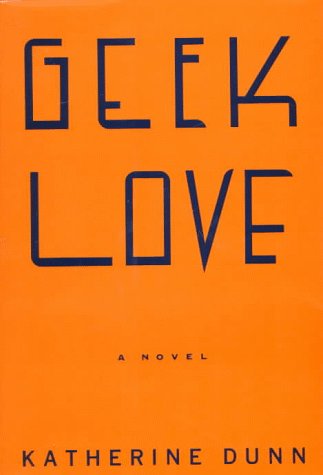
                • Cover of Geek Love
                  Geek Love

                  Katherine Dunn · standalone novel · 1989

                  similar bydarkcontemporaryliterary & generalchallenging

                  Geek Love is a novel by American writer Katherine Dunn, published completely by Alfred A. Knopf in 1989. Dunn published parts of the novel in Mississippi Mud Book of Days (1983) and Looking Glass Bookstore Review (1988). It was a finalist for the National Book Award.

                • Cover of Kingdom Come
                  Kingdom Come

                  J. G. Ballard · standalone novel · 2006

                  similar bydarkcontemporaryliterary & generalchallenging

                  In contemporary Britain, the suburban population falls prey to a combination of boredom, consumerism, xenophobia, sports hooliganism, and resentment of authority leading to the rise of a new fascism centered around a giant enclosed shopping mall.

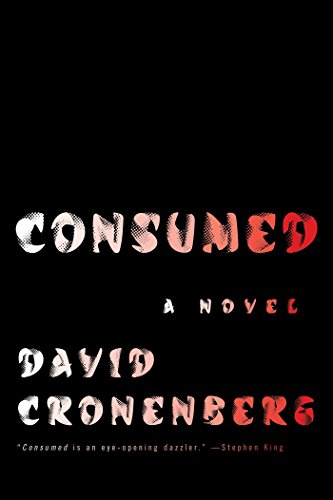
                • Cover of Consumed
                  Consumed

                  David Cronenberg · standalone novel · 2014

                  similar bydarkcontemporaryliterary & general+1 more

                  Consumed is the first novel by the Canadian filmmaker, screenwriter and actor David Cronenberg.

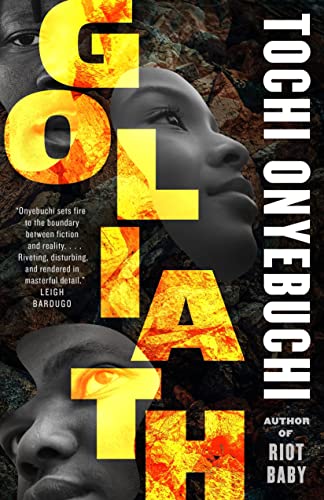
                • Cover of Goliath
                  Goliath

                  Tochi Onyebuchi · standalone novel · 2022

                  similar bycolonialismdarkchallenging

                  Goliath is a 2022 science fiction novel by Nigerian American writer Tochi Onyebuchi. It is his first adult science fiction novel and it was first published in New York on January 25, 2022, by Tor Books.

                • Cover of The Hidden Force
                  The Hidden Force

                  Louis Couperus · standalone novel · 1900

                  similar bycolonialismdarkliterary & general

                  The Hidden Force is a 1900 novel by the Dutch writer Louis Couperus. The narrative is set on the island of Java in the Dutch East Indies. The book was adapted into a 1974 Dutch TV serial. In 2010, a feature-film adaptation was announced as under development with Paul Verhoeven as director.

                • Cover of Ishmael
                  Ishmael

                  series · 2 books · 1992

                  completed

                  similar bycontemporaryliterary & generalchallenging+1 more