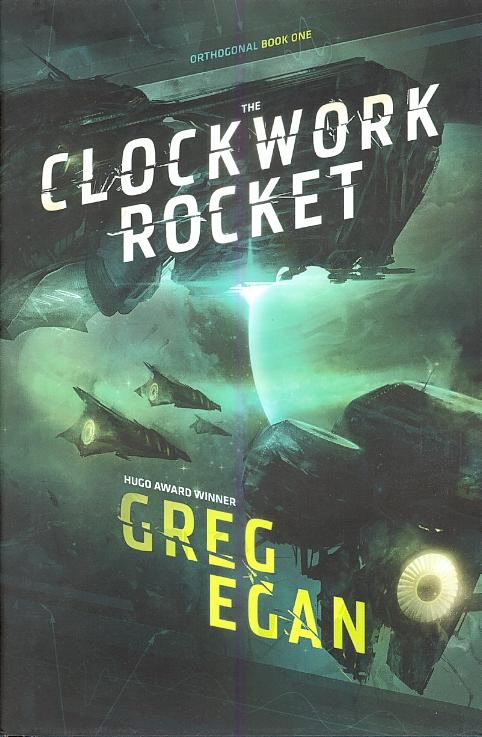
More like The Clockwork Rocket
anchored on:science fictionhard science fictionother star systemsfar futurechallengingspace exploration
but
- Diaspora
Greg Eganstandalone novel1997
similar byspace explorationchallengingfar futurescience fictionhard science fictionother star systems
Diaspora is a hard science fiction novel by the Australian writer Greg Egan which first appeared in print in 1997. It originated as the short story "Wang's Carpets" which originally appeared in the Greg Bear-edited anthology New Legends. The story appears as a chapter of the novel.
- Schild's Ladder
Greg Eganstandalone novel2002
similar byspace explorationchallengingfar futurescience fictionhard science fiction+1 more
Schild's Ladder is a 2002 science fiction novel by Australian author Greg Egan. The book derives its name from Schild's ladder, a construction in differential geometry, devised by the mathematician and physicist Alfred Schild.
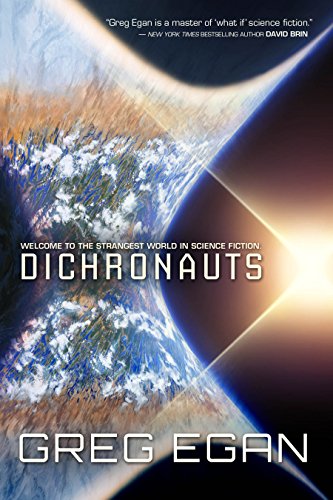
- Dichronauts
Greg Eganstandalone novel2017
similar byspace explorationchallengingfar futureother star systemsscience fictionhard science fiction
Dichronauts is a hard science-fiction novel by Australian author Greg Egan. The novel was published by Night Shade Books on 11 July 2017. It describes a universe with two time dimensions, one of which corresponds to the time perception of the characters while the other influences their spatial perception, which precludes rotations in the latter chronological direction. Hence a symbiosis of two life forms is necessary, so that they can even see in all directions. Furthermore, many fundamental laws of physics are altered crucially: Objects can roll uphill or not fall over any more when oriented suitably. There is negative kinetic energy and a fourth state of matter. Planets are no longer spherical, but hyperbolic and therefore have three separate surfaces. Egan describes these details on his website.
- Orthogonal
series3 books2011
similar byspace explorationchallengingfar futurescience fictionhard science fictionother star systemsgeneration ship+1 more
Orthogonal is a science fiction trilogy by Australian author Greg Egan taking place in a universe where, rather than three dimensions of space and one of time, there are four fundamentally identical dimensions. While the characters in the novels always perceive three of the dimensions as space and one as time, this classification depends entirely on their state of motion, and the dimension that one observer considers to be time can be seen as a purely spatial dimension by another observer.
- Incandescence
Greg Eganstandalone novel2008
similar byspace explorationchallengingfar futureother star systemsscience fictionhard science fiction
Incandescence is a 2008 science fiction novel by Australian author Greg Egan. The book is based on the idea that the theory of general relativity could be discovered by a pre-industrial civilisation.
- Thistledown
series5 books1978
completed
similar byspace explorationfar futurescience fictionhard science fiction+3 more
- Ringworld
series5 books1970
part of Known Space
similar byspace explorationfar futureother star systemsscience fiction
The Ringworld series is a series of science fiction novels written by American author Larry Niven. It is part of his Known Space series of stories. Its backdrop is the Ringworld, a giant artifact 3 million times the surface area of Earth circling a star. The series is composed of four standalone science fiction novels, the original award-winning book and its three sequels:1970: Ringworld 1979: The Ringworld Engineers 1996: The Ringworld Throne 2004: Ringworld's Children
- Aurora
Kim Stanley Robinsonstandalone novel2015
similar bychallengingfar futurescience fictionhard science fictionother star systemsgeneration ship+1 more
Aurora is a 2015 novel by American science fiction author Kim Stanley Robinson. The novel concerns a generation ship built in the style of a Stanford torus, traveling to Tau Ceti to start a human colony. The novel's primary narrative voice is that of the starship's artificial intelligence. Aurora was well received by critics.
- The City and the Stars
Arthur C. Clarkestandalone novel1956
similar byspace explorationfar futureother star systemsscience fiction
The City and the Stars is a science fiction novel by British writer Arthur C. Clarke, published in 1956. This novel is a complete rewrite of Clarke's earlier Against the Fall of Night, his first novel, which had been published in Startling Stories magazine in 1948 after being rejected by the editor of Astounding Science-Fiction, according to the author.
- Mesklin
series6 books1954
completed
similar byspace explorationfar futureother star systemsscience fictionhard science fiction
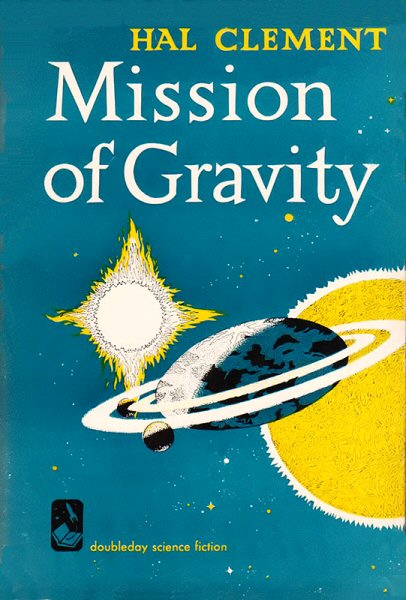
Mesklin is a fictional planet created by Hal Clement and used in a number of his hard science fiction stories, starting with Mission of Gravity (1954). Alongside the novel's original 1953 serialization in Astounding Science Fiction, Clement published an essay titled "Whirligig World" on how he designed the planet to have the properties he wanted. The idea came from an object that was at the time believed to exist in the 61 Cygni system, and which might represent an extrasolar planet.
- A Meeting with Medusa
series2 books1971
similar byspace explorationchallengingfar futurescience fictionhard science fictionother star systems
Arthur C. Clarke's A Meeting with Medusa follows an astronaut, badly injured in an earlier disaster, on a solo balloon expedition into Jupiter's atmosphere, where he encounters vast floating lifeforms unlike anything previously catalogued. Decades later, Stephen Baxter and Alastair Reynolds continued the story in The Medusa Chronicles, following the same protagonist across a much longer span of future history. The original novella won the 1972 Nebula Award.
- Starman Jones
Robert A. Heinleinstandalone novel1953
similar byspace explorationfar futurescience fictionother star systems+1 more
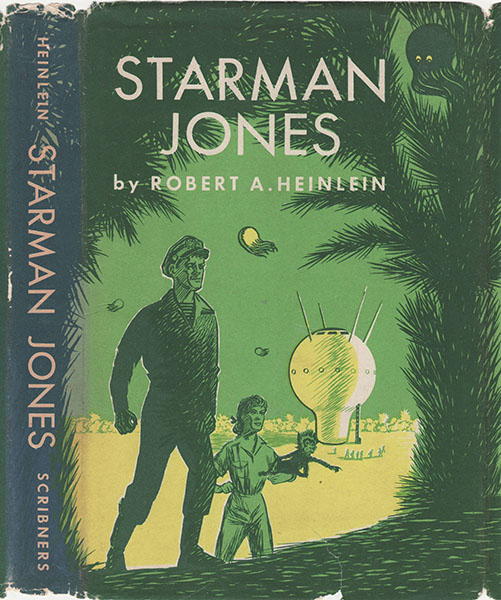
Starman Jones, a 1953 science fiction novel by Robert A. Heinlein, features a farm boy who wants to go to the stars. Charles Scribner's Sons published the book as part of the Heinlein juveniles series.
- Tau Zero
Poul Andersonstandalone novel1970
similar byspace explorationfar futurescience fictionhard science fiction+1 more
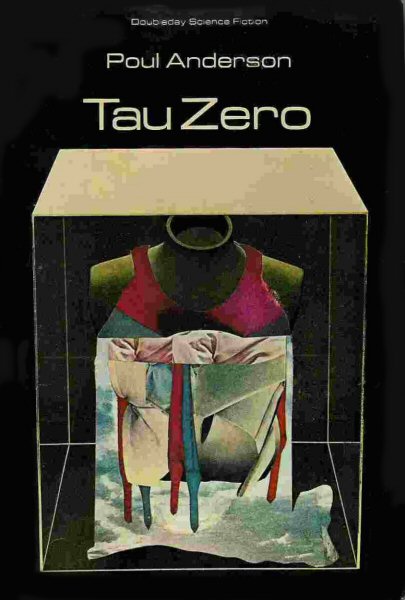
During an epic voyage to a planet 30 light years away, the engines of the starship the 'Leonora Christine' are damaged. Unable to slow down, it attains light speed (the tau zero of the title). The disparity between time for those on board and external time becomes impossibly great. Eons and galaxies hurtle by, as the crew speed helplessly into the great unknown.
- Pushing Ice
Alastair Reynoldsstandalone novel2005
similar byspace explorationfar futurescience fictionother star systemshard science fiction
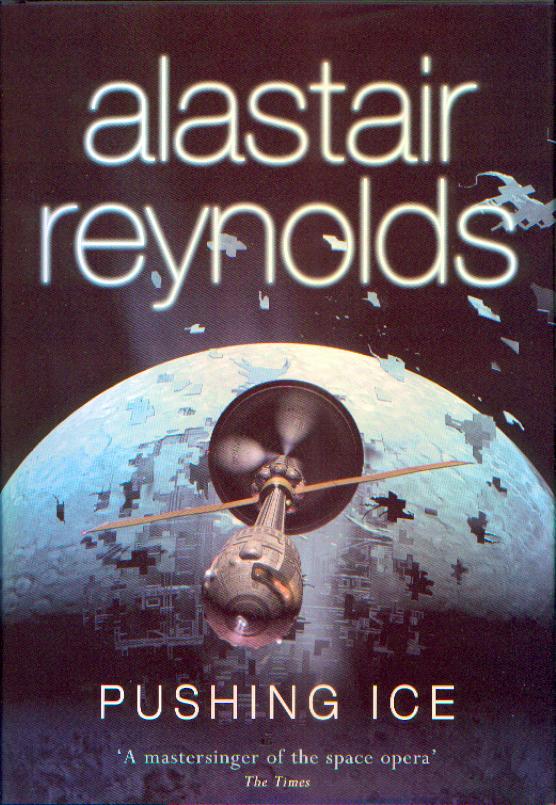
When Saturn's moon Janus suddenly takes off into interstellar space, an ice mining spaceship sent to investigate finds itself swept along into distant space until it ends up trapped in a gigantic alien structure, wherein the crew must prepare to reside for the foreseeable future.
- Xeelee
series89 books1987
similar byfar futurescience fictionhard science fiction+3 more
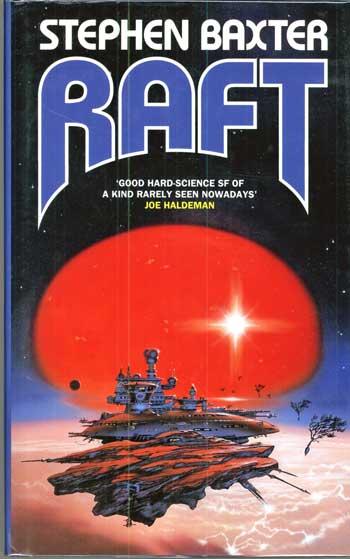
The Xeelee Sequence is a series of hard science fiction novels, novellas, and short stories written by British author Stephen Baxter. The series spans billions of years of fictional history, exploring humanity's future expansion into the universe, its intergalactic war with the Xeelee, a supremely advanced Kardashev Type V alien civilization, and the Xeelee's own conflict with dark matter entities known as Photino Birds. The Xeelee are described as symbiotic entities composed of spacetime defects, Bose–Einstein condensates, and baryonic matter.
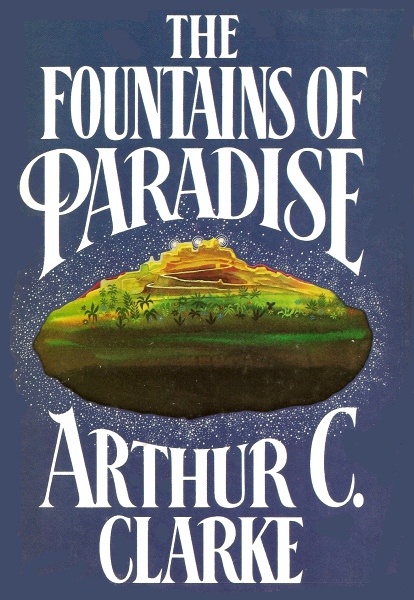
- The Fountains of Paradise
Arthur C. Clarkestandalone novel1979
similar byspace explorationfar futurescience fictionhard science fiction
The Fountains of Paradise is a 1979 science fiction novel by British writer Arthur C. Clarke. Set in the 22nd century, it describes the construction of a space elevator. This "orbital tower" is a giant structure rising from the ground and linking with a satellite in geostationary orbit at the height of approximately 36,000 kilometres. Such a structure would be used to raise payloads to orbit without the expense of using rockets. The novel won both the Hugo and Nebula Awards for Best Novel.
- Tunnel in the Sky
Robert A. Heinleinstandalone novel1955
similar byspace explorationfar futureother star systemsscience fiction
As the final test of a survivalist/explorer class, teenagers are dumped on an alien planet to use their skills while awaiting pickup. But something has gone wrong, and they find they are on their own.
- Heechee
series19 books1972
completed
similar byspace explorationfar futurescience fictionother star systems
The Heechee Saga, also known as the Gateway series, is a series of science fiction novels and short stories by Frederik Pohl. The Heechee are an advanced alien race that visited the Solar System hundreds of millennia ago and then mysteriously disappeared. They left behind bases containing artifacts, including working starships, which are discovered and exploited by humanity.
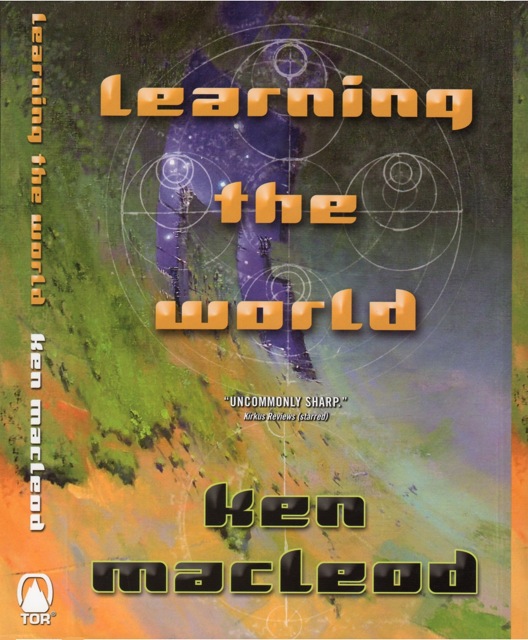
- Learning the World
Ken MacLeodstandalone novel2005
similar byspace explorationfar futureother star systemsscience fictionhard science fiction+1 more
From the front flap of the Tor first printing: "Humanity has spread to every star within 500 light-years of its half-forgotten origin, coloring the sky with a haze of habitats. Societies rise and fall. Incautious experiments burn fast and fade. On the fringes, less modified humans get on with the job of settling a universe that has, so far, been empty of intelligent life. The ancient starship But the Sky, My Lady! The Sky! is entering orbit around a promising new system after a four hundred year journey. For its long-lived inhabitants, the centuries have been busy. Now a younger generation is eager to settle the system. The ship is a seed-pod ready to burst. Then they detect curious electromagnetic emissions from the system's Earth-like world. As the nature of the signals becomes clear, the choices facing the humans become stark. On Ground, second world from the sun, a young astronomer searches for his system's outermost planet. A moving point of light thrills, then disappoints him. It's only a comet. His physicist colleague Orro takes time off from trying to invent a flying-machine to calculate the comet's trajectory. Something is very odd about that comet's path. They are not the only ones for whom the world has changed. "We are not living in the universe we thought we lived in yesterday. We have to start learning the world all over again.""
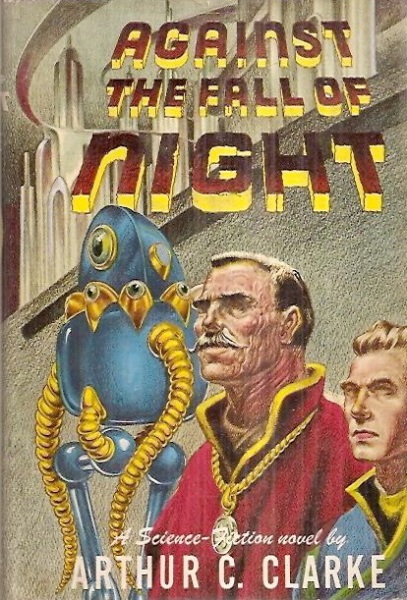
- Against the Fall of Night
series2 books1953
similar byspace explorationfar futureother star systemsscience fiction
Against the Fall of Night is Arthur C. Clarke's 1953 novel of a stagnant, climate-controlled city called Diaspar a billion years in Earth's future, where a young man named Alvin becomes the first in living memory to want to leave it. Clarke later rewrote the book more expansively as The City and the Stars, and in 1990 Gregory Benford wrote Beyond the Fall of Night, an authorized sequel continuing on from this original, shorter version's ending.
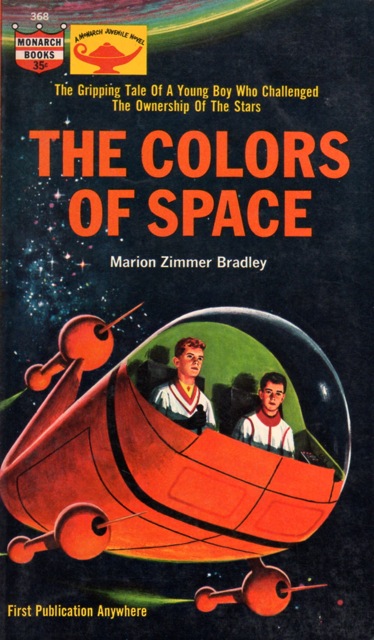
- The Colors of Space
Marion Zimmer Bradleystandalone novel1963
similar byspace explorationfar futureother star systemsscience fiction
The Lhari seem peaceful and friendly, but they go to some lengths to protect their monopoly on faster-than-light travel. One young man is sent to discover their secrets.
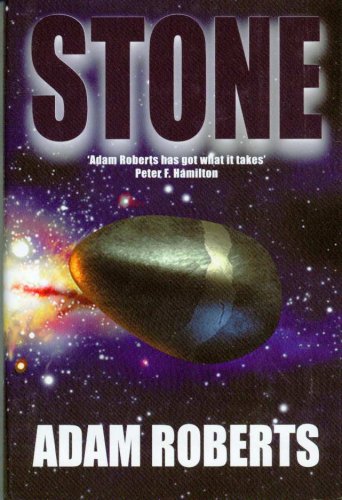
- Stone
Adam Robertsstandalone novel2002
similar byspace explorationchallengingfar futurescience fictionother star systems
Stone, published in 2002, is a science fiction novel by the British writer Adam Roberts.
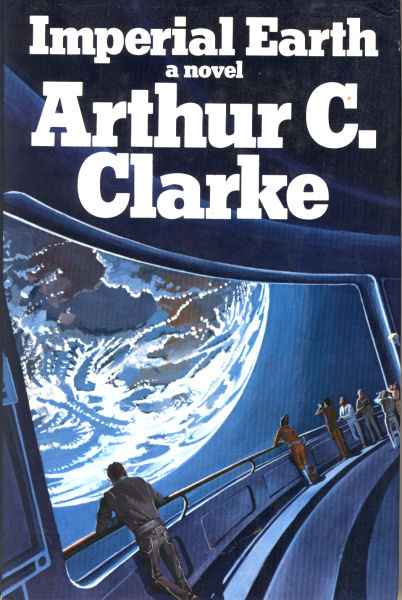
- Imperial Earth
Arthur C. Clarkestandalone novel1975
similar byspace explorationfar futurescience fictionhard science fiction
Imperial Earth is a science fiction novel by British writer Sir Arthur C. Clarke, published in 1975 by Gollancz Books. The plot follows the protagonist, Duncan Makenzie, on a trip to Earth from his home on Titan, in large part as a diplomatic visit to the U.S. for its quincentennial in 2276, but also to have a clone of himself produced. The book was published in time for the U.S. bicentennial in 1976.
- Dragon's Egg
series3 books1980
completed
similar byspace explorationother star systemsscience fictionhard science fictionfar future
Robert L. Forward's Dragon's Egg (1980) follows first contact with the cheela, intelligent beings the size of sesame seeds living on the surface of a neutron star, where crushing gravity and fast-moving physics let them evolve from primitive agriculture to advanced technology in about a month of Earth time while human observers watch from orbit. The sequel Starquake (1985) follows the cheela's own development of space travel and a catastrophic starquake that devastates their neutron-star home, alongside the continuing story of the human crew observing them.