More like The Clone
anchored on:science fictionour worldmid 20th centurycloningsurvivalbig city+1 more
but
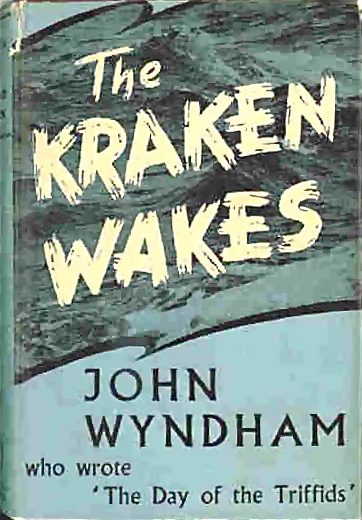
- The Kraken Wakes
John Wyndhamstandalone novel1953
similar byscience fictiontensemid 20th centurysurvivalour worlddark
" Behind a spectacular meteor shower actually hides the beginning of an invasion by a mysterious and powerful alien race. Earth's life is disrupted by the attacks of extraterrestrials whose war machines, emerging from the depths of the oceans, seem indestructible. The coalitioned forces of the whole world are worthless, powerless in the face of the indecipherable and deadly plans of a superior intelligence, capable of bringing the entire planet to the brink of catastrophe" Goodreads May 20, 2022
- I Am Legend
Richard Mathesonstandalone novel1954
similar byscience fictiontensemid 20th centurysurvivalour worlddark
The last human survivor of the vampire epidemic has to maintain his defences against their onslaught, while attempting to research the cause and possibly solution to the plague. Robert Neville is the last living man on Earth... but he is not alone. Every other man, woman and child on the planet has become a vampire, and they are hungry for Neville's blood. By day he is the hunter, stalking the undead through the ruins of civilization. By night, he barricades himself in his home and prays for the dawn. How long can a man survive like this?
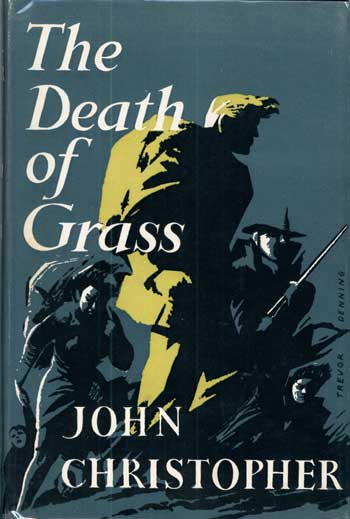
- The Death of Grass
John Christopherstandalone novel1956
similar byscience fictiontensemid 20th centurysurvivalour worlddark
The Death of Grass is a 1956 post-apocalyptic science fiction novel written by the English author Sam Youd under the pen name John Christopher. The plot concerns a virus that kills off grass species, including rice and wheat. The Death of Grass was the first of several post-apocalyptic novels written by Youd. The novel was written in a matter of weeks and liberated him from his day job.
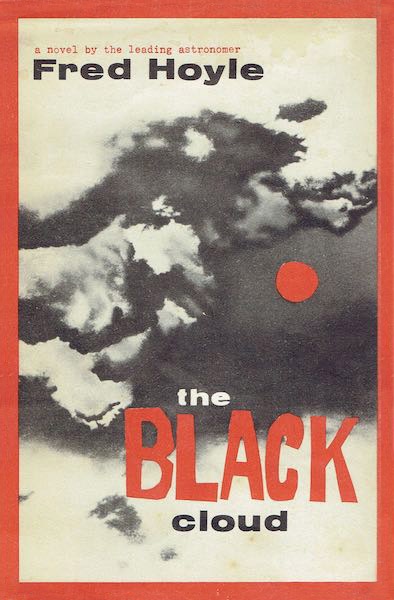
- The Black Cloud
Fred Hoylestandalone novel1957
similar byscience fictiontensemid 20th centurysurvivalour world
The Black Cloud is a 1957 science fiction novel by British astrophysicist Fred Hoyle. It details the arrival of an enormous cloud of gas that enters the Solar System and appears about to destroy most of the life on Earth by blocking the Sun's radiation.
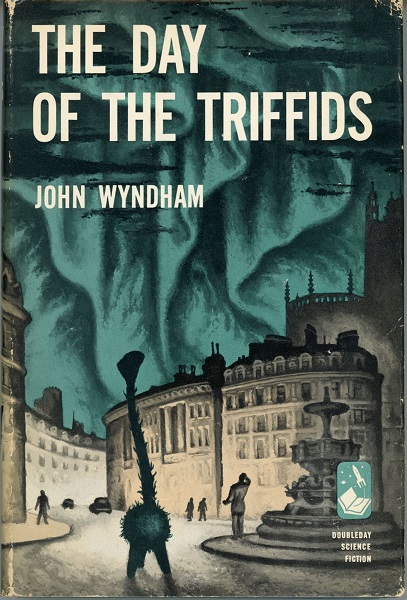
- The Triffids
series3 books1951
similar byscience fictionsurvivaldarkour world+2 more
John Wyndham's The Day of the Triffids (1951) opens with a meteor-shower-like event that leaves most of Britain's population blind, throwing civilization into collapse just as triffids, an aggressive and mobile species of poisonous plant, become free to hunt the helpless survivors. Simon Clark's authorized sequel The Night of the Triffids (2001) picks up a generation later, narrated by the original protagonist's son as he confronts a new triffid-dominated world, and John Whitbourn's The Age of the Triffids extends the shared setting further still. Together the three novels form a loose post-apocalyptic trilogy built on Wyndham's original premise rather than a tightly plotted single story.
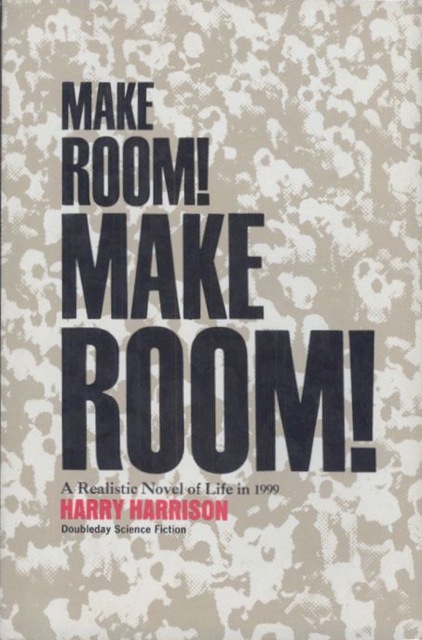
- Make Room! Make Room!
Harry Harrisonstandalone novel1966
similar byscience fictiontensesurvivalour worlddarkbig city
Make Room! Make Room! is a 1966 science fiction novel written by Harry Harrison exploring the consequences of both unchecked population growth on society and the hoarding of resources by a wealthy minority. It was originally serialized in Impulse magazine.
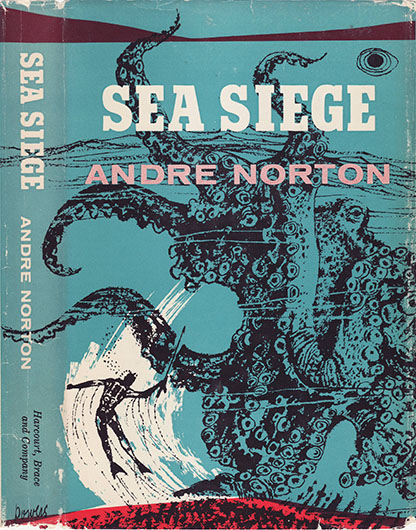
- Sea Siege
Andre Nortonstandalone novel1957
similar byscience fictiontensemid 20th centurysurvivalour world+1 more
On a bleak little island in the West Indies, Griff Gunston faces many questions. Why were so many small island cruisers adrift and abandoned? Why was the sea disease that Griff's scientist father was investigating radioactive. Why were the colonies of octopi growing larger and becoming so strangely organized and daring? Before the answers can be found, civilization blanks out. An atom bomb war has left the little group isolated. A danger from the ocean floor, a new type of intelligence is prepared to seize the world for itself. (adapted from the blurb accompanying the first edition)
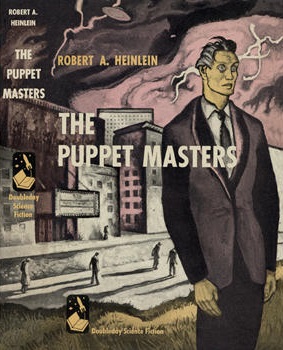
- The Puppet Masters
Robert A. Heinleinstandalone novel1951
similar byscience fictiontensemid 20th centurysurvival
Parasitical aliens attach themselves to human hosts and take over their bodies. Two spies are sent to find out what's happening, but the extent is much farther than they knew. With access to the humans' memories, the aliens quietly invade the government and start taking over.
- Alas, Babylon
Pat Frankstandalone novel1959
similar byscience fictiontensemid 20th centurysurvival
Classic novel of nuclear war and aftermath in rural Florida. From the back cover of a Bantam Pathfinder edition: "The day that the bomb dropped the thousands of years of "progress" that had covered the treacheries and weaknesses of ordinary man with a thin veneer of civilization were dissolved and melted like snow on the desert's dusty face. Then - the law of the jungle reigned but in the wreckage a few courageous survivors, men and women with the guts to have hope, were determined to build a new and better world on the ruins of the old. This is their story."
- Lord of the Flies
William Goldingstandalone novel1954
similar bytensemid 20th centurysurvivaldarkour world+1 more
Lord of the Flies is the 1954 debut novel of British author William Golding. The plot concerns a group of prepubescent British boys who are stranded on an uninhabited island and their disastrous attempts to govern themselves that lead to a descent into savagery. The novel's themes include morality, leadership, and the tension between civility and chaos.
- The Andromeda Strain
series2 books1969
similar byscience fictiontensesurvival+2 more
Michael Crichton's 1969 novel The Andromeda Strain follows a team of scientists racing to contain a lethal extraterrestrial microorganism that crash-lands in Arizona, told in the clinical, document-driven style that helped establish the techno-thriller genre. Daniel H. Wilson's authorized 2019 sequel The Andromeda Evolution revisits the same threat five decades later. Together the two books form a two-part outbreak story separated by a fifty-year gap in publication.
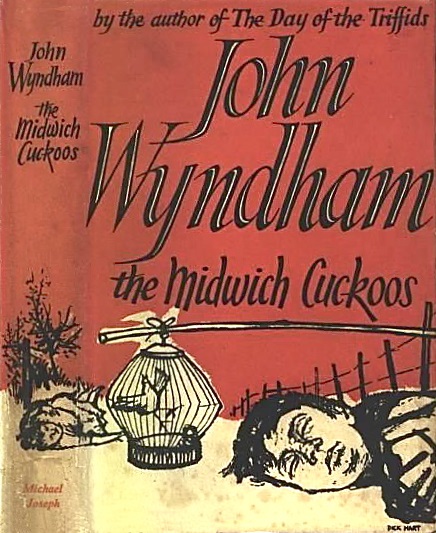
- The Midwich Cuckoos
John Wyndhamstandalone novel1957
similar byscience fictiontensemid 20th centurydark
The Midwich Cuckoos is a 1957 science fiction novel written by the English author John Wyndham. It tells the tale of an English village in which the women become pregnant by brood parasitic aliens. The book has been praised by many critics, including the dramatist Dan Rebellato, who called it "a searching novel of moral ambiguities", and the novelist Margaret Atwood, who called the book Wyndham's "chef d'œuvre". The book has been adapted for film, radio, and television.
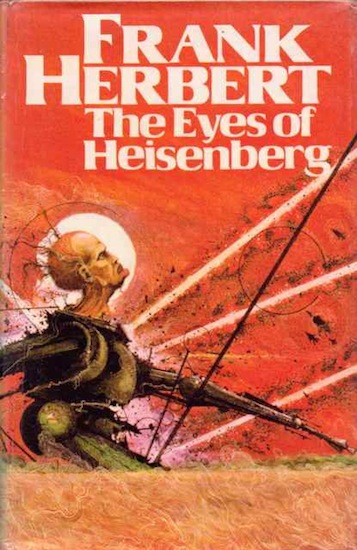
- The Eyes of Heisenberg
Frank Herbertstandalone novel1966
similar byscience fictiontenseour worlddarkgenetic engineering+1 more
Tens of thousands of years in the future, Earth is ruled by the Optimen, a genetically engineered aristocracy that has made itself functionally immortal, while ordinary people, the Folk, live under strict reproductive control. When Harvey and Lizbeth Durant arrive to have their embryo genetically screened, the examining doctor finds something in the child no one has seen in a very long time: real potential for both fertility and life span, traits the Optimen have arrogated to themselves. Rather than destroy the embryo as policy demands, the doctor hesitates, setting off a chain of surveillance, suspicion and resistance. A tightly wound Frank Herbert thriller about genetic caste and rebellion.
- Prey
Michael Crichtonstandalone novel2002
similar byscience fictiontensesurvivalour worldgenetic engineering+1 more
Prey is the thirteenth novel by Michael Crichton under his own name and his twenty-third novel overall. It was first published in November 2002, making it his first novel of the twenty-first century. An excerpt was first published in the January–February 2003 issue of Seed magazine. Prey brings together themes from two earlier Crichton best-selling novels, Jurassic Park and The Andromeda Strain, and serves as a cautionary tale about developments in science and technology: in particular, nanotechnology, genetic engineering, and distributed artificial intelligence.
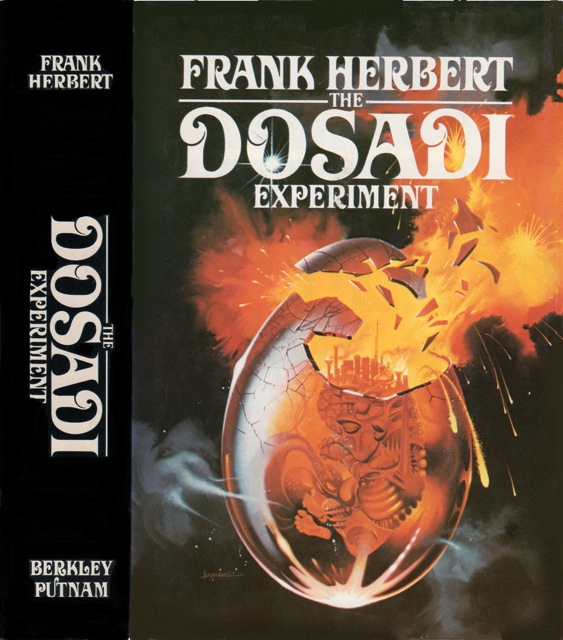
- The Dosadi Experiment
Frank Herbertstandalone novel1977
similar byscience fictiontensesurvival+2 more
From the flaps of the Berkley Putnam first edition: "In his first new work of science fiction since the best-selling Children of Dune, Frank Herbert returns to his world of Whipping Star, and involves Jorj X. McKie, Saboteur Extraordinary, in a new intrigue. In Whipping Star, McKie discovered that some of the stars in the universe are actually intelligent, super-powerful beings, and was able to befriend one of them, the star Alcyone - affectionately known as Fannie Mae. As The Dosadi Experiment opens, McKie is assigned to investigate the planet Dosadi, which is isolated from the rest of the galaxy by a "god-wall," a barrier set up by one of the intelligent stars. Dosadi is rumored to be an experimental planet, and the experimenters are the froglike Gowachin, whose culture is founded upon a strange legal system in which McKie is the only human ever trained. He learns that humans and Gowachin have been placed on Dosadi, without their consent, for an experiment that could last centuries: an experiment in extreme overcrowding. But this monstrous plot is apparently out of control, and it seems the Gowachin may be prepared to destroy Dosadi rather than expose its secret, thus breaking the peace among the races, and starting the first interstellar war. But this is just the beginning. When McKie finally reaches Dosadi he discovers that the Dosadis have taken control of their own evolution and produced a competitive, highly evolved elite, of both humans and Gowachin, who have been able to extrapolate the existence of a universe beyond the god-wall and hate whoever has imprisoned them like this. They plan to break out and avenge themselves on the galaxy."
- City at World's End
Edmond Hamiltonstandalone novel1951
similar byscience fictiontensesurvivalour worlddark
An experimental atomic weapons test in small-town America goes catastrophically wrong, hurling the entire town of Middletown, buildings, streets and all, untold ages into Earth's future, to a time when the sun is dying and humanity's last city struggles on beneath a darkening sky. Cut off from everything and everyone they knew, the townspeople have to find a way to survive in a world that has nothing left to spare for latecomers. Edmond Hamilton's novel strands a slice of mid-century America at the literal end of the world.
- The Hamelin Plague
A. Bertram Chandlerstandalone novel1963
similar byscience fictiontensemid 20th centurysurvivalour worlddarkgenetic engineering
It began with a few small items in the newspapers - dead dogs and cats, a mutilated child, a series of unexplained fires. Then suddenly it exploded into a full sized catastrophe. Huge mutants - half rat, half man - began to take over the world, stealing children for slaves and destroying whole cities and their populations. Only a few people escaped, among them Tim Barrett, his wife Jane, and a handful of survivors. Alone on the high seas in a small ship, they set off to find the island where Dr. Theodore Piper had been experimenting with a sonic death ray. They knew Dr. Piper was their only hope for personal and world survival - if he was still alive... if the King Rats hadn't forced him to serve their evil purpose... and if he could find a way to stop the spreading horror of invasion. (from the back cover of the Monarch Books first edition)
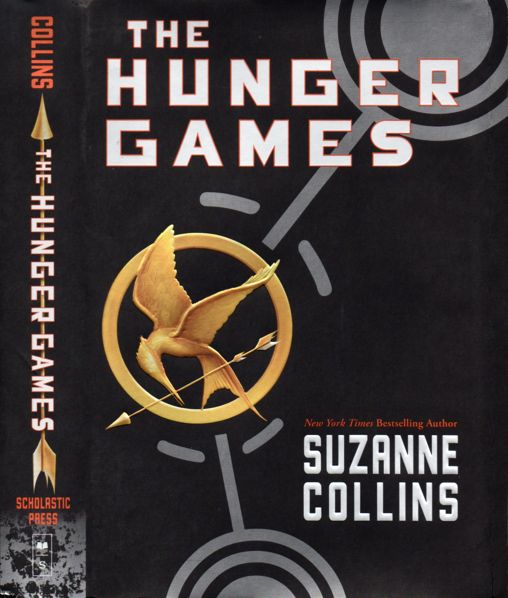
- The Hunger Games
series3 books2008
part of The Hunger Games Universe
similar byscience fictiontensesurvivaldark
The Hunger Games is a series of young adult dystopian novels written by American author Suzanne Collins. The series consists of a trilogy that follows teenage protagonist Katniss Everdeen, as well as two prequels. The Hunger Games universe is a dystopia set in Panem, a post-apocalyptic North American country consisting of the wealthy Capitol and 12 districts in varying states of poverty. As punishment for rebellion, the Capitol hosts an annual battle royale competition called The Hunger Games. Each of the 12 districts must send two children between the ages of 12 and 18 to participate, and the last surviving child is dubbed the victor.
- Z for Zachariah
Robert C. O'Brienstandalone novel1975
similar byscience fictiontensesurvivalour world+1 more
Sixteen-year-old Ann Burden, on an Amish family farm in an isolated valley, believes she is the only survivor of nuclear war and nerve gas. One day a man arrives in a "safe-suit" that he and others have recently developed.
- The Fireman
Joe Hillstandalone novel2016
similar byscience fictiontensesurvivalour worlddark
The Fireman is a novel set in a post-apocalyptic time by American author Joe Hill. The novel, Hill's fourth, tells the tale of a deadly spore that has infected most of the world's population. Hill first spoke of the novel in 2013 in promotional interviews for his then-new novel NOS4A2. The novel was released on May 17, 2016.
- The Hunger Games Universe
universe5 books2008
Start hereThe Hunger Games · Start here
similar byscience fictiontensesurvivaldark
Panem, they call it now — a nation raised on the drowned bones of North America, a glittering Capitol ringed by twelve districts it once starved into obedience. Every year the Capitol collects its debt in children: two tributes from each district, drawn by lottery, dropped into an engineered arena, and made to kill one another on live television while the whole country is required to watch. This is the Hunger Games — entertainment, punishment, and government at once. Suzanne Collins tells it in a compact, unified body of work. The founding trilogy — The Hunger Games, Catching Fire, and Mockingjay — follows Katniss Everdeen, a girl from the coal-mining District 12 who volunteers in her sister's place and becomes something the Capitol never scripted. Two prequels reach back into the same machinery: The Ballad of Songbirds and Snakes traces a young Coriolanus Snow long before he is President, and Sunrise on the Reaping returns to District 12 a generation ahead of Katniss. Begin with the trilogy, in order — it is Katniss's voice, close and present-tense, that makes Panem breathe, and the prequels land hardest once you know how her story ends. Beneath the spectacle sits one steady, uncomfortable question: who profits when we agree to look away.
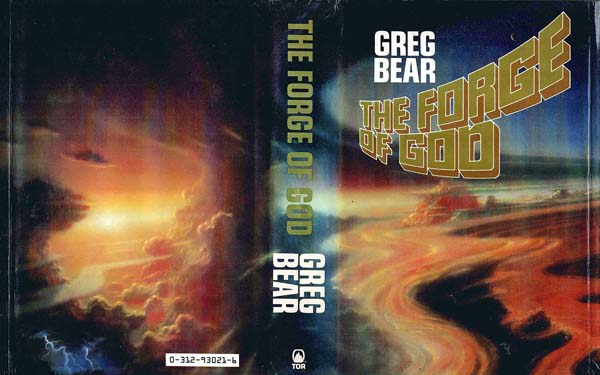
- Forge of God
series2 books1987
completed
similar byscience fictiontensesurvivaldark+1 more
The Forge of God (1987) is Greg Bear's science fiction novel about Earth's discovery that it is the target of an incomprehensible, overwhelming alien attack, following scientists and ordinary people as they try to understand what is destroying the planet. Its 1992 sequel, Anvil of Stars, follows a group of young survivors sent on a mission of interstellar retaliation, continuing directly from the first book's ending.
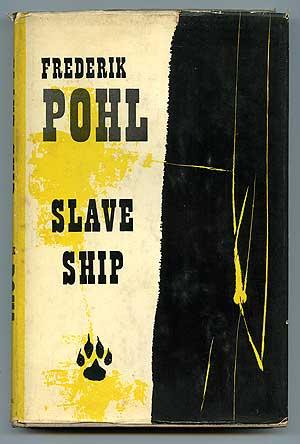
- Slave Ship
Frederik Pohlstandalone novel1957
similar byscience fictiontensemid 20th centuryour worlddark
Slave Ship is a 1956 short science fiction novel by American writer Frederik Pohl, originally serialized in Galaxy. The scene is a world in the throes of a low-intensity global war, which appears to be an amplified representation of the Vietnam War, in which the U.S. was just beginning to be involved. The plot involves telepathy, speaking to animals, and, in the last few pages, an invasion by extraterrestrials.
- The Twilight of Briareus
Richard Cowperstandalone novel1974
similar byscience fictiontensesurvivalour worlddarkgenetic engineering
It took the light of the supernova Briareus Delta one hundred and thirty-two years to cross space to the Solar System. But the night it exploded in our sky was a night that would never be forgotten in the history of the world. For in that bath of cosmic particles, all things changed. Not only the weather and the flora and fauna, but humanity itself received what seemed to be its death sentence. Sterility signalled the end of man, until the strange children known as the Zeta-mutants began to appear. Richard Cowper, author of Clone and other sf novels, has produced in this new novel a gripping story of how one man coped with the terrible dilemma of his world - how he attempted to solve the problem of the girls with the amber eyes and what he did when he found out what he himself had become during The Twilight of Briarseus. (from the back cover of the DAW Books first printing)