More like The Dalek Factor
anchored on:science fictionfar futurealienssurvivaltotalitarianismspaceship+2 more
but
- The Hunger Games
series3 books2008
part of The Hunger Games Universe
similar byscience fictionfar futuredarktensetotalitarianismsurvival
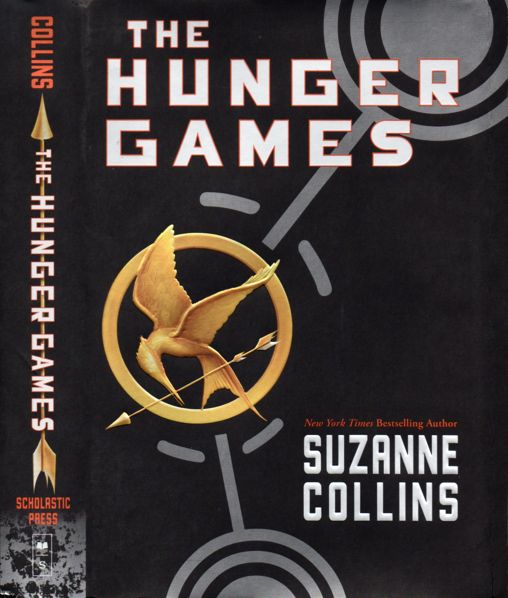
The Hunger Games is a series of young adult dystopian novels written by American author Suzanne Collins. The series consists of a trilogy that follows teenage protagonist Katniss Everdeen, as well as two prequels. The Hunger Games universe is a dystopia set in Panem, a post-apocalyptic North American country consisting of the wealthy Capitol and 12 districts in varying states of poverty. As punishment for rebellion, the Capitol hosts an annual battle royale competition called The Hunger Games. Each of the 12 districts must send two children between the ages of 12 and 18 to participate, and the last surviving child is dubbed the victor.
- The Hunger Games Universe
universe5 books2008
Start hereThe Hunger Games · Start here
similar byscience fictionfar futuredarktensesurvivaltotalitarianism
Panem, they call it now — a nation raised on the drowned bones of North America, a glittering Capitol ringed by twelve districts it once starved into obedience. Every year the Capitol collects its debt in children: two tributes from each district, drawn by lottery, dropped into an engineered arena, and made to kill one another on live television while the whole country is required to watch. This is the Hunger Games — entertainment, punishment, and government at once. Suzanne Collins tells it in a compact, unified body of work. The founding trilogy — The Hunger Games, Catching Fire, and Mockingjay — follows Katniss Everdeen, a girl from the coal-mining District 12 who volunteers in her sister's place and becomes something the Capitol never scripted. Two prequels reach back into the same machinery: The Ballad of Songbirds and Snakes traces a young Coriolanus Snow long before he is President, and Sunrise on the Reaping returns to District 12 a generation ahead of Katniss. Begin with the trilogy, in order — it is Katniss's voice, close and present-tense, that makes Panem breathe, and the prequels land hardest once you know how her story ends. Beneath the spectacle sits one steady, uncomfortable question: who profits when we agree to look away.
- Pushing Ice
Alastair Reynoldsstandalone novel2005
similar byscience fictionfar futurespaceshiptensealienssurvival
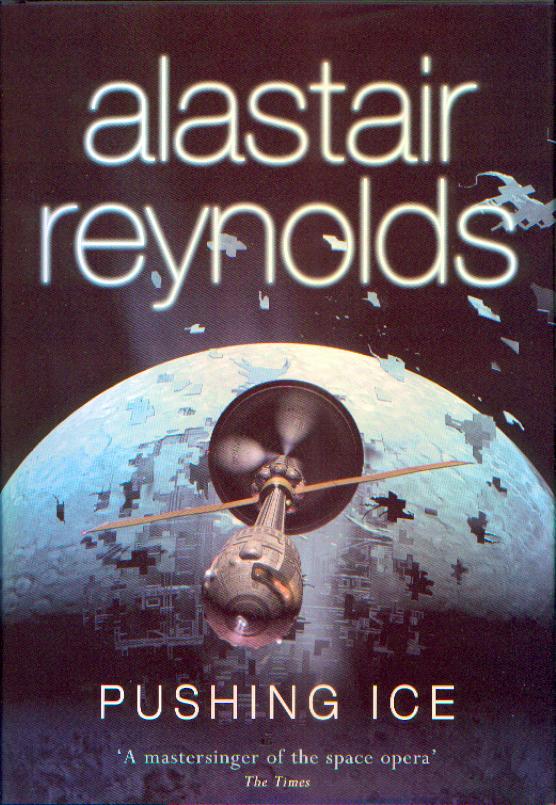
When Saturn's moon Janus suddenly takes off into interstellar space, an ice mining spaceship sent to investigate finds itself swept along into distant space until it ends up trapped in a gigantic alien structure, wherein the crew must prepare to reside for the foreseeable future.
- Space Beagle
series5 books1939
completed
similar byscience fictionfar futurespaceshiptensealiens+1 more
The Voyage of the Space Beagle is a 1950 fix-up novel by A. E. van Vogt, stitched together from four previously published pulp stories into a single continuous account of the exploration ship Space Beagle's encounters with a series of dangerous alien life forms. Its episodic, crew-versus-monster structure reads as a loose sequence of adventures rather than one continuous plot.
- Providence
Max Barrystandalone novel2020
similar byscience fictionfar futurespaceshiptensealienssurvival+1 more
Providence is the sixth novel by Australian science fiction author Max Barry. It was published in March 2020 by Putnam.
- The Dosadi Experiment
Frank Herbertstandalone novel1977
similar byscience fictionfar futuretensealienssurvival+1 more
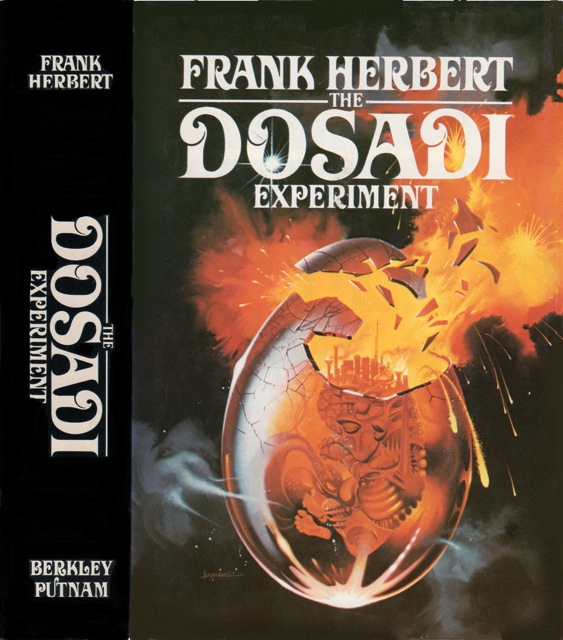
From the flaps of the Berkley Putnam first edition: "In his first new work of science fiction since the best-selling Children of Dune, Frank Herbert returns to his world of Whipping Star, and involves Jorj X. McKie, Saboteur Extraordinary, in a new intrigue. In Whipping Star, McKie discovered that some of the stars in the universe are actually intelligent, super-powerful beings, and was able to befriend one of them, the star Alcyone - affectionately known as Fannie Mae. As The Dosadi Experiment opens, McKie is assigned to investigate the planet Dosadi, which is isolated from the rest of the galaxy by a "god-wall," a barrier set up by one of the intelligent stars. Dosadi is rumored to be an experimental planet, and the experimenters are the froglike Gowachin, whose culture is founded upon a strange legal system in which McKie is the only human ever trained. He learns that humans and Gowachin have been placed on Dosadi, without their consent, for an experiment that could last centuries: an experiment in extreme overcrowding. But this monstrous plot is apparently out of control, and it seems the Gowachin may be prepared to destroy Dosadi rather than expose its secret, thus breaking the peace among the races, and starting the first interstellar war. But this is just the beginning. When McKie finally reaches Dosadi he discovers that the Dosadis have taken control of their own evolution and produced a competitive, highly evolved elite, of both humans and Gowachin, who have been able to extrapolate the existence of a universe beyond the god-wall and hate whoever has imprisoned them like this. They plan to break out and avenge themselves on the galaxy."
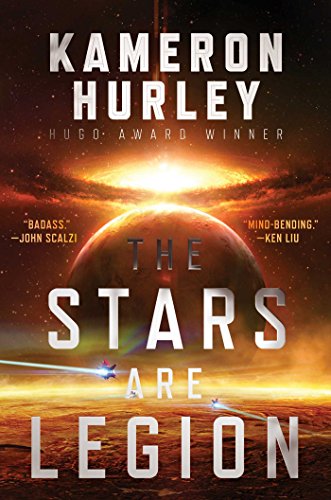
- The Stars Are Legion
Kameron Hurleystandalone novel2017
similar byscience fictionfar futurespaceshipdarktensesurvival
396 pages ; 20 cm
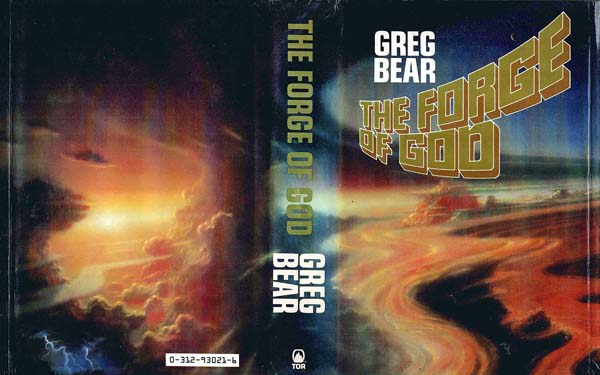
- Forge of God
series2 books1987
completed
similar byscience fictiondarktensealienssurvival+1 more
The Forge of God (1987) is Greg Bear's science fiction novel about Earth's discovery that it is the target of an incomprehensible, overwhelming alien attack, following scientists and ordinary people as they try to understand what is destroying the planet. Its 1992 sequel, Anvil of Stars, follows a group of young survivors sent on a mission of interstellar retaliation, continuing directly from the first book's ending.
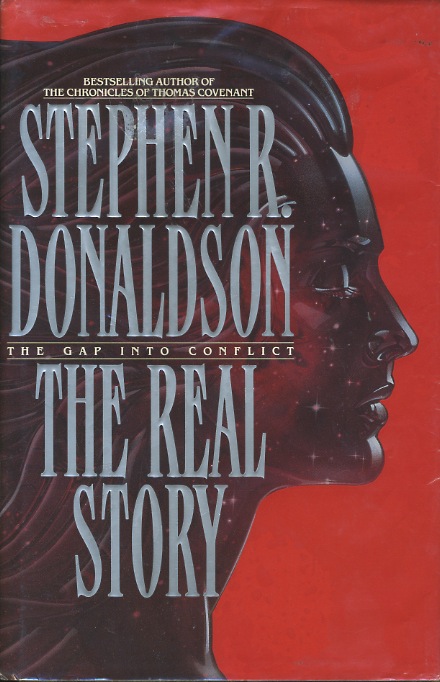
- The Gap
series5 books1990
similar byscience fictionfar futurespaceshipdarktensealiens
The Gap Cycle is a series of science fiction novels by Stephen R. Donaldson, more usually known for his works of epic fantasy. The series was originally published between 1991 and 1996 by Bantam Books and was reprinted by Gollancz in 2008 in the UK. Here, Donaldson gave a loose retelling of Wagner's Ring cycle.
- Chanur
series7 books1982
part of Alliance-Union Universe
similar byscience fictionfar futurespaceshiptensealiens
The Chanur novels are a series of five science fiction novels, forming three separate stories, written by American author C. J. Cherryh and published by DAW Books between 1982 and 1992. The first novel in the series is The Pride of Chanur (1982), which was nominated for both the Hugo and Locus Awards in 1983. The Pride of Chanur, originally a stand-alone story, was followed by the Chanur's Venture trilogy, Chanur's Venture (1984), which was shortlisted for a Locus Award in 1985; The Kif Strike Back (1985) and Chanur's Homecoming (1986). These were followed by a later sequel, Chanur's Legacy (1992). The five novels were also published in two omnibus editions: the first three in The Chanur Saga in 2000 and the next two in Chanur's Endgame in 2007.
- The Exile Waiting
Vonda N. McIntyrestandalone novel1975
similar byscience fictionfar futuredarktensealienssurvival
From the front flap of the Gollancz first printing: The time is the distant future and Earth has been rendered uninhabitable for much of the year by terrible storms during which its only city, Center, constructed around a natural cave system, is closed off from the outside. Mischa, a young thief whose capabilities are enhanced by hereditary mutation, is trying to escape with her drug-addicted brother from the dominance of her uncle. So when a starship arrives commanded by the twin alien pseudosibs, Subone and Subtwo, Mischa seizes her chance. She is soon assigned for training to Jan Hikaru, who quickly realises that Mischa has immense abilities. All goes well until Subone, in a moment of cruelty, lures Mischa's brother into a fight and then kills him. Mischa attacks Subone and both she and Jan have to flee the wrath of the brothers and take refuge n the deep cave system underneath the city.
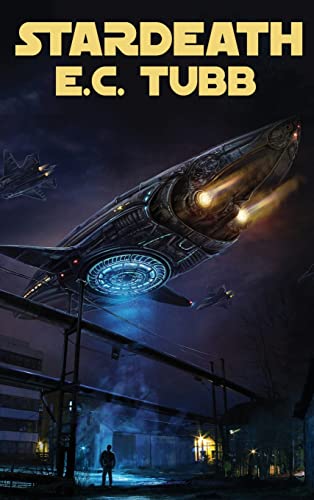
- Stardeath
E. C. Tubbstandalone novel1983
similar byscience fictionfar futurespaceshipdarktensesurvival
Amazon: Ships occasionally disappeared in hyperspace, regrettable sacrifices to the luxury of faster than light travel. But now one of the lost ships has been found and the wreckage is enough to terrify even the most cold blooded witness. From the author of the Dumarest saga.
- Slow Train to Arcturus
Eric Flint & Dave Freerstandalone novel2008
similar byscience fictionfar futurespaceshiptensealienssurvival
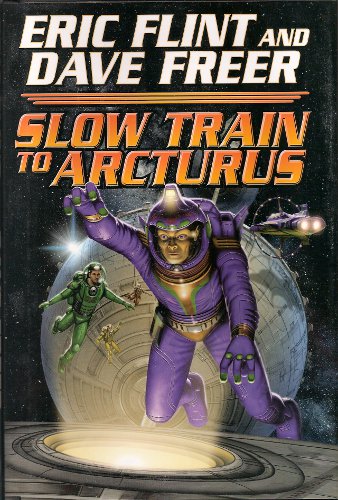
Sending a spaceship to rendezvous with an enormous vessel made up of a series of globular habitats approaching its star system, the aliens find a savage race calling themselves "humans" who promptly slaughter the exploration team, except for a single survivor who escapes to another habitat, where he finds more friendly humans whose help he requires to get back to his own ship.
- Dancers in the Afterglow
Jack L. Chalkerstandalone novel1978
similar byscience fictionfar futurespaceshiptensealiens+2 more
From the back cover: FIRST CAME THE TOURISTS... Ondine was a resort planet. Sixteen million tourists traveled there from just about every world you could think of to live and love in sixteen million different ways. THEN CAME THE MACHISTS... They had gobbled up world after world, spreading their culture to thousands of different races with a brutal, vicious, but most effective system. They were inhuman, unthinking... uncaring. The Combine had already seen what they had done on other worlds, seen whole populations converted into something horrible... something not quite human, non-thinking and no longer caring. Now they had captured Ondine, and no human could save the planet. AND THEN DANIEL CAME TO JUDGMENT Daniel was a cyborg, a former fighter pilot now wedded to a master computer and life-support system housed in a flying golden egg. He was the Combine scientists' finest creation, a spaceship that could control twenty-two robot slaves. He was the perfect savior for Ondine, but for one thing. Everyone seemed to forget that somewhere deep inside that golden egg was a very human being...
- The City in the Middle of the Night
Charlie Jane Andersstandalone novel2019
similar byscience fictionfar futuredarktensealienssurvival
The City In the Middle of the Night is a 2019 climate-fiction novel by Charlie Jane Anders. It is set on a tidally locked planet, where human life, surrounded by hostile alien life, is mostly divided between two archetypically different urban sites. The main story focuses on two characters whose actions take them outside of the cities.
- When the Sleeper Wakes
H. G. Wellsstandalone novel1899
similar byscience fictionfar futuredarktensetotalitarianism
Graham, an insomniac Englishman in 1890s London, takes a course of sleep-inducing drugs and falls into a coma that lasts two centuries. He wakes in the year 2100 to find his investments have compounded, through a ruling body called the White Council, into effective ownership of most of the world's wealth and power, making him, on paper, humanity's master, and in practice, its prisoner, held under guard while the Council governs in his name. A rebel faction led by a man named Ostrog frees him, hoping to use his symbolic authority to spark an uprising against the Council. An early H. G. Wells dystopia about inherited power and manufactured consent.
- Armor
John Steakleystandalone novel1984
similar byscience fictionfar futuredarktensealiens
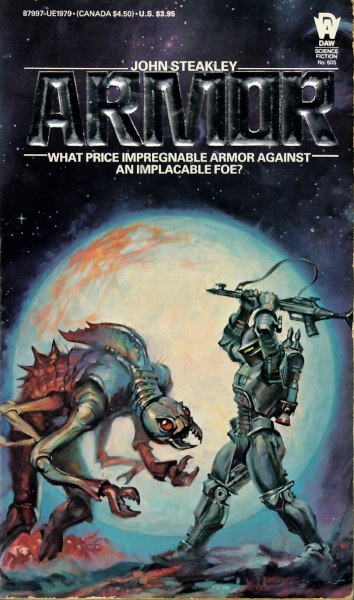
Armor is a military science fiction novel by John Steakley. It features the military use of exoskeletons and insect-like alien enemies but concentrates on the psychological effects of violence on human beings.
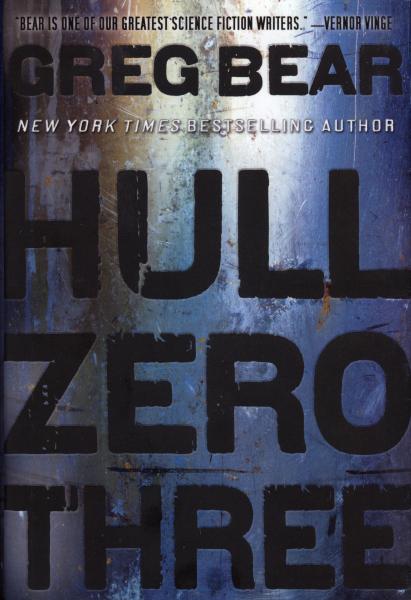
- Hull Zero Three
Greg Bearstandalone novel2010
similar byscience fictionfar futurespaceshiptensesurvival
Hull Zero Three is a science fiction novel by American author Greg Bear. It was published on November 22, 2010. It is set on a generation ship that has lost its way under mysterious circumstances.
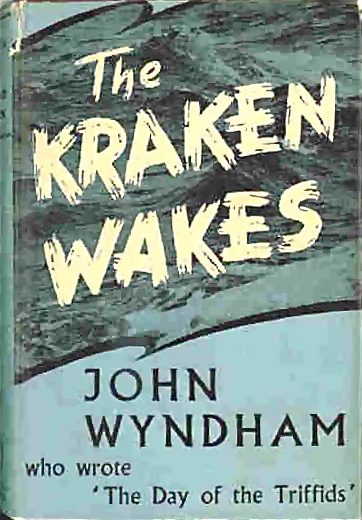
- The Kraken Wakes
John Wyndhamstandalone novel1953
similar byscience fictiondarktensealienssurvival
" Behind a spectacular meteor shower actually hides the beginning of an invasion by a mysterious and powerful alien race. Earth's life is disrupted by the attacks of extraterrestrials whose war machines, emerging from the depths of the oceans, seem indestructible. The coalitioned forces of the whole world are worthless, powerless in the face of the indecipherable and deadly plans of a superior intelligence, capable of bringing the entire planet to the brink of catastrophe" Goodreads May 20, 2022
- City at World's End
Edmond Hamiltonstandalone novel1951
similar byscience fictionfar futuredarktensesurvival
An experimental atomic weapons test in small-town America goes catastrophically wrong, hurling the entire town of Middletown, buildings, streets and all, untold ages into Earth's future, to a time when the sun is dying and humanity's last city struggles on beneath a darkening sky. Cut off from everything and everyone they knew, the townspeople have to find a way to survive in a world that has nothing left to spare for latecomers. Edmond Hamilton's novel strands a slice of mid-century America at the literal end of the world.
- This Perfect Day
Ira Levinstandalone novel1970
similar byscience fictionfar futuredarktensetotalitarianism
This Perfect Day is a science fiction novel by American writer Ira Levin, about a technocratic dystopia. Levin won a Prometheus Award in 1992 for this novel. This Perfect Day is one of two Levin novels yet to be adapted to film.
- The Status Civilization
Robert Sheckleystandalone novel1960
similar byscience fictionfar futuredarktensesurvival
"Will Barrent had no memory of his crime ... but he found himself shipped across space to a brutal prison-planet. On Omega, his only chance to advance himself -- and stay alive -- is to commit an endless series of violent crimes. The average inmate's life expectancy from time of arrival is three years. Can Barrett survive, escape, and return to Earth to clear his name?" - From the cover of the 2007 Wildside paperback edition.
- Pandora
series4 books1966
similar byscience fictionfar futuresurvival+3 more
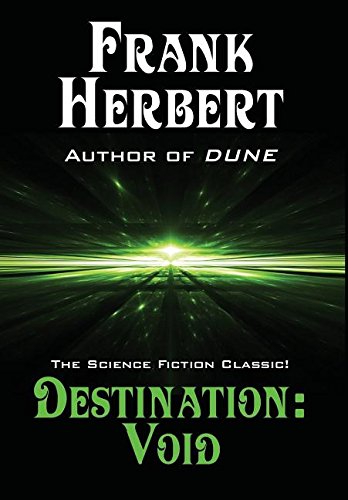
The Pandora Sequence opens with Frank Herbert's solo novel Destination: Void, in which a starship crew must jury-rig a working artificial consciousness after their vessel's control systems fail. Bill Ransom co-writes the three novels that follow, carrying the survivors to the world Pandora, where they must contend with both a manipulative machine intelligence and the planet's own hostile ecology. Across its four books the series moves from a claustrophobic ship-bound crisis to a generations-long struggle over faith, control, and survival on a dangerous new world.
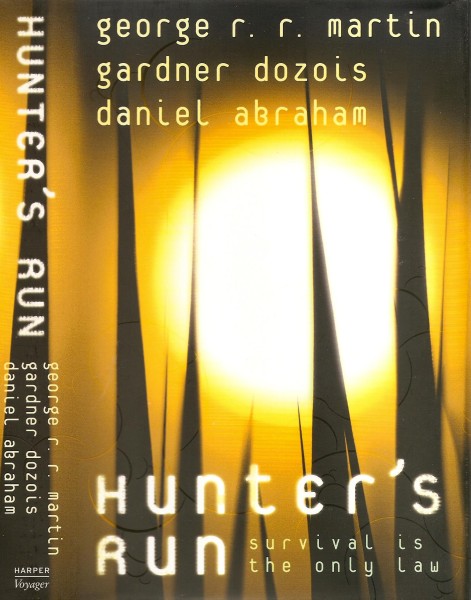
- Hunter's Run
Gardner Dozois, George R. R. Martin & Daniel Abrahamstandalone novel2007
similar byscience fictionfar futuretensealienssurvival+1 more
Hunter's Run is a 2007 science fiction novel written by Daniel Abraham, Gardner Dozois and George R. R. Martin. It is a heavily rewritten and expanded version of an earlier novella called Shadow Twin.