More like The Double Invaders
anchored on:science fiction
but
- The Triffids
series3 books1951
similar byscience fiction+1 more
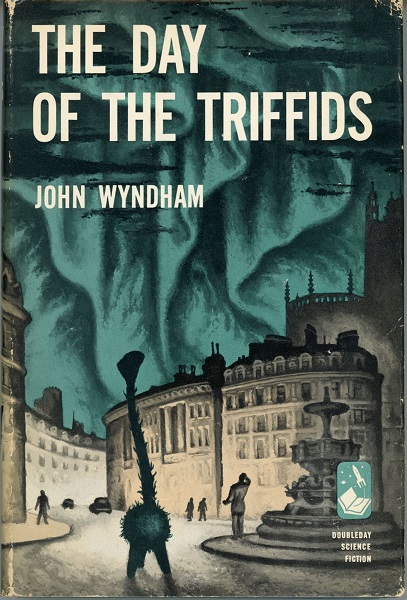
John Wyndham's The Day of the Triffids (1951) opens with a meteor-shower-like event that leaves most of Britain's population blind, throwing civilization into collapse just as triffids, an aggressive and mobile species of poisonous plant, become free to hunt the helpless survivors. Simon Clark's authorized sequel The Night of the Triffids (2001) picks up a generation later, narrated by the original protagonist's son as he confronts a new triffid-dominated world, and John Whitbourn's The Age of the Triffids extends the shared setting further still. Together the three novels form a loose post-apocalyptic trilogy built on Wyndham's original premise rather than a tightly plotted single story.
- The Midwich Cuckoos
John Wyndhamstandalone novel1957
similar byscience fictionmid 20th century
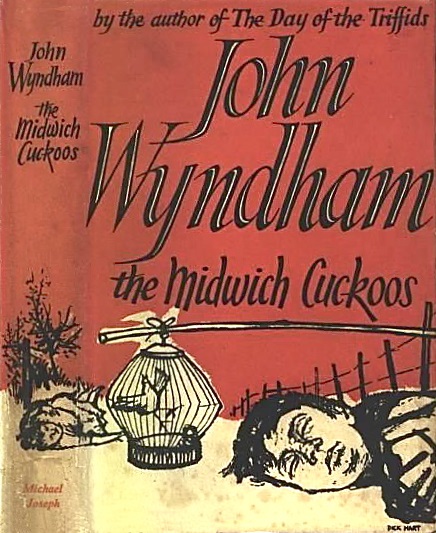
The Midwich Cuckoos is a 1957 science fiction novel written by the English author John Wyndham. It tells the tale of an English village in which the women become pregnant by brood parasitic aliens. The book has been praised by many critics, including the dramatist Dan Rebellato, who called it "a searching novel of moral ambiguities", and the novelist Margaret Atwood, who called the book Wyndham's "chef d'œuvre". The book has been adapted for film, radio, and television.
- On the Beach
Nevil Shutestandalone novel1957
similar byscience fictionmid 20th century
On the Beach is an apocalyptic novel published in 1957, written by British author Nevil Shute after he immigrated to Australia. The novel details the experiences of a mixed group of people in Melbourne as they await the arrival of deadly radiation spreading towards them from the Northern Hemisphere, following a nuclear war some years previously. As the radiation approaches, each person deals with impending death differently.
- The Door Into Summer
Robert A. Heinleinstandalone novel1957
similar byscience fiction+1 more
From the first page of the Signet 6th printing: "An electronics engineer invents a wizard robot... only to find himself shanghaied by his ruthless partner and his gold-digging fiancee. The crafty pair forces him to submit to the "long sleep" - suspended animation for thirty years. But when he wakes up in the year 2000 A.D. the inventor makes a startling discovery. He learns that it is possible now to twist time forwards or backwards. And so he returns to the past bent on a mission... of revenge."
- The Puppet Masters
Robert A. Heinleinstandalone novel1951
similar byscience fictionmid 20th century
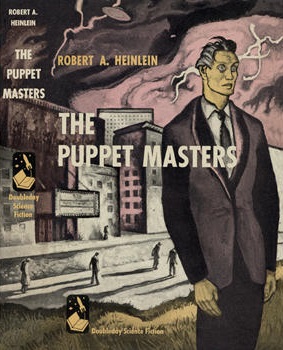
Parasitical aliens attach themselves to human hosts and take over their bodies. Two spies are sent to find out what's happening, but the extent is much farther than they knew. With access to the humans' memories, the aliens quietly invade the government and start taking over.
- Alas, Babylon
Pat Frankstandalone novel1959
similar byscience fictionmid 20th century
Classic novel of nuclear war and aftermath in rural Florida. From the back cover of a Bantam Pathfinder edition: "The day that the bomb dropped the thousands of years of "progress" that had covered the treacheries and weaknesses of ordinary man with a thin veneer of civilization were dissolved and melted like snow on the desert's dusty face. Then - the law of the jungle reigned but in the wreckage a few courageous survivors, men and women with the guts to have hope, were determined to build a new and better world on the ruins of the old. This is their story."
- Earth Abides
George R. Stewartstandalone novel1949
similar byscience fictionmid 20th century
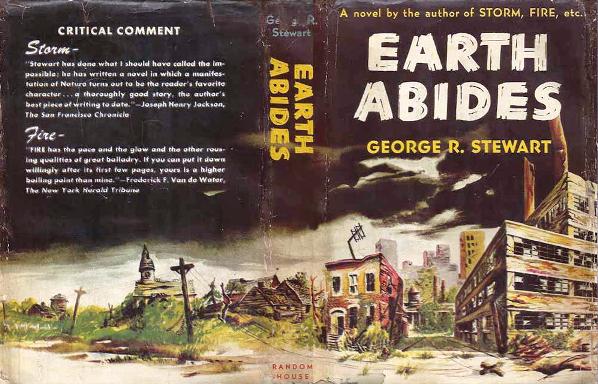
The novel tells the story of the fall of civilization from deadly disease and the emergence of a new culture with simpler tools. Set in the 1940s in Berkeley, California, the story is told by Isherwood Williams, who emerges from isolation in the mountains to find almost everyone dead. en.wikipedia.org
- The Black Cloud
Fred Hoylestandalone novel1957
similar byscience fictionmid 20th century
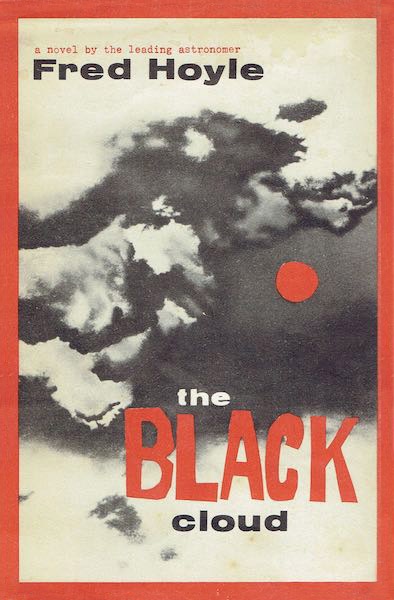
The Black Cloud is a 1957 science fiction novel by British astrophysicist Fred Hoyle. It details the arrival of an enormous cloud of gas that enters the Solar System and appears about to destroy most of the life on Earth by blocking the Sun's radiation.
- Cosmic Trilogy (C. S. Lewis)
series4 books1938
completed
similar byscience fiction+1 more
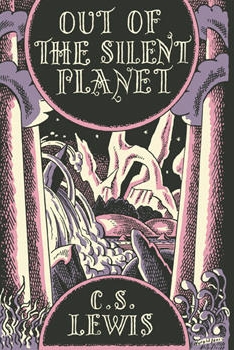
The Space Trilogy is a series of science fiction novels by British writer C. S. Lewis. The trilogy consists of Out of the Silent Planet (1938), Perelandra (1943), and That Hideous Strength (1945). A philologist named Elwin Ransom is the protagonist of the first two novels and an important character in the third.
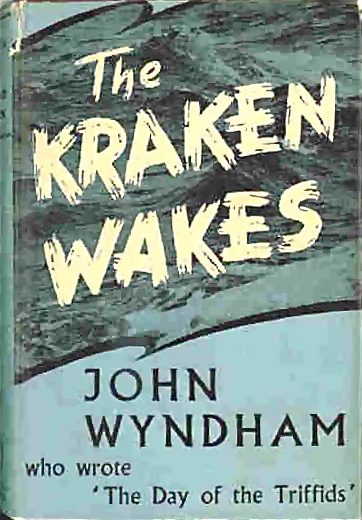
- The Kraken Wakes
John Wyndhamstandalone novel1953
similar byscience fictionmid 20th century
" Behind a spectacular meteor shower actually hides the beginning of an invasion by a mysterious and powerful alien race. Earth's life is disrupted by the attacks of extraterrestrials whose war machines, emerging from the depths of the oceans, seem indestructible. The coalitioned forces of the whole world are worthless, powerless in the face of the indecipherable and deadly plans of a superior intelligence, capable of bringing the entire planet to the brink of catastrophe" Goodreads May 20, 2022
- The Man Who Fell to Earth
Walter Tevisstandalone novel1963
similar byscience fictionmid 20th century
The Man Who Fell to Earth is a 1963 science-fiction novel by American writer Walter Tevis. Published by Gold Medal Books as a paperback original, it was Tevis's second novel, following The Hustler. The novel follows Thomas Jerome Newton, an extraterrestrial from the drought-stricken planet Anthea, who comes to Earth hoping to build a spacecraft that can save the surviving members of his species.
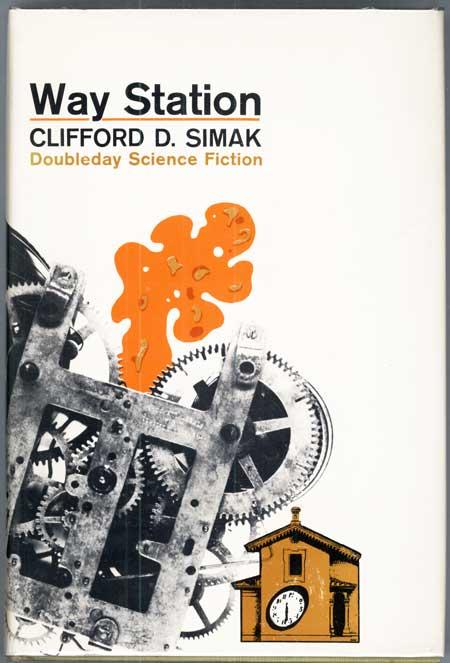
- Way Station
Clifford D. Simakstandalone novel1963
similar byscience fictionmid 20th century
The human operator of a transfer station for aliens traveling between planets, kept secret from the human race, deals with discovery by the US government and interplanetary political crisis, as well as his own emotional issues.
- Time Traders
series7 books1958
similar byscience fiction+1 more
The Time Traders opens Andre Norton's Cold War-flavored science fiction series, following an American agent recruited to travel into the past and counter a Soviet operation built around ancient technology unearthed from a vanished civilization. Norton, later joined by collaborators Sherwood Smith and P. M. Griffin, expanded the sequence to seven novels published between 1958 and 2002, and revised the opening book herself in 2000. Like several of Norton's other series, it treats leftover technology from a long-gone ancient culture as its central plot engine.
- Trouble with Lichen
John Wyndhamstandalone novel1960
similar byscience fictionmid 20th century
Biochemists Diana Brackley and Francis Saxover, working independently, both isolate a compound from a rare lichen that appears to dramatically slow the aging process. Francis quietly doses himself and his family and says nothing; Diana takes the opposite approach, opening exclusive beauty spas as cover to give the drug to well-connected women across Britain, reasoning that if longevity becomes known before women have a foothold, men will simply monopolize it as they have everything else. The secret can only hold so long, and the novel's tension builds toward the moment it gets out. A quietly subversive social science-fiction novel from John Wyndham.
- Fantastic Voyage
series2 books1966
completed
similar byscience fiction+1 more
Fantastic Voyage (1966) is Isaac Asimov's novelization of the film about a submarine crew shrunk to microscopic size and injected into an injured scientist's body to repair damage from the inside. Asimov returned to the same premise of medical miniaturization in the unrelated 1987 novel Fantastic Voyage II: Destination Brain, which follows a different cast and plot rather than continuing the first book's story.
- Dolphin Island
Arthur C. Clarkestandalone novel1963
similar byscience fictionmid 20th century
A teen stows away on a giant freight hovership that makes an emergency landing near his house. When the craft is lost at sea, his life is saved by a school of dolphins that leads him to an island in the Great Barrier Reef. There he meets a research team that is trying to learn to communicate with dolphins.
- Venus Plus X
Theodore Sturgeonstandalone novel1960
similar byscience fictionmid 20th century
Charlie Johns wakes in a featureless silver room with no memory of how he got there and a watch that's inexplicably running backward. He's been brought, how and by whom is never explained to him, to Ledom, an isolated, technologically advanced society whose members are all both male and female and have done away with fixed sex roles entirely. Guides walk him through Ledom's customs and machinery while making clear he's there to judge them before he can go home. Interwoven with Charlie's tour are chapters following an ordinary mid-century American family, setting the utopia against the world it's implicitly critiquing. Theodore Sturgeon's provocative novel about gender and social design.
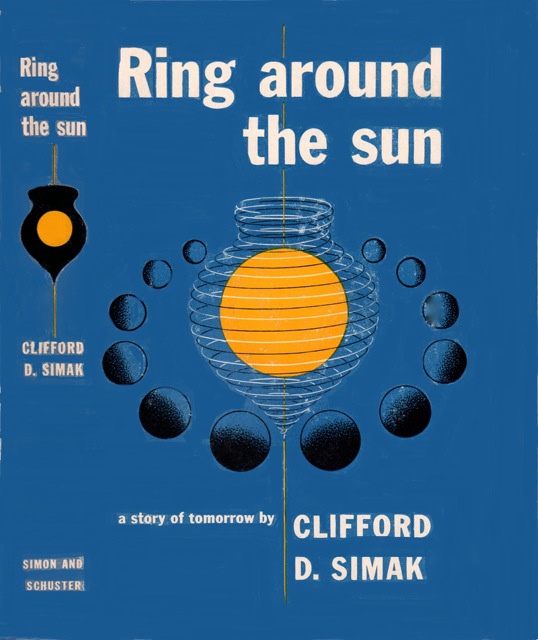
- Ring Around the Sun
Clifford D. Simakstandalone novel1953
similar byscience fictionmid 20th century
Ring Around the Sun is a science fiction novel by American writer Clifford D. Simak. Its anti-urban and pro-agrarian sentiments are typical of much of Simak's work.
- Z for Zachariah
Robert C. O'Brienstandalone novel1975
similar byscience fiction+1 more
Sixteen-year-old Ann Burden, on an Amish family farm in an isolated valley, believes she is the only survivor of nuclear war and nerve gas. One day a man arrives in a "safe-suit" that he and others have recently developed.
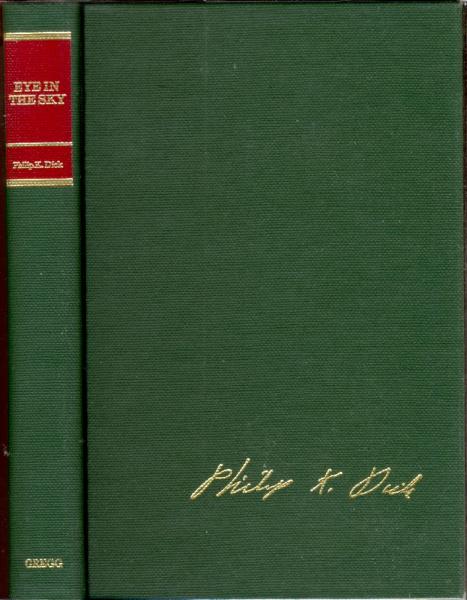
- Eye in the Sky
Philip K. Dickstandalone novel1957
similar byscience fictionmid 20th century
Eight visitors touring a particle-accelerator facility are caught in a catastrophic malfunction, a collapsing platform, a burst of radiation, that leaves them all unconscious. When protagonist Jack Hamilton, an engineer recently fired over Red Scare-era suspicions about his wife's politics, comes to, the world around him is subtly, then not so subtly, wrong: physics bends to fit one fellow victim's religious convictions, then to another's paranoid fears, as the group cycles through what turn out to be shared hallucinations built from each other's private belief systems. Philip K. Dick's early novel about how differently people actually see the same world.
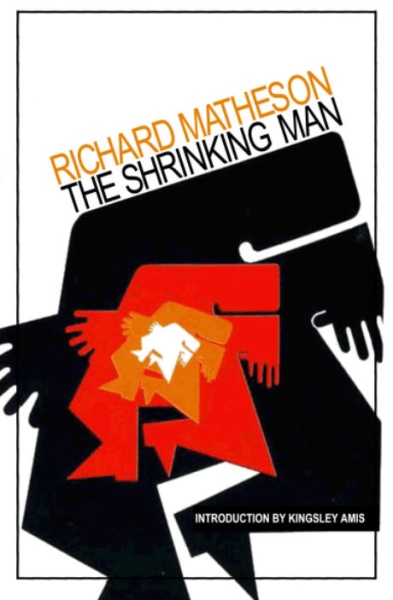
- The Shrinking Man
Richard Mathesonstandalone novel1956
similar byscience fictionmid 20th century
The Shrinking Man is a science fiction novel by American writer Richard Matheson, published in 1956. The novel was retitled The Incredible Shrinking Man in some later editions.