Loreful
HomeDiscover
Search series, authors…⌘K
Loreful

Reading orders for SF/F series and shared universes — with your place kept in every one.

Explore

UniversesSeriesWorksAuthorsAtlas

Help

FAQAboutSite map

Account & legal

Sign inCreate accountPrivacyTerms

Data

Built on ISFDB, Wikipedia, Wikidata and Open Library. Curated reading orders carry their reasoning on the page; the rest follow publication order. Data sources & licenses

© Loreful · data: ISFDB · CC BY

More like The Echo

anchored on:science fictionspace explorationnear futurehard science fictionmadnessspace+4 more

but

Mood

The mood the book leaves you in.

  • The reading experience is propelled by journeys, exploration, and physical risk; excitement and forward momentum dominate over dread or introspection.
  • Joy and loss are deliberately mixed; the resolution grants characters something real while taking something else away, leaving warmth and sorrow together.
  • The book demands work from the reader — dense prose, difficult structure, unfamiliar ideas, or morally uncomfortable material — as part of its intended effect.
  • Grim events, cruelty, or despair dominate the atmosphere, and the book does not soften them with comfort or comic relief.
  • The atmosphere is quietly unsettling — wrongness, unease, and the uncanny pervade the book without necessarily escalating into overt horror.
  • The book is built to move the reader; character feeling is foregrounded and major scenes aim at a strong emotional response.
  • Humor is a primary aim and the prose plays for laughs — comic situations, wit, or dialogue produce sustained comedy, not occasional levity.
  • The book insists that things can improve; effort and decency are shown to matter, and the arc bends toward better outcomes even through hardship.
  • The book teaches as it goes — real facts, history, science, or craft are conveyed in enough depth that learning is part of the reading experience.
  • The book is designed to uplift and motivate, presenting perseverance or achievement in a way that invites the reader to aspire or act.
  • The overall register is cheerful and easygoing; stakes are kept gentle and the book avoids dwelling on pain or dread.
  • Withheld information drives the experience; the book sustains enigmas and secrets the reader wants resolved, whatever its genre.
  • The book is contemplative and inward-looking, giving more weight to thought, memory, and meaning than to external events.
  • The book works as comfort reading — low tension, a soothing pace, and an atmosphere the reader can unwind in.
  • Grief, loss, or melancholy set the dominant register, and the book lets sorrow stand rather than resolving it into comfort.
  • Sustained suspense is the point; the book keeps the reader braced for what happens next through danger, pressure, or impending revelation.
  • Playful invention and charm define the register — fanciful conceits, light absurdity, and a narration that delights in its own oddity.

About

What the story runs on.

  • Stories in which extraterrestrial beings are central — as characters, cultures, or the object of the plot.
  • Stories about venturing into space to explore — survey missions, astronauts, and the frontier of the unknown beyond Earth.
  • Stories about minds with paranormal abilities — telepathy, telekinesis, precognition, empathy — and how societies handle those who have them.
  • Stories structured as a quest — a journey undertaken to find, deliver, or destroy something of great import.
  • Stories in which staying alive against nature, catastrophe, or scarcity is the central problem.
  • Stories of growing up — a young protagonist crossing from childhood into adult knowledge and responsibility.
  • Stories about who a character truly is — self-discovery, doubled lives, and the search for a self.
  • Stories about mental unraveling — descent into madness, delusion, and minds at war with themselves.
  • Stories in which a buried family truth — hidden parentage, crimes, or shames — surfaces and reorders the present.
  • Stories driven by maneuvering for power — factions, conspiracies, and statecraft conducted in shadow.
  • Stories in which war itself is the subject — combat, occupation, and what warfare does to soldiers and civilians.
  • Stories organized around investigating a killing — the case, the clues, and the pursuit of the killer, in any genre's clothing.

Shelf

Where it sits in the library.

    • Fiction built on magic or other supernatural elements that have no scientific explanation.
    • Secondary-world fantasy at large scale, where the fate of nations or the world turns on the protagonists' struggle.
    • Fantasy set in a recognizably modern city or contemporary world where the supernatural intrudes on everyday life.
    • Fantasy that blends in horror's atmosphere and imagery, keeping a fantastical frame around grim or frightening material.
    • Action-driven fantasy following warriors or rogues with personal stakes against sorcerous threats, rather than world-spanning conflicts.
    • Fantasy set in a real historical period or a close analogue of one, with magic woven into the era.
    • Fantasy in which protagonists cross from the ordinary world into another world through a portal or similar passage.
    • Fiction that retells or reworks a traditional fairy tale in a new form or setting.
    • Fantasy drawing directly on myths, legends, and folklore, retelling them or building on their figures and logic.
    • Fantasy of ghosts, vampires, shapeshifters, psychics, and similar phenomena, usually set in an otherwise ordinary world.
    • Fiction mixing science-fictional trappings with overtly magical or impossible elements in one setting.
    • Low-stakes fantasy emphasizing comfort, community, and everyday pleasures over conflict and peril.
    • Speculative fiction of pervasive moral ambiguity, violence, and cynicism that rejects heroic conventions — fantasy and SF alike.
      • Fiction that extrapolates from science and technology — future societies, space travel, or speculative inventions — within at least nominally natural laws.
      • Science fiction of interstellar scope — starships, galactic polities, and adventure across star systems.
      • Science fiction committed to scientific rigor, where technical plausibility constrains the story.
      • Science fiction centered on armed forces and warfare, told largely from a military point of view.
      • Science fiction of networked, corporate-dominated near futures, pairing high technology with social decay.
      • Science fiction styled on nineteenth-century steam-powered technology, often in a Victorian or pseudo-Victorian setting.
      • Fiction depicting an oppressive or catastrophic society, presented as a warning.
      • Fiction set after civilization's collapse, following survivors in the ruins of the old world.
      • Fiction in which characters move between past and future, and the mechanics or consequences of that travel drive the plot.
      • Fiction exploring a world where a historical event went differently and history diverged from ours.
      • Science fiction about humanity's first encounter and communication with an alien intelligence.
      • Science fiction in which extraterrestrial forces attack or occupy Earth and humanity resists.
      • Fiction whose primary aim is to frighten or unsettle the reader through dread, menace, or the monstrous.
      • Horror of vast, indifferent, incomprehensible entities before which humanity is insignificant, in the Lovecraft tradition.
      • Horror of decaying houses, buried family secrets, and oppressive atmosphere in the Gothic literary tradition.
      • Horror centered on hauntings and the returning dead.
      • Horror located in the mind — paranoia, obsession, and unreliable perception rather than external monsters.
      • Horror built around the reanimated dead and survival amid their outbreaks.
      • Horror defined by explicit, transgressive gore that refuses to cut away from violence.
      • Speculative fiction of the strange and uncanny that resists both natural explanation and standard genre categories.
      • Fiction organized around solving a crime or puzzle, typically following an investigator toward the identification of a culprit.
      • A puzzle-first mystery that lays out clues so the culprit's identity can be deduced before the reveal.
      • Crime fiction of moral ambiguity, fatalism, and hard-edged style, set among the corrupt and the doomed.
      • A mystery following the realistic routines of police work — forensics, interviews, and case-building.
      • A gentle mystery with an amateur sleuth, a small community, and violence kept off the page.
      • A mystery set in a past era, where the investigation works within that period's methods and society.
      • Fast-paced fiction driven by imminent danger, pursuit, or high-stakes conspiracy, built to sustain tension.
      • A thriller of espionage — agents, tradecraft, and intelligence services in conflict.
      • A thriller centered on lawyers and the courtroom, where litigation carries the suspense.
      • A thriller driven by detailed contemporary or near-future technology, often military or scientific.
      • A thriller whose tension comes from mental states and manipulation between characters rather than external action.
      • Fiction whose central plot is a romantic relationship and its development toward an emotionally satisfying resolution.
      • Romance in which one or both partners are supernatural beings, blending fantasy elements into the love story.
      • A fantasy-romance hybrid in which the romantic arc and the fantasy plot carry equal weight.
      • Romance set in a past era, with courtship shaped by the period's society and manners.
      • Romance set in the present day, without supernatural or historical elements.
      • Fiction set in a real past period, where the historical setting materially shapes characters and events.
        • General and literary fiction emphasizing prose style, character interiority, or formal ambition over genre plot conventions.
        • Fiction in a realistic world where magical events occur and are treated as ordinary, in the tradition of Latin American literature.
        • Fiction that ridicules people, institutions, or society in order to criticize them.
        • Fiction of dreamlike, irrational imagery and logic that breaks from realistic representation.
        • Fiction that plays with narrative convention through metafiction, fragmentation, and self-reference.
        • Fiction propelled by journeys, exploration, and physical peril, where action and survival carry the plot.
        • Adventure fiction of ships and seafaring — naval engagements, voyages, and life at sea.
        • Fiction of the American frontier West — gunmen, ranchers, and lawmen, typically in the late nineteenth century.
        • Fiction centered on soldiers, campaigns, and the experience of warfare, historical or imagined.
          • Fiction written primarily to amuse, using comedic situations, wit, or parody as its organizing principle.
            • Multi-generational fiction following a family or dynasty across decades, with inheritance and kinship as the through-line.
              • Fiction whose world runs on explicit game mechanics — levels, stats, and skills that characters can see and exploit.
                • Fiction about costumed or superpowered heroes and their conflicts with comparable villains.

                Practical

                How long a commitment, whether it stands alone, and whether it has finished.

                Tap a chip to ask for it · tap again to rule it out · once more to clear. Numbers show what would be left.

                • Cover of The Martian
                  The Martian

                  series · 2 books · 2012

                  similar bynear futurescience fictionspace explorationtensehard science fiction

                  Andy Weir's novel The Martian, first self-published in 2011 before a commercial re-release, follows astronaut Mark Watney after he is stranded alone on Mars when his crew presumes him dead and departs. Using scientific improvisation and dark humor, Watney works to keep himself alive long enough for a rescue to reach him. It is a single, self-contained survival story.

                • Cover of Adventures of Viktor & Julia
                  Adventures of Viktor & Julia

                  series · 2 books · 1999

                  similar byspace explorationnear futurescience fictiontensehard science fiction+1 more

                • Cover of Heart of the Comet
                  Heart of the Comet

                  David Brin & Gregory Benford · standalone novel · 1986

                  similar byspace explorationnear futurescience fictionhard science fictionspace+1 more

                  Heart of the Comet is a novel by David Brin and Gregory Benford about human space travel to Halley's Comet published in 1986. Its publication coincided with the comet's 1986 approach to the Earth.

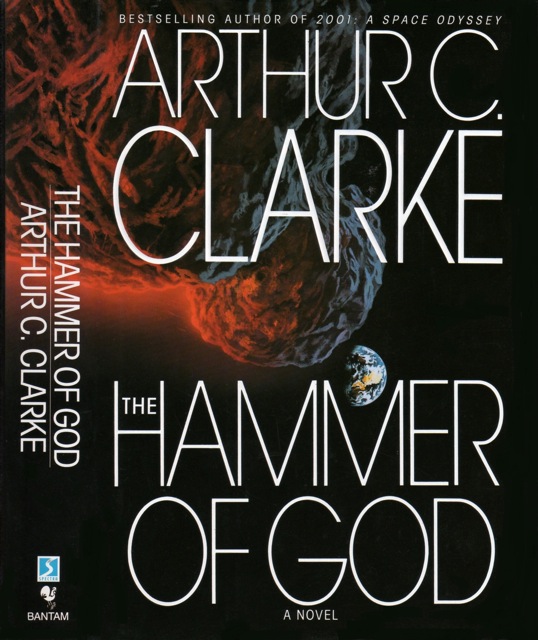
                • Cover of The Hammer of God
                  The Hammer of God

                  Arthur C. Clarke · standalone novel · 1993

                  similar bynear futurescience fictionspace explorationtensehard science fictionspace

                  The Hammer of God is a science fiction novel by Arthur C. Clarke originally published in 1993. Set in the year 2109, it deals with the discovery of an asteroid to be on course to collide with Earth and depicts the mission for deflecting the asteroid by using fusion thermal rockets.

                • Cover of The Lathe of Heaven
                  The Lathe of Heaven

                  Ursula K. Le Guin · standalone novel · 1971

                  similar bynear futurescience fictioneerietense+1 more

                  The Lathe of Heaven is a 1971 science fiction novel by American writer Ursula K. Le Guin, first serialized in the American science fiction magazine Amazing Stories. It won the 1972 Locus Award for Best Novel and was a finalist for the 1971 Nebula Award for Best Novel and 1972 Hugo Award for Best Novel. Two television film adaptations were released: the PBS production, The Lathe of Heaven (1980), and Lathe of Heaven (2002), a remake produced by the A&E Network.

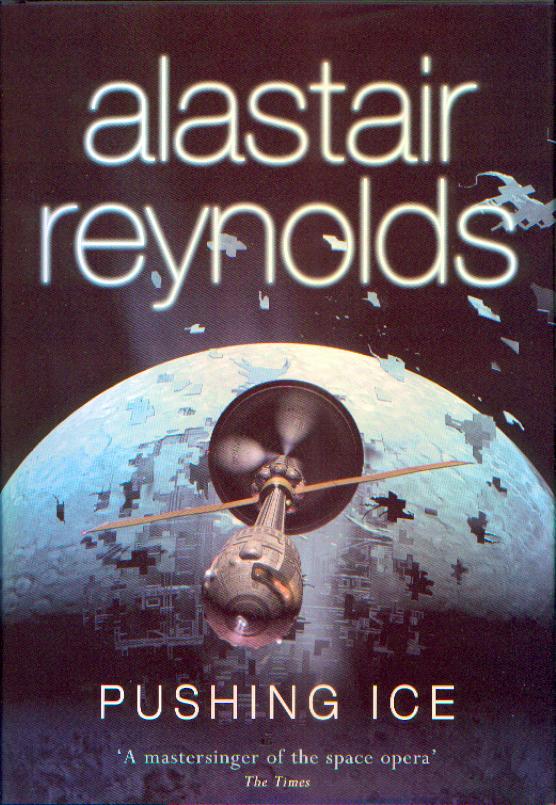
                • Cover of Pushing Ice
                  Pushing Ice

                  Alastair Reynolds · standalone novel · 2005

                  similar byspace explorationscience fictiontensehard science fictionspacespaceship

                  When Saturn's moon Janus suddenly takes off into interstellar space, an ice mining spaceship sent to investigate finds itself swept along into distant space until it ends up trapped in a gigantic alien structure, wherein the crew must prepare to reside for the foreseeable future.

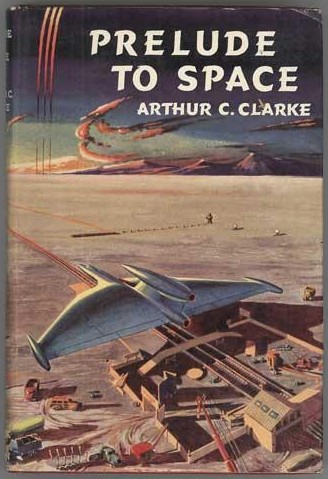
                • Cover of Prelude to Space
                  Prelude to Space

                  Arthur C. Clarke · standalone novel · 1951

                  similar byspace explorationnear futurescience fictionhard science fiction+2 more

                  Prelude to Space is a science fiction novel written by British author Arthur C. Clarke in 1947. It appeared for the first time in 1951 as a paperback from World Editions Inc, as number three in its series of Galaxy novels. Sidgwick & Jackson published it in the UK in 1953, followed the next year by a United States hardcover edition from Gnome Press and a paperback from Ballantine Books.

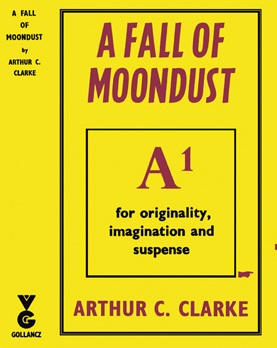
                • Cover of A Fall of Moondust
                  A Fall of Moondust

                  Arthur C. Clarke · standalone novel · 1961

                  similar bynear futurescience fictiontensehard science fiction+1 more

                  From the back cover of the Harbrace paperback: "The action of A Fall of Moondust takes place almost a century from now when tours on the moon are a common occurrence. One of the high points of each tour is a cruise around the Sea of Thirst, a body of volcanic dust, in a specially designed vessel called the Selene On a perfectly routine voyage one day the Selene suddenly disappears. How do you locate a small tourist "cruiser" buried beneath fifty feet of dust? If you find it, how do you rescue the passengers and crew? If you are on board, how do you feel and what do you do while brave men and expert technicians join forces in a race against time? Sustained excitement, lively humor, and an engaging cast of characters make this one of Arthur C. Clarke's most intriguing novels."

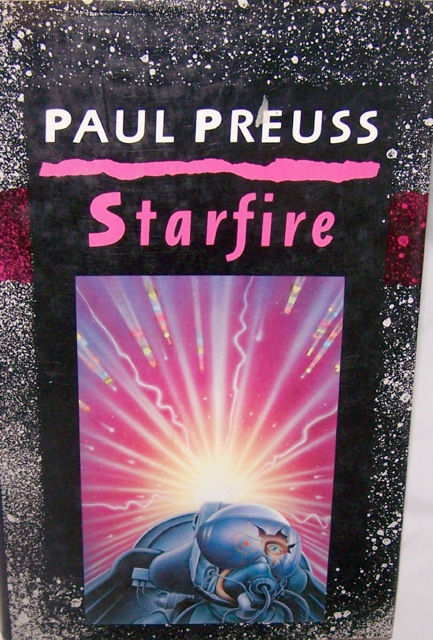
                • Cover of Starfire
                  Starfire

                  Paul Preuss · standalone novel · 1988

                  similar byspace explorationnear futurescience fictiontensehard science fictionspace

                  Starfire is a science fiction novel by author Paul Preuss. First published in February 1988, it is about a group of NASA astronauts on a mission to an asteroid which is falling into the Sun.

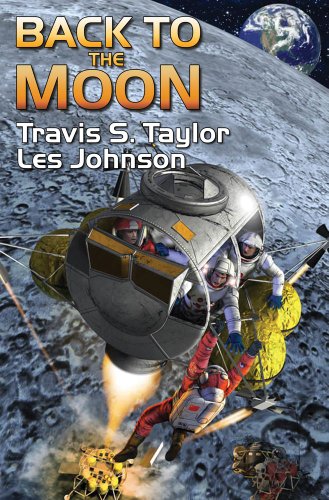
                • Cover of The Space Excursions Series
                  The Space Excursions Series

                  series · 2 books · 2010

                  similar byspace explorationnear futurescience fictiontensehard science fictionspace

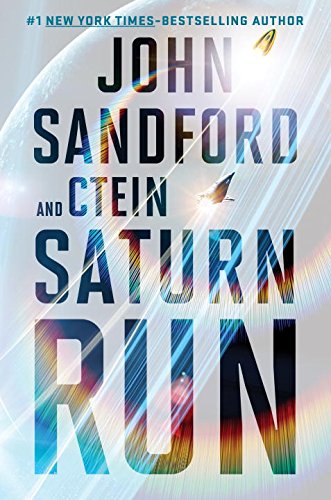
                • Cover of Saturn Run
                  Saturn Run

                  Ctein & John Sandford · standalone novel · 2015

                  similar byspace explorationnear futurescience fictiontensehard science fictionspacespaceship

                  "The year is 2066. A Caltech intern inadvertently notices an anomaly from a space telescope--something is approaching Saturn, and decelerating. Space objects don't decelerate. Spaceships do. A flurry of top-level government meetings produces the inescapable conclusion: Whatever built that ship is at least one hundred years ahead in hard and soft technology, and whoever can get their hands on it exclusively and bring it back will have an advantage so large, no other nation can compete. A conclusion the Chinese definitely agree with when they find out. The race is on, and a remarkable adventure begins..."--

                • Cover of Have Space Suit - Will Travel
                  Have Space Suit - Will Travel

                  Robert A. Heinlein · standalone novel · 1958

                  similar bynear futurescience fictionspace explorationtensespace

                  From the back cover of the Del Rey 9th printing: "Skyjacked - Everything happened at once. One minute Kip Russell was walking about in his own backyard, testing out an old space suit and dreaming about going to the moon - and the next he was out cold and the captive of an insidious space pirate. The whole thing seemed like a very bad dream until he discovered he wasn't the only prisoner on board. Then the reality of the situation became inescapable. He - along with the daughter of a world-renowned scientist and a beautiful creature from an alien planet - had been skyjacked by a monstrous extraterrestrial and they were on their way to the Moon... a journey toward a fate worse than death!"

                • Cover of NASA Trilogy
                  NASA Trilogy

                  series · 4 books · 1996

                  similar byspace explorationscience fictiontensehard science fiction+2 more

                  The NASA Trilogy consists of three hard science fiction novels written by British science fiction author Stephen Baxter. They were published from 1996 to 1998. These books explore the possibilities of the American space program if the circumstances had been different. They have generally darker tones than his other books and are critical of NASA. They consist of:

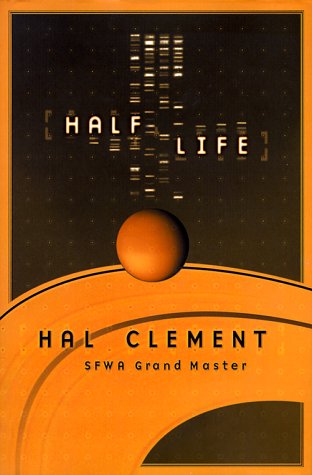
                • Cover of Half Life
                  Half Life

                  Hal Clement · standalone novel · 1999

                  similar byspace explorationnear futurescience fictiontensehard science fictionspace

                  As the human race faces extinction because of incurable diseases, a crew of young men and women is sent to the moons of Saturn. They are to study pre-life conditions in the hope of discovering a way of saving Earth. But they are all dying.

                • Cover of The Final Six
                  The Final Six

                  series · 2 books · 2018

                  similar byspace explorationnear futurescience fictiontensespace+1 more

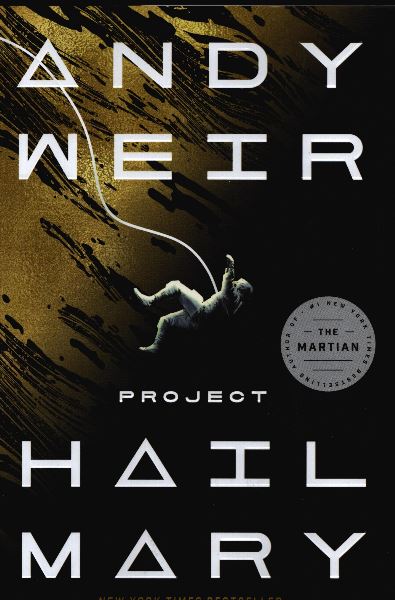
                • Cover of Project Hail Mary
                  Project Hail Mary

                  Andy Weir · standalone novel · 2021

                  similar bynear futurescience fictionspace explorationhard science fictionspaceship

                  Project Hail Mary is a 2021 hard science fiction novel by American writer Andy Weir. It centers on science teacher and former biologist Ryland Grace, who wakes up aboard a spacecraft, afflicted with amnesia.

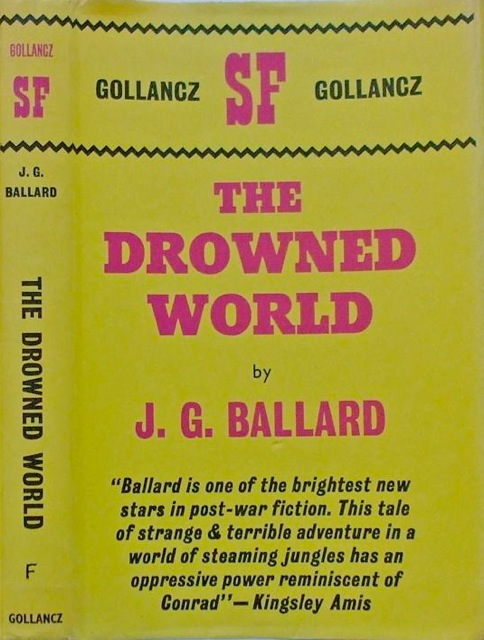
                • Cover of The Drowned World
                  The Drowned World

                  J. G. Ballard · standalone novel · 1962

                  similar bynear futurescience fictionmadnesseerie

                  The Drowned World is a 1962 science fiction novel by J. G. Ballard. It first appeared in shortened form in the January 1962 issue of the UK edition of Science Fiction Adventures and was published in book form later that year by Victor Gollancz Ltd in London; an American edition followed from Berkley Medallion. Critics have grouped The Drowned World with Ballard's early science-fiction novels as part of an "ambiguous apocalypse" sequence that also includes The Drought and The Crystal World, from the period in which he was developing the ideas he described as "inner space". Set in a future in which solar radiation has melted the polar ice caps and transformed London into a flooded tropical lagoon, the novel follows biologist Robert Kerans as he becomes increasingly drawn toward the altered environment rather than toward restoring the old social order.

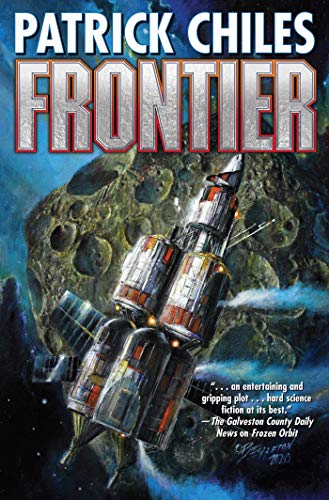
                • Cover of Frontier
                  Frontier

                  Patrick Chiles · standalone novel · 2021

                  similar bynear futurescience fictionspace explorationtensehard science fictionspacespaceship

                  Marshall Hunter only wanted to fly: the faster, the higher, the better. But a life of rescuing wayward spacefarers and derelict satellites in the cislunar cruiser U.S.S. Borman is far from the adventure he'd imagined. But his fortunes change when a billionaire couple goes missing on their way to a near-Earth asteroid. Out of contact and on a course that will eventually send them crashing into Mars, the nuclear-powered Borman is dispatched on an audacious, high-speed interplanetary run to bring the couple home. As they approach the asteroid, however, the Borman itself becomes hopelessly disabled. With the Borman suddenly out of commission and far beyond reach, cislunar space begins falling into chaos as critical satellites fail and valuable lunar mineral shipments begin disappearing in transit. Nothing is as it seems, and Marshall Hunter and the rest of the crew suspect none of it is by coincidence.

                • Cover of Orbiter
                  Orbiter

                  Warren Ellis · standalone novel · 2004

                  similar byspace explorationnear futurescience fictiontensehard science fictionspacespaceship

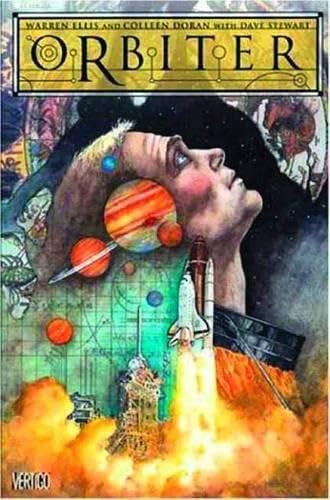
                  Orbiter is a graphic novel by Warren Ellis and Colleen Doran, published in 2003 by DC Comics under their Vertigo imprint.

                • Cover of Starplex
                  Starplex

                  Robert J. Sawyer · standalone novel · 1996

                  similar bynear futurescience fictionspace explorationtensespacespaceship

                  The only novel of its year to be nominated for both the Hugo and Nebula Awards. Starplex won Canada's Aurora Award for best novel of the year. For nearly twenty years Earth's space exploration had exploded outward, thanks to a series of mysterious, artificial wormholes. No one knows who created these interstellar passages, yet they have brought the far reaches of space immediately close. For Starplex Director Keith Lansing, too close. Discovery is superseding understanding. And when an unknown vessel — with no windows, no seams, and no visible means of propulsion — arrives through a new wormhole, an already battle-scarred Starplex could be the starting point of a new interstellar war . . . ROBERT J. SAWYER has won the Hugo, Nebula, John W. Campbell Memorial, Seiun, and Aurora Awards, all for best science fiction novel of the year. His novels include Hominids, Rollback, Wake, and FlashForward (basis for the TV series).

                • Cover of The Web Between the Worlds
                  The Web Between the Worlds

                  Charles Sheffield · standalone novel · 1979

                  similar byspace explorationnear futurescience fictionhard science fictionspace

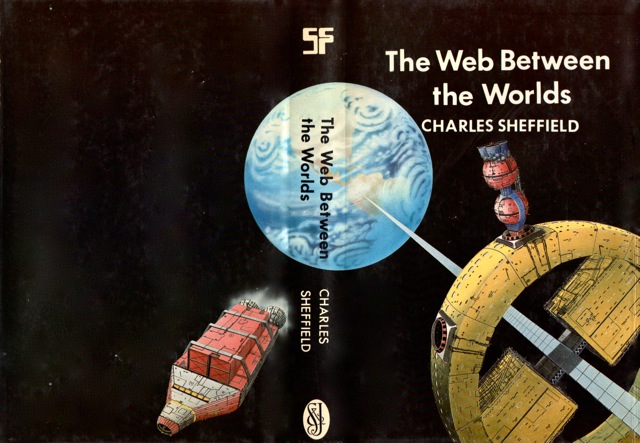
                  The Web Between the Worlds is the second science fiction novel by Charles Sheffield. It was first published as a trade paperback by Ace Books in 1979, by the first UK edition in hardcover by Sidgwick & Jackson Ltd the following year. Further editions were published by Arrow Books, Ace Books, Del Rey/Ballantyne and others; in 2001 Baen Books issued a revised edition. The novel has also been translated into German and French. This novel and the simultaneously published novel The Fountains of Paradise, by Arthur C. Clarke, are the first popularization of the space elevator.

                • Cover of Dangerous
                  Dangerous

                  Shannon Hale · standalone novel · 2014

                  similar byspace explorationnear futurescience fictiontensespace+1 more

                  When aspiring astronaut Maisie Danger Brown, who was born without a right hand, and the other space camp students get the opportunity to do something amazing in space, Maisie must prove how dangerous she can be and how far she is willing to go to protect everything she has ever loved. - Summary from LOC entry.

                • Cover of Tau Zero
                  Tau Zero

                  Poul Anderson · standalone novel · 1970

                  similar byspace explorationscience fictionhard science fictionspaceshipdeep space

                  During an epic voyage to a planet 30 light years away, the engines of the starship the 'Leonora Christine' are damaged. Unable to slow down, it attains light speed (the tau zero of the title). The disparity between time for those on board and external time becomes impossibly great. Eons and galaxies hurtle by, as the crew speed helplessly into the great unknown.

                • Cover of Creation Node
                  Creation Node

                  Stephen Baxter · standalone novel · 2023

                  similar byspace explorationnear futurescience fictionhard science fictionspace+1 more

                  Creation Node is a 2023 science fiction novel by British writer Stephen Baxter, first published in September 2023 in the United Kingdom by Victor Gollancz Ltd. The book is about the discovery of the hypothesised Planet Nine in the Oort cloud at the outer edge of the Solar System. Initially it is thought to be a black hole, but it is later revealed to be an artificial planet.