More like The Emperor's Agent
anchored on:historical fictioneurope
but
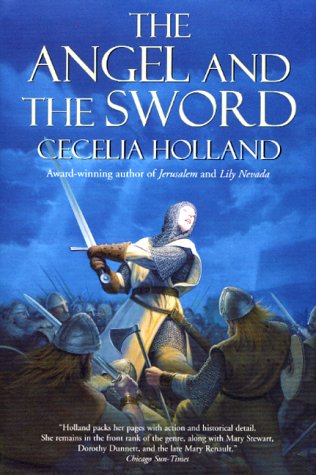
- The Angel and the Sword
Cecelia Hollandstandalone novel2000
similar bypolitical intriguehistorical fictiontenseeurope
"It is the waning days of the ninth century. The vast dominion won by the great Emperor Charlemagne has been torn apart by his heirs and successors. In Paris, once the heart of that realm, the Emperor's irresolute grandson, Charles the Bald, battles desperately to preserve his kingdom from the ravages of Viking raiders. If the city falls, its people will perish, and along with them the precious remnants of culture and learning rescued from the ashes of Rome." -- Jacket.
- Barney Custer
series3 books1914
completed
similar bypolitical intriguetenseeurope+1 more
Barney Custer is an American farmer from Nebraska who travels to the small European kingdom of Lutha only to discover he's the spitting image of its unstable ruler, King Leopold. Edgar Rice Burroughs's The Mad King drops him into court intrigue on the eve of World War I, as a scheming uncle's plot for the throne and a budding romance with a princess force Barney to impersonate the king he resembles. It's a standalone Ruritanian adventure rather than an ongoing series.
- First North Americans
series34 books1990
similar byhistorical fiction+1 more
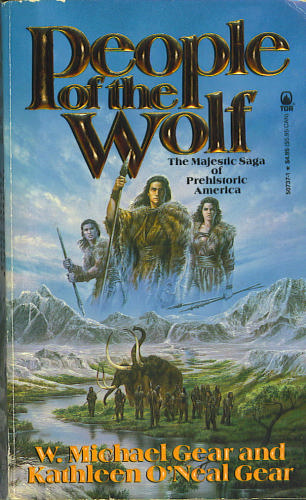
North America's Forgotten Past is a series of historical fiction novels published by Tor and written by husband and wife co-authors W. Michael Gear and Kathleen O'Neal Gear. The series, which began with 1990's People of the Wolf, explores various civilizations and cultures in prehistoric North America. It is somewhat comparable to Jean M. Auel's Earth's Children series, which is set in prehistoric Europe, but each of its books focuses on a different time period, location, and set of characters. The first four novels form a coherent, more or less linear narrative, from the initial migration of Siberian peoples into what is now Canada and Alaska through the florescence of the Mississippian semi-urban mound-building culture, considered the "high-water mark" of North American pre-Columbian civilization, around 1000 AD. The remaining novels cover a wide variety of times and settings, most standalone stories in no particular order, ranging from tropical Florida in the 6th millennium BC to the Chaco Empire of the Southwest in the 13th century AD. The novels take into account new developments in North American archaeology such as the discovery of Kennewick Man and the development of the coastal-route model as a possible alternative or supplement to overland migration across Beringia.
- Sally Lockhart
series4 books1985
similar byhistorical fiction+2 more
Philip Pullman's Sally Lockhart quartet follows a resourceful, unconventional heroine navigating Victorian London - a sharpshooting, mathematically gifted young orphan who builds an improbable career as a financial consultant against the era's expectations for women. The Ruby in the Smoke opens with Sally investigating her father's death and a mysterious jewel; the following novels widen out into fraud, opium-trade crime, and international intrigue, tracking Sally's evolving relationships, including with the journalist Daniel Goldberg, across four Victorian-set mysteries.
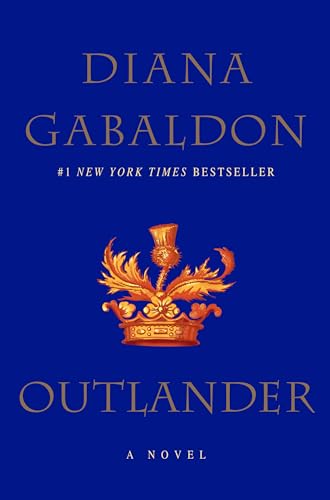
- Outlander (Diana Gabaldon)
series26 books1991
similar by+2 more
Outlander is a series of historical fantasy novels by American author Diana Gabaldon. Gabaldon began the first volume of the series, Outlander, in the late 1980s; it was published in 1991. She has published nine out of a planned ten volumes. The ninth novel in the series, Go Tell the Bees That I Am Gone, was released on November 23, 2021.
- Ancient Egyptian
series9 books1993
similar byhistorical fiction+2 more
Wilbur Smith's Ancient Egypt novels open with River God (1993), narrated by the loyal eunuch slave Taita as he guides the royal family's flight from the Hyksos invasion and their eventual return to power. The series, later continued by Smith with co-author Mark Chadbourn, follows Taita and Egypt's rulers across further installments including The Seventh Scroll, Warlock, and Desert God, spanning three decades of publication.
- Marcus
series4 books1954
completed
similar byhistorical fiction
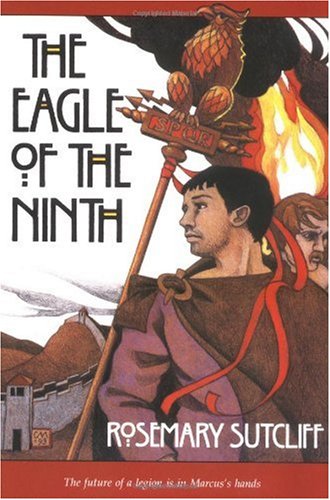
Rosemary Sutcliff's linked Roman Britain novels follow several generations of one family across centuries of the Roman occupation and its aftermath, opening with The Eagle of the Ninth, in which the young centurion Marcus Aquila sets out to recover his lost father's legion standard. Later books, including The Silver Branch and The Lantern Bearers, follow his descendants through Britain's slow slide out of the Empire.
- Wings of the Falcon
Barbara Michaelsstandalone novel1977
similar bypolitical intriguehistorical fictiontenseeurope
WorldCat: While staying with her dead mother's family in Italy when that country is in the midst of Garibaldi's Red Shirt uprising, Francesca is plunged into a situation of political and emotional turmoil.
- King Raven
series3 books2006
similar byhistorical fiction+1 more
The King Raven Trilogy is a series of historical novels by American writer Stephen R. Lawhead, based on the Robin Hood legend. Lawhead relocates Robin Hood from Sherwood Forest in Nottingham to Wales, and sets the story in the late eleventh century, after the Battle of Hastings and to coincide with the Norman invasion of Wales and the struggles the Cymry (Welsh) people against the Normans, and the political intrigue of medieval Britain. The trilogy consists of three books named Hood, Scarlet, and Tuck. The King Raven series continued his themes of reimagining popular mythology into more authentic and gritty settings, which began with his Pendragon Cycle.
- The Spy
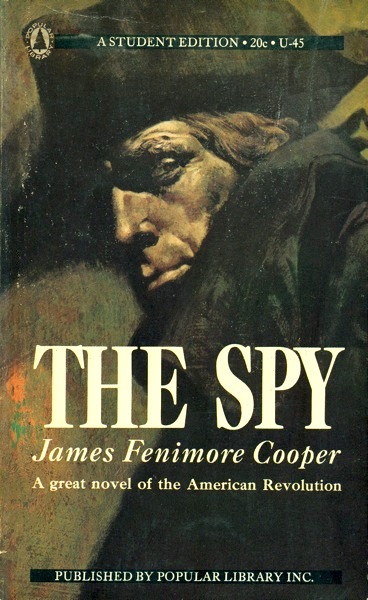
James Fenimore Cooperstandalone novel1821
similar bypolitical intriguehistorical fictiontense
Alternate history, U.S. Revolutionary War.
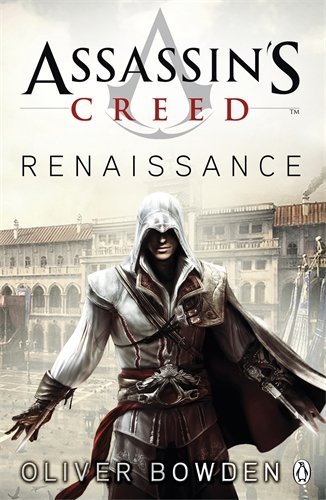
- Assassin's Creed (Oliver Bowden)
series8 books2009
part of Assassin's Creed Universe
similar bytensehistorical fiction+2 more
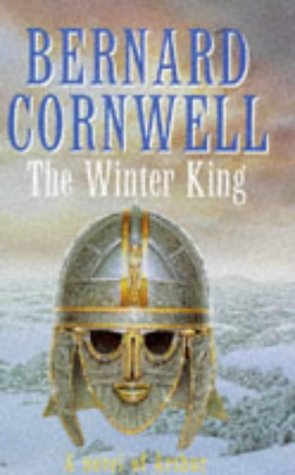
- The Warlord Chronicles
series3 books1995
similar bypolitical intriguehistorical fiction+1 more
The Warlord Chronicles or The Warlord Trilogy is a series of three novels about Arthurian Britain written by Bernard Cornwell. The story is written as a mixture of historical fiction and Arthurian legend. The books were originally published between 1995 and 1997 by Penguin and Michael Joseph in the United Kingdom and by St. Martin's Press in the United States. It has been adapted for television as The Winter King.
- Dune Universe
universe78 books1963
Start hereDune · Start here
similar bypolitical intrigue+1 more
Arrakis. Dune. The desert planet, where empire runs on a single substance: the spice melange, which folds space, prolongs life, and unlocks prescience, and which exists nowhere else in the known universe. Frank Herbert's saga is a meditation dressed as an adventure — feudal houses and a secret sisterhood, engineered messiahs and the patient ecology of a world without water, all turning on the terrible gravity of who commands the spice. It reads like scripture and schemes like a war room, ten thousand years hence, among people who have outlawed the thinking machine and made instruments of themselves instead. At its heart stand Herbert's original six — Dune, Dune Messiah, Children of Dune, God Emperor of Dune, Heretics of Dune, Chapterhouse: Dune — a single deepening arc across millennia, arguing the whole way between prophecy and free will. Around that spine his son Brian Herbert and Kevin J. Anderson have raised a vast prequel architecture: Prelude to Dune, tracing the great houses a generation before Paul; Legends of Dune, reaching back to the crusade that broke the machines; the Schools of Dune cycle on the founding of Bene Gesserit, Mentat, and Navigator; the Caladan Trilogy and Heroes of Dune filling years the originals left in shadow. Many hands, dozens of volumes, one desert. What sets Dune apart is its refusal of the simple: religion is manufactured, heroes are hazards, and the sand itself — worm, water, ecology — acts as a political power. Begin where the universe did, with Frank Herbert's Dune (1965), and read the original six in order; you need nothing else to feel the full weight. The prequels are a country to explore afterward, taken by era. Beginnings are delicate times.
- Dune
series20 books1963
part of Dune Universe
similar bypolitical intrigue+1 more
Frank Herbert's Dune Chronicles opens with 1965's Dune, set on the desert planet Arrakis where House Atreides takes control of the only source of the vital spice melange and young Paul Atreides is pulled into a struggle over its politics and religion. Herbert carried the story forward across five further novels — Dune Messiah, Children of Dune, God Emperor of Dune, Heretics of Dune, and Chapterhouse: Dune — following Paul's line over the following millennia, before Brian Herbert and Kevin J. Anderson later extended the saga. Many other editions of these six novels are omnibus and box-set repackagings rather than separate stories.
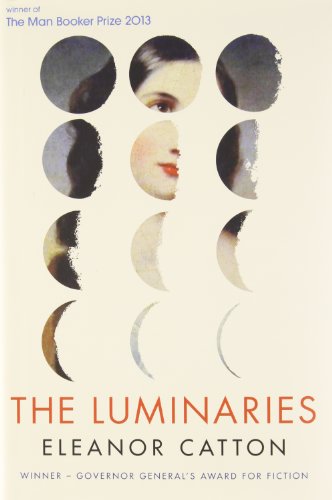
- The Luminaries
Eleanor Cattonstandalone novel2013
similar byhistorical fictiontense+1 more
The Luminaries is a 2013 novel by Eleanor Catton. Set in New Zealand's South Island in 1866, the novel follows Walter Moody, a prospector who travels to the West Coast settlement of Hokitika to make his fortune on the goldfields. Instead, he stumbles into a tense meeting between twelve local men, and is drawn into a complex mystery involving a series of unsolved crimes. The novel's complex structure is based on the system of Western astrology, with each of the twelve local men representing one of the twelve signs of the zodiac, and with another set of characters representing planets in the Solar System.
- The Baroque Cycle
series11 books2003
similar byhistorical fictioneurope+1 more
The Baroque Cycle is a series of novels by American writer Neal Stephenson. It was published in three volumes containing eight books in 2003 and 2004. The story follows the adventures of a sizable cast of characters living amidst some of the central events of the late 17th and early 18th centuries in Europe, Africa, Asia, and Central America. Despite featuring a literary treatment consistent with historical fiction, Stephenson has characterized the work as science fiction, because of the presence of some anomalous occurrences and the work's particular emphasis on themes relating to science and technology. The sciences of cryptology and numismatics feature heavily in the series, as they do in some of Stephenson's other works.
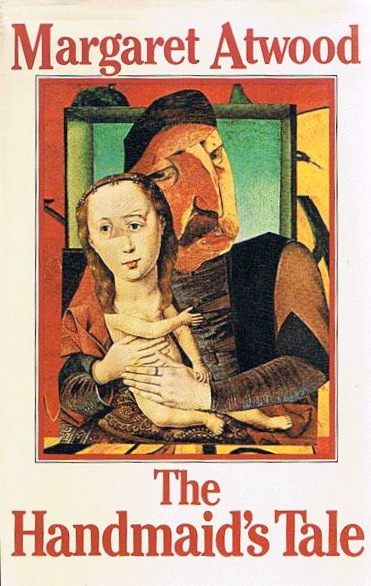
- The Handmaid's Tale
series3 books1985
similar bytense+2 more
The Handmaid's Tale is Margaret Atwood's 1985 novel set in Gilead, a totalitarian theocracy that has overthrown the United States and forces fertile women into reproductive servitude as Handmaids; it is narrated by one such woman, Offred. Atwood returned to the world in her 2019 sequel The Testaments, set fifteen years later and narrated by three women, including the regime's Aunt Lydia. Together the two novels move from Gilead's grip on power toward the first cracks in it.