More like The Ends
anchored on:science fiction
but
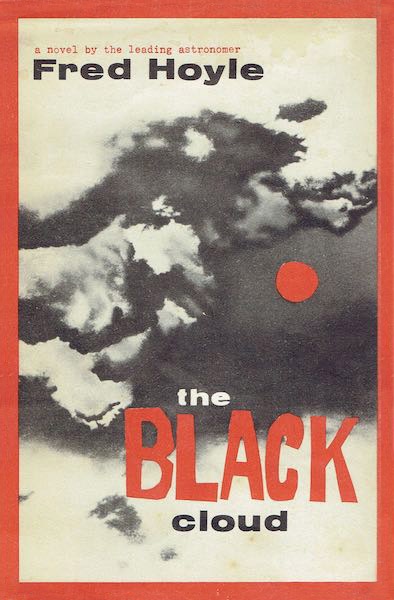
- The Black Cloud
Fred Hoylestandalone novel1957
similar byscience fictiontensesurvival+2 more
The Black Cloud is a 1957 science fiction novel by British astrophysicist Fred Hoyle. It details the arrival of an enormous cloud of gas that enters the Solar System and appears about to destroy most of the life on Earth by blocking the Sun's radiation.
- Tunnel in the Sky
Robert A. Heinleinstandalone novel1955
similar byscience fictiontensesurvivalspace exploration+1 more
As the final test of a survivalist/explorer class, teenagers are dumped on an alien planet to use their skills while awaiting pickup. But something has gone wrong, and they find they are on their own.
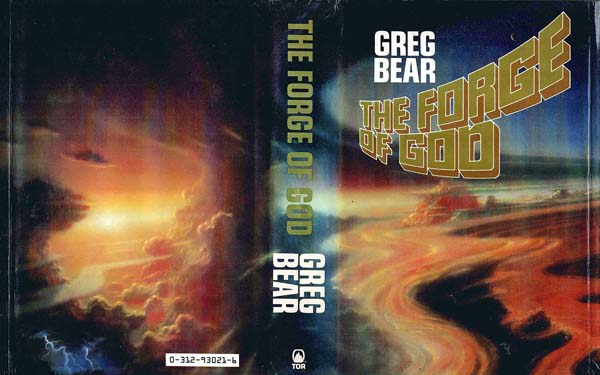
- Forge of God
series2 books1987
completed
similar byscience fictiontensesurvival+2 more
The Forge of God (1987) is Greg Bear's science fiction novel about Earth's discovery that it is the target of an incomprehensible, overwhelming alien attack, following scientists and ordinary people as they try to understand what is destroying the planet. Its 1992 sequel, Anvil of Stars, follows a group of young survivors sent on a mission of interstellar retaliation, continuing directly from the first book's ending.
- Have Space Suit - Will Travel
Robert A. Heinleinstandalone novel1958
similar byscience fictiontensesurvivalspacespace exploration
From the back cover of the Del Rey 9th printing: "Skyjacked - Everything happened at once. One minute Kip Russell was walking about in his own backyard, testing out an old space suit and dreaming about going to the moon - and the next he was out cold and the captive of an insidious space pirate. The whole thing seemed like a very bad dream until he discovered he wasn't the only prisoner on board. Then the reality of the situation became inescapable. He - along with the daughter of a world-renowned scientist and a beautiful creature from an alien planet - had been skyjacked by a monstrous extraterrestrial and they were on their way to the Moon... a journey toward a fate worse than death!"
- Space Beagle
series5 books1939
completed
similar byscience fictiontensespacespace exploration+1 more
The Voyage of the Space Beagle is a 1950 fix-up novel by A. E. van Vogt, stitched together from four previously published pulp stories into a single continuous account of the exploration ship Space Beagle's encounters with a series of dangerous alien life forms. Its episodic, crew-versus-monster structure reads as a loose sequence of adventures rather than one continuous plot.
- Company Wars
series7 books1981
part of Alliance-Union Universe
similar byscience fictiontensespace+1 more
Company Wars gathers the novels C. J. Cherryh set during the breakaway conflict between Earth's colonial Company and the newly independent Union, within her wider Alliance-Union future history. Anchored by the Hugo Award-winning Downbelow Station, the books follow different ships, stations, and crews caught on either side, from merchanter traders to military spacers, rather than a single continuing cast. Read in any order, they build up a picture of the political and economic pressure that reshapes Cherryh's larger Alliance-Union universe.
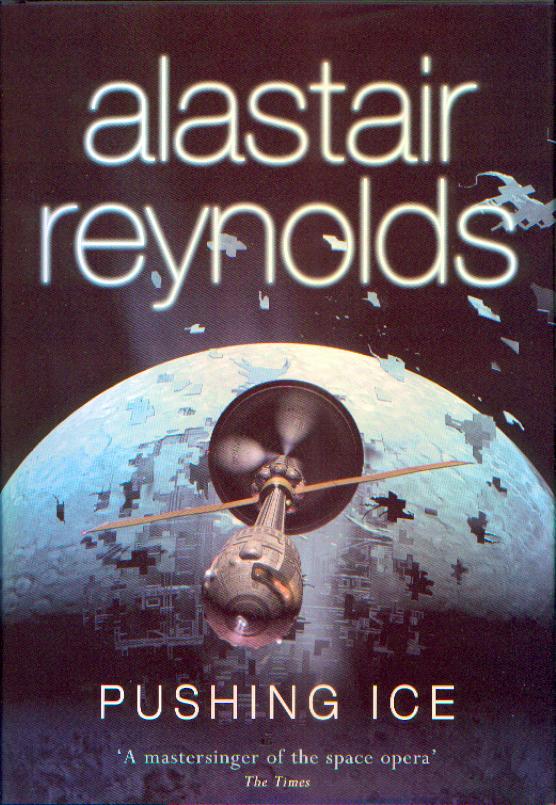
- Pushing Ice
Alastair Reynoldsstandalone novel2005
similar byscience fictiontensesurvivalspacespace exploration
When Saturn's moon Janus suddenly takes off into interstellar space, an ice mining spaceship sent to investigate finds itself swept along into distant space until it ends up trapped in a gigantic alien structure, wherein the crew must prepare to reside for the foreseeable future.
- Of Man and Manta
series3 books1968
similar byscience fiction+3 more
Of Man and Manta is a trilogy of science fiction novels written by Piers Anthony. It consists of the three books: Omnivore (1968), Orn (1970), and 0X (1975).
- Icerigger Trilogy
series3 books1974
part of Humanx Commonwealth
similar byscience fictionsurvival+2 more
Alan Dean Foster's Icerigger trilogy, set in his Humanx Commonwealth universe, strands a group of characters on the frozen world of Tran-Ky-Ky, where they get pulled into the local population's fight against a destructive nomadic force. Much of the trilogy follows their overland journey by ice-sailing craft toward the planet's one interstellar outpost, a trek of roughly a year across the ice, as they help the natives survive along the way.
- Ocean / Galactic Center
series12 books1972
similar byscience fiction+4 more
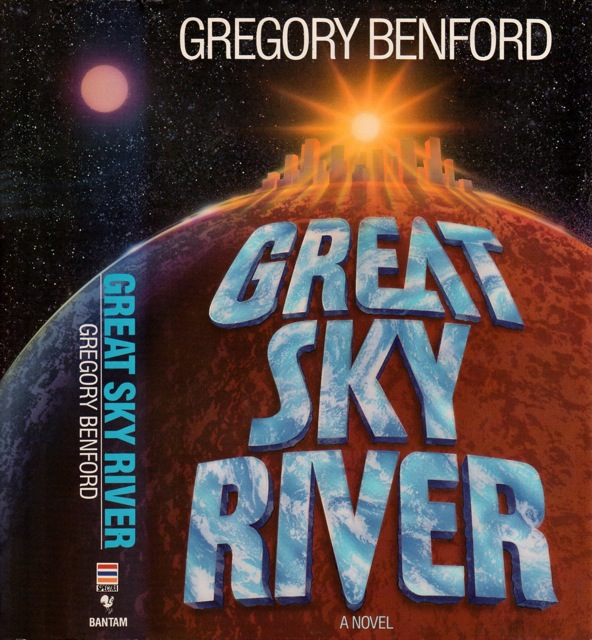
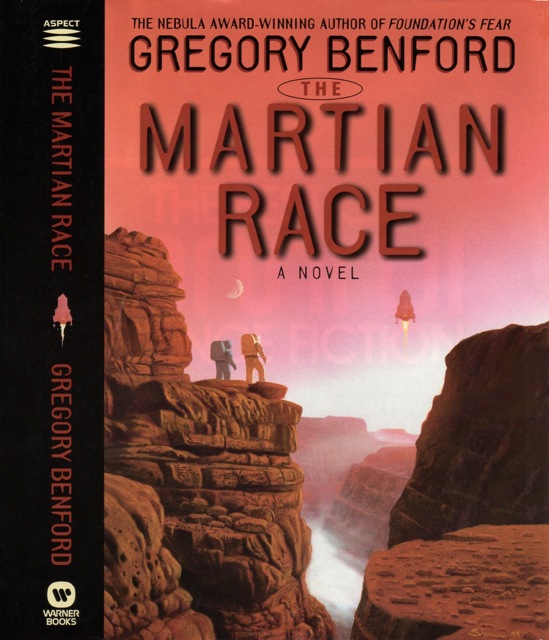
The Galactic Center Saga is a series of books by author Gregory Benford detailing a galactic war between mechanical and biological life.In the Ocean of Night (1977) — 1977 Nebula Award nominee, 1978 Locus Award nominee Across the Sea of Suns (1984) Great Sky River (1987) — 1988 Nebula Nominee Tides of Light (1989) — 1990 Locus Award nominee Furious Gulf (1994) Sailing Bright Eternity (1996) "A Hunger for the Infinite" a novella published in the anthology Far Horizons
- NASA Trilogy
series4 books1996
similar byscience fictiontensespace exploration+2 more
The NASA Trilogy consists of three hard science fiction novels written by British science fiction author Stephen Baxter. They were published from 1996 to 1998. These books explore the possibilities of the American space program if the circumstances had been different. They have generally darker tones than his other books and are critical of NASA. They consist of:
- Cities in Flight
series10 books1950
completed
similar byscience fictionspace+2 more
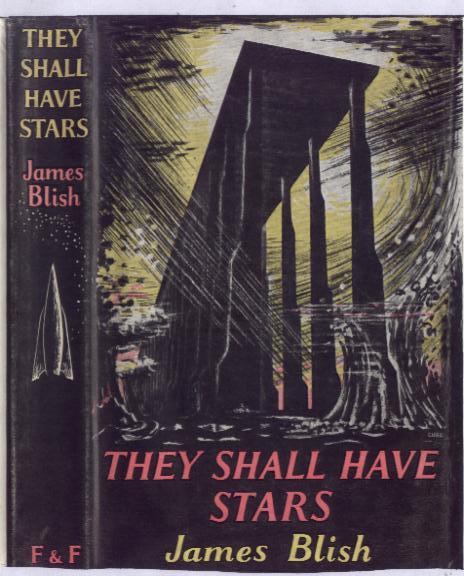
Cities in Flight is a four-volume series of science fiction novels and short stories by American writer James Blish, originally published between 1950 and 1962, which were first known collectively as the "Okie" novels. The series features entire cities that are able to fly through space using an anti-gravity device, the spindizzy. The stories cover roughly two thousand years, from the very near future to the end of the universe. One story, "Earthman, Come Home", won a Retro Hugo Award in 2004 for Best Novelette. Since 1970, the primary edition has been the omnibus volume first published in paperback by Avon Books. Over the years James Blish made many changes to these stories in response to points raised in letters from readers.
- David Ryerson
series2 books1958
completed
similar byscience fictiontensesurvivalspacespace exploration
The Enemy Stars follows the crew of a faster-than-light survey ship stranded far from home after their matter-transmission drive is damaged, forced to keep the vessel and each other going across a voyage that will outlast some of them. Poul Anderson's 1959 novel was originally serialized as We Have Fed Our Sea-, a title drawn from Kipling. It stands alone rather than part of a series; David Ryerson is one of the ship's crew.
- Dune
series20 books1963
part of Dune Universe
similar byscience fiction+1 more
Frank Herbert's Dune Chronicles opens with 1965's Dune, set on the desert planet Arrakis where House Atreides takes control of the only source of the vital spice melange and young Paul Atreides is pulled into a struggle over its politics and religion. Herbert carried the story forward across five further novels — Dune Messiah, Children of Dune, God Emperor of Dune, Heretics of Dune, and Chapterhouse: Dune — following Paul's line over the following millennia, before Brian Herbert and Kevin J. Anderson later extended the saga. Many other editions of these six novels are omnibus and box-set repackagings rather than separate stories.
- Heart of the Comet
David Brin & Gregory Benfordstandalone novel1986
similar byscience fictionsurvivalspacespace exploration+1 more
Heart of the Comet is a novel by David Brin and Gregory Benford about human space travel to Halley's Comet published in 1986. Its publication coincided with the comet's 1986 approach to the Earth.
- Jumper
series6 books1992
similar byscience fictiontense+1 more
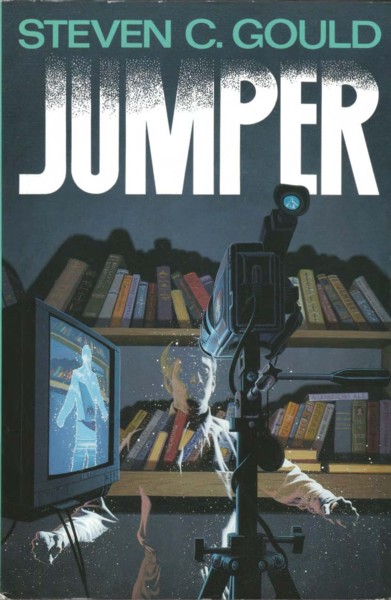
Jumper follows David Rice, a teenager who discovers he can teleport anywhere he's been and uses the power to escape an abusive home, only to find that ability alone doesn't solve the harder problems of finding his absent mother, building an honest relationship, or staying off the radar of people who'd exploit him. Steven Gould's series continues across Reflex, Impulse, and Exo, later following his and his wife's daughter as a second-generation jumper. A 2008 film loosely adapted the first novel.
- H. G. Wells' War of the Worlds
universe65 books1898
Start hereThe War of the Worlds · Start here
similar byscience fiction+1 more
No one would have believed, in the closing years of the nineteenth century, that human affairs were being watched keenly and closely from the timeless worlds of space. And then the cylinders fell. H. G. Wells' War of the Worlds opens in the quiet of the Surrey commons, where a falling star proves to be the first Martian craft — and from the pit rise the towering tripods, the Heat-Ray, the choking Black Smoke and the creeping red weed, wielded by minds that regard mankind much as we regard the creatures we boil for supper. This is invasion rendered as natural disaster: cold, methodical, and vast beyond argument. Wells' 1898 novel is the seed; everything else grows from that Martian soil. The catalogue gathers direct sequels and continuations alongside a wide field of other hands. In War of the Worlds: Global Dispatches the invasion is retold across the whole planet through the eyes of Twain, Verne, Tolstoy, Lowell and Kipling; in the Manly Wade and Wade Wellman crossover, Sherlock Holmes, Watson and Professor Challenger take the field against the machines; and Scott Washburn's Great Martian War stretches the fighting into a decades-long alternate history of steam, artillery and grinding attrition. It is a loose shared world — no single decreed sequence, many voices answering one calamity. What sets this world apart is its refusal of heroics: the invaders fall not to generals but to the smallest things of Earth, humbling and indifferent. Begin, always, with Wells' original novel — it is short, and it is the ground every later book stands upon. From there follow your appetite: Global Dispatches for the panorama, the Holmes campaign for adventure, Washburn for the long war.
- Adventures of Viktor & Julia
series2 books1999
similar byscience fictiontensesurvivalspace exploration+1 more
- The Wanderer
Fritz Leiberstandalone novel1964
similar byscience fictiontensesurvivalspace
The Wanderer is a science fiction novel by American writer Fritz Leiber, published as a paperback original by Ballantine Books in 1964. It won the 1965 Hugo Award for Best Novel.
- Bronson Beta
series5 books1933
similar byscience fiction+3 more
When Worlds Collide (1933) and its sequel After Worlds Collide (1934), written together by Edwin Balmer and Philip Wylie, follow a small group of survivors who escape a doomed Earth as the rogue planet Bronson Alpha destroys it, landing on its companion world Bronson Beta to begin again. The two novels form a self-contained disaster-and-survival duology.
- The Hammer of God
Arthur C. Clarkestandalone novel1993
similar byscience fictiontensesurvivalspacespace exploration
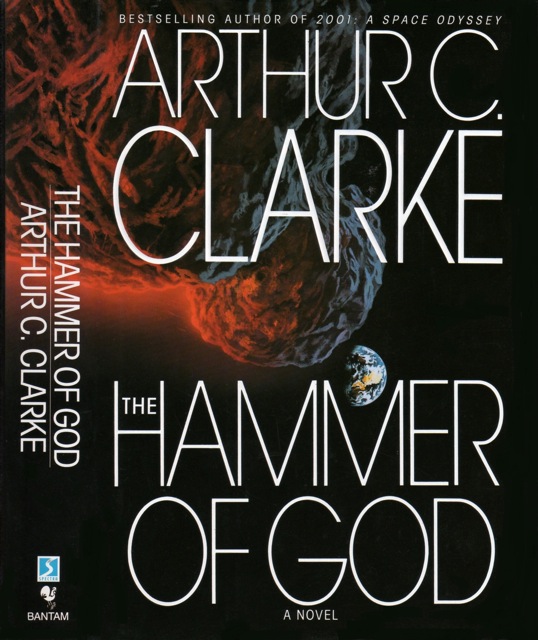
The Hammer of God is a science fiction novel by Arthur C. Clarke originally published in 1993. Set in the year 2109, it deals with the discovery of an asteroid to be on course to collide with Earth and depicts the mission for deflecting the asteroid by using fusion thermal rockets.
- Ender Wiggin
series14 books1977
part of Ender's Game Universe
similar byscience fiction+2 more
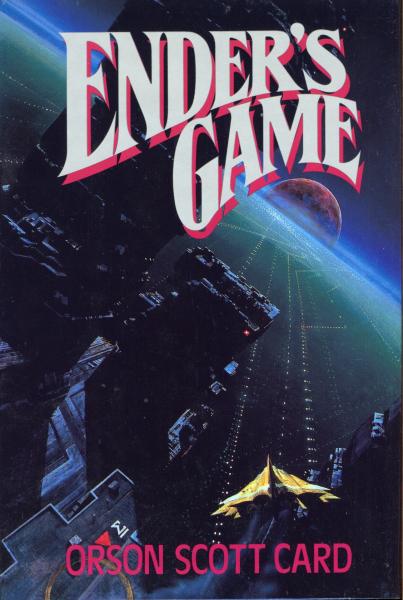
Orson Scott Card's Ender's Game (1985, expanded from his 1977 novella) follows child prodigy Andrew "Ender" Wiggin as he is recruited into a military training program built to prepare Earth's defenses for an anticipated third war against an insectoid alien species known as the Formics. The saga continues years later through Speaker for the Dead and Xenocide, following an older Ender as he confronts the moral weight of his role in that earlier conflict, and concludes the core arc in Children of the Mind, with Ender in Exile filling in the years between the first two books. Set within the wider Ender's Game universe, the series shifts from military coming-of-age story to slower, more philosophical science fiction as it progresses.
- Central Control
series2 books1953
completed
similar byscience fictionspace+2 more
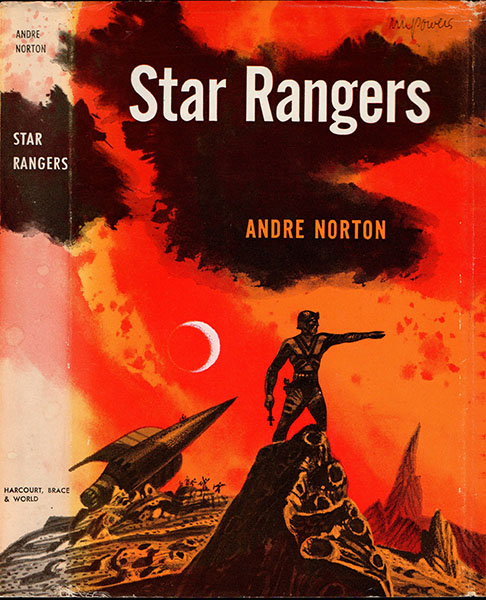
Andre Norton's Central Control novels are a loose future history that sketches the rise of a galactic empire through events echoing Norton's own reading of Terran history rather than following one continuing cast. Star Rangers follows the crew of a crashed Stellar Patrol scoutship who, after entangling themselves in a local rebellion on what seems an unknown world, discover they have found humanity's long-lost original homeworld, Terra. Star Guard and Star Soldiers extend the same shared background with their own separate stories.