More like The Explorers' Gate
anchored on:middle grade
but
- Kairos
series11 books1962
completed
similar by+4 more
The Time Quintet is a science fantasy series of five young adult novels written by American author Madeleine L'Engle and made up of A Wrinkle in Time (1962), A Wind in the Door (1973), A Swiftly Tilting Planet (1978), Many Waters (1986), and An Acceptable Time (1989).
- Artemis Fowl
series15 books2001
similar byadventurousour worldcontemporaryfantasymiddle grade
Artemis Fowl is a series of eleven fantasy novels by Irish author Eoin Colfer, revolving around various members of the Fowl family. The first cycle, the Artemis Fowl series, consists of eight books, and the second cycle, The Fowl Twins series, is a trilogy. Both releases have received commercial success and positive critical reception in the children's literature genre, and also originated graphic novel adaptations. As of 2013, the novels have sold more than 21 million copies in 44 languages, and are one of the best-selling series of all time. In 2010, Artemis Fowl was voted by readers as their favorite Puffin Books title of all time.
- Five Children Universe
series27 books1902
completed
similar byfantasy+5 more
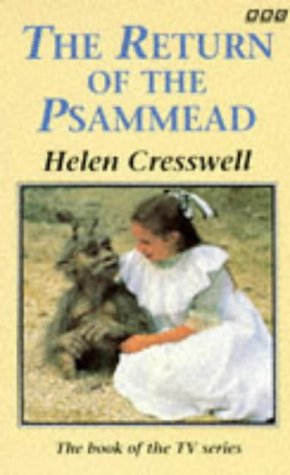
Two separate modern continuations of E. Nesbit's Psammead stories were written decades apart by different authors: Helen Cresswell's The Return of the Psammead (1992) brings the wish-granting sand fairy back for a new set of children, while Kate Saunders's Five Children on the Western Front (2014) follows the now-grown Lamb and his siblings as the First World War arrives, in a more somber sequel to Nesbit's original trilogy. Neither book is by Nesbit herself, and the two have no direct connection to each other beyond both drawing on her creation. Later writers have kept returning to Nesbit's premise long after her own trilogy ended.
- Tales of Magic
series7 books1954
completed
similar byfriendshipour worldcontemporaryfantasy+3 more
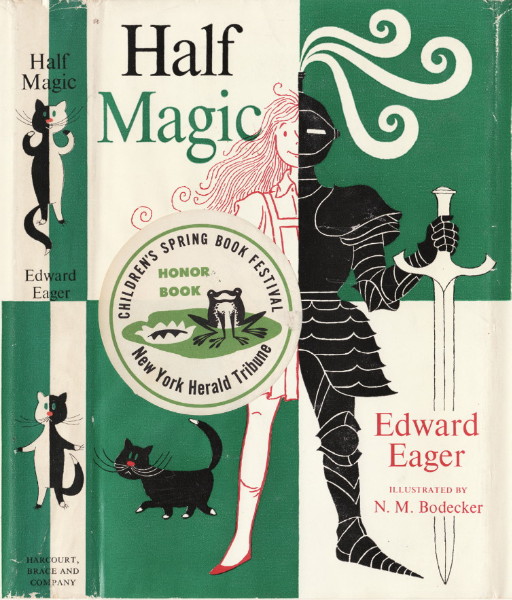
Tales of Magic collects Edward Eager's seven loosely connected children's novels about ordinary kids who stumble into magic in everyday American settings, starting with Half Magic, in which four siblings find a coin that grants exactly half of any wish. Each book follows a different, sometimes overlapping set of children and a different magical object or rule, from Knight's Castle to the deliberately ambiguous Magic or Not? and its sequel The Well-Wishers. Eager wrote them as a direct homage to E. Nesbit, sometimes having his own child characters read her books.
- Watership Down
series21 books1972
completed
similar byadventurousquestsour worldcontemporaryfantasy+2 more
Watership Down is Richard Adams's 1972 novel following a group of rabbits who flee the destruction of their warren and cross the English countryside of Hampshire in search of a new home, developing over the journey a full rabbit culture of language, proverbs, and mythology. Adams returned to the same world in 1996 with Tales from Watership Down, a collection of nineteen short stories mixing rabbit folklore with further adventures of characters from the novel.
- Chitty Chitty Bang Bang
series10 books1964
similar byour worldcontemporaryfantasy+4 more
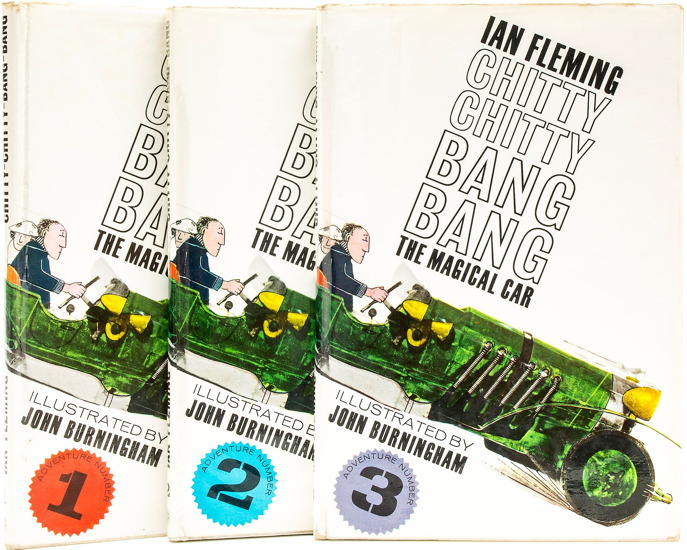
Ian Fleming's Chitty-Chitty-Bang-Bang (1964) follows the Pott family and their magical car -- able to fly and turn into a hovercraft -- as it helps them foil criminals across the English Channel; Fleming, best known for James Bond, wrote it while recovering from a heart attack and drew on his own love of vintage racing cars. Decades later, Frank Cottrell-Boyce wrote three further Chitty novels (2011-2013) continuing the car's adventures with a new family.
- House of Secrets
series3 books2013
similar byadventurousquestscontemporaryfantasyadventuremiddle grade+1 more
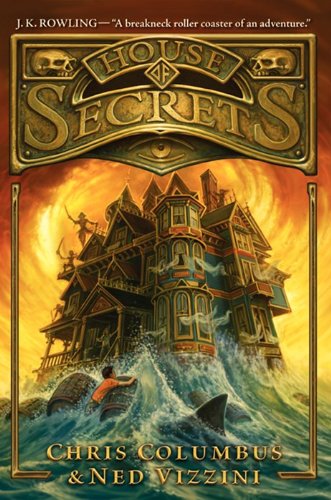
Chris Columbus and Ned Vizzini's House of Secrets follows the three Walker children after they move into an unusual new home and their parents are taken from them; the children set out to find a secret book that holds the key to getting them back. The series continues across two more books, Battle of the Beasts and Clash of the Worlds, the latter co-written with Chris Rylander.
- His Dark Materials Universe
universe13 books1995
Start hereHis Dark Materials · Start here
similar byadventurousfantasy+2 more
In a world like ours and unlike it, every human soul walks outside the body in the shape of an animal — a daemon, who speaks, who cannot be lied to, and who settles into one fixed form only when childhood ends. This is the country of His Dark Materials: a company of parallel worlds across which an invisible dust of consciousness drifts down upon the waking mind; where a Church that calls itself the Magisterium would sooner sever a child's soul than let that Dust be understood; and where a golden instrument, the alethiometer, answers true questions for anyone with the patience to read it. Philip Pullman's design stands in two trilogies and a scatter of shorter tales. His Dark Materials — Northern Lights (published in America as The Golden Compass), The Subtle Knife, and The Amber Spyglass — carries Lyra Belacqua from the rooftops of a shadow Oxford across the borders between worlds. The Book of Dust returns to that same territory: La Belle Sauvage looks back to Lyra as an infant carried through a great flood, while The Secret Commonwealth follows her grown and less certain into adulthood, with a concluding volume closing the arc. Around them sit slim companion books — Lyra's Oxford, Once Upon a Time in the North, Serpentine — and Nicholas Wright's stage adaptation, made with Pullman's blessing. The register is grave and luminous at once, its title lifted from Milton and its quarrel drawn from Blake: a story that takes the side of curiosity, love, and the physical world against any authority that would forbid them. It reads as adventure — armoured bears, aeronauts, knife-cut windows between skies — yet reasons like philosophy. Begin with Northern Lights / The Golden Compass and read the first trilogy through before turning to The Book of Dust, which deepens everything the first has already made you feel.
- Emily Windsnap
series16 books2003
similar byadventurouscontemporaryfantasy+4 more
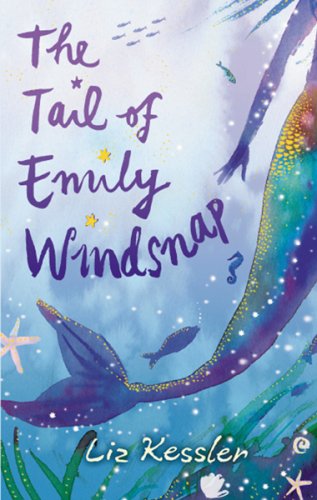
Emily Windsnap is a series of children's fantasy novels written by British author Liz Kessler, inaugurated by The Tail of Emily Windsnap in 2003 and continuing as of 2025. It is illustrated primarily by Sarah Gibb and published by Orion Children's Books in Britain, and Candlewick Press in America. The series originated as a poem that Kessler was writing about a "little girl who lived on a boat but had a big secret"; an editor recommended that Kessler turn the poem into a book.
- Narnia
series26 books1950
part of Narnia Universe
similar byadventurousfantasy+3 more
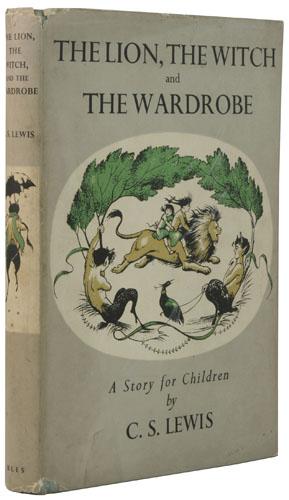
The Chronicles of Narnia is a series of seven portal fantasy novels by British author C. S. Lewis. Illustrated by Pauline Baynes and originally published between 1950 and 1956, the series is set in the fictional realm of Narnia, a fantasy world of magic, mythical beasts, and talking animals. It narrates the adventures of various children who play central roles in the unfolding history of the Narnian world. Except in The Horse and His Boy, the protagonists are all children from the real world who are magically transported to Narnia, where they are sometimes called upon by the lion Aslan to protect Narnia from evil. The books span the entire history of Narnia, from its creation in The Magician's Nephew to its eventual destruction in The Last Battle.
- Seven Wonders
series10 books2013
similar byadventurousquestscontemporaryfantasyadventuremiddle grade+2 more
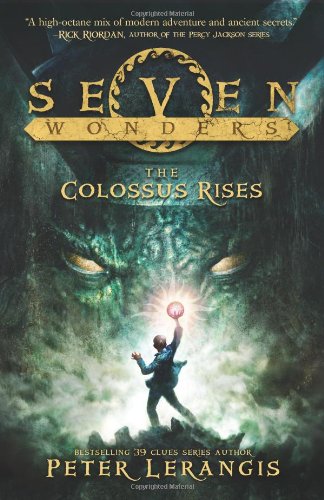
Seven Wonders is a pentalogy of children's fantasy, adventure and mythological fiction books written by American author Peter Lerangis. It is based on Greek mythology and set around the Seven Wonders of the Ancient World. Jack McKinley discovers a secret organization on a hidden island, and becomes the leader of a mission to retrieve seven lost magical orbs. As Jack and his three friends realize their lives are at stake, they have no choice but to accept the quest and embark on the challenge.
- His Dark Materials
series8 books1995
part of His Dark Materials Universe
similar byadventurousfantasy+2 more
His Dark Materials is a trilogy of fantasy novels by Philip Pullman consisting of Northern Lights, The Subtle Knife (1997), and The Amber Spyglass (2000). It follows the coming of age of two children, Lyra Belacqua and Will Parry, as they wander through a series of parallel universes. The novels have won a number of awards, including the Carnegie Medal in 1995 for Northern Lights and the 2001 Whitbread Book of the Year for The Amber Spyglass. In 2003, the trilogy was ranked third on the BBC's The Big Read poll.
- Silverwing
series5 books1997
similar byadventurousfantasymiddle grade+2 more
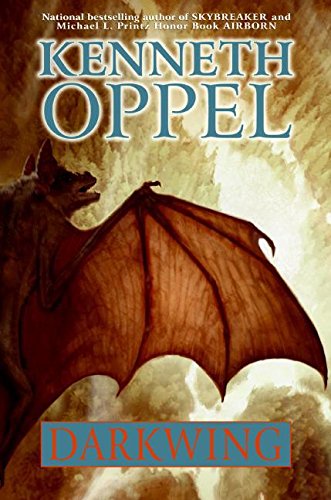
Kenneth Oppel's Silverwing novels follow a colony of bats whose society is divided along old lines of species, faction, and belief, forcing young bats to navigate conflicts that adults have inherited rather than chosen. Across four books, the series treats bat colonies as full societies with their own history and politics, using that lens to explore tolerance and freedom of thought. It's popular enough to have been adapted into an animated television series.
- Pandava
series5 books2018
similar byadventurousquestscontemporaryfantasymiddle grade+3 more
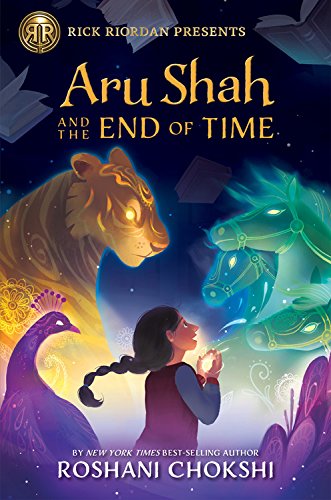
Pandava Quintet is a five-part book series written by Roshani Chokshi. It is part of the "Rick Riordan Presents" publishing imprint. The first book of the series and the imprint was published on March 23, 2018, under the name Aru Shah and the End of Time. The next books are Aru Shah and the Song of Death, Aru Shah and the Tree of Wishes, Aru Shah and the City of Gold, and Aru Shah and the Nectar of Immortality. The main character of the series is the young Aru Shah, who is disliked by her classmates, but fits in with the other Pandava sisters, like Mini and Brynne, once she meets an enchanted talking pigeon who she nicknames "Boo" after touching a cursed ancient artifact. The rest of the series has gotten praise for being similar to Rick Riordan's Percy Jackson and the Olympians series.
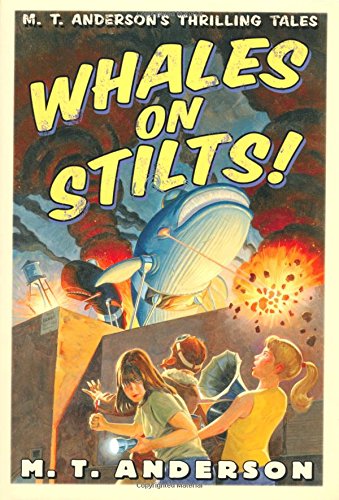
- Pals in Peril / M. T. Anderson's Thrilling Tales
series6 books2005
similar byfriendshipcontemporarymiddle grade+3 more
- Peter Pan Universe
universe112 books1902
Start herePeter Pan · Start here
similar byfantasy+1 more
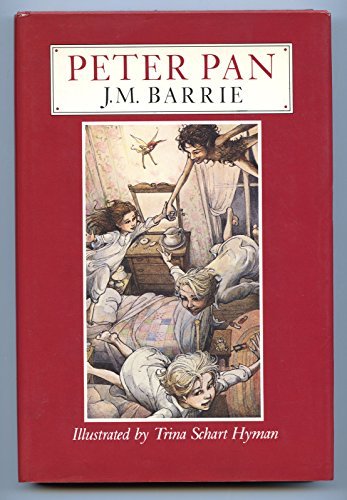
Second star to the right, and straight on till morning — and there it is, the island that every child dreams once and then, growing up, contrives to forget. Neverland: mermaids in the lagoon, a ticking crocodile with a clock in its belly, a pirate nursing his severed hand, and above it all the boy who will not grow up, forever flying, forever heartless in the lovely careless way that only children are. It begins with J. M. Barrie — the 1904 stage play, the chapters of Kensington Gardens, and the novel Peter and Wendy that fixed Peter, Wendy, Tinker Bell, Hook and the Lost Boys in place. From that small window a wide world has flown. Dave Barry and Ridley Pearson supply the how-it-all-began in their Starcatchers books, chasing falling starstuff aboard a doomed ship to explain why one orphan came to fly and never age. A whole bright shelf tends Tinker Bell's Pixie Hollow — the Disney Fairies and Fairy Haven tales, Kiki Thorpe's Never Girls — while Heidi Schulz hands the wheel to Hook's own daughter, and stranger, dimmer corners carry the island into far darker weather. Many hands, one archipelago; no single map governs them all. What sets it apart is the sweetness with a blade in it — wonder shadowed always by the ache of leaving, of mothers who keep the window open and children who fly home too late. Newcomers should begin where it began, with Barrie's Peter and Wendy, then, for the origin, take the Starcatchers books in their own order. The rest of Neverland waits, as it always does, for whoever still remembers how to reach it.
- Chronicles of Ancient Darkness
series9 books2004
similar byadventurousquestsfantasymiddle grade+1 more
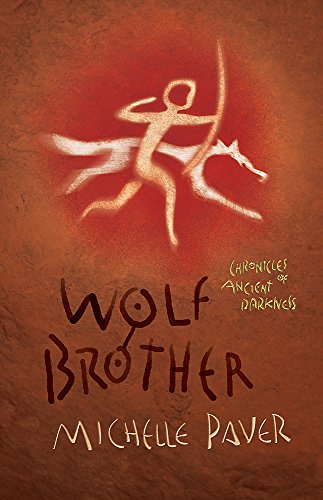
Chronicles of Ancient Darkness is a series of historical fantasy novels by the British author Michelle Paver and her first books for children. The books chronicle the adventures of Torak, an adolescent boy, and his friends Renn and Wolf. The main story arc revolves around Torak and his quest to defeat the Soul Eaters, a group of power hungry mages who seek to destroy all life in the forest. Paver has called it simply "a single story: the tale of Torak's discovery of himself and his world."
- The Mysterious Benedict Society milieu
series4 books2007
similar byadventurousfriendshipour worldcontemporaryadventuremiddle grade
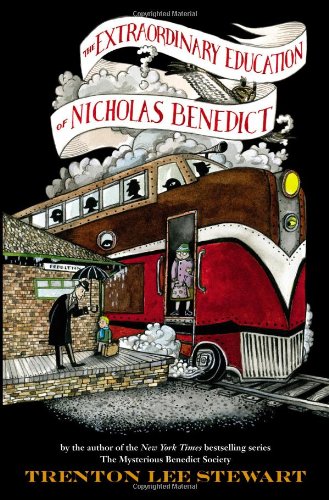
The Extraordinary Education of Nicholas Benedict is Trenton Lee Stewart's prequel to his Mysterious Benedict Society books, tracing the childhood of Mr. Benedict, the eccentric mentor of the main series' four child protagonists, before he became the man who recruits them to stop his twin brother Ledroptha Curtain from conquering the world. It was published in 2012, several years after the original trilogy began and a year after a 2011 companion volume. It can be read independently of the main quartet, though it draws its stakes from what Benedict becomes in those books.
- Minecraft
universe207 books2014
Start hereThe Island · Start here
similar bymiddle grade+2 more
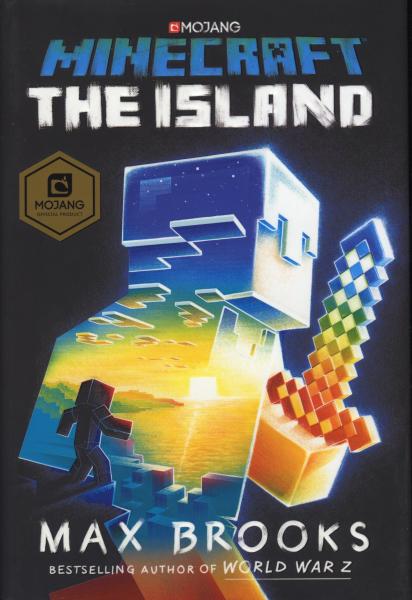
The sun is going down, and you have no walls. Somewhere in the dark a green thing is walking toward you on four stubby legs, and it does not stop and it does not speak, and when it reaches you it will hiss. So you dig. You punch wood from a tree, shape it into planks, stack the planks into a box just big enough to outlast the night — and in the morning the world is yours again, cubic and endless and waiting to be reshaped one block at a time. This is the Overworld: squared-off oceans, blocky hills, deep glittering mines, and beyond them the burning Nether and the floating void of the End, where everything can be broken down and built back into something else. The books that grow from it come in two very different sizes. On one shelf sits Mojang's own line — standalone novels like Max Brooks' tale of a castaway learning the island's rules the hard way, the monster-hunting Mob Squad, the illustrated Woodsword Chronicles, and rack on rack of official handbooks. Against it surges a whole cottage industry of unofficial "Minecrafter" fiction for young readers: the diary-comic misadventures of Diary of a Minecraft Zombie and The Creeper Diaries, Winter Morgan's brisk quest tales, and Mark Cheverton's Gameknight999 saga of a boy trapped inside the game. No single timeline binds them; each series keeps its own. What holds it together is not a plot but a place, and a feeling — the small triumph of surviving one more night, the itch to see past the next ridge, the freedom to build the thing you pictured. Newcomers wanting a story with a spine should start with Max Brooks' The Island, self-contained and quietly clever; younger readers chasing laughs can drop into Diary of a Minecraft Zombie or Woodsword Chronicles at book one. Beyond that, pick a mine and start digging.
- Young Wizards
series24 books1983
similar byadventurousour worldcontemporaryfantasy+1 more
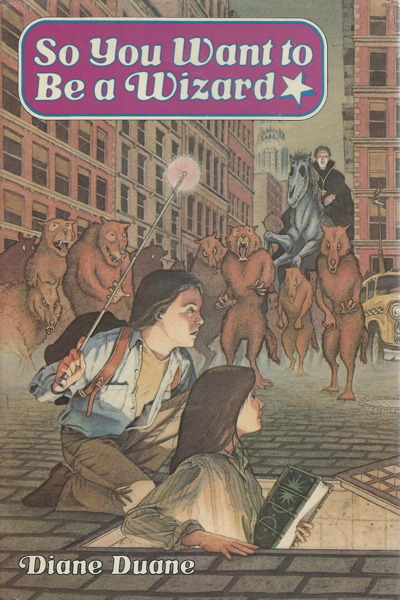
Diane Duane's Young Wizards series begins with thirteen-year-old Nita, bullied and friendless, who borrows a library book on wizardry and discovers it's the real thing: an apprenticeship into a covert order that fights entropy, alongside a classmate named Kit. Across fifteen books published between 1983 and 2019, the two age forward in something close to real time as their missions escalate from New York streets to alien worlds and beyond. The series centers on the wizard's Oath and the idea that magic is a responsibility taken on to slow the universe's decay, not a power to be enjoyed for its own sake.
- Castaways of the Flying Dutchman
series3 books2001
completed
similar byadventurousour worldfantasymiddle grade+3 more
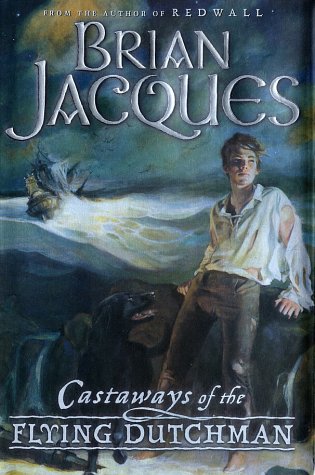
Brian Jacques's Castaways of the Flying Dutchman follows Neb and his dog Denmark, the sole survivors of the cursed ghost ship's crew, condemned to eternal youth and wandering the world to help people in trouble wherever they land. The trilogy continues through The Angel's Command and Voyage of Slaves.