More like The Fallout
anchored on:science fictionsurvivalour worldnear futuretenseyoung adult+5 more
but
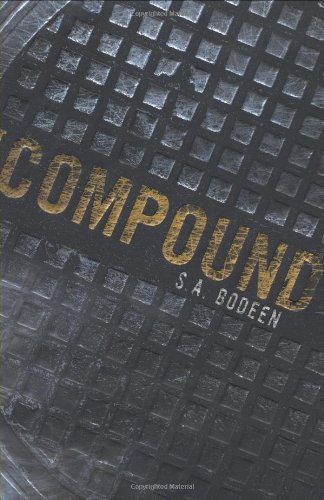
- The Compound
series2 books2008
similar bynear futuretensesurvivalscience fictiondarkfamily secretsyoung adultunderground & caves+3 more
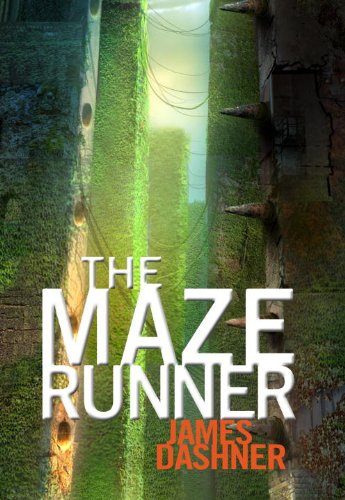
- Maze Runner
series11 books2009
similar byscience fictiontensesurvivalnear futuredystopiayoung adult+2 more
The Maze Runner is a series of young adult dystopian science fiction novels written by American author James Dashner. The series consists of the trilogy The Maze Runner (2009), The Scorch Trials (2010) and The Death Cure (2011), as well as two prequel novels, The Kill Order (2012) and The Fever Code (2016). A novella titled Crank Palace (2020) and a companion book titled The Maze Runner Files (2013) have also been released. A sequel trilogy in the series titled The Maze Cutter takes place 73 years following the events of The Death Cure and consists of the novels The Maze Cutter (2022), The Godhead Complex (2023), and The Infinite Glade (2025).
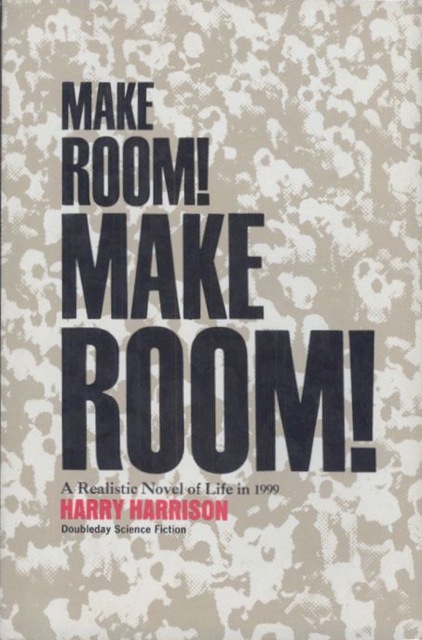
- Make Room! Make Room!
Harry Harrisonstandalone novel1966
similar bynear futurescience fictiondystopiadarktensesurvivalour world
Make Room! Make Room! is a 1966 science fiction novel written by Harry Harrison exploring the consequences of both unchecked population growth on society and the hoarding of resources by a wealthy minority. It was originally serialized in Impulse magazine.
- The Chemical Garden Trilogy
series3 books2011
similar bynear futurescience fictiondystopiadarktensesurvivalgenetic engineeringyoung adult
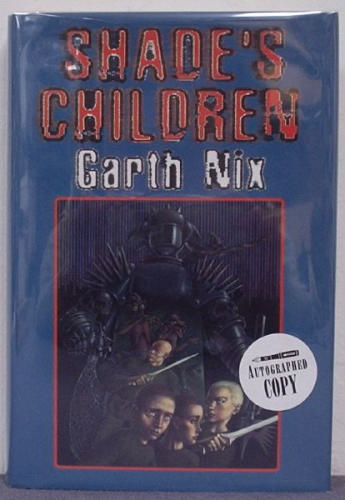
- Shade's Children milieu
series2 books1997
similar bynear futurescience fictiondystopiadarktensesurvivalyoung adult+1 more
Shade's Children is set on an Earth where all adults vanished overnight fourteen years earlier, leaving children to be harvested at puberty by the machines that now run the world, unless they escape into hiding with Shade, a mysterious AI-like protector. Garth Nix's 1997 novel is a single, self-contained book rather than a series, though its bleak post-apocalyptic premise has drawn comparisons to his other work.
- Unwind Dystology
series5 books2007
similar bynear futurescience fictiondystopiatensedarkgenetic engineeringyoung adult+2 more
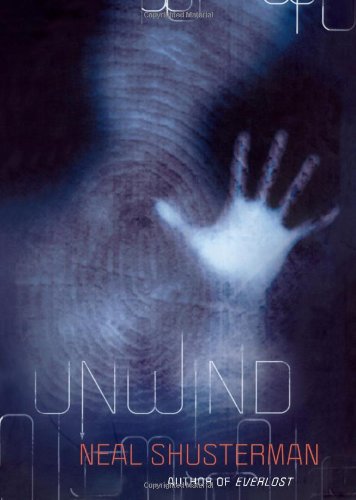
Neal Shusterman's Unwind Dystology opens in a United States reshaped by the resolution to a war over reproductive rights: parents can retroactively have a teenager "unwound," their body disassembled for transplant on the premise that nothing technically dies since every part lives on in someone else. The first novel follows three teens fleeing that fate, and the sequels widen the same dystopia's cast and consequences across a four-book arc plus companion material. It is grim speculative fiction built to ask hard bioethical questions rather than offer comfort.
- House of Stairs
William Sleatorstandalone novel1974
similar bynear futurescience fictiontensesurvivaldystopiadarkyoung adult
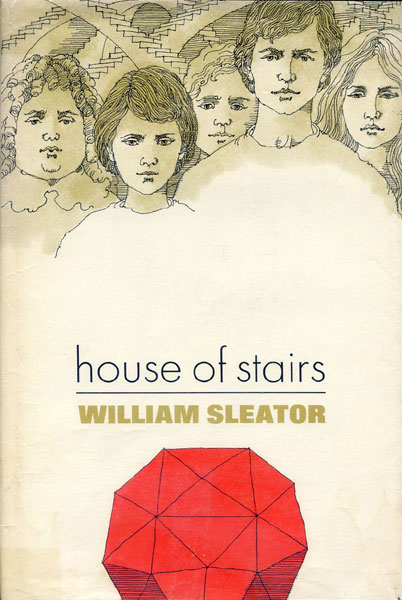
Publisher's description: "Five fifteen-year-old orphans of widely varying personality characteristics are involuntarily placed in a house of endless stairs as subjects for a psychological experiment on conditioned human response."
- The Windup Universe
series3 books2005
similar bynear futurescience fictiondystopiadarkgenetic engineeringour world+1 more
- Stand on Zanzibar
John Brunnerstandalone novel1968
similar bynear futurescience fictiondystopiadarkgenetic engineeringour world
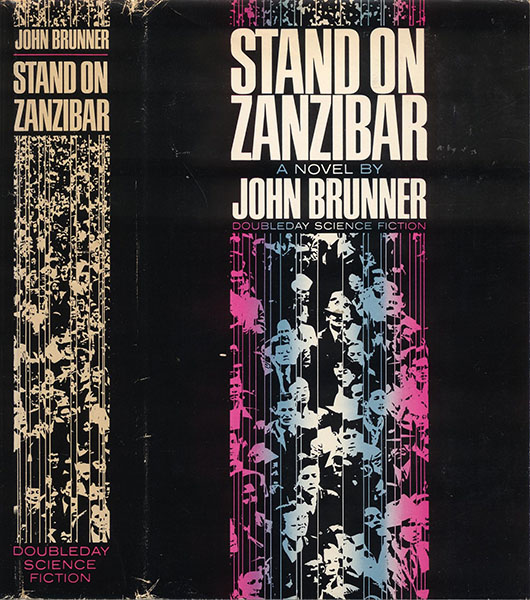
Stand on Zanzibar is a dystopian New Wave science fiction novel written by John Brunner and first in part published in New Worlds magazine in 1967 and in book form in 1968. The book won a Hugo Award for Best Novel at the 27th World Science Fiction Convention in 1969, as well as the 1969 BSFA Award and the 1973 Prix Tour-Apollo Award.
- The Running Man
Stephen Kingstandalone novel1982
similar bynear futurescience fictiontensesurvivaldystopiadark
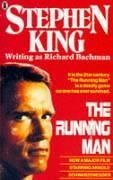
The Running Man is a dystopian thriller novel by American writer Stephen King, first published under the pseudonym Richard Bachman in 1982 as a paperback original. It was collected in 1985 in the omnibus The Bachman Books. The novel is set in a dystopian United States during the year 2025, in which the nation's economy is in ruins and world violence is rising. The story follows protagonist Ben Richards as he participates in the reality show The Running Man, in which contestants win money by evading a team of hitmen sent to kill them.
- Level 7
Mordecai Roshwaldstandalone novel1959
similar bynear futurescience fictiondystopiadarktensesurvivalunderground & caves
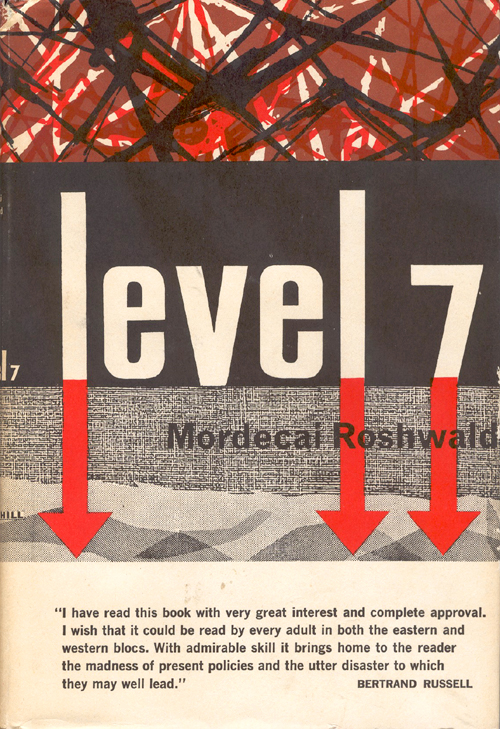
Level 7 is a 1959 science fiction novel by American writer Mordecai Roshwald. It is told from the first-person perspective of a modern soldier, X-127, living in the underground military complex Level 7, where he and several hundred others are expected to reside permanently. X-127 fulfills the role of 'push-button' offensive initiator of his nation's nuclear weapons capacity against an unspecified enemy. X-127 narrates life within a deep shelter before, during and after a nuclear war that wipes out the human species.
- At the End of Everything
Marieke Nijkampstandalone novel2022
similar bynear futurescience fictiontensesurvivaldarkour worldyoung adult+1 more
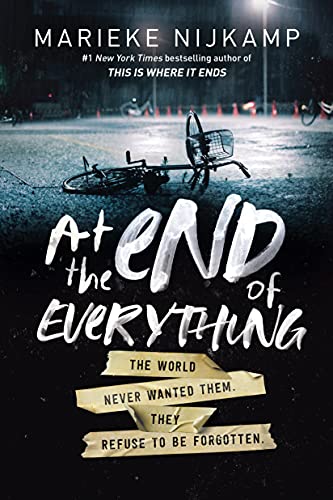
The Hope Juvenile Treatment Center is ironically named. No one has hope for the delinquent teenagers who have been exiled there; the world barely acknowledges that they exist. Then the guards at Hope start acting strange. And one day…they don't show up. But when the teens band together to make a break from the facility, they encounter soldiers outside the gates. There's a rapidly spreading infectious disease outside, and no one can leave their houses or travel without a permit. Which means that they're stuck at Hope. And this time, no one is watching out for them at all. As supplies quickly dwindle and a deadly plague tears through their ranks, the group has to decide whom among them they can trust and figure out how they can survive in a world that has never wanted them in the first place.
- The Hopkins Manuscript
R. C. Sherriffstandalone novel1939
similar bynear futurescience fictionsurvivaldystopiadarktenseour world
The Hopkins Manuscript is a dystopian science fiction novel by R. C. Sherriff, first published in 1939 by Victor Gollancz. In 1958 it was reissued in a revised edition as a Pan paperback under the title The Cataclysm. The novel was later republished under its original title by The Macmillan Company in 1963 and by Persephone Books in 2002.
- The Hunger Games
series3 books2008
part of The Hunger Games Universe
similar byscience fictiontensedystopiadarksurvivalyoung adult
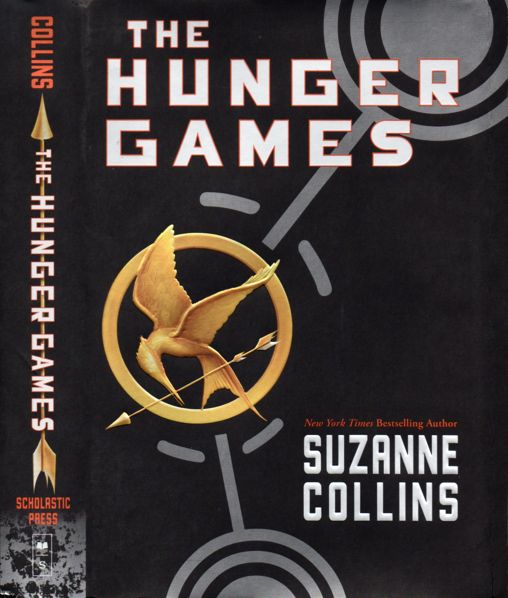
The Hunger Games is a series of young adult dystopian novels written by American author Suzanne Collins. The series consists of a trilogy that follows teenage protagonist Katniss Everdeen, as well as two prequels. The Hunger Games universe is a dystopia set in Panem, a post-apocalyptic North American country consisting of the wealthy Capitol and 12 districts in varying states of poverty. As punishment for rebellion, the Capitol hosts an annual battle royale competition called The Hunger Games. Each of the 12 districts must send two children between the ages of 12 and 18 to participate, and the last surviving child is dubbed the victor.
- Toys
James Patterson & Neil McMahonstandalone novel2011
similar bynear futurescience fictiondystopiatensegenetic engineeringsurvivalour world+1 more
Toys is a novel by James Patterson and Neil McMahon published by Little, Brown and Company in December 2011. Set in the future where humans are seen as an inferior species, Toys revolves around an "Elite" Hays Baker, who is endowed with superhuman attributes and is a high-ranking government official; however, in an unexpected turn of events, he is made to flee for his life.
- Control
series2 books2013
similar bynear futurescience fictiontensedystopiagenetic engineeringsurvivalour worldyoung adult+1 more
- Shadow Children
series7 books1998
similar bynear futuretensescience fictiondystopiadarksurvivalyoung adult+1 more
Shadow Children is a series of seven books by Margaret Peterson Haddix about a dystopian country which suffers food shortages due to a drought and the effects of the government's totalitarian attempts to control resources as a way to solidify its power. The Population Police enforce the government's Population Law, killing or imprisoning "shadow children," any child born after their first two siblings. In some cases, a parent may choose to forge a child's identification card so a shadow child can live a normal life.
- Dark Matter (Teri Terry)
series3 books2017
similar bynear futurescience fictiontensedarksurvivaldystopiayoung adult+3 more
- The Supernaturalist
Eoin Colferstandalone novel2004
similar bynear futurescience fictiondarktensedystopiasurvivalyoung adult
The Supernaturalist is a science fiction cyberpunk novel by Irish author Eoin Colfer. The book was influenced by film noir and other predecessors of the cyberpunk science fiction movement. Colfer has outlined plans for a sequel, Avernus.
- Ship Breaker
series3 books2010
similar byscience fictiondarktensenear futuresurvivalyoung adult+3 more
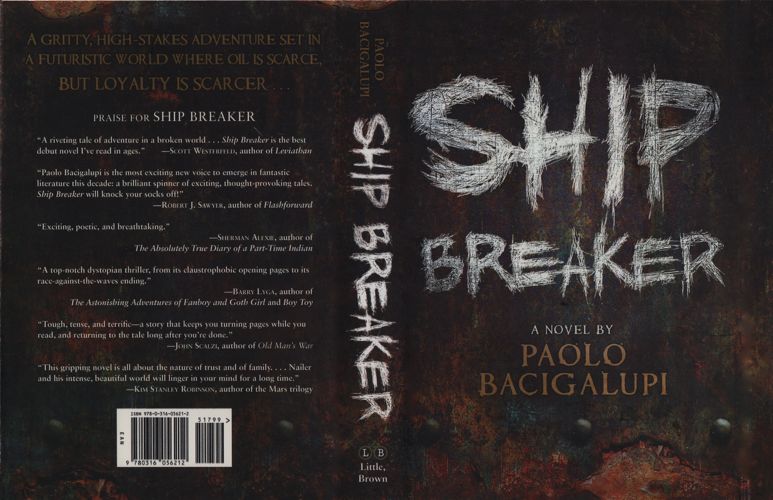
Nailer works a light-crew scavenging copper wire and scrap from beached oil tankers on a Gulf Coast reshaped by rising seas and vanished order, until a wrecked clipper ship washes ashore carrying a half-drowned girl from the wealthy world he'll never belong to. Paolo Bacigalupi's Ship Breaker follows Nailer as helping her pulls him out of his abusive father's orbit and into a much larger, more dangerous game involving her family's fortune. The sequels The Drowned Cities and Tool of War widen the same flooded, resource-scavenging future to new characters and coastlines.
- City of Darkness
Ben Bovastandalone novel1976
similar bynear futurescience fictiondystopiadarktensesurvivalyoung adult+1 more
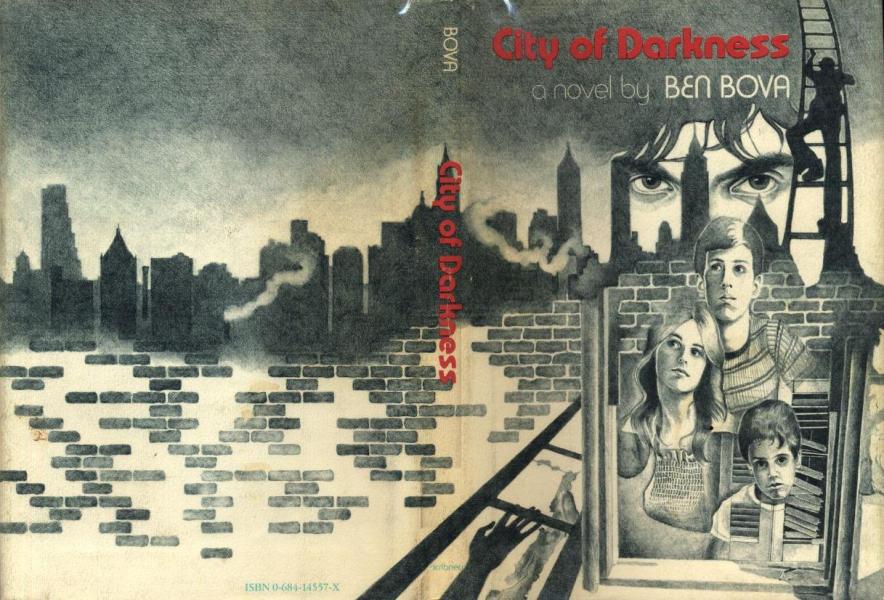
City of Darkness is a dystopian young adult novel by Ben Bova, first published in 1976 by Charles Scribner's Sons.
- The Hunger Games Universe
universe5 books2008
Start hereThe Hunger Games · Start here
similar byscience fictiontensedystopiadarksurvivalyoung adult
Panem, they call it now — a nation raised on the drowned bones of North America, a glittering Capitol ringed by twelve districts it once starved into obedience. Every year the Capitol collects its debt in children: two tributes from each district, drawn by lottery, dropped into an engineered arena, and made to kill one another on live television while the whole country is required to watch. This is the Hunger Games — entertainment, punishment, and government at once. Suzanne Collins tells it in a compact, unified body of work. The founding trilogy — The Hunger Games, Catching Fire, and Mockingjay — follows Katniss Everdeen, a girl from the coal-mining District 12 who volunteers in her sister's place and becomes something the Capitol never scripted. Two prequels reach back into the same machinery: The Ballad of Songbirds and Snakes traces a young Coriolanus Snow long before he is President, and Sunrise on the Reaping returns to District 12 a generation ahead of Katniss. Begin with the trilogy, in order — it is Katniss's voice, close and present-tense, that makes Panem breathe, and the prequels land hardest once you know how her story ends. Beneath the spectacle sits one steady, uncomfortable question: who profits when we agree to look away.
- The Fireman
Joe Hillstandalone novel2016
similar bynear futurescience fictionsurvivaldarktenseour world
The Fireman is a novel set in a post-apocalyptic time by American author Joe Hill. The novel, Hill's fourth, tells the tale of a deadly spore that has infected most of the world's population. Hill first spoke of the novel in 2013 in promotional interviews for his then-new novel NOS4A2. The novel was released on May 17, 2016.
- Colony
Ben Bovastandalone novel1978
similar bynear futurescience fictiondystopiatensesurvival+3 more
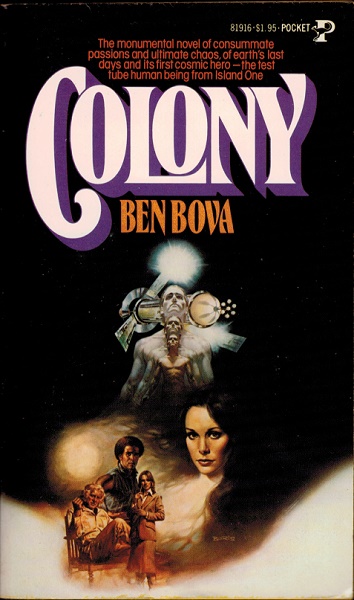
Colony continues the story Ben Bova began in Millennium, following astronaut-turned-administrator Chet Kinsman years later as the head of an orbiting space habitat that has become Earth's only real refuge from a planet buckling under overpopulation, food shortages and unrest. Getting a place in the habitat is a matter of life and death for millions who will never be chosen, and as Earth's governments grow more desperate to control or dismantle the colony outright, Kinsman has to decide how far he'll go to protect the world he's built off-world. Bova later folded both novels together into the omnibus The Kinsman Saga. Part of Ben Bova's Chet Kinsman series.