Loreful
HomeDiscover
Search series, authors…⌘K
Loreful

Reading orders for SF/F series and shared universes — with your place kept in every one.

Explore

UniversesSeriesWorksAuthorsAtlas

Help

FAQAboutSite map

Account & legal

Sign inCreate accountPrivacyTerms

Data

Built on ISFDB, Wikipedia, Wikidata and Open Library. Curated reading orders carry their reasoning on the page; the rest follow publication order. Data sources & licenses

© Loreful · data: ISFDB · CC BY

More like The Five O'Clock Ghost

anchored on:our worldcontemporarymiddle gradefantasyparanormalmystery & detective+2 more

but

Mood

The mood the book leaves you in.

  • The reading experience is propelled by journeys, exploration, and physical risk; excitement and forward momentum dominate over dread or introspection.
  • Joy and loss are deliberately mixed; the resolution grants characters something real while taking something else away, leaving warmth and sorrow together.
  • The book demands work from the reader — dense prose, difficult structure, unfamiliar ideas, or morally uncomfortable material — as part of its intended effect.
  • Grim events, cruelty, or despair dominate the atmosphere, and the book does not soften them with comfort or comic relief.
  • The atmosphere is quietly unsettling — wrongness, unease, and the uncanny pervade the book without necessarily escalating into overt horror.
  • The book is built to move the reader; character feeling is foregrounded and major scenes aim at a strong emotional response.
  • Humor is a primary aim and the prose plays for laughs — comic situations, wit, or dialogue produce sustained comedy, not occasional levity.
  • The book insists that things can improve; effort and decency are shown to matter, and the arc bends toward better outcomes even through hardship.
  • The book teaches as it goes — real facts, history, science, or craft are conveyed in enough depth that learning is part of the reading experience.
  • The book is designed to uplift and motivate, presenting perseverance or achievement in a way that invites the reader to aspire or act.
  • The overall register is cheerful and easygoing; stakes are kept gentle and the book avoids dwelling on pain or dread.
  • Withheld information drives the experience; the book sustains enigmas and secrets the reader wants resolved, whatever its genre.
  • The book is contemplative and inward-looking, giving more weight to thought, memory, and meaning than to external events.
  • The book works as comfort reading — low tension, a soothing pace, and an atmosphere the reader can unwind in.
  • Grief, loss, or melancholy set the dominant register, and the book lets sorrow stand rather than resolving it into comfort.
  • Sustained suspense is the point; the book keeps the reader braced for what happens next through danger, pressure, or impending revelation.
  • Playful invention and charm define the register — fanciful conceits, light absurdity, and a narration that delights in its own oddity.

About

What the story runs on.

  • Stories in which extraterrestrial beings are central — as characters, cultures, or the object of the plot.
  • Stories structured as a quest — a journey undertaken to find, deliver, or destroy something of great import.
  • Stories in which staying alive against nature, catastrophe, or scarcity is the central problem.
  • Stories of lovers kept apart by law, family, faith, or station, where the obstacle to love is the plot.
  • Stories in which a friendship — its making, testing, or loss — is the emotional center.
  • Stories of growing up — a young protagonist crossing from childhood into adult knowledge and responsibility.
  • Stories about who a character truly is — self-discovery, doubled lives, and the search for a self.
  • Stories about mourning — living through the death of a loved one and what loss does to the survivors.
  • Stories in which a buried family truth — hidden parentage, crimes, or shames — surfaces and reorders the present.
  • Stories driven by maneuvering for power — factions, conspiracies, and statecraft conducted in shadow.
  • Stories in which war itself is the subject — combat, occupation, and what warfare does to soldiers and civilians.
  • Stories organized around investigating a killing — the case, the clues, and the pursuit of the killer, in any genre's clothing.

Shelf

Where it sits in the library.

    • Fiction built on magic or other supernatural elements that have no scientific explanation.
    • Secondary-world fantasy at large scale, where the fate of nations or the world turns on the protagonists' struggle.
    • Fantasy set in a recognizably modern city or contemporary world where the supernatural intrudes on everyday life.
    • Fantasy that blends in horror's atmosphere and imagery, keeping a fantastical frame around grim or frightening material.
    • Action-driven fantasy following warriors or rogues with personal stakes against sorcerous threats, rather than world-spanning conflicts.
    • Fantasy set in a real historical period or a close analogue of one, with magic woven into the era.
    • Fantasy in which protagonists cross from the ordinary world into another world through a portal or similar passage.
    • Fiction that retells or reworks a traditional fairy tale in a new form or setting.
    • Fantasy drawing directly on myths, legends, and folklore, retelling them or building on their figures and logic.
    • Fantasy of ghosts, vampires, shapeshifters, psychics, and similar phenomena, usually set in an otherwise ordinary world.
    • Fiction mixing science-fictional trappings with overtly magical or impossible elements in one setting.
    • Low-stakes fantasy emphasizing comfort, community, and everyday pleasures over conflict and peril.
    • Speculative fiction of pervasive moral ambiguity, violence, and cynicism that rejects heroic conventions — fantasy and SF alike.
      • Fiction that extrapolates from science and technology — future societies, space travel, or speculative inventions — within at least nominally natural laws.
      • Science fiction of interstellar scope — starships, galactic polities, and adventure across star systems.
      • Science fiction committed to scientific rigor, where technical plausibility constrains the story.
      • Science fiction centered on armed forces and warfare, told largely from a military point of view.
      • Science fiction of networked, corporate-dominated near futures, pairing high technology with social decay.
      • Science fiction styled on nineteenth-century steam-powered technology, often in a Victorian or pseudo-Victorian setting.
      • Fiction depicting an oppressive or catastrophic society, presented as a warning.
      • Fiction set after civilization's collapse, following survivors in the ruins of the old world.
      • Fiction in which characters move between past and future, and the mechanics or consequences of that travel drive the plot.
      • Fiction exploring a world where a historical event went differently and history diverged from ours.
      • Science fiction about humanity's first encounter and communication with an alien intelligence.
      • Science fiction in which extraterrestrial forces attack or occupy Earth and humanity resists.
      • Fiction whose primary aim is to frighten or unsettle the reader through dread, menace, or the monstrous.
      • Horror of vast, indifferent, incomprehensible entities before which humanity is insignificant, in the Lovecraft tradition.
      • Horror of decaying houses, buried family secrets, and oppressive atmosphere in the Gothic literary tradition.
      • Horror centered on hauntings and the returning dead.
      • Horror located in the mind — paranoia, obsession, and unreliable perception rather than external monsters.
      • Horror built around the reanimated dead and survival amid their outbreaks.
      • Horror defined by explicit, transgressive gore that refuses to cut away from violence.
      • Speculative fiction of the strange and uncanny that resists both natural explanation and standard genre categories.
      • Fiction organized around solving a crime or puzzle, typically following an investigator toward the identification of a culprit.
      • A puzzle-first mystery that lays out clues so the culprit's identity can be deduced before the reveal.
      • Crime fiction of moral ambiguity, fatalism, and hard-edged style, set among the corrupt and the doomed.
      • A mystery following the realistic routines of police work — forensics, interviews, and case-building.
      • A gentle mystery with an amateur sleuth, a small community, and violence kept off the page.
      • A mystery set in a past era, where the investigation works within that period's methods and society.
      • Fast-paced fiction driven by imminent danger, pursuit, or high-stakes conspiracy, built to sustain tension.
      • A thriller of espionage — agents, tradecraft, and intelligence services in conflict.
      • A thriller centered on lawyers and the courtroom, where litigation carries the suspense.
      • A thriller driven by detailed contemporary or near-future technology, often military or scientific.
      • A thriller whose tension comes from mental states and manipulation between characters rather than external action.
      • Fiction whose central plot is a romantic relationship and its development toward an emotionally satisfying resolution.
      • Romance in which one or both partners are supernatural beings, blending fantasy elements into the love story.
      • A fantasy-romance hybrid in which the romantic arc and the fantasy plot carry equal weight.
      • Romance set in a past era, with courtship shaped by the period's society and manners.
      • Romance set in the present day, without supernatural or historical elements.
      • Fiction set in a real past period, where the historical setting materially shapes characters and events.
        • General and literary fiction emphasizing prose style, character interiority, or formal ambition over genre plot conventions.
        • Fiction in a realistic world where magical events occur and are treated as ordinary, in the tradition of Latin American literature.
        • Fiction that ridicules people, institutions, or society in order to criticize them.
        • Fiction of dreamlike, irrational imagery and logic that breaks from realistic representation.
        • Fiction that plays with narrative convention through metafiction, fragmentation, and self-reference.
        • Fiction propelled by journeys, exploration, and physical peril, where action and survival carry the plot.
        • Adventure fiction of ships and seafaring — naval engagements, voyages, and life at sea.
        • Fiction of the American frontier West — gunmen, ranchers, and lawmen, typically in the late nineteenth century.
        • Fiction centered on soldiers, campaigns, and the experience of warfare, historical or imagined.
          • Fiction written primarily to amuse, using comedic situations, wit, or parody as its organizing principle.
            • Multi-generational fiction following a family or dynasty across decades, with inheritance and kinship as the through-line.
              • Fiction whose world runs on explicit game mechanics — levels, stats, and skills that characters can see and exploit.
                • Fiction about costumed or superpowered heroes and their conflicts with comparable villains.

                Practical

                How long a commitment, whether it stands alone, and whether it has finished.

                Tap a chip to ask for it · tap again to rule it out · once more to clear. Numbers show what would be left.

                • Cover of Black Dragon
                  Black Dragon

                  series · 2 books · 1983

                  similar byfriendshipour worldcontemporarymysteriousfantasymystery & detective+1 more

                  R. A. MacAvoy's Tea with the Black Dragon pairs Martha Macnamara, a folk musician searching for her missing daughter, with Mayland Long, a courtly stranger who reveals himself to be a dragon living in human form, as they investigate a computer-fraud scheme in 1980s San Francisco. Its low-key blend of contemporary mystery and gentle fantasy proved popular enough to spawn a sequel, Twisting the Rope, following the same pair into a new case years later.

                • Cover of Secret Series
                  Secret Series

                  series · 5 books · 2007

                  similar byfriendshipcontemporaryour worldmysteriousfantasymystery & detectivemiddle grade+1 more

                • Cover of Menagerie (Tui and Kari Sutherland)
                  Menagerie (Tui and Kari Sutherland)

                  series · 3 books · 2013

                  similar byour worldcontemporaryfantasymiddle grade+5 more

                • Cover of The Halloween Tree
                  The Halloween Tree

                  Ray Bradbury · standalone novel · 1972

                  similar byfriendshipour worldcontemporaryfantasymiddle grade

                  Eight boys gather on Halloween night to trick-or-treat with their ninth friend, Pipkin, only Pipkin never shows, having vanished on some errand that may cost him his life. A strange, black-robed guide named Moundshroud appears to lead the boys after him, and the chase turns into a journey through the history of the holiday itself: ancient Egypt, druidic Britain, Rome, medieval Paris, and the Mexican Day of the Dead, each stop peeling back another layer of how humanity has faced death and the dark. Ray Bradbury's Halloween novel doubles as a compressed history of the holiday's origins.

                • Cover of The Ocean at the End of the Lane
                  The Ocean at the End of the Lane

                  Neil Gaiman · standalone novel · 2013

                  similar byfriendshipour worldcontemporaryfantasyfirst person

                  A seven year old farm boy becomes friends with an eleven year old neighbor girl, who he discovers is ancient and powerful and intervenes when a nonhuman entity attempts to make a home in earthly reality.

                • Cover of Girl Meets Ghost
                  Girl Meets Ghost

                  series · 3 books · 2013

                  similar byour worldcontemporaryparanormal+7 more

                • Cover of The Cavendish Home for Boys and Girls
                  The Cavendish Home for Boys and Girls

                  Claire Legrand · standalone novel · 2012

                  similar byfriendshipour worldcontemporarymysteriousfantasymystery & detectivemiddle grade

                  Practically-perfect twelve-year-old Victoria Wright must lie, sneak, and break the rules when her investigation of the disappearance of her best--and only--friend, Lawrence, reveals dark secrets about her town and the orphanage run by the reclusive Mrs. Cavendish.

                • Cover of Pip Bartlett's Guides
                  Pip Bartlett's Guides

                  series · 3 books · 2015

                  similar byfriendshiplightheartedour worldcontemporaryfantasymiddle grade

                • Cover of Joe Grey
                  Joe Grey

                  series · 22 books · 1996

                  completed

                  similar bycontemporarymurder investigationmystery & detective+4 more

                • Cover of Whatshisface
                  Whatshisface

                  Gordon Korman · standalone novel · 2018

                  similar byfriendshiplightheartedour worldcontemporaryparanormalmiddle grade+1 more

                  When 12-year-old Cooper Vega moves for the third time in five years, he receives a state-of-the-art smartphone to help him stay in touch with old friends. He's had phones before, but this one is buggy and unpredictable. When a boy named Roderick Northrop communicates with him through the phone, Cooper realizes that his phone isn't buggy at all; the thing is haunted!

                • Cover of The Unseen
                  The Unseen

                  Zilpha Keatley Snyder · standalone novel · 2004

                  similar byfriendshipour worldcontemporarymysteriousfantasymiddle grade

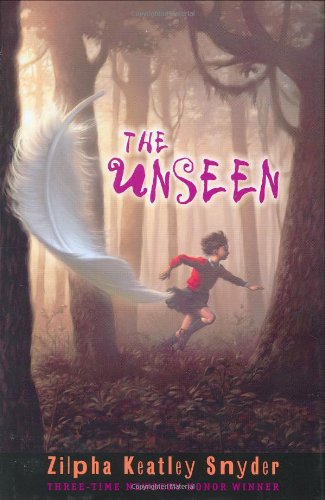
                  Xandra Hobson has always been fascinated by magic. So when she rescues a beautiful wounded bird, she is convinced that the glowing white feather it leaves behind must be magical. When she brings the feather to school, she is surprised to find that Belinda is interested in it, too. Belinda is a weird girl whom everybody makes fun of. Xandra doesn't want to be seen with her, but Belinda seems to know something about the feather--so Xandra decides to befriend her. Belinda calls the feather a key.But a key to what? And how does it work? When Xandra tries to use the key, she becomes aware of an unseen world, full of phantoms. Some are soft and cuddly, like the young animals she has rescued. But others are terrifying monsters. Could the key's magic be evil? Xandra needs Belinda to help her explore the unseen, but she also needs to learn to help herself if the key is to become a gift and not a nightmare.From the Hardcover edition.

                • Cover of The Ghost of Graylock
                  The Ghost of Graylock

                  Dan Poblocki · standalone novel · 2012

                  similar byfriendshipour worldcontemporarymysteriousmystery & detectivemiddle grade+1 more

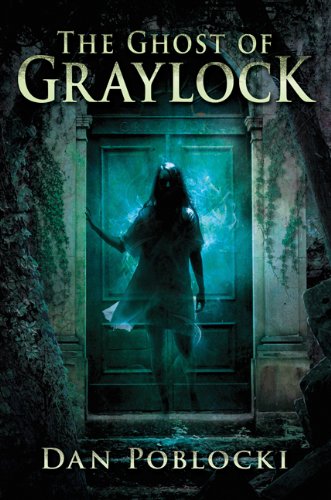
                  Staying with their aunts over the summer, Neil Cady, his sister Bree, and their new friends Wesley and Eric, set out to explore Greylock Hall, an abandoned psychiatric hospital which is supposed to be haunted by the ghost of Nurse Janet. Staying with their aunts over the summer, Neil Cady, his sister, Bree, and their new friends Wesley and Eric set out to explore Graylock Hall, an abandoned psychiatric hospital which is rumored to be haunted by the ghost of Nurse Janet.

                • Cover of The Mysterious Benedict Society milieu
                  The Mysterious Benedict Society milieu

                  series · 4 books · 2007

                  similar byfriendshipcontemporaryour worldmysteriousmystery & detectivemiddle grade

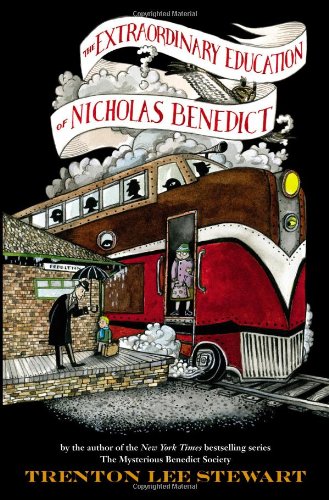
                  The Extraordinary Education of Nicholas Benedict is Trenton Lee Stewart's prequel to his Mysterious Benedict Society books, tracing the childhood of Mr. Benedict, the eccentric mentor of the main series' four child protagonists, before he became the man who recruits them to stop his twin brother Ledroptha Curtain from conquering the world. It was published in 2012, several years after the original trilogy began and a year after a 2011 companion volume. It can be read independently of the main quartet, though it draws its stakes from what Benedict becomes in those books.

                • Cover of Philippa Fisher
                  Philippa Fisher

                  series · 3 books · 2008

                  similar byfriendshiplightheartedcontemporaryour worldfantasy+1 more

                • Cover of The Haunted Library
                  The Haunted Library

                  series · 10 books · 2014

                  similar byfriendshipcontemporarylighthearted+4 more

                • Cover of Elliot's Park
                  Elliot's Park

                  series · 3 books · 2008

                  similar byfriendshiplightheartedour worldcontemporary+2 more

                • Cover of More Than Magic
                  More Than Magic

                  Kathryn Lasky · standalone novel · 2016

                  similar byfriendshiplightheartedour worldcontemporaryfantasymiddle grade

                  Ryder Holmsby is the same age as Rory, the popular TV cartoon character her animator parents created. Ryder and Rory are alike bold and brave! But Ryder is a bit lonely: Mom passed away a couple of years ago, and Dad is dating a woman with snooty teenage daughters. Ryder doesn t fit in with them at all. And then: Shazam! Rory jumps out of the TV into Ryder s bedroom to tell her that the TV studio behind her parents show is trying to turn Rory into a dopey princess no more adventures. She needs Ryder s help! The two girls team up with a crew of animated and real-life friends to save the day in both worlds.

                • Cover of Rotten School
                  Rotten School

                  series · 16 books · 2005

                  similar byfriendshiplightheartedcontemporaryour worldfirst person

                  Rotten School is a children's book series by R. L. Stine concerning the adventures of children at a boarding school. Each book is written from the perspective of Bernie Bridges, a fourth-grader who lives in his dormitory at Rotten School with his pals Belzer, Feenman and Crench, Beast, Chipmunk, Nosebleed, Billy The Brain and others. Their rivals are Sherman Oaks, a rich spoiled brat, and his buddies Wes Updood and Joe Sweety, from the Nyce House dormitory. Bernie has a crush on a girl by the name of April–May June. Bernie tries to earn money by any means, by selling stuff, stealing from his friends and making bets. Rotten School, much like R. L. Stine's pre-Fear Street works, is a light-hearted comedy instead of horror.

                • Cover of The Homework Machine
                  The Homework Machine

                  series · 2 books · 2006

                  similar byfriendshipcontemporarymiddle grade+4 more

                • Cover of Sunshine
                  Sunshine

                  Robin McKinley · standalone novel · 2003

                  similar byour worldcontemporaryfantasyparanormalfirst person+1 more

                  From the front flap of the Berkley HB first edition: "There are places in the world where darkness rules, where it's unwise to walk. Sunshine knew that. But there hadn't been any trouble out at the lake for years, and she needed a place to be alone for a while. Unfortunately, she wasn't alone. She never heard them coming. Of course you don't, when they're vampires. They took her clothes and sneakers. They dressed her in a long red gown. And they shackled her to the wall of an abandoned mansion - within easy reach of a figure stirring in the moonlight. She knows that he is a vampire. She knows that she's to be his dinner, and that when he is finished with her, she will be dead. Yet, as dawn breaks, she finds that he has not attempted to harm her. And now it is he who needs her to help him survive the day..."

                • Cover of Magic Can Be Murder
                  Magic Can Be Murder

                  Vivian Vande Velde · standalone novel · 2000

                  similar byour worldcontemporarymurder investigationmysteriousfantasymystery & detective+1 more

                  Set apart from other people because of their unusual abilities, Nola, a teenage witch, and her mother find themselves in great danger when Nola uses her power to call up images and witnesses a murder.

                • Cover of The Sisters Grimm
                  The Sisters Grimm

                  series · 9 books · 2005

                  similar bycontemporaryour worldfantasymystery & detectivemiddle grade+2 more

                  The Sisters Grimm is a children's fantasy series written by Michael Buckley and illustrated by Peter Ferguson. The series is partially based on the works and lives of the Brothers Grimm, with the titular protagonists, Sabrina Grimm and Daphne Grimm, being their fictional descendants, and the supporting cast featuring many characters from the Grimms’ collection of fairytales.

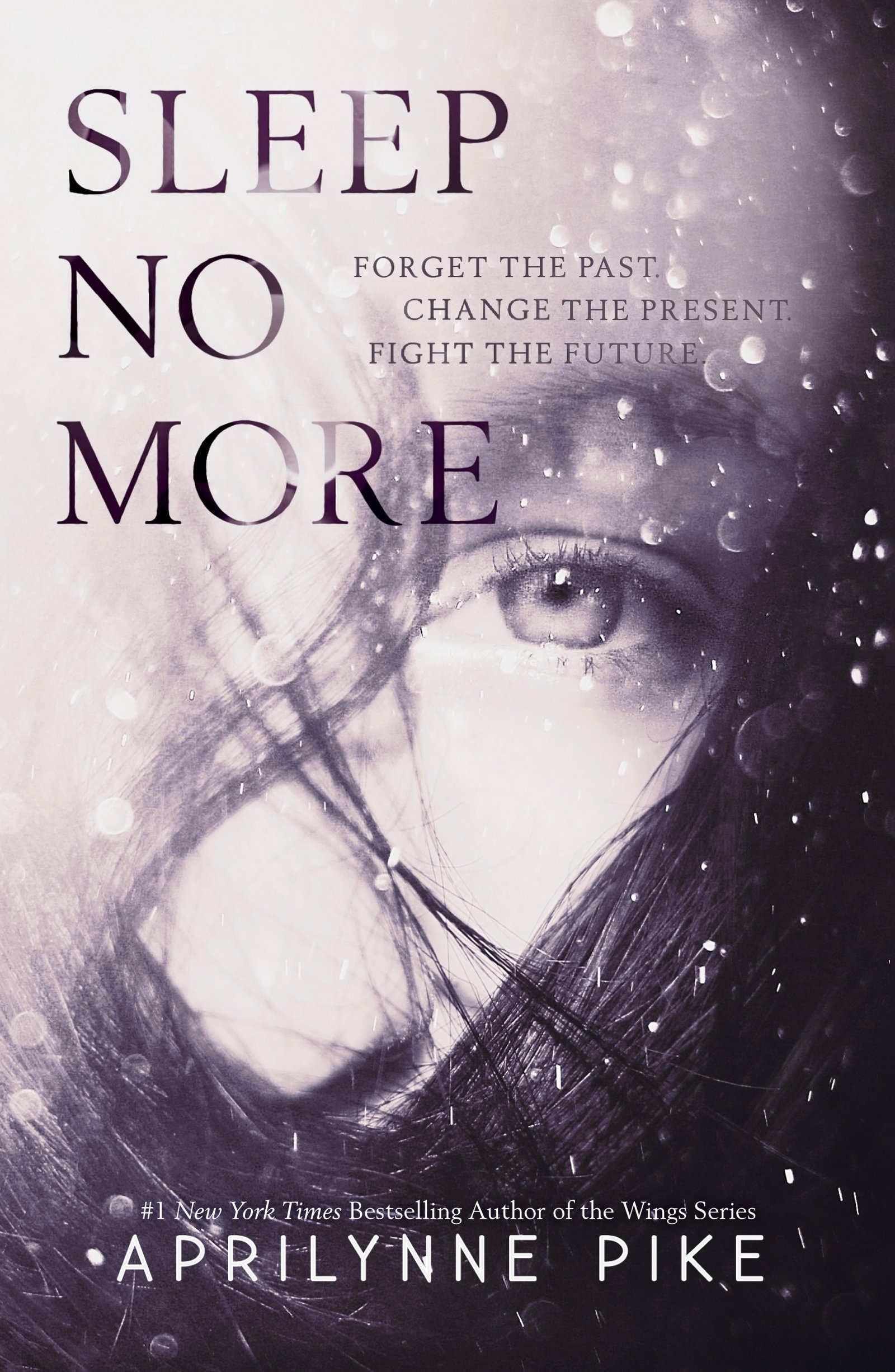
                • Cover of Sleep No More
                  Sleep No More

                  Aprilynne Pike · standalone novel · 2014

                  similar byour worldcontemporarymurder investigationmysteriousfantasyparanormalmystery & detective

                  "Charlotte is a sixteen-year-old Oracle who is not supposed to interfere with her visions of the future, but when she foresees a classmate's murder, she realizes she must break the rules to stop the killer"-- Charlotte is a 16-yr-old Oracle who is not supposed to interfere with her visions of the future, but when she foresees a classmate's murder, she realizes she must break the rules to stop the killer. The plot contains profanity and graphic violence.

                • Cover of Shades of London
                  Shades of London

                  series · 4 books · 2011

                  similar bycontemporarymurder investigationmystery & detective+6 more