Loreful
HomeDiscover
Search series, authors…⌘K
Loreful

Reading orders for SF/F series and shared universes — with your place kept in every one.

Explore

UniversesSeriesWorksAuthorsAtlas

Help

FAQAboutSite map

Account & legal

Sign inCreate accountPrivacyTerms

Data

Built on ISFDB, Wikipedia, Wikidata and Open Library. Curated reading orders carry their reasoning on the page; the rest follow publication order. Data sources & licenses

© Loreful · data: ISFDB · CC BY

More like The Ghost Bride

anchored on:historical fantasyafterlife & underworld

but

Mood

The mood the book leaves you in.

  • The reading experience is propelled by journeys, exploration, and physical risk; excitement and forward momentum dominate over dread or introspection.
  • Joy and loss are deliberately mixed; the resolution grants characters something real while taking something else away, leaving warmth and sorrow together.
  • The book demands work from the reader — dense prose, difficult structure, unfamiliar ideas, or morally uncomfortable material — as part of its intended effect.
  • Grim events, cruelty, or despair dominate the atmosphere, and the book does not soften them with comfort or comic relief.
  • The atmosphere is quietly unsettling — wrongness, unease, and the uncanny pervade the book without necessarily escalating into overt horror.
  • The book is built to move the reader; character feeling is foregrounded and major scenes aim at a strong emotional response.
  • Humor is a primary aim and the prose plays for laughs — comic situations, wit, or dialogue produce sustained comedy, not occasional levity.
  • The book insists that things can improve; effort and decency are shown to matter, and the arc bends toward better outcomes even through hardship.
  • The book teaches as it goes — real facts, history, science, or craft are conveyed in enough depth that learning is part of the reading experience.
  • The book is designed to uplift and motivate, presenting perseverance or achievement in a way that invites the reader to aspire or act.
  • The overall register is cheerful and easygoing; stakes are kept gentle and the book avoids dwelling on pain or dread.
  • Withheld information drives the experience; the book sustains enigmas and secrets the reader wants resolved, whatever its genre.
  • The book is contemplative and inward-looking, giving more weight to thought, memory, and meaning than to external events.
  • The book works as comfort reading — low tension, a soothing pace, and an atmosphere the reader can unwind in.
  • Grief, loss, or melancholy set the dominant register, and the book lets sorrow stand rather than resolving it into comfort.
  • Sustained suspense is the point; the book keeps the reader braced for what happens next through danger, pressure, or impending revelation.
  • Playful invention and charm define the register — fanciful conceits, light absurdity, and a narration that delights in its own oddity.

About

What the story runs on.

  • Stories structured as a quest — a journey undertaken to find, deliver, or destroy something of great import.
  • Stories in which staying alive against nature, catastrophe, or scarcity is the central problem.
  • Stories of lovers kept apart by law, family, faith, or station, where the obstacle to love is the plot.
  • Stories in which a friendship — its making, testing, or loss — is the emotional center.
  • Stories of growing up — a young protagonist crossing from childhood into adult knowledge and responsibility.
  • Stories about who a character truly is — self-discovery, doubled lives, and the search for a self.
  • Stories about mental unraveling — descent into madness, delusion, and minds at war with themselves.
  • Stories about mourning — living through the death of a loved one and what loss does to the survivors.
  • Stories in which a buried family truth — hidden parentage, crimes, or shames — surfaces and reorders the present.
  • Stories driven by maneuvering for power — factions, conspiracies, and statecraft conducted in shadow.
  • Stories in which war itself is the subject — combat, occupation, and what warfare does to soldiers and civilians.
  • Stories organized around investigating a killing — the case, the clues, and the pursuit of the killer, in any genre's clothing.

Shelf

Where it sits in the library.

    • Fiction built on magic or other supernatural elements that have no scientific explanation.
    • Secondary-world fantasy at large scale, where the fate of nations or the world turns on the protagonists' struggle.
    • Fantasy set in a recognizably modern city or contemporary world where the supernatural intrudes on everyday life.
    • Fantasy that blends in horror's atmosphere and imagery, keeping a fantastical frame around grim or frightening material.
    • Action-driven fantasy following warriors or rogues with personal stakes against sorcerous threats, rather than world-spanning conflicts.
    • Fantasy set in a real historical period or a close analogue of one, with magic woven into the era.
    • Fantasy in which protagonists cross from the ordinary world into another world through a portal or similar passage.
    • Fiction that retells or reworks a traditional fairy tale in a new form or setting.
    • Fantasy drawing directly on myths, legends, and folklore, retelling them or building on their figures and logic.
    • Fantasy of ghosts, vampires, shapeshifters, psychics, and similar phenomena, usually set in an otherwise ordinary world.
    • Fiction mixing science-fictional trappings with overtly magical or impossible elements in one setting.
    • Low-stakes fantasy emphasizing comfort, community, and everyday pleasures over conflict and peril.
    • Speculative fiction of pervasive moral ambiguity, violence, and cynicism that rejects heroic conventions — fantasy and SF alike.
      • Fiction that extrapolates from science and technology — future societies, space travel, or speculative inventions — within at least nominally natural laws.
      • Science fiction of interstellar scope — starships, galactic polities, and adventure across star systems.
      • Science fiction committed to scientific rigor, where technical plausibility constrains the story.
      • Science fiction centered on armed forces and warfare, told largely from a military point of view.
      • Science fiction of networked, corporate-dominated near futures, pairing high technology with social decay.
      • Science fiction styled on nineteenth-century steam-powered technology, often in a Victorian or pseudo-Victorian setting.
      • Fiction depicting an oppressive or catastrophic society, presented as a warning.
      • Fiction set after civilization's collapse, following survivors in the ruins of the old world.
      • Fiction in which characters move between past and future, and the mechanics or consequences of that travel drive the plot.
      • Fiction exploring a world where a historical event went differently and history diverged from ours.
      • Science fiction about humanity's first encounter and communication with an alien intelligence.
      • Science fiction in which extraterrestrial forces attack or occupy Earth and humanity resists.
      • Fiction whose primary aim is to frighten or unsettle the reader through dread, menace, or the monstrous.
      • Horror of vast, indifferent, incomprehensible entities before which humanity is insignificant, in the Lovecraft tradition.
      • Horror of decaying houses, buried family secrets, and oppressive atmosphere in the Gothic literary tradition.
      • Horror centered on hauntings and the returning dead.
      • Horror located in the mind — paranoia, obsession, and unreliable perception rather than external monsters.
      • Horror built around the reanimated dead and survival amid their outbreaks.
      • Horror defined by explicit, transgressive gore that refuses to cut away from violence.
      • Speculative fiction of the strange and uncanny that resists both natural explanation and standard genre categories.
      • Fiction organized around solving a crime or puzzle, typically following an investigator toward the identification of a culprit.
      • A puzzle-first mystery that lays out clues so the culprit's identity can be deduced before the reveal.
      • Crime fiction of moral ambiguity, fatalism, and hard-edged style, set among the corrupt and the doomed.
      • A mystery following the realistic routines of police work — forensics, interviews, and case-building.
      • A gentle mystery with an amateur sleuth, a small community, and violence kept off the page.
      • A mystery set in a past era, where the investigation works within that period's methods and society.
      • Fast-paced fiction driven by imminent danger, pursuit, or high-stakes conspiracy, built to sustain tension.
      • A thriller of espionage — agents, tradecraft, and intelligence services in conflict.
      • A thriller centered on lawyers and the courtroom, where litigation carries the suspense.
      • A thriller driven by detailed contemporary or near-future technology, often military or scientific.
      • A thriller whose tension comes from mental states and manipulation between characters rather than external action.
      • Fiction whose central plot is a romantic relationship and its development toward an emotionally satisfying resolution.
      • Romance in which one or both partners are supernatural beings, blending fantasy elements into the love story.
      • A fantasy-romance hybrid in which the romantic arc and the fantasy plot carry equal weight.
      • Romance set in a past era, with courtship shaped by the period's society and manners.
      • Romance set in the present day, without supernatural or historical elements.
      • Fiction set in a real past period, where the historical setting materially shapes characters and events.
        • General and literary fiction emphasizing prose style, character interiority, or formal ambition over genre plot conventions.
        • Fiction in a realistic world where magical events occur and are treated as ordinary, in the tradition of Latin American literature.
        • Fiction that ridicules people, institutions, or society in order to criticize them.
        • Fiction of dreamlike, irrational imagery and logic that breaks from realistic representation.
        • Fiction that plays with narrative convention through metafiction, fragmentation, and self-reference.
        • Fiction propelled by journeys, exploration, and physical peril, where action and survival carry the plot.
        • Adventure fiction of ships and seafaring — naval engagements, voyages, and life at sea.
        • Fiction of the American frontier West — gunmen, ranchers, and lawmen, typically in the late nineteenth century.
        • Fiction centered on soldiers, campaigns, and the experience of warfare, historical or imagined.
          • Fiction written primarily to amuse, using comedic situations, wit, or parody as its organizing principle.
            • Multi-generational fiction following a family or dynasty across decades, with inheritance and kinship as the through-line.
              • Fiction whose world runs on explicit game mechanics — levels, stats, and skills that characters can see and exploit.
                • Fiction about costumed or superpowered heroes and their conflicts with comparable villains.

                Practical

                How long a commitment, whether it stands alone, and whether it has finished.

                Tap a chip to ask for it · tap again to rule it out · once more to clear. Numbers show what would be left.

                • Cover of My Brother's Keeper
                  My Brother's Keeper

                  Tim Powers · standalone novel · 2023

                  similar byeeriehistorical fantasy19th century+1 more

                  This is a ghost story. It is a story about werewolves, and things that go bump in the night. It is a story of an ill-fated land, the pathless moors of Northern England so well chronicled in Wuthering Heights. And it is the story of a real family whose destiny it is to deal with this darkly glamorous and dangerous world. When young Emily Brontë helps a wounded man she finds at the foot of an ancient pagan shrine in the remote Yorkshire moors, her life becomes contentiously entwined with his. He is Alcuin Curzon, embittered member of a sect working to eradicate the resurgent plague of lycanthropy in Europe and northern England. But Emily’s father, curate of the Haworth village church, is responsible for having unwittingly brought a demonic werewolf god to Yorkshire forty years ago—and it is taking possession of Emily’s beloved but foolish and dissolute brother. Curzon must regard Emily’s family as a dire threat. In spite of being at deadly odds, Emily and Curzon find themselves thrown together in fighting werewolves, confronting pagan gods, even saving each other from the lures of moorland demons. And in a final battle that sweeps from the haunted village of Haworth to a monstrous shrine far out on the moors, the two of them must be reluctant allies against an ancient power that seems likely to take their souls as well as their lives.

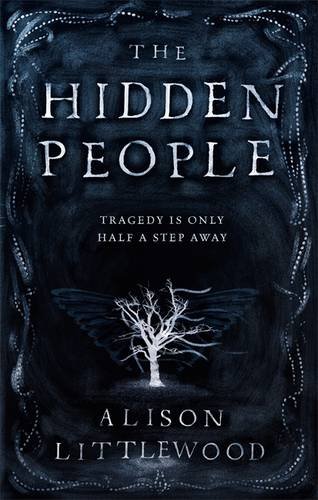
                • Cover of The Hidden People
                  The Hidden People

                  Alison Littlewood · standalone novel · 2016

                  similar byeeriehistorical fantasy19th century+1 more

                  The Hidden People is a historical fantasy and horror novel by English writer Alison Littlewood, first published in October 2016 in the United Kingdom by Jo Fletcher Books. It is based on the 1895 incident in County Tipperary, Ireland, where Bridget Cleary was burnt alive by her husband, who believed she was a fairy changeling.

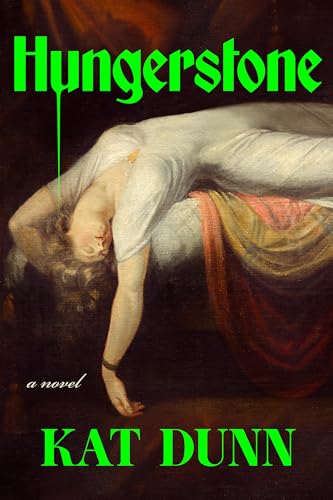
                • Cover of Hungerstone
                  Hungerstone

                  Kat Dunn · standalone novel · 2025

                  similar byeeriemarriage of convenience19th century+1 more

                  An orphaned, emotionally isolated heiress with no money marries a cunning steel tycoon for a chance to build back her life. As their relationship progresses, she grows increasingly disturbed by her own desires, which are brought to the forefront by the mysterious woman they rescue upon their arrival to their new, decrepit, countryside estate. Set during the English industrial revolution, inspired by Sheridan Le Fanu's Carmilla (1872).

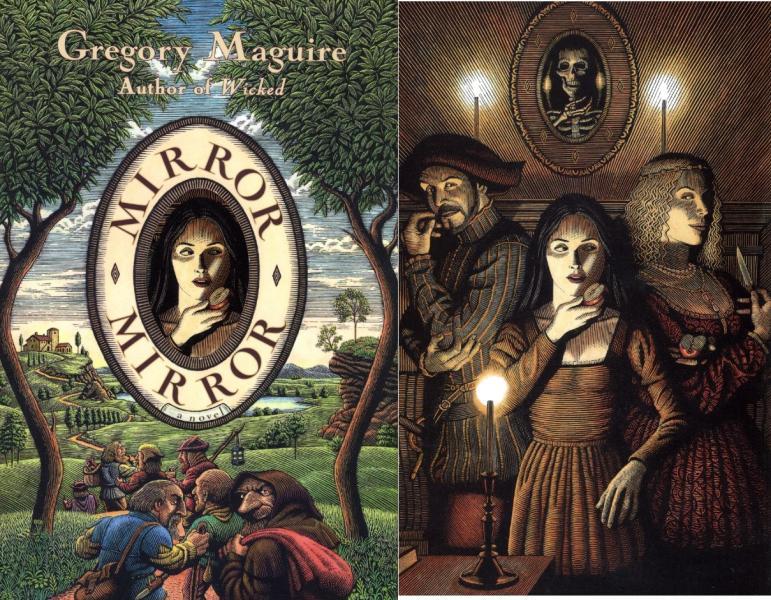
                • Cover of Mirror Mirror
                  Mirror Mirror

                  Gregory Maguire · standalone novel · 2003

                  similar byhistorical fantasyfamily secretsour world+1 more

                  Mirror, Mirror is a fantasy novel by American writer Gregory Maguire, published in 2003. The novel is a revisionist version of the tale of Snow White set in rural Italy and featuring the historical Borgia family, with Lucrezia Borgia in the role of the Evil Queen.

                • Cover of The Romancist and Novelist's Library
                  The Romancist and Novelist's Library

                  series · 16 books · 1764

                  similar by+3 more

                • Cover of Ghosts and Shadows
                  Ghosts and Shadows

                  series · 2 books · 2015

                  similar byeeriefamily secrets+2 more

                • Cover of The Haunted Hotel
                  The Haunted Hotel

                  Wilkie Collins · standalone novel · 1878

                  similar byeerie19th century+1 more

                  Lord Montbarry breaks off his engagement to Agnes Lockwood and marries the Countess Narona, with whom he lives in a Venetian palace. When he dies, Agnes Lockwood becomes suspicious of the circumstances, and goes to Venice with other family members to investigate. Staying in Montbarry's former residence, they experience a haunting.

                • Cover of Hiddensee
                  Hiddensee

                  Gregory Maguire · standalone novel · 2017

                  similar byhistorical fantasy19th century+1 more

                  Presents an imaginative tale rooted in early nineteenth-century German Romanticism that explores parallels between the origin legend of the famous Nutcracker with the life of Drosselmeier, the toymaker who carves him.

                • Cover of Fitcher's Brides
                  Fitcher's Brides

                  Gregory Frost · standalone novel · 2002

                  similar byeeriehistorical fantasy19th centuryour world+1 more

                  In a retelling of the Bluebeard and Fitcher's Bird fairy tales, a sinister preacher who is reputed to have had many wives manipulates a town with predictions about the end of the world and targets Vernelia, the eldest of three sisters, for his newest bride.

                • Cover of A Skinful of Shadows
                  A Skinful of Shadows

                  Frances Hardinge · standalone novel · 2017

                  similar byeeriehistorical fantasyparanormal+1 more

                  A Skinful of Shadows is a 2017 children's or young adults' paranormal historical fiction novel by Frances Hardinge. Her seventh novel, it revolves around Makepeace Felmotte, a girl with the inherited ability to see and absorb ghosts. It is set during the First English Civil War, and in particular the Siege of Oxford. The book was received positively by critics and was short-listed for the Waterstones Book of the Year 2017.

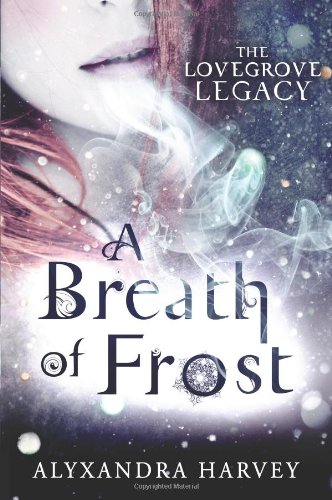
                • Cover of The Lovegrove Legacy / The Witches of London Trilogy
                  The Lovegrove Legacy / The Witches of London Trilogy

                  series · 3 books · 2014

                  similar byhistorical fantasy19th century+3 more

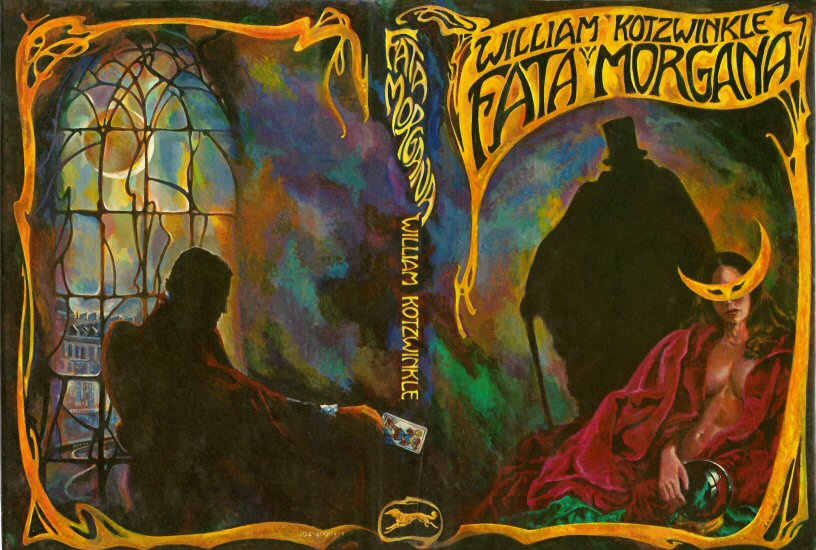
                • Cover of Fata Morgana
                  Fata Morgana

                  William Kotzwinkle · standalone novel · 1977

                  similar byeeriehistorical fantasy19th century

                  From the flaps of the Knopf first edition: "In Fata Morgana a celebrated novelist turns conjurer to bring us a supremely theatrical magic show - a rich exotic entertainment of crime, treble-trickery, and legerdermain, with Europe as its stage and the golden leaders of the Uppercrust and the Underworld as its players. The time and place are Paris, 1861 - the extravagant capital of Louis Napoleon and his Empress Eugenie, the gaudy, blatant public arena of Great Whores and fabulous charlatans; the treacherous private labyrinth of Police Inspector Paul Picard and the human prey he stalks. Picard is a hunter of the purest instincts, with an appetite for the ladies, a taste for lemon tarts, and a policeman's nose for hard realities. As the book opens he is on his way to the Opera, for music and murder: among the guests is as elegant a killer as ever sliced his way through Parisian high society, and on his arm is the young woman he means to decapitate tonight. A strange encounter with them precipitates Picard into a new and (apparently) trivial assignment - a case that is fated to disrupt and then transform, irrevocably, his life. At first it seems routine: a man - Ric Lazare - has recently arrived in Paris and in a short time has captured the jaded attention and the favors of the entire city. His aura of opulence, his bewitching wife, Rene, and, above all, his unearthly fortune-telling machine have won him entree to the salons (and the bank vaults) of the most dazzling leaders of society, including, it is whispered, the Emperor himself. But, who - and what - is Lazare? Is he a crook? A master of illusions? A real magician? Or - more terrible - a reincarnation from an Older World? To find the answer, Picard must follow the thread of the man's past. His quest takes him from Paris to Vienna, Nuremberg, Budapest, and on to the dark, menacing valleys and steppes of eastern Hungary, uncovering a trail of deceit and violent death: a fabled toy maker driven to destroy himself and a lifetime's priceless creations... a man ruthlessly killed over a dice game... a beautiful woman purchased at auction, then stolen away... the sudden death of a priest. Beset by intimations of his own mortality, by a sense of inexplicable entrapment in a malign world of mechanical and deadly playthings, by a slowly suffocating conviction that he is undertaking a journey he has made before, Picard, caught up in the quickening pace, returns to Paris - and to a terrifying confrontation with his quarry and his own destiny."

                • Cover of The Turn of the Screw
                  The Turn of the Screw

                  series · 3 books · 1898

                  similar by19th century+1 more

                  Henry James's 1898 novella The Turn of the Screw follows a governess at an isolated English country house who becomes convinced that the two children in her care are being stalked by malevolent ghosts, narrated entirely through her own increasingly uncertain account. Its ambiguity over whether the haunting is real has made it one of the most discussed ghost stories in English literature and prompted later works built around it, including Michael Hastings's The Nightcomers, a 1971 prequel imagining events at the house before the governess's arrival. A stage adaptation of James's original text also exists.

                • Cover of The Borden Dispatches
                  The Borden Dispatches

                  series · 2 books · 2014

                  similar byfamily secrets19th century+2 more

                • Cover of The House of the Seven Gables
                  The House of the Seven Gables

                  Nathaniel Hawthorne · standalone novel · 1851

                  similar byeeriefamily secrets19th centuryour world

                  The House of the Seven Gables: A Romance is a Gothic novel written beginning in mid-1850 by American author Nathaniel Hawthorne and published in April 1851 by Ticknor and Fields of Boston. The novel follows a New England family and their ancestral home. In the book, Hawthorne explores themes of guilt, retribution, and atonement, and colors the tale with suggestions of the supernatural and witchcraft. The setting for the book was inspired by the Turner-Ingersoll Mansion, a gabled house in Salem, Massachusetts, belonging to Hawthorne's cousin Susanna Ingersoll, as well as ancestors of Hawthorne who had played a part in the Salem Witch Trials of 1692. The book was well received upon publication and has been adapted several times to film and television.

                • Cover of Chime
                  Chime

                  Franny Billingsley · standalone novel · 2011

                  similar byeeriehistorical fantasyfamily secretsour world+1 more

                  In the early twentieth century in Swampsea, seventeen-year-old Briony, who can see the spirits that haunt the marshes around their town, feels responsible for her twin sister's horrible injury until a young man enters their lives and exposes secrets that even Briony does not know about.

                • Cover of The Winter Witch
                  The Winter Witch

                  Paula Brackston · standalone novel · 2013

                  similar byeeriehistorical fantasy19th century

                  Mute fledgling witch Morgana is married for her safety to a kind farmer in the mountains of Wales before she is targeted by townspeople who are being manipulated by a dark force that compels Morgana to harness her powers.

                • Cover of Something Strange and Deadly / Eleanor Fitt
                  Something Strange and Deadly / Eleanor Fitt

                  series · 4 books · 2012

                  similar byhistorical fantasy19th century+2 more

                • Cover of The Night Gardener
                  The Night Gardener

                  Jonathan Auxier · standalone novel · 2014

                  similar byeeriefamily secrets19th century

                  From copyright page: Irish orphans Molly, fourteen, and Kip, ten, travel to England to work as servants in a crumbling manor house where nothing is quite what it seems to be, and soon the siblings are confronted by a mysterious stranger and secrets of the cursed house.

                • Cover of The Facts of Life
                  The Facts of Life

                  Graham Joyce · standalone novel · 2002

                  similar byhistorical fantasyfamily secrets+1 more

                  The Facts of Life is a historical fantasy novel by English writer Graham Joyce. It was first published in the United Kingdom in December 2002 by Victor Gollancz Ltd, and in June 2003 in the United States by the Atria Publishing Group. It is set in Coventry, England after the end of World War II, with flashbacks to the Coventry Blitz when the Luftwaffe bombed the city on 14 November 1940.

                • Cover of The Peculiarities
                  The Peculiarities

                  David Liss · standalone novel · 2021

                  similar byeeriehistorical fantasyfamily secrets

                  All of his life, Thomas Thresher has been free of obligation and responsibility, but that is over now. He is a twenty-three-year-old man whose best days are behind him. Thomas's older brother Walter has trapped him in a tedious clerical job at the family bank in London, and Thomas is expected to wed a wealthy young woman in whom he has no interest. But Thomas has more serious problems than those of a disaffected young man. There are irregularities at the bank he cannot explain. His childhood friend has mysteriously turned up dead. Worse, a verdant skin malady has infected him: leaves have begun sprouting on his skin. Thomas must conclude that it is due to the long-rumored Peculiarities. London's famous grey fog has been concealing a rash of unnatural afflictions--and worse, the murderous Elegants. As Thomas grows leafier, the conspiracies surrounding him become more apparent. He cannot determine whom to trust: his own family; his banking co-workers and superiors; the beautiful widow of his companion; the woman he is to marry. Or perhaps a lycanthropic medium; the members of a secret occult society...or even Aleister Crowley.

                • Cover of Haunted Hearts Legacy
                  Haunted Hearts Legacy

                  series · 3 books · 2016

                  similar byeerie19th century+3 more

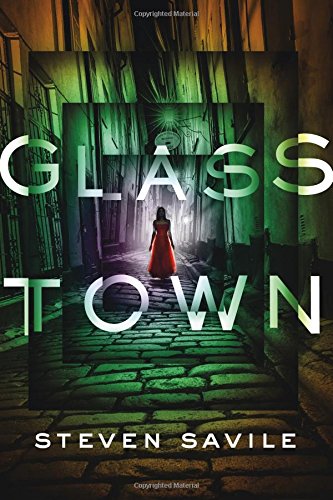
                • Cover of Glass Town
                  Glass Town

                  Steven Savile · standalone novel · 2017

                  similar byeeriehistorical fantasyfamily secretsour world

                  "In 1924, two brothers both loved Eleanor Raines, a promising young actress from the East End of London. She disappeared during the filming of Alfred Hitchcock's debut, Number 13, which itself is now lost. It was the crime of the age, capturing the imagination of the city: the beautiful actress never seen again, and the gangster who disappeared the same day. Generations have passed. Everyone involved is long dead. But even now their dark, twisted secret threatens to tear the city apart. Joshua Raines is about to enter a world of macabre beauty, of glittering celluloid and the silver screen, of illusion and deception, of impossibly old gangsters and the fiendish creatures they command, and most frighteningly of all, of genuine magic." --

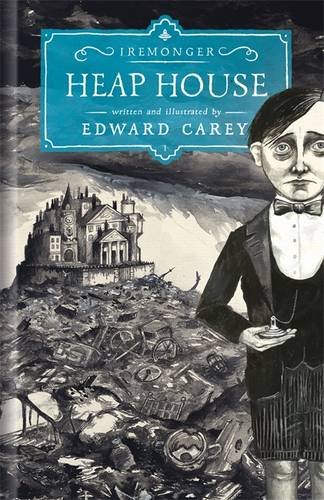
                • Cover of The Iremonger Trilogy
                  The Iremonger Trilogy

                  series · 3 books · 2013

                  similar byeeriefamily secrets19th century+1 more