Loreful
HomeDiscover
Search series, authors…⌘K
Loreful

Reading orders for SF/F series and shared universes — with your place kept in every one.

Explore

UniversesSeriesWorksAuthorsAtlas

Help

FAQAboutSite map

Account & legal

Sign inCreate accountPrivacyTerms

Data

Built on ISFDB, Wikipedia, Wikidata and Open Library. Curated reading orders carry their reasoning on the page; the rest follow publication order. Data sources & licenses

© Loreful · data: ISFDB · CC BY

More like The Hexing

anchored on:contemporary

but

Mood

The mood the book leaves you in.

  • The reading experience is propelled by journeys, exploration, and physical risk; excitement and forward momentum dominate over dread or introspection.
  • Joy and loss are deliberately mixed; the resolution grants characters something real while taking something else away, leaving warmth and sorrow together.
  • The book demands work from the reader — dense prose, difficult structure, unfamiliar ideas, or morally uncomfortable material — as part of its intended effect.
  • Grim events, cruelty, or despair dominate the atmosphere, and the book does not soften them with comfort or comic relief.
  • The atmosphere is quietly unsettling — wrongness, unease, and the uncanny pervade the book without necessarily escalating into overt horror.
  • The book is built to move the reader; character feeling is foregrounded and major scenes aim at a strong emotional response.
  • Humor is a primary aim and the prose plays for laughs — comic situations, wit, or dialogue produce sustained comedy, not occasional levity.
  • The book insists that things can improve; effort and decency are shown to matter, and the arc bends toward better outcomes even through hardship.
  • The book teaches as it goes — real facts, history, science, or craft are conveyed in enough depth that learning is part of the reading experience.
  • The book is designed to uplift and motivate, presenting perseverance or achievement in a way that invites the reader to aspire or act.
  • The overall register is cheerful and easygoing; stakes are kept gentle and the book avoids dwelling on pain or dread.
  • Withheld information drives the experience; the book sustains enigmas and secrets the reader wants resolved, whatever its genre.
  • The book is contemplative and inward-looking, giving more weight to thought, memory, and meaning than to external events.
  • The book works as comfort reading — low tension, a soothing pace, and an atmosphere the reader can unwind in.
  • Grief, loss, or melancholy set the dominant register, and the book lets sorrow stand rather than resolving it into comfort.
  • Sustained suspense is the point; the book keeps the reader braced for what happens next through danger, pressure, or impending revelation.
  • Playful invention and charm define the register — fanciful conceits, light absurdity, and a narration that delights in its own oddity.

About

What the story runs on.

  • Stories in which extraterrestrial beings are central — as characters, cultures, or the object of the plot.
  • Stories structured as a quest — a journey undertaken to find, deliver, or destroy something of great import.
  • Stories in which staying alive against nature, catastrophe, or scarcity is the central problem.
  • Stories of lovers kept apart by law, family, faith, or station, where the obstacle to love is the plot.
  • Stories in which a friendship — its making, testing, or loss — is the emotional center.
  • Stories of growing up — a young protagonist crossing from childhood into adult knowledge and responsibility.
  • Stories about who a character truly is — self-discovery, doubled lives, and the search for a self.
  • Stories about mourning — living through the death of a loved one and what loss does to the survivors.
  • Stories in which a buried family truth — hidden parentage, crimes, or shames — surfaces and reorders the present.
  • Stories driven by maneuvering for power — factions, conspiracies, and statecraft conducted in shadow.
  • Stories in which war itself is the subject — combat, occupation, and what warfare does to soldiers and civilians.
  • Stories organized around investigating a killing — the case, the clues, and the pursuit of the killer, in any genre's clothing.

Shelf

Where it sits in the library.

    • Fiction built on magic or other supernatural elements that have no scientific explanation.
    • Secondary-world fantasy at large scale, where the fate of nations or the world turns on the protagonists' struggle.
    • Fantasy set in a recognizably modern city or contemporary world where the supernatural intrudes on everyday life.
    • Fantasy that blends in horror's atmosphere and imagery, keeping a fantastical frame around grim or frightening material.
    • Action-driven fantasy following warriors or rogues with personal stakes against sorcerous threats, rather than world-spanning conflicts.
    • Fantasy set in a real historical period or a close analogue of one, with magic woven into the era.
    • Fantasy in which protagonists cross from the ordinary world into another world through a portal or similar passage.
    • Fiction that retells or reworks a traditional fairy tale in a new form or setting.
    • Fantasy drawing directly on myths, legends, and folklore, retelling them or building on their figures and logic.
    • Fantasy of ghosts, vampires, shapeshifters, psychics, and similar phenomena, usually set in an otherwise ordinary world.
    • Fiction mixing science-fictional trappings with overtly magical or impossible elements in one setting.
    • Low-stakes fantasy emphasizing comfort, community, and everyday pleasures over conflict and peril.
    • Speculative fiction of pervasive moral ambiguity, violence, and cynicism that rejects heroic conventions — fantasy and SF alike.
      • Fiction that extrapolates from science and technology — future societies, space travel, or speculative inventions — within at least nominally natural laws.
      • Science fiction of interstellar scope — starships, galactic polities, and adventure across star systems.
      • Science fiction committed to scientific rigor, where technical plausibility constrains the story.
      • Science fiction centered on armed forces and warfare, told largely from a military point of view.
      • Science fiction of networked, corporate-dominated near futures, pairing high technology with social decay.
      • Science fiction styled on nineteenth-century steam-powered technology, often in a Victorian or pseudo-Victorian setting.
      • Fiction depicting an oppressive or catastrophic society, presented as a warning.
      • Fiction set after civilization's collapse, following survivors in the ruins of the old world.
      • Fiction in which characters move between past and future, and the mechanics or consequences of that travel drive the plot.
      • Fiction exploring a world where a historical event went differently and history diverged from ours.
      • Science fiction about humanity's first encounter and communication with an alien intelligence.
      • Science fiction in which extraterrestrial forces attack or occupy Earth and humanity resists.
      • Fiction whose primary aim is to frighten or unsettle the reader through dread, menace, or the monstrous.
      • Horror of vast, indifferent, incomprehensible entities before which humanity is insignificant, in the Lovecraft tradition.
      • Horror of decaying houses, buried family secrets, and oppressive atmosphere in the Gothic literary tradition.
      • Horror centered on hauntings and the returning dead.
      • Horror located in the mind — paranoia, obsession, and unreliable perception rather than external monsters.
      • Horror built around the reanimated dead and survival amid their outbreaks.
      • Horror defined by explicit, transgressive gore that refuses to cut away from violence.
      • Speculative fiction of the strange and uncanny that resists both natural explanation and standard genre categories.
      • Fiction organized around solving a crime or puzzle, typically following an investigator toward the identification of a culprit.
      • A puzzle-first mystery that lays out clues so the culprit's identity can be deduced before the reveal.
      • Crime fiction of moral ambiguity, fatalism, and hard-edged style, set among the corrupt and the doomed.
      • A mystery following the realistic routines of police work — forensics, interviews, and case-building.
      • A gentle mystery with an amateur sleuth, a small community, and violence kept off the page.
      • A mystery set in a past era, where the investigation works within that period's methods and society.
      • Fast-paced fiction driven by imminent danger, pursuit, or high-stakes conspiracy, built to sustain tension.
      • A thriller of espionage — agents, tradecraft, and intelligence services in conflict.
      • A thriller centered on lawyers and the courtroom, where litigation carries the suspense.
      • A thriller driven by detailed contemporary or near-future technology, often military or scientific.
      • A thriller whose tension comes from mental states and manipulation between characters rather than external action.
      • Fiction whose central plot is a romantic relationship and its development toward an emotionally satisfying resolution.
      • Romance in which one or both partners are supernatural beings, blending fantasy elements into the love story.
      • A fantasy-romance hybrid in which the romantic arc and the fantasy plot carry equal weight.
      • Romance set in a past era, with courtship shaped by the period's society and manners.
      • Romance set in the present day, without supernatural or historical elements.
      • Fiction set in a real past period, where the historical setting materially shapes characters and events.
        • General and literary fiction emphasizing prose style, character interiority, or formal ambition over genre plot conventions.
        • Fiction in a realistic world where magical events occur and are treated as ordinary, in the tradition of Latin American literature.
        • Fiction that ridicules people, institutions, or society in order to criticize them.
        • Fiction of dreamlike, irrational imagery and logic that breaks from realistic representation.
        • Fiction that plays with narrative convention through metafiction, fragmentation, and self-reference.
        • Fiction propelled by journeys, exploration, and physical peril, where action and survival carry the plot.
        • Adventure fiction of ships and seafaring — naval engagements, voyages, and life at sea.
        • Fiction of the American frontier West — gunmen, ranchers, and lawmen, typically in the late nineteenth century.
        • Fiction centered on soldiers, campaigns, and the experience of warfare, historical or imagined.
          • Fiction written primarily to amuse, using comedic situations, wit, or parody as its organizing principle.
            • Multi-generational fiction following a family or dynasty across decades, with inheritance and kinship as the through-line.
              • Fiction whose world runs on explicit game mechanics — levels, stats, and skills that characters can see and exploit.
                • Fiction about costumed or superpowered heroes and their conflicts with comparable villains.

                Practical

                How long a commitment, whether it stands alone, and whether it has finished.

                Tap a chip to ask for it · tap again to rule it out · once more to clear. Numbers show what would be left.

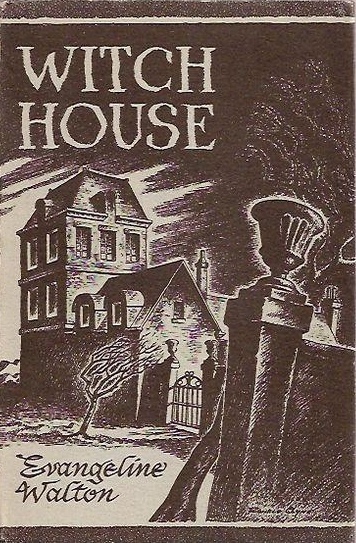
                • Cover of Witch House
                  Witch House

                  Evangeline Walton · standalone novel · 1945

                  similar bycursesdarkcontemporaryour worldfantasyhorrorwitcheseerie

                  Witch House is a fantasy novel by American writer Evangeline Walton. It was published in 1945 by Arkham House in an edition of 3,000 copies. It was the first full-length novel to be published by Arkham House and was listed as the initial book in the Library of Arkham House Novels of Fantasy and Terror. An expanded version, with a newly written 20,000-word prologue, was published in England in 1950. In 2013, Centipede Press issued the first American edition of this revised version, also including previously unpublished writings by Walton and several of her short stories.

                • Cover of The Vampire Chronicles
                  The Vampire Chronicles

                  series · 15 books · 1976

                  completed

                  similar bydarkour worldcontemporaryhorror+1 more

                  The Vampire Chronicles is a series of Gothic vampire novels and a media franchise, created by American author Anne Rice, that revolves around the fictional character Lestat de Lioncourt, a French nobleman turned into a vampire in the 18th century.

                • Cover of The Blood Journals
                  The Blood Journals

                  series · 2 books · 2011

                  similar bycontemporaryfantasywitches+4 more

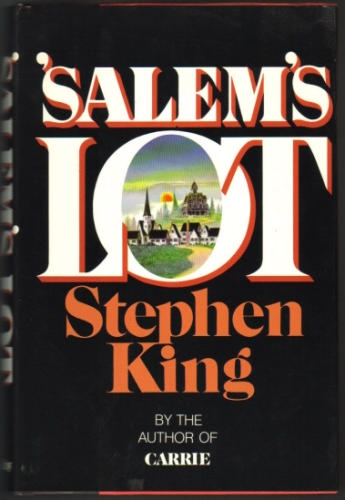
                • Cover of Jerusalem's Lot
                  Jerusalem's Lot

                  series · 3 books · 1975

                  similar bydarkcontemporaryour worldhorroreerie+1 more

                  Stephen King's 1975 novel 'Salem's Lot follows writer Ben Mears as he returns to his childhood town of Jerusalem's Lot, Maine, only to discover that its residents are being turned into vampires by a newly arrived stranger. It transplants Gothic vampire horror into a small New England community, tracking that community's collapse under a supernatural siege. It is a single, self-contained novel.

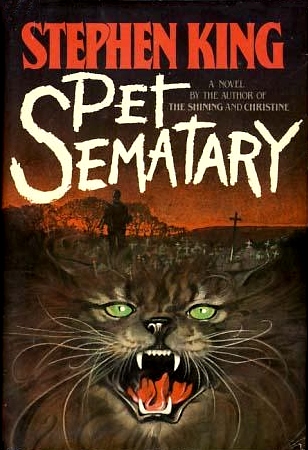
                • Cover of Pet Sematary
                  Pet Sematary

                  Stephen King · standalone novel · 1983

                  similar bycursesdarkcontemporaryhorroreerie

                  Pet Sematary is a 1983 horror novel by American writer Stephen King. It tells the story of a family moving to Maine and settling closer to a pet cemetery in the woods, which is home to a terrifying force that brings death and sorrow. The novel was nominated for a World Fantasy Award for Best Novel in 1984, and adapted into two films: one in 1989 and another in 2019 as well as several spinoffs.

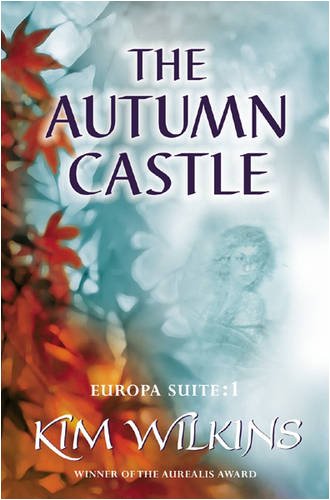
                • Cover of Europa Suite
                  Europa Suite

                  series · 2 books · 2003

                  similar bydarkcontemporaryour worldfantasyhorroreerie+2 more

                  Kim Wilkins' Europa Suite opens with The Autumn Castle, in which a woman's ordinary life is upended when the childhood friend she lost — abducted as a girl into a realm of magic and myth — unexpectedly returns, bringing old jealousies and betrayals that threaten to destroy them both. Giants of the Frost continues the loosely linked suite in the same vein.

                • Cover of Book of the Art
                  Book of the Art

                  series · 3 books · 1989

                  similar bydarkcontemporaryfantasydark fantasyhorroreerie+1 more

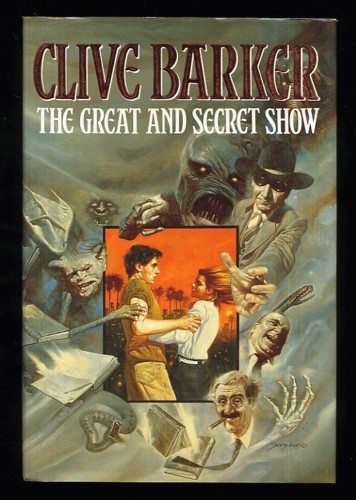
                  The Art was meant to be a trilogy about a hidden order guarding the boundary between our world and Quiddity, a dream-sea shared by all sleeping minds, but Clive Barker only completed two of its three volumes. The Great and Secret Show follows a decades-long feud between two men who discover Quiddity's power - one seeking to harness it, the other to protect it - with consequences that distort reality itself; Everville continues the story a generation later. The planned third volume was never published.

                • Cover of Verdigris Deep
                  Verdigris Deep

                  Frances Hardinge · standalone novel · 2007

                  similar bycursescontemporaryfantasywitcheseerie+2 more

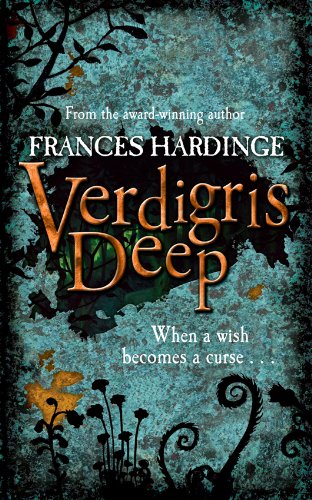
                  Verdigris Deep is a children's fantasy novel by Frances Hardinge. It concerns three children who fall into the power of a "well witch" after stealing coins from a wishing well. They are given various powers to grant the wishes of others. While many of the wishes seem harmless they all eventually lead to perilous fates. It was originally published by Macmillan in the UK in 2007 and released in the United States a year later under the title Well Witched.

                • Cover of The Thief of Always
                  The Thief of Always

                  Clive Barker · standalone novel · 1992

                  similar bydarkfantasydark fantasyeerie+3 more

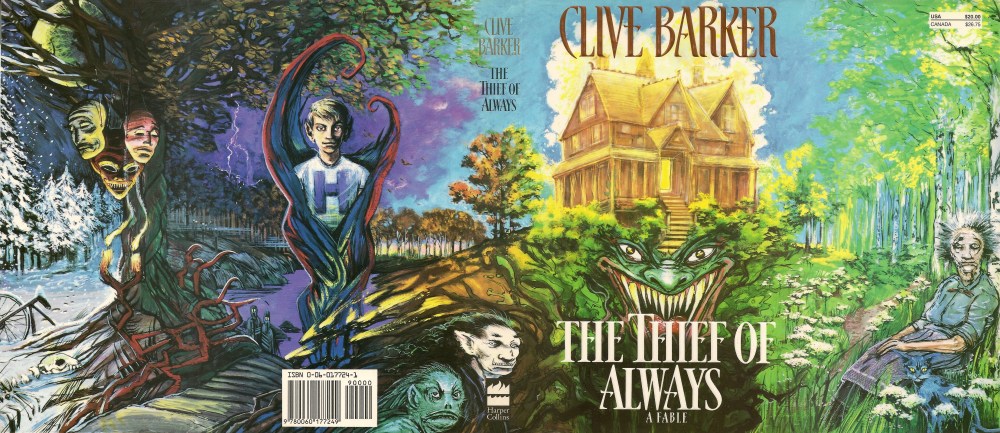
                  Ten-year-old Harvey Swick is bored out of his mind when a stranger named Rictus offers him a way out: Holiday House, a place where every season of the year -- Christmas, Halloween, summer -- arrives in a single glorious day, one after another. Once inside, Harvey meets fellow children Wendell and Lulu, the elderly caretaker Mrs. Griffin and her cats, and settles into a routine of enchantment that starts to feel too perfect. Their host, the mysterious Mr. Hood, never appears, rumors about a figure called Carna keep surfacing, and something in the nearby lake is very wrong. One of Clive Barker's best-known standalone books, written for younger readers.

                • Cover of Stephen King multiverse
                  Stephen King multiverse

                  universe · 46 books · 1967

                  Start hereThe Gunslinger · Start here

                  similar bydark+4 more

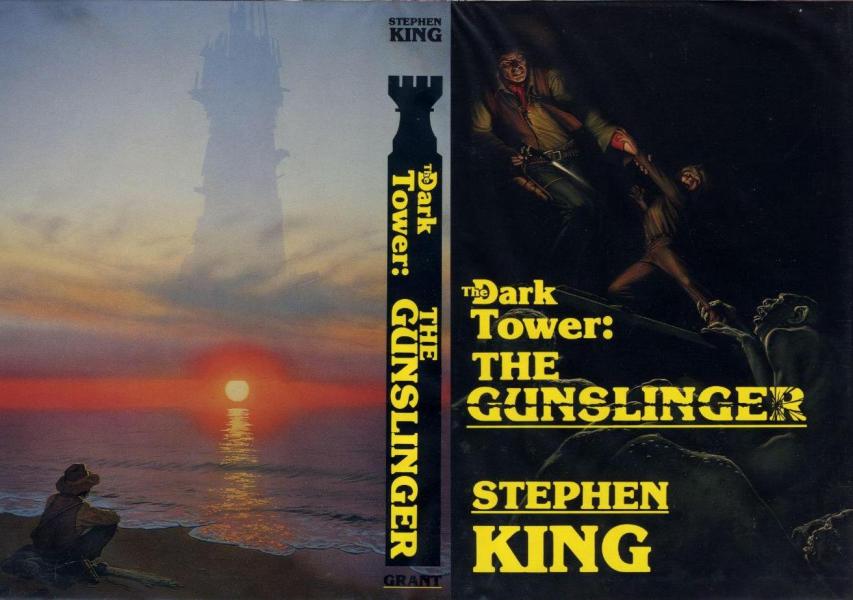
                  The man in black fled across the desert, and the gunslinger followed. So begins the long walk of Roland Deschain, last of an order of knight-errant pistoleers, across a land that has "moved on" — where the compass points drift, dead machines rot toward sentience, and the weave of what's real wears thin. His quest is the Dark Tower itself: a spire standing at the hub of every world that exists, the linchpin that holds all of them back from ruin. Roland's road runs eight volumes, from The Gunslinger through the closing Dark Tower, with the later, interleaved tale The Wind Through the Keyhole folding a story-within-a-story back into his youth. Along the way he draws a ka-tet — a fellowship bound by fate, not choosing — through doorways between worlds: a heroin-shackled New Yorker, a woman of two minds, a boy who dies twice. The Tower is also the secret axle around which the wider shelf of King's work turns; threads from The Stand, 'Salem's Lot and beyond wind quietly toward it. Expect a mongrel of Western, high fantasy, horror and decayed science fiction, told in a dusty, incantatory dialect all its own — ka, thankee-sai, the world that has moved on. This is King at his most mythic and most personal, a decades-spanning circle that rewards a patient reader. Begin at the beginning: The Gunslinger, then walk forward in publication order. There are other worlds than these — but this door opens first.

                • Cover of Supernatural Minnesota
                  Supernatural Minnesota

                  series · 4 books · 1984

                  completed

                  similar bydarkcontemporaryhorroreerie+2 more

                • Cover of Rosemary Reilly
                  Rosemary Reilly

                  series · 2 books · 1967

                  completed

                  similar byhorror+5 more

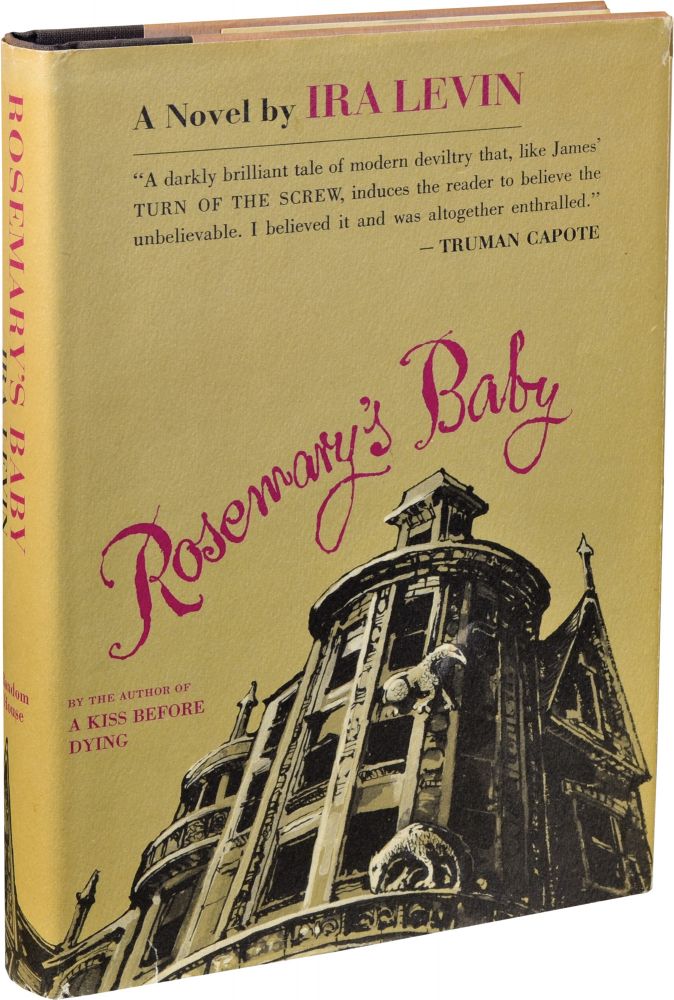
                  Rosemary's Baby follows a young wife in a Gothic Manhattan apartment building who grows increasingly convinced that her elderly neighbors, and even her own husband, are part of a conspiracy surrounding her pregnancy. Ira Levin returned to the character thirty years later in the 1997 sequel Son of Rosemary. Together the two novels form a short, self-contained horror series about faith, control, and motherhood.

                • Cover of Fairy Tale Anthologies
                  Fairy Tale Anthologies

                  series · 7 books · 1993

                  similar byfantasy+3 more

                  Fairy Tale Anthologies gathers Ellen Datlow and Terri Windling's series of adult short-fiction anthologies retelling classic fairy tales, beginning with Snow White, Blood Red (1993) and continuing through Black Thorn, White Rose, Ruby Slippers, Golden Tears and further volumes. Each book commissions new stories from a rotating set of authors reworking familiar tales, often into darker, more adult territory than their source material. The volumes are linked by editorial concept and theme rather than a continuing plot or cast.

                • Cover of Raine's Landing
                  Raine's Landing

                  series · 7 books · 2008

                  similar bycontemporaryour world+4 more

                • Cover of Fiend
                  Fiend

                  Alma Katsu · standalone novel · 2025

                  similar bycursesdarkcontemporaryour worldfantasydark fantasy

                  Imagine if the Sackler family had a demon at their beck and call. The Berisha family runs one of the largest import-export companies in the world, and they’ve always been lucky. Their rivals suffer strokes. Inconvenient buildings catch on fire. Earthquakes swallow up manufacturing plants, destroying harmful evidence. Things always seem to work out for the Berishas. They’re blessed. At least that is what Zef, the patriarch, has always told his three children. And each of them knows their place in the family—Dardan, as the only male heir, must prepare to take over as keeper of the Berisha secrets, Maris’s most powerful contribution, much to her dismay, will be to marry strategically, and Nora’s job, as the youngest, is to just stay out of the way. But when things stop going as planned, and the family blessing starts looking more like a curse, the Berishas begin to splinter, each hatching their own secret scheme. They didn’t get to be one of the richest families in the world without spilling a little blood, but this time, it might be their own.

                • Cover of Weaveworld
                  Weaveworld

                  Clive Barker · standalone novel · 1987

                  similar bydarkcontemporaryour worldfantasydark fantasyeerie

                  Weaveworld is a 1987 dark fantasy novel by English writer Clive Barker. It is about a magical world, known as the Fugue, which has been hidden inside a carpet to safeguard it from both inquisitive humans and hostile supernatural foes. Two humans become embroiled in the fate of the Fugue, attempting to save it from those who seek to destroy it. The book was nominated in 1988 for the World Fantasy Award for Best Novel.

                • Cover of Anna Korlov
                  Anna Korlov

                  series · 2 books · 2011

                  similar bycontemporaryhorror+4 more

                  Kendare Blake's YA horror duology follows Cas Lowood, who has spent three years continuing his late father's work of hunting and dispatching violent ghosts, until he meets Anna, a ghost far more dangerous, and more sympathetic, than any he's faced. Anna Dressed in Blood and its sequel Girl of Nightmares follow Cas as his professional detachment gives way to a bond that complicates everything he thought he knew about his calling.

                • Cover of yresruN semyhR
                  yresruN semyhR

                  series · 4 books · 2016

                  similar bydarkour worldcontemporary+4 more

                • GU
                  GhostWriters Universe

                  series · 9 books · 2017

                  similar bycontemporary+6 more

                • Cover of The Jeremiah Hunt Chronicles
                  The Jeremiah Hunt Chronicles

                  series · 3 books · 2011

                  similar bydarkcontemporary+5 more

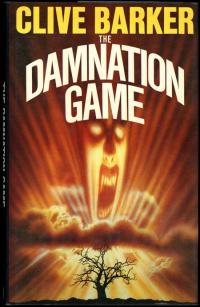
                • Cover of The Damnation Game
                  The Damnation Game

                  Clive Barker · standalone novel · 1985

                  similar bydarkcontemporaryour worldfantasydark fantasyhorror

                  Marty Strauss is a compulsive gambler fresh out of prison when he's hired as bodyguard for Joseph Whitehead, a reclusive tycoon whose fortune and continued existence trace back to a bargain struck decades earlier, during World War II, with a man named Mamoulian. That bargain is coming due: Mamoulian, who commands powers reaching well past death, wants what he's owed, and Whitehead's household -- his wife, his daughter Carys, his previous bodyguard -- is caught in the middle of a decades-old debt finally being called in. Marty, out of his depth from the start, finds himself the only one willing to stand against Mamoulian. Clive Barker's first novel.

                • Cover of Tales of the Werewolf Clan
                  Tales of the Werewolf Clan

                  series · 22 books · 1925

                  completed

                  similar by+7 more

                • Cover of Alex Stern
                  Alex Stern

                  series · 4 books · 2019

                  similar bycontemporarydark fantasy+4 more

                  Leigh Bardugo's Alex Stern series follows Galaxy 'Alex' Stern, a survivor and college dropout offered a scholarship to Yale in exchange for policing the eight secret societies that practice occult magic on campus, as a member of the shadowy organization Lethe. The opening novel, Ninth House, establishes her as an outsider gifted with the ability to see ghosts; the sequels continue her investigation into the societies' abuses and the murder that first drew her into Lethe's world. It is a dark fantasy series blending campus intrigue with horror.

                • Cover of The House That Jack Built
                  The House That Jack Built

                  Graham Masterton · standalone novel · 1996

                  similar bydarkcontemporaryour worldhorroreerie+1 more

                  When he and his wife stumble across a derelict house, "Valhalla", Craig Bellman becomes fascinated by it, even to the extent of trying to buy it, regardless of local tales which say the house is dogged by tragedy. As Craig becomes more obsessed day by day, injury and death return to "Valhalla"