More like The Invincible
anchored on:science fictionhard science fictionaliensother star systemsfar futurespace exploration+1 more
but
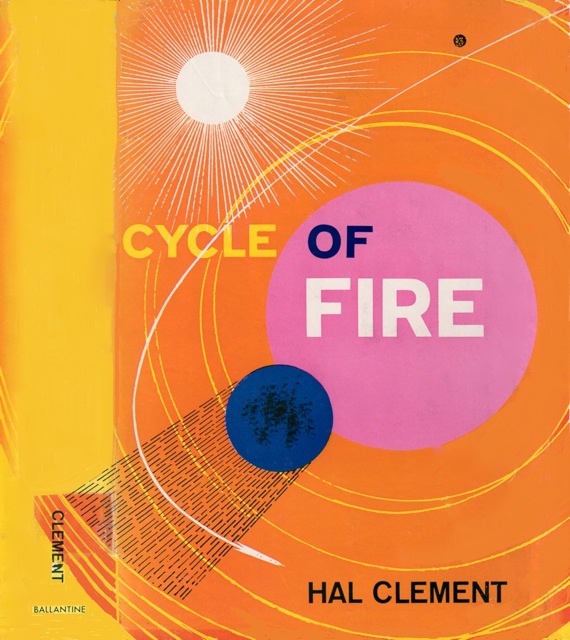
- Cycle of Fire
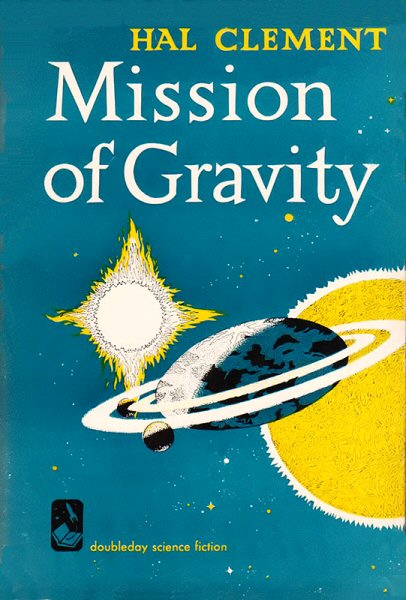
Hal Clementstandalone novel1957
similar byother star systemsfar futurereflectivealiensscience fictionhard science fictionsurvival+1 more
After his ship crashed on the inhospitable planet Abyorman, Nils Kruger had spent weeks wandering across the face of the planet.suffering from blistering heat, the searing cold of an alien climate. Now he had found a fellow wanderer, Dar, an alien castaway. They may both die. The human opts to do something about it. Dar, who knows the time of his death in advance, opts to do nothing. Which of them is right? Perhaps both
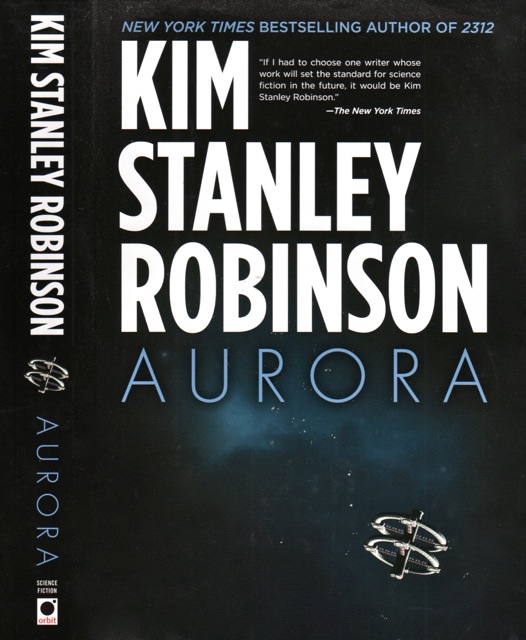
- Aurora
Kim Stanley Robinsonstandalone novel2015
similar byfar futurechallengingreflectiveother star systemsscience fictionhard science fictionsurvival+1 more
Aurora is a 2015 novel by American science fiction author Kim Stanley Robinson. The novel concerns a generation ship built in the style of a Stanford torus, traveling to Tau Ceti to start a human colony. The novel's primary narrative voice is that of the starship's artificial intelligence. Aurora was well received by critics.
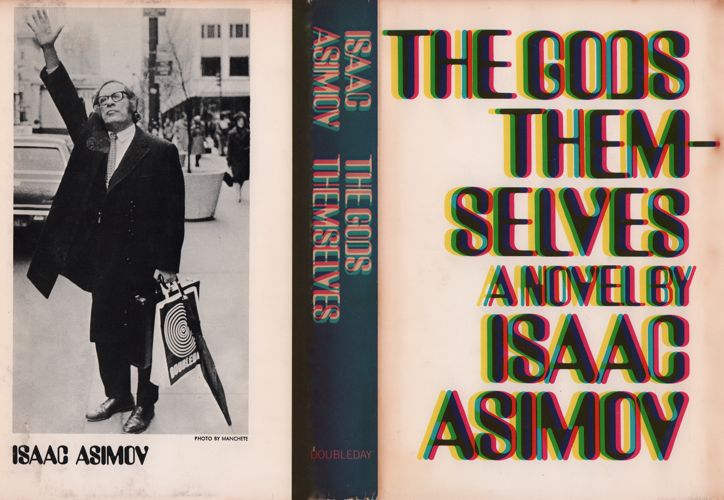
- The Gods Themselves
Isaac Asimovstandalone novel1972
similar byfar futurechallengingaliensother star systemsscience fictionhard science fiction+1 more
The Gods Themselves is a 1972 science fiction novel written by Isaac Asimov, and his first original novel in fifteen years. It won the Nebula Award for Best Novel in 1972, and the Hugo Award for Best Novel in 1973.
- Dune
series20 books1963
part of Dune Universe
similar byfar futureother star systemsscience fiction+2 more
Frank Herbert's Dune Chronicles opens with 1965's Dune, set on the desert planet Arrakis where House Atreides takes control of the only source of the vital spice melange and young Paul Atreides is pulled into a struggle over its politics and religion. Herbert carried the story forward across five further novels — Dune Messiah, Children of Dune, God Emperor of Dune, Heretics of Dune, and Chapterhouse: Dune — following Paul's line over the following millennia, before Brian Herbert and Kevin J. Anderson later extended the saga. Many other editions of these six novels are omnibus and box-set repackagings rather than separate stories.
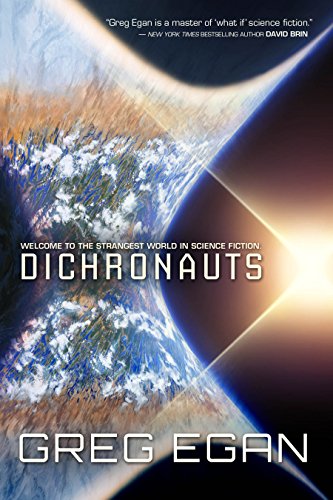
- Dichronauts
Greg Eganstandalone novel2017
similar byother star systemsfar futurechallengingscience fictionhard science fictionaliensspace explorationsurvival
Dichronauts is a hard science-fiction novel by Australian author Greg Egan. The novel was published by Night Shade Books on 11 July 2017. It describes a universe with two time dimensions, one of which corresponds to the time perception of the characters while the other influences their spatial perception, which precludes rotations in the latter chronological direction. Hence a symbiosis of two life forms is necessary, so that they can even see in all directions. Furthermore, many fundamental laws of physics are altered crucially: Objects can roll uphill or not fall over any more when oriented suitably. There is negative kinetic energy and a fourth state of matter. Planets are no longer spherical, but hyperbolic and therefore have three separate surfaces. Egan describes these details on his website.
- Hainish
series33 books1964
completed
similar byfar futureother star systemsreflectivescience fiction+2 more
The Hainish Cycle consists of a number of science fiction novels and stories by Ursula K. Le Guin. The cycle is set in a future history that features civilizations of human beings on planets orbiting a number of nearby stars, including Terra ("Earth"); these humans are contacting each other for the first time and establishing diplomatic relations, as well as setting up a confederacy under the guidance of the oldest of the human worlds, the peaceful planet Hain. In this history, human beings did not evolve on Earth, but they were instead the result of interstellar colonies planted by Hain in the distant past, after which interstellar travel ceased for an extended period. Some of the human races have new genetic traits, a result of ancient Hainish experiments in genetic engineering; this includes people who can dream while awake, and a world of hermaphroditic people who only enter active sexuality once per month, not knowing which sex will manifest in them. In keeping with Le Guin's narrative approach, she uses varied social and environmental settings to explore the anthropological and sociological outcomes of human evolution in those environments. The author often discounted the characterization of a so-called "Hainish Cycle".
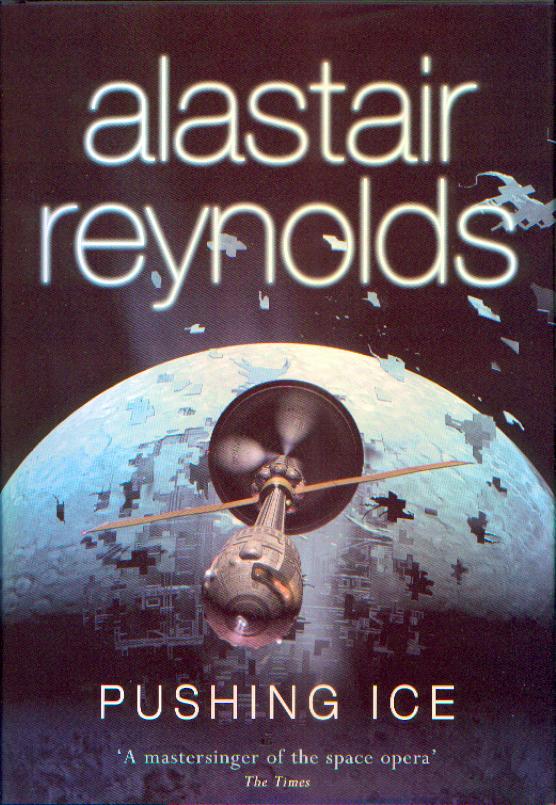
- Pushing Ice
Alastair Reynoldsstandalone novel2005
similar byfar futureother star systemsscience fictionaliensspace explorationsurvivalhard science fictionfirst contact+1 more
When Saturn's moon Janus suddenly takes off into interstellar space, an ice mining spaceship sent to investigate finds itself swept along into distant space until it ends up trapped in a gigantic alien structure, wherein the crew must prepare to reside for the foreseeable future.
- A Meeting with Medusa
series2 books1971
similar byfar futurechallengingreflectivescience fictionaliensother star systemsspace explorationhard science fiction
Arthur C. Clarke's A Meeting with Medusa follows an astronaut, badly injured in an earlier disaster, on a solo balloon expedition into Jupiter's atmosphere, where he encounters vast floating lifeforms unlike anything previously catalogued. Decades later, Stephen Baxter and Alastair Reynolds continued the story in The Medusa Chronicles, following the same protagonist across a much longer span of future history. The original novella won the 1972 Nebula Award.
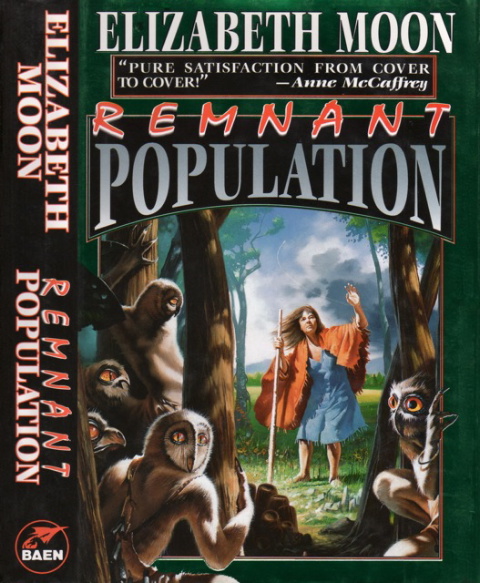
- Remnant Population
Elizabeth Moonstandalone novel1996
similar byother star systemsfar futurereflectivealiensscience fictionsurvivalfirst contact+1 more
From the dust jacket front flap of the Baen first edition: Alone at last... People had always told Ofelia what to do; for once she was going to do what she wanted. She refused to get on the cryo ships, refused to leave the only world she could call home. And when they finally came for her, she hid, not that the authorities looked all that hard for one crazy old woman. Now Ofelia is alone, content to live with no more demands on her self or her time, the only remaining settler on an abandoned planet. The new settlers arrive. At first she fears that they have come to reoccupy the settlement she has come to think of as hers - but they land far away. And as Ofelia secretly listens, they are slaughtered to the last child by stone-age aliens no one knew were there. Now it will be up to Ofelia to save the aliens from Earth's wrath...
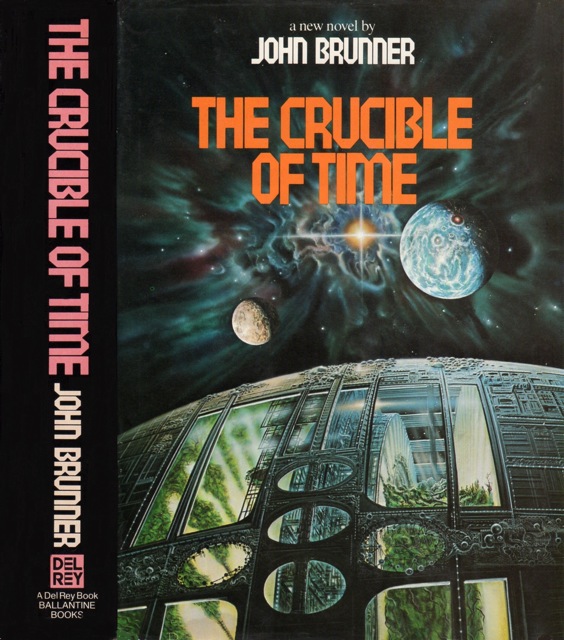
- The Crucible of Time
John Brunnerstandalone novel1983
similar byother star systemsfar futurechallengingaliensscience fiction+2 more
The Crucible of Time is a fix-up science fiction novel by John Brunner. It was first published in 1983.
- Mesklin
series6 books1954
completed
similar byother star systemsfar futurescience fictionhard science fictionaliensspace exploration+1 more
Mesklin is a fictional planet created by Hal Clement and used in a number of his hard science fiction stories, starting with Mission of Gravity (1954). Alongside the novel's original 1953 serialization in Astounding Science Fiction, Clement published an essay titled "Whirligig World" on how he designed the planet to have the properties he wanted. The idea came from an object that was at the time believed to exist in the 61 Cygni system, and which might represent an extrasolar planet.
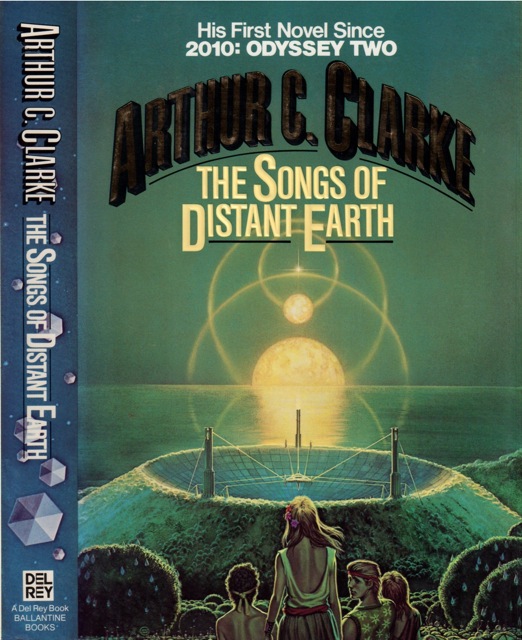
- The Songs of Distant Earth
Arthur C. Clarkestandalone novel1986
similar byother star systemsfar futurereflectivescience fictionsurvivalhard science fiction+1 more
The Songs of Distant Earth is a 1986 science fiction novel by British writer Arthur C. Clarke, based upon his 1958 short story of the same title. Of all of his novels, Clarke stated that this was his favourite. Prior to the publishing of the novel, Clarke also wrote a short step outline with the same title, published in Omni magazine and anthologised in The Sentinel in 1983.
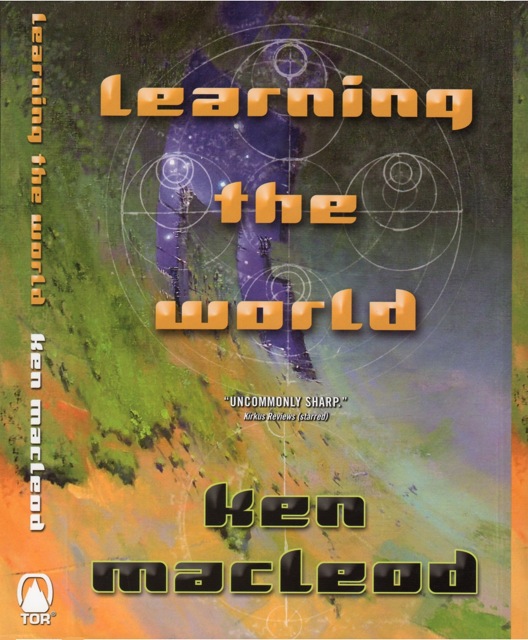
- Learning the World
Ken MacLeodstandalone novel2005
similar byother star systemsfar futurereflectivescience fictionaliensspace explorationhard science fictionfirst contact
From the front flap of the Tor first printing: "Humanity has spread to every star within 500 light-years of its half-forgotten origin, coloring the sky with a haze of habitats. Societies rise and fall. Incautious experiments burn fast and fade. On the fringes, less modified humans get on with the job of settling a universe that has, so far, been empty of intelligent life. The ancient starship But the Sky, My Lady! The Sky! is entering orbit around a promising new system after a four hundred year journey. For its long-lived inhabitants, the centuries have been busy. Now a younger generation is eager to settle the system. The ship is a seed-pod ready to burst. Then they detect curious electromagnetic emissions from the system's Earth-like world. As the nature of the signals becomes clear, the choices facing the humans become stark. On Ground, second world from the sun, a young astronomer searches for his system's outermost planet. A moving point of light thrills, then disappoints him. It's only a comet. His physicist colleague Orro takes time off from trying to invent a flying-machine to calculate the comet's trajectory. Something is very odd about that comet's path. They are not the only ones for whom the world has changed. "We are not living in the universe we thought we lived in yesterday. We have to start learning the world all over again.""
- Incandescence
Greg Eganstandalone novel2008
similar byother star systemsfar futurechallengingscience fictionhard science fictionaliensspace exploration
Incandescence is a 2008 science fiction novel by Australian author Greg Egan. The book is based on the idea that the theory of general relativity could be discovered by a pre-industrial civilisation.
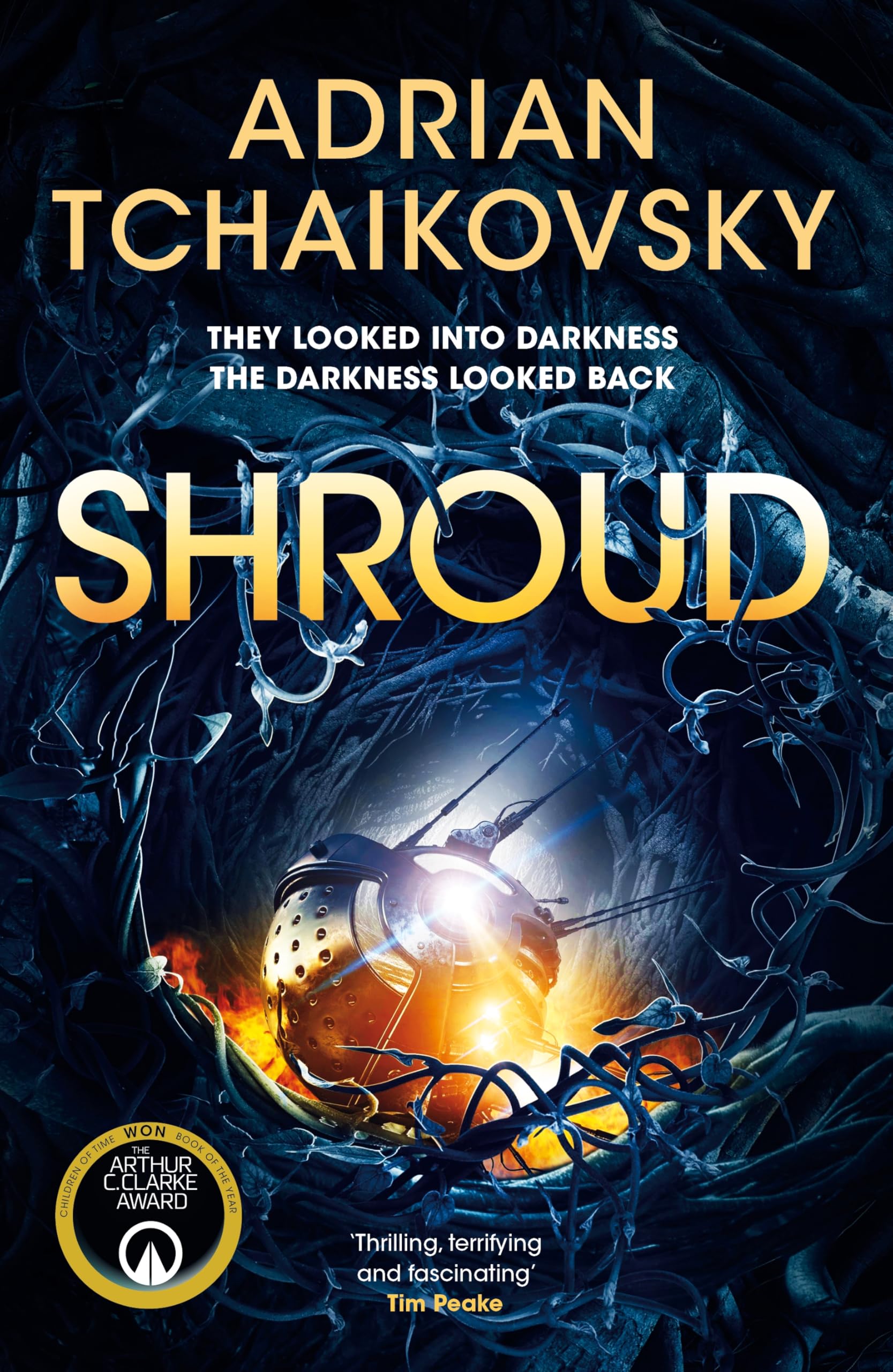
- Shroud (Adrian Tchaikovsky)
series2 books2024
similar byother star systemsfar futurealiensscience fictionspace explorationsurvivalhard science fiction+1 more
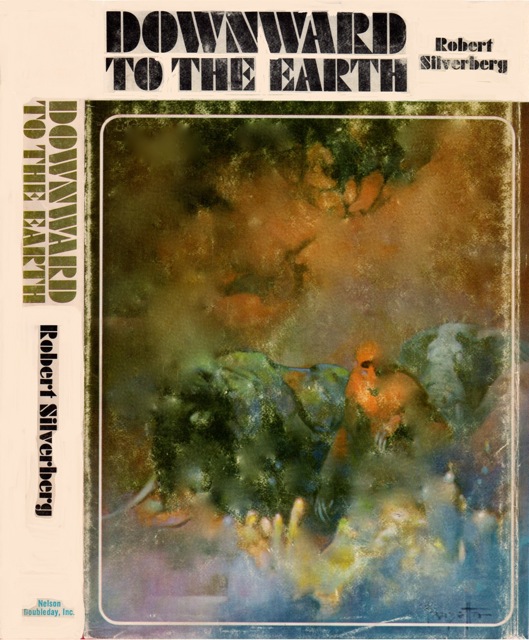
- Downward to the Earth
Robert Silverbergstandalone novel1969
similar byother star systemsfar futurereflectivealiensscience fiction+1 more
Edmund Gunderson was the Terran administrator of the colony world of Belzagor, and he returns to it after it has gained independence, feeling a sense of guilt for the way he has treated its dominant species, the elephant-like nildoror, whose animalistic appearance had kept Gunderson from taking them seriously as sentient beings. On his return, he feels a new sense of kinship with the natives, perhaps more than for the Terran tourists. The nildoror undergo a process of rebirth, and Gunderson's greatest guilt comes from having denied rebirth to seven nildoror to make them help him repair flood damage.(From Wikipedia)
- The City and the Stars
Arthur C. Clarkestandalone novel1956
similar byother star systemsfar futurereflectivescience fictionspace exploration
The City and the Stars is a science fiction novel by British writer Arthur C. Clarke, published in 1956. This novel is a complete rewrite of Clarke's earlier Against the Fall of Night, his first novel, which had been published in Startling Stories magazine in 1948 after being rejected by the editor of Astounding Science-Fiction, according to the author.
- Ender Wiggin
series14 books1977
part of Ender's Game Universe
similar byfar futureother star systemsscience fictionaliens+1 more
Orson Scott Card's Ender's Game (1985, expanded from his 1977 novella) follows child prodigy Andrew "Ender" Wiggin as he is recruited into a military training program built to prepare Earth's defenses for an anticipated third war against an insectoid alien species known as the Formics. The saga continues years later through Speaker for the Dead and Xenocide, following an older Ender as he confronts the moral weight of his role in that earlier conflict, and concludes the core arc in Children of the Mind, with Ender in Exile filling in the years between the first two books. Set within the wider Ender's Game universe, the series shifts from military coming-of-age story to slower, more philosophical science fiction as it progresses.
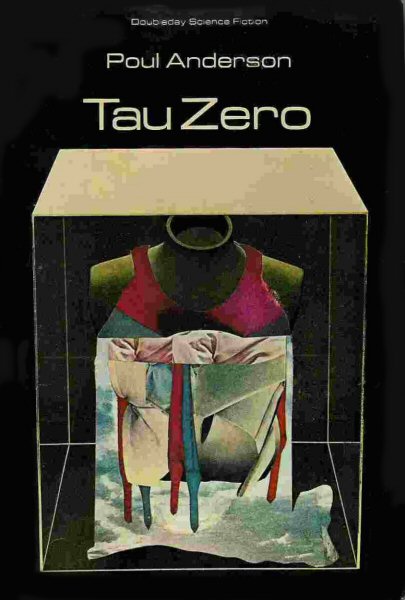
- Tau Zero
Poul Andersonstandalone novel1970
similar byfar futurereflectivescience fictionhard science fictionspace explorationsurvival
During an epic voyage to a planet 30 light years away, the engines of the starship the 'Leonora Christine' are damaged. Unable to slow down, it attains light speed (the tau zero of the title). The disparity between time for those on board and external time becomes impossibly great. Eons and galaxies hurtle by, as the crew speed helplessly into the great unknown.
- Dragon's Egg
series3 books1980
completed
similar byother star systemsaliensscience fictionhard science fictionfar futurespace explorationfirst contact+1 more
Robert L. Forward's Dragon's Egg (1980) follows first contact with the cheela, intelligent beings the size of sesame seeds living on the surface of a neutron star, where crushing gravity and fast-moving physics let them evolve from primitive agriculture to advanced technology in about a month of Earth time while human observers watch from orbit. The sequel Starquake (1985) follows the cheela's own development of space travel and a catastrophic starquake that devastates their neutron-star home, alongside the continuing story of the human crew observing them.
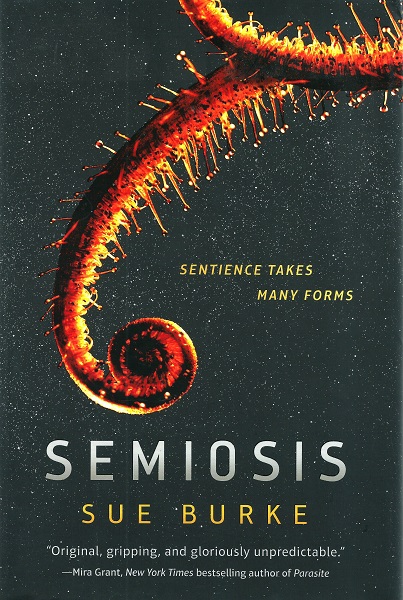
- Semiosis
series3 books2018
similar byother star systemsfar futurescience fiction+5 more
Semiosis is Sue Burke's science fiction trilogy: Semiosis (2018), Interference and Usurpation. It follows generations of human colonists on an alien world forming an uneasy, evolving relationship with Stevland, a highly intelligent sentient plant, as the colony's survival comes to depend on cooperating with a fundamentally non-animal intelligence. The trilogy follows one continuous colony's history across decades of story time.
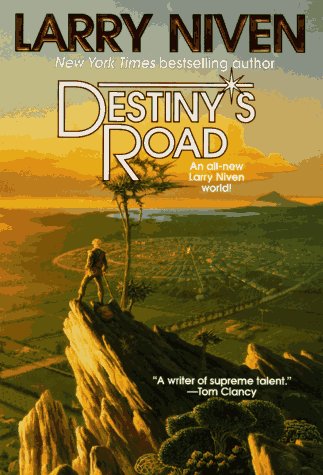
- Destiny's Road
Larry Nivenstandalone novel1997
similar byother star systemsfar futurescience fictionsurvivalhard science fiction+2 more
Destiny's Road is a science fiction novel by American writer Larry Niven, first published in 1998. It follows Jemmy Bloocher's exploration of Destiny's Road, a long scar of once-melted rock seared onto the planet's surface by a spaceship's fusion drive. Jemmy is descended from the original Destiny colonists, who were stranded when their landing craft deserted them.
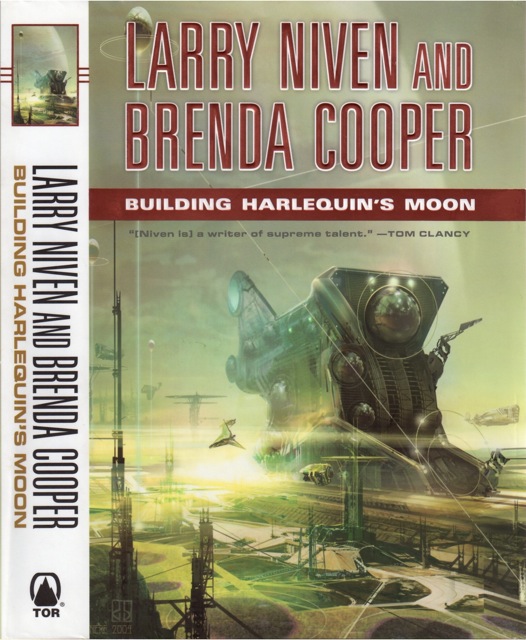
- Building Harlequin's Moon
Larry Niven & Brenda Cooperstandalone novel2005
similar byother star systemsfar futurechallengingreflectivescience fictionhard science fiction+1 more
The first interstellar starship, John Glenn, fled a Solar System populated by rogue AIs and machine/human hybrids, threatened by too much nanotechnology and rife with political dangers. The John Glenn’s crew intended to terraform the nearly pristine planet Ymir, in hopes of creating a utopian society that will limit intelligent technology. But by some miscalculation they have landed in another solar system, and extremely low on the antimatter needed to continue to Ymir, they must shape the nearby planet Harlequin’s moon, Selene, into a new, temporary home. Their only hope of ever reaching Ymir is to rebuild their store of antimatter through decades of terraforming the moon. Gabriel, the head terraformer, must lead this nearly impossible task, with all the wrong materials. His primary tools are the uneducated and nearly illiterate children of the original colonists, born and bred to build Harlequin’s moon into a virtual antimatter factory. With no concept of the future and with life defined as duty, one girl, Rachel Vanowen, begins to ask herself the question: what will become of the children of Selene once the terraforming is complete.
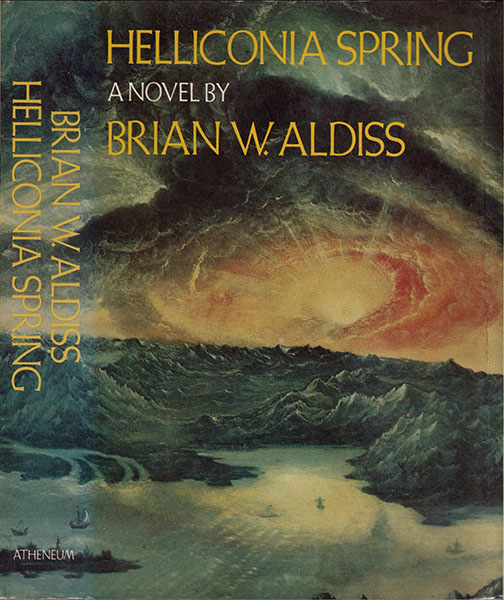
- Helliconia
series4 books1982
completed
similar byother star systemsfar futurechallengingreflectivescience fiction+1 more
The Helliconia trilogy is a series of science fiction books by British writer Brian W. Aldiss, set on the Earth-like planet Helliconia. It is an epic chronicling the rise and fall of a civilisation over thousands of years as the planet progresses through its incredibly long seasons, which last for centuries.