Loreful
HomeDiscover
Search series, authors…⌘K
Loreful

Reading orders for SF/F series and shared universes — with your place kept in every one.

Explore

UniversesSeriesWorksAuthorsAtlas

Help

FAQAboutSite map

Account & legal

Sign inCreate accountPrivacyTerms

Data

Built on ISFDB, Wikipedia, Wikidata and Open Library. Curated reading orders carry their reasoning on the page; the rest follow publication order. Data sources & licenses

© Loreful · data: ISFDB · CC BY

More like The Jam

anchored on:horror

but

Mood

The mood the book leaves you in.

  • The reading experience is propelled by journeys, exploration, and physical risk; excitement and forward momentum dominate over dread or introspection.
  • Joy and loss are deliberately mixed; the resolution grants characters something real while taking something else away, leaving warmth and sorrow together.
  • The book demands work from the reader — dense prose, difficult structure, unfamiliar ideas, or morally uncomfortable material — as part of its intended effect.
  • Grim events, cruelty, or despair dominate the atmosphere, and the book does not soften them with comfort or comic relief.
  • The atmosphere is quietly unsettling — wrongness, unease, and the uncanny pervade the book without necessarily escalating into overt horror.
  • The book is built to move the reader; character feeling is foregrounded and major scenes aim at a strong emotional response.
  • Humor is a primary aim and the prose plays for laughs — comic situations, wit, or dialogue produce sustained comedy, not occasional levity.
  • The book insists that things can improve; effort and decency are shown to matter, and the arc bends toward better outcomes even through hardship.
  • The book teaches as it goes — real facts, history, science, or craft are conveyed in enough depth that learning is part of the reading experience.
  • The book is designed to uplift and motivate, presenting perseverance or achievement in a way that invites the reader to aspire or act.
  • The overall register is cheerful and easygoing; stakes are kept gentle and the book avoids dwelling on pain or dread.
  • Withheld information drives the experience; the book sustains enigmas and secrets the reader wants resolved, whatever its genre.
  • The book is contemplative and inward-looking, giving more weight to thought, memory, and meaning than to external events.
  • The book works as comfort reading — low tension, a soothing pace, and an atmosphere the reader can unwind in.
  • Grief, loss, or melancholy set the dominant register, and the book lets sorrow stand rather than resolving it into comfort.
  • Sustained suspense is the point; the book keeps the reader braced for what happens next through danger, pressure, or impending revelation.
  • Playful invention and charm define the register — fanciful conceits, light absurdity, and a narration that delights in its own oddity.

About

What the story runs on.

  • Stories structured as a quest — a journey undertaken to find, deliver, or destroy something of great import.
  • Stories in which staying alive against nature, catastrophe, or scarcity is the central problem.
  • Stories of lovers kept apart by law, family, faith, or station, where the obstacle to love is the plot.
  • Stories in which a friendship — its making, testing, or loss — is the emotional center.
  • Stories of growing up — a young protagonist crossing from childhood into adult knowledge and responsibility.
  • Stories about who a character truly is — self-discovery, doubled lives, and the search for a self.
  • Stories about mental unraveling — descent into madness, delusion, and minds at war with themselves.
  • Stories about mourning — living through the death of a loved one and what loss does to the survivors.
  • Stories in which a buried family truth — hidden parentage, crimes, or shames — surfaces and reorders the present.
  • Stories driven by maneuvering for power — factions, conspiracies, and statecraft conducted in shadow.
  • Stories in which war itself is the subject — combat, occupation, and what warfare does to soldiers and civilians.
  • Stories organized around investigating a killing — the case, the clues, and the pursuit of the killer, in any genre's clothing.

Shelf

Where it sits in the library.

    • Fiction built on magic or other supernatural elements that have no scientific explanation.
    • Secondary-world fantasy at large scale, where the fate of nations or the world turns on the protagonists' struggle.
    • Fantasy set in a recognizably modern city or contemporary world where the supernatural intrudes on everyday life.
    • Fantasy that blends in horror's atmosphere and imagery, keeping a fantastical frame around grim or frightening material.
    • Action-driven fantasy following warriors or rogues with personal stakes against sorcerous threats, rather than world-spanning conflicts.
    • Fantasy set in a real historical period or a close analogue of one, with magic woven into the era.
    • Fantasy in which protagonists cross from the ordinary world into another world through a portal or similar passage.
    • Fiction that retells or reworks a traditional fairy tale in a new form or setting.
    • Fantasy drawing directly on myths, legends, and folklore, retelling them or building on their figures and logic.
    • Fantasy of ghosts, vampires, shapeshifters, psychics, and similar phenomena, usually set in an otherwise ordinary world.
    • Fiction mixing science-fictional trappings with overtly magical or impossible elements in one setting.
    • Low-stakes fantasy emphasizing comfort, community, and everyday pleasures over conflict and peril.
    • Speculative fiction of pervasive moral ambiguity, violence, and cynicism that rejects heroic conventions — fantasy and SF alike.
      • Fiction that extrapolates from science and technology — future societies, space travel, or speculative inventions — within at least nominally natural laws.
      • Science fiction of interstellar scope — starships, galactic polities, and adventure across star systems.
      • Science fiction committed to scientific rigor, where technical plausibility constrains the story.
      • Science fiction centered on armed forces and warfare, told largely from a military point of view.
      • Science fiction of networked, corporate-dominated near futures, pairing high technology with social decay.
      • Science fiction styled on nineteenth-century steam-powered technology, often in a Victorian or pseudo-Victorian setting.
      • Fiction depicting an oppressive or catastrophic society, presented as a warning.
      • Fiction set after civilization's collapse, following survivors in the ruins of the old world.
      • Fiction in which characters move between past and future, and the mechanics or consequences of that travel drive the plot.
      • Fiction exploring a world where a historical event went differently and history diverged from ours.
      • Science fiction about humanity's first encounter and communication with an alien intelligence.
      • Science fiction in which extraterrestrial forces attack or occupy Earth and humanity resists.
      • Fiction whose primary aim is to frighten or unsettle the reader through dread, menace, or the monstrous.
      • Horror of vast, indifferent, incomprehensible entities before which humanity is insignificant, in the Lovecraft tradition.
      • Horror of decaying houses, buried family secrets, and oppressive atmosphere in the Gothic literary tradition.
      • Horror centered on hauntings and the returning dead.
      • Horror located in the mind — paranoia, obsession, and unreliable perception rather than external monsters.
      • Horror built around the reanimated dead and survival amid their outbreaks.
      • Horror defined by explicit, transgressive gore that refuses to cut away from violence.
      • Speculative fiction of the strange and uncanny that resists both natural explanation and standard genre categories.
      • Fiction organized around solving a crime or puzzle, typically following an investigator toward the identification of a culprit.
      • A puzzle-first mystery that lays out clues so the culprit's identity can be deduced before the reveal.
      • Crime fiction of moral ambiguity, fatalism, and hard-edged style, set among the corrupt and the doomed.
      • A mystery following the realistic routines of police work — forensics, interviews, and case-building.
      • A gentle mystery with an amateur sleuth, a small community, and violence kept off the page.
      • A mystery set in a past era, where the investigation works within that period's methods and society.
      • Fast-paced fiction driven by imminent danger, pursuit, or high-stakes conspiracy, built to sustain tension.
      • A thriller of espionage — agents, tradecraft, and intelligence services in conflict.
      • A thriller centered on lawyers and the courtroom, where litigation carries the suspense.
      • A thriller driven by detailed contemporary or near-future technology, often military or scientific.
      • A thriller whose tension comes from mental states and manipulation between characters rather than external action.
      • Fiction whose central plot is a romantic relationship and its development toward an emotionally satisfying resolution.
      • Romance in which one or both partners are supernatural beings, blending fantasy elements into the love story.
      • A fantasy-romance hybrid in which the romantic arc and the fantasy plot carry equal weight.
      • Romance set in a past era, with courtship shaped by the period's society and manners.
      • Romance set in the present day, without supernatural or historical elements.
      • Fiction set in a real past period, where the historical setting materially shapes characters and events.
        • General and literary fiction emphasizing prose style, character interiority, or formal ambition over genre plot conventions.
        • Fiction in a realistic world where magical events occur and are treated as ordinary, in the tradition of Latin American literature.
        • Fiction that ridicules people, institutions, or society in order to criticize them.
        • Fiction of dreamlike, irrational imagery and logic that breaks from realistic representation.
        • Fiction that plays with narrative convention through metafiction, fragmentation, and self-reference.
        • Fiction propelled by journeys, exploration, and physical peril, where action and survival carry the plot.
        • Adventure fiction of ships and seafaring — naval engagements, voyages, and life at sea.
        • Fiction of the American frontier West — gunmen, ranchers, and lawmen, typically in the late nineteenth century.
        • Fiction centered on soldiers, campaigns, and the experience of warfare, historical or imagined.
          • Fiction written primarily to amuse, using comedic situations, wit, or parody as its organizing principle.
            • Multi-generational fiction following a family or dynasty across decades, with inheritance and kinship as the through-line.
              • Fiction whose world runs on explicit game mechanics — levels, stats, and skills that characters can see and exploit.
                • Fiction about costumed or superpowered heroes and their conflicts with comparable villains.

                Practical

                How long a commitment, whether it stands alone, and whether it has finished.

                Tap a chip to ask for it · tap again to rule it out · once more to clear. Numbers show what would be left.

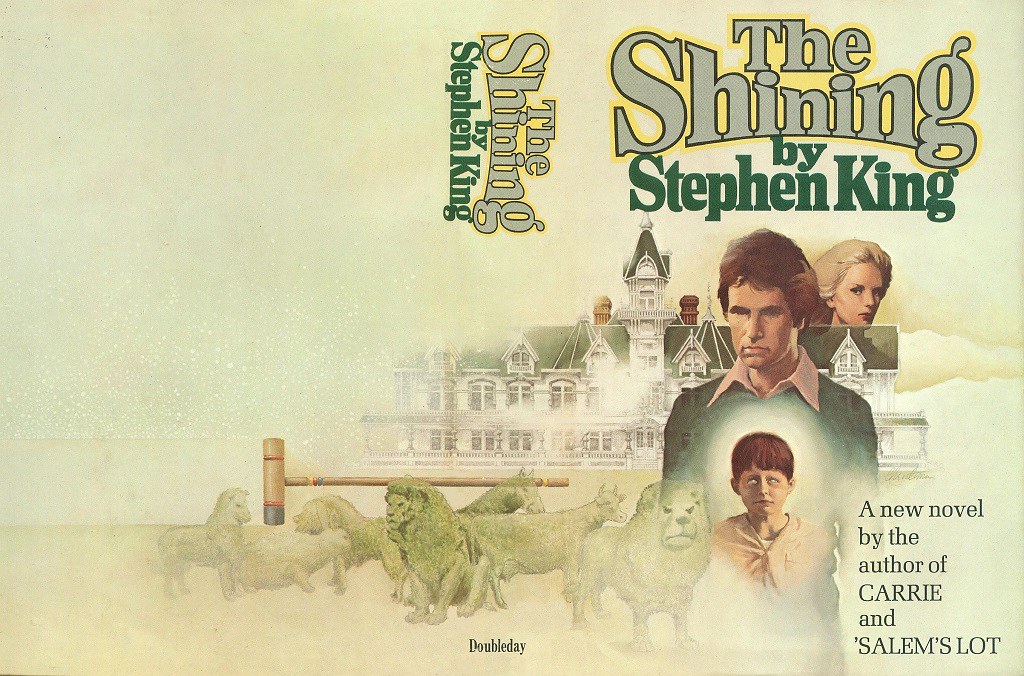
                • Cover of The Shining
                  The Shining

                  series · 5 books · 1977

                  similar byaddictioncontemporaryhorror

                  Stephen King's 1977 novel The Shining follows the Torrance family as winter caretakers of the isolated, malevolent Overlook Hotel, where father Jack is gradually consumed by the hotel's influence while his young son Danny's psychic "shining" draws its attention. Doctor Sleep (2013) picks up the story decades later, following Danny as an adult still marked by that childhood ordeal. Together the two form a horror duology spanning nearly forty years of real-world publication.

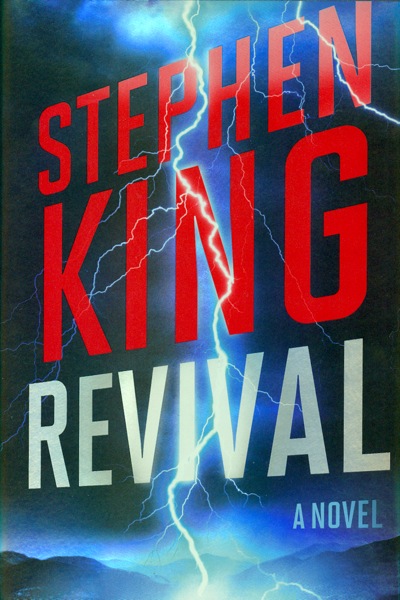
                • Cover of Revival
                  Revival

                  Stephen King · standalone novel · 2014

                  similar bycontemporaryhorror+2 more

                  The protagonist details how his life keeps intersecting with that of the man he first met as the pastor of his church in childhood, whose experiments with electricity lead to mastery of a cosmic power which he uses to help people, until his obsession leads to physical and spiritual disaster for all.

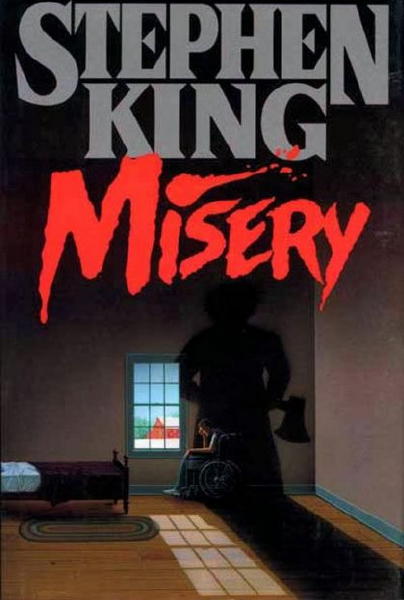
                • Cover of Misery
                  Misery

                  Stephen King · standalone novel · 1987

                  similar byaddictioncontemporaryhorror

                  Novelist Paul Sheldon finishes the manuscript that will finally kill off Misery Chastain, the heroine who made his career, when a snowstorm sends his car off a Colorado road. He wakes with both legs shattered, in the care of Annie Wilkes, a former nurse and 'number one fan' with no intention of taking him to a hospital. Annie manages his pain with drugs he comes to depend on, and her moods swing between doting and violent. When she learns Misery doesn't survive his new manuscript, her reaction makes clear Paul isn't just her patient, he's her hostage. A Stephen King novel about a writer at his most devoted fan's mercy.

                • Cover of The Tommyknockers
                  The Tommyknockers

                  Stephen King · standalone novel · 1987

                  similar bycontemporaryhorror+1 more

                  The Tommyknockers is a 1987 science fiction horror novel by Stephen King. The novel is an excursion into the realm of science fiction for King, as the residents of the Maine town of Haven gradually fall under the influence of a mysterious object buried in the woods. King has since soured on The Tommyknockers, describing it as "an awful book", due to his drug addiction while writing the novel, though acknowledges the story's potential: "There's really a good book in here, underneath all the sort of spurious energy that cocaine provides, and I ought to go back." A miniseries adaptation was released in 1993.

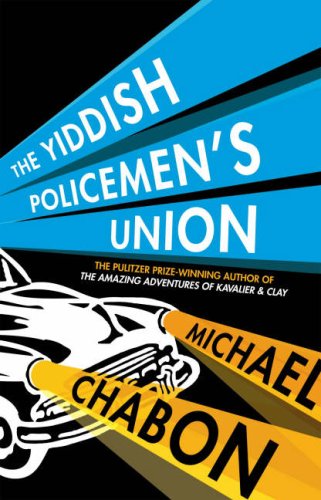
                • Cover of The Yiddish Policemen's Union
                  The Yiddish Policemen's Union

                  Michael Chabon · standalone novel · 2007

                  similar bycontemporary+2 more

                  In an alternate present where Jewish refugees settled Alaska during World War II rather than Israel, homicide detective Meyer Landsman -- divorced, drinking, living in a run-down hotel -- catches a case in his own building: a former chess prodigy, shot dead beside an unfinished game. Landsman and his half-Tlingit partner Berko Shemets learn the dead man was more than he seemed, connected to a messianic movement within Sitka's Orthodox community, just as the settlement faces a countdown of its own -- its status as a federal district about to expire, everyone's future up for grabs. Michael Chabon's Hugo- and Nebula-winning noir, told as hardboiled alternate history.

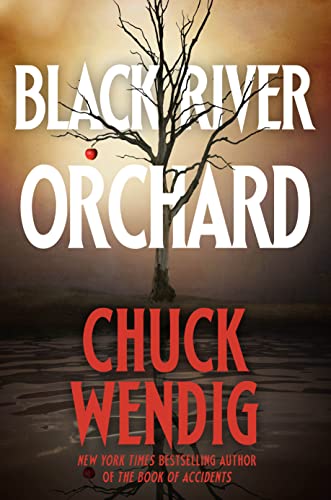
                • Cover of Black River Orchard
                  Black River Orchard

                  Chuck Wendig · standalone novel · 2023

                  similar byaddictioncontemporaryhorror

                  It’s autumn in the town of Harrow, but something besides the season is changing there. Because in that town there is an orchard, and in that orchard, seven most unusual trees. And from those trees grows a new sort of apple: strange, beautiful, with skin so red it’s nearly black. Take a bite of one of these apples, and you will desire only to devour another. And another. You will become stronger. More vital. More yourself, you will believe. But then your appetite for the apples and their peculiar gifts will keep growing—and become darker. This is what happens when the townsfolk discover the secret of the orchard. Soon it seems that everyone is consumed by an obsession with the magic of the apples... and what’s the harm, if it is making them all happier, more confident, more powerful? Even if something else is buried in the orchard besides the seeds of these extraordinary trees: a bloody history whose roots reach back to the very origins of the town. But now the leaves are falling. The days grow darker. It’s harvest time, and the town will soon reap what it has sown.

                • Cover of The Door Into Summer
                  The Door Into Summer

                  Robert A. Heinlein · standalone novel · 1957

                  similar by+2 more

                  From the first page of the Signet 6th printing: "An electronics engineer invents a wizard robot... only to find himself shanghaied by his ruthless partner and his gold-digging fiancee. The crafty pair forces him to submit to the "long sleep" - suspended animation for thirty years. But when he wakes up in the year 2000 A.D. the inventor makes a startling discovery. He learns that it is possible now to twist time forwards or backwards. And so he returns to the past bent on a mission... of revenge."

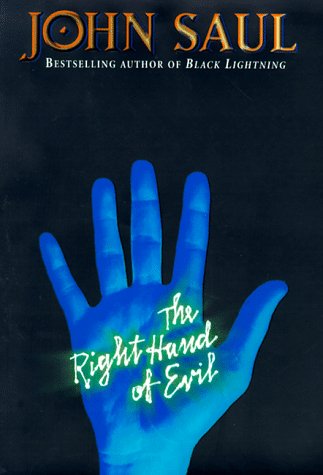
                • Cover of The Right Hand of Evil
                  The Right Hand of Evil

                  John Saul · standalone novel · 1999

                  similar byhorror+2 more

                  A financially-struggling alcoholic brings his wife and children to live in his family's old mansion in a small town in Louisiana, but the house has a history of dreadful deeds.

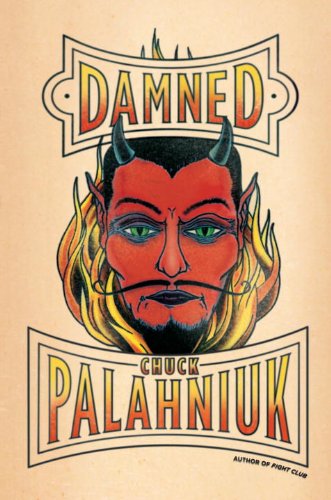
                • Cover of Damned Trilogy
                  Damned Trilogy

                  series · 2 books · 2011

                  similar bycontemporaryafterlife & underworldhorror+1 more

                  Chuck Palahniuk's Damned follows Madison Spencer, a sharp-tongued thirteen-year-old who wakes up dead and navigates a bureaucratic, telemarketing-riddled Hell, phoning the living to warn them before she's through. Its sequel, Doomed, continues her afterlife story; despite the 'trilogy' label, only these two books have been published.

                • Cover of God Bless You, Mr. Rosewater or Pearls Before Swine
                  God Bless You, Mr. Rosewater or Pearls Before Swine

                  Kurt Vonnegut & Jr. · standalone novel · 1965

                  similar byaddictioncontemporary

                  The Rosewater Foundation was built to shield the family fortune from taxes, but its current steward, war veteran and committed alcoholic Eliot Rosewater, has other ideas: he moves the foundation's offices to rural Rosewater County, Indiana, and starts handing out 'unlimited amounts of love and limited sums of money' to anyone who asks. His disgusted father, Senator Lister Rosewater, watches the family name become a punchline. Meanwhile a distant, downtrodden cousin, Fred Rosewater, is approached by an ambitious young lawyer with a scheme to have Eliot declared insane and the fortune redirected. A satire of American philanthropy, class and sanity from Kurt Vonnegut.

                • Cover of Spyder Baxter
                  Spyder Baxter

                  series · 2 books · 1998

                  similar bycontemporary+3 more

                • Cover of Steve and Ghost Universe
                  Steve and Ghost Universe

                  series · 10 books · 1987

                  similar byhorror+1 more

                • Cover of Crash
                  Crash

                  J. G. Ballard · standalone novel · 1973

                  similar byaddictioncontemporary

                  Crash is a novel by J. G. Ballard, first published in 1973 with a cover designed by Bill Botten. It follows a group of car-crash fetishists who, inspired by the famous crashes of celebrities, become sexually aroused by staging and participating in car accidents.

                • Cover of Aia
                  Aia

                  series · 2 books · 1923

                  completed

                  similar byaddictionhorrorfantasy

                • Cover of Davey Owen
                  Davey Owen

                  series · 2 books · 1987

                  completed

                  similar byhorror+1 more

                  Live Girls is Ray Garton's best-known novel, a horror title that earned a Bram Stoker Award nomination among the roughly 68 books he wrote across a long horror-fiction career. Night Life continues the same series with a second entry published nearly two decades later.

                • Cover of Husk
                  Husk

                  Dave Zeltserman · standalone novel · 2018

                  similar bycontemporaryhorror+1 more

                  Charlie is a Husker on the prowl in the New Hampshire wilderness when he falls in love with one of them: a girl named Jill. Loving Jill means leaving the Husk clan, with its gruesome cannibalistic rituals, and that will be far more difficult - and dangerous - than Charlie could have foreseen. It's only in New York City that the secret to ending his terrible cravings may reveal itself - if it doesn't kill him and everything he has grown to love first.

                • Cover of The Chrysalis
                  The Chrysalis

                  Brendan Deneen · standalone novel · 2018

                  similar byaddictioncontemporaryhorror

                  "Barely employed millennials Tom and Jenny Decker have to grow up fast when they lose their cheap Manhattan apartment. Leaving "the city" is hard, but the blow is softened when they stumble upon a surprisingly affordable house in the suburbs. For Tom, the bills, the mortgage, and Jenny's unexpected pregnancy add up to terror. He's not ready for this kind of responsibility. Then he finds the thing in the basement. It makes him feel like a winner even as it scrambles his senses. A new job soon has him raking in the big bucks--enough that Jenny can start making her entrepreneurial dreams come true. The Deckers' dream home conceals more than one deadly secret. As Tom's obsession with the basement grows, Jenny realizes that to save her family, she must expose everything. Before it destroys them all. No one ever really wants to grow up...but sometimes behaving like an adult is the only way to survive"--Amazon.com.

                • Cover of Christine
                  Christine

                  Stephen King · standalone novel · 1983

                  similar byaddictionhorror

                  Christine is a horror novel by American writer Stephen King, published in 1983. It tells the story of a car possessed by malevolent supernatural forces.

                • Cover of Immortal Beloved
                  Immortal Beloved

                  series · 3 books · 2010

                  similar bycontemporaryfantasy+1 more

                  Cate Tiernan's Immortal Beloved follows Nastasya, an immortal who has restarted her life more times than she can count and is tired of her aimless party-girl existence. She retreats to River's Edge, a refuge for wayward immortals, where she begins to confront long-buried secrets about herself and those around her. The story continues across Darkness Falls and Eternally Yours.

                • Cover of The Vampire Chronicles
                  The Vampire Chronicles

                  series · 15 books · 1976

                  completed

                  similar bycontemporaryhorror+1 more

                  The Vampire Chronicles is a series of Gothic vampire novels and a media franchise, created by American author Anne Rice, that revolves around the fictional character Lestat de Lioncourt, a French nobleman turned into a vampire in the 18th century.

                • Cover of The Blue Ant Trilogy
                  The Blue Ant Trilogy

                  series · 3 books · 2003

                  similar bycontemporary+1 more

                  Hubertus Bigend is a fictional character appearing in the third trilogy of novels of science fiction and literary author William Gibson. Bigend is the antihero of Gibson's Pattern Recognition (2003), Spook Country (2007) and Zero History (2010). In an interview Gibson says "I've always had a sense of Bigend as someone who presents himself as though he knows what's going on, but who in fact doesn't. It's just my sense of the subtext of the character: he's bullshitting himself, at the same time as he's bullshitting all of us."

                • Cover of Another / Marlowe School
                  Another / Marlowe School

                  series · 3 books · 2009

                  similar bycontemporary+2 more

                • Cover of Only Child
                  Only Child

                  Jack Ketchum · standalone novel · 1995

                  similar bycontemporaryhorror+1 more

                  Long out of print, this novel is known by both of its names--Only Child and Stranglehold. It is the story of spousal and child abuse to the extreme. "Arthur Danse is one of Ketchum's nost dark and frightening creations. A user, a violent abuser and quite possibly much, much worse. And it falls to his wife Lydia to protect the life and sanity of both herself and her six-year-old son--their only child."--Cover.

                • Cover of Survive the Night
                  Survive the Night

                  Danielle Vega · standalone novel · 2015

                  similar byaddictioncontemporaryhorror

                  Fresh out of rehab for oxycodone addiction, Casey and some of her friends attend an all-night rave called Survive the Night in the New York City subway, and find themselves fighting for their lives because drugs are not the only danger here--something is using the rave to attract victims, and some of them will not be coming back.