Loreful
HomeDiscover
Search series, authors…⌘K
Loreful

Reading orders for SF/F series and shared universes — with your place kept in every one.

Explore

UniversesSeriesWorksAuthorsAtlas

Help

FAQAboutSite map

Account & legal

Sign inCreate accountPrivacyTerms

Data

Built on ISFDB, Wikipedia, Wikidata and Open Library. Curated reading orders carry their reasoning on the page; the rest follow publication order. Data sources & licenses

© Loreful · data: ISFDB · CC BY

More like The Keep: (Sample)

anchored on:horroreuropeearly 20th centurydark fantasygothicwar+2 more

but

Mood

The mood the book leaves you in.

  • The reading experience is propelled by journeys, exploration, and physical risk; excitement and forward momentum dominate over dread or introspection.
  • Joy and loss are deliberately mixed; the resolution grants characters something real while taking something else away, leaving warmth and sorrow together.
  • The book demands work from the reader — dense prose, difficult structure, unfamiliar ideas, or morally uncomfortable material — as part of its intended effect.
  • Grim events, cruelty, or despair dominate the atmosphere, and the book does not soften them with comfort or comic relief.
  • The atmosphere is quietly unsettling — wrongness, unease, and the uncanny pervade the book without necessarily escalating into overt horror.
  • The book is built to move the reader; character feeling is foregrounded and major scenes aim at a strong emotional response.
  • Humor is a primary aim and the prose plays for laughs — comic situations, wit, or dialogue produce sustained comedy, not occasional levity.
  • The book insists that things can improve; effort and decency are shown to matter, and the arc bends toward better outcomes even through hardship.
  • The book teaches as it goes — real facts, history, science, or craft are conveyed in enough depth that learning is part of the reading experience.
  • The book is designed to uplift and motivate, presenting perseverance or achievement in a way that invites the reader to aspire or act.
  • The overall register is cheerful and easygoing; stakes are kept gentle and the book avoids dwelling on pain or dread.
  • Withheld information drives the experience; the book sustains enigmas and secrets the reader wants resolved, whatever its genre.
  • The book is contemplative and inward-looking, giving more weight to thought, memory, and meaning than to external events.
  • The book works as comfort reading — low tension, a soothing pace, and an atmosphere the reader can unwind in.
  • Grief, loss, or melancholy set the dominant register, and the book lets sorrow stand rather than resolving it into comfort.
  • Sustained suspense is the point; the book keeps the reader braced for what happens next through danger, pressure, or impending revelation.
  • Playful invention and charm define the register — fanciful conceits, light absurdity, and a narration that delights in its own oddity.

About

What the story runs on.

  • Stories in which extraterrestrial beings are central — as characters, cultures, or the object of the plot.
  • Stories structured as a quest — a journey undertaken to find, deliver, or destroy something of great import.
  • Stories in which staying alive against nature, catastrophe, or scarcity is the central problem.
  • Stories of lovers kept apart by law, family, faith, or station, where the obstacle to love is the plot.
  • Stories of growing up — a young protagonist crossing from childhood into adult knowledge and responsibility.
  • Stories about who a character truly is — self-discovery, doubled lives, and the search for a self.
  • Stories about mental unraveling — descent into madness, delusion, and minds at war with themselves.
  • Stories about mourning — living through the death of a loved one and what loss does to the survivors.
  • Stories in which a buried family truth — hidden parentage, crimes, or shames — surfaces and reorders the present.
  • Stories driven by maneuvering for power — factions, conspiracies, and statecraft conducted in shadow.
  • Stories in which war itself is the subject — combat, occupation, and what warfare does to soldiers and civilians.
  • Stories organized around investigating a killing — the case, the clues, and the pursuit of the killer, in any genre's clothing.

Shelf

Where it sits in the library.

    • Fiction built on magic or other supernatural elements that have no scientific explanation.
    • Secondary-world fantasy at large scale, where the fate of nations or the world turns on the protagonists' struggle.
    • Fantasy set in a recognizably modern city or contemporary world where the supernatural intrudes on everyday life.
    • Fantasy that blends in horror's atmosphere and imagery, keeping a fantastical frame around grim or frightening material.
    • Action-driven fantasy following warriors or rogues with personal stakes against sorcerous threats, rather than world-spanning conflicts.
    • Fantasy set in a real historical period or a close analogue of one, with magic woven into the era.
    • Fantasy in which protagonists cross from the ordinary world into another world through a portal or similar passage.
    • Fiction that retells or reworks a traditional fairy tale in a new form or setting.
    • Fantasy drawing directly on myths, legends, and folklore, retelling them or building on their figures and logic.
    • Fantasy of ghosts, vampires, shapeshifters, psychics, and similar phenomena, usually set in an otherwise ordinary world.
    • Fiction mixing science-fictional trappings with overtly magical or impossible elements in one setting.
    • Low-stakes fantasy emphasizing comfort, community, and everyday pleasures over conflict and peril.
    • Speculative fiction of pervasive moral ambiguity, violence, and cynicism that rejects heroic conventions — fantasy and SF alike.
      • Fiction that extrapolates from science and technology — future societies, space travel, or speculative inventions — within at least nominally natural laws.
      • Science fiction of interstellar scope — starships, galactic polities, and adventure across star systems.
      • Science fiction committed to scientific rigor, where technical plausibility constrains the story.
      • Science fiction centered on armed forces and warfare, told largely from a military point of view.
      • Science fiction of networked, corporate-dominated near futures, pairing high technology with social decay.
      • Science fiction styled on nineteenth-century steam-powered technology, often in a Victorian or pseudo-Victorian setting.
      • Fiction depicting an oppressive or catastrophic society, presented as a warning.
      • Fiction set after civilization's collapse, following survivors in the ruins of the old world.
      • Fiction in which characters move between past and future, and the mechanics or consequences of that travel drive the plot.
      • Fiction exploring a world where a historical event went differently and history diverged from ours.
      • Science fiction about humanity's first encounter and communication with an alien intelligence.
      • Science fiction in which extraterrestrial forces attack or occupy Earth and humanity resists.
      • Fiction whose primary aim is to frighten or unsettle the reader through dread, menace, or the monstrous.
      • Horror of vast, indifferent, incomprehensible entities before which humanity is insignificant, in the Lovecraft tradition.
      • Horror of decaying houses, buried family secrets, and oppressive atmosphere in the Gothic literary tradition.
      • Horror centered on hauntings and the returning dead.
      • Horror located in the mind — paranoia, obsession, and unreliable perception rather than external monsters.
      • Horror built around the reanimated dead and survival amid their outbreaks.
      • Horror defined by explicit, transgressive gore that refuses to cut away from violence.
      • Speculative fiction of the strange and uncanny that resists both natural explanation and standard genre categories.
      • Fiction organized around solving a crime or puzzle, typically following an investigator toward the identification of a culprit.
      • A puzzle-first mystery that lays out clues so the culprit's identity can be deduced before the reveal.
      • Crime fiction of moral ambiguity, fatalism, and hard-edged style, set among the corrupt and the doomed.
      • A mystery following the realistic routines of police work — forensics, interviews, and case-building.
      • A gentle mystery with an amateur sleuth, a small community, and violence kept off the page.
      • A mystery set in a past era, where the investigation works within that period's methods and society.
      • Fast-paced fiction driven by imminent danger, pursuit, or high-stakes conspiracy, built to sustain tension.
      • A thriller of espionage — agents, tradecraft, and intelligence services in conflict.
      • A thriller centered on lawyers and the courtroom, where litigation carries the suspense.
      • A thriller driven by detailed contemporary or near-future technology, often military or scientific.
      • A thriller whose tension comes from mental states and manipulation between characters rather than external action.
      • Fiction whose central plot is a romantic relationship and its development toward an emotionally satisfying resolution.
      • Romance in which one or both partners are supernatural beings, blending fantasy elements into the love story.
      • A fantasy-romance hybrid in which the romantic arc and the fantasy plot carry equal weight.
      • Romance set in a past era, with courtship shaped by the period's society and manners.
      • Romance set in the present day, without supernatural or historical elements.
      • Fiction set in a real past period, where the historical setting materially shapes characters and events.
        • General and literary fiction emphasizing prose style, character interiority, or formal ambition over genre plot conventions.
        • Fiction in a realistic world where magical events occur and are treated as ordinary, in the tradition of Latin American literature.
        • Fiction that ridicules people, institutions, or society in order to criticize them.
        • Fiction of dreamlike, irrational imagery and logic that breaks from realistic representation.
        • Fiction that plays with narrative convention through metafiction, fragmentation, and self-reference.
        • Fiction propelled by journeys, exploration, and physical peril, where action and survival carry the plot.
        • Adventure fiction of ships and seafaring — naval engagements, voyages, and life at sea.
        • Fiction of the American frontier West — gunmen, ranchers, and lawmen, typically in the late nineteenth century.
        • Fiction centered on soldiers, campaigns, and the experience of warfare, historical or imagined.
          • Fiction written primarily to amuse, using comedic situations, wit, or parody as its organizing principle.
            • Multi-generational fiction following a family or dynasty across decades, with inheritance and kinship as the through-line.
              • Fiction whose world runs on explicit game mechanics — levels, stats, and skills that characters can see and exploit.
                • Fiction about costumed or superpowered heroes and their conflicts with comparable villains.

                Practical

                How long a commitment, whether it stands alone, and whether it has finished.

                Tap a chip to ask for it · tap again to rule it out · once more to clear. Numbers show what would be left.

                • Cover of Gravity's Rainbow
                  Gravity's Rainbow

                  Thomas Pynchon · standalone novel · 1973

                  similar bywareuropeearly 20th centurydark

                  Gravity's Rainbow is a 1973 postmodern novel by Thomas Pynchon. The narrative is set primarily in Europe at the end of World War II and centers on the design, production and dispatch of V-2 rockets by the German military. In particular, it features the quest undertaken by several characters to uncover the secret of a mysterious device, the Schwarzgerät, which is slated to be installed in a rocket with the serial number "00000".

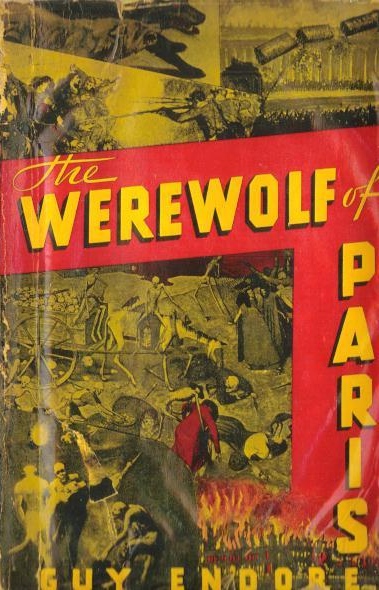
                • Cover of The Werewolf of Paris
                  The Werewolf of Paris

                  Guy Endore · standalone novel · 1933

                  similar bywareuropedarkhorrorgothic

                  The Werewolf of Paris (1933) is a Gothic horror novel by American writer Guy Endore. The novel follows Bertrand Caillet, the eponymous werewolf, throughout the tumultuous events of the Franco-Prussian War and the Paris Commune of 1870–71. Some literature experts have compared this book with Dracula by Bram Stoker and they have identified it as the Dracula of werewolf fiction.

                • Cover of The Lady of the Shroud
                  The Lady of the Shroud

                  Bram Stoker · standalone novel · 1909

                  similar byeuropeearly 20th centuryeeriegothic+1 more

                  Rupert Sent Leger inherits his eccentric uncle's fortune on one condition: he must spend a year living in the family's castle in the Blue Mountains, a small, embattled corner of the Balkan coast under threat from Turkish forces. Determined to earn the trust of his new neighbors, Rupert arms the local mountain people for their own defense, and soon finds his castle visited at night by a beautiful woman in a wet burial shroud, who claims sanctuary from the cold and offers no explanation of who, or what, she might be. Bram Stoker's follow-up to Dracula trades outright horror for Ruritanian romance and adventure, blending gothic atmosphere with political intrigue.

                • Cover of Pan's Labyrinth: The Labyrinth of the Faun
                  Pan's Labyrinth: The Labyrinth of the Faun

                  Cornelia Funke & Guillermo Del Toro · standalone novel · 2019

                  similar byeuropeearly 20th centurydarkeeriedark fantasy+1 more

                  Inspired by the film of the same name.

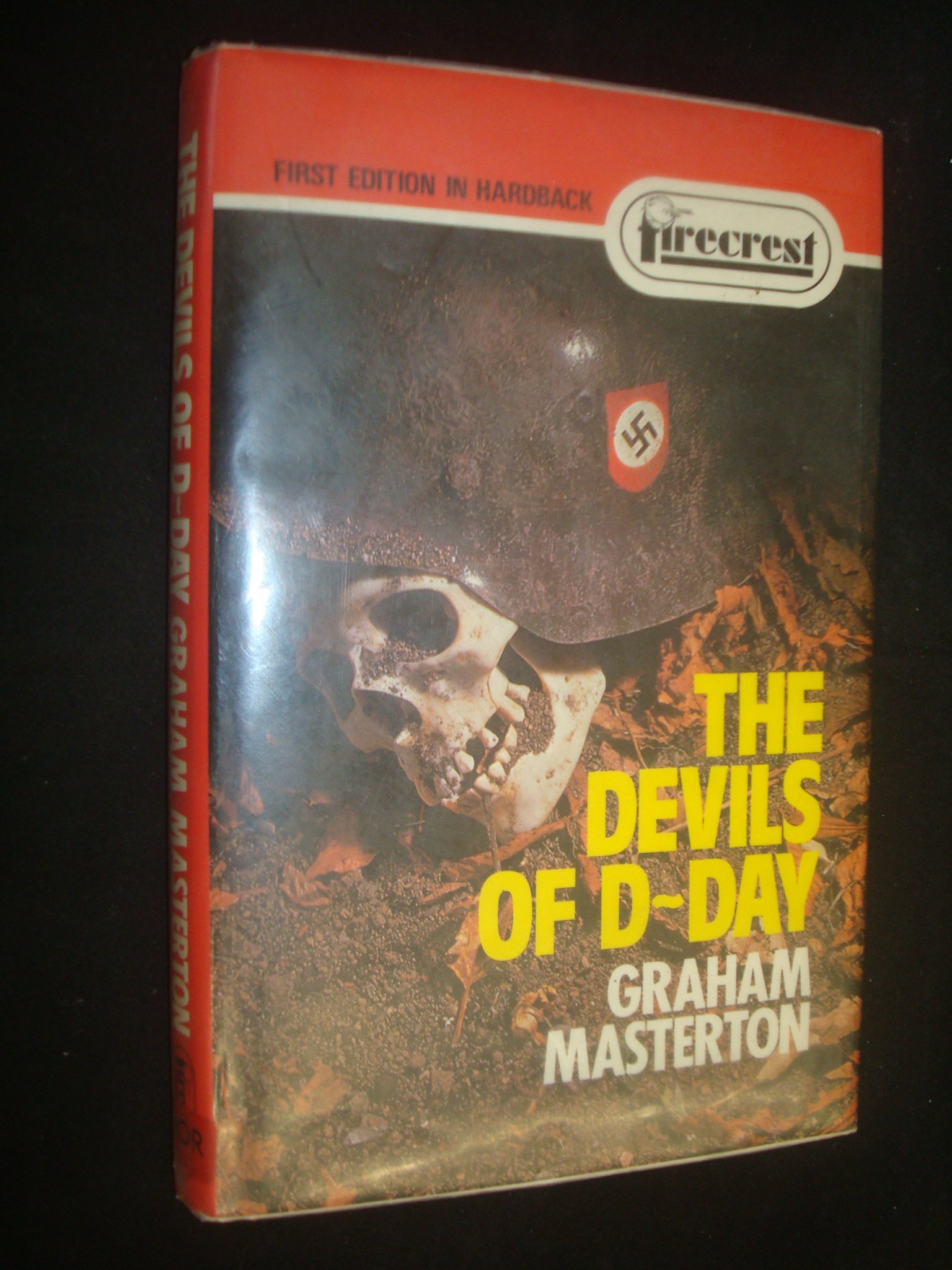
                • Cover of The Devils of D-Day
                  The Devils of D-Day

                  Graham Masterton · standalone novel · 1978

                  similar bywareuropedarkeeriehorror

                  UNHOLY TERROR... September, 1944...the villagers of Pont D'Ouilly atill shudder at the memory of that infernal day when a special divison of American tanks annihilated a Nazi armoured column. Thirteen U.S. tanks, all painted black. A strange sight, evven in wartime. One of the vehicles had broken a track, and stopped, its deadly mission complete. For some mysterious reason, the Allies sealed the hatch, and left the tank by the roadside. for thirty years, it just sat there, rusting with time, a grim reminder of the nearly forgotten battle. Some local people claimed the tank was cursed.. Haden't they heard eerie voices and wild laughter echoing from within? And didn't an old woman die exactly thirteen days after she'd tried to exorcise the supposed demons? Was there indeed a supernatural force inside...something so unearthly and sinisterthat no one would come near...something capable of unleashing an unspeakable evil no power on earth could destroy? Come, see for yourself, if you dare!

                • Cover of The Foreshadowing
                  The Foreshadowing

                  Marcus Sedgwick · standalone novel · 2005

                  similar bywareuropeearly 20th centurydark+1 more

                  The Foreshadowing is a historical fiction novel by Marcus Sedgwick published in 2005. It takes place during the beginning of World War I, following a 17-year-old British girl named Sasha who has premonitions of death.

                • Cover of The Beardless Warriors
                  The Beardless Warriors

                  Richard Matheson · standalone novel · 1960

                  similar bywareuropeearly 20th centurydark

                  The Beardless Warriors is a 1960 World War II novel by American writer Richard Matheson. It was based on his experiences as a young infantryman in the 87th Division in France and Germany.

                • Cover of Slaughterhouse-Five or the Children's Crusade: A Duty-Dance with Death
                  Slaughterhouse-Five or the Children's Crusade: A Duty-Dance with Death

                  Kurt Vonnegut & Jr. · standalone novel · 1969

                  similar bywardarkeurope+1 more

                  Vonnegut opens in his own voice, describing the twenty years it took him to face writing about surviving the firebombing of Dresden as a POW. He then hands the story to Billy Pilgrim, an awkward, fatalistic American chaplain's assistant swept into the Battle of the Bulge and captured by German forces alongside a soldier who dies blaming him for it. Imprisoned in a disused slaughterhouse in Dresden, Billy survives the firebombing that follows, and, we're told upfront, has also come 'unstuck in time,' living his life out of order, including a stretch on the alien world of Tralfamadore. Vonnegut's best-known novel folds war memoir into science fiction and black comedy.

                • Cover of Dawn of Fear
                  Dawn of Fear

                  Susan Cooper · standalone novel · 1970

                  similar bywareuropeearly 20th centurydark

                  "A study not a story, really, demonstrating--decisively--just what the title says." --Kirkus Reviews 1970-09-01 "Dawn of Fear (1970) is a[n] effective though nonfantastic Young Adult novel set during World War Two." --SFE3

                • Cover of Mother Night
                  Mother Night

                  Kurt Vonnegut & Jr. · standalone novel · 1962

                  similar bywardarkeurope+1 more

                  Howard W. Campbell Jr., an American playwright who grew up in Germany, writes his memoirs from an Israeli prison cell awaiting trial for war crimes. As the Nazis rose to power, Campbell stayed on, married a German actress, and was recruited by an American agent to serve as a double agent, broadcasting Nazi propaganda over the radio while secretly passing coded intelligence to the Allies. The catch, as Campbell tells it, is that he became one of the war's most effective propagandists in the process, whatever his loyalties. Kurt Vonnegut's darkest novel asks what a person becomes when the mask he wears for a cause is indistinguishable from his face.

                • Cover of Time's Arrow
                  Time's Arrow

                  Martin Amis · standalone novel · 1991

                  similar bywarearly 20th centurydarkeurope

                  From Amazon description: In this icy, knife's-edge story of a life that progresses backward through time, unfolding into one of the darkest episodes of the 20th century, Amis ("at his intriguing, heedful, and powerful best" —Time Out), finds a chillingly original approach to the Holocaust in fiction • From the acclaimed author of Zone of Interest "The narrative moves with irresistible momentum.... [Amis is] a daring, exacting writer willing to defy the odds in pursuit of his art." —Newsday Tod. T. Friendly is living his life in reverse. Doctor Friendly has just died, but he moves "out of blackest sleep" to find himself surrounded by doctors and on the deathbed of a man in whose body he is imprisoned. After weeks of improving in the hospital, he is sent home to his affable, melting-pot, primary-colors existence in suburban America. As Friendly breaks up with his lovers in a prelude to seducing them and mangles his patients before he sends them home, his life races backward toward the one appalling moment in modern history when such reversals make sense. From the fresh-cut lawns of his retirement to the hustle of New York, and then back to the boat which reverses his course to the war-torn Europe Friendly came from, Amis brings the steeliest nerve to the job of realizing the novel's inevitable logic. Trapped in his body from grave to cradle, Friendly's consciousness can only watch as he struggles to make sense of the good doctor's most ambitious project yet—the final solution.

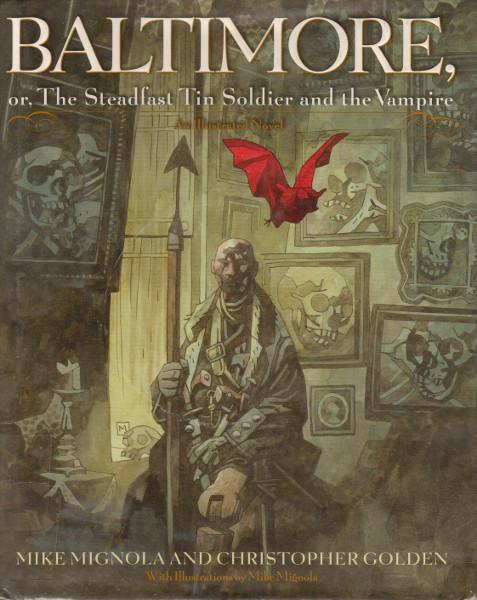
                • Cover of Baltimore, or, the Steadfast Tin Soldier and the Vampire
                  Baltimore, or, the Steadfast Tin Soldier and the Vampire

                  Christopher Golden & Mike Mignola · standalone novel · 2007

                  similar byeuropeearly 20th centurydarkdark fantasyhorror+2 more

                  Baltimore, or, The Steadfast Tin Soldier and the Vampire is a 2007 illustrated novel written by Mike Mignola and Christopher Golden, and illustrated by Mignola. It follows the quest of Lord Henry Baltimore, a British officer during World War I who inadvertently changes the course of the war, and his own life, by wounding a vampire on the battlefield.

                • Cover of The War in the Air
                  The War in the Air

                  H. G. Wells · standalone novel · 1908

                  similar bywarearly 20th centuryeurope+1 more

                  The War in the Air: And Particularly How Mr. Bert Smallways Fared While It Lasted is a military science fiction novel written by H. G. Wells and published in 1908.

                • Cover of Angel Down
                  Angel Down

                  Daniel Kraus · standalone novel · 2025

                  similar bywareuropeearly 20th centurydark

                  Angel Down is a World War I novel, written as a single unbroken sentence, by American author Daniel Kraus. The protagonist is a draft dodger and then an army private who encounters an angel on the battlefield. It was published by Atria Books, an imprint of Simon & Schuster, in July 2025. The book won the 2026 Pulitzer Prize for Fiction.

                • Cover of Vile Bodies
                  Vile Bodies

                  Evelyn Waugh · standalone novel · 1930

                  similar bywareuropeearly 20th centurydark

                  Some of the Bright Young Things of Waugh's other satiric novels appear in this work set slightly in the future; apparently light-hearted to begin with, it ends bleakly with its inept protagonist alone on an apocalyptic European battlefield.

                • Cover of Ludis Kristaps
                  Ludis Kristaps

                  series · 3 books · 2011

                  similar bywareuropeearly 20th centurydarkdark fantasy

                • Cover of A Coming Evil
                  A Coming Evil

                  Vivian Vande Velde · standalone novel · 1998

                  similar bywareuropeearly 20th centuryeerie

                  During the German occupation of France in 1940, thirteen-year-old Lisette meets a ghost while living with her aunt who harbors Jewish and Gypsy children in the French countryside.

                • Cover of Flanders
                  Flanders

                  Patricia Anthony · standalone novel · 1998

                  similar bywareuropeearly 20th centurydark

                  From the front flap of the Ace first edition: Last night while I was walking the graveyard alone, I heard someone signing... World War I, Flanders, Northern France: The British trenches grow wet and foul. For Travis Lee Stanhope, a Texan sharpshooter serving in an English unit, the war is not hell, but home. Each night he ventures into No-Man's Land between his comrades and the German trenches, and waits. At dawn, he begins the methodical killing of enemy troops. Then he returns. His numbers are exemplary. But Travis Lee is changing. He senses are ravaged by the unending scream of shells overhead. His mind numbed by too many rations of rum. His soul bled dry by the constant death all around him.. But in his dreams, something still lives. He sees a world like the war, where living is the same as walking dead. But the people there are his comrades killed in action. Sometimes they lay in glass-covered graves in an Eden-like cemetery. He speaks to them. He tries to ease their pain. But no one can ease his pain. And it will take more than death, and more than dreams, to make Travis Lee realize that he may have a fuction in this war beyond killing his enemies."

                • Cover of The Book Thief
                  The Book Thief

                  Markus Zusak · standalone novel · 2005

                  similar bywareuropeearly 20th century

                  The Book Thief is a historical fiction novel by the Australian author Markus Zusak, set in Nazi Germany during World War II. Published in 2005, The Book Thief became an international bestseller and was translated into 63 languages and sold 17 million copies. It was adapted into the 2013 feature film, The Book Thief.

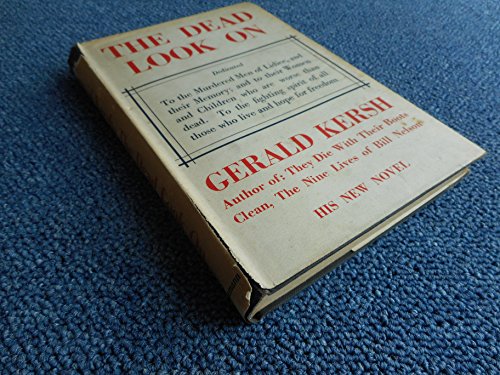
                • Cover of The Dead Look On
                  The Dead Look On

                  Gerald Kersh · standalone novel · 1943

                  similar bywareuropeearly 20th centurydark

                  "The tragedy of Lidice (called Dudicka, here) is the factual background for this story of the infamous World War Two atrocity. In harsh detail, Gerald Kersh's grim, lucid novel of the infamous German atrocity reconstructs the revenge inflicted upon a whole village for the death of one German soldier." – Goodreads

                • Cover of The Scholar and the Last Faerie Door
                  The Scholar and the Last Faerie Door

                  H. G. Parry · standalone novel · 2024

                  similar bywarearly 20th centurydarkeurope

                  The Scholar and the Last Faerie Door is a 2024 historical fantasy novel by New Zealand author H. G. Parry. It was first published in October 2024 in the United Kingdom by Orbit Books and in the United States by its imprint, Redhook Books. The story takes place during and immediately after World War I, and concerns a faerie who kills hundreds of soldiers and curses a number of others during the Battle of Amiens in 1918.

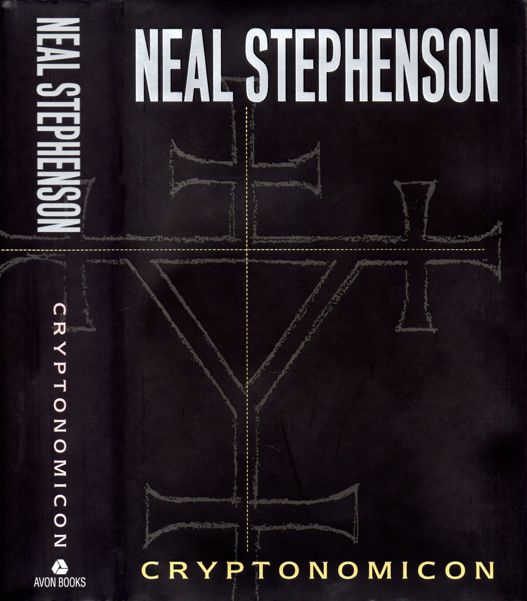
                • Cover of Cryptonomicon
                  Cryptonomicon

                  Neal Stephenson · standalone novel · 1999

                  similar bywareuropeearly 20th century

                  There are two main timelines in this novel. This first is during World War II, and follows the lives of three cryptologists: Lawrence Pritchard Waterhouse (American), Alan Turing (British), and Rudolf von Hacklheber (German), as well as the strange exploits of Detachment 2702. The second timeline takes place during the present, filled with the offspring of the main characters in the first timeline. They are preoccupied with the construction of a data haven.

                • Cover of The Separation
                  The Separation

                  Christopher Priest · standalone novel · 2002

                  similar bywareuropeearly 20th century

                  The Separation is a novel by British writer Christopher Priest, published in 2002. It is an alternate history revolving around the experiences of identical twin brothers during the Second World War, during which one becomes a pilot for the RAF, and the other, a conscientious objector, becomes an ambulance driver for the Red Cross. The author introduces a deliberate confusion by giving these brothers identical initials – J.L. Sawyer – one known as Jack and the other as Joe.

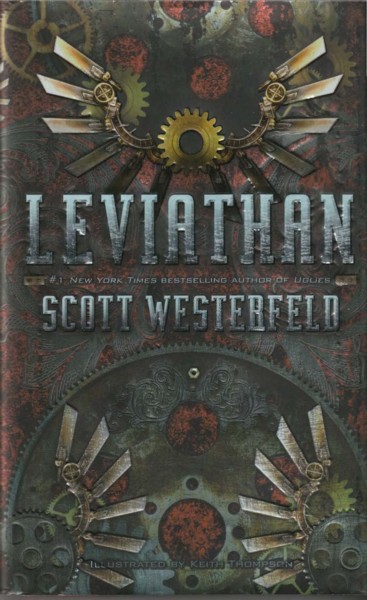
                • Cover of The Leviathan Trilogy
                  The Leviathan Trilogy

                  series · 3 books · 2009

                  similar bywarearly 20th centuryeurope

                  Set in an alternate First World War, Leviathan splits the belligerents into Clankers, who fight with mechanical walkers, and Darwinists, who fight with fabricated living creatures built from spliced DNA. Scott Westerfeld follows a British girl disguised as a boy to serve on a living airship and the exiled heir to the Austro-Hungarian throne as their paths collide, continuing across Behemoth and Goliath. Keith Thompson's illustrations are integral to all three books, alternating text chapters with illustrated sequences.